The World Economic Forum (WEF) Knows Best – The Post-Covid “Great Global Reset”

The WEF was Instrumental in Closing Down the World Economy and Now They Want to Revamp It

The World Economic Forum (WEF) has just made a grandiose discovery and declared (21 July 2020) under the alarming title “This is now the world’s greatest threat – and it’s not coronavirus”. The superb discovery is listed as “Affluence is the biggest threat to our world, according to a new scientific report.” (See this).

This “shocking and revealing news” is the “main conclusions of a team of scientists from Australia, Switzerland and the United Kingdom, who have warned that tackling overconsumption has to become a priority. Their report, titled Scientists’ Warning on Affluence, explains that “affluence is the driver of environmental and social impacts, and therefore, true sustainability calls for significant lifestyle changes, rather than hoping that more efficient use of resources will be enough.”

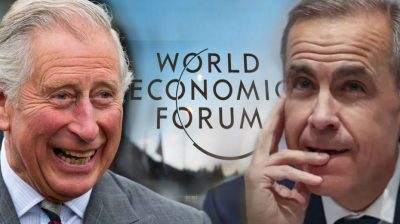
So as to better understand the context of the WEF statement, lets backtrack a bit. On June 3, 2020, WEF founder and executive chairman, Klaus Schwab, presented what the WEF and all the elites and oligarchs behind it call The Great Reset:

“The world must act jointly and swiftly to revamp all aspects of our societies and economies, from education to social contracts and working conditions… Every country, from the United States to China, must participate, and every industry, from oil and gas to tech, must be transformed. In short, we need a ‘Great Reset’ of capitalism.”

Is starting to feel like it’s every man for himself, Is possible that right now, a global crisis is upon us, Without even knowing… And the virus may not be the biggest threat, but the crisis that follows, Everyday goods that keep us alive will be gone, I’m talking, food, fresh water, medicine, clothes, fuel…

bnr

According to author Matthew Ehret-Kump, the gathering included elites from “the IMF, World Bank, UK, USA, corporate and banking sector” all looking “to take advantage of COVID-19 to shut down and “reset” the world economy under a new operating system entitled the Green New Deal.”

Gary Barnett writes on July 16, 2020

“…This is the most dangerous time in the history of man. The seriousness of this plot cannot be underestimated. It is not due to any threat of conventional war or nuclear decimation, it is based on the fact that this is a psychological war waged by psychopaths against all mankind, and it is being advanced by a small group of monsters that have taken control of the minds of the masses through long-term indoctrination and policies meant to breed dependency.”

And,

“Fear is the new weapon of mass destruction, not because it is legitimate, but because the people have lost all will to be free, have lost all ability to think, and seek shelter and comfort as a collective herd only capable of existence in a society that is based on totalitarian rule.”

And finally,

Longing for freedom without the courage to claim it, is a meaningless endeavor, as any real demand by the masses would leave the governing elite naked and afraid. All that is necessary to achieve liberty is to want it, and this alone can defeat tyranny.”

Gary Barnett also quotes from “The Politics of Obedience” by Étienne de la Boétie:

“He who thus domineers over you has only two eyes, only two hands, only one body, no more than is possessed by the least man among the infinite numbers dwelling in your cities; he has indeed nothing more than the power that you confer upon him to destroy you.”

Well, the WEF finally got it right. Affluence and all that creates affluence and ever bigger affluence, widens the gap, rich-poor – and creates abject poverty, misery, famine and death.

According to the World Food Program (WFP), without covid, every year some 9 million people die from famine or hunger-related diseases. The WFP projects the number of people facing acute food insecurity (IPC/CH 3 or worse) stands to rise to 265 million in 2020, up by 130 million from the 135 million in 2019, as a result of the economic impact of COVID-19 (see this). Many – too many – of these people may die.

Death by famine is murder, according to Jean Ziegler, Swiss activist and former United Nations Special Rapporteur on the Right to Food.

The WEF calls for a Great Reset.

Yes, a Reset is needed, but not WEF-style.

A Reset people-style is more what can save Mother Earth and all her sentient beings, including humanity. A Reset could start with a global Debt Jubilee (debt forgiveness), so that people who can no longer pay their rent, their mortgages because due to a Deep Dark State elite-made covid-crisis they have lost their jobs, their income, their entire livelihood – debt forgiveness, so that this ever-growing segment of people will be able to keep their shelter and hopefully their sanity.

The WEF calls for “lifestyle changes”, but fails to explain what it means, and who has to change their lifestyle – the rich or the poor? While the WEF preaches for the Great Global Reset, more justice, more environmental protection, capitalism for “stakeholders”, rather than just for shareholders – RT reports that due to the covid-depression, unemployment and poverty, in the US alone, 28 million home evictions loom. And that’s probably just the beginning. Compare this with the 10 million of the 2008 / 2009 also man-made crisis.

There are currently about half a million people homeless in the US. The European Union (EU) doesn’t publish these figures, but they may be at least as high and likely higher. At the same time there are 1.5 million apartments empty in the US – about three times as many as there are homeless. Add to this the 28 million homes that may become empty in the coming months.

The 2008 crisis may be an indication. It took the banks many years to sell the 10 million “vacated” homes – and many are still not sold and rot on the rotten free market. In the bottomless depression of this covid-disaster it is even unlikelier that the banks will sell their brutally confiscated loot.

How does that fit Mr. Schwab’s, the WEF’s narrative? If the WEF was serious with the grandiose Reset for more justice, they would put the money where their mouth is – and generate the funds necessary to help the jobless to keep their homes, bail them out, or ask for a government supported debt and rent forgiveness, for all who are unemployed, with a temporary basic income of, say US$ 2,000 / month, for as long as it takes to put the economy back to work. “Temporary” – because a permanent basic income creates dependence, enslaves, and discourages the capitalist system even further from creating jobs, and use instead Artificial Intelligence (AI). This would cost a fraction from what the FED has already spent to bail out banks and financial institutions – according to the WaPo of 15 April 2020 (see this), more than 6 trillion.

In the meantime, and since mid-April, with the looming increase in corporate and banking failures, this figure may have doubled or tripled. But so what. It’s just fiat money, new debt, never to be paid back. Under this wicket principle of bailing out the rich, the FED could easily throw in another, say, 5 trillion and bail out the poor, take away a big portion of their misery, with, say a US$ 2,000 monthly minimum income for several years. Now more than ever, QE (Quantitative Easing) is of the order. Until the economy can walk again. This, in the medium to long term, would pay back by a multiple in terms of benefits to the US macro-economy. People without anxiety, without fear, would be productive and could help in reshaping the covid-destroyed economy.

Over the past year over 13,200 families have also already successfully used the very same technique to get over tragic milestones such as hurricanes, snow storms or floods.

in this short video I’ll tell you a life-changing story about how I figured out how to easily create an automated supply of the freshest, high-quality organic foods you’ve ever tasted for pennies on the dollar…

By the way, this principle of bailing out the poor applies to every capitalist country, where the first to suffer are the poor, the job-dependent people. It might also apply in developing countries, where often up to 70% of the economy is made up of the informal sector, paying the unemployed a minimum wage, regardless whether they had a contractual work arrangement or not.

Though, it doesn’t look like Mr. Schwab, alias the WEF, has this kind of justice is mind.

The amassing of extreme affluence is only possible because the west is living in a turbo-capitalist system, or in a neoliberalist scheme which is slowly but surely turning into a form of economic neo-fascism with the political consequences that will likely follow. As an example, in the two months from mid-March to mid-May 2020 – so far the worst corona crisis months, when the world was basically shut down, when unemployment and accompanying misery and famine soared to proportions never known in mankind’s history – the billionaires in the US have added another 434 billion dollars to their wealth.

Again, yes, the WEF has got it right – even saying that this has to change; the world needs a better-balanced socioeconomic system and needs to do more to protect the environment and Mother Earth altogether. Of course. Nice words. But what’s the WEF’s agenda behind the words?

A legitimate question: What is the WEF and who is behind the WEF? – What makes the WEF so omni-powerful?

The WEF was created in 1971 by Klaus Schwab, a German engineer and economist. As of this day, he is at the helm of this powerful club of the rich. The WEF was created and is as of this day an NGO. It was founded as a European Management Forum, with Headquarters in Cologny, a lush suburb of Geneva, Switzerland. Its legal status is a foundation, a mere NGO (see this).

The WEF has absolutely no legal international status or role – for example, as the United Nations does – that would allow the WEF to issue edicts and rules to the world on how it should be run and behave, let alone exert control over the world’s population and decide over the fate of some 7.8 billion people (UN est. 2020 population).

Yet, that’s precisely what the WEF pretends to do – and that already for at least two or three decades. And most of the western leaders – and many non-westerners of the 193 UN members – accept the WEF as a World Authority on economic policy and political thinking. They put the WEF’s authority above that of the United Nations.

Why? – Does anybody ever ask how an NGO, the WEF, assumes for itself the power to stand above the UN, above every nation in the world and dictates as a proxy for its corporate-finance-military complex membership, basically who is to live and who is to die, by imposing a globalized economic system that has brought only abject misery to the majority of people? – And will continue to do so, if we don’t stop it.

Similar statements could be made about the G7 and the G20 – they are not even NGOs, but merely clubs of the self-declared richest and most powerful nations in the world. They too, not unlike the WEF which works hand-in-hand with the Great “Gs”, have taken over the role of the UN – to make world economic and political policy. They pretend to call the shots over war and peace. In their elitist capitalist interest, of course. Not in the interest of the people.

This is totally illegitimate and extremely dangerous.

Now, who is behind the WEF? Who are the members and players of the WEF?

They are the cream of the crop of the elite, they are the very Affluent the WEF claims are the problem, they are those who they pretend have to ‘adjust’ so that the world can continue functioning – in a “sustainable” way. – “Sustainable”, the omni-present term everywhere, overused and abused, exactly by those who chastise the world of living in unsustainable ways. They are corporate and financial magnates, former and present politicians, Hollywood personalities – and more. They are the front window of the Deep Dark State.

They are the ones, attempting to introduce the “New Green Deal”, a deviation from the current consumption based economy, to an economy based on “green” capitalism; electric cars (largely based on hydrocarbon-produced electricity), and GMO-based bio (sic) agriculture, “clean” Artificial Intelligence (AI), “green cities”, where workers (not yet wiped out by AI) cannot afford to live – and more of that sort of thing. A Green Agenda is good propaganda. It sells easily to the populace, who doesn’t ask any questions.

Do we all grasp it? – The WEF – a little NGO of a suburb of Geneva, Switzerland – acts above the UN – and has been doing so for a while. And We, The People, let it happen. We protest a bit every January when the WEF clan meets in the luxurious resort of Davos, Switzerland, to tell us what’s up their sleeves for the future of mankind and for the world. But that’s all.

Then they go “home” and disappear behind the curtain again for a year, or so we believe, and then appear again with new ideas and rules and ways to impose behavior for the 99.999% of the people of the world. And, again, this little rich NGO, without any international legal status, keeps acting like God, way above and beyond the United Nations, which, in turn, was created by nations of the world to arbitrate over conflicts for peace. Doing nothing against the WEF, letting it be and taking ever more power, means as much as accepting heir rule – it means approving of its illegitimate status as a supreme world authority.

It seems that’s what we have been doing, lately – to the detriment of the world economy, harming the social fabric of our multicultural world, as imperfect as it may be – but it has a legitimate existence. Now that existence has been shred to pieces – yes, largely by the WEF and its cohorts and cronies, WHO, the Johns Hopkins University School of Health, the Bill and Melinda Gates Foundation. They are behind the corona disaster. Event 201 is the last testimony to this effect.

They are supported by a myriad of other world scene actors, and extended arms of the affluent oligarchs and institutions, who pretend to rule the world, the IMF, World Bank, FED, the globe’s pharma imperia, private banking and financial institutions, i.e. Wall Street and its international affiliates, and not to forget the world’s war industrial complex.

The Lost Ways is a far–reaching book with chapters ranging from simple things like making tasty bark-bread-like people did when there was no food-to building a traditional backyard smokehouse… and many, many, many more!

The Global Destruction that the WEF now wants to fix by a Global Reset, WEF style, has been – and is being caused – by an invisible enemy, a virus, a corona virus, the same that is at the base of most flue outbreaks. The western media trumpet messages of corona fear 24 x 7 into our brains, so it must be true. But, it ain’t true at all.

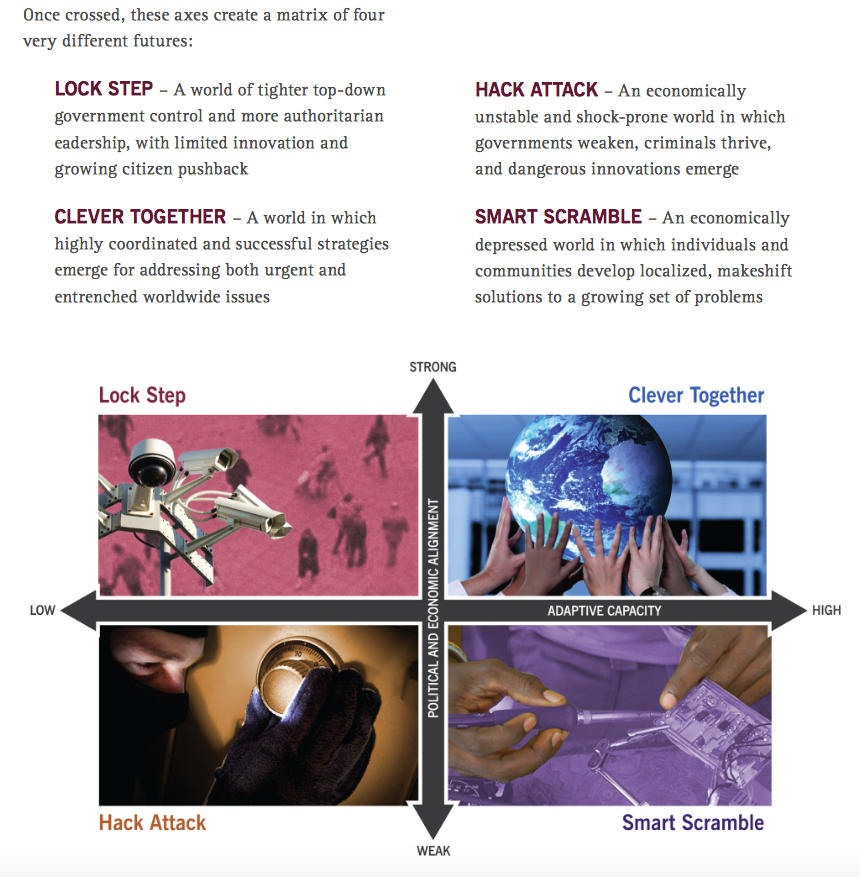
The corona pandemic, what is now called COVID-19, had been carefully planned, probably for decades, at least since the 2010 Rockefeller Report, which outlines the first phase of this global destruction that we are experiencing now “The Lockstep Scenario” (p. 18 of the 2010 Rockefeller Report).

The Event 201 was the last and final important exercise, a corona pandemic simulation and its consequences – 65 million deaths in 18 months and a devastated stock market, bankruptcies no end – was the “dry run” before the outbreak, first in China, and a few weeks later throughout the world. This event was co-sponsored by the WEF, the Bill Gates Foundation and the Johns Hopkins University School of Public Health.

A number of today’s key actors in maintaining the momentum afloat – also called the Fear Indoctrination – were also present at Event 201, such as WHO, UNICEF, the IMF, the World Bank – and representatives from various UN agencies. The UN is fully complicit in this criminal and genocidal endeavor.

It shows that the UN has no teeth; a world body created after WWII, …. “The United Nations is an international organization founded in 1945 after the Second World War by 51 countries committed to maintaining international peace and security, developing friendly relations among nations and promoting social progress, better living standards and human rights” (see this).

This just shows that that the WEF, a little NGO, has more power than the UN, and has in fact coopeted the UN and many of its agencies to follow the dictate of the elitist oligarchs, or the Dark Deep State – that stand behind the WEF.

Why do we allow it?

This Great Global Reset that the WEF predicts and plans, is of course driven by another agenda than the “Good of The World”. These self-nominated masters of the universe, some of the very same affluent people the WEF claims are the biggest risk for humanity, are now turning around and giving away their riches so that there will be a better equilibrium in the distribution of Mother Earth’s wealth, more justice, more respect for human rights, less consumerism and – an absolute protection of the environment and of unrenewable resources? – Not likely.

To the contrary, as has already been proven. The planned collapse of the world economy has created unfathomable misery by bankruptcies mostly of small and medium enterprises, to be gobbled up by large corporations – and by syphoning off what was left of the social safety nets in the Global North as well as the Global South. Another enormous shift of resources from the bottom to the top – as testified by the 434 billion dollars additional riches of US billionaires (see above) – and this does not include the sum of additional billionaire-wealth around the globe.

Having said that affluence is the biggest threat to the world, without going into any details, the WEF argues that true sustainability will only be achieved through drastic lifestyle changes” and calls “for a great reset of capitalism in the wake of the pandemic.”

An excerpt from “In the Stranglehold of the Untruth”, by Gerd Reuther, Rubikon News – (translated from German) – may put the WEF’s agenda in yet another perspective:

“A “pandemic“ of overwhelming false-positive test results, mask obligation without an increase of infection risk, Covid “mass-outbreaks” without sick people, gigantic money transfers without compensation. Corona made possible what no counter reformation or counter information was able to achieve. How many Covid-deaths did you know personally? Probably not many. In the meantime, however, almost everyone knows someone who went crazy. Societies have bypassed the planet on the way to the abyss.”

We can only speculate what the Great Reset could mean for the world’s citizens. Let’s give it a try. This is what the affluent oligarchs through their corporate, finance, pharma and military affiliation, may intend to impose on the “big masses below them”.

  • To achieve the WEF’s Great Global Reset, number one is maintaining or increasing the cadence of the ongoing false fear propaganda and lies, as described above by Gerd Reuther in Rubikon.News. This has to be a relentless effort and should not be a problem, as all western Anglo-American propaganda and news outlets and their other-languages affiliates are fully coopted.
  • Another one or more lockdowns with masks and social distancing, confinement, to further diminishing human contact through isolation; a “masked society” loses self-esteem, the fear and anxiety lower people’s immune system, making them vulnerable to all kinds of diseases, especially the mask obligation which has people breathe their own highly toxic CO2 –anything exceeding the level of 1,000 ppm CO2 is above tolerance – wearing a mask may increase inhaling CO2 to a rate of 10,000 ppm, or higher (see this).
  • Less consumerism, through extreme austerity, low-wage work, gigantic unemployment to continue, causing insecurity, anxieties and fear for survival, thus, preparing the populace’s mindset for more manipulation, more enslavement – and desperately waiting for THE VACCINE.
  • Replacing the fruit of work, namely wages for proud labor, by a universal basic income (UBI), creating a dependence on the system and demolishing human work and what’s left of self-esteem.
  • The WEF also calls for “stakeholder capitalism”. Anybody knows what it means? Google describes it as follows: “Stakeholder capitalism is a system in which corporations are oriented to serve the interests of all their stakeholders. … Under this system, a company’s purpose is to create long-term value and not to maximize profits and enhance shareholder value at the cost of other stakeholder groups.”

In other words, this would be a drastic and welcome change from the neoliberal corporate shareholder capitalism, if by “other stakeholder groups” the common consumer is meant. Highly unlikely. – More likely is that long-term benefits (profits) should accumulate more equally to shareholders, as every shareholder is also a stakeholder. But not every stakeholder is a shareholder. Consumers, common people, are left behind.

  • And finally, there is a strong drive to reduce the world population; Bill Gates is one of the key drivers and has said so openly on various occasions. One of his most flagrant admissions is his TED Talk in 2010, “Innovating to Zero”, in California, where he says nonchalantly, “if we are doing a real good job, we may be able to reduce “the world population by 10% to 15% – see this. This eugenics agenda fits the WEF agenda perfectly. Less people, fewer resources. Those that remain, can be more abundantly shared among the beautiful and powerful.

To close this essay on the WEF’s Great Global Reset, let me repeat the quote from “The Politics of Obedience” by Étienne de la Boétie: “He who thus domineers over you has only two eyes, only two hands, only one body, no more than is possessed by the least man among the infinite numbers dwelling in your cities; he has indeed nothing more than the power that you confer upon him to destroy you.”

If you’re interested in learning more old remedies, you should read The Lost Book Of Remedies.

Lost Book of Remedies pages

The physical book has 300 pages, with 3 colored pictures for every plant and for every medicine.It was written by Claude Davis, whose grandfather was one of the greatest healers in America. Claude took his grandfather’s lifelong plant journal, which he used to treat thousands of people, and adapted it into this book.

Lost Book of Remedies cover

Learn More…

Overinflated Covid Death Counts: Gunshot Wounds, Parkinson’s Disease, Car Accidents. Incorrectly Attributed to COVID-19.

When it comes to overinflated coronavirus death counts, we recently outlined how a fatal motorcycle accident in Florida was added to the state’s COVID-19 death toll. Still, no precise data shows just how overinflated death counts are on a state by state level.

We have to rely on real journalism, such as a new report via CBS12 West Palm, that made a shocking discovery about deaths being incorrectly attributed to the virus.

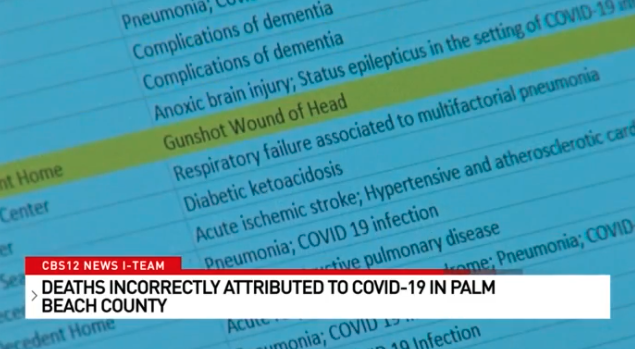
CBS12 said a 60-year old man who died from a gunshot blast to the head was labeled as a virus death. A 90-year old man who fell and died from a hip fracture was another. Even a 77-year old woman who died of Parkinson’s disease was somehow labeled a virus-related death.

Source: CBS12

CBS12’s I-Team investigated these statistical anomalies by combing through the Medical Examiner’s spreadsheet of all people who recently died of the virus in Palm Beach County.

What they found are “eight cases in which a person was counted as a COVID death, but did not have COVID listed as a cause of contributing cause of death.”

For more color on how a COVID-19 death is determined, it must be an immediate or underlying cause of death. So a gunshot to the head, a falling accident, and or Parkinson’s disease certainly doesn’t fit the defined criteria of classifying these deaths as virus-related.

Residents in South Florida are furious about the overinflated death toll:

“I think it is completely misleading,” said Rachel Eade, a Palm Beach County resident who has been researching the same issue.

“We need to remove those cases that are not COVID exclusive, and we need to be giving people that information,” said Eade, who is one of the plaintiffs suing Palm Beach County for its mask mandate.

Eade told the I-Team she’s been digging around in medical reports and said, out of the 581 deaths, only 169 deaths are listed as COVID-19 without any contributing factors.

Florida Gov. Ron DeSantis recently told Fox News that his staff has been informed about virus deaths being incorrectly reported.

DeSantis said, “I think the public, when they see the fatality figures, they want to know who died because they caught COVID.”

“If you’re just in a car accident – and we have had other instances where there is no real relationship, and it’s been counted, we want to look at that and see how pervasive that issue is as well.”

Palm Beach County Medical Examiner’s office and Operations Manager Paul Petrino told the I-Team the eight cases were, in fact, errors. He said his medical staff was in the process of relabeling those deaths.

Readers may recall, here’s Dr. Scott Jensen on Fox News in April providing more color on the situation.

If virus-related deaths are being overinflated in Florida, is the same being done in other states?

The Global Elite’s Coup Against Humanity. Fear and “Submissive Obedience”

Any serious study of the relevant scholarly literature reveals at least four possible paths to “human extinction”: nuclear war, the climate catastrophe, the deployment of 5G and biodiversity collapse.

Moreover, as I have documented previously, under cover of a virus  labeled COVID-19, the global elite is conducting a coup against humanity.

That is, by bombarding us with fear-mongering propaganda to focus our attention on the ‘virus’, the capacity of virtually all people, including activists, to devote attention to the coup, and to resist it, has been effectively eliminated.

Unfortunately, it has also meant that, despite documented evidence of  the threat to human survival, it is even more difficult than usual to get people to focus on this point.

This means that engaging people to consider the evidence for themselves is extremely difficult: it is easier to live in delusion, reassured by elite-driven narratives promulgated through education systems and the corporate media which effectively convey the message that there is either no serious cause for concern (yet) or, perhaps, that the timeframe allows for an adequate official response in due course.

In either case we, as individuals or groups, do not really need to do anything differently; going along with the elite-driven narrative, including timeframe, will ensure our survival.

This presentation PROOVES WITHOUT DOUBT that America is in for a major fight that will put you and your family in the firing line, literally… So make sure you watch this presentation while it’s still online…

Of course, as those paying attention to the evidence already know, being obedient to the elite-driven narrative is a recipe for extinction. We have already exceeded 2°C above the pre-industrial temperature, the ongoing and rapid deployment of 5G will be catastrophic, biodiversity is already collapsing (and will be seriously accelerated by the rising temperature and deployment of 5G) – for just the latest in the ongoing stream of disasters, see ‘Calls for swift action as hundreds of elephants die in Botswana’s Okavango Delta’– and, according to the Bulletin of the Atomic Scientists, nuclear war is now a greater possibility that at any previous time in human history.

In this article I would like to explain why people are so terrified of the truth and what we can do about it so that an effective response to each of these threats can be implemented (assuming, problematically, that there is enough time).

Why are Most Human Beings so Terrified?

Virtually all human beings are terrified and they are terrified for the same reason: the child-raising process that sociologists like to label ‘socialization’ should be more accurately labeled ‘terrorization’. Why? Because from the moment of a child’s birth, parents, teachers, religious leaders and adults generally regard themselves as responsible for terrorizing the child into obedience of the commands, rules, conventions and laws that define the nature of permissible behaviour in their society.

This means that provided the child responds obediently to parental (or other adult) commands, obeys any rules imposed (by the parents, teachers and religious figures in the child’s life), learns all relevant social conventions for their society and, ultimately, obeys the law, they are allowed to live, recognized as compliant citizens, in their society.

Unfortunately, from society’s viewpoint, evolutionary pressures over vast time scales have led to each human individual being given Self-will to seek out and fulfill their own unique destiny: evolutionary pressures do not predispose any individual to obey the will of another for the simple reason that obedience has no evolutionary functionality.

Consequently, it takes enormous terrorization during childhood to ensure that the child surrenders their Self-will at the alter of obedience. To achieve this outcome and largely unknowingly, parents use a large range of behaviours from the three categories of violence that I have labeled ‘visible’ violence, ‘invisible’ violence and ‘utterly invisible’ violence. See ‘Why Violence?’ and‘Fearless Psychology and Fearful Psychology: Principles and Practice’.

A common element of this terrorization is that the child is frequently threatened with, and/or actually suffers, violence for being ‘disobedient’. Of course, this violence, assuming it is even recognized as such (given that ‘invisible’ and ‘utterly invisible’ violence are just that to virtually everyone), is invariably labeled ‘punishment’ so that we can delude ourselves that our violence is not harmful. See ‘Punishment is Violent and Counterproductive’.

This means that virtually every single individual has been successfully terrorized into being submissively obedient. And, fundamentally, this obedience includes accepting the elite-driven narrative delivered by education systems and the corporate media in relation to issues crucial to human survival.

So despite our preference for believing otherwise, those individuals in our societies who survive the education system capable of thinking for themselves, or even of ‘clear thinking’, are rare. And then they must also survive (preferably by refusing to access it) the propaganda (that is, lies) presented as ‘news’ by the corporate media. Given that another outcome of being terrorized throughout childhood means that most people are very gullible, perceiving lies is a huge challenge in itself.

Of course, this powerless imperative to believe the lies we are told and to behave obediently in response is always reinforced by the fear of violence (‘punishment’), including the fear of social ostracism for resisting elite narratives, but it is also reinforced by other fears: for example, the fear that makes people feel powerless to respond in any meaningful way, the fear of changing their behaviour, and the fear of feeling out of control of their own destiny. After all, if extinction is imminent and we are to avert it, we will need to do some fundamental things – including thinking and behaving – very differently. But we are not allowed to think or behave differently, are we? That would be disobedient.

This can be readily illustrated. When a young child does not get what they need, the child will have an emotional reaction. This will always include fear, it will probably include anger and it will probably include sadness, among other feelings. However, almost invariably, parents behave in a manner intended to prevent the child from having their emotional response (and using this information in formulating the appropriate behavioural response in the circumstance). They do not listen to the child while they express their feelings. Instead, they act to make the child suppress awareness of their feelings.

At its simplest and apparently most benign, the parent might comfort the child in the misguided belief that this is helpful. But it is not, unless you want a submissively obedient child. See ‘Comforting a Baby is Violent’.

Another simple and common way in which we suppress the emotional awareness and, hence, capacity for emotional expression of a child is by giving them food or a toy to distract them from how they feel. The fundamental outcome of this act is that we unconsciously ‘teach’ the child to seek food and/or material items as substitutes for feeling and acting on how they feel. But this is absolutely disastrous.

The net result of this behaviour is that virtually all people in industrialized societies have become addicted to material consumption, and the direct (including military), structural and ecological violence that makes excessive consumption in these societies possible. All so that we can suppress how we really feel. See ‘Love Denied: The Psychology of Materialism, Violence and War’.

And, therefore, the very notion of substantially reducing consumption – a central part of any strategy for human survival by reducing greenhouse gas emissions from industrial production and transport, checking the collapse of biodiversity by halting the destruction of habitat such as rainforests, denying financial incentive to deploy technology for 5G, ending wars (and the threat of nuclear war) for resources – becomes ‘unthinkable’.

Because the fundamental imperative of materialist societies is ‘Consume!’ (so that corporations can profit). And we do not have the emotional power to disobey that imperative because deep in our unconscious remains the childhood terror of resisting the offered food or toy and insisting on expressing how we feel and behaving powerfully in accord with that. It is far simpler to just put something more in our mouth or use one of our ‘toys’. Who wants to feel scared, sad or angry instead?

In essence, the individual who has been terrorized into obedience is no longer capable of thinking for themself and then behaving in accord with their own Self-will. This means that imperatives of the global elite – mediated through its agents such as governments, education systems and the corporate media and enforced by legal systems, the police and prison cells (see ‘The Rule of Law: Unjust and Violent’) – are readily obeyed by the vast bulk of the human population.

And because the global elite is insane – see ‘The Global Elite is Insane Revisited’ – this obedience means that we are submitting to the elite coup and complying with its imperatives that are fast-tracking humanity to extinction on four separate paths, as noted above.

To reiterate: At this most critical moment in human history, when a coup is being conducted against us and four separate threats to human existence and all life on Earth require our engaged attention and powerful response, it is almost impossible to get people to even acknowledge these threats, let alone to consider the evidence and act strategically in response.

Which means that profoundly altering our approaches to parenting and education, so that we produce powerful individuals, is critical to any strategy to fight for human survival.

Conclusion

Given that submissive obedience is the primary behavioural characteristic of all ‘good citizens’, it is going to take a monumental effort to defeat the elite coup and reverse the tide. This is because most common human behaviours – from parenting to consumption habits – have been shaped to serve elite interests, and it is these behaviours that must change.

Of course, this is also why lobbying elite agents – such as governments and corporations – cannot work. Apart from the fact that they exist to serve elite interests and obey elite directives accordingly (rather than respond to grassroots pressure which they function superbly to dissipate), governments and corporations cannot meaningfully impact the crises that confront us.

That power is ours but we must use it, and deploy it strategically.

Is starting to feel like it’s every man for himself, Is possible that right now, a global crisis is upon us, Without even knowing… And the virus may not be the biggest threat, but the crisis that follows, Everyday goods that keep us alive will be gone, I’m talking, food, fresh water, medicine, clothes, fuel…

bnr

Global Destruction, The COVID-19 Lockdown: Economic and Social Impacts

Planned Destruction of World-wide Economy

What we have to realize is that the global, country-by-country destruction – happening simultaneously – is not a coincidence.

It has been planned for decades. Thousands of pages were written alone for the preparation of such documents, like the 2010 Rockefeller Report and the preparation of Event 201 in NYC on October 18, 2019, as well as “studies” for WHO to justify calling the new corona virus (SARS-2-2019 / COVID-19) a pandemic that eventually prompted a worldwide lockdown around mid-March 2020. 

To come up with these and more decision-making tools, leaders of the “deep state” and their henchmen had to sieve through volumes of countless pages and sit through dozens of secret meetings. Now, the unnamed people of the financial establishment and the Deep State have the world living – or dying? – in lockstep, precisely as predicted in the 2010 Rockefeller report (p.18, The Lockstep Scenario) (see below) and confirmed by Event 201. 

References to the 2010 Rockefeller Report and precursor drafts, as well as those that led to the “pandemic” and “lockdown” decisions were easily available only a few weeks ago. Today, the internet has been largely “cleaned” by Google, or debunked, declaring everything that points to the diabolical intentions of this “evil plan” as “fake news”.

Event 201, organized by John Hopkins with Gates and WEF consisted in a simulation exercise of the pandemic which we are living now:

“The Johns Hopkins Center for Health Security in partnership with the World Economic Forum and the Bill and Melinda Gates Foundation hosted Event 201, a high-level pandemic exercise on October 18, 2019, in New York, NY. The exercise illustrated areas where public/private partnerships will be necessary during the response to a severe pandemic in order to diminish large-scale economic and societal consequences.”

Emerging from all this were documents over documents of instructions and scenarios, on how to control humanity – reduce the population – eugenics at their best – and how the small “Deep Dark Elite” will eventually have all of us under a mask, social distancing, avoiding that we talk to each other and unite.

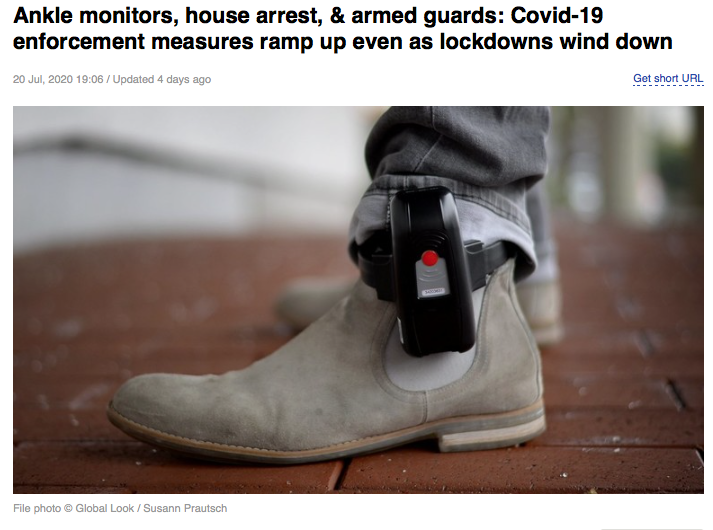
Non-compliance may be punished. Refusal to go into quarantine – meaning into isolation – will put you in certain US States under surveillance by ankle monitors

It’s fear from an invisible enemy –  a virus – that threatens our lives, so they make us believe – and divide the believers from the non-believers, and propaganda demonizes the non-believers into hate objects – getting a disparaging hate-look by masked passers-by… yes, the old divide to conquer and rule. That’s what’s happening.

Destruction of the World Economy

In the meantime, the world economy is crumbling, bankruptcies abound – and related unemployment soars into unknown dimensions – unknown in mankind’s history – by far surpassing the so far worst crisis of 1929-33. And we haven’t even seen the tip of the iceberg yet.

After six months-plus into covid, ILO (International Labor Office) reports worldwide about half a billion people unemployed or under-employed. Of that, a staggering 267 million young people (aged 15-24) are not in employment, education or training, and many more endure substandard working conditions.

In the Global South – or the so-called developing countries, 60% to 70% of the labor force is informal, no social safety net, no social benefits – no contractual obligations by employers. The people are on their own. Locked away in quarantine? – How could they, they have to look for work, earning a daily meal for themselves, and often also for their families. Famine is already rampant. And death by famine is not reported, or simply ascribed to Covid-19, ”improving” the statistics for the diabolical masters.

At the height of the 2020 and-onwards-crisis – ILO predicts up to 2 billion people – 58% of the world’s total labor force might be unemployed or underemployed (world total labor force 2019: 3.46 billion). What does that say about poverty, about famine, about misery and despair – about death by a myriad of diseases, other than Covid, but rather related to lack of nutrition and health services, despair and ultimately suicide?

Peter Koenig and Michel Chossudovsky. Dialogue on the Economic Impacts

According to the World Food Program about 9 million people die annually from famine and hunger-related causes. This figure may – and likely will – skyrocket to 1.5 to 2.0 billion famine-vulnerable people, many of whom may die. Can you imagine – up to a quarter of the world population that may perish from lack of nutrition – due to the covid hoax, or rather due to the propaganda-driven Covid fear – followed scrupulously by all the governments of the globe – which is truly no coincidence. A wanton mismanagement of a fabricated crisis – that may bring about a quantum change in our civilization.

A team of ten renowned German medical doctors and professors, virologists and immunologists, were commissioned by the German Interior Ministry last May to analyze all facets (medical, economic, social) of the Covid crisis. They concluded that the German Government grossly mismanaged the corona-virus. The medical team called it benignly a “False Alarm” (document in German). Some of the report key passages are:

  • The dangerousness of Covid-19 was overestimated: probably at no point did the danger posed by the new virus go beyond the normal level.
  • The people who die from Corona are essentially those who would statistically die this year, because they have reached the end of their lives and their weakened bodies can no longer cope with any random everyday stress (including the approximately 150 viruses currently in circulation).
  • Worldwide, within a quarter of a year, there has been no more than 250,000 deaths from Covid-19, compared to 1.5 million deaths [25,100 in Germany] during the influenza wave 2017/18.
  • The danger is obviously no greater than that of many other viruses. There is no evidence that this was more than a false alarm.
  • A reproach could go along these lines: During the Corona crisis the State has proved itself as one of the biggest producers of Fake News.

They proposed an emergency session with the German Government to take immediate correcting actions, to revamp the economy, employment and re-establish social normalcy. From what it looks like, the German Government did not respond to this sensible proposal. 

Germany is symptomatic for most governments in the Global North as well as in the Global South. They follow strict orders, from which they are not allowed to deviate, and few countries did. One of them is Sweden. The Swedes didn’t close down the country and the economy, but were especially careful with the elderly and other vulnerable groups. They didn’t do worse than other European countries. To the contrary. The Swedes feel less depressed, less despair, thus, they are healthier and their economy has not been dismantled. 

Will Sweden be able to maintain their “exceptional” concept of dealing with Covid? – Or will orders from above insist on changing their approach? – Now, what would happen if a government wants to save its economy and people and dared to not obey these orders? – What’s the extent of the pressure or threats? Or what’s the “carrot” for obeying?

The plan as it unfolds, will continue to use the media for heavy propaganda, day-in-day out, Covid is number one. There is not one newscast that does not have Covid in the headline. And that always in a scary way – so-and-so many new infections since the day before- a new record for this month. Death rates are propagated. They never talk about how many people had recovered, let alone how these statistics are made, and on what criteria a person is considered covid-infected or not. 

Every country, or even every “sub-country’ – every State in the US – has its methods, and no independent authority checks upon these methods and figures. Every so often, some medical doctors or virology scientists step out from their lockstep frame and divulge their doubts and experiences. Mostly those who don’t depend on holding on to their jobs, but to be fair, also some whose conscientiousness is inclined towards humanity rather than a corrupt system. 

After loosening of restrictions, government decisions are reversed (based on an increase of new cases which nobody checks!), reintroducing a mask obligation – threatening with stricter means, if people don’t adhere. In Spain, where after a long quarantine, restrictions were eased. People were rejoicing, dancing in the streets. Now the already foreseen punch-back comes. people have to wear masks again, in public places, in the street and even at the beach. Those who disobey risk a fine of 100 euros. A mental setback. Back into despair. 

There will be waves of loosening and tightening the covid restrictions, with always more severe controls and lesser freedoms – and all under heavy fear propaganda – it’s for the good health of civilization. Imagine, a pandemic of which more than 97% of the infected recover and were the death to infection rate is on average about 0.7%, very similar to the common flu!

The Vaccine

This will go on until a vaccine is ready – and people will be so sick and tired of this “game” -that they will voluntarily submit to the vaccine, no matter how untested and dangerous these vaccines may be. No matter that these vaccines will most likely introduce a DNA-altering protein, and come possibly laced with some kind of nano-chips that can be remote controlled and remote-manipulated. That’s the main reason for 5G electromagnetic waves, the dangers of which may be much worse than of Covid. 

DNA-altering vaccines – that’s genetically modifying the human genome. It has never been tested on humans. It is what Monsanto does to plants and food crops, makes them Genetically Modified Organisms – GMOs. GAVI, the Vaccine Alliance, created and funded by the Bill and Melinda Gates Foundation and Glaxo-Smith-Klein – one of the foremost vaccine producing pharmaceuticals, supported by WHO, are planning to GMO – “Monsanto-nize” – our genome, for the sake of better controlling humanity – not for better health, to be sure. Can you imagine what Bill Gates’ Big Money is up to? – Will you allow being monsanto-nized

Remember Bill Gates TED Talk in Southern California in February 2010, where he said, “when we are doing a real good job (referring to vaccination), we may be able to reduce the world population by 10% to 15%”

Digitalize our Lives

From that follows full digitization of our lives – a cashless society, digital money only – controlled by the banks, your health records available to whomever authority likes to know – your bank accounts vulnerable for any outside interference – digital of course. Many people, especially young people, think digital money, “so cool” – just swiping a card and the purchase is made. They have no clue of the ulterior implications of digital-only money. No cash. Your sovereign control of your money, your income, your savings – is gone.

Most people hope with the vaccine “normalcy” as they know it, or knew it, will return. It will not return. Only if people step out of the realm of fear, turn off their radios, TVs and mainstream media fear propaganda – there is a chance that people will regain control of their lives and be able to rebuild our universe as a sovereign effort of humanity – and abolish the psychotic dream of a Dark Deep State elite that is nominating itself as the rulers of a New World Order.

This is the actual plan. We can stop it. Don’t fall for the lies, don’t fall for the propaganda – especially don’t fall for the FEAR that they want to indoctrinate you with. There is NO REASON FOR FEAR. RESIST!

Rebuilding Society

Our thoughts should now concentrate not on the disease, covid, corona – or whatever you want to call this Virus of Fear, but on rebuilding our society, our community, our economy, our social fabrics – our social systems of cohesion. We are healthy. Isolation makes us sick. Living behind a mask makes us sick. Fear makes us sick. It brings desolation – and desolation makes us sick. We, mankind, have to take care of our common future. Don’t let the invisible Deep Dark State pretending taking care of you, manipulate you into their New World Order.

The strength of our health – which is at least as strong as before the onset of covid – can power our ingenuity to build a new society, one that corrects the aberration that our old civilization has slithered into over the past decades, especially since the ascent of neoliberalism. We can build a civilization of more equilibrium, of more justice, do away with unfettered capitalism, with the boundless profit-thinking, with endless consumerism, wasting resources, many of which are never renewable and gone forever. 

The Foreign Debt Machine

To restart and rebuild Covid-destroyed economies, governments have to rescue productive sectors and subsidize citizens for survival. To do so, local money, debt, is mostly used, in all countries, south or north, where rescue government interventions occur.

In the rich and industrialized north it is normal that local debt is managed locally by a nation’s sovereign monetary and economic development policies, as well as by policies guiding social safety nets- unemployment, health, pension benefits -and more. There is hardly a country in the Global North asking for an IMF “rescue package”.

In the Global South, it’s also governments that are supposed to step in with local money to rescue citizens and the national economy. It’s a sovereign internal affair, it’s a local debt, like in the north. However, in the south for some “strange reasons” the IMF and the World Bank come in with foreign money to “rescue” the countries. In other words, these governments give up their sovereign rights to manage their local debt locally. Instead they apply willingly – perhaps under pressure, to the IMF / WB for foreign loans. 

They monetize local debt into foreign debt, thereby increasing their foreign debt and creating not only a foreign exchange and foreign debt service dependence, but also accepting a number of conditions they would not be subject to, if they managed their local debt internally. The same as the rich sovereign industrialized Global North does – except for those European countries which got themselves enslaved by the Eurozone (mostly Greece and other Southern European countries), having given away their financial and economic sovereignty to the European Central Bank (ECB) and their political sovereignty to the European Commission in Brussels.   

A few months ago, the IMF set up a special Covid rescue fund of about a trillion dollars – probably higher by now, and at least 60 countries from the Global South had already applied for such “rescue packages”. These rescue operations all come with the usual strings attached – massive privatization of public assets and services, as well as concessions for exploitation of natural resources, like hydrocarbons, minerals. Most importantly, the latest semi-clandestine corporate takeover and conversion from a public good into a privately owned commodity – is WATER. Water to be privatized by western corporations, water on which all life depends. Privatization of water is the final blow to a population, especially the poor segments of a country. 

Alternatives to Foreign Debt – Use of Local / National Debt instead of Foreign Debt

Most debt resulting from the corona crisis is local debt that is created locally (the FED calls it QE – Quantitative Easing, a complex term for a simple concept, “printing new money”), by sovereign nationally owned central banks and national public banks. They are in charge of bailing out local industries, the local work force – building or rebuilding social safety nets, public health plans and more. The autonomous national government sets the lending conditions, not the IMF or the WB, nor a Wall Street-connected private bank that works for profit for its shareholders – rather than for the government it is supposedly “rescuing”.

Foreign debt is most often linked to foreign trade. Some of it may be necessary for imports of crucial goods – food, medication, spare parts and more. However, before increasing foreign debt, a country may want to use to the extent possible her foreign currency reserves.

To better control the use of foreign currencies, a sovereign central bank may introduce a temporary dual monetary system – a local currency for the local economy, and a higher-valued international currency to be used for foreign trade (and to promote import substitution) – thus, controlling the use of foreign exchange – i.e. potentially foreign debt. A good example for applying this concept is China, using the dual system until 1984. 

A simple concept to rebuild and boost the local economy is local production for local consumption, through a local public banking system with local / national money, monitored by a national autonomous central bank that works for the national economy and the wellbeing of the people – to achieve self-sufficiency. The three key pillars for national autonomy are – food, health and education. – Foreign trade to be concluded with friendly nations that share the same ideology, ALBA-style.

All of this may not be easy, and may not happen overnight. However, the only way of rebuilding an autonomous national economy – is deglobalization and de-dollarization, moving out of the reach of the dollar dominion. There is life after Covid – and especially after the fall of the dollar hegemony. 

Who Will Come to America’s Rescue? A Nation Under Internal Threat, Engulfed in an Unprecedented Crisis

USA needs help. Let’s face it: our democratic institutions aren’t working well; our president is behaving like a depraved, spiteful monarch; our police, with almost 19,000 independent units nationwide, are unmanageable; our unprecedented social and economic divides are growing; the health of our citizens is declining; new digital platforms are sources of unprecedented hate and threats; our media is so polarized, we don’t know whom to believe. (Then there’s Covid-19.)

Across the globe, wherever a nation is in crisis—by hurricane or earthquake, mounting disease or plunging poverty, military attack or teetering government— whether requested or not, others are alerted and assistance from abroad mobilized. The U.S. (as projected by American media) is in the forefront of concern for others (except those on its sanctions list— e.g. North Korea, Syria, Venezuela, Iran, Cuba, Yemen). Genuine humanitarian aid is dispatched from NGOs and private, religious and government agencies. Assistance flows in cash, in materials and advisors, observers and medical experts (along with military intelligence and troops where it’s determined to be advantageous to American policy).

Today America itself is a nation under internal threat and in dire need. Along with signs that the U.S.healthcare system and its leaders cannot control the Covid-19 disease, more examples of police brutality are exposed. Underpinning and exacerbating both ailments is political instability (although few would identify it as such).

If Americans will not admit that they’re engulfed by this unprecedented crisis, outside observers note it with growing alarm. Countries close their borders to Americans while the pandemic spirals out of control. Across the world, people are questioning the very idea of American democracy. Longtime U.S. allies are flummoxed by its unpredictable foreign policy. Even before these multiple crises emerged, commentators pondered our teetering democracy.

We’ve had flawed, embarrassing state primary elections in Georgia and Wisconsin; we had the Democratic National Committee interrupt the presidential primaries to install its preferred candidate Joe Biden. Public doubts are increasing about how November’s election can be legitimately conducted. Every week presents us with more fears about this democracy. Management of the pandemic is undermined when the CDC, one of America’s most highly regarded health agencies, is bypassed by a White House order to divert medical data to a branch of Homeland Security. Most recently we have unidentified paramilitaries circumventing state and local authorities to confront protesters, first in D.C. now in Portland, with threats of similar directives to other cities.

This slide towards greater political instability looks unstoppable.

Another country experiencing a similar crisis will surely be the object of outside assistance, or interference. There’ll be offers of economic assistance, dispatch of intelligence advisors; international peacekeepers might be sent; a U.N. Security Council resolution would be proposed.

But who will help America? Who could? In 2007 Venezuela’s Hugo Chavez donated heating oil to American families struggling through the winter months. Cuba’s offer to help early in the Covid-19 crisis was spurned, (while from its side Washington blocked Chinese assistance to Cuba, interfered with a shipment to France, and essentially commandeered a Chinese Covid-19 supplies meant for Canada).

I can think of just three states—Israel, Australia and the U.K.– who might offer assistance. Israel is a dependable training site for American police, and a highly valued intelligence service for the U.S. Australiamaintains an opaque but firm military alliance with America, readily falling in with the Pentagon’s needs. On intelligence sharing, the U.K is a solid partner. Although one wonders how much economic assistance England could offer, preoccupied with its own pandemic. Plans for new U.S-U.K. trade agreements to thwart the European Union are delayed. As for guidance from England on democracy, its parliamentary system differs markedly from U.S. federalism and few British understand America’s election processes. The White House occupant might reach out to Russia; but that would raise other problems, even among Republicans.

What about India? Historically beset by discord between two major ethnic groups, multi-cultural India might be a model. But the rise of Hindu nationalism under Modi has been fiercely uncompromising. Advice from India is out.

Maybe South Africa would step up to guide us. The U.S. backed the anti-apartheid struggle there, and South Africa’s victory established an exemplary racial reconciliation system.

Scanning the rest of Africa, the Middle East, and South America, we find few candidates who might help us.

But wait! We have billionaires, lots of them—609 out of 2,208 globally.

Billionaire Michael Bloomberg and his peer Apple’s Tim Cook responded to Governor Cuomo’s call for help during New York’s Covid-19 crisis, and George Soros promises more support for Black Americans’ struggle for justice. Some very wealthy Americans offer to pay more taxes.

The alternative to all these solutions is: people in the streets.

The Next Global Recession: Why this time it is (really) different

U.S. stocks and bonds are at all time highs in a relentless ‘melt-up’ that seems to ignore anything you can throw at it: Iran, Hong Kong or the Trump’s war on China mean nothing. It’s the longest bull run in history, surpassing its 10th year in December.

How long can this go on? …and are we at the peak yet?

Certainly, it doesn’t comfort anyone that some of the most respected investors of all times have turned to prolific writers on the subject. Ray Dalio, for one, seems to be on a march to prove everyone that we are at the precipice of an epic social meltdown.

John Templeton famously warned of the four most dangerous words in investing (“this time it’s really different”) in 1933. Since then, people couldn’t stop, but trying to come up with reasons why it is.

So is it this time? Well, it’s not impossible. Even John Templeton admits that when people say things are different, 20% of the time they are right.

It is hard to put finger on anything systemic that could cause the next recession. Instead, something much more sinister is lurking under the surface — the colossal levels of cheap money in the system. All this easy money is looking for home, being pushed into all asset classes in investors’ desperate search for yield. Markets are ‘melting up’, propped by the free money. It is sinister because we don’t control it, nor do we understand it — we don’t have a historical precedent for it.

Feeding off the historically low rates, corporate debt is up 50% from the 2008 levels. All of this debt is funded by insurers, pension funds and other institutional investors who have been forced to push their money into private markets because the rates on treasuries and other government debt are so low that they simply can’t fulfill obligations to their customers.

As a result, corporate debt is cheap, very cheap. Tesla’s $1.8 billion high-yield bond just touched its full face value again this week, meaning demand for corporate debt is surpassing all expectations again, and companies can fund their growth at near zero rates.

It is a C-suite dream come true: management is using cheap borrowed money to fund buybacks and acquisitions, further propelling market prices to all time highs. All this does, of course, increase risks of a sudden deep collapse should there be a change in rates pushing thousands of zombie companies into delinquency in what could become a self-feeding downward spiral.

But how could this happen?

There is nothing structural that could cause such a reversal. We are all hyper-alert to any signals that the next recession is coming. The 2007/08 crisis has left us with deep scars, and thanks to its cataclysmic nature, it was also a great topic in a new world dominated by the rise of social media. This near paranoia feeds through all levels of society, so that regulators and authorities feel acute need to prevent and stop any wrongdoing.

Nor does the economy show any signs of overheating. Yes, it was the longest, but also the slowest bull market in history. In FED’s chair Jerome Powell own words: “There’s nothing that’s really booming that would want to bust, … ”. For now, FED has absolutely no reason to be concerned about inflation that would force it to start hiking. Wages simply can’t pick up despite low unemployment levels. Numbers show that jobs are being added in the lower-earning groups. Better and newer technology means that same amount of work can be done with fewer people, a phenomenon that is increasingly finding its way to higher-skill jobs. There is also the argument that consumers are more clever and less demanding: the mantra of the post-2008 age is less is more.

Yes, everything seems to be ticking along just nicely. But wait a minute.

A lot of that record corporate debt we’ve mentioned above comes from private investors: private equity groups and other institutional investors. Should things really go bad, delinquent companies would fall right back to private hands. What this means in theory is that even in case of a large public default, it shouldn’t get contagious, as it would stay on private books.

But that doesn’t solve anything, does it? When WeWork failed its IPO, it fell right back to Softbank’s hands. And what did they do? Print more money (Softbank is planning to issue $3 billion loan to mend WeWork’s failure).

More importantly, WeWork’s debacle shook the market to its core, not due to its size, but because of its structural significance. Private investments in venture capital have been the primary source of gains for large investors in the post-crisis years. In the era of free money, the creeping realization that the likes of WeWork and UBER may not be worth their ballooned valuations is troublesome because they were the last bastion of superior returns.


So it’s different this time, but it is not. Crises are certain; they are inevitable like death and taxes because we are all driven by the crave to earn superior return. It is human to chase sensations. Last time it was the subprime mortgages and derivatives that no one understood; this time it is the tech sector.

We all needed some excitement after the depth of 2007/08, and the start-up economy gave us just that — the promise to create an infinitely more efficient and cleaner way of doing things, exchanging factories and steel for smartphones and abstract products.

It all went well until now. Companies like WeWork and UBER have become the religion of future, and people forgot to value them on the cold basis of profits & losses. They have freed themselves from the dryness of discounted cash flow to take the investors on a trip to forever, growing to billion-dollar valuations buoyed by private money.

Scarred by 2007/08, people are looking for the next big short; the next Collateralized Debt Obligation that could bring the market down. But there might not be one this time round. All crises are caused by some form of a market bubble; a moment when no price is too high, which eventually leads to a reversal and a downward spiral. WeWork, UBER and other utopian giants have infected markets with a profound belief that they are about to revolutionize world. Cash-burning giants with a zero cost of capital.

Their eventual (and unavoidable) collapse may prove to be systemic, dragging down the market, not because of their size (which is insignificant), but because investors will reprice the market, taking the promise of infinitely more efficient tomorrow out of the equation.

Ray Dalio’s dark prophecies may just be right: when the ‘dream companies’ (UBER, WeWork) fail to deliver on their promise, and the only way for pension funds to make good on the obligations is to chase debt, there might be a moment when investors say enough and began pulling their money out of the system, causing massive repricing and a surge in rates.

It would be impossible to time exactly when this happens, although Dalio seems to be trying to do just that — his fund is rumored to have bet $1.5B against the stock market in November.

Uncovering the Real Causes of Depression. The Antidote: “Reconnection”

We bring to the attention of our readers, this timely and incisive article by Radhika Tikku, Ph.D candidate at Queen’s University, Kingston, Ontario.

millions of people Worldwide are suffering from depression as a result of the global crisis which is affecting humanity.

The pandemic is based on fear. it’s a big lie.

People are being manipulated. They have accepted the consensus imposed upon them: economic collapse, social engineering, poverty, despair and depression.

The impact of this crisis on mental health is beyond description. The Anti-dote is “Reconnection”: Solidarity and Mass Social Action against this diabolical project.

***

Depression is a global problem that’s on the rise.

In Lost Connections, Johann Hari offers practical solutions for how to tackle it. Unfortunately, he misses the crucial point that personal sacrifice is the only way we can discover what makes us content.

Hari explores the sources behind depression and anxiety.

Knowing depression, Hari considers two main explanations for why depression occurs. Each blames the individual. One is that depression is the result of overactive imagination, or weakness of the will. The other is that depression is caused by brain malfunction. The brain’s chemistry is “off” and needs to regain equilibrium.

Hari scrutinizes both explanations. For the first, the sheer numbers suggest depression is not the effect of false consciousness, or that depressives lack fortitude. The second is not supported by science. So, Hari offers an alternative explanation.

Depression requires us to revise the way we live in the world. In fact, we should ask: What does it mean to be human?

Depression “is a normal response to abnormal life experiences”. [1] It’s like grief. Grief is human suffering that stems from loss. Grief is relational. We grieve the death of a loved one because we stand in a bi-directional relationship with them.

Death is not an abnormal life experience; however, modern culture has made it so.

We intellectually know that death occurs, but we do not live as if we ourselves will die.

We live out of joint with the world, as if we’re invincible. Thus, Hari’s alternative explanation is that depression is a social problem. Depression is the illness we contract when disconnected from sources of meaning. The disconnection is disorienting because we lose a part of ourselves. The antidote: Reconnection.

Hari offers sources from which we might draw meaning. All involve the individual changing life in substantive ways and becoming part of a community, closer to the soil. Our ancestors understood this fact better than we today.

Hari is skirting around the problem of the ego. It has practical, political consequences. Hari looks at ways to overcome depression, but he could have gone further: We have to change our relationship with ourselves. We need to talk about identity and how it negatively impacts us.

For instance, we’re not the “author” of our own stories. That slogan is false, because it doesn’t account for the way the world actually is. It cloisters us from the very freedom and choice we so desperately desire. Identity functions like a map; it aids in the navigation of familiar and uncharted territory.

But there’s no use clinging to a moth-eaten map, where a portion of the legend and other key elements are missing. Ancient scholars understood that a person’s identity can be self-imprisoning, which is why they advocated for the renunciation of the self. Thinking yourself the hero of your life—just like thinking yourself the victim of all that’s happened to you—can obscure real knowledge about yourself.

Hari doesn’t go that far. He should have touched on renunciation of the self and how to go about it.

Renunciation of self has three dimensions. First, it requires a relentless on-going engagement between self and the world. This includes ideas. Maps are always subject to revision or wholesale rejection given new conventions or interests.

For example, Hari’s case of the reconstitution of Kotti, the tenement housing in Berlin, leaves this out. When people create a neighbourhood to force recognition of prohibitive rental increases, Kotti’s struggle was not over when the German government made concessions. But living in community, if it is really about connection, is constant negotiation toward rejuvenation of the group and ideas presupposed in one’s identity as a group. Otherwise, old ideas remain in place, obstructing real constructive change.

There has to be a constant forsaking if the objective is really to discover what it means to be human because we live in a dehumanizing world, the full nature of which is not always evident.

It’s a risky prospect.

Second, renunciation involves personal sacrifice. You have to actually give something of value up to discover new ways of living and being in the world. Sacrifice is not valued, culturally. The global pandemic forces us to do without that which we believed to be essential. New social conditions compel us to decide what is essential and give up the rest.

Third, this matters to truth. Just because map-makers reconfigure maps in light of new conventions and interests doesn’t mean anything goes. Maps are accurate or they are not; they either aid in the wayfinding experience, or they don’t. Similarly, personal sacrifice can lead us to living life more truthfully, thriving instead of merely existing.

Hari’s conclusion about a return to community and to nature to heal ourselves, to become self-possessed in ways that were previously impossible, shouldn’t be surprising but it is. It has consequences that challenge other beliefs, some cherished.

There’s more to be said though because we have to confront ourselves to get past ourselves. The ancients understood this point on a much deeper level than us.

What Lies Ahead: Permanent Job Losses, Poverty in America, Financial and Political Instability

The US economy at mid-year 2020 is at a critical juncture. What happens in the next three months will likely determine whether the current Great Recession 2.0 continues to follow a W-shape trajectory—or drifts over an economic precipice into an economic depression. With prompt and sufficient fiscal stimulus targeting US households, minimal political instability before the November 2020 elections, and no financial instability event, it may be contained. No worse than a prolonged W-shape recovery will occur. But should the fiscal stimulus be minimal (and poorly composed), should political instability grow significantly worse, and a major financial instability event erupt in the US (or globally), then it is highly likely a descent to a bona fide economic depression will occur.

The prognosis for a swift economic recovery is not all that positive. Multiple forces are at work that strongly suggest the early summer economic ‘rebound’ will prove temporary and that a further decline in jobs, consumption, investment, and the economy is on the horizon.

A Second Wave of Permanent Job Losses

Through mid-June to mid-July, the COVID-19 infection rate, hospitalization rate, and soon the death rate, have all begun to escalate once again. Daily infections consistently now exceed 60,000 cases—i.e. more than twice that of the earlier worst month of April 2020. Consequently, states are beginning to order a return to more sheltering in place and shutdowns of business, especially retail, travel, and entertainment services. The direction of events cannot but hamper any initial rebound of the economy, let alone generate a sustained economic recovery.

Exacerbating conditions, a second wave of job layoffs is clearly now emerging—and not just due to economic shutdowns related to the resurging virus.

This presentation PROOVES WITHOUT DOUBT that America is in for a major fight that will put you and your family in the firing line, literally… So make sure you watch this presentation while it’s still online…

Reopening of the US economy in June resulted in 4.8 million jobs restored for that month, according to the US Labor Department. That number included, however, no fewer than 3 million service jobs in restaurants, hospitality, and retail establishments. These are the occupations that are now being impacted again with layoffs, as States retrench once more due to the virus resurgence underway. But there’s a new development as well: A second jobless wave is now emerging in addition to the renewed layoffs due to shutdowns not only of the resumed service and retail occupations, but reflecting longer term and even permanent job layoffs across various industries.

Household consumption patterns have changed fundamentally and permanently in a number of ways due to both the virus effect and the depth of the current recession. Many consumers will not be returning soon to travel, to shopping at malls, to restaurant services, to mass entertainment or to sport events at the levels they had, pre-virus.

In response, large corporations in these sectors have begun to announce job layoffs by the thousands. Two large US airlines—United and American—have announced their intention to lay off 36,000 and 20,000, respectively, including flight attendants, ground crews, and even pilots. Boeing has announced a cut of 16,000, and Uber in just its latest announcement, a cut of 3,000. Big box retail companies like JCPenneys, Nieman Marcus, Lord & Taylor, and others are closing hundreds of stores with a similar impact on what were formerly thousands of permanent jobs. Oil & gas fracking companies like Cheasepeake and 200 other frackers now defaulting on their debt are laying off tens of thousands more. Trucking companies like YRC Worldwide, the Hertz car rental company, clothing & apparel sellers like Brooks Brothers, small-medium independent restaurant and hotel chains like Krystal, Craftworks—all are implementing, or announcing permanent layoffs by the thousands as well.

Reflecting this, since mid-June new unemployment benefit claims have continued to rise weekly at a rate of more than 2 million—with about 1.3 million receiving regular state unemployment benefits plus another 1 million independent contractors, gig workers, self-employed receiving the special federal government unemployment benefits. The latter group’s numbers are rising rapidly since mid-June.

As of mid-July no fewer than 33 million are receiving unemployment benefits, with another 6 million having dropped out of the labor force altogether and no longer even being counted as unemployed. Unemployment therefore remains at what will likely be a chronically high number, at around 40 million—with about 25% of the US labor force unemployed—as renewed service-retail sector layoffs, plus new permanent layoffs, both loom on the horizon.

Added to the growing problem of renewed service layoffs and the 2nd wave of permanent layoffs in the private sector is the growing likelihood of significant layoffs in the public sector, as states and cities facing massive budget deficits are forced to lay off several millions of the roughly 22 million public sector workers in the US. This potential public employee layoff wave will accelerate and occur sooner, should Congress in summer 2020 fail to bail out the states and cities whose budgets have been severely impacted by the collapse of tax revenues while facing escalating costs of dealing with the health crisis. Estimates as of last May are that the states and cities will need $969 billion in bailout funding this summer—roughly two-thirds for the states and the rest for cities and local governments.

The resurgence of layoffs from all these sources is a sure indicator that the economy’s rebound—let alone recovery—is in trouble. Rising joblessness means less wage income for households and therefore less consumption and, given that consumption is 70% of the economy, a slowing of the rebound and recovery. Problems in consumption in turn mean business investment suffers as well, further slowing the economy and recovery. Exacerbating the decline in personal income devoted to consumption due to unemployment is the evidence that even those fortunate enough to return to work after spring 2020’s economic shutdown are doing so increasingly as part time employed—which means less wage income for consumption compared to the pre-COVID period before March 2020.

Overlaid on these negative prospects for employment, consumption, business investment is the intensification of economic crisis-related problems.

Rent Evictions, Child Care & Education Chaos

There is an imminent crisis in rents affecting tens of millions. At the peak in April, it is estimated that roughly one-third of the 110 million renters in the US economy had stopped making rent payments due to the COVID-related shutdowns of the economy. The CARES ACT, passed in March, provided forbearance on rental payments, although perhaps as many as 20 states failed to enforce it. That forbearance directive expires at the end of July, with as many as 23 million rent evictions projected in coming months. A major housing crisis is thus brewing, as well as the second wave of job layoffs.

A combined education-child care crisis is about to occur almost simultaneously. The K-12 public education system is approaching chaos, as school districts plan to introduce remote learning on a major scale in order to deal with the renewed COVID-19 infection and hospitalization wave. The heart of the crisis is that tens of millions of US working class families dependent on two paychecks to survive economically cannot afford to accommodate school district practices for remote learning—especially for young children in the K-6 grade levels. Even if such families could afford to pay for expensive child care, the current US child care system is far from being able to accommodate them. Many minority and working class households, moreover, lack the computers and networking equipment, or even the requisite skills to set it up, to enable their children participate in remote learning.

The Lost Ways is a far–reaching book with chapters ranging from simple things like making tasty bark-bread-like people did when there was no food-to building a traditional backyard smokehouse… and many, many, many more!

Several forces are driving the shift to remote learning: school district fears of liability actions by parents if children become ill, the significant cost of ensuring disinfected classrooms, the lack of classroom space to allow distance learning on site, and the growing concern of teachers regarding their own exposure to infection. At least 1.5 million public school teachers are over age 50 and have health conditions that put them at greater risk of serious infection, should they attend closed-in classroom environments.

The child care plus K-12 education crisis will likely erupt within months on a major scale. Chaos in education is around the corner.

This fall, higher education—colleges and universities—will also experience chaos of their own kind. While distance learning will not be as serious an implementation problem as it will in K-12 levels, costs from the pandemic will force many smaller, private colleges into bankruptcy, consolidation or closure. Public colleges’ funding problems will require them to sharply reduce available services. Remote education will create a two-tier system of higher education—educational services delivered remotely and those of a more traditional nature on campus; or a hybrid of both.

However, demand for higher education services will likely decline sharply in the short term, during which higher education will experience a devastating decrease in tuition and other sources of college revenues. Some estimates show a third of freshmen plan to take what’s called a ‘gap year’: i.e. accept entrance but not attend for a year. That’s a massive revenue loss. Some estimates foresee a 15%-30% decline in new student attendance, with another 5%-10% decline in transfer students, and a similar decline of 5%-10% in continuing students. In addition, the attendance by international students, the ‘cash cow’ for most colleges, will also decline sharply due to the Trump administration’s new rules.

Still other developments will sharply reduce college revenues. Students forced to attend classes via remote learning will demand lower tuition. One can expect a wave of legal suits as students seek to ‘claw back’ full tuition expenses. Other secondary sources of college revenues—from fees, on-campus room and board, endowment earnings and gifts, and sports revenues—also spell a looming revenue crunch.

A wave of college consolidations and closures is inevitable. And with student loan debt at $1.6 trillion it is unlikely that the federal government will introduce new aid through that channel. Nor will States increase their subsidization of public colleges, given the severe state budget deficits on the horizon.

In short, the economic crisis is about to assume more socio-economic dimensions and character: rent, child-care, education chaos will soon overlay the continuing unemployment problem and worsening recession. Social and political discontent, frustration, and anxiety are almost certainly to rise in turn in coming months as a consequence.

Global Recession & Sovereign Debt Defaults

The weakness of the global economy is yet another factor likely to ensure the US economy’s W-shape trajectory. As noted previously, with 90% of other countries in recession, global demand for US exports will remain weak or declining. In addition, global supply chains have also been severely disrupted by the health crisis, or even broken, and will not be restored soon. The global economy is suffering from deep problems of both demand and supply. This too is a unique historical event. Never before have demand and supply problems occurred congruently. Together, they increase the potential for a global depression.

Commodity producing economies have been hard hit, especially oil and metal producing countries. Many were in a recession well before the COVID health crisis. Global trade in general had stagnated, registering little to no growth in 2019, for the first time since modern records were kept. Many countries had over-extended their borrowing, expanding their sovereign debt loads during the last decade. This was money capital borrowed largely from western banks and capital markets (i.e. shadow banks).

Now, with global trade flat and declining, and prices for their export goods deflating in price as well, these debt-extended countries cannot earn sufficient income from exports in order to pay the principal and interest on their debt. As a result, several countries in the worst shape may soon default on their debt payment to western banks, hedge funds, private equity firms, and so on. Debt defaults potentially mean the same western financial institutions that loaned the funds now experience financial crises in turn. In such a manner, financial instability events abroad are often transmitted to the domestic US economy through its banking system. It would not be the first time, moreover, that foreign bank crashes have spilled over the US and rest of the world economy and in the process significantly exacerbated a recession already underway.

Theoretically, countries experiencing severe sovereign debt crises could borrow from the International Monetary Fund. However, the IMF has nowhere near the funds to accommodate multiple large sovereign defaults that occur simultaneously. Nor is it likely that the US and Europe will increase the IMF’s funding to enable it to do so. Once it becomes clear the IMF cannot handle a crisis of such potential dimensions, the global capitalist economy will slip even further toward global depression.

The further deterioration now already occurring in economic relations between the US and China may also potentially impact the Great Recession in the US, and ensure its continued W-Shape recovery. Trump’s trade pact with China signed December 2019 has proven thus far a colossal failure. The president declared at the deal’s signing it would mean $150 billion in China purchases of US goods in 2020—especially farm products, oil & gas, and manufactured goods. At mid-year, China has purchased only $5 billion of the agreed $40 billion in farm products and only $14 billion of $85 billion in US manufactured goods. Trump’s promised $150 billion was never agreed to by China, even before the Covid pandemic struck the US economy in 2020. China never agreed to a dollar value of purchases of US exports, but announced it would purchase based on conditions in 2020-21. Trump’s $150 billion was typical Trump misrepresentation of a deal never made. At best China would purchase perhaps $40 billion in agricultural goods—i.e. about the level of it purchases before Trump launched a trade war with it in March 2018. Failure to deliver his exaggerated public promise in 2020 Trump turned on on China and embraced further his anti-China hard line advisors on trade and other matters. The former ‘trade war’ with China will likely transform now, in the wake of Covid, into a broader economic war with China. Furthermore, the deterioration of relations with China, set in motion by the current recession and the collapse of global trade, shows signs of spilling over to other political and even military affairs.

Permanent Industry Transformations

The COVID health crisis is accelerating the transformation of entire industries and sectors of the economy, US and global. As noted above, household consumption patterns are already changing fundamentally and will continue as changed even after the health crisis passes. Entire industries will shrink as a consequence. Company consolidations and downsizing are inevitable in airlines, cruise lines, and even public land transport. So too will companies fail, consolidate and restructure in the hospitality, leisure and hotel industries, in mall-based retail establishments, inside entertainment (movies, casinos, etc.) to name but the obvious. Sports and public entertainment companies are struggling to redefine their business models and how they bring their ‘product’ to the public for consumption. Even education—public and private—is undergoing a radical shift. Not so obvious is similar fundamental change in oil & energy industries, and later as well in manufacturing as supply chains are slowly returned to the US economy.

Not only will these changes significantly (and often negatively) impact employment levels and wage incomes, but business practices as well. Already businesses are instituting new cost cutting practices under the pressure of the health crisis and shutdowns. These practices will become permanent. And since much of the practices and cost cutting will focus on workers’ pay and benefits, more of what economists call ‘long term structural unemployment’ will result—in addition to the current ‘cyclical unemployment’ occurring due to the current recession.

An historic consequence of the current Great Recession precipitated by the COVID-19 health crisis is the accelerating introduction underway of what some call the Artificial Intelligence revolution. AI is about cost-cutting. It’s about new data accumulation, data processing and statistical evaluation, to allow software machines to make decisions previously made by human beings. AI will eliminate millions of low level decision-making by workers in both services and manufacturing. A 2017 report by the business consulting firm, McKinsey, predicted no less than 30% of all workers’ occupations will be severely impacted by AI by the end of the present decade. 30% of jobs will either disappear or have their hours reduced significantly. That means less wage income and less consumption still.

The important linkage to the current Great Recession 2.0 is that the introduction of AI by businesses will now speed up. What McKinsey formerly predicted for the late 2020s decade will now take place by mid-decade. The economic consequences for the next generation of US workers, the late Millennials and the GenZers will be serious, to say the least. After decades of the permeation of low pay, low benefits ‘contingent’ part time and temp jobs since the 1990s, after the impact of the 2008-09 crash and aftermath on employment, after the acceleration of ‘gig’ jobs with the Uberization of the capitalist economy since 2010, and after the even more serious negative economic effects of the current Great Recession 2.0, the tens of millions of US workers entering the labor force today and in coming years will have to face the transformation of another 30% of all occupations. The future does not portend very well for the 70 million millennials and GenZers. US neoliberal economic policies and the Great Recession 2.0 is accelerating the long term structural unemployment crisis of both the US and the global capitalist economy.

Return of Fiscal Austerity

The US federal budget deficit under Trump averaged more than a trillion dollars annually during his first three years in office. The federal national debt at the end of 2019 was $22.8 trillion. As of July 2020 it has risen to $26.5 trillion—and rising. Earlier projections in March were that it would increase by $3.7 trillion in 2020. That has already been exceeded. So, too, will projections for 2021, or another $2.1 trillion. The deficit and debt will likely rise to more than $4 trillion in this fiscal year and another $3 trillion in 2021. That means the current national debt within 18 months will reach $30 trillion. And that’s not counting the debt level rise for state and local governments, already $3 trillion; nor the debt carried on the US central bank, the Federal Reserve, balance sheet which is scheduled to rise another $3 trillion at minimum.

The point of presenting these statistics is that the US elites, sooner or later, will introduce a major austerity program. It will likely come later in 2021. And it will make little difference whether the administration that time is headed by Democrats or Republicans. It will come and it will target social security, Medicare, Medicaid, Obamacare, education, housing, transport and other social programs.

A The first Great Recession provides a historical precedent. Obama’s recovery program in January 2009 provided for $787 billion in stimulus. But the joint Republican-Democrat austerity agreement introduced in August 2011 took back nearly twice that stimulus, or $1.5 trillion, in 2011-13. That austerity contributed significantly to the W-shape recovery from the 2008-09 economic crash and contraction—i.e. the first Great Recession. With the current deficit surge of $6 trillion to date, likely to increase to $9 to $10 trillion, the US economic elites will no doubt pursue a new austerity regime at some point within the next few years. That austerity will, like its predecessor, ensure at best a W-shape recovery typical of Great Recessions. At worst, it may prove the final event that pushes the US economy into another Great Depression.

Most people don’t realize that things are going to get worse than this…Much worse! The United States is on the verge of a national crisis that could mean the end of clean, cheap water.

Financial Instability

Those who deny that the US and global economy have already entered a second Great Recession offer the argument that the 2008-09 crash and recession was caused by the banking and financial crash of 2008-09, and therefore, since there has not yet been a financial crash, the economy at present is not in another Great Recession. But they are wrong.

Great Recessions are always associated with a financial crisis, but that crisis need not precede the deep contraction of the real, non-financial economy. The COVID-19 pandemic has played the role of a financial crash in driving the real economy into a contraction that is both quantitatively and qualitatively worse than a ‘normal’ recession. Furthermore, a subsequent banking system-financial crash is not impossible in the coming months, although not yet likely in 2020.

The preconditions for a financial crisis are in development. It won’t be precipitated by a residential mortgage crisis, as in 2007-08. But there are several potential candidates for precipitating a financial crash once again. Here are just a few:

  • The commercial property sector in the US is in deep trouble. Commercial property includes malls, office buildings, hotels, resorts, factories, and multiple tenant apartment complexes. Many incurred deep debt obligations as they expanded after 2010 or just kept operating by accruing more high cost debt when they were unprofitable. Today they are unable to continue servicing (i.e. paying principal and interest) on their excessive debt load. Many have begun the process of default and chapter 11 bankruptcy reorganization. Banks and investors hold much of the commercial property debt that will never be repaid. Excess derivatives (credit default swaps) have been written on the debt. A debt crisis and wave of defaults and bankruptcies in 2020-21 in the commercial property sector could easily precipitate a subprime mortgage-like debt crisis as occurred in 2008-09. And derivatives obligations could transmit the crisis throughout the banking system—as it did in 2009. Regional and small community banks in the US are particularly vulnerable.
  • The oil and gas fracking industry, where junk bond and leverage loan debt had already risen to unstable levels by the advent of the COVID crisis. The collapse of world oil and gas prices—which began before the COVID-19 impact and continues—will render drillers and others unable to generate the income with which to service their debt. Already more than 200 companies in this sector are in default and bankruptcy proceedings. Again, regional banks that financed much of the expansion of fracking in Texas, the Dakotas, and Pennsylvania will be impacted severely by the defaults. Their financial instability could easily spread to other sectors of banking and finance in the US.
  • State and local governments, should Congress fail to appropriate sufficient bailout funding in its next round of fiscal spending in July 2020. State and local governments are capable of default and bankruptcy—unlike the Federal government, which is not. The US has a long history of state defaults associated with the onset of Great Depressions. This time around, state financial instability will quickly spill over to public pension funds, and from public to private pensions, and from there to the municipal bond markets with which state and local governments raise revenue by borrowing to fund deficits.
  • Global sovereign debt markets, as previously noted. Defaults on massive debt accumulated since 2010 by many countries could result in serious contagion effects on the private banking systems of the advanced economies, including the US, Europe, and Japan. Should the IMF fail to contain a chain of sovereign debt crises that could follow in the wake of the current Great Recession, a chain reaction of defaults across emerging market economies in particular has the potential to precipitate a global financial crisis.

History shows that financial crises often originate from unsuspected corners of the economy. The above candidates are the ‘known unknowns’. There may also lurk in the bowels of the capitalist global financial system still more ‘unknown unknowns’—i.e. what are sometimes called ‘black swan’ events.

Political Instability

The US and other countries are on new ground in terms of potential political instability. The piecemeal curtailment of democratic and civil rights has been progressing at least since the mid- 1990s. In the 21st century it has been accelerating, both in the US and across the globe. Recent years have seen a growing public confrontation between contending wings of the capitalist elites and their political operatives. Institutions of even limited capitalist democracy are under attack and atrophying. And now political instability is growing as well at both the institutional and grass roots levels. One should not underestimate the potential for even more intense political confrontation among elites, or between segments of the US population itself, from having a negative impact on the current economic crisis and 2nd Great Recession. A Trump ‘October Surprise’ or a November 2020 constitutional crisis are no longer beyond the realm of the possible, but even likely.

The expectations of both households and business may serve as transmission mechanisms propagating political instability into more economic and financial instability. Political instability has the effect of freezing up business investment and therefore employment recovery. It has the further effect of causing households to hoard what income they have and raise the savings rate—at the expense of consumption. It also leads to government inaction on the policy necessary to provide stimulus for recovery.

On a global front, political instability may even assume a global dimension. History in general, and US history in particular, reveals that US presidents seek to divert public attention from domestic economic and social problems by provoking foreign wars. Targets for US attack, in the short term, are Iran and Venezuela—especially the latter, which is more susceptible to US military action. But tomorrow, in 2021 and after, it could well be Russia (Ukraine or Baltics US provocations), North Korea (a US attack on its nuclear facilities) or China (a US naval confrontation in the South China sea)—irrespective of the unlikely success of such ventures.

Like another financial-banking crash, a major political instability event—domestic or foreign—could easily send an already weak US economy struggling in the midst of a Great Recession into the abyss of the first Great Depression of the 21st century.

If you’re interested in learning more old remedies, you should read The Lost Book Of Remedies.

Lost Book of Remedies pages

The physical book has 300 pages, with 3 colored pictures for every plant and for every medicine.It was written by Claude Davis, whose grandfather was one of the greatest healers in America. Claude took his grandfather’s lifelong plant journal, which he used to treat thousands of people, and adapted it into this book.

Lost Book of Remedies cover

Learn More…

Building Power to Win Is the Revolutionary Approach to “Bourgeois Electoralism”

We must make clear that it is imperialism that degrades and destroys the earth, makes water a commodity, food a luxury, education an impossibility, and health care a distant dream.

The following is excerpted from a presentation by Ajamu Baraka to a national webinar Electoral School of the Black Is Back Coalition for Social Justice, Peace and Reparations, June 13 and 14.

***

The Context of Struggle:

The great African revolutionary, Amilcar Cabral, reminded us that without revolutionary theory there can be no revolution.

His reminder was not a call for abstract theorizing, quite the contrary. What he meant was that one cannot  advance in practice unless that practice is guided by the most advanced understanding of the material and ideological conditions that revolutionary forces face.

Over the next two days we will ground ourselves in our particular realities as they relate to our strategic and tactical engagement with bourgeois electoral system in the United States.

Let’s begin:

The ongoing and current capitalist crisis has created the most serious crisis of legitimacy since the collapse of the capitalist economy during the years referred to as the Great Depression.

The economic collapse comes on the heels of the deep crisis of the economy that occurred in 2007-8. With the economic instability and the increasing economic competition among capitalist states, divisions have emerged among the nations that those of us in BAP refer to as the U.S./EU/NATO Axis of Domination.

The U.S. has responded by moving toward a more confrontational posture, not only with its allies in Europe. It has also elevated China and Russia as national security threats.

Domestically, the African working class never recovered from the collapse of 2007-8. The continued restructuring of the U.S. economy to a low-wage economy has resulted in the African working class being relegated to the lower rungs of the labor force joining undocumented migrants, immigrants, and other colonized workers.

We are now seeing with the economy the genocidal implications of economic conditions, in which young Black workers have more value as human generators of profit locked up in prisons than as participants in the economy as low-wage workers. This reality is one of the factors driving the obscene phenomenon of Black and Brown mass incarceration in the largest prison system on the planet.

Astronomical youth unemployment, millions of Africans without health care, poisoned environments, and crumbling schools reflect the objective conditions that, with COVID-19, are ravaging the Black communities.

This is the colonial/capitalist system in its neoliberal stage. And that was before the coronavirus pandemic!

The Pandemic pulled the ideological curtain from the system and exposed the brutal realities of a rapacious system of greed, human exploitation and degradation, social insecurity, corruption, and the normalization of coercive state violence.

Bipartisan support for neoliberal capitalist policies over last four decades revealed the devastating impacts of neoliberal policies – the closing of public healthcare facilities, including hospitals as giant for-profit hospital chains consolidated; millions, disproportionately Africans, living precarious lives at the bottom of the labor markets and as gig workers with no benefits, no sick leave, no vacation, no security when ordered to shutter in place by capitalist state because the privatization of healthcare resulted in a healthcare system unable to respond to a national healthcare crisis.

Hundreds of Africans are dying unnecessarily from the virus because of conditions of colonial oppression, which amounts to state-sanctioned murder!

So, the murders of Floyd, Breonna Taylor, Ahmaud Aubrey and the phenomenon of vicious killer cops are just the tip of the iceberg

But because there was no video of grandma, alone and shoveled into a corner of the hospital taking her last breath on a ventilator, along with all of the other thousands of Africans who are unnecessarily dying from COVID-19, it took the video of George Floyd to bring the people out of their houses and into the streets.

This is context for the current Black is Back election school as we approach the next round of bourgeois elections. This context informs the ideological, political, and economic issues of the bourgeois electoral arena, and how we see and approach the electoral system.

The Context Determines the Strategy: 

Let me share a few points that I believe must inform how we see and engage the electoral arena in a way that develops and advances our forces.

1. There can be no ideological confusion – we must be clear in language that cannot be co-opted or commodified by the state or its associated institutions like liberal funders. So, we must state in unequivocal language that it is the Western colonial/capitalist imperialist system, now led by the U.S., that is responsible for the billions of human beings living in poverty. It is imperialism that degrades and destroys the earth, that makes water a commodity, food a luxury, education an impossibility, and health care a distant dream. It is the rapacious greed and absolute disregard for human life by imperialism that drives the arms trade, turns human incarceration into a profitable enterprise, and transforms millions into migrants and refugees because of war and economic plunder. This parasitic imperialist domination would be impossible without imperialism’s core instrument of enforcement and control – state violence. Beginning with the European invasion of the Americas’ in 1492 to this very moment, previously unimaginable brutality and systematic violence was used to enslave, commit genocide, steal lands, despoil cultures and assault the earth, all in the service of what became the Pan-European colonial/capitalist white supremacist patriarchal project. When you start from that foundation, not only are you clear but everyone that you engage with will be clear where you stand.

2. The struggle is for power not reform. We make demands against the state and the system, but it is clear that those demands are in context of a program for winning power. Demands are strategic – participation in electoral system must be seen as an aspect of the process of building dual and contending power. The BIB 19-point program  represents a useful roadmap for building and shifting power to the people.

3. The entry point for participating in electoral process must be through organization. Reject candidate centered politics. Engagement with electoral system by progressive forces must be informed by a collective power-building strategy that is part of a broader strategy for building independent popular power. Individualistic, candidate-centered politics lacks accountability and is inherently corruptible.

Issue selection – focus on issues that if won will reflect a significant shift in power to the people. Defund the police – questionable, but if linked to community control of the police, stopping Israeli training of police, cutting the military budget and transferring money to the people; and electoral proportional representation represent demands that can’t be easily co-opted by the state.

4. Focus on local races – county commissions, city councils, school board, mayors. The emphasis on the local is connected to what I see as the inevitable disintegration of the U.S. state. As a settler colonial state, the U.S. is, and has always been, a fragile and inauthentic state. That is precisely why a civil war was fought just 70 years after its inception as a constitutional republic in 1791.

We remember the importance of having some degree of local control with the Katrina crisis, where the surrounding white municipalities used their local power to prevent Black people, escaping from the hurricane, to enter their communities. And we watched how regional coalitions were formed during COVID-19 crisis as the Federal Government failed to provide national leadership.

As national and state power become increasingly unable to hold on to a centralized power and there is generalized descent into chaos, having some degree of local control of the state apparatus will be especially important.

In closing.

We are facing some difficult times, but we have faced difficult times before. As we ground ourselves over these next two days during our electoral school, we acknowledge that we are an African people and we are at war! We did not ask for this war – and it has been a one-sided war so far – but we do not intent for that situation to last that long because we do not intend to lose. We understand that we must win this war – for ourselves and for global humanity!

All Power to the People

No Compromise, No Retreat!

This Pandemic Will Subject Our Political System, Economy, And Society to a Set Of Stress Tests Into The Distant Future

The American world that Covid-19 reveals.

The Severe Acute Respiratory Syndrome (SARS-CoV-2) virus, which causes Covid-19, seemed to emerge from deepest history, from the Black Death of the 14th century and the “Spanish Flu” of 1918. In just months, it has infected more than 1.5 million people and claimed more than 88,000 lives. The virus continues to spread almost everywhere. In no time at all, it’s shattered the global economy, sent it tumbling toward a deep recession (possibly even a depression), and left much of a planet locked indoors. Think of it as a gigantic stress test.

Doctors use stress tests to assess the physical fitness of patients. Governments use them to see whether banks have enough cash in reserve to honor their obligations to depositors and creditors in economic crises. The International Monetary Fund conducts stress tests on national financial systems. Now, like several other countries, notably Italy and Spain, the United States faces a different, far tougher stress test imposed by Covid-19. The early results are alarming.

Since the first infection in the U.S. came to light in the state of Washington on January 20th, the disease has spread across the country at a furious pace. Hospitals, especially in New York City, have been deluged and are already at the breaking point. And things will get worse — and not just in New York. Yet the most basic necessities — protective masks, gowns, rubber gloves, and ventilators — are so scarce that they are being reused, further increasing the risk to healthcare workers, some of whom have already contracted Covid-19 from patients. The experiences of China, Italy, and other countries suggest that the disease will take the lives of many of these brave people; indeed, some here have already paid the ultimate price.

And this pandemic will subject our political system, economy, and society to a set of stress tests into the distant future.

The “Wartime President”

By mid-January, the news from China made it obvious that the virus would spread across borders and soon reach the United States. The sheer volume of travel between the two countries should have made that reality all too obvious. Nearly three million Chinese visitors came to this country in 2018 and 2.5 million Americans, counting only tourists, traveled to China. In fact, we now know that, in the weeks after Covid-19 was disclosed in Wuhan, China, more than 430,000 people flew here from that country, thousands of them from Wuhan itself — and this continued even after Donald Trump put his much-vaunted travel measures in place. (“I do think we were very early, but I also think that we were very smart, because we stopped China,” he nonetheless claimed.)

In addition, President Trump and his team remained unruffled, never mind that the country wasn’t remotely prepared for what was clearly coming. Despite secret intelligence reports as early as January warning that Chinese leaders were understating the coronavirus threat’s severity, the administration failed to develop any kind of emergency plan to prepare for the pandemic.

That proved to be a monumental blunder. China confirmed its first coronavirus fatality on January 11th. An infection was first reported in Washington state barely a week later. More than a month after that, at a February 26th press conference, President Trump nonetheless dismissed the seriousness of the disease, noting that seasonal flu kills as many as 69,000 in the U.S. annually. He failed to mention that the virus may have a fatality rate up to 10 times higher than the flu and that a Covid-19 vaccine was nowhere in sight. Only 15 infections had been reported here, he claimed breezily, and “when you have fifteen people, and the 15 within a couple of days is going to be down to close to zero, that’s a pretty good job we’ve done.”

Close to zero? By mid-March, infections had risen to 1,200 (which soon would prove a drop in the pandemic bucket as “America First” acquired a new meaning). Yet the president called that number inconsequential. Presidential Medal of Freedom recipient Rush Limbaugh did him one better: “Yeah, I’m dead right on this. The coronavirus is the common cold, folks.” He accused the media of exaggerating “in an effort to get Trump.”

True to form, the president was quick to personalize the pandemic. He preened about how scientific experts marveled at his grasp of the complex details of virology and the way supposedly awestruck doctors asked, “How do you know so much?” The president’s self-effacing answer: natural ability, possibly even a genetically-derived aptitude, thanks to “a great, super-genius uncle” who’d worked at MIT.

He declared himself a “wartime president,” despite the lack of any evident strategy to vanquish this particular foe. His response when governors of hard-hit states began pleading for urgent help from the federal government: “Respirators, ventilators, all of the equipment — try getting it yourselves.” The governors, he groused, were “complainers,” who should have stockpiled what they were now begging for. Thin-skinned as ever, he told Vice President Mike Pence that those like Governor Gretchen Whitmer, “the woman from Michigan,” who weren’t appreciative enough of his help didn’t even deserve to have their phone calls returned, at least by him. Inevitably, he had a Limbaugh-like conspiracy theory ready: fear-mongering Democrats were exploiting the Covid crisis to bash him. The virus, he said during a campaign rally — yes, he was still holding them in late February — was their “new hoax.” Fox News and the president’s base duly ran with this theme.

Despite the warning of epidemiologists that the virus’s transmission rate would skyrocket unless Americans were scrupulous about “social distancing,” Trump tarried (and to this day can’t keep his distance from anyone at his news conferences). He failed to use the presidential bully pulpit to disseminate this advice quickly.

Nor, despite an evident shortage of medical supplies and equipment, did he act decisively. The 1950 Defense Production Act (DPA) gives him the authority to order private companies to produce essential medical supplies and equipment, including ventilators, and then distribute them in ways that would prevent hard-hit states from outbidding each other. He rejected widespread calls to use the Act. “We’re not,” he quipped, “a country based on nationalizing our business. Call a person over in Venezuela. How did the nationalization of their businesses work out? Not too well.” Of course, no one had called for a government takeover of American companies. Trump did eventually invoke the DPA reluctantly in late March but has used it sparingly and ineffectively.

Continuing to downplay the Covid-19 threat, he declared during a March 31st Fox News “virtual town hall” on the coronavirus that he would love to have the economy up and running two weeks later on Easter Sunday with “packed churches all over the country.” That was, of course, a pipedream: by March 30th, the Centers for Disease Control and Prevention (CDC) had already reported more Covid-19 cases — 140,904 — here than in any other country and 2,405 deaths. (And yet, in early April, Trump was still talking about the need to fill sports stadiums “sooner rather than later”; the cure, he said, cannot “be worse than the problem itself.”)

As of April 11th, the CDC’s tally had risen to 492,416 infections and 18,559 fatalities, while John Hopkins University’s tracking site reported 526,296 infections and 20,463 deaths (the highest numbers in the world in both categories). Physicians and public health specialists have, however, warned that the toll could already be much higher given the shortage of test kits. President Trump seemed finally to be grasping the gravity of the pandemic, thanks in part to the patient tutelage of specialists like Dr. Anthony Fauci, the long-time head of the National Institute of Allergy and Infectious Diseases. But put this in your no-good-deed-goes-unpunished file: on social media, radio, and television, Fauci has been pilloried by Trump fans for supposedly undercutting the president or, as one acolyte tweeted, for trying to create a “Police State Like China in Order to Stop the coronavirus.” Fauci even started receiving death threats.

Unable to stay out of the limelight, Rudolph Giuliani, evidently seeking to displace Dr. Fauci as Trump’s top coronavirus expert, took to Twitter, practicing medicine without a license and touting the anti-malarial drug hydroxychloroquine as a sure-fire cure for the disease. This despite doctors’ warnings that the drug’s efficacy was unproven and that it could have fatal results, as well as the American Medical Association’s counsel that a rush to use it could lead to hoarding and reduce its availability for treating people with ailments for which it’s actually been approved. The president has followed Dr. Giuliani’s advice on hydroxychloroquine, repeatedly hailing it “the biggest game-changer in the history of medicine.”

At a March 29th press conference, Trump finally ditched his goal of restarting the economy by Easter and asked non-essential workers to stay home until the end of April, venturing outdoors only when essential. The Covid-19 death toll could, he now conceded, end up ranging between 100,000 and 240,000, a number, he asserted, that would only prove “we all, together, have done a very good job” given that he’d heard estimates of “up to 2.2 million deaths and maybe even beyond that” if the pandemic were not dealt with effectively here. Later, he allowed that even 240,000 deaths in the U.S. could be a low end figure. Then he again praised himself for taking decisive steps — assumedly by denying for weeks that the virus was a massive problem, predicting that it would perish in the summer heat, and assuring Americans that you could, in any case, cure it with anti-malarial drugs, which he “may take” himself. Compared to two million possible deaths, 240,000 was, he boasted, “a very low number.” Give him credit for the math, at least: 240,000 is indeed a far lower figure than two million.

Economic Pain—Acute, with More to Come

As the stock market plunged—it had lost more than a third of its value by the end of March—and it became undeniable that the fallout from the virus would cause the economy to crater, Congress passed a $2 trillion-plus Coronavirus Aid, Relief, and Economic Security (CARES) bill on March 27th, which the president signed within hours. The main provisions of that mammoth, nearly 900-page piece of legislation included:

  • $1,200 to people with annual incomes below $75,000;
  • $2,400 to those who file taxes jointly and earn less than $150,000;
  • $500 per child for households with dependent children;
  • 13 weeks of unemployment compensation beyond individual state government limits plus a weekly supplement of $600;
  • a 50% payroll tax credit up to $10,000 for businesses that continued to pay non-working employees and whose revenues have shrunk by at least 50% compared to a year ago;
  • loans to small businesses to help them cover the costs of employees’ salaries and health insurance;
  • a $30.75 billion “Education Stabilization Fund,” providing various forms of economic assistance to hard-pressed students;
  • six-month deferments on federal student loans and the suspension of penalties for overdue payments;
  • $500 billion in loans and guarantees for corporations.

These were certainly much-needed moves and $2.2 trillion was hardly chump change. Still, the number of the unemployed may far exceed current expectations as the economy more or less shuts down. Some economists estimate that the gross domestic product could eventually shrink by a staggering 30%, with unemployment reaching at least 32%, or 47 million people, a figure that would surpass the 24.9% peak during the Great Depression of the 1930s. The CARES stimulus package, geared significantly to big banks and big corporations, may not suffice to meet the needs of an increasing number of jobless people. At least 6.6 million had filled unemployment claims by end of March alone. By early April, the number edged close to 17 million, and millions more will follow. And who knows how much of the $500 billion allotted to corporations will be devoted to protecting workers’ jobs and benefits when less than 10% percent of it has strings attached?

Because the United States lacks the strong social safety nets of European countries, people with meager savings will be especially vulnerable.
Furthermore, some of the measures in the CARES Act to help the jobless expire on July 30th and others at the end of the year, although it could take far longer to truly contain the virus. The government could pony up more money, but the bill itself has no renewal clause, which means that we could be in for another grim legislative battle. Senate Majority Leader Mitch McConnell has already stated that he’ll oppose rapid follow-on legislation until the effects of the current bill are known, lest Democrats “try to achieve unrelated policy items they would not be able to pass.”

The intricately linked global economic system has broken down in just a couple of months, so time isn’t on the side of the unemployed. In addition, the maximum duration of unemployment benefits varies strikingly by state. In North Carolina, it’s only 12 weeks; in Massachusetts, 30. Likewise, the maximum weekly amount paid ranges from $823 in Massachusetts to $235 in Mississippi. Unemployment insurance certainly helps, but the Center on Budget and Policy Priorities calculates that it averages just over $300 a week nationally, covering only 46.6% percent of a worker’s former earnings. Yet if Covid-19 leaves many millions without jobs well beyond July 30th, or perhaps even the end of the year, they will have to pay for food, rents or mortgages, and utility bills, to mention just a few of the basics.

Households with incomes in the bottom 20% will face a particularly hard struggle, to say nothing of the 38 million people already living in poverty. Monthly rent in 2018 averaged $1,450 and monthly food costs (not counting spending in restaurants) $363. The average savings of Americans — excluding investments, retirement accounts, and homes — totaled only $4,830 that year. Unsurprisingly, approximately 27% percent of them report that may not be able to cover even a month’s worth of basic expenses; another 25% say that they could hang on for three months. Then what? Already, laid-off low-wage workers, who could barely meet their basic expenses when they had jobs, have become desperate, while those still employed who work in restaurants and hotels hit hard by social distancing have seen their hours cut back and their tips diminished.

No one knows just how bad things could get, how many people will succumb to Covid-19, or what heights the jobless rate will reach, but of this much we can be certain: the virus’s wave hasn’t crested yet and may not for weeks, or even months. And because the United States lacks the strong social safety nets of European countries, people with meager savings will be especially vulnerable. Apart from the trauma of suddenly losing jobs, people filing unemployment claims have already been wearied by chronically busy phones and crashing websites as unemployment offices face a tsunami of a sort never previously imagined.

The Social Fabric Under Stress

The loss of a job doesn’t just create economic insecurity, it can also produce psychological stress and a diminished sense of self-worth. Covid-19 is likely to leave startling numbers of Americans feeling bereft. Social isolation may provide welcome solitude for a while (at least for those who can half-afford it). Before long, though, it will likely disorient people, particularly the elderly and those who are alone and cut off from friends and family, not to speak of exercise, eating out, or even trips to the local library. Zoom and Skype won’t, in the long run, qualify as the real deal. Well before Covid-19 made its appearance, the Health Resources and Services Administration (HRSA) reported that a fifth of Americans already felt isolated and two out of five claimed to lack “meaningful” social networks.” Loneliness, the HRSA concluded, had become an “epidemic” — and that was before an actual epidemic hit. Medical professionals concurred at the time. Imagine what they’d say now.

Among other things, the coronavirus experience will undoubtedly increase the risk of suicide (especially given the rush to purchase weaponry), already at epidemic levels. In 2017 alone, 47,000 Americans killed themselves. By then, suicide had already become the 10th leading cause of death in the United States, claiming more lives than homicides or motor vehicle accidents. The suicide rate has increased for the last 13 years straight. Among youth, it has jumped 56% in the past decade alone, among blue-collar workers by 40% in less than two decades. Sixty thousand veterans have died by their own hand since 2008, a suicide rate 1.5 times higher than for other adults.

By ratcheting up stress, dejection, and isolation, Covid-19 could also increase domestic violence, the neglect and mistreatment of children, and drug and alcohol abuse, especially among recovering addicts. Globally, the virus has also turbocharged demagogues, for whom the pandemic provides an opportunity to commit hate crimes and engage in scapegoating, racial tropes, and weird conspiracy theories, while using social media to whip up fear, suspicion, and animosity, and deepen social divisions. Admittedly, such problems can’t all be chalked up to the pandemic. Still, they could all get worse as this insidious virus continues to wreak havoc.

Now for the Good Part

Crises highlight and exacerbate a society’s problems, but they also put some of its best attributes on display. Covid-19 hasn’t been an exception. Doctors, nurses, hospital staff, and first responders knowingly endanger their lives daily to care for those sickened by the virus. By April, 25,000 healthcare workers from other parts of the country had converged on New York State, the pandemic’s epicenter, to help. Volunteers have mobilized nationwide to sew masks for hospital workers, stepping in where the government has failed. People have found ways to help elderly neighbors. Strangers have been engaging in acts of kindness and generosity toward one another—an acknowledgement that we confront a shared problem that will consume much more than our livelihoods if we don’t stand together (social distancing aside). Civic groups, non-profit organizations, and companies are pitching in to help in a variety of ways. Governors — Andrew Cuomo of New York, Mike DeWine of Ohio, Larry Hogan of Maryland, Gavin Newsom of California — have been working tirelessly to protect their states, showing that not all parts of the political system are as dysfunctional as Washington, D.C., today.

At some point, we’ll emerge into a different world. What it will be like no one can yet know. Covid-19 has certainly created much despair but reasons for gratitude and admiration as well—something to keep in mind as this terrible stress test continues without letup.