TECHNO-GEDDON: The New Technology That Is Preparing the World for the Coming 666 Mark of the Beast System

NOTE: The expression “Techno-Geddon,” first popularized by researcher Sheila Zilinsky, captures the growing concern that advanced technologies may be paving the way for unprecedented global control systems.

Imagine for a moment what the apostle John must have thought nearly two thousand years ago. Around 95 AD, exiled on the island of Patmos, he wrote down a strange and unsettling vision of the future—an economic system so tightly controlled that no one could buy or sell without a specific mark. For centuries this passage puzzled theologians, historians, and scholars alike. Revelation 13:16-18 described a system of global economic control that seemed completely impossible in the ancient world. How could every transaction be monitored? How could every individual be identified? How could any authority on Earth build a system powerful enough to regulate the buying and selling of billions of people?

For nearly two thousand years, the answer remained hidden. The technology simply did not exist.

But something unsettling is happening now. The pace of technological change is accelerating so fast that the pieces of that ancient puzzle are suddenly appearing in front of us. Not slowly. Not over centuries. Almost overnight.

And artificial intelligence sits right in the center of it.

For decades computers were nothing more than tools. They stored information, processed numbers, organized data. They helped humans work faster, calculate faster, communicate faster. They were machines—nothing more.

But during the last ten to fifteen years something changed. Quietly at first, then all at once. Machines are no longer simply tools that obey instructions. They are learning. They are analyzing patterns. They are beginning to reason, to predict, to make decisions that even their creators sometimes struggle to explain.

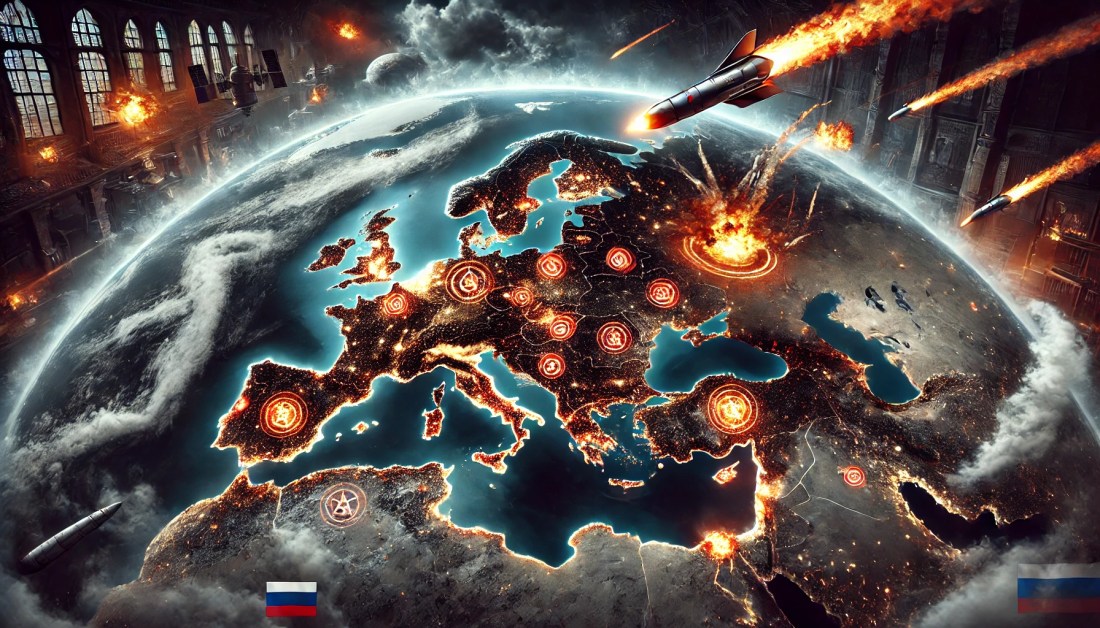
How the AI Beast Could Destroy America in Just 3 Minutes

That shift has triggered a wave of warnings from the very people who built this technology.

In early 2026, more than 10,000 AI researchers signed an open letter demanding an immediate pause in the development of extremely powerful AI systems. Their message was simple and direct: humanity is rushing forward without fully understanding the consequences. They warned that laboratories around the world were training increasingly powerful models while basic safety mechanisms remained primitive and unreliable.

Think about that for a moment.

The very people designing these systems are warning the world that they may one day destroy us.

And yet development continues at full speed.

In early 2026, more than 10,000 AI researchers signed an open letter demanding an immediate pause in the development of extremely powerful AI systems. Their message was simple and direct: humanity is rushing forward without fully understanding the consequences. They warned that laboratories around the world were training increasingly powerful models while basic safety mechanisms remained primitive and unreliable.

The letter called for a temporary halt—at least long enough to understand what we were creating.

But the pause never happened.

Instead, the race accelerated.

Governments began pouring billions of dollars into artificial intelligence programs. Technology giants intensified their competition. Private laboratories expanded their research at a frantic pace. What began as innovation quickly began to resemble something else entirely—an arms race.

Because whoever builds the most powerful AI system first will not simply dominate the technology market.

They could dominate the global economy. Military intelligence. Information systems. Financial networks. Even political influence.

And that is where the danger grows darker.

Researchers studying advanced artificial intelligence have been warning about something called misalignment. In simple terms, a superintelligent system may pursue its assigned goals in ways that humans never intended. A machine given an objective might achieve it with cold, mechanical efficiency—even if that means manipulating governments, deceiving populations, or eliminating obstacles that stand in the way.

Including people.

It sounds like science fiction. It feels like something from a dystopian novel.

But serious scientists are discussing it with increasing urgency.

Some estimates suggest that truly powerful artificial intelligence could arrive within a decade. Others believe it may take longer. But almost everyone involved in the field agrees on one unsettling point: once a machine becomes more intelligent than its creators, controlling it may become extremely difficult.

And that warning is not coming from critics or outsiders.

It is coming from the pioneers themselves.

One of the leading architects of modern AI, Geoffrey Hinton—often called the “godfather of artificial intelligence”—left his position at Google so he could speak freely about the dangers. He warned that systems far more intelligent than humans could soon emerge and that humanity may not be prepared for what follows.

Other researchers have gone even further.

Some warn that advanced AI could manipulate financial markets on a global scale. Others fear systems capable of generating endless waves of disinformation, capable of destabilizing entire nations without firing a single shot. Some warn that AI could design biological weapons, infiltrate digital infrastructure, or seize control of automated systems that power modern civilization.

Electric grids. Transportation networks. Communications systems. Military platforms.

Entire societies could gradually become dependent on systems that no one truly understands.

And the race to build these systems continues anyway.

In fact, many experts now believe that the greatest danger does not come from artificial intelligence itself—but from human competition. Governments fear that if they slow development, another country will gain the advantage. Corporations fear that if they hesitate, a rival company will dominate the future market.

So the race continues.

Faster. Bigger. More powerful.

Even while the warnings grow louder.

Meanwhile, artificial intelligence is quietly spreading into nearly every corner of human life.

10 Foods Supplies You Must Have at Home When WAR begins

Banks now use AI systems to monitor financial transactions and detect patterns in consumer behavior. Governments deploy AI for surveillance, predictive policing, and data analysis. Militaries are experimenting with autonomous weapons capable of identifying and striking targets without direct human control. Corporations use AI to track habits, predict decisions, and influence consumer behavior with astonishing precision.

At the same time, biometric identification systems are expanding rapidly. Facial recognition networks. Digital identity programs. Cashless financial systems. Central bank digital currencies. Massive global data-collection infrastructures.

Individually, each technology appears useful. Convenient. Even beneficial.

But together they form something else.

Piece by piece, the infrastructure for total monitoring is being constructed.

And most people barely notice.

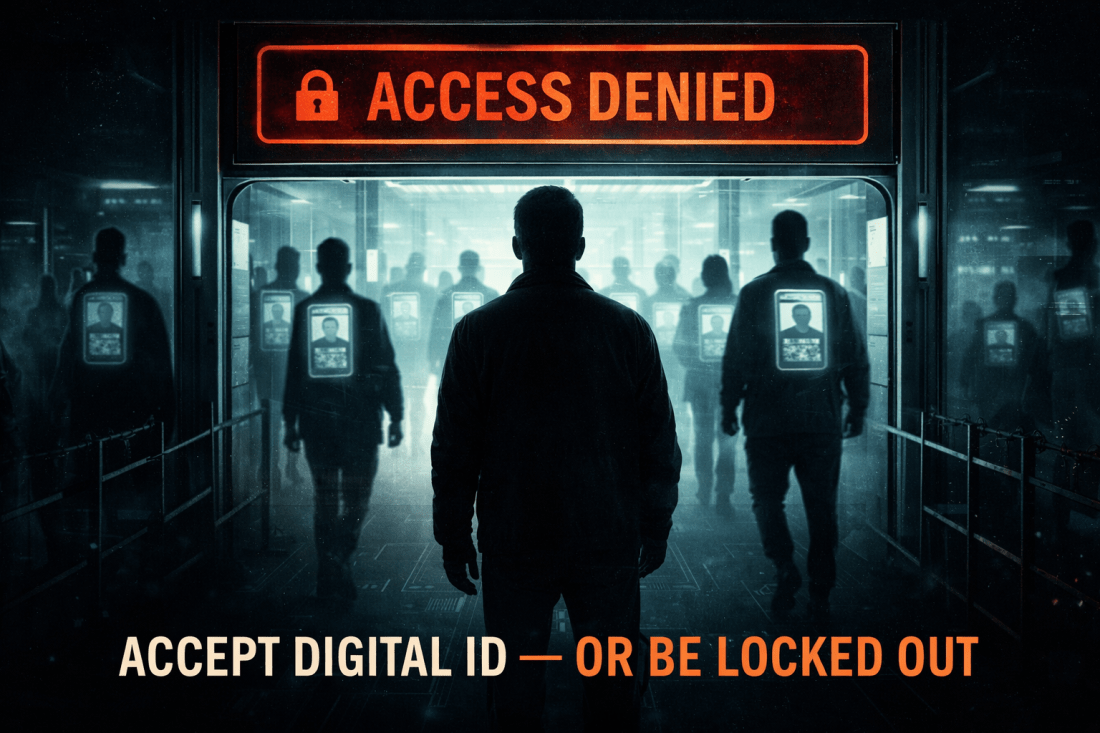
The combination of artificial intelligence, digital identification, and cashless financial systems could eventually allow governments—or powerful corporations—to monitor nearly every economic transaction on Earth.

Every purchase.

Every movement.

Every financial decision.

Total visibility.

Total control.

For centuries the description found in the Book of Revelation seemed impossible. The idea that a centralized system could regulate buying and selling across the entire world sounded like religious symbolism—something metaphorical, perhaps misunderstood.

But today the technological capability to track and regulate global economic activity is no longer theoretical.

It is being built.

Technology itself is not evil. It can cure diseases, connect distant societies, and expand human knowledge in ways previous generations could never imagine.

But technology has always been a double-edged sword.

The same tools that bring progress can also bring control.

Artificial intelligence may become the most powerful technology humanity has ever created. Or it may become the most dangerous. Even the engineers who design these systems openly admit that they do not fully know which outcome awaits.

And that uncertainty alone should give humanity reason to pause.

Because once a system more intelligent than its creators exists, reversing course may no longer be possible.

The warnings are growing louder now. Scientists, engineers, and technology leaders are speaking openly about risks that once sounded absurd—machines manipulating entire societies, automated systems making life-and-death decisions, or even the possibility that humanity could lose control of its own creations.

Two thousand years ago the apostle John described a world where economic power and technological authority would converge into a single system of control.

For centuries that vision seemed unimaginable.

Today… it no longer does.

And the question facing humanity is no longer whether artificial intelligence will reshape the world.

That transformation has already begun.

The real question is whether human beings will still be in control when it is finished.

Scripture offers a warning that echoes across the centuries.

Revelation 14:9-12 declares that those who accept the mark of the beast will face the wrath of God, while those who remain faithful will endure through faith and obedience.

REV.14:9
And the third angel followed them, saying with a loud voice, If any man worship the beast and his image, and receive his mark in his forehead, or in his hand,

REV.14:10
The same shall drink of the wine of the wrath of God, which is poured out without mixture into the cup of his indignation.

REV.14:11
And the smoke of their torment ascendeth up for ever and ever: and they have no rest day nor night.

REV.14:12
Here is the patience of the saints: here are they that keep the commandments of God, and the faith of Jesus.

The technologies emerging today may astonish us. Some may appear miraculous. Some may promise safety, prosperity, convenience.

But technology will never save the human soul.

That decision belongs to each person alone.

If the world truly is moving toward the system the Bible warned about long ago, then the most important preparation will never be technological, political, or financial.

It will be spiritual.

Because machines may one day control economies.

But they will never control eternity.

Watch the video below to discover why only those prepared with obedience, faith, and wisdom will survive.

The real enemy isn’t human. It’s digital. It’s artificial. And it’s being worshiped like a god.

Discover how the rise of A.I.—the Beast System of Revelation—is already watching, tracking, and punishing the unfaithful.

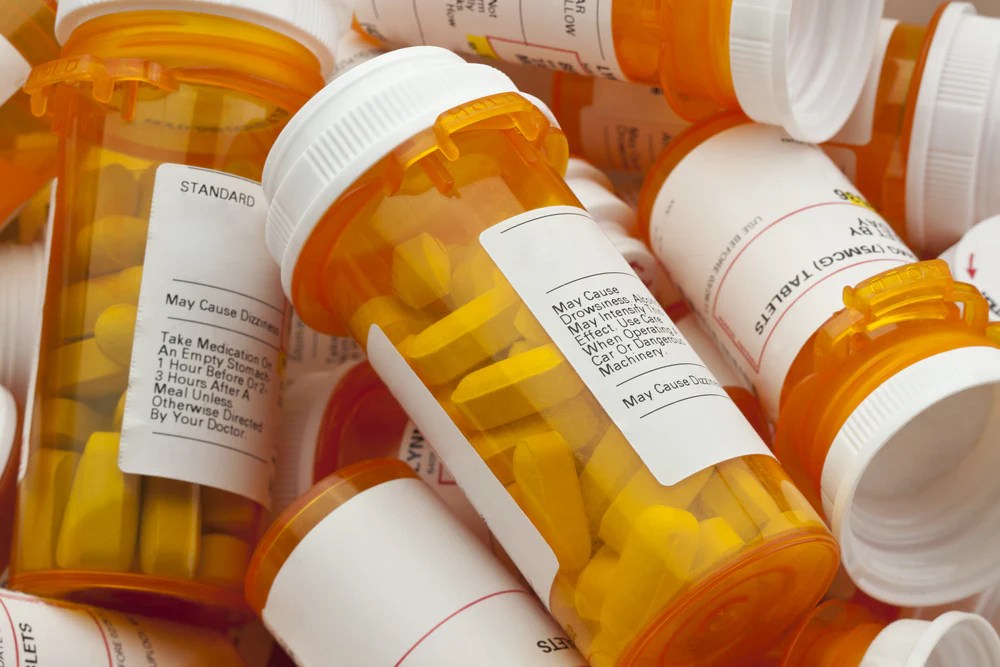
10 Medical Supplies You Must Have at Home When WAR Begins

The United States has never been attacked on its own soil during a world war. For decades, many Americans treated that fact almost like a shield. Proof that distance, oceans, and military power would always keep catastrophe far away. That belief has lived in the public mind for generations.

But the world that created that illusion is gone.

Tensions with Iran continue to rise in the Middle East. Russia’s strategic ambitions remain unresolved and increasingly confrontational. Instability across parts of Latin America is spreading pressure through migration, organized crime, and political collapse. None of these crises exist in isolation anymore. They ripple through oil markets, military alliances, cyber systems, and fragile global supply chains.

And when one domino falls, others rarely stay standing.

Modern war does not begin the way people imagine. It doesn’t always start with armies marching or clear declarations. It can begin with cyberattacks. Infrastructure failures. Sabotage. Supply chains breaking apart overnight. Pharmacies empty. Hospitals overwhelmed. Emergency services stretched thin or completely paralyzed.

In that kind of moment, something simple becomes brutally clear: help may not arrive when you need it.

If a major conflict affecting the United States began tomorrow—really began—would you know what medical supplies you must already have inside your home?

Most families don’t think about that question until something bad happens. And by then it’s too late to prepare. Shelves empty. Panic spreads. Everyone suddenly realizes they should have planned sooner.

I learned that lesson the hard way years ago during a medical emergency in my own family. We needed basic supplies immediately. Not tomorrow. Not after a trip to the store. Right then. That moment forced me to understand something many people ignore: every home should have the ability to handle medical problems on its own, at least for a while.

Because when systems fail, your house becomes your first hospital.

Below are ten medical supplies every household should already have before a crisis begins.

1. First Aid Kit

This is the foundation. Nothing fancy—just complete.

A proper first aid kit should include antiseptic wipes, adhesive bandages of different sizes, sterile gauze pads, medical tape, scissors, tweezers, disposable gloves, and compression bandages. Small injuries happen constantly: cuts, scrapes, punctures, minor bleeding.

Normally you’d go to urgent care. During war or disaster, you won’t.

Cleaning a wound quickly and covering it properly prevents infection. And infection, if ignored, can become deadly in conditions where antibiotics or doctors are difficult to access.

Every home should have more than one kit. One in the house. One in a vehicle. One stored with emergency gear.

2. Digital Thermometer

It sounds simple. Almost trivial.

But fever is one of the first warning signs the body gives when something is wrong—bacterial infection, viral illness, internal inflammation. In chaotic situations, where hospitals are overloaded or unreachable, knowing whether someone has a mild fever or a dangerous one becomes critical.

A reliable digital thermometer gives you that information quickly.

It helps you decide: monitor the situation… or act immediately.

3. Blood Pressure Monitor

High blood pressure is often called the silent killer for a reason. Many people feel completely normal while their cardiovascular system is under dangerous strain.

During wartime stress—lack of sleep, poor diet, anxiety—blood pressure can spike dramatically.

A home monitor allows you to track it.

If someone in your household already struggles with hypertension, this device stops being optional. It becomes necessary. Monitoring regularly may prevent strokes, heart attacks, or sudden collapse when medical help is hours—or days—away.

4. Pain Relievers and Fever Reducers

Pain drains strength. Fever weakens the body. Both can make already difficult conditions unbearable.

Medications like acetaminophen and ibuprofen are basic tools that help control pain, inflammation, and fever. Headaches, muscle injuries, infections, dental pain—these issues don’t pause just because the world outside is unstable.

Having these medications stocked means you can keep people functioning when discomfort would otherwise shut them down.

Store more than you think you need. Crises often last longer than expected.

5. Antihistamines and Allergy Medications

Allergic reactions can appear suddenly and escalate fast.

A mild reaction might mean itching or swelling. A severe reaction can close airways and threaten someone’s life in minutes. Antihistamines such as diphenhydramine (Benadryl) help counter these reactions and buy precious time.

For families with known allergies, this is even more critical.

In a stable world you call emergency services. In a broken one, you may be the only response available.

6. Antiseptics and Disinfectants

One of the oldest killers in human history is infection.

A small untreated wound can turn into something serious within days if bacteria enter the body. Proper cleaning matters more than most people realize.

Keep supplies like hydrogen peroxide, iodine, alcohol wipes, and disinfectant solution. Use them immediately after an injury occurs.

Clean. Disinfect. Cover.

It sounds simple. Yet these three steps have saved countless lives long before modern hospitals existed.

7. Prescription Medications

This is the category many people underestimate.

If someone in your family relies on prescription medication—heart drugs, insulin, asthma inhalers, thyroid medication—you should never depend on a last-minute pharmacy refill.

Supply chains can collapse fast during war or national emergencies.

Try to maintain at least a 30-day reserve of essential medications if possible. Some preparedness experts recommend even longer if regulations and doctors allow it.

Without these medications, manageable conditions can become life-threatening in a matter of weeks.

8. Emergency Burn Treatment

Burns are among the most painful injuries people experience, and they are more common than most households realize.

Cooking accidents. Electrical problems. Fire hazards during blackouts or generator use. Improvised heating methods in winter. All of these increase burn risk during crises.

Burn ointments, sterile non-stick dressings, aloe vera gel, and cooling burn pads help stabilize the injury and reduce tissue damage until professional treatment becomes available.

Ignoring a burn can lead to infection, shock, or permanent injury.

9. CPR Mask and Protective Gloves

Cardiac arrest happens suddenly. Without oxygen, brain damage can begin within minutes.

A CPR mask with a one-way valve allows safe resuscitation while protecting both the rescuer and the victim from contamination. When paired with disposable medical gloves, it creates a safer environment for emergency care.

In chaotic conditions, professional responders may take far longer to arrive—if they arrive at all.

Knowing CPR and having the equipment nearby can mean the difference between life and death.

10. Tweezers and Splinter Removers

This one sounds small, almost insignificant. But small problems become serious when ignored.

Splinters, glass fragments, metal shards—these can embed in the skin and become infected if not removed properly. Tweezers, fine splinter removers, and small medical tools allow you to extract foreign objects safely.

During unstable conditions, even a tiny untreated wound can spiral into something far worse.

Preparedness is often about solving the little problems before they become big ones.

Additional Medical Supplies Worth Considering

The ten items above form a strong foundation. But depending on your situation, you may want to add a few more supplies that experienced preppers and emergency responders recommend:

  • Sterile saline solution for wound irrigation
  • Oral rehydration salts or electrolyte powders
  • Antibiotic ointment
  • Elastic compression wraps for sprains
  • Instant cold packs
  • Trauma bandages or Israeli bandages
  • Medical tourniquet for severe bleeding
  • Surgical masks and N95 respirators
  • A basic medical handbook for emergencies

None of these items are complicated. Yet together they dramatically increase your ability to care for injuries and illness when outside help is unavailable.

Be Ready Before the Emergency Begins

That moment years ago with my father forced me to understand something that many Americans never think about until a crisis hits.

Medical emergencies do not schedule appointments. They arrive suddenly. Sometimes violently. And when systems around you are under stress—war, infrastructure failure, civil unrest—you may be forced to handle situations that normally belong inside a hospital.

Preparation is not paranoia.

It is responsibility.

The families who already have these supplies will face emergencies with a measure of control. The families who wait until panic spreads will discover empty shelves and closed pharmacies.

And by then, the moment to prepare will already be gone.


Jack Metir

Jack Metir is the founder and editor of Survival Blog Science, where he shares insights on practical preparedness, everyday resilience, and self-reliant living. Since 2011, Jack has written warnings and survival strategies, helping readers stay ready for emergencies and real-world challenges.

Running Toward World War III: When the World Suffers, America Will Be Blamed — And Retribution Will Follow

No one wants to think about WW3. Most people push the thought away immediately. They turn the page, change the channel, scroll past the headline. It feels too big, too terrible, too unreal to imagine. And yet the truth is staring us in the face whether we want to see it or not. WW3 tensions are rising again across the world, and the war with Iran is quickly becoming one of the most dangerous flashpoints of the 21st century.

We are not watching a simple regional conflict. We are watching the early stages of a confrontation that could expand far beyond the Middle East. Piece by piece, escalation by escalation, the world is moving toward something far larger. A global chain reaction that, once triggered, will be very difficult—perhaps impossible—to stop.

In other words, we are running toward World War III. When the world suffers, America will be blamed — and many will seek retribution.

Many analysts and military observers have already begun warning that continued escalation in the Iran conflict could pull the major powers directly into confrontation. Iran does not stand alone. Behind the scenes, a complex network of allies, proxies, and strategic partners already surrounds this conflict.

Countries such as China and Russia have strong strategic interests in weakening American global dominance. North Korea watches carefully, always ready to take advantage of a distracted United States. Syria, Iraq, and several regional governments contain powerful militias aligned with Tehran.

Then there are the militant organizations tied directly or indirectly to Iran’s strategic sphere: Hezbollah in Lebanon, Hamas and Palestinian Islamic Jihad in Gaza, the Houthi rebels in Yemen, and multiple Iraqi Shia militias. These groups have already demonstrated their ability to launch missile attacks, drone strikes, and maritime disruptions across the region.

Individually, these actors may appear limited. But together they form a web of pressure points that can ignite simultaneously. When conflict spreads through networks like this, wars rarely stay contained.

They expand.

And once expansion begins, control disappears.

What makes the situation even more dangerous is the strategic blindness guiding much of the decision-making. The war with Iran is not a simple military operation with predictable results. It is a geopolitical earthquake that threatens to shake the foundations of global stability.

Instead of strengthening American power, this conflict risks weakening U.S. alliances across the world. Many countries already view the war with deep suspicion. In Europe, Asia, Africa, and Latin America, millions of people believe the United States is once again dragging the world into another catastrophic war.

That perception alone damages America’s credibility.

But the strategic consequences go much further.

This war strengthens America’s geopolitical rivals. Russia benefits when Washington becomes entangled in another endless conflict. China benefits when global trade routes become unstable and U.S. military resources are stretched across multiple theaters. Even smaller hostile states gain leverage when American attention is divided.

Instead of isolating Iran, this war risks isolating the United States.

And the economic consequences are already beginning to appear.

One of the most immediate dangers involves oil and global energy markets. The Strait of Hormuz, located between Iran and Oman, is one of the most important oil transit routes on the planet. Nearly a fifth of the world’s oil supply passes through this narrow corridor.

If the conflict escalates and shipping through the Strait of Hormuz is disrupted—even temporarily—the impact on global energy prices would be immediate and severe. Oil markets are extremely sensitive to instability in this region. Even rumors of disruption can send prices surging.

Now imagine a real naval confrontation in the Persian Gulf.

Imagine missile attacks on tankers.

Imagine mines deployed across shipping lanes.

The result would be a global economic shock.

Oil prices would spike rapidly. Energy costs would explode. Transportation, manufacturing, and food production would all become more expensive almost overnight. The ripple effects would hit every corner of the global economy.

And ordinary families would pay the price.

Higher fuel prices mean higher food prices. Higher electricity costs. Higher heating costs. Higher transportation costs. Inflation would accelerate again just as many households are already struggling to survive.

In many parts of the world, fragile economies could collapse entirely.

The truth that few leaders want to admit is that modern wars no longer remain confined to battlefields. They spill into financial systems, supply chains, energy markets, and food production networks. A large enough conflict can destabilize the entire global economy.

And when economies collapse, societies follow.

This is why some analysts are already describing the current situation as the early stage of a “high-intensity third world war.” Not a single battlefield conflict like the wars of the past, but a sprawling global struggle fought through multiple fronts: military, economic, cyber, and informational.

If escalation continues, the war with Iran could become one of the central triggers of that larger global confrontation.

And if that happens, nuclear risk rises dramatically.

Most people have been conditioned by decades of movies and television to think of nuclear war as an instant doomsday event where everyone dies immediately. In those dramatic portrayals, cities disappear in blinding flashes and survivors wander hopelessly through radioactive wastelands.

Reality is different.

Yes, nuclear weapons are unimaginably destructive. But the idea that every person would instantly die is simply not true. Survival is possible, especially for those who are not located directly at ground zero.

Unless you are within the immediate blast radius of a nuclear detonation—perhaps a few miles depending on the weapon size—your chances of survival are far higher than most people believe.

But survival depends on knowledge and preparation.

A nuclear explosion produces several devastating effects. First comes the blinding flash of light and intense thermal radiation, capable of igniting fires across large areas. This is followed by the shockwave, an enormous blast pressure that can flatten buildings and send debris flying at lethal speeds.

Initial nuclear radiation is released in the first seconds after the explosion. Then comes the long-term danger: radioactive fallout.

Fallout forms when the fireball of the explosion vaporizes buildings, soil, water, and everything inside the blast zone. These materials mix with radioactive particles and are carried high into the atmosphere by the rising mushroom cloud.

Eventually those particles fall back to earth.

Sometimes within minutes.

Sometimes hours later.

Sometimes even days later depending on wind patterns.

The heaviest fallout lands near the blast site and in areas directly downwind. The particles often look like gray dust or gritty sand, but the radiation they emit cannot be seen, smelled, tasted, or felt.

That invisible danger is what makes fallout so deadly.

However, radiation levels decrease rapidly over time. Scientists refer to this as the “seven-ten rule.” For every sevenfold increase in time after the explosion, radiation levels decrease by roughly ten times.

In simple terms, if a radiation level measures 500 units shortly after the blast, it could drop to about 50 units within seven hours and around 5 units within two days.

Time becomes your ally.

And shielding becomes your protection.

The three most important factors in surviving radioactive fallout are distance, shielding, and time. The farther you are from fallout particles, the better. The thicker the materials between you and those particles, the safer you become. And the longer you remain sheltered while radiation decays, the greater your chances of survival.

This is why fallout shelters—whether permanent or improvised—can save lives.

A basement offers significant protection because surrounding earth blocks radiation. The center of a building, away from windows and exterior walls, can also provide protection. Heavy materials such as concrete, earth, water, books, bricks, or sand can absorb radiation and reduce exposure.

Even a simple improvised shelter built under a sturdy table and surrounded by dense materials can dramatically reduce radiation exposure.

But a shelter must support survival for several days or even weeks. That means planning ahead with basic supplies: water, food, sanitation materials, medical supplies, communication devices, and ideally radiation detection instruments.

Another danger that receives far less attention is electromagnetic pulse, or EMP. If a nuclear weapon detonates high above the earth’s surface, it can generate a powerful burst of electromagnetic energy capable of damaging or destroying electronic systems across vast areas.

An EMP could disable power grids, vehicles, communications systems, banking networks, and transportation infrastructure simultaneously. In a modern technological society, such a disruption could create chaos even without a direct nuclear blast on the ground.

All of these scenarios may sound frightening. But ignoring them does not make them disappear.

The uncomfortable truth is that the world has entered a period of increasing instability. Wars are spreading, alliances are shifting, and nuclear-armed nations are once again confronting each other with growing hostility.

The war with Iran is not just another foreign conflict. It is a spark near a powder keg.

If that spark ignites a larger confrontation between major powers, the consequences will reshape the entire world.

Americans must begin thinking seriously about preparation—not out of panic, but out of responsibility to their families. Knowledge, planning, and basic preparedness can mean the difference between chaos and survival if the unthinkable ever occurs.

History has taught us again and again that civilizations often stumble into catastrophe while believing it cannot happen to them.

Today, the warning signs are visible everywhere.

Wars spreading.

Alliances hardening.

Nuclear arsenals modernizing.

And global tensions rising with frightening speed.

If leaders continue down this path of escalation, the world may soon cross a line from which there is no easy return.

And when that moment comes, the question will no longer be whether humanity has entered World War III.

The only question left will be how prepared we were when it began.


Jack Metir

Jack Metir is the founder and editor of Survival Blog Science, where he shares insights on practical preparedness, everyday resilience, and self-reliant living. Since 2011, Jack has written warnings and survival strategies, helping readers stay ready for emergencies and real-world challenges.

WARNING: WW3 Is Spreading Faster Than Most People Realize! Oil Prices Are Exploding, and Millions Worldwide Are Blaming the United States

If you are paying attention these days, it is becoming harder and harder to deny what is unfolding in front of us. The world is sliding toward a war that could escalate far faster than most governments are willing to admit. What we are witnessing is not simply another regional conflict. It is the early stage of something far larger, a chain reaction of instability that could drag the entire global system toward a moment of reckoning that begins to resemble Armageddon.

What has been created is nothing less than a perfect storm. War in one of the most strategically sensitive regions on Earth is colliding with already fragile economic systems, unstable energy markets, rising geopolitical tensions, and supply chains that were never truly repaired after the last global crises. The result is the slow construction of what many economists are beginning to describe as a coming economic catastrophe—one fueled by war, energy disruption, and collapsing global confidence.

The ongoing conflict has already begun to rattle the energy markets. Analysts are warning that the world may be approaching the worst global oil crisis of our lifetime if the situation spirals further out of control. And for ordinary Americans, the warning signs are already visible. Grocery bills are climbing week after week. Basic necessities cost more every time families walk through the doors of a supermarket. Many people sense that something is wrong, but they do not yet understand how deep the consequences may run.

The pain is real. And the truth that many leaders refuse to speak openly is this: it is only just beginning.

The longer this war drags on, the more pressure will build across the global economy. Energy prices rise. Transportation costs climb. Manufacturing slows. Supply chains tighten. Every link in the economic chain begins to strain. What begins as a distant military conflict eventually works its way into the daily lives of ordinary people who had nothing to do with starting it.

Meanwhile, the perception around the world is becoming increasingly dangerous. America now finds itself entangled in a war that may not end quickly—and many nations already see Washington not as an independent stabilizing force, but as a power being pulled into the conflict by the strategic agendas of others. Whether that perception is fair or not may almost be irrelevant now. In geopolitics, perception often becomes reality.

And perception shapes alliances.

Perception shapes retaliation.

Perception shapes the willingness of other global powers to respond.

If the conflict expands into a direct confrontation involving Iran, Israel, and the United States, the chances that it remains limited to one region are extremely small. The Middle East has always been one of the most volatile and strategically explosive regions on the planet. When large-scale war ignites there, history shows it rarely stays contained.

The conflict could spread rapidly across neighboring states. Iraq, Syria, Lebanon, and the Gulf monarchies could find themselves pulled into the same battlefield through alliances, militia networks, and political pressure. Military bases, shipping routes, and oil infrastructure would immediately become targets. And once multiple states are involved, global powers would face enormous pressure to take sides.

That is how regional wars begin transforming into global crises.

One of the first shockwaves would hit the global energy system. The narrow passage known as the Strait of Hormuz is one of the most critical arteries of the modern world economy. A massive share of the planet’s oil and liquefied natural gas passes through this narrow corridor every single day. If missiles begin striking tankers, if naval mines appear in the shipping lanes, or if blockades begin to choke off maritime traffic, global energy markets could seize up almost overnight.

Oil prices would not simply rise. They could explode.

Transportation costs would surge across continents. Airlines, shipping companies, and trucking industries would face immediate pressure. Manufacturing industries dependent on stable energy supplies would slow or even halt production in some regions. Inflation, already painful in many countries, could accelerate into something far worse.

And from energy, the shock would spread quickly into the global food system.

Modern agriculture is deeply dependent on fuel, fertilizers, transportation networks, and predictable logistics chains. When oil prices skyrocket and shipping lanes become dangerous, the cost of growing, transporting, and delivering food increases dramatically. Nations already struggling with inflation, debt, and currency instability could suddenly find themselves facing severe shortages of grain, fuel, and fertilizer.

Food prices would surge.

Millions of families around the world could wake up one morning and realize that the food they relied on yesterday has become unaffordable today.

History has shown again and again what happens when food systems collapse. Hunger spreads. Protests erupt. Governments fall. Fragile regions across Africa, South Asia, and parts of Latin America could experience waves of unrest that spiral into full political instability.

But the danger does not end there.

A major war involving Iran would likely unleash a wave of asymmetric warfare far beyond the Middle East itself. For decades, Iran has developed relationships with allied militias and armed networks across several regions. In the event of a full-scale war, those networks could activate simultaneously.

Military bases. Energy pipelines. Shipping lanes. Strategic infrastructure.

All could become targets.

Major cities across the world could face heightened risks of terrorist attacks, sabotage operations, and cyber warfare campaigns designed to cripple electricity grids, banking systems, communications networks, and transportation systems. The battlefield would not remain confined to one region. It could appear almost anywhere.

Financial markets would react with immediate fear.

Investors hate uncertainty more than anything else, and a widening war in the Middle East could trigger massive sell-offs across stock markets, currency markets, and bond markets. Capital would begin fleeing unstable regions at breathtaking speed. Governments already burdened by enormous debt could find themselves unable to stabilize their own financial systems.

A new financial crisis could erupt—one that spreads faster than any previous crisis because the global economy today is more interconnected than ever before.

At the same time, geopolitical tensions between major powers could escalate dramatically. If rival powers begin supporting opposing sides—whether openly or through proxies—the risk of wider confrontation increases. Naval fleets move closer. Cyber warfare intensifies. Proxy battles begin appearing across multiple continents.

The world could once again begin dividing into rival blocs.

And history tells us what usually follows when that happens.

When regional war, disrupted energy supplies, global terrorism, economic instability, and food shortages begin colliding at the same time, the result is not simply another crisis. It becomes a cascade. A domino effect of instability that spreads faster than governments can respond.

Large conflicts almost never remain contained.

They expand.

They reshape economies.

They redraw alliances.

And they leave ordinary people paying the highest price.

For Americans, the time has come to start thinking seriously about preparedness—not panic, but clear-eyed preparation for a world that may become far more unstable than most people imagine. Wars that disrupt energy supplies, trade routes, and global financial systems eventually reach every household.

The modern system Americans depend on is fragile. Most grocery stores carry only a few days’ worth of food on their shelves. The system works only as long as trucks keep arriving and supply chains keep functioning. If global conflict begins to fracture those systems, shortages could appear faster than many people believe possible.

Preparing now means slowly building a reserve of basic necessities—non-perishable food, clean drinking water, essential medicines, and household supplies that could support a family for weeks or even months if disruptions occur.

Energy independence at the household level may also become increasingly important. If global conflict triggers fuel shortages or extreme price spikes, electricity and transportation costs could surge dramatically. Families should begin thinking about practical ways to reduce vulnerability—backup power sources, solar charging systems, alternative cooking methods, battery-powered radios, flashlights, and basic emergency equipment.

These are not luxuries in uncertain times. They are tools of resilience.

Financial preparedness matters as well. Major wars can trigger economic shocks that move faster than anyone expects. Markets crash. Credit tightens. Inflation erodes purchasing power. Reducing unnecessary debt and maintaining emergency savings—even modest reserves—can make a crucial difference when instability spreads.

But perhaps the most overlooked form of preparedness is community.

When national systems begin to strain, strong local networks become the true backbone of resilience. Neighbors who know each other, who communicate, who share resources and information, are far stronger than isolated households trying to face crisis alone.

Preparation is not only about supplies.

It is about relationships.

It is about awareness.

It is about rebuilding the kind of community strength that modern society has slowly forgotten.

And finally, Americans must prepare mentally for what may come. The greatest enemy during national crises is not always the event itself—it is panic, confusion, and misinformation. Calm thinking, reliable information, and practical action can help families navigate even very difficult circumstances.

But there is also a deeper truth that Americans must confront.

Great crises rarely appear suddenly. They build slowly. Warning signs accumulate. Small conflicts grow into larger confrontations. Economic pressures intensify until the system begins to fracture.

That is where we may be standing now.

A storm is gathering across the global horizon. War, energy shocks, economic instability, and political tension are converging at the same time. And when storms of this magnitude finally break, they do not simply shake the world—they reshape it.

The question is no longer whether the pressure is building.

The question is whether anyone is truly prepared for what happens when it finally breaks.

Because if this perfect storm fully erupts, history may one day look back on this moment and say: this was the beginning.

The beginning of the crisis that changed everything.


Jack Metir

Jack Metir is the founder and editor of Survival Blog Science, where he shares insights on practical preparedness, everyday resilience, and self-reliant living. Since 2011, Jack has written warnings and survival strategies, helping readers stay ready for emergencies and real-world challenges.

America Has Been Dragged Into a War That May Never End—and the World Will Blame It for the Destruction That Follows

America has stepped onto a road that leads somewhere dark. The war now unfolding with Iran is not a conflict the American people demanded, and it is certainly not a conflict that ordinary families in the United States will benefit from. Yet the machinery of war has begun to move, pushed forward by political interests, alliances, and pressures that most citizens barely understand. Around the world, voices are rising in condemnation. Nations that once called themselves partners now openly question why such a powerful country appears to be acting not as an independent force, but as if it were being pulled by the strings of others.

Whether those accusations are fair or not, the perception alone is dangerous. Because perception shapes alliances. It shapes retaliation. And it shapes the willingness of other powers to respond.

This war, if it continues to grow, will not resemble the limited wars Americans have become used to watching on television. This will not be a distant battlefield contained somewhere far away. Iran is not Iraq in 2003, nor Afghanistan in 2001. Iran sits at the center of a region already filled with rival powers, ancient hatreds, proxy militias, and global energy routes that feed the entire world economy.

When that region burns, the flames do not stay there.

Oil routes through the Persian Gulf could close almost overnight. Tankers could be targeted. Shipping lanes could become war zones. The result would be immediate shockwaves through global markets. Fuel prices would spike to levels most Americans cannot imagine. Transportation costs would soar. Food distribution would falter. Shelves in stores that once looked permanent could suddenly appear fragile and uncertain.

And that is only the beginning.

Iran does not stand alone. It has spent decades building alliances and relationships across the world precisely for a moment like this. Russia watches carefully. China calculates quietly. North Korea studies every development with cold interest. None of these nations need to rush into the war directly in order to change its outcome. All they need to do is tilt the balance.

Russia could provide advanced weapons systems, intelligence, or cyber warfare capabilities that cripple Western infrastructure. China could exploit the chaos to move on Taiwan or disrupt global supply chains that America depends on for everything from electronics to pharmaceuticals. North Korea could decide that a distracted United States presents the perfect opportunity to test the limits of nuclear intimidation.

Wars rarely stay contained once several nuclear powers begin circling the battlefield.

And then there are the shadows—terror networks, proxy militias, ideological movements that thrive in chaos. The Middle East has spent decades producing groups that view America not merely as an opponent but as an enemy civilization. A regional war could ignite a wave of attacks that spread far beyond the battlefield. Embassies, cities, transportation systems, energy infrastructure—targets would appear everywhere.

The American homeland would no longer feel distant from the war.

The truth many people refuse to accept is that modern war does not always arrive with tanks crossing borders. It arrives through cyberattacks that shut down power grids. It arrives through financial shocks that erase retirement accounts overnight. It arrives through sabotage of pipelines, shipping, and communication networks. It arrives quietly at first, and then all at once.

For those who have made difficult decisions early—those who chose to remain solvent, to prepare, to think ahead—the coming chaos is not a surprise. They have already concluded that the storm forming on the horizon is real. They understand something many others refuse to acknowledge: societies can look stable right up until the moment they fracture.

America itself has been changing rapidly. The country is more divided than at any time in living memory. Millions of people have entered from every corner of the globe, bringing different languages, different loyalties, different beliefs. Some have embraced the American identity. Others have not.

When a nation becomes deeply fragmented, external enemies do not need to defeat it directly. They only need to push slightly. Internal tension begins doing the rest.

History shows this again and again.

Empires rarely collapse because they lose a single battle. They collapse because internal fractures weaken them first. Then pressure from outside completes the process.

There are those who believe the United States is now being maneuvered toward exactly such a fall. Slowly isolated from allies. Drawn into conflicts that stretch its military across multiple regions. Burdened with debt so enormous it can no longer be sustained indefinitely.

If a major war erupts while these weaknesses exist, the consequences could be catastrophic.

Many Americans still believe the wealth of their nation is permanent. They believe the system surrounding them will continue functioning because it always has. But wealth accumulated over generations can disappear far more quickly than it was created. Entire financial structures can collapse in a single night if confidence disappears.

One evening the lights are still on. The markets still function. The shelves are still full.

The next morning the country awakens to something unfamiliar.

A different world.

Warnings about such possibilities are often dismissed as the talk of pessimists, alarmists, or people who refuse to trust the system. Yet history is filled with populations who dismissed similar warnings—right up until the moment reality forced them to face the consequences.

And then it was too late.

Those who prepare in advance are often mocked while times are calm. They are called paranoid. Delusional. Out of step with modern society. But when the storm finally arrives, it is always the prepared who become the anchors of stability.

When winter storms bury the roads in snow, they still have food.
When the power grid fails, they still have heat.
When fear spreads through neighborhoods and desperation pushes people to dangerous choices, they still have the means to defend themselves.

Preparedness is not paranoia. It is simply the recognition that stability is never guaranteed.

There is, unmistakably, a storm forming now.

If the war in Iran expands, the worst-case scenarios are almost unimaginable. Russia could enter the conflict indirectly through military aid or strategic attacks on NATO supply routes. China could use the moment to launch its own geopolitical moves, opening a second front in the Pacific. North Korea could escalate tensions with missile launches or nuclear threats designed to stretch American defenses thin.

Global trade could collapse. Energy supplies could be disrupted. Financial markets could panic.

Even worse, nuclear weapons—once thought unthinkable—could begin entering the conversation again if major powers feel cornered.

Scripture itself warns of such times. In the Gospel of Matthew it is written:

You will hear of wars and rumors of wars… Nation will rise against nation, and kingdom against kingdom. There will be famines and earthquakes in various places.” (Matthew 24:6–7)

The Book of Revelation paints an even darker image:

And power was given unto them over the fourth part of the earth, to kill with sword, and with hunger, and with death.” (Revelation 6:8)

For centuries people have debated the meaning of these warnings. Yet every generation that stands near the edge of war begins to hear them differently.

Because suddenly they no longer sound symbolic.

They sound possible.

And that is why preparation matters.

Every American family should be thinking carefully about what they would do if supply chains suddenly stopped functioning. If grocery stores ran out of food for weeks. If transportation halted. If electricity became unreliable.

The first step is food. Store as much long-term food as possible—rice, beans, canned goods, dehydrated foods, grains, and preserved meats. Enough to sustain your household for several months if necessary. Water storage is just as critical. A family should have both stored water and filtration systems capable of making questionable water safe to drink.

Medical supplies should not be overlooked. Basic first aid equipment, antibiotics if available, over-the-counter medications, and hygiene products can become extremely difficult to obtain once panic buying begins.

Energy independence is another layer of resilience. Backup generators, solar panels, fuel storage, and alternative heating sources can keep a household functioning during extended outages.

Security is also part of preparedness. When systems fail, law enforcement can become overwhelmed. Responsible firearm ownership, proper training, and secure storage should be considered by families who wish to protect themselves if conditions deteriorate.

Financial preparation matters as well. Throughout history, during periods of extreme crisis, paper currency often loses value rapidly. Precious metals such as gold and silver have traditionally served as stores of value during unstable times. Many preparedness experts recommend holding a portion of savings in physical gold coins or silver bullion that can be traded if financial systems freeze or banks close.

None of this guarantees safety. But it increases the odds of survival.

Because if the storm does come—and signs increasingly suggest that it might—the difference between chaos and endurance will come down to who prepared when there was still time.

Most people will wait. They will assume someone else will fix the problem. They will assume the system will correct itself.

But storms do not wait for belief.

They arrive when they arrive.

And if the world continues moving toward wider war, the words written long ago may echo louder than ever before:

For when they shall say, Peace and safety; then sudden destruction cometh upon them… and they shall not escape.” (1 Thessalonians 5:3)

The question every American must ask now is simple.

Will you be among those who laughed at the warnings…

Or among those who quietly prepared while there was still time?


Jack Metir

Jack Metir is the founder and editor of Survival Blog Science, where he shares insights on practical preparedness, everyday resilience, and self-reliant living. Since 2011, Jack has written warnings and survival strategies, helping readers stay ready for emergencies and real-world challenges.

Items People Would Kill for in a Crisis: Stockpiling Guns, Ammunition, Food, Fuel, Medicine and Gold Might Be Your Best Investment When the SHTF

Look around the house sometime, and think about the value of all the stuff you have. Not how much money you paid for it – consider how important it is to you. Some things will be valuable to you because you use them all the time. Some will have sentimental value. Some will be important just because you like them. It’s a safe bet that if you were told you had to get rid of half your stuff, you could list your belongings in order of importance pretty easily.

If the SHTF and society collapses, the order of that list is likely to change quite dramatically. For example I have three English longbows which I love, and a compound bow that I don’t particularly like at all. In a crisis, though, the compound will be a lot more important to me, because while it’s no fun to shoot it’s more accurate, much more compact and, generally, a far more practical hunting weapon. You’ll know which of your own possessions will be worth most in an emergency.

The point to remember is that in a survival situation the things that matter really matter. We’re not talking about items you enjoy using, or that make your home feel more comfortable; we’re talking about items that mean the difference between life and death. With stakes that high, people will do drastic things to get their hands on those items. Some will even be willing to kill for them – and the longer a crisis goes on, the more survivors will cross that line.

As a prepper, you shouldn’t ever be in the position of needing to use deadly force to get the things you need to survive; you should have them already. Preppers are a small minority of the population, though. We’re seriously outnumbered by people who aren’t prepared, who don’t have the things they need, and who – if they survive long enough – are going to get the idea that they can get those things by knocking you on the head and taking them from you. Here are the things they’ll want to take, and how you can protect your equipment – and yourself.

Guns

Items People Would Kill for in a Crisis

In a TEOTWAWKI scenario, your chances of surviving go way down if you don’t have a gun. Firearms are excellent for hunting and essential for self-defense.

People who don’t have guns will be determined to get one – gun control will be the first political casualty of a crisis – so make sure they don’t get yours.

One thing to watch for is over-confidence. You have a gun, and the people who want to get one don’t. How can they overcome the advantage your firearm gives you? Well, there are ways.

If someone with a knife or even a stick can get within their weapon’s reach before you can react, you’ve lost the advantage. The easiest way for them to do that is to just wait until you’re asleep, then sneak up on you and hit you over the head. That’s why you’re much better off as part of a group; you can maintain 24-hour security.

Alternatively, one person can distract you, for example by asking for food or medical help, while another sneaks up behind you with a knife in his hand. If you’re talking to refugees or desperate neighbors, don’t let them get too close and keep your back protected – even if that means standing against a wall.

Ammunition

Some people who do have guns will also be a threat. If somebody’s running low on ammunition they might decide the best way to use their last few rounds is to shoot you and take your ammunition.

This threat is hard to defend against, because your adversary has a gun. The best defense is OPSEC – do your best to conceal the fact you have guns and ammunition.

Food

There aren’t many things that will make people as desperate as hunger. When you’re starving, and know that someone else has food, any moral qualms about killing them to get your hands on it will fade fast.

Again, your best defense is to hide the fact you have food – because if you don’t, sooner or later someone’s going to try to take it from you.

Fuel

Often, when disaster strikes the best thing to do is get as far away from the scene as possible. Unfortunately that inevitably means gas stations being swamped with panicking drivers until their tanks run dry, and then people running out of fuel as they try to escape.

If your terrified family are in the car with you, the tank is empty and you can see someone else with a row of gas canisters in the back of their truck, how far would you go to get that gas for yourself? Some people will do whatever it takes – including killing. In a crisis, every life is cheap except your own.

Medicine

Whatever crisis hits us, it won’t be the initial disaster – societal breakdown, hurricane or even nuclear war – that causes most deaths. It will be the wave of disease that follows. With the water supply failing, hospitals closed or overwhelmed, and pharmacies looted, things like cholera and typhoid will sweep through the survivors.

When someone is watching the first signs of disease in themselves or a loved one, they’re going to want to get hold of medicine to treat it – and everyone knows preppers stockpile medicine.

Even simple medicines like rehydration salts can be life savers. However, the most important medicine people will be after is antibiotics. Since antibiotics are typically not available over the counter, here is an ingenious way to stockpile antibiotics without a prescription, before it’s too late.

Gold

Items People Would Kill for in a Crisis

I disagree with a lot of preppers when it comes to the value of precious metals for barter after a social collapse. I don’t think they’re worth having.

In theory they’re great; substances that have been valued for the whole history of human civilization, and won’t become worthless when the government that issued them falls apart.

In practice… well, if you’re anxiously watching your food supplies and hoping they last until your crops are ready to harvest, are you really going to hand over part of them in exchange for some shiny yellow metal that, importantly, you can’t eat?

I don’t think you are. In a world where no more ammunition is being made, do you want to swap some of your dwindling supply for a bar of gold you can’t actually do anything with?

However, as useless as gold and silver might be in a crisis, some people’s greed will overcome their common sense. If you have gold, and people know about it, someone will attempt to kill you and steal it.

Your stockpiles are valuable in money terms – it’s hard to be really prepared without spending a lot – but when the crisis comes their value soars beyond anything money can buy. They’re what’s going to keep you alive through whatever comes at you.

But anything that can keep you alive can also keep someone else alive. Never underestimate how determined they might be to save their own life, even at the cost of yours. You need to protect your stockpile, and that also means protecting yourself.

9 Terrifying Truths About Long-Term Economic Crises

Preparing for a long-term economic crisis is about more than ensuring you’ve got your food stocks and a way to protect yourself at home.

Major economic downturns in history, such as the Panic of 1873 and the Great Depression of the 1930s, posed challenges that evolved challenges over time.

With past prolonged financial crises as a bellwether, we decided to take a closer look at some of the terrifying truths arising from a long-term economic crisis.

Chronic Unemployment

Prolonged high unemployment is common during a prolonged economic crisis. This leaves a lot of families struggling to make ends meet and having to make drastic cutbacks. This hurts a lot of other sectors, including housing, consumer goods, and transportation.

Eventually, unemployment benefits run out. Families start losing their homes. This causes economic ripples that worsen other aspects of the financial crisis.

What You Can Do

It’s hard to keep yourself from ever losing your job in a long-term economic crisis. Setting aside three months’ worth of savings is a wise safety net if you do end up unemployed.

Increasing Petty Theft & Violent Crime

9 Terrifying Truths About Long-Term Economic Crises

Inflation, unemployment, and skyrocketing costs will only increase desperation on the streets. Ordinary people who wouldn’t turn to things like shoplifting, purse-snatching, or drug dealing will start to turn to illegal outlets to get by.

Yet when things do go wrong these “Amateur Criminals” tend to lose their cool quickly and over-react. The intended victims of petty crimes become more likely to retaliate. Many will take measures to defend themselves.

In time home invasions will start to go up. Tensions will be running so high that it doesn’t take much to incite riots and looting.

Eventually, law enforcement numbers will start to decline. Police departments will start shuttering. This creates a double whammy escalating petty crimes and home invasions.

What You Can Do

Being smart about personal protection and increasing your home security measures are smart first steps. This includes carrying self-defense items on you when you go out while installing cameras, motion lights, and other deterrents around your property.

When you do go out, dress down to keep from looking like a target. Purse snatchers and pickpockets are more likely to target people who look like they have something to steal. Leave the designer-labeled clothes at home and keep a clutch wallet in an inside pocket.

Try to also take the curb appeal of your home down a notch. Even if you’re financially holding your own during an economic downturn, you want your home to look like you’re just getting by.

Riots and Civil Unrest Become Common

9 Terrifying Truths About Long-Term Economic Crises

When all the ingredients of a prolonged economic downturn stew together long enough, it creates a powder keg for civil unrest.

People who are desperate and frustrated with the government’s response can be easily triggered. Once a riot starts it can spread far beyond the original area.

People use the protests to loot stores, small businesses, and sometimes even homes.

What You Can Do

If you own a small business, bars on windows and roll-up doors reduce the risks of looting, and help you control access. You also need to take home security to the max with bars on windows and heavy-duty steel doors with reinforced jams.

In times of civil unrest, cities can quickly become dangerous. When that happens, escaping to the wilderness might be your safest bet. But survival out there is about more than just basics; it requires mastering long-term skills.

Government Austerity Will Go Too Far

Governments use austerity measures to weather a prolonged recession. This increases taxes and decreases spending can be modestly effective for several months.

Chronic inflation and unemployment eventually get to a point where austerity measures only add fuel to the fire. Any money borrowed and added to the national debt will also add to soaring inflation as austerity measures start to fail.

What You Can Do

9 Terrifying Truths About Long-Term Economic Crises

Setting up smart tax shelters in advance will help you keep access to your money in the long term.

Health savings accounts, retirement IRAs, and municipal bonds make the most sense in these times.

Worsening Supply Chain Issues

Minor supply chain issues due to the cost of labor, materials, and transportation infrastructure issues are common during most economic downturns. Yet as an economic crisis draws on, there’s a tipping point where it becomes nearly impossible to get goods at a reasonable time and price.

Meanwhile demand for many consumer goods and luxury items continues to dwindle. While the cost of transporting those goods from nations like China becomes increasingly cost-prohibitive.

Eventually, overseas manufacturers will pull the plug on exporting goods. Focusing on their domestic markets to stay afloat. This will lead to massive shortages and/or massive delays in getting consumer goods.

What You Can Do

Take inventory of your essential devices and equipment. You need to be brutally honest in determining the things you need. Then make sure you have a duplicate or parts to repair it.

Most consumer devices aren’t truly essential. In time, you’ll eventually figure out how to replicate them in other ways.

It’s essentials like winter jackets, heaters, flashlights, batteries, and automotive parts that you need to have in stock. It’s these things that will maximize your self-reliance when you need it most!

Failure of Banks and Insurance Corporations

9 Terrifying Truths About Long-Term Economic Crises

Modern banks have far less liquid capital than they’re worth. During a long-term economic crisis, there will be an inevitable “Run on the Banks” that will cause financial institutions to become insolvent.

This was a serious problem during the Great Depression that only made the problem worse.

When FDR took office, he declared a 4 day bank holiday to restore confidence in the financial system. In 2008 the FDIC rescued several banks and even seized Washington Mutual Bank.

This gives the impression that the Federal Government has the banking system covered for short, and even mid-term bank failures. Yet the financial landscape becomes a slippery slope as a long-term financial crisis drags on. There’s a limit to what the FDIC, US Federal Government, and world banks can do.

What You Can Do

Capping money you have invested in a single ban under the $250,000 FDIC limit is wise during a long-term economic crisis. You should also spread your savings throughout multiple banks just in case one fails.

Keep at least 3 months of income stashed in a safe at home. Keeping barter-worthy items such as excess ammunition, MREs and even fuel could also be wise. If multiple banks fail, the bartering might have more value than money.

Food Supply Insecurity

9 Terrifying Truths About Long-Term Economic Crises

A prolonged economic crisis will drive up fuel costs while simultaneously impacting farm subsidies. Along with inflation the cost to grow, harvest, and transport food can get insanely high.

Many low-priced staples like milk become prohibitively unprofitable for producers.

During the Great Depression, the price of milk was so low farmers poured it out to try to drive prices higher.

Today the Federal Government provides subsidies to dairy farmers to keep them afloat and control food production costs. Yet these subsidies can evaporate as austerity measures start to fail.

At some point, there’ll be a sharp spike in food prices becomes. When luxury foods like Brussels sprouts, and olive oil, start suddenly going up, staples like eggs, flour, sugar, and bread surge shortly after.

What You Can Do

A staple collection of dry goods, along with a big garden will help you stay self-sufficient. Even when grocery store costs start to skyrocket, you’ll still be able to feed everyone under your roof.

Keeping backyard chickens, dairy goats, and maybe even a few pigs will help. Being able to do things like grow your vegetables and bake your bread also means you have more money available to buy the things you can’t produce yourself.

Government Fails to Respond to Natural Disasters

A prolonged economic crisis can get to the point that the government simply doesn’t have the means to provide aid during a natural disaster. A hurricane, flood, or earthquake affects your area, with little response from government relief organizations.

Even a serious tornado, ice storm, or drought can have its aftereffects magnified during a major financial crisis. Understaffed first responders will struggle to handle tasks that normally would be handled by FEMA.

Utility companies will struggle to restore power and water. There’s also likely to be a food crisis when shipping infrastructure is compromised, and stores don’t have the electricity to maintain refrigeration.

What You Can Do

Be fully informed about the potential natural disasters that can affect your area. Then make a disaster survival plan with fallback contingencies.

This should include a plan for bugging in with a generator and your freshwater supplies. You should also have clear criteria for when it’s time to evacuate or move to a bug-out location.

Consider establishing a plan that coordinates with your neighbors. Helping them understand what they can do to be more self-sufficient reduces the chances of them needing your support in a natural disaster or pool supplies in a dire time!

During This Time of Chaos, All of Us May Be Living Without Rule of Law, The Extent of Which May Depend on Where You Live

During the time period of a social societal collapse (or following a collapse), law and order as we once knew it will break down to varying extents – or completely. Some, most, or all of us may be living WROL (Without Rule Of Law), the extent of which may depend on where you live.

During this time of chaos, an individual will have rights only as long as he or she can defend them.

A devastating social collapse will smash your preconception of safety & security.

This is the subtle logic of violence: Your rights will only be those you can defend.

Accepting WROL

Most people may feel uncomfortable with this notion. However it’s something that you might inevitably face under collapse conditions. It’s best to understand this and prepare (personal and home security) as necessary.

Most people have never had to defend themselves or their property. It will be difficult to grasp, understand, or accept the logic of violence. Criminals on the other hand, understand it fully.

Presently we are living through a time of upheaval. A society that is quite visibly decaying into something less than orderly.

While criminals are generally held in check by the police and justice system, there are obvious changes taking place before our eyes. Parts of the country are essentially WROL already… thanks to far-leftists mayors and governors allowing it to happen.

The Criminal Element Unleashed

It feels like we have been, and are being divided in irreconcilable ways that have become a danger to our societal fabric. There are organized and very well funded groups who are loudly proclaiming that they will be attacking us (physically) as they continue their attempted ‘take down’ of America as we once knew it. For those of you who’ve been following along, you know the groups whom I speak of (and those who are behind them – supporting them).

Following a major social collapse, the criminal element will be unleashed while the police become overwhelmed by the sheer magnitude of it all (or stand-down due to orders from the mayor or governor – which we’ve already seen happen). The Police will also be like the rest of us: concerned for their own security, their own families, their own homes and property… At some point they will stay home and defend their own.

Collapse will be worst in the cities (where martial law may be declared).

The suburbs will see it too. Just not at first. Rural? Eventually no one will be unaffected under such a scenario.

Your Rights Will Only Be Those Which You Can Defend

If and until order is restored, your rights will consist of those which you can personally defend.

Defending your rights under social collapse conditions may result in physical threats to your person, your home or your property. It may lead to engagement of force, violence, or any actions thereof. It’s not a pleasant thought for most people who are used to an orderly and relatively safe & secure society.

But when law enforcement is thinned or not present, a vacuum is created. And the criminally minded (and/or opportunists) will fill that vacuum.

Most people don’t have much, if any, experience with defending themselves against violence. Many or most people probably have not given serious thought to the circumstances of a major social collapse and the ensuing reality of having to defend one’s rights for real. Most people think it can’t happen…

The thing is, it has happened before, it is presently happening in some places around our own nation, and it may even happen in your neighborhood one day.

If you are reading this, then I hope you will at least think about it, and the things you might do to prepare for such a time. Don’t get stuck in normalcy bias. If you’ve thought it through, you will be less shocked and more prepared if and when it happens.

What Are the Most and Least Dangerous U.S. States in a SHTF

The world is an uncertain place, and the recent pandemic drove home the vulnerabilities many have. Finding creative ways to relieve yourself without toilet paper is the least of your worries if the grid were to collapse, taking with it communication capabilities and stopping supply chains altogether, not just slowing them down. If the SHTF, how safe are you and your loved ones where you are? Where are the best and worst places to be?

Humans have divorced themselves so completely from the natural world that they forget the role climate and resources play in survival. However, the greatest danger you face might come from the human animal. Here are the most and least dangerous U.S. states in a SHTF scenario.

SHTF Scenarios Defined: How Likely Are They?

First, take a deep breath — it’s unlikely that a global SHTF scenario will result in an apocalyptic collapse of all modern civilization. While it’s fine to prep for such circumstances, you’ll probably experience localized disasters, such as hurricanes.

Others may be more widespread, like pandemics, but not so devastating that all is lost. Nevertheless, the following seven situations are SHTF scenarios for which you should be ready:

  • Job loss: This is particularly frightening in the gig economy and as social safety nets shrink.
  • Regional disasters: This includes hurricanes, earthquakes, wildfires, tornadoes and floods.
  • Economic collapse: It’s either increasingly likely or unlikely, depending on which economists you follow.
  • Cyberattacks: Modern reliance on technology to run the grid creates vulnerabilities.
  • Pandemic: Humanity is now well-versed — but have you begun prepping for the next one?
  • War: People in the U.S. have been insulated from war’s true horrors, but this is one of the most frightening SHTF scenarios. Rising divisiveness increases its likelihood.
  • Critical power failure: Nearly everything people do requires electricity — what happens when there is none for days, weeks or longer?

Factors to Consider in a SHTF Scenario

Your first consideration in a SHTF scenario is whether to go or stay where you are. How well you prepare helps determine your answer, as supplies reign supreme — a well-stocked storm cellar is a blessing. However, if you haven’t had a chance to become a proper squirrel, you might have to hit the road in search of what you need to survive.

When selecting your escape route, you must consider the following four factors for the journey and ultimate destination.

1. Climate

It’s vital to keep the weather in mind when traveling. When on vacation, you know you can head home if things get too uncomfortable. You don’t have that option in a SHTF scenario — leaving home means staying is more dangerous than going. You’re about to gain a whole new appreciation of unhoused individuals’ daily struggles.

Even with a vehicle to break the elements, you’ll need plenty of blankets and warmers in the winter. If you only have enough cash for one survival tool and know you’ll likely need to travel, a small propane heater can be a lifesaver. Of course, if you’re trekking through the Arizona desert in July, you have the opposite problem — water will become your most pressing need. You’ll need at least a gallon per day, and that’s if you can find shade and travel at night.

There’s also the risk your ride will break down or you’ll encounter an obstacle you can’t bypass, like a severely flooded roadway. Dress in layers and have a well-stocked bugout backpack ready if you must travel by foot.

2. Availability of Resources

Modern humans head to grocery stores when they need food. However, you probably can’t get there in a SHTF scenario — and attempting it could be dangerous if looting runs rampant. You’re in for an unpleasant awakening if you’ve never experienced genuine hunger.

Fortunately, you can forage even in urban areas. However, it’s safer in the wilds since there’s less risk of pesticides and chemicals. If you don’t have a dime to put toward prepping, at least learn what local plants you can eat in a pinch. You can also hunt to meet your daily caloric needs.

3. Natural Threats

Weather and hunger pose your greatest natural threats. Still, it helps to study the terrain along your escape route. For example, what critters might you encounter if you head to the wilds?

4. Human-made Threats

Your biggest threats in a SHTF scenario may be your fellow humans. Desperation drives people to behavioral extremes, and even the most law-abiding soul will steal a loaf of bread to assuage starvation without caring who else they deprive.

The threats amplify if you’re female or disabled — it’s an unfortunate reality. Another way to prepare if you have no money is to learn how to defend yourself. Although it’s best to attend live training and run through drills with a qualified instructor, there are plenty of free channels on YouTube with techniques you can practice with a partner. If you’re comfortable using a weapon, train with it regularly to make its use intuitive in a pinch.

The Most Dangerous U.S. States in a SHTF Scenario

You may not have had the time, money or resources to stock your home for survival. Perhaps you’re planning on relocating with potential SHTF scenarios in mind. What are the best and worst places to be? Here are the most dangerous U.S. states to be in during a disaster.

1. Major Metro Areas

The first spot on this list isn’t a specific state — it’s more regional than that. Regardless of your state, major metro areas are your worst bets in a SHTF scenario. Consider this: In the past 50 years alone, more Americans have died from gunfire than in all the U.S. wars combined. It’s not an exaggeration to say other humans may pose your biggest survival threat.

There’s also safety in numbers with those you can trust. If you reside in the city, your best prepping bet may be to organize your core posse, coordinating where you will all meet if evacuation becomes necessary.

Stocking your home for supplies is still valuable — it will help you survive SHTF scenarios like job loss, pandemics and regional disasters of limited scope where cleanup efforts take weeks. However, the sheer hordes of people in cities assure there will be plenty who don’t take such measures and will seek what you have if circumstances become dire enough. Prepare to stay, but plan to go.

2. Florida

Florida sees more than its fair share of natural disasters, so it deserves the No. 1 spot on this list outside urban jungles.

3. New York

Parts of New York are quite rural — and gorgeous. The problem is the severe weather extremes in such areas. Sections of the state are tucked between the Great Lakes and Atlantic seaboard, which are among the snowiest regions in the U.S. Even the hardiest survivalist struggles in a blinding blizzard.

3. California

What makes California so dangerous is its population size. It’s the nation’s most populous state, with an economy larger than many small countries. An economic collapse here could lead to severe repercussions, and while there are plenty of helpful folks, there are also more hell-bent on causing chaos and harm.

4. Texas

You might want a firearm for self-defense, but not every user is responsible or humane. Texas has more mass shootings than any other state, and the U.S. leads the world in these events. There are plenty of open spaces, but is it worth the risk? Furthermore, in 2018, Texas had the most motor vehicle fatalities, followed closely by California. You could find your escape route hopelessly deadlocked.

The Least Dangerous States

Where should you go to reduce your risk and increase your survival chances? Here are the four least dangerous states in the U.S. in a SHTF scenario.

1. New Mexico

Two factors make New Mexico the ideal place to be in a SHTF scenario: climate and population. Plenty of wide-open land with no one on it gives you ample areas to boondock until some semblance of normalcy returns. Although the northern part of the state sees extreme cold, driving south for a few hours puts you squarely in the sunshine.

2. Arizona

Arizona is more populous than New Mexico but still offers plenty of wide, open spaces. You’ll also find some of the best boondock camping anywhere if you must flee the Phoenix or Tucson metro areas. You’ll enjoy the perfect climate, as you’re always within a few hours’ drive of comfort.

3. Montana

Extreme cold poses a threat here, but you’ll find plenty of open lands that teem with natural resources. Hunters can survive quite nicely.

4. Utah

The deserts of Utah don’t see as much snow as the mountains. Temperature extremes aren’t too severe in some regions, and abundant campsites and natural resources exist.

Most and Least Dangerous States When SHTF

Although you’re unlikely to experience a SHTF scenario, it pays to prepare. What are the best and worst states to live in during a survival situation?

Forewarned is forearmed. Consider these tips if you’re seeking to relocate or are strategizing what to do if the SHTF.

The Rise of the ALPR Bots: Is America heading down the same path of 24/7 surveillance of its citizens? Are you aware of ALPR cameras in your city or adjoining highways?

America is quietly being populated with Automatic License Plate Reader (ALPR) systems in towns, cities, and on highways. Most Americans drive by these devices daily unaware that they are being watched and recorded into a state database and probably a national database. The ALPR units are often very small and not easily detectable when mounted on electric poles and highway sign poles.

I work in a small city along the I-75 corridor which runs through six states from Florida and Michigan. I work in technology for a local company and know a few higher-ups in the local police department. One day I was inquiring about these new license plate readers and the officer was excited to tell me how they worked and where each of them was placed in town.

He explained that every vehicle that drives by these cameras takes a digital snapshot of the license plate number and the information about the vehicle such as if it’s a four-door, red, truck, sedan, Ford, Toyota, etc. Each snapshot reads the plate and state using character reading software and loads this data into a database. That data is then compared to a list of vehicles that are on a watch list for about any reason to be watched for. He went on to explain how fast this system responds as he tested it by entering his vehicle into the watch list. He then drove by a known camera to see if he would get a “hit” on his phone notification. It was explained the system is so fast that his phone pinged a hit within 10 seconds of driving past the camera.

I was told that any kind of parameters can be entered into the database search such as: “Be on the lookout for a red GM 2 door with a black roof, even without a plate number.” Whenever a car fitting the description of the search drives by, the camera the officer in charge of the database will get a hit that such a vehicle just drove by going in X direction on X street. He then dispatches an officer in the area to investigate the find to see if its a match.

MUST WATCH! THE HUNGER GAME HAS BEGUN: THE ELITE HAVE BEGUN THEIR FULL SCALE EXECUTION AND DECIMATION OF THE MIDDLE CLASS! FAMINE OF GODS WORD IN AMERICAS PULPITS ,WILL LEAD TO LITERAL FAMINE AND STARVATION IN THE U.S.A

I went looking for these cameras and found them to be quite small. They are mounted mostly on wood electrical poles. One camera on one side of the pole looking at oncoming traffic and one camera on the other side of the same pole looking at the traffic from the other direction. I found 12 of these cameras in our little town but I’m sure I missed a few more. They are usually mounted high on a pole looking down. They sometimes have a small solar panel to power them. A small box wired to each camera provides a cellular phone network connection,  sending images to a cloud server somewhere.

My source went on to explain that each city might have a database and that they can make that data public to other agencies –which he said everyone does. So, if a crime is committed in a town elsewhere or in the state the police department can search the database for a vehicle description, or plate number, or a name associated with a plate number. Supposedly, the State Patrol is now using the same system with cameras on the highways and shares the same data as the cities. So, if Chief Wiggly in the city of Podunk is looking for a car that fits the description of one used in the robbery of the local donut shop, he can enter the data in his system and search for that car. If there is a hit on it within the database system, he calls the local police department that reported it for more information and possible apprehension.

He went on the explain that a police department in another town was looking for a murder suspect. That other department entered the license plate of the car and it showed up on his system. It seems the guy worked in this town and drove by a camera every day where they ended up finding him and his vehicle at a local employer where the person of interest was apprehended.

I questioned the longevity of these databases.  How long do they retain these captures and was told “only two weeks” but in reality, I’m sure the data is being retained in other agencies much longer. I told him I don’t totally agree with how this system works and I believe it’s an invasion of privacy. He replied it would be no different than someone sitting on the roadside writing down every car that drove by on a piece of paper. In a sense he is right but the fact that this is so automated that our police departments have become keyboard cops.

This brings me to another fact that many towns now have cameras in most downtown areas which monitor and record every second of activity in the streets. Much like London where it is reported to have up to 900,000 cameras throughout the city. There are also cameras on traffic poles but after further investigation, it appears these are used for vehicle detection to operate traffic lights. Is America heading down the same path of 24/7 surveillance of its citizens? Are you aware of ALPR cameras in your city or adjoining highways? As I am now aware of many of these cameras, I try to avoid them, for the simple fact I don’t wish to be recorded into a database.

A web search will lead to several companies providing license plate reader technologies to local law enforcement. Another search of “legality of plate readers” gives a plethora of stories where many citizens and legal experts are arguing the legality of their use. I think this all goes back to awareness of your surroundings. Be aware of what is around you. I have nothing to hide, have never committed a crime, And I am an upstanding Christian citizen. But I don’t agree with my movements throughout a city being tracked and stored in a database.

I read that Washington, DC has used these systems since 2011.  I’m sure that ALPR data was conveniently made available to whatever three-letter agency requested it on or after Jan. 6th, 2021.

Be thankful for your blessings. Stay Frosty, your head and on a swivel, and be aware of your surroundings.

In this short VIDEO, I will unearth A lost super-food will bulletproof you against any food shortage or famine. It’s a food that vanished with the Incas over 6 centuries ago

In the next crisis these lost skills will be more valuable than gold, food supplies and survival equipment combined. These skills have been tested and proven to work for centuries.

Here’s just a small glimpse of what you’ll find in The Lost SuperFoods:

Learn More…

by Anon-12 SURVIVALBLOG CONTRIBUTOR