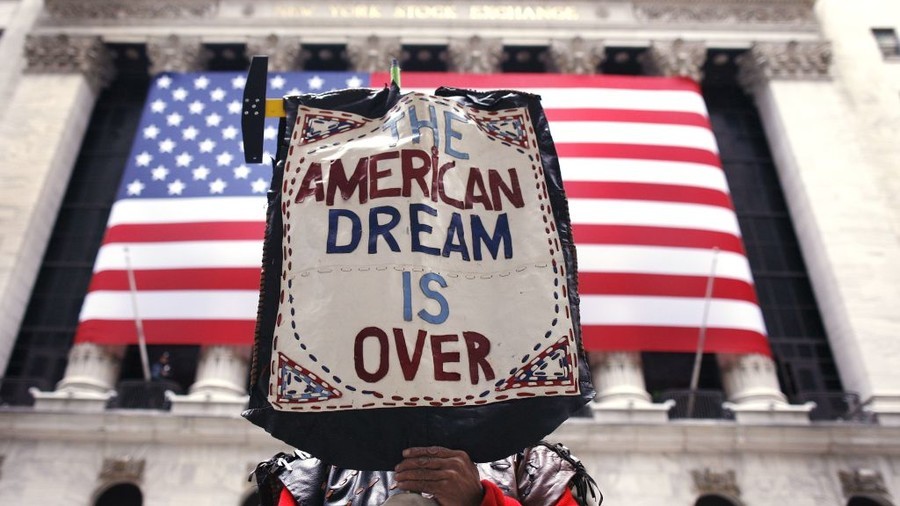
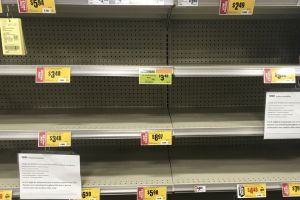
Satan’s Primary Goal Has Never Changed: Confusion, Collapse, and the Slow Strangling of a World That Can No Longer Afford to Live

Satan’s primary goal has never changed. It never evolves, never softens, never retreats. It is still the same twofold mission that began before man even understood hunger or fear: to usurp the authority and glory of God, and to destroy the souls of men—slowly if necessary, violently if possible.

Long before there were rising gas prices, collapsing currencies, or families standing in grocery aisles putting food back on the shelf, there was a rebellion. Isaiah 14 reveals it plainly. “I will ascend… I will exalt… I will be like the Most High.” That repeated “I will” wasn’t just arrogance—it was the birth of disorder. Pride turned into rebellion. Rebellion turned into exile. And exile turned into war… not against heaven anymore, but against us.

Because when that rebellion failed—when Satan was cast down—his focus shifted. If he could not dethrone God, he would corrupt what God loves most. Humanity became the battlefield.

And now, here we are.

At first, the attack was subtle. It always is. In Genesis 3, the method was laid out like a blueprint that still hasn’t changed. A question. Just a question. “Did God really say?” Not denial. Not yet. Just enough to plant doubt. Enough to loosen the grip on truth. Enough to make obedience feel restrictive… unfair… outdated.

That same whisper echoes today, but it no longer stays in churches or theology. It bleeds into everything. Into economies. Into leadership. Into the systems people depend on to survive.

Because once truth is weakened, everything else follows.

Then comes the second step—denial. “You shall not surely die.” The consequences are dismissed. The warnings are mocked. Today, it sounds different, but it carries the same poison: “There’s no real collapse coming.” “The system is stable.” “Prices will normalize.” “Everything is under control.”

But look around. Really look.

Gas prices rise—not gradually, but in waves that feel coordinated, almost deliberate. Diesel follows. Transportation costs surge. And then, quietly at first, food prices begin to climb. Bread. Meat. Eggs. The basics. Not luxuries—necessities. The things people used to take for granted now come with hesitation.

People start calculating. Not saving—calculating. Can I afford this? Do I skip that? Do I fill the tank… or feed my family?

And that’s when the pressure begins to tighten.

Because this isn’t just economic. It’s psychological. It’s spiritual. When survival becomes uncertain, fear takes root. And fear is one of Satan’s sharpest tools. Fear clouds judgment. It makes people desperate. Angry. Irrational. It turns neighbor against neighbor, not overnight, but gradually… until it feels normal.

Then comes the third step: pride and false promise.

“For you shall be as gods.”

That lie never disappeared—it just adapted. Today it looks like self-reliance without God, systems without truth, leaders without accountability. Humanity convinced it can fix what it broke. That it can print its way out of collapse, digitize its way out of chaos, control what was never meant to be controlled.

But the cracks are showing.

You can feel it in the silence when bills arrive. In the tension at gas stations. In the quiet panic behind forced smiles. Something is off. Deeply off. And people know it—but they don’t want to say it out loud.

Because saying it makes it real.

Meanwhile, the deception deepens. Not through obvious evil, but through something far more dangerous—something that looks good. Reasonable. Even righteous. “Progress.” “Stability.” “Reform.” Words that sound like solutions, but often mask deeper corruption.

Satan does not appear as darkness. Scripture warned that. He appears as light. And that’s why the deception works.

Even institutions that once stood for truth begin to bend. Churches soften. Leaders compromise. Voices that should warn instead reassure. They question what was once unquestionable, deny what was once certain, and elevate human desire above divine truth.

And people follow.

Because it feels easier.

But beneath all of it—the rising prices, the economic strain, the confusion, the quiet rage building in society—there is a deeper war unfolding. Not just for stability. Not just for survival. For souls.

The system doesn’t have to collapse overnight. It just has to become unbearable. Slowly. Quietly. Until people are too tired, too distracted, too desperate to resist anything placed in front of them as a solution.

And that’s the trap.

Because when people are hungry, they don’t argue. When they’re afraid, they comply. When they’re exhausted, they stop questioning.

This is how control spreads. Not always through force—but through pressure.

And yet, in the middle of all this, something remains unchanged.

Truth.

The same truth that was questioned in the garden still stands. The same warning that was denied still echoes. The same deception still repeats itself, generation after generation, system after system.

But so does the answer.

“For this purpose the Son of God was manifested, that He might destroy the works of the devil.”

That didn’t end the battle. It exposed it.

Because now the line is clear. Not politically. Not economically. Spiritually.

Submit to God… or be consumed by the chaos that follows rebellion.

There is no neutral ground anymore. Not in a world where even survival is being weaponized.

So when the lies grow louder—“Everything is fine,” “There is no consequence,” “You will not surely fall”—the response must be the same as it has always been:

It is written.

Because what’s coming—what is already unfolding—is not just a crisis of money or markets. It’s a crisis of truth. And when truth collapses, everything else follows.

The shelves empty. The systems fail. The order dissolves.

And then people will finally see it. Too late for many.

This was never just about prices.

It was always about control. About deception. About the slow, deliberate breaking of a world that forgot the difference between truth and lies.

And when that breaking is complete—when confusion, violence, rage, and desperation fully take hold—understand this:

That was the plan from the beginning.

Timeline Of Events Following A Long Term Grid Down Catastrophe: When the Grid Goes Down, You Better Be Ready – 90% Of Americans Would Be Dead From Starvation, Disease And Violence

People think they’re prepared.

A flashlight in a drawer. A few bottles of water. Maybe some canned food. That’s what they call “a plan.” That’s what they rely on. Because deep down, they believe the same thing everyone believes—that the system will come back. It always does.

Except one day… it doesn’t.

No warning that makes sense. No clear explanation. Just the power gone. Everywhere. Not a storm. Not a region. Something bigger. Something that doesn’t fix itself by morning.

And the worst part is not the darkness.

It’s the delay. The hours where people still think it’s temporary. Still waiting. Still trusting.

That delay kills.

You can argue all day about what could cause it. Cyber attack. War. Internal failure. It doesn’t matter. Once the grid is down long enough, the cause becomes irrelevant. What matters is what follows.

And what follows is not slow.

It comes in waves. Hard. Uneven. Ugly.

IMMEDIATE AFTERMATH

Cities choke first.

Elevators stop. People trapped inside metal boxes, no air moving, no answers coming. Some scream. Some wait. No one comes fast enough.

Everything electric just dies. Refrigerators go silent. Heat gone. A/C gone. No hum, no background noise. Just a strange, heavy quiet.

ATMs don’t work. Cards don’t work. People stand there, confused, like the machine owes them something.

Gas stations… useless. Fuel locked underground. Pumps dead.

And then night hits.

Real darkness. Not the kind people know. No streetlights. No glow from buildings. Just black. Thick, uncomfortable black. It changes people faster than they expect.

DAY 1

Now the feeling starts. Something is wrong.

Water pressure drops in places. Faucets spit, then slow. Toilets don’t flush. People notice, but they’re still telling themselves it’s temporary.

Police and emergency services are already drowning. Too many calls. Too many unknowns.

Looting begins. Not everywhere. But enough. It always starts in the same kinds of places. Then spreads.

Phones are dying. People stare at screens watching the last bars disappear. No signal. No updates. Nothing to hold on to.

Generators run—for those who have them. But fuel burns fast. Faster than people think.

Traffic locks up. People try to leave cities all at once. Bad idea. Highways turn into parking lots. Cars run out of gas. People abandon them. Walk.

Officials say different things. No clear message. No timeline. That uncertainty starts to break people.

DAY 3

Now it’s different.

Gas stations empty or closed. Doesn’t matter anymore. Movement becomes limited, dangerous.

Water is the problem now. Not money. Not anything else. Water.

Food is already gone for many. Shelves stripped. Stores broken into. Pharmacies hit hard.

Panic is not hidden anymore. You see it. In faces. In behavior. In the way people move.

This is the moment. The one where it hits.

This isn’t coming back.

END OF WEEK 1 — LONG TERM GRID DOWN

Whatever emergency supplies existed… gone, or unreachable.

Hospitals are in trouble. Generators failing one by one. No steady fuel. No system to resupply.

The elderly start dying. Then the sick. Then the ones who needed daily medication.

Hospitals stop being places of healing. They become places of decisions. Who gets help. Who doesn’t.

Martial law is declared somewhere. Most people never hear it. Communication is broken.

Military shows up in some areas. Not enough. Not even close.

Looting is everywhere now. Not just criminals. Regular people. Hungry people. Scared people.

The line is gone.

Millions are completely on their own.

END OF WEEK 2 — LONG TERM GRID DOWN

Fear settles in. It doesn’t leave.

Food is gone for most. Water harder to find.

People die quietly now. From dehydration. From exposure. From weakness.

In cold areas—no heat kills. In hot areas—dehydration kills faster.

Disease begins. Dirty water. Rotting food. No sanitation. It spreads quietly, then not so quietly.

People try to move. To find something better. Most don’t find it.

END OF FIRST MONTH

No medication. No stability.

People with mental disorders spiral. Others break under pressure.

Communities start turning on each other. Not all at once. But enough.

Home invasions. Resource fights. Small groups forming—some defensive, some violent.

Prisons fail. Some inmates get out. Gangs grow stronger where structure disappears.

Starvation is real now. Not hunger. Starvation. Slow, grinding, unavoidable.

People change.

END OF FIRST YEAR

What used to be the system… is gone.

Not damaged. Not weakened. Gone.

And the numbers… they’re hard to accept. But they keep coming up the same.

Up to 90% dead.

Not from one event. Not from one cause. From everything stacking—hunger, disease, violence, exposure, collapse.

Cities mostly empty. Or worse.

What’s left is smaller. Harder. Unrecognizable.

And this is the part people don’t want to hear:

No one is coming to fix it.

No hidden system waiting to restart everything.

The grid is not just electricity. It is the spine of everything. And when it snaps, everything built on it follows.

You don’t get a second chance to prepare when it’s already happening.

You either saw it early…

or you become part of the timeline.

NUCLEAR WAR: How the World Could Change in 24 Hours—One Moment Cities Are Alive, Bright, Vibrant, Buzzing, and the Next, With the Flip of a Switch, They Are Burning, Silent, and Dead

As the war in Iran intensifies, something deeper is breaking loose. This is no longer a regional conflict contained by borders and headlines. It feels… different. Heavier. Like a fault line under the surface has finally started to crack. What we are witnessing is not just war—it is the early movement of a global rupture, slow at first, then all at once.

The language has already changed. It’s no longer diplomatic, no longer careful. Words like “obliterate” are no longer whispered—they are spoken openly, almost casually. President Trump has threatened to wipe out Iran’s power entirely. And maybe he can. Maybe Iran cannot stop that kind of force directly.

But that is not where the danger ends.

Because Iran does not need to win. It only needs to respond.

And it already has.

The destruction of 17 percent of Qatar’s Ras Laffan natural gas complex is not just damage—it’s a warning. A signal. If the remaining 83 percent is hit, the consequences won’t stay in the Middle East. They will ripple outward, fast, uncontrollable. Roughly 20 percent of the world’s liquefied natural gas flows through that single point. Take it offline, and the system doesn’t bend—it snaps.

Energy shortages would spread like a shockwave. Fertilizer production collapses. Agriculture follows. Food becomes scarce, then scarce becomes gone. Hunger doesn’t arrive slowly—it accelerates. Entire populations pushed to the edge not by bombs, but by absence. By nothing.

And rebuilding? Years. 10 to 15, at best. In a world already unstable, already stretched thin.

This is how systems fail—not in isolation, but in chains.

For decades, we were told about nuclear war as a distant nightmare. A theoretical scenario. Maps with red circles over cities like New York, Washington, Chicago, Los Angeles. Tens of millions dead in minutes. It always felt abstract. Almost unreal.

It doesn’t feel that way anymore.

Because now those scenarios are no longer separate from reality. They are connected to decisions being made right now. Quietly. Behind closed doors. In rooms the public will never see.

And when Iran is pushed to the edge, it does not stand alone.

Russia does not sleep through this. It watches. It adjusts.
China does not react emotionally—it calculates.

The system—built over decades of tension, deterrence, and fear—begins to move.

You might think you understand war. Maybe you’ve followed conflicts, studied history, watched invasions unfold on screens. But this… this is something else entirely. This is not a war you adapt to. It doesn’t give you time to adjust, to react, to survive in the way people imagine.

It removes the idea of survival.

One moment, a city is alive. Lights on. Phones buzzing. People moving, talking, arguing, laughing.

The next moment—nothing.

No sound. No structure. No time to process what just happened.

Gone.

The chain reaction doesn’t begin with explosions. It begins quietly.

Minute 0. No announcement. No warning. A decision is made somewhere deep inside a secured network. U.S. strikes intensify. Iran responds immediately—missiles, proxies, disruptions. The Strait of Hormuz begins to close. Oil stops. Markets react faster than people can think. Panic begins in the system before it reaches the streets.

Minute 5. Early warning systems detect launches—unusual ones. Not conventional. Heat signatures where there shouldn’t be any. Confusion turns into something sharper. Military systems shift from observation to readiness. Protocols written decades ago wake up.

Minute 10. Leaders disappear underground. Emergency lines open. Data floods in. Russia raises alert levels. China moves assets. This is no longer about Iran. This is about balance. And once that balance tilts, hesitation fades.

Minute 15. A line is crossed. Not fully, not yet—but enough. Submarines reposition. Bombers move. Missile systems unlock. Each move demands a response. The chain tightens.

Minute 20. The lights go out. Not metaphorically—literally. Cyberattacks hit first, then electromagnetic disruption. Power grids fail. Communication collapses. Satellites blink offline. The illusion of control disappears in seconds.

Minute 30. Impact. No warning sirens in time. Just impact. Strategic targets vanish—bases, infrastructure, command centers. Entire areas reduced to burning fragments before people even understand.

Minute 45. The second wave. Wider. Colder. Cities are no longer avoided. Europe begins to fracture. Fire in the sky. Defense systems overwhelmed. There is no shield for this.

Minute 60. Full-scale nuclear exchange. No speech. No declaration. Just launches. Hundreds. Then more. NATO responds. Russia responds. China cannot remain passive—it is pulled in. At that moment, the word “global” becomes meaningless. There is no outside.

2 Hours. The world is unrecognizable. Hundreds of millions gone. Firestorms everywhere. The atmosphere fills with ash. Governments lose control. Command structures fracture under pressure.

6 Hours. Survivors begin to understand something worse—the explosions were just the beginning. Radiation spreads silently. Hospitals don’t function. There is no help coming. The injured are left where they fall.

12 Hours. Darkness begins to take hold. Not just from destruction—but from the sky itself. Smoke blocks the sun. Temperatures shift. Communication is gone. Entire populations isolated, unable to grasp the scale.

1 Day. Systems collapse completely. No markets. No supply chains. No water distribution. Civilization doesn’t fall gracefully—it breaks apart.

3 Days. Radiation sickness spreads. The survivors begin to die differently now. Slower. More painfully.

7 Days. The environment starts to turn. Crops fail. Livestock dies. Water poisons itself. Distance no longer protects anyone.

30 Days. The air carries death. Hunger replaces explosions as the main killer. Society dissolves into fragments.

3 Months. Sunlight weakens. Temperatures fall. Agriculture ends. Food becomes conflict.

6 Months. The population drops further. Entire regions go silent. Knowledge begins to disappear with those who carried it.

1 Year. The planet changes. Nuclear winter settles in. Ash blocks the sun. Ecosystems collapse. Billions are gone—not just from war, but from what followed.

And this is the part most people refuse to accept.

None of this requires madness.

No irrational leader. No sudden breakdown.

Only one step too far. One response too strong. One system doing exactly what it was designed to do—respond automatically, without hesitation, without mercy.

What is happening in Iran is not isolated. It is connected to a structure built on fear, power, and the illusion that escalation can always be controlled.

It cannot.

One moment, everything feels normal.

The next moment—it’s over.

And if that moment comes, there will be no victory. No rebuilding the way people imagine. No return to what was.

Only silence.

Only ash.

Only the memory of a civilization that believed it could play with forces it never truly understood.

There is no such thing as a limited nuclear war.

There is only the moment before it—

and everything that comes after.

The Great Starvation Is Coming, And the World Must Prepare: Money and Industry Dried Up Almost Overnight, Along With the Nation’s Food Resources

The warning signs are no longer distant. They are here, unfolding in real time, dismissed by many, understood by very few. The Iran war is not just another regional conflict buried in headlines—it is a trigger point. A pressure release that is already shaking global energy markets, already bleeding into the daily lives of ordinary Americans who still believe the system will somehow stabilize itself.

It won’t.

Rising oil prices don’t stay confined to the oil markets. They move—quietly at first, then all at once. Gasoline costs begin to climb, squeezing families already stretched thin. Then comes transportation. Then food production. Then the supply chains. It spreads like a disease through every artery of the economy until the cost of survival itself begins to rise beyond reach.

People notice it at the grocery store before they understand why it’s happening. Prices tick up, slowly, unevenly. Some items disappear. Others double. What used to be routine becomes a calculation. What used to be affordable becomes a luxury.

And this is only the beginning.

The conflict with Iran carries the potential to ignite something far larger, something uncontrollable. It is already being framed as part of a broader strategy—targeting energy infrastructure, destabilizing supply routes, provoking retaliation that could spill across the Gulf. Oil fields, gas facilities, desalination plants—these are not just strategic assets, they are lifelines. And they are now targets.

If escalation continues—and all signals suggest it will—the Strait of Hormuz becomes a choke point. One disruption there, just one, and global energy markets don’t just react… they fracture.

And when energy fractures, everything else follows.

There is talk, quiet but persistent, of a collapse far worse than the one the world remembers as the Great Depression. That era, often reduced to black-and-white photographs and distant history, was not just an economic downturn. It was a collapse of certainty. A destruction of stability so complete that millions were left without work, without homes, without food.

Families didn’t just struggle—they endured. Hunger wasn’t an inconvenience. It was a daily reality.

Unemployment surged. Homelessness spread like wildfire. Food became scarce, unpredictable. People learned—because they had no choice—how to survive with less, how to stretch what little they had into something that could sustain them one more day.

And here we are again, standing at the edge of something disturbingly similar, only this time the system is far more fragile, far more interconnected, far more vulnerable to cascading failure.

Food prices are already rising. Globally, they have surged over 8 percent in just a year. In the United States, grocery costs have jumped even higher, nearing levels not seen in decades. Forty years of relative stability—gone, eroded in a matter of months.

People still believe this is temporary. A fluctuation. A phase.

It isn’t.

What we are witnessing is the early stage of a structural breakdown, where energy shocks feed inflation, inflation erodes purchasing power, and weakened supply chains begin to fail under pressure. It doesn’t collapse all at once. It tightens. Slowly. Then suddenly.

And when it does, the unprepared will have nothing to fall back on.

This is why looking back is no longer optional—it is necessary. Those who survived the Great Depression did not do so because they were lucky. They survived because they adapted. Because they learned to make something out of nothing.

They wasted nothing.

Even the water used to boil food became valuable. Corn water, rich in nutrients, reused as broth or even consumed directly. Potato water turned into gravy, thickened not with expensive ingredients, but with ingenuity. Rice water, bean water, even the liquid from canned goods—nothing was discarded without thought.

What today is seen as scraps was once seen as survival.

Preservation became a lifeline. When food began to spoil, it wasn’t thrown away—it was transformed. Fermented. Dried. Canned. Techniques that extended life, increased nutrition, and created reserves for days when nothing else was available.

These were not hobbies. They were necessities.

Meat, when it could be found, was stretched beyond recognition. Mixed with oats, beans, rice—whatever could add bulk and make it last longer. Entire meals were built around the absence of meat, not its presence. Loaves made from scraps, from leftovers, from whatever could be gathered and combined into something edible.

Nothing was wasted because nothing could be wasted.

Even the idea of eating changed. The modern habit of three meals a day—fixed, predictable—became a luxury few could afford. Hunger dictated eating, not the clock. People learned to listen to their bodies, to endure discomfort, to function with less.

And they had to.

Bones were not thrown away—they were boiled, reboiled, stripped of everything they could give. Broth became a source of life. Fat was saved, rendered, reused. Bacon grease, lard, tallow—these were not excess, they were resources. Stored, protected, used carefully.

Even after everything was extracted, bones were ground down, turned into something useful. Nothing left behind.

The same was true for cuts of meat most people today refuse to touch. Organ meats, offal—liver, heart, tongue, parts dismissed as undesirable—were, in truth, among the most nutrient-dense foods available. They required effort, knowledge, patience. But they provided what the body needed to endure.

And outside, beyond the controlled environment of stores and supply chains, there was another world entirely. One most people have forgotten.

Wild plants. Edible greens. Berries. Roots. Foods that grow freely, unnoticed, dismissed as weeds by those who no longer recognize them. Entire ecosystems of nourishment, ignored because modern society has conditioned people to depend entirely on systems that can—and will—fail.

Learning to forage is not a novelty. It is a return to reality.

Because when the shelves empty—and they will, in places, at times, without warning—those who rely solely on what can be bought will find themselves with nothing.

This is not speculation. It is a pattern. One repeated throughout history whenever war, economic instability, and systemic fragility collide.

And now, all three are aligning again.

The coming crisis will not announce itself with clarity. It will creep. Prices will rise further. Shortages will appear sporadically, then more frequently. Supply chains will strain, then break in places. People will begin to notice—but by then, adaptation will no longer be easy.

Preparation must come before understanding fully sets in.

Because once it does, it is already too late.

The truth is uncomfortable, but it is simple: modern society has been built on abundance so constant that it created the illusion of permanence. That illusion is breaking. Slowly, but unmistakably.

And when it finally shatters, it will not be replaced by stability. It will be replaced by survival.

The question is no longer whether hardship is coming. It is whether people will be ready when it arrives.

Because history has already given the answer for those who are not.

They will learn—but they will learn the hard way.

And many will not learn in time.

Running Toward World War III: When the World Suffers, America Will Be Blamed — And Retribution Will Follow

No one wants to think about WW3. Most people push the thought away immediately. They turn the page, change the channel, scroll past the headline. It feels too big, too terrible, too unreal to imagine. And yet the truth is staring us in the face whether we want to see it or not. WW3 tensions are rising again across the world, and the war with Iran is quickly becoming one of the most dangerous flashpoints of the 21st century.

We are not watching a simple regional conflict. We are watching the early stages of a confrontation that could expand far beyond the Middle East. Piece by piece, escalation by escalation, the world is moving toward something far larger. A global chain reaction that, once triggered, will be very difficult—perhaps impossible—to stop.

In other words, we are running toward World War III. When the world suffers, America will be blamed — and many will seek retribution.

Many analysts and military observers have already begun warning that continued escalation in the Iran conflict could pull the major powers directly into confrontation. Iran does not stand alone. Behind the scenes, a complex network of allies, proxies, and strategic partners already surrounds this conflict.

Countries such as China and Russia have strong strategic interests in weakening American global dominance. North Korea watches carefully, always ready to take advantage of a distracted United States. Syria, Iraq, and several regional governments contain powerful militias aligned with Tehran.

Then there are the militant organizations tied directly or indirectly to Iran’s strategic sphere: Hezbollah in Lebanon, Hamas and Palestinian Islamic Jihad in Gaza, the Houthi rebels in Yemen, and multiple Iraqi Shia militias. These groups have already demonstrated their ability to launch missile attacks, drone strikes, and maritime disruptions across the region.

Individually, these actors may appear limited. But together they form a web of pressure points that can ignite simultaneously. When conflict spreads through networks like this, wars rarely stay contained.

They expand.

And once expansion begins, control disappears.

What makes the situation even more dangerous is the strategic blindness guiding much of the decision-making. The war with Iran is not a simple military operation with predictable results. It is a geopolitical earthquake that threatens to shake the foundations of global stability.

Instead of strengthening American power, this conflict risks weakening U.S. alliances across the world. Many countries already view the war with deep suspicion. In Europe, Asia, Africa, and Latin America, millions of people believe the United States is once again dragging the world into another catastrophic war.

That perception alone damages America’s credibility.

But the strategic consequences go much further.

This war strengthens America’s geopolitical rivals. Russia benefits when Washington becomes entangled in another endless conflict. China benefits when global trade routes become unstable and U.S. military resources are stretched across multiple theaters. Even smaller hostile states gain leverage when American attention is divided.

Instead of isolating Iran, this war risks isolating the United States.

And the economic consequences are already beginning to appear.

One of the most immediate dangers involves oil and global energy markets. The Strait of Hormuz, located between Iran and Oman, is one of the most important oil transit routes on the planet. Nearly a fifth of the world’s oil supply passes through this narrow corridor.

If the conflict escalates and shipping through the Strait of Hormuz is disrupted—even temporarily—the impact on global energy prices would be immediate and severe. Oil markets are extremely sensitive to instability in this region. Even rumors of disruption can send prices surging.

Now imagine a real naval confrontation in the Persian Gulf.

Imagine missile attacks on tankers.

Imagine mines deployed across shipping lanes.

The result would be a global economic shock.

Oil prices would spike rapidly. Energy costs would explode. Transportation, manufacturing, and food production would all become more expensive almost overnight. The ripple effects would hit every corner of the global economy.

And ordinary families would pay the price.

Higher fuel prices mean higher food prices. Higher electricity costs. Higher heating costs. Higher transportation costs. Inflation would accelerate again just as many households are already struggling to survive.

In many parts of the world, fragile economies could collapse entirely.

The truth that few leaders want to admit is that modern wars no longer remain confined to battlefields. They spill into financial systems, supply chains, energy markets, and food production networks. A large enough conflict can destabilize the entire global economy.

And when economies collapse, societies follow.

This is why some analysts are already describing the current situation as the early stage of a “high-intensity third world war.” Not a single battlefield conflict like the wars of the past, but a sprawling global struggle fought through multiple fronts: military, economic, cyber, and informational.

If escalation continues, the war with Iran could become one of the central triggers of that larger global confrontation.

And if that happens, nuclear risk rises dramatically.

Most people have been conditioned by decades of movies and television to think of nuclear war as an instant doomsday event where everyone dies immediately. In those dramatic portrayals, cities disappear in blinding flashes and survivors wander hopelessly through radioactive wastelands.

Reality is different.

Yes, nuclear weapons are unimaginably destructive. But the idea that every person would instantly die is simply not true. Survival is possible, especially for those who are not located directly at ground zero.

Unless you are within the immediate blast radius of a nuclear detonation—perhaps a few miles depending on the weapon size—your chances of survival are far higher than most people believe.

But survival depends on knowledge and preparation.

A nuclear explosion produces several devastating effects. First comes the blinding flash of light and intense thermal radiation, capable of igniting fires across large areas. This is followed by the shockwave, an enormous blast pressure that can flatten buildings and send debris flying at lethal speeds.

Initial nuclear radiation is released in the first seconds after the explosion. Then comes the long-term danger: radioactive fallout.

Fallout forms when the fireball of the explosion vaporizes buildings, soil, water, and everything inside the blast zone. These materials mix with radioactive particles and are carried high into the atmosphere by the rising mushroom cloud.

Eventually those particles fall back to earth.

Sometimes within minutes.

Sometimes hours later.

Sometimes even days later depending on wind patterns.

The heaviest fallout lands near the blast site and in areas directly downwind. The particles often look like gray dust or gritty sand, but the radiation they emit cannot be seen, smelled, tasted, or felt.

That invisible danger is what makes fallout so deadly.

However, radiation levels decrease rapidly over time. Scientists refer to this as the “seven-ten rule.” For every sevenfold increase in time after the explosion, radiation levels decrease by roughly ten times.

In simple terms, if a radiation level measures 500 units shortly after the blast, it could drop to about 50 units within seven hours and around 5 units within two days.

Time becomes your ally.

And shielding becomes your protection.

The three most important factors in surviving radioactive fallout are distance, shielding, and time. The farther you are from fallout particles, the better. The thicker the materials between you and those particles, the safer you become. And the longer you remain sheltered while radiation decays, the greater your chances of survival.

This is why fallout shelters—whether permanent or improvised—can save lives.

A basement offers significant protection because surrounding earth blocks radiation. The center of a building, away from windows and exterior walls, can also provide protection. Heavy materials such as concrete, earth, water, books, bricks, or sand can absorb radiation and reduce exposure.

Even a simple improvised shelter built under a sturdy table and surrounded by dense materials can dramatically reduce radiation exposure.

But a shelter must support survival for several days or even weeks. That means planning ahead with basic supplies: water, food, sanitation materials, medical supplies, communication devices, and ideally radiation detection instruments.

Another danger that receives far less attention is electromagnetic pulse, or EMP. If a nuclear weapon detonates high above the earth’s surface, it can generate a powerful burst of electromagnetic energy capable of damaging or destroying electronic systems across vast areas.

An EMP could disable power grids, vehicles, communications systems, banking networks, and transportation infrastructure simultaneously. In a modern technological society, such a disruption could create chaos even without a direct nuclear blast on the ground.

All of these scenarios may sound frightening. But ignoring them does not make them disappear.

The uncomfortable truth is that the world has entered a period of increasing instability. Wars are spreading, alliances are shifting, and nuclear-armed nations are once again confronting each other with growing hostility.

The war with Iran is not just another foreign conflict. It is a spark near a powder keg.

If that spark ignites a larger confrontation between major powers, the consequences will reshape the entire world.

Americans must begin thinking seriously about preparation—not out of panic, but out of responsibility to their families. Knowledge, planning, and basic preparedness can mean the difference between chaos and survival if the unthinkable ever occurs.

History has taught us again and again that civilizations often stumble into catastrophe while believing it cannot happen to them.

Today, the warning signs are visible everywhere.

Wars spreading.

Alliances hardening.

Nuclear arsenals modernizing.

And global tensions rising with frightening speed.

If leaders continue down this path of escalation, the world may soon cross a line from which there is no easy return.

And when that moment comes, the question will no longer be whether humanity has entered World War III.

The only question left will be how prepared we were when it began.


Jack Metir

Jack Metir is the founder and editor of Survival Blog Science, where he shares insights on practical preparedness, everyday resilience, and self-reliant living. Since 2011, Jack has written warnings and survival strategies, helping readers stay ready for emergencies and real-world challenges.

America Has Been Dragged Into a War That May Never End—and the World Will Blame It for the Destruction That Follows

America has stepped onto a road that leads somewhere dark. The war now unfolding with Iran is not a conflict the American people demanded, and it is certainly not a conflict that ordinary families in the United States will benefit from. Yet the machinery of war has begun to move, pushed forward by political interests, alliances, and pressures that most citizens barely understand. Around the world, voices are rising in condemnation. Nations that once called themselves partners now openly question why such a powerful country appears to be acting not as an independent force, but as if it were being pulled by the strings of others.

Whether those accusations are fair or not, the perception alone is dangerous. Because perception shapes alliances. It shapes retaliation. And it shapes the willingness of other powers to respond.

This war, if it continues to grow, will not resemble the limited wars Americans have become used to watching on television. This will not be a distant battlefield contained somewhere far away. Iran is not Iraq in 2003, nor Afghanistan in 2001. Iran sits at the center of a region already filled with rival powers, ancient hatreds, proxy militias, and global energy routes that feed the entire world economy.

When that region burns, the flames do not stay there.

Oil routes through the Persian Gulf could close almost overnight. Tankers could be targeted. Shipping lanes could become war zones. The result would be immediate shockwaves through global markets. Fuel prices would spike to levels most Americans cannot imagine. Transportation costs would soar. Food distribution would falter. Shelves in stores that once looked permanent could suddenly appear fragile and uncertain.

And that is only the beginning.

Iran does not stand alone. It has spent decades building alliances and relationships across the world precisely for a moment like this. Russia watches carefully. China calculates quietly. North Korea studies every development with cold interest. None of these nations need to rush into the war directly in order to change its outcome. All they need to do is tilt the balance.

Russia could provide advanced weapons systems, intelligence, or cyber warfare capabilities that cripple Western infrastructure. China could exploit the chaos to move on Taiwan or disrupt global supply chains that America depends on for everything from electronics to pharmaceuticals. North Korea could decide that a distracted United States presents the perfect opportunity to test the limits of nuclear intimidation.

Wars rarely stay contained once several nuclear powers begin circling the battlefield.

And then there are the shadows—terror networks, proxy militias, ideological movements that thrive in chaos. The Middle East has spent decades producing groups that view America not merely as an opponent but as an enemy civilization. A regional war could ignite a wave of attacks that spread far beyond the battlefield. Embassies, cities, transportation systems, energy infrastructure—targets would appear everywhere.

The American homeland would no longer feel distant from the war.

The truth many people refuse to accept is that modern war does not always arrive with tanks crossing borders. It arrives through cyberattacks that shut down power grids. It arrives through financial shocks that erase retirement accounts overnight. It arrives through sabotage of pipelines, shipping, and communication networks. It arrives quietly at first, and then all at once.

For those who have made difficult decisions early—those who chose to remain solvent, to prepare, to think ahead—the coming chaos is not a surprise. They have already concluded that the storm forming on the horizon is real. They understand something many others refuse to acknowledge: societies can look stable right up until the moment they fracture.

America itself has been changing rapidly. The country is more divided than at any time in living memory. Millions of people have entered from every corner of the globe, bringing different languages, different loyalties, different beliefs. Some have embraced the American identity. Others have not.

When a nation becomes deeply fragmented, external enemies do not need to defeat it directly. They only need to push slightly. Internal tension begins doing the rest.

History shows this again and again.

Empires rarely collapse because they lose a single battle. They collapse because internal fractures weaken them first. Then pressure from outside completes the process.

There are those who believe the United States is now being maneuvered toward exactly such a fall. Slowly isolated from allies. Drawn into conflicts that stretch its military across multiple regions. Burdened with debt so enormous it can no longer be sustained indefinitely.

If a major war erupts while these weaknesses exist, the consequences could be catastrophic.

Many Americans still believe the wealth of their nation is permanent. They believe the system surrounding them will continue functioning because it always has. But wealth accumulated over generations can disappear far more quickly than it was created. Entire financial structures can collapse in a single night if confidence disappears.

One evening the lights are still on. The markets still function. The shelves are still full.

The next morning the country awakens to something unfamiliar.

A different world.

Warnings about such possibilities are often dismissed as the talk of pessimists, alarmists, or people who refuse to trust the system. Yet history is filled with populations who dismissed similar warnings—right up until the moment reality forced them to face the consequences.

And then it was too late.

Those who prepare in advance are often mocked while times are calm. They are called paranoid. Delusional. Out of step with modern society. But when the storm finally arrives, it is always the prepared who become the anchors of stability.

When winter storms bury the roads in snow, they still have food.
When the power grid fails, they still have heat.
When fear spreads through neighborhoods and desperation pushes people to dangerous choices, they still have the means to defend themselves.

Preparedness is not paranoia. It is simply the recognition that stability is never guaranteed.

There is, unmistakably, a storm forming now.

If the war in Iran expands, the worst-case scenarios are almost unimaginable. Russia could enter the conflict indirectly through military aid or strategic attacks on NATO supply routes. China could use the moment to launch its own geopolitical moves, opening a second front in the Pacific. North Korea could escalate tensions with missile launches or nuclear threats designed to stretch American defenses thin.

Global trade could collapse. Energy supplies could be disrupted. Financial markets could panic.

Even worse, nuclear weapons—once thought unthinkable—could begin entering the conversation again if major powers feel cornered.

Scripture itself warns of such times. In the Gospel of Matthew it is written:

You will hear of wars and rumors of wars… Nation will rise against nation, and kingdom against kingdom. There will be famines and earthquakes in various places.” (Matthew 24:6–7)

The Book of Revelation paints an even darker image:

And power was given unto them over the fourth part of the earth, to kill with sword, and with hunger, and with death.” (Revelation 6:8)

For centuries people have debated the meaning of these warnings. Yet every generation that stands near the edge of war begins to hear them differently.

Because suddenly they no longer sound symbolic.

They sound possible.

And that is why preparation matters.

Every American family should be thinking carefully about what they would do if supply chains suddenly stopped functioning. If grocery stores ran out of food for weeks. If transportation halted. If electricity became unreliable.

The first step is food. Store as much long-term food as possible—rice, beans, canned goods, dehydrated foods, grains, and preserved meats. Enough to sustain your household for several months if necessary. Water storage is just as critical. A family should have both stored water and filtration systems capable of making questionable water safe to drink.

Medical supplies should not be overlooked. Basic first aid equipment, antibiotics if available, over-the-counter medications, and hygiene products can become extremely difficult to obtain once panic buying begins.

Energy independence is another layer of resilience. Backup generators, solar panels, fuel storage, and alternative heating sources can keep a household functioning during extended outages.

Security is also part of preparedness. When systems fail, law enforcement can become overwhelmed. Responsible firearm ownership, proper training, and secure storage should be considered by families who wish to protect themselves if conditions deteriorate.

Financial preparation matters as well. Throughout history, during periods of extreme crisis, paper currency often loses value rapidly. Precious metals such as gold and silver have traditionally served as stores of value during unstable times. Many preparedness experts recommend holding a portion of savings in physical gold coins or silver bullion that can be traded if financial systems freeze or banks close.

None of this guarantees safety. But it increases the odds of survival.

Because if the storm does come—and signs increasingly suggest that it might—the difference between chaos and endurance will come down to who prepared when there was still time.

Most people will wait. They will assume someone else will fix the problem. They will assume the system will correct itself.

But storms do not wait for belief.

They arrive when they arrive.

And if the world continues moving toward wider war, the words written long ago may echo louder than ever before:

For when they shall say, Peace and safety; then sudden destruction cometh upon them… and they shall not escape.” (1 Thessalonians 5:3)

The question every American must ask now is simple.

Will you be among those who laughed at the warnings…

Or among those who quietly prepared while there was still time?


Jack Metir

Jack Metir is the founder and editor of Survival Blog Science, where he shares insights on practical preparedness, everyday resilience, and self-reliant living. Since 2011, Jack has written warnings and survival strategies, helping readers stay ready for emergencies and real-world challenges.

Items People Would Kill for in a Crisis: Stockpiling Guns, Ammunition, Food, Fuel, Medicine and Gold Might Be Your Best Investment When the SHTF

Look around the house sometime, and think about the value of all the stuff you have. Not how much money you paid for it – consider how important it is to you. Some things will be valuable to you because you use them all the time. Some will have sentimental value. Some will be important just because you like them. It’s a safe bet that if you were told you had to get rid of half your stuff, you could list your belongings in order of importance pretty easily.

If the SHTF and society collapses, the order of that list is likely to change quite dramatically. For example I have three English longbows which I love, and a compound bow that I don’t particularly like at all. In a crisis, though, the compound will be a lot more important to me, because while it’s no fun to shoot it’s more accurate, much more compact and, generally, a far more practical hunting weapon. You’ll know which of your own possessions will be worth most in an emergency.

The point to remember is that in a survival situation the things that matter really matter. We’re not talking about items you enjoy using, or that make your home feel more comfortable; we’re talking about items that mean the difference between life and death. With stakes that high, people will do drastic things to get their hands on those items. Some will even be willing to kill for them – and the longer a crisis goes on, the more survivors will cross that line.

As a prepper, you shouldn’t ever be in the position of needing to use deadly force to get the things you need to survive; you should have them already. Preppers are a small minority of the population, though. We’re seriously outnumbered by people who aren’t prepared, who don’t have the things they need, and who – if they survive long enough – are going to get the idea that they can get those things by knocking you on the head and taking them from you. Here are the things they’ll want to take, and how you can protect your equipment – and yourself.

Guns

Items People Would Kill for in a Crisis

In a TEOTWAWKI scenario, your chances of surviving go way down if you don’t have a gun. Firearms are excellent for hunting and essential for self-defense.

People who don’t have guns will be determined to get one – gun control will be the first political casualty of a crisis – so make sure they don’t get yours.

One thing to watch for is over-confidence. You have a gun, and the people who want to get one don’t. How can they overcome the advantage your firearm gives you? Well, there are ways.

If someone with a knife or even a stick can get within their weapon’s reach before you can react, you’ve lost the advantage. The easiest way for them to do that is to just wait until you’re asleep, then sneak up on you and hit you over the head. That’s why you’re much better off as part of a group; you can maintain 24-hour security.

Alternatively, one person can distract you, for example by asking for food or medical help, while another sneaks up behind you with a knife in his hand. If you’re talking to refugees or desperate neighbors, don’t let them get too close and keep your back protected – even if that means standing against a wall.

Ammunition

Some people who do have guns will also be a threat. If somebody’s running low on ammunition they might decide the best way to use their last few rounds is to shoot you and take your ammunition.

This threat is hard to defend against, because your adversary has a gun. The best defense is OPSEC – do your best to conceal the fact you have guns and ammunition.

Food

There aren’t many things that will make people as desperate as hunger. When you’re starving, and know that someone else has food, any moral qualms about killing them to get your hands on it will fade fast.

Again, your best defense is to hide the fact you have food – because if you don’t, sooner or later someone’s going to try to take it from you.

Fuel

Often, when disaster strikes the best thing to do is get as far away from the scene as possible. Unfortunately that inevitably means gas stations being swamped with panicking drivers until their tanks run dry, and then people running out of fuel as they try to escape.

If your terrified family are in the car with you, the tank is empty and you can see someone else with a row of gas canisters in the back of their truck, how far would you go to get that gas for yourself? Some people will do whatever it takes – including killing. In a crisis, every life is cheap except your own.

Medicine

Whatever crisis hits us, it won’t be the initial disaster – societal breakdown, hurricane or even nuclear war – that causes most deaths. It will be the wave of disease that follows. With the water supply failing, hospitals closed or overwhelmed, and pharmacies looted, things like cholera and typhoid will sweep through the survivors.

When someone is watching the first signs of disease in themselves or a loved one, they’re going to want to get hold of medicine to treat it – and everyone knows preppers stockpile medicine.

Even simple medicines like rehydration salts can be life savers. However, the most important medicine people will be after is antibiotics. Since antibiotics are typically not available over the counter, here is an ingenious way to stockpile antibiotics without a prescription, before it’s too late.

Gold

Items People Would Kill for in a Crisis

I disagree with a lot of preppers when it comes to the value of precious metals for barter after a social collapse. I don’t think they’re worth having.

In theory they’re great; substances that have been valued for the whole history of human civilization, and won’t become worthless when the government that issued them falls apart.

In practice… well, if you’re anxiously watching your food supplies and hoping they last until your crops are ready to harvest, are you really going to hand over part of them in exchange for some shiny yellow metal that, importantly, you can’t eat?

I don’t think you are. In a world where no more ammunition is being made, do you want to swap some of your dwindling supply for a bar of gold you can’t actually do anything with?

However, as useless as gold and silver might be in a crisis, some people’s greed will overcome their common sense. If you have gold, and people know about it, someone will attempt to kill you and steal it.

Your stockpiles are valuable in money terms – it’s hard to be really prepared without spending a lot – but when the crisis comes their value soars beyond anything money can buy. They’re what’s going to keep you alive through whatever comes at you.

But anything that can keep you alive can also keep someone else alive. Never underestimate how determined they might be to save their own life, even at the cost of yours. You need to protect your stockpile, and that also means protecting yourself.

9 Terrifying Truths About Long-Term Economic Crises

Preparing for a long-term economic crisis is about more than ensuring you’ve got your food stocks and a way to protect yourself at home.

Major economic downturns in history, such as the Panic of 1873 and the Great Depression of the 1930s, posed challenges that evolved challenges over time.

With past prolonged financial crises as a bellwether, we decided to take a closer look at some of the terrifying truths arising from a long-term economic crisis.

Chronic Unemployment

Prolonged high unemployment is common during a prolonged economic crisis. This leaves a lot of families struggling to make ends meet and having to make drastic cutbacks. This hurts a lot of other sectors, including housing, consumer goods, and transportation.

Eventually, unemployment benefits run out. Families start losing their homes. This causes economic ripples that worsen other aspects of the financial crisis.

What You Can Do

It’s hard to keep yourself from ever losing your job in a long-term economic crisis. Setting aside three months’ worth of savings is a wise safety net if you do end up unemployed.

Increasing Petty Theft & Violent Crime

9 Terrifying Truths About Long-Term Economic Crises

Inflation, unemployment, and skyrocketing costs will only increase desperation on the streets. Ordinary people who wouldn’t turn to things like shoplifting, purse-snatching, or drug dealing will start to turn to illegal outlets to get by.

Yet when things do go wrong these “Amateur Criminals” tend to lose their cool quickly and over-react. The intended victims of petty crimes become more likely to retaliate. Many will take measures to defend themselves.

In time home invasions will start to go up. Tensions will be running so high that it doesn’t take much to incite riots and looting.

Eventually, law enforcement numbers will start to decline. Police departments will start shuttering. This creates a double whammy escalating petty crimes and home invasions.

What You Can Do

Being smart about personal protection and increasing your home security measures are smart first steps. This includes carrying self-defense items on you when you go out while installing cameras, motion lights, and other deterrents around your property.

When you do go out, dress down to keep from looking like a target. Purse snatchers and pickpockets are more likely to target people who look like they have something to steal. Leave the designer-labeled clothes at home and keep a clutch wallet in an inside pocket.

Try to also take the curb appeal of your home down a notch. Even if you’re financially holding your own during an economic downturn, you want your home to look like you’re just getting by.

Riots and Civil Unrest Become Common

9 Terrifying Truths About Long-Term Economic Crises

When all the ingredients of a prolonged economic downturn stew together long enough, it creates a powder keg for civil unrest.

People who are desperate and frustrated with the government’s response can be easily triggered. Once a riot starts it can spread far beyond the original area.

People use the protests to loot stores, small businesses, and sometimes even homes.

What You Can Do

If you own a small business, bars on windows and roll-up doors reduce the risks of looting, and help you control access. You also need to take home security to the max with bars on windows and heavy-duty steel doors with reinforced jams.

In times of civil unrest, cities can quickly become dangerous. When that happens, escaping to the wilderness might be your safest bet. But survival out there is about more than just basics; it requires mastering long-term skills.

Government Austerity Will Go Too Far

Governments use austerity measures to weather a prolonged recession. This increases taxes and decreases spending can be modestly effective for several months.

Chronic inflation and unemployment eventually get to a point where austerity measures only add fuel to the fire. Any money borrowed and added to the national debt will also add to soaring inflation as austerity measures start to fail.

What You Can Do

9 Terrifying Truths About Long-Term Economic Crises

Setting up smart tax shelters in advance will help you keep access to your money in the long term.

Health savings accounts, retirement IRAs, and municipal bonds make the most sense in these times.

Worsening Supply Chain Issues

Minor supply chain issues due to the cost of labor, materials, and transportation infrastructure issues are common during most economic downturns. Yet as an economic crisis draws on, there’s a tipping point where it becomes nearly impossible to get goods at a reasonable time and price.

Meanwhile demand for many consumer goods and luxury items continues to dwindle. While the cost of transporting those goods from nations like China becomes increasingly cost-prohibitive.

Eventually, overseas manufacturers will pull the plug on exporting goods. Focusing on their domestic markets to stay afloat. This will lead to massive shortages and/or massive delays in getting consumer goods.

What You Can Do

Take inventory of your essential devices and equipment. You need to be brutally honest in determining the things you need. Then make sure you have a duplicate or parts to repair it.

Most consumer devices aren’t truly essential. In time, you’ll eventually figure out how to replicate them in other ways.

It’s essentials like winter jackets, heaters, flashlights, batteries, and automotive parts that you need to have in stock. It’s these things that will maximize your self-reliance when you need it most!

Failure of Banks and Insurance Corporations

9 Terrifying Truths About Long-Term Economic Crises

Modern banks have far less liquid capital than they’re worth. During a long-term economic crisis, there will be an inevitable “Run on the Banks” that will cause financial institutions to become insolvent.

This was a serious problem during the Great Depression that only made the problem worse.

When FDR took office, he declared a 4 day bank holiday to restore confidence in the financial system. In 2008 the FDIC rescued several banks and even seized Washington Mutual Bank.

This gives the impression that the Federal Government has the banking system covered for short, and even mid-term bank failures. Yet the financial landscape becomes a slippery slope as a long-term financial crisis drags on. There’s a limit to what the FDIC, US Federal Government, and world banks can do.

What You Can Do

Capping money you have invested in a single ban under the $250,000 FDIC limit is wise during a long-term economic crisis. You should also spread your savings throughout multiple banks just in case one fails.

Keep at least 3 months of income stashed in a safe at home. Keeping barter-worthy items such as excess ammunition, MREs and even fuel could also be wise. If multiple banks fail, the bartering might have more value than money.

Food Supply Insecurity

9 Terrifying Truths About Long-Term Economic Crises

A prolonged economic crisis will drive up fuel costs while simultaneously impacting farm subsidies. Along with inflation the cost to grow, harvest, and transport food can get insanely high.

Many low-priced staples like milk become prohibitively unprofitable for producers.

During the Great Depression, the price of milk was so low farmers poured it out to try to drive prices higher.

Today the Federal Government provides subsidies to dairy farmers to keep them afloat and control food production costs. Yet these subsidies can evaporate as austerity measures start to fail.

At some point, there’ll be a sharp spike in food prices becomes. When luxury foods like Brussels sprouts, and olive oil, start suddenly going up, staples like eggs, flour, sugar, and bread surge shortly after.

What You Can Do

A staple collection of dry goods, along with a big garden will help you stay self-sufficient. Even when grocery store costs start to skyrocket, you’ll still be able to feed everyone under your roof.

Keeping backyard chickens, dairy goats, and maybe even a few pigs will help. Being able to do things like grow your vegetables and bake your bread also means you have more money available to buy the things you can’t produce yourself.

Government Fails to Respond to Natural Disasters

A prolonged economic crisis can get to the point that the government simply doesn’t have the means to provide aid during a natural disaster. A hurricane, flood, or earthquake affects your area, with little response from government relief organizations.

Even a serious tornado, ice storm, or drought can have its aftereffects magnified during a major financial crisis. Understaffed first responders will struggle to handle tasks that normally would be handled by FEMA.

Utility companies will struggle to restore power and water. There’s also likely to be a food crisis when shipping infrastructure is compromised, and stores don’t have the electricity to maintain refrigeration.

What You Can Do

Be fully informed about the potential natural disasters that can affect your area. Then make a disaster survival plan with fallback contingencies.

This should include a plan for bugging in with a generator and your freshwater supplies. You should also have clear criteria for when it’s time to evacuate or move to a bug-out location.

Consider establishing a plan that coordinates with your neighbors. Helping them understand what they can do to be more self-sufficient reduces the chances of them needing your support in a natural disaster or pool supplies in a dire time!

END-TIMES TRENDS AND PRE-TRIBULATION EVENTS: THE ARMIES OF THE WORLD PREPARE FOR WW3,THE ‘WORLDS POP’ PLAYS ON!  

The Old Testament of the Christian Bible (which is the whole of the Jewish Bible) gave many astonishing predictions of what will take place during the end of the world as we know it (TEOTWAWKI). The key passages found in the Old Testament include Psalms Chapter 83, Ezekiel 36-39, Zechariah 14, and Daniel 7-12. The last book of the Christian Bible, Revelation, and many other New Testament books are full of end-times predictions.

Jesus combined most of these Old and New Testament prophecies about the end times when he gave the Olivet Discourse (Mat 24, Mark 13, Luke 21). This was Jesus’s last teaching just before his arrest and execution, so at least Jesus considered these end-time events to be important. It is also important to remember that the Bible is primarily the story of the Jews and their Jewish homeland, which includes Jerusalem and the Temple Mount. And the prophecies foretold in the Bible are presented from a Jewish point of view. Since we are constantly bombarded with human ideas and deceptions, wouldn’t it be reasonable to get our “Perception Bias” on end-time events from the most important book ever written?

All these end-time predictions defined at least 11 Key Trends to watch for leading up to the final seven-year Tribulation. As described in Matthew 24, a key condition to knowing these Trends are occurring during the end-times is they all will grow in Frequency, Intensity and Visibility like birth pangs until by Tribulation time they become Unstoppable.

These trends are:

  • Global Travel (Faster/Easier) (Dan 12:4)
  • Global Knowledge (Exponential Increase/Easily Available) (Dan 12:4)
  • Global Deception (Clever/Diabolical) (Mat 24:11, Luke 21:8, 2Ti 3:13)
  • Global Weather Anomalies (Violent/Extremes/Widespread) (Luk 21:11)
  • Global Communication (Faster/Easier) (Dan 12:4)
  • Global Pandemics (Mat 24:7)
  • Global Weapons of Mass Destruction (WMDs) (Zechariah 14:12, Rev 18)
  • Global Materialism/Hedonism (Mat 24:12, Rev 18)
  • Global Christian Evangelism (to Every Tongue & Tribe) (Mat 24:14)
  • Global Digital Money (Enabling Global Tracking) (Rev 13:17)
  • Global Hatred for Israel (Zech. 12:3)

Of this list of Trends, we can see that most are now in the Visible/Unstoppable phases: Travel, Knowledge, Deception, Weather, Communication, and WMDs.

Some are still in the more Frequency/Intensity phases: Pandemics, Materialism/Hedonism, Christian Evangelism.

And the final two trends are just around the corner:
Digital Money and Global Hatred of Israel

So, what still needs to transpire before we can definitely know this is the end of current history. What specific Future Events do we need to look for not including but leading to the 7yr Tribulation period?

GLOBAL PANIC ATTACK

This “Panic Attack” will be caused by incessant wars, riots, earthquakes, tsunamis, famines, epidemics/pandemics, and strange heavenly sights. Specifically, what will this look like over the next several years?

War – “And you shall hear of wars and rumors of wars” (Mat 24:6)

A hybrid WWIII with NATO vs Russia has already started and will intensify and spread beyond Ukraine. Then China/N Korea/Venezuela/others will be tempted to take this opportunity to seize their neighbor’s lands. With our advanced communication and media we hear of every rumor of wars.

Riots – “Nation shall rise against nation” (Mat 24:7)
In modern context nation here would mean tribal groups against other tribal groups. We can see now that most riots have a tribal mentality, especially political, BLM, and Palestinian causes. Anti-Semitism incidents have increased over 350% in the past 6 months. Elon Musk just recently stated that DEI training and enforcement is inherently anti-Semitic. Therefore, Pro-Palestinian riots will continue through 2024. But that is just a cover in order to test the legal limits they can get away with. These riots will also test and improve the details of their political cover (“Let them through, they are just expressing their frustrations”) and media cover (“Mostly peaceful protests”). Then political riots will ensue and intensify in US if Trump is seen leading or outright wins the 2024 Presidential election (if one is held). On the flip side, limited riots may also happen if perception that the vote was rigged and Democrat nominee wins (notice that I didn’t say Biden). But those latter pro-America protests will be met with ferocious legal/political/media responses. Either way, 2024-2026 will likely be the most violent time in the US since the 1861-1865 Civil War.

Lawlessness/Fascism – “And because Iniquity shall abound the love of many will become cold” (Mat 24:12)
Rampages and general lawlessness will continue around the world. The October 7 war and Israel’s retaliation to Hamas atrocities has exposed the convergence of Ultra Liberals (historical Reds) and Ultra Conservatives (historical Greens): the so-called Red-Green convergence. This Left-Right fascist convergence has been unwittingly inculcated into our youth over many decades by extremists in our educational institutions across both the Western and Islamic worlds.

Climate Change – “…and there will be famine and earthquakes…” (Mat 24:7)
Weather anomalies and the Ukraine war will intensify worldwide hunger and famine. Then, as we know, the convergence of political anger and hunger will intensify riots and possibly end in revolutions. Hunger, famine, and riots will all be blamed on Climate Change caused by human selfishness. If all these political/economic/social riots continue, many countries, including the US will likely invoke Martial Law or descend into civil war.

Pestilence – “…and there will be … pestilence…” (Mat 24:7)
Regional Epidemics leading to Global Pandemics are likely to emerge. This will trigger the new World Health Organization’s Pandemic Accords, which essentially will take away our 1st Amendment rights. These new Accords will allow the WHO to define what is a pandemic, say, Climate Change, or Disease X potential. It will allow them to decide what are the mandatory remedies to resolve/reduce the pandemics. And just as important control/ remove what are NOT remedies (Ivermectin/coal?). It will allow the WHO to control travel, give stay-at-home directives, and even limit certain purchases. And it will allow the WHO to decide what is dis/misinformation, giving them authority to stop it. It will even allow them to decide and remove “malinformation”, what DHS defines as things that are based in truth but cause you to distrust authority.

Heavenly Events – “And I will give wonders in the heavens above… The sun shall be turned into darkness and the moon into blood…” (Acts 2:19-20)
Strange events in the heavens will be shown around the world. Since these haven’t happened yet, not sure what they will be. And it is possible that these will only occur during the final Seven-Year Tribulation.

Earthquakes – “…and earthquakes in diverse places.” (Mat 24:7)
Earthquakes and Tsunamis will continue to increase around the world and be shown globally. The biggest world-wide news of Jan 1, 2024 was the 7.6 earthquake in Japan followed by a tsunami scare. The aftermath was shown around the world via TV and the internet. These events will continue.

GLOBAL DESIRE FOR PEACE

As the aforementioned trends and events intensify all peoples will cry out for Peace and Security.

“Take heed that no man deceives you. For many shall come in my name, saying, I am Christ; and shall deceive many. And many false prophets shall rise, and shall deceive many”. (Mat 24:4-5, 11)

Therefore, False Peacekeepers (religious/political/social/military) will arise around the world. Deceptions will make it hard to determine who is sincere. This is when trust becomes an important commodity. We must build a community of trust before it is too late.

Finally, just before the seven-year Tribulation, the Anti-Christ will arise, deceiving the world and espousing global peace.

Digital Money & Tracking

This is one of the trends from above that is not quite there. So, this will continue. The current global US Dollar is likely replaced by BRICS gold-backed currency or global IMF agreement for a single digital currency.

Going digital will allow governments and corporations to more easily track where we are and what our spending habits are. It will then be very easy to move to enforcing DEI/ESG/social credit requirements via digital purchase denials or even confiscating bank accounts. And this will likely happen prior to the seven-year Tribulation and the Mark of the Beast (Rev 13).

Israel Hated and Alone – “And in that day I will make Jerusalem a burdensome stone for all peoples… all the nations of the earth will be gathered against it.” (Zec 12:3)

Current supporters USA/UK/etc. will disavow and separate from Israel likely because of their violent response to Hamas/Hezbollah atrocities. Perhaps the Palestinians will be forcibly resettled into South Gaza, South Lebanon and/or West Bank thus further angering the world and isolating Israel.

Israel at Peace – “In the latter years … on the mountains of Israel, which have always been waste. Israel shall be brought out of the nations of the world, and they shall dwell securely, all of them” (Ezk 38:8)

Somehow, Israel will return to peace. This means that Hamas and Hezbollah will be defeated. Perhaps Israel will also destroy Iran’s leaders and WMDs allowing a reprieve. If Israel does not return to peace, then that means the peace of Israel is already over and the next event below is just a continuation of the Hamas War.

BATTLE OF MAGOG (EZK 36-39)

A specific League of Nations, led by Magog and Persia will attack Israel (Ezk 38). Remember, this prophecy was written ~2600 years ago, long before Islam arrived in the Middle East. Now all the nations listed in these Biblical prophecies are Islamic, except Magog.

Persia – Iran has been in the news ever since 1997 when the Ayatollahs took over what was called Persia for thousands of years. From a Biblical point of view Persia was the land where the Jews were exiled to in 586BC, where Queen Esther and Mordecai lived, where the evil Haman tried to destroy all the descendants of Jacob, the Jews. The current rulers of Persia, the Ayatollahs, have consistently and publicly stated their desire to destroy Israel.

Magog – Many scholars believe that Magog is Russia, and it very well may be based on how nations are aligning. The Scythians have historically been identified as the descendants of Magog. They are now settled in the steppes of Russia. Magog will be forced into the battle likely because of treaties w/Iran. So, Magog doesn’t sound like an Islamic nation.

Beth Togarmah and Gomer – Their historic lands are now Turkey. Therefore, watch for Turkey to move from prior EU/NATO centric and align towards this evil league based on mostly Islamic Shia-inspired dogma.

Cush – This is the northern part of Africa along the southern coast of the Mediterranean Sea. So should include Islamic nations of Tunisia, Algeria, and Libya. Interestingly, this league will not include Egypt, as they are not on the list and currently have a peace agreement with Israel.

Put – Put was historically the area south of the 2nd cataracts of the Nile River. This could include Sudan, Ethiopia, and Somalia. Also, based on people migrations over the years, this could include Arabic peoples just across the Red Sea channel: the Houthis. Abomination of desolation

Friends of my Enemy – Interestingly, this league will include countries that have hated each other for generations: i.e. Iran vs Russia, Turkey vs Russia, Turkey vs Iran, Iran vs Iraq.

Rebuilding of the Third Jewish Temple – “Therefore when you see the abomination of desolation, spoken of by Daniel the prophet, stand in the holy place…” (Mat 24:15)

It is biblically difficult to determine if the Temple will be rebuilt before or during the seven-year Tribulation. No matter when built, preparations for the Temple instruments, priests, animals, and ceremonies will continue and be visible to all the world. The Dome of the Rock will have to be removed. This may happen if the current Hamas war spills over into the West Bank, or an act of terrorism could destroy it. The area is also an active earthquake zone so could happen that way. Either way, watch for major movements on the Temple Mount.

What Must We Do?

1. AMERICA IN TROUBLE

In my opinion, America is in very deep trouble. From a Biblical point of view America doesn’t exist in the end-times. What happens? I can see several possibilities:

Mystery Babylon – Revelation 18 speaks of a great power that exists towards the end of civilization but is destroyed in a single day. The US fits all the items listed, so this may be our end.

CME/EMP – Modern cultures are so dependent upon electricity and our electronic devices that if a solar Coronal Mass Ejection or man-made Electro Magnetic Pulse occurs all our home electricity, travel, communications, supply chain, and electronic financial transactions will be halted, throwing us into the dark ages.

Fade Away – As the older generations die off, we are left with DEI-educated young adults that really know only a woke/liberal imaginary world. Yes, our conservative-trained children may be homeschooled and attend church or synagogue, but they are a precious few compared to the hordes coming out of the universities and service academies. The leaders of the future are just itching to become untethered from the past ‘mistakes’ that us older people have left them with. America will soon reach a tipping point where the woke have enough control to take over all institutions, then we are toast.

Merge into EU – A new Roman Empire will arise during end-times and it is possible we will merge or be closely tied to that new empire, especially if we lose our superpower status.

Rapture – 63% of Americans still claim to be Christians (Wikipedia), so if only half of these are true Christians that is still 30% of American citizens disappearing just as all these mentioned Trends converge into a perfect storm of trouble. [JWR’s Comment:  Opinions of course vary widely on when the rapture will occur,  i.e. before, during, or after the tribulation.]

2. GET RIGHT WITH GOD

In my opinion, we are now entering Biblical times and events. There may be no worldly preparations that we can do to protect us from what is soon coming. Therefore, we need to prepare for our eternal peace and security.

“No one comes to the Son except first the Father draws them.” (Jn 6:44)

The word “draw” here is describing the creation of a vacuum, similar to drawing on a straw. Nature abhors a vacuum, so something must replace what was removed. In this Biblical context, God will remove our worldly attempts to satisfy our needs and wants until we finally look up and cry ‘uncle’. These are definitely ‘drawing’ times. So much has happened in just 10 years that it is almost unfathomable. It is obvious to me that all our preps will not save us for what is coming. So, we need to admit that we can’t save ourselves. I am not saying that we shouldn’t continue our preps, for we are always encouraged to plan and prepare for our families, right up to the time of our death.

“I am the way, the truth, and the life. No man comes to the Father except through Me.” (Jn 14:6)

Jesus says that he is ‘The Way’, there are no other alternatives. Even our Jewish friends will eventually recognize that they missed the first coming of their Messiah.

Jesus says that he is ‘The Truth’. We are inundated with dis/mis/mal information so much now that it is hard to know what is truth. He says that his truth can be found primarily though the Bible, prayer, meditation and like-minded community.

Jesus says that no one gets to Heaven except ‘Though Him’. That path was created when He died on the cross for all the world’s sins. When He was buried for three days to signify the destruction of his earthly body. And when He arose from the grave on the third day in a resurrected body to show the hope of everlasting life if we follow the same path. But it is not just a path of death, burial, and resurrection, but that we do each step ‘Through Him’.

So, we first admit that we are sinners headed for destruction. Second, we admit we cannot save ourselves and that we therefore need a savior. And finally, we ask Jesus to be our savior and come into our heart and make us a new person.

When we follow these steps we give our sins to Him, we spiritually die to this world thru Him, we turn away (repent) from our sinful nature through Him, and we receive a second birth with a renewed soul and spirit. We are Born Again. We also get an added bonus because the Holy Spirit is now given an avenue into our new spirit, showing us the way we should live our lives.

“I have spoken these things to you so that you might have peace in Me. In the world you shall have tribulation, but take heart. I have overcome the world” (Jn 16:33)

Christians are not perfect while living on this earth. We will continue to make mistakes. We will continue to sin and we will continue to have hardships as we go through life. But now we have two advocates for us to help guide our path to love, peace, truth, and goodness. To encourage us to make amends for the wrongs we do and to keep us from the evil that is soon upon us. Take heart, do not fear, we are not alone.

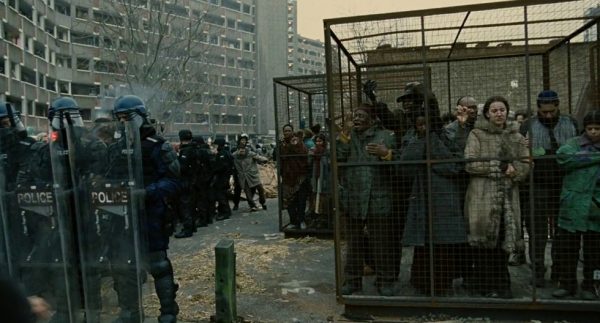
In Order to Understand How to Prepare for a Protracted Power Outage, You Should Understand Timeline of Events Following a Long Term Grid Down Catastrophe – Based on Population Density, 90% Are Dead

People may have basic emergency plans for a short term power outage. Usually these things are fixed fairly quickly, thanks to electric utility company lineman working the affected region. However, “what if” the entire power grid went down here in America? A catastrophic long term grid down. Surely that would never happen, right? “Come on man!” No way…

What if one of several potentially possible events actually brought the grid down all across the country? Without debating the aspects of causation, I wonder what might be the cascading timeline of resulting events following a long term grid down disaster? I would like to present an opinion about what might happen versus hours, days, weeks, etc.. afterwards.

Most of those who are preparedness-minded know and realize that they cannot count on government to ‘save them’ in the thick of a major and overwhelming disaster such as the aforementioned hypothetical long term grid down situation. Unfortunately the vast majority of people presume that there is a plan. And that regardless of the disaster, their government will step in and ‘provide’ for them. It will save them, so to speak. It will all ‘get fixed’. In the terrifying event of a long term grid down, this assumption will prove to be deadly.

Lets look at a potential timeline of events when the lights go out in America…

IMMEDIATE AFTERMATH

The cities would be the hardest hit.

  • Thousands trapped in elevators
  • ALL electrical appliances shut down… refrigerators, heating, A/C
  • ATM machines are inoperative
  • Banks and other businesses shut down
  • Gas stations without generators cannot pump fuel
  • For most, profound darkness

DAY 1

Some people are beginning to realize that this is very widespread, and could become a long term grid down situation.

  • Water faucets begin to run dry in some areas without utility generators
  • Toilets will no longer flush without water pressure
  • Law enforcement and responders overwhelmed by emergencies
  • Outbreaks of looting in the ‘usual places’
  • Batteries on laptops, cell phones, and flashlights are dying
  • Those with generators are using up their fuel
  • Massive ‘grid lock’ in the city regions, Some vehicles run out of gas and are abandoned
  • Conflicting descriptions of power outage, unknown expected duration, but looking more like long term
  • Officials disagree regarding recommended actions

DAY 3

  • Gas stations running out of fuel (those that could pump)
  • Water is at a premium
  • Some emergency generators assist in pumping water and sewage (limited)
  • Many ‘unprepared’ are running out of food already
  • Majority are beginning to panic, as reality sets in of this being a widespread long term grid down event
  • Drug stores and grocery stores being stripped in some regions
  • The “Oh $hit” moment of terrifying realization…

END OF WEEK 1 – LONG TERM GRID DOWN

  • Any .gov emergency rations are depleted
  • Hospital generator systems are running out of fuel, Renewed fuel delivery isn’t looking good
  • Some of the elderly and infirm are dying
  • Hospitals overwhelmed and struggling to perform emergency services
  • Martial Law is declared by the government, though most don’t get the message
  • Military attempts to maintain a veneer of order, but not enough personnel
  • Looting has become rampant, Desperate people join in
  • Millions upon millions are ‘on their own’

END OF WEEK 2 – LONG TERM GRID DOWN

  • People have become deeply frightened and fear for their lives, now knowing that this is going to be a long term grid down catastrophe
  • Most are now entirely running out of food to eat
  • Many are dying in regions without access to water and the inability to get somewhere else
  • Many are dying in regions /climates where there is no heat (if during winter)
  • Disease sets in (e.g. typhoid fever, cholera) from eating tainted food, water, poor sanitation

THE END OF THE FIRST MONTH

  • Many drug dependent patients are dying or are dead
  • The millions with severe psychotic disorders (no more meds) create bedlam
  • People and communities fighting over resources
  • Home invasions and violence related die-offs
  • Escaped prisoners, organized gangs, more violence related die-off
  • Communities are slowly starving

THE END OF THE FIRST YEAR OF LONG TERM GRID DOWN

90% are dead

The timeline of events following a long term grid down will vary based on population density, cities, suburbia, rural, season, and geographical circumstances. However it’s an interesting mental exercise to come up with a ‘best guess’. The process may help motivate more preparedness :=)

What’s your input? Would you add to the above or shift things around a bit?