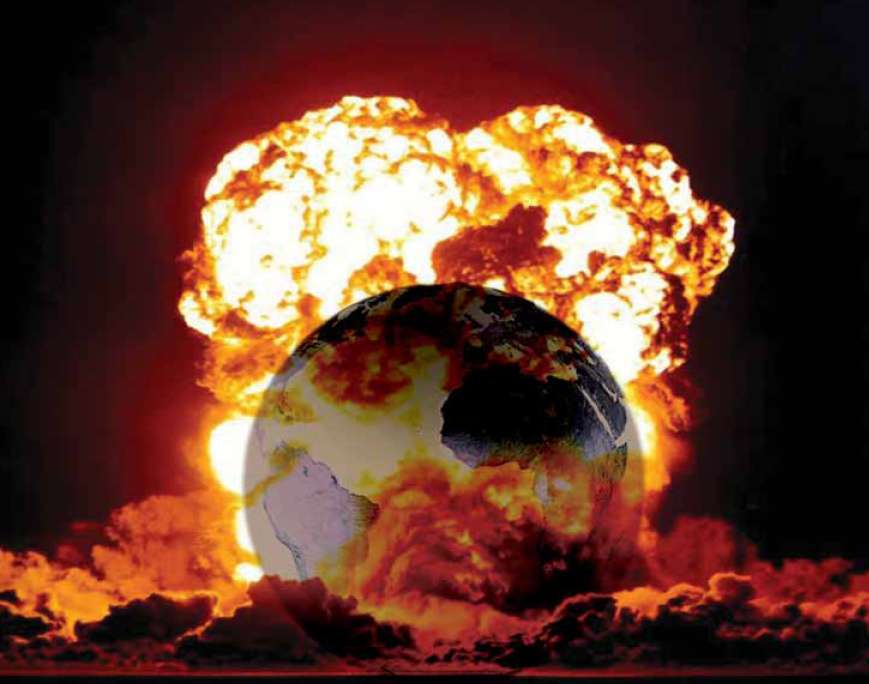

America has stepped onto a road that leads somewhere dark. The war now unfolding with Iran is not a conflict the American people demanded, and it is certainly not a conflict that ordinary families in the United States will benefit from. Yet the machinery of war has begun to move, pushed forward by political interests, alliances, and pressures that most citizens barely understand. Around the world, voices are rising in condemnation. Nations that once called themselves partners now openly question why such a powerful country appears to be acting not as an independent force, but as if it were being pulled by the strings of others.
Whether those accusations are fair or not, the perception alone is dangerous. Because perception shapes alliances. It shapes retaliation. And it shapes the willingness of other powers to respond.
This war, if it continues to grow, will not resemble the limited wars Americans have become used to watching on television. This will not be a distant battlefield contained somewhere far away. Iran is not Iraq in 2003, nor Afghanistan in 2001. Iran sits at the center of a region already filled with rival powers, ancient hatreds, proxy militias, and global energy routes that feed the entire world economy.
When that region burns, the flames do not stay there.
Oil routes through the Persian Gulf could close almost overnight. Tankers could be targeted. Shipping lanes could become war zones. The result would be immediate shockwaves through global markets. Fuel prices would spike to levels most Americans cannot imagine. Transportation costs would soar. Food distribution would falter. Shelves in stores that once looked permanent could suddenly appear fragile and uncertain.
And that is only the beginning.
Iran does not stand alone. It has spent decades building alliances and relationships across the world precisely for a moment like this. Russia watches carefully. China calculates quietly. North Korea studies every development with cold interest. None of these nations need to rush into the war directly in order to change its outcome. All they need to do is tilt the balance.
Russia could provide advanced weapons systems, intelligence, or cyber warfare capabilities that cripple Western infrastructure. China could exploit the chaos to move on Taiwan or disrupt global supply chains that America depends on for everything from electronics to pharmaceuticals. North Korea could decide that a distracted United States presents the perfect opportunity to test the limits of nuclear intimidation.
Wars rarely stay contained once several nuclear powers begin circling the battlefield.
And then there are the shadows—terror networks, proxy militias, ideological movements that thrive in chaos. The Middle East has spent decades producing groups that view America not merely as an opponent but as an enemy civilization. A regional war could ignite a wave of attacks that spread far beyond the battlefield. Embassies, cities, transportation systems, energy infrastructure—targets would appear everywhere.
The American homeland would no longer feel distant from the war.
The truth many people refuse to accept is that modern war does not always arrive with tanks crossing borders. It arrives through cyberattacks that shut down power grids. It arrives through financial shocks that erase retirement accounts overnight. It arrives through sabotage of pipelines, shipping, and communication networks. It arrives quietly at first, and then all at once.
For those who have made difficult decisions early—those who chose to remain solvent, to prepare, to think ahead—the coming chaos is not a surprise. They have already concluded that the storm forming on the horizon is real. They understand something many others refuse to acknowledge: societies can look stable right up until the moment they fracture.
America itself has been changing rapidly. The country is more divided than at any time in living memory. Millions of people have entered from every corner of the globe, bringing different languages, different loyalties, different beliefs. Some have embraced the American identity. Others have not.
When a nation becomes deeply fragmented, external enemies do not need to defeat it directly. They only need to push slightly. Internal tension begins doing the rest.
History shows this again and again.
Empires rarely collapse because they lose a single battle. They collapse because internal fractures weaken them first. Then pressure from outside completes the process.
There are those who believe the United States is now being maneuvered toward exactly such a fall. Slowly isolated from allies. Drawn into conflicts that stretch its military across multiple regions. Burdened with debt so enormous it can no longer be sustained indefinitely.
If a major war erupts while these weaknesses exist, the consequences could be catastrophic.
Many Americans still believe the wealth of their nation is permanent. They believe the system surrounding them will continue functioning because it always has. But wealth accumulated over generations can disappear far more quickly than it was created. Entire financial structures can collapse in a single night if confidence disappears.
One evening the lights are still on. The markets still function. The shelves are still full.
The next morning the country awakens to something unfamiliar.
A different world.
Warnings about such possibilities are often dismissed as the talk of pessimists, alarmists, or people who refuse to trust the system. Yet history is filled with populations who dismissed similar warnings—right up until the moment reality forced them to face the consequences.
And then it was too late.
Those who prepare in advance are often mocked while times are calm. They are called paranoid. Delusional. Out of step with modern society. But when the storm finally arrives, it is always the prepared who become the anchors of stability.
When winter storms bury the roads in snow, they still have food.
When the power grid fails, they still have heat.
When fear spreads through neighborhoods and desperation pushes people to dangerous choices, they still have the means to defend themselves.
Preparedness is not paranoia. It is simply the recognition that stability is never guaranteed.
There is, unmistakably, a storm forming now.
If the war in Iran expands, the worst-case scenarios are almost unimaginable. Russia could enter the conflict indirectly through military aid or strategic attacks on NATO supply routes. China could use the moment to launch its own geopolitical moves, opening a second front in the Pacific. North Korea could escalate tensions with missile launches or nuclear threats designed to stretch American defenses thin.
Global trade could collapse. Energy supplies could be disrupted. Financial markets could panic.
Even worse, nuclear weapons—once thought unthinkable—could begin entering the conversation again if major powers feel cornered.
Scripture itself warns of such times. In the Gospel of Matthew it is written:
“You will hear of wars and rumors of wars… Nation will rise against nation, and kingdom against kingdom. There will be famines and earthquakes in various places.” (Matthew 24:6–7)
The Book of Revelation paints an even darker image:
“And power was given unto them over the fourth part of the earth, to kill with sword, and with hunger, and with death.” (Revelation 6:8)
For centuries people have debated the meaning of these warnings. Yet every generation that stands near the edge of war begins to hear them differently.
Because suddenly they no longer sound symbolic.
They sound possible.
And that is why preparation matters.
Every American family should be thinking carefully about what they would do if supply chains suddenly stopped functioning. If grocery stores ran out of food for weeks. If transportation halted. If electricity became unreliable.
The first step is food. Store as much long-term food as possible—rice, beans, canned goods, dehydrated foods, grains, and preserved meats. Enough to sustain your household for several months if necessary. Water storage is just as critical. A family should have both stored water and filtration systems capable of making questionable water safe to drink.
Medical supplies should not be overlooked. Basic first aid equipment, antibiotics if available, over-the-counter medications, and hygiene products can become extremely difficult to obtain once panic buying begins.
Energy independence is another layer of resilience. Backup generators, solar panels, fuel storage, and alternative heating sources can keep a household functioning during extended outages.
Security is also part of preparedness. When systems fail, law enforcement can become overwhelmed. Responsible firearm ownership, proper training, and secure storage should be considered by families who wish to protect themselves if conditions deteriorate.
Financial preparation matters as well. Throughout history, during periods of extreme crisis, paper currency often loses value rapidly. Precious metals such as gold and silver have traditionally served as stores of value during unstable times. Many preparedness experts recommend holding a portion of savings in physical gold coins or silver bullion that can be traded if financial systems freeze or banks close.
None of this guarantees safety. But it increases the odds of survival.
Because if the storm does come—and signs increasingly suggest that it might—the difference between chaos and endurance will come down to who prepared when there was still time.
Most people will wait. They will assume someone else will fix the problem. They will assume the system will correct itself.
But storms do not wait for belief.
They arrive when they arrive.
And if the world continues moving toward wider war, the words written long ago may echo louder than ever before:
“For when they shall say, Peace and safety; then sudden destruction cometh upon them… and they shall not escape.” (1 Thessalonians 5:3)
The question every American must ask now is simple.
Will you be among those who laughed at the warnings…
Or among those who quietly prepared while there was still time?
Jack Metir
Jack Metir is the founder and editor of Survival Blog Science, where he shares insights on practical preparedness, everyday resilience, and self-reliant living. Since 2011, Jack has written warnings and survival strategies, helping readers stay ready for emergencies and real-world challenges.


The first major attack on America was feminism which destroyed the basic family. It can be debated whether the homosexuals brought feminism, or feminism caused homosexuality, but the fact is that when women are told that they should have the right to vote, the government is actively encouraging them to disobey their husband and make their own political decisions rather than following his leadership. It is not survivable. Once homosexuality touches a nation, it’s like snake venom that only takes a period of time to kill the nation, regardless of how much money it has or how big its military is.
These words should never have to be spoken, but if anyone survives what is coming, hopefully they will correct it in the next generation. A nation that forgets God and goes down the path of feminism and homosexuality cannot long survive.
LikeLike