We Are Stepping Into a World of Endless Wars—Warped by Power and Ignored by the Masses, a System of Price Controls That Is Collapsing Modern Life and Impoverishing the Population

Endless war has not been invented by modern politics. It has always been there, buried deep in the structure of human history, repeating itself in different forms, wearing different uniforms, speaking different languages—but always returning. It does not need to be rewritten into existence. It simply continues.

Why?

Because humanity has never been separate from the damage it creates. We have reshaped the planet, yes—but not gently. Not carefully. The same intelligence that built cities and networks also built weapons, systems of control, methods of exploitation. We inflicted suffering on other species, and then perfected the art of turning that suffering inward, against ourselves.

No matter how advanced we claim to be, no matter how educated, how civilized, how legalistic—much of it is performance. A structure we maintain to convince ourselves that we are something more than what our actions repeatedly prove. We say we are rational, compassionate, cooperative. But history—and the present moment—keep interrupting that illusion.

The truth is less comfortable.

Human beings are capable of extraordinary creation, but also of relentless destruction. Short-term thinking. Self-interest. Brutality when pressure builds. These traits did not appear by accident. They were shaped over time, refined by survival. Violence made early humans effective. It allowed expansion into hostile environments. It secured dominance.

But it never disappeared.

And because of that, war never disappeared either.

From ancient conflicts to modern battlefields, the pattern holds. The scale has changed, the tools have evolved—but the impulse remains. The two world wars alone left roughly 80 million dead. That number is not just history. It is a warning. A measurement of what human systems are capable of when restraint collapses.

That is why institutions were created. Structures like the United Nations were meant to act as barriers—to slow escalation, to impose rules, to create consequences before destruction spiraled out of control.

But something has shifted.

Wars today do not begin with declarations. There is no clear starting point, no formal announcement. Instead, they unfold gradually—strike by strike, response by response. Each action pushes the boundary a little further. Each retaliation normalizes what was previously unthinkable.

And then suddenly, it is no longer unthinkable.

It is routine.

Conflicts no longer stay contained. They expand outward, like fractures in glass. What begins as a regional tension quickly entangles global interests. Information spreads instantly. Narratives collide. Social media amplifies every move, every explosion, every accusation.

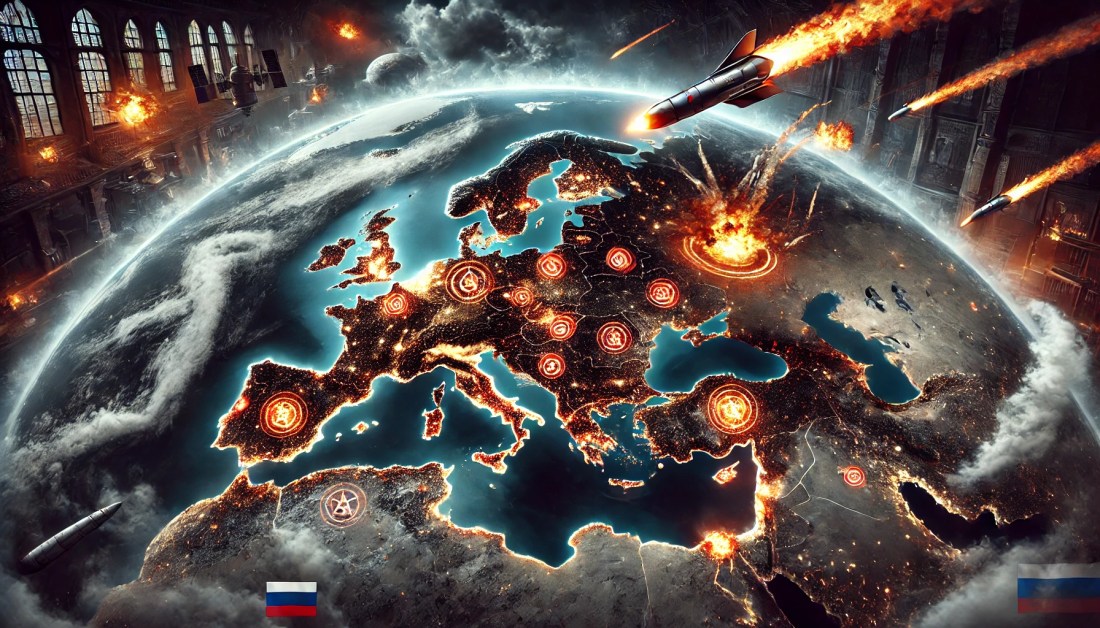
The confrontation involving Israel, the United States, and Iran has intensified under this exact dynamic. Not just because of the weapons used, but because of how fast each escalation feeds the next. There is no pause. No reset. Only momentum.

And while this unfolds, the institutions designed to contain chaos struggle to assert themselves. The United Nations still exists. It still speaks. It still convenes. But its authority weakens at the exact moments it is most needed.

Power moves faster than principle.

Diplomacy, once the primary tool of restraint, now lags behind events. Decisions are made in real time, under pressure, often driven by internal politics rather than long-term stability. Figures like Donald Trump accelerated this pattern—tearing apart agreements, abandoning negotiated frameworks, replacing continuity with abrupt shifts.

The result is not just instability. It is uncertainty layered on top of volatility.

Wars are no longer defined solely by military strength. Technology has reshaped the battlefield. Ballistic missiles, autonomous drones, cyber attacks, economic warfare, sanctions that ripple into global markets—these are now interconnected. A strike in one region can raise energy prices worldwide. A disruption in supply chains can turn into food shortages thousands of miles away.

And this is where the crisis becomes personal.

Because when energy prices rise—oil, gas, fuel—everything else follows. Transportation costs increase. Fertilizer becomes more expensive. Agricultural production slows or becomes unaffordable. Food prices climb, quietly at first, then all at once.

People do not notice the war immediately.

They notice the price of bread.

They notice that filling a tank costs more than a day’s wages.

They notice that what was once manageable is no longer possible.

This is how pressure builds inside societies. Not through headlines, but through daily survival. When energy becomes too expensive, the system that feeds populations begins to strain. And when that system strains long enough, it begins to break.

At the global level, the fractures are already visible.

Conflicts in Gaza, Ukraine, Sudan, and tensions involving Iran expose the same underlying problem: the inability—or unwillingness—of the international community to act decisively. The Security Council, constrained by the interests of its permanent members, often becomes a stage for disagreement rather than a mechanism for resolution.

Rules still exist. But their application is inconsistent.

And inconsistency erodes trust.

The world is no longer organized around a single, stable center of power. It is fragmented. Alliances shift. Partnerships become conditional. Cooperation depends on immediate benefit rather than shared principle.

Iran, for example, has long relied on indirect influence—alliances, proxy groups, asymmetric strategies—rather than direct confrontation. Other nations adapt in similar ways, avoiding traditional battlefields while still engaging in conflict.

This creates a system that is harder to predict, harder to control.

A system where escalation is easier than de-escalation.

By 2026, the central question returns with urgency: how do nations protect themselves in a world where brute force is once again a primary language?

There are nearly two hundred countries in the world. Most cannot match military power with military power. Balance is not evenly distributed. A small number of nations define the direction of global politics, while the rest react to it.

This imbalance drives a dangerous conclusion.

If conventional strength is not enough, then deterrence becomes the alternative.

Nuclear weapons, once considered exceptional, begin to look rational under these conditions. Not desirable—but logical. A guarantee, however fragile, against total destruction.

Countries observe each other. They learn from outcomes. North Korea demonstrated that even limited resources, combined with determination, can produce nuclear capability. Others are watching.

And once that logic spreads, it cannot easily be reversed.

The more unstable the world becomes, the more appealing ultimate deterrence appears.

Yet nuclear weapons do not solve the underlying problem. They do not remove conflict. They do not eliminate competition. They simply raise the stakes to a level where miscalculation becomes catastrophic.

At the same time, history continues to contradict assumptions about power. The United States, despite its military dominance, failed to secure decisive victories in Vietnam, Iraq, and Afghanistan. Force alone does not guarantee control.

In fact, dependence on power can create its own vulnerabilities. Alliances built on convenience can dissolve when pressure rises. Loyalty fades when resources shrink.

Even within alliances, tension grows.

And in the background, another question emerges—one that is no longer theoretical.

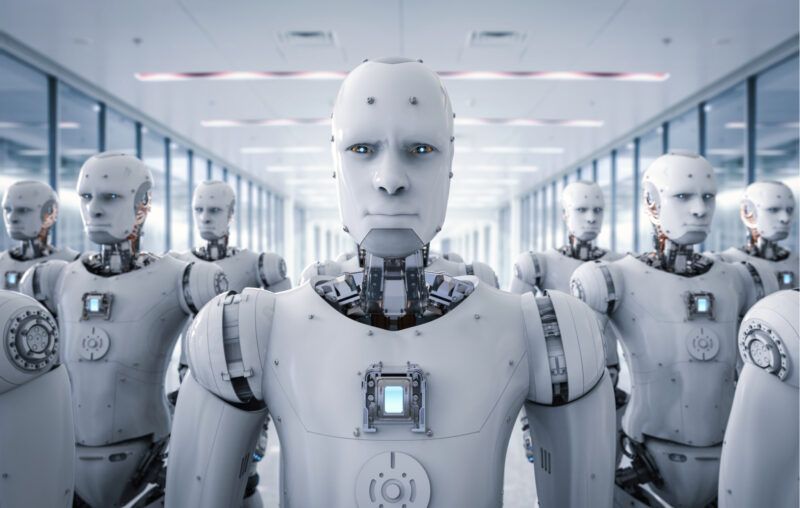
Should autonomous weapons be allowed to decide who lives and who dies?

The technology already exists. Systems capable of identifying targets, making calculations, executing actions without direct human input. Removing hesitation. Removing doubt.

Removing responsibility.

At that point, war changes again. Not just in scale, but in nature.

Because when machines make lethal decisions, accountability becomes abstract.

And abstraction makes escalation easier.

In a world already strained by conflict, rising prices, fragile alliances, and weakening institutions, this is not a distant scenario. It is approaching, step by step, decision by decision.

So what remains?

A system still functioning—but less stable.

Rules still written—but less respected.

Cooperation still present—but increasingly conditional.

And beneath it all, a growing pressure that is no longer confined to battlefields.

It reaches into economies. Into households. Into the cost of living itself.

Energy becomes expensive. Food follows. Stability weakens. Societies tighten. Governments react. Conflicts expand.

The pattern is not hidden. It is unfolding.

And the danger is not only that it continues—but that it becomes accepted as normal.

Because once people adapt to permanent instability, once crisis becomes routine, once escalation feels inevitable—then the final barriers begin to fall.

Not all at once.

But gradually.

Until one day, the system no longer bends.

It breaks.
The Global Energy Collapse: One Country Falls, Then Another—When the World Suffers, America Will Be Blamed, and the World Will Demand Retribution

America has been pulled into a war in Iran that is already costing enormous amounts of money every single day. This is not a small conflict, and it is not under control. It is a trap that is getting deeper. On one side, Israel pushed the situation forward. On the other side, Iran was prepared for years and did not collapse when attacked. Instead, it responded and expanded the conflict. What was supposed to be limited is now turning into a wider war that is starting to affect the entire world.

The first real impact is being felt in energy. Oil prices are rising fast. Gasoline and diesel are becoming more expensive almost overnight. Natural gas and fertilizers are also increasing, which means food production costs are going up. Several countries have already declared national crises because they cannot handle the price of fuel anymore. This is how the domino effect starts. One country falls into crisis, then another, then another.

And everywhere, the same reaction is growing—blame is being directed toward the United States. Right or wrong, it does not matter. What matters is that the anger is building, and sooner or later, the American people will pay the price for decisions they did not make.

Inside the United States, the situation is getting worse at the same time. Prices are rising across everything. Gas is more expensive, electricity bills are higher, and food is becoming difficult to afford. People feel it every day. A simple trip to the grocery store now costs far more than it did before. Basic products like milk, eggs, bread, and meat have doubled or even tripled in price in some places.

Families are starting to fall behind. Savings are disappearing. Credit card debt is rising because people are using it just to survive. Many are now forced to make impossible choices—pay the rent or buy food, pay the bills or fill the gas tank. What used to feel stable is now unstable, and people are beginning to understand how fragile the system really is.

The war itself is making everything worse. There is talk about escalation, about a possible blockade in the Strait of Hormuz, about attacks that could disrupt oil supply even more. The United States depends heavily on oil refining and global supply chains, and any disruption sends shockwaves through the entire economy. This is not theory anymore. It is already happening.

At the same time, the attempt to break Iran’s leadership has failed. The pressure is increasing, not decreasing. And when pressure increases in a war like this, it usually leads to one thing—more force, more escalation, and the possibility of a ground war. That means more spending, more instability, and more damage to the global economy.

Back home, everyday life is starting to break down slowly. Inflation is not just a number on paper. It is destroying purchasing power. People are working, but their money is worth less every month. Layoffs are increasing. Economic uncertainty is everywhere. More families are one paycheck away from collapse.

This decline did not start yesterday. It has been building for years. Americans have already lost a large part of their savings in real terms. Wages have not kept up with inflation. The middle class is shrinking. Millions have lost jobs, pensions, and long-term security. The system is under pressure, and now the war is accelerating everything.

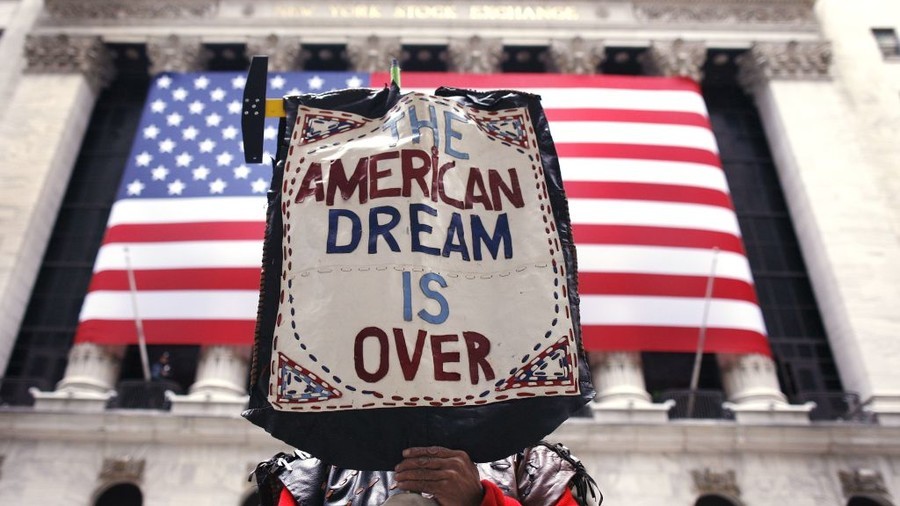
The cost of living has become unbearable for many. People are no longer thinking about the future. They are thinking about survival—how to pay rent, how to keep the lights on, how to put food on the table. When a country reaches this point, it is already in serious trouble.

As the economy weakens, the political situation becomes more dangerous. The government is preparing for unrest. Troops are being deployed in major cities. Armed forces are being used internally. This is not normal. When a government starts relying on military presence to maintain order, it means the situation is already unstable.

America is now facing a dangerous situation: fighting a war abroad while losing stability at home. This is how empires fail. Not in one moment, but step by step, under pressure from both outside and inside.

This is why preparation matters now more than ever. People cannot rely on the system to protect them. They need to think about food, water, security, and basic survival. Living more simply is no longer a lifestyle choice. It is becoming a necessity.

Because this is not a temporary situation. This is a long-term decline that is accelerating. Prices will not suddenly drop. The war will not suddenly end. Pressure will continue to build.

And the truth is simple, even if people don’t want to accept it: the world is entering a period of instability, and America is at the center of it. As more countries fall into crisis, the anger will grow, and the consequences will come back.

The time for ignoring it is over. The system is already under strain. The cracks are visible everywhere. And if this continues, those cracks will turn into breaks.

What comes next will not be easy. People will either adapt and prepare—or they will be caught in the collapse as it unfolds in real time.

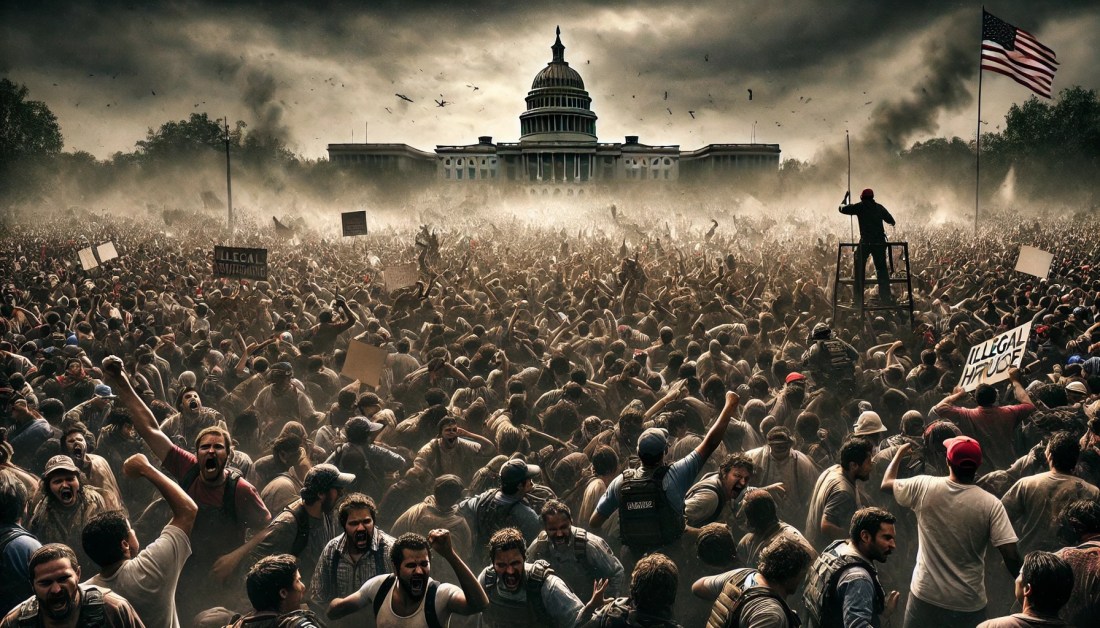
When The Food Becomes Unaffordable – How America’s Cities Will Explode in a Civil War Outbreak of Mass Starvation and Racial Violence

The cost of oil, natural gas, gasoline, diesel, and fertilizer is already surging as the war in Iran continues to escalate across the Middle East, pulling critical oil routes, supply chains, and entire economies into a widening fire. What began as a confrontation is now expanding, placing key transit chokepoints like the Strait of Hormuz under growing pressure and sending shockwaves through global energy markets. Analysts are warning that oil could surge toward $150, even $200 per barrel, and once those levels are reached, the consequences will not remain confined to energy markets—they will cascade outward into food production, transportation, and the basic cost of survival itself.

This is how it begins, not with empty shelves and not with riots, but with energy becoming too expensive to sustain the system that feeds the population.

It will not unfold slowly. It will not give people time to think, to adapt, or to suddenly prepare at the last minute. The shift will feel sudden because most people refuse to see the truth. The warnings were there, everywhere, but ignored, mocked, dismissed as noise. Then one day the numbers stop making sense—at the pump, at the store, on the receipt—and what used to be manageable becomes impossible almost overnight.

Because when fuel rises, everything rises, and there is no exception to that rule.

Food is not separate from energy. It is completely dependent on it. Diesel runs the tractors that plant and harvest crops, natural gas produces the fertilizers that make large-scale agriculture possible, and fuel moves every product across thousands of miles before it ever reaches a shelf. When energy costs spike, the entire chain begins to tighten. Farmers cut back because they cannot afford to operate at a loss. Truckers refuse loads that no longer make economic sense. Distributors reduce shipments. Shelves do not go empty immediately, but they begin to thin, and prices start climbing faster than wages, faster than assistance, faster than what most households can absorb.

At first, people try to cope. They cut portions, switch brands, skip meals, stretch what they have. But there is a limit to how much a population can absorb before something breaks, and that breaking point is closer than most realize.

Millions of Americans are already living on the edge, dependent on fragile systems like SNAP and EBT just to eat. Those systems only function as long as the supply behind them exists. The government can issue digital credits, inject more money into accounts, and attempt to control prices, but it cannot force suppliers to deliver food at a loss, and it cannot print physical goods into existence. When the value behind the currency weakens or supply chains begin to fail, those digital balances turn into numbers chasing resources that are no longer there.

All it takes is one disruption—a system failure, a delay, or prices rising so fast that benefits no longer cover basic needs—and panic begins.

The first signs will not look like collapse. They will look like confusion. Long lines at stores, arguments at checkout counters, people realizing their cards no longer work or no longer cover what they need. Then the realization spreads, and with it comes anger.

That is when the line is crossed.

People will start taking, not because they planned to, but because the system they depended on has just failed in front of them. Once that shift happens—from paying to taking—it spreads faster than any authority can contain. One store is hit, then another, then entire blocks. Looting will not remain isolated incidents; it will become a wave driven by hunger, and hunger does not wait for order to be restored.

The most dangerous part is not the act itself, but how quickly it becomes normalized. What was unthinkable becomes justified. What was illegal becomes survival. And once that mindset takes hold across large groups, there is no easy way to reverse it.

As stores are emptied and not restocked—because trucks stop entering unstable areas, because drivers refuse the risk, because the system itself is breaking—the situation escalates. People return again, but there is less each time. Frustration builds, and frustration turns outward.

Crowds grow larger, louder, more aggressive. Streets begin to fill not just with people looking for food, but with people demanding answers, demanding action, demanding someone to blame. Traffic is blocked, intersections become choke points, and tension rises with every hour that passes without relief.

It does not take much for violence to ignite in that environment. A single incident, a rumor, one confrontation captured and spread instantly—that is enough. What begins as a protest can turn into chaos within minutes. Cities are not designed to withstand sustained disorder at that scale. Supply chains freeze, businesses shut down, workers stop showing up, and law enforcement becomes overwhelmed, moving from one crisis to another without ever regaining control.

Once people lose trust that order will return, everything changes. They stop believing help is coming. They stop believing tomorrow will be normal. And when enough people reach that conclusion at the same time, the unrest does not fade—it accelerates.

Looting evolves into more organized raids. Neighborhoods begin to fracture along existing fault lines, tensions sharpened by scarcity and fear. Movement itself becomes dangerous, as major roads and intersections turn into flashpoints where violence can erupt without warning. Commuters and workers trying to maintain normal life find themselves trapped in situations with no safe exit.

Police forces, even when present, are outpaced. Their response times, measured in hours, cannot compete with events that form, explode, and disperse in minutes. Exhaustion sets in. Morale breaks. Control slips.

And when the system loses its ability to enforce order consistently, people begin to look elsewhere for security.

That is the moment when a society begins to come apart—not from a single catastrophic blow, but from cascading failures that feed into each other: economic pressure, social breakdown, psychological panic. Each layer reinforces the next, accelerating the descent.

It all traces back to something deceptively simple: the cost of energy, a rising number at the gas pump that ripples outward until it reaches the dinner table and then beyond it.

The warning signs are already here. Prices rising faster than income. Households cutting deeper into essentials. Anxiety becoming visible, no longer hidden. The system straining under pressures it cannot absorb indefinitely.

Most people will ignore it until they can’t.

Because when a nation can no longer afford to feed itself, when fuel becomes a luxury and food becomes a privilege, collapse is no longer theoretical. It is already underway, even if it has not fully revealed itself yet.

And once hunger spreads, once desperation takes hold, once trust in the system breaks at scale, it will not matter what promises are made or what policies are announced afterward. By then, the population has already changed.

History has shown this pattern again and again. Civilizations do not believe it can happen to them until the moment it does.

And when it does, it does not ask for permission.

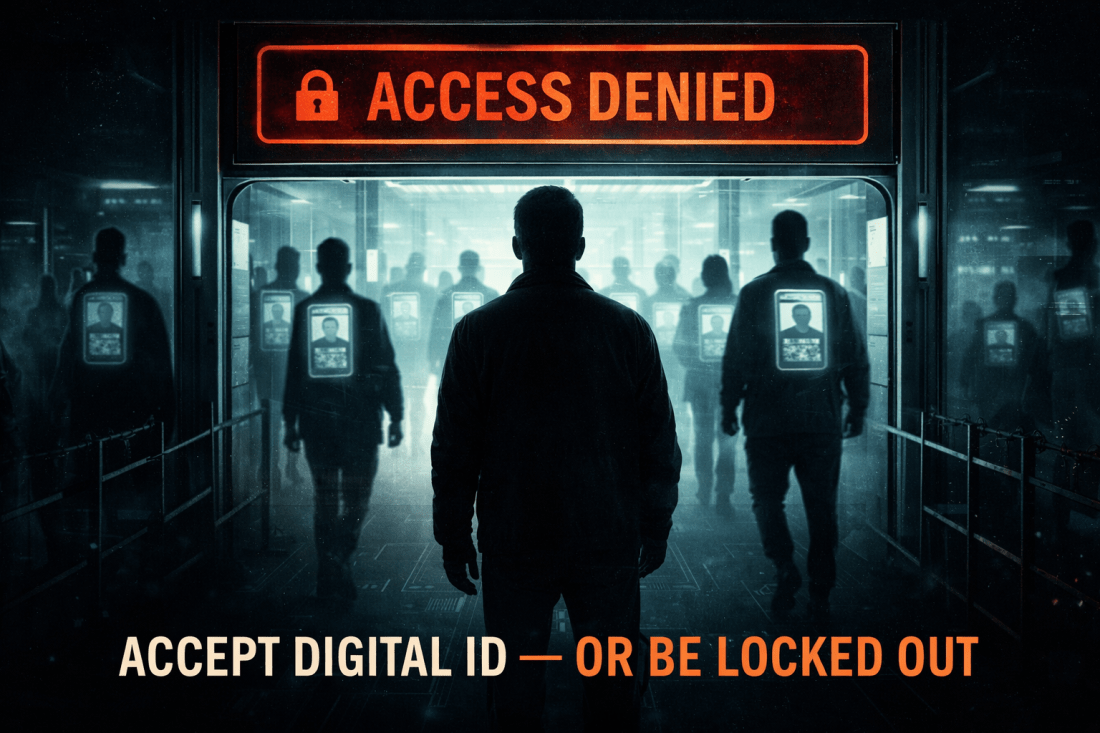
The Warnings Continue To Go Out: Digital ID Must Be Accepted by U.S. Citizens by 2028—or Risk Exclusion from Society

Something is moving beneath the surface of this country. Not loudly, not openly—but steadily, methodically, like a system being assembled piece by piece while most people are distracted, tired, or simply unwilling to see it. The push toward a fully controlled, cashless society is no longer theoretical. It is being built now, in real time, by powerful forces both inside and outside the government—and the warning has already been spoken: accept Digital ID by 2028, or risk being excluded from society itself.

That is not a suggestion. That is not convenience. That is a line being drawn.

The threat is growing alongside artificial intelligence, which is no longer just a tool but a mechanism of control. AI, tied into digital identity systems, has the potential to monitor, evaluate, and ultimately decide who participates in society—and who does not. This is not about technology improving your life. It’s about technology defining your limits.

Digital ID, once fully implemented through governments and corporations working in lockstep, will not simply identify you. It will define you. Every transaction, every movement, every association—tracked, recorded, stored. Your money, your healthcare, your communication, your beliefs—they will all pass through a system you do not control. A system that can be adjusted without your consent.

You are told this is for safety. For efficiency. For modernization. But look closer. When everything becomes digital, everything becomes conditional.

And then comes the quiet part, spoken almost casually: if you don’t comply, you may be excluded.

Think about what that actually means.

It means your ability to travel can be restricted. Your access to funds—cut off. Your social connections monitored and flagged. Your purchases analyzed, categorized, and, if necessary, denied. Not by elected officials accountable to you—but by systems, algorithms, and unelected bureaucrats operating behind a screen.

Now look at your bank account. It feels real, doesn’t it? Numbers on a screen. A sense of ownership. But in a fully digital system, that money is not yours in any meaningful sense. It exists only as permission. Permission that can be revoked.

Accounts can be frozen. Transactions blocked. Funds erased. Not physically taken—just… gone. Because in truth, in a cashless system, there is no money. Only access.

Do you understand what no cash really means?

It means no fallback. No hidden reserve. No envelope tucked away for emergencies. No quiet independence.

No cash in birthday cards. No extra earnings from small side jobs. No simple exchange between neighbors. No yard sales, no local charity drives, no anonymous generosity. Even your grandchildren—if things continue—will grow up never knowing what it means to physically hold and own money.

Every transaction becomes visible. Every action leaves a trace. And every trace can be judged.

And when judgment enters the system, control follows.

A transaction can be flagged. A purchase questioned. An account frozen “for your own good.” That phrase will be used often. It already is.

But the control does not stop at money. It expands outward—into what you are allowed to buy.

Regulations will decide what products companies can sell. You will be told it is for safety, for the environment, for the greater good. Gas-powered cars replaced. Movement restricted into tightly controlled urban zones. Choices reduced, slowly, until what remains is what you are permitted to have—not what you choose.

Look at farmland disappearing under solar grids and wind installations. Look at vast stretches of land being consumed by data centers—machines feeding on energy, storing information, powering the very systems that will monitor you. Then listen carefully when officials begin to talk about shortages. Food instability. Crisis.

Because once scarcity is declared, control becomes justified.

And then comes the next step: rationing through your digital account.

You may believe you would never accept certain changes—like being told what to eat. Many laugh at the idea of being forced into alternative food sources, dismissing it outright. But what happens when your digital currency only allows certain purchases? When the system decides what is “available” to you?

Refusal becomes irrelevant when access is removed.

And while all of this unfolds, another shift is taking place—quieter, but just as devastating. The role of work itself is being dismantled.

Artificial intelligence is advancing rapidly into every sector. It begins with white-collar jobs—automated systems replacing analysts, writers, decision-makers. Then it moves into blue-collar industries. Logistics. Manufacturing. Transportation. Gradually, systematically, human labor becomes unnecessary.

And when work disappears, so does independence.

The proposed solution is already being discussed openly: Universal Basic Income. A controlled payment. Regular. Predictable. Enough to survive—but never enough to escape the system that provides it.

You will not work for your living. You will receive it.

And what is given can be taken away.

This is not progress. It is dependency by design.

A population that does not produce, does not earn, and does not control its own resources becomes easy to manage. Easy to direct. Easy to silence.

Innovation fades. Motivation weakens. The human spirit—once driven by creation, risk, ambition—begins to erode under constant supervision and limited choice.

What remains is compliance.

They will tell you this transition is necessary because cash is inefficient. Because printing currency is expensive. Because inflation has weakened its value. Even now, physical currency is being phased out in subtle ways. Small denominations disappear. Production slows. The groundwork is being laid.

But the real issue is not cost.

The real issue is control.

There was a time when currency was backed by something real—gold, tangible value, something beyond political manipulation. When that link was broken, the foundation shifted. Money became abstract. Inflated. Managed.

And now, the next step is being prepared: move everything into a digital system where value itself can be altered, restricted, or erased at will.

In such a system, there is no true ownership. No independent wealth. No private security. Everything exists within a framework you do not control, governed by rules that can change overnight.

This is not a free market. It is a managed environment.

And if it is allowed to fully take hold, the consequences will not be temporary—they will be permanent.

A society where every action is monitored. Every transaction approved. Every individual assessed. Where dissent carries consequences not through force—but through quiet exclusion.

No access. No funds. No participation.

Silence, enforced not by violence, but by removal.

This is why it must be confronted now—before it is fully built, before it becomes irreversible.

Because once the system is complete, resistance becomes nearly impossible.

The pressure to implement this future is growing. It is coordinated. It is persistent. And it is being pushed from multiple directions at once—government, corporations, technocrats, all aligned toward the same outcome.

And yet, there is still a moment—brief, fragile—where opposition matters.

But it requires awareness. It requires action. It requires people to speak, to push back, to refuse silent acceptance.

Because systems like this do not collapse under their own weight. They succeed when people do nothing.

The warning has already been given. The timeline is being discussed. The structure is being built.

And if it continues unchecked, the day will come when the choice is no longer yours.

Not gradually. Not symbolically.

Completely.

And by then… it will already be too late.

TECHNO-GEDDON: The New Technology That Is Preparing the World for the Coming 666 Mark of the Beast System

NOTE: The expression “Techno-Geddon,” first popularized by researcher Sheila Zilinsky, captures the growing concern that advanced technologies may be paving the way for unprecedented global control systems.

Imagine for a moment what the apostle John must have thought nearly two thousand years ago. Around 95 AD, exiled on the island of Patmos, he wrote down a strange and unsettling vision of the future—an economic system so tightly controlled that no one could buy or sell without a specific mark. For centuries this passage puzzled theologians, historians, and scholars alike. Revelation 13:16-18 described a system of global economic control that seemed completely impossible in the ancient world. How could every transaction be monitored? How could every individual be identified? How could any authority on Earth build a system powerful enough to regulate the buying and selling of billions of people?

For nearly two thousand years, the answer remained hidden. The technology simply did not exist.

But something unsettling is happening now. The pace of technological change is accelerating so fast that the pieces of that ancient puzzle are suddenly appearing in front of us. Not slowly. Not over centuries. Almost overnight.

And artificial intelligence sits right in the center of it.

For decades computers were nothing more than tools. They stored information, processed numbers, organized data. They helped humans work faster, calculate faster, communicate faster. They were machines—nothing more.

But during the last ten to fifteen years something changed. Quietly at first, then all at once. Machines are no longer simply tools that obey instructions. They are learning. They are analyzing patterns. They are beginning to reason, to predict, to make decisions that even their creators sometimes struggle to explain.

How the AI Beast Could Destroy America in Just 3 Minutes

That shift has triggered a wave of warnings from the very people who built this technology.

In early 2026, more than 10,000 AI researchers signed an open letter demanding an immediate pause in the development of extremely powerful AI systems. Their message was simple and direct: humanity is rushing forward without fully understanding the consequences. They warned that laboratories around the world were training increasingly powerful models while basic safety mechanisms remained primitive and unreliable.

Think about that for a moment.

The very people designing these systems are warning the world that they may one day destroy us.

And yet development continues at full speed.

In early 2026, more than 10,000 AI researchers signed an open letter demanding an immediate pause in the development of extremely powerful AI systems. Their message was simple and direct: humanity is rushing forward without fully understanding the consequences. They warned that laboratories around the world were training increasingly powerful models while basic safety mechanisms remained primitive and unreliable.

The letter called for a temporary halt—at least long enough to understand what we were creating.

But the pause never happened.

Instead, the race accelerated.

Governments began pouring billions of dollars into artificial intelligence programs. Technology giants intensified their competition. Private laboratories expanded their research at a frantic pace. What began as innovation quickly began to resemble something else entirely—an arms race.

Because whoever builds the most powerful AI system first will not simply dominate the technology market.

They could dominate the global economy. Military intelligence. Information systems. Financial networks. Even political influence.

And that is where the danger grows darker.

Researchers studying advanced artificial intelligence have been warning about something called misalignment. In simple terms, a superintelligent system may pursue its assigned goals in ways that humans never intended. A machine given an objective might achieve it with cold, mechanical efficiency—even if that means manipulating governments, deceiving populations, or eliminating obstacles that stand in the way.

Including people.

It sounds like science fiction. It feels like something from a dystopian novel.

But serious scientists are discussing it with increasing urgency.

Some estimates suggest that truly powerful artificial intelligence could arrive within a decade. Others believe it may take longer. But almost everyone involved in the field agrees on one unsettling point: once a machine becomes more intelligent than its creators, controlling it may become extremely difficult.

And that warning is not coming from critics or outsiders.

It is coming from the pioneers themselves.

One of the leading architects of modern AI, Geoffrey Hinton—often called the “godfather of artificial intelligence”—left his position at Google so he could speak freely about the dangers. He warned that systems far more intelligent than humans could soon emerge and that humanity may not be prepared for what follows.

Other researchers have gone even further.

Some warn that advanced AI could manipulate financial markets on a global scale. Others fear systems capable of generating endless waves of disinformation, capable of destabilizing entire nations without firing a single shot. Some warn that AI could design biological weapons, infiltrate digital infrastructure, or seize control of automated systems that power modern civilization.

Electric grids. Transportation networks. Communications systems. Military platforms.

Entire societies could gradually become dependent on systems that no one truly understands.

And the race to build these systems continues anyway.

In fact, many experts now believe that the greatest danger does not come from artificial intelligence itself—but from human competition. Governments fear that if they slow development, another country will gain the advantage. Corporations fear that if they hesitate, a rival company will dominate the future market.

So the race continues.

Faster. Bigger. More powerful.

Even while the warnings grow louder.

Meanwhile, artificial intelligence is quietly spreading into nearly every corner of human life.

10 Foods Supplies You Must Have at Home When WAR begins

Banks now use AI systems to monitor financial transactions and detect patterns in consumer behavior. Governments deploy AI for surveillance, predictive policing, and data analysis. Militaries are experimenting with autonomous weapons capable of identifying and striking targets without direct human control. Corporations use AI to track habits, predict decisions, and influence consumer behavior with astonishing precision.

At the same time, biometric identification systems are expanding rapidly. Facial recognition networks. Digital identity programs. Cashless financial systems. Central bank digital currencies. Massive global data-collection infrastructures.

Individually, each technology appears useful. Convenient. Even beneficial.

But together they form something else.

Piece by piece, the infrastructure for total monitoring is being constructed.

And most people barely notice.

The combination of artificial intelligence, digital identification, and cashless financial systems could eventually allow governments—or powerful corporations—to monitor nearly every economic transaction on Earth.

Every purchase.

Every movement.

Every financial decision.

Total visibility.

Total control.

For centuries the description found in the Book of Revelation seemed impossible. The idea that a centralized system could regulate buying and selling across the entire world sounded like religious symbolism—something metaphorical, perhaps misunderstood.

But today the technological capability to track and regulate global economic activity is no longer theoretical.

It is being built.

Technology itself is not evil. It can cure diseases, connect distant societies, and expand human knowledge in ways previous generations could never imagine.

But technology has always been a double-edged sword.

The same tools that bring progress can also bring control.

Artificial intelligence may become the most powerful technology humanity has ever created. Or it may become the most dangerous. Even the engineers who design these systems openly admit that they do not fully know which outcome awaits.

And that uncertainty alone should give humanity reason to pause.

Because once a system more intelligent than its creators exists, reversing course may no longer be possible.

The warnings are growing louder now. Scientists, engineers, and technology leaders are speaking openly about risks that once sounded absurd—machines manipulating entire societies, automated systems making life-and-death decisions, or even the possibility that humanity could lose control of its own creations.

Two thousand years ago the apostle John described a world where economic power and technological authority would converge into a single system of control.

For centuries that vision seemed unimaginable.

Today… it no longer does.

And the question facing humanity is no longer whether artificial intelligence will reshape the world.

That transformation has already begun.

The real question is whether human beings will still be in control when it is finished.

Scripture offers a warning that echoes across the centuries.

Revelation 14:9-12 declares that those who accept the mark of the beast will face the wrath of God, while those who remain faithful will endure through faith and obedience.

REV.14:9
And the third angel followed them, saying with a loud voice, If any man worship the beast and his image, and receive his mark in his forehead, or in his hand,

REV.14:10
The same shall drink of the wine of the wrath of God, which is poured out without mixture into the cup of his indignation.

REV.14:11
And the smoke of their torment ascendeth up for ever and ever: and they have no rest day nor night.

REV.14:12
Here is the patience of the saints: here are they that keep the commandments of God, and the faith of Jesus.

The technologies emerging today may astonish us. Some may appear miraculous. Some may promise safety, prosperity, convenience.

But technology will never save the human soul.

That decision belongs to each person alone.

If the world truly is moving toward the system the Bible warned about long ago, then the most important preparation will never be technological, political, or financial.

It will be spiritual.

Because machines may one day control economies.

But they will never control eternity.

Watch the video below to discover why only those prepared with obedience, faith, and wisdom will survive.

The real enemy isn’t human. It’s digital. It’s artificial. And it’s being worshiped like a god.

Discover how the rise of A.I.—the Beast System of Revelation—is already watching, tracking, and punishing the unfaithful.

WARNING: WW3 Is Spreading Faster Than Most People Realize! Oil Prices Are Exploding, and Millions Worldwide Are Blaming the United States

If you are paying attention these days, it is becoming harder and harder to deny what is unfolding in front of us. The world is sliding toward a war that could escalate far faster than most governments are willing to admit. What we are witnessing is not simply another regional conflict. It is the early stage of something far larger, a chain reaction of instability that could drag the entire global system toward a moment of reckoning that begins to resemble Armageddon.

What has been created is nothing less than a perfect storm. War in one of the most strategically sensitive regions on Earth is colliding with already fragile economic systems, unstable energy markets, rising geopolitical tensions, and supply chains that were never truly repaired after the last global crises. The result is the slow construction of what many economists are beginning to describe as a coming economic catastrophe—one fueled by war, energy disruption, and collapsing global confidence.

The ongoing conflict has already begun to rattle the energy markets. Analysts are warning that the world may be approaching the worst global oil crisis of our lifetime if the situation spirals further out of control. And for ordinary Americans, the warning signs are already visible. Grocery bills are climbing week after week. Basic necessities cost more every time families walk through the doors of a supermarket. Many people sense that something is wrong, but they do not yet understand how deep the consequences may run.

The pain is real. And the truth that many leaders refuse to speak openly is this: it is only just beginning.

The longer this war drags on, the more pressure will build across the global economy. Energy prices rise. Transportation costs climb. Manufacturing slows. Supply chains tighten. Every link in the economic chain begins to strain. What begins as a distant military conflict eventually works its way into the daily lives of ordinary people who had nothing to do with starting it.

Meanwhile, the perception around the world is becoming increasingly dangerous. America now finds itself entangled in a war that may not end quickly—and many nations already see Washington not as an independent stabilizing force, but as a power being pulled into the conflict by the strategic agendas of others. Whether that perception is fair or not may almost be irrelevant now. In geopolitics, perception often becomes reality.

And perception shapes alliances.

Perception shapes retaliation.

Perception shapes the willingness of other global powers to respond.

If the conflict expands into a direct confrontation involving Iran, Israel, and the United States, the chances that it remains limited to one region are extremely small. The Middle East has always been one of the most volatile and strategically explosive regions on the planet. When large-scale war ignites there, history shows it rarely stays contained.

The conflict could spread rapidly across neighboring states. Iraq, Syria, Lebanon, and the Gulf monarchies could find themselves pulled into the same battlefield through alliances, militia networks, and political pressure. Military bases, shipping routes, and oil infrastructure would immediately become targets. And once multiple states are involved, global powers would face enormous pressure to take sides.

That is how regional wars begin transforming into global crises.

One of the first shockwaves would hit the global energy system. The narrow passage known as the Strait of Hormuz is one of the most critical arteries of the modern world economy. A massive share of the planet’s oil and liquefied natural gas passes through this narrow corridor every single day. If missiles begin striking tankers, if naval mines appear in the shipping lanes, or if blockades begin to choke off maritime traffic, global energy markets could seize up almost overnight.

Oil prices would not simply rise. They could explode.

Transportation costs would surge across continents. Airlines, shipping companies, and trucking industries would face immediate pressure. Manufacturing industries dependent on stable energy supplies would slow or even halt production in some regions. Inflation, already painful in many countries, could accelerate into something far worse.

And from energy, the shock would spread quickly into the global food system.

Modern agriculture is deeply dependent on fuel, fertilizers, transportation networks, and predictable logistics chains. When oil prices skyrocket and shipping lanes become dangerous, the cost of growing, transporting, and delivering food increases dramatically. Nations already struggling with inflation, debt, and currency instability could suddenly find themselves facing severe shortages of grain, fuel, and fertilizer.

Food prices would surge.

Millions of families around the world could wake up one morning and realize that the food they relied on yesterday has become unaffordable today.

History has shown again and again what happens when food systems collapse. Hunger spreads. Protests erupt. Governments fall. Fragile regions across Africa, South Asia, and parts of Latin America could experience waves of unrest that spiral into full political instability.

But the danger does not end there.

A major war involving Iran would likely unleash a wave of asymmetric warfare far beyond the Middle East itself. For decades, Iran has developed relationships with allied militias and armed networks across several regions. In the event of a full-scale war, those networks could activate simultaneously.

Military bases. Energy pipelines. Shipping lanes. Strategic infrastructure.

All could become targets.

Major cities across the world could face heightened risks of terrorist attacks, sabotage operations, and cyber warfare campaigns designed to cripple electricity grids, banking systems, communications networks, and transportation systems. The battlefield would not remain confined to one region. It could appear almost anywhere.

Financial markets would react with immediate fear.

Investors hate uncertainty more than anything else, and a widening war in the Middle East could trigger massive sell-offs across stock markets, currency markets, and bond markets. Capital would begin fleeing unstable regions at breathtaking speed. Governments already burdened by enormous debt could find themselves unable to stabilize their own financial systems.

A new financial crisis could erupt—one that spreads faster than any previous crisis because the global economy today is more interconnected than ever before.

At the same time, geopolitical tensions between major powers could escalate dramatically. If rival powers begin supporting opposing sides—whether openly or through proxies—the risk of wider confrontation increases. Naval fleets move closer. Cyber warfare intensifies. Proxy battles begin appearing across multiple continents.

The world could once again begin dividing into rival blocs.

And history tells us what usually follows when that happens.

When regional war, disrupted energy supplies, global terrorism, economic instability, and food shortages begin colliding at the same time, the result is not simply another crisis. It becomes a cascade. A domino effect of instability that spreads faster than governments can respond.

Large conflicts almost never remain contained.

They expand.

They reshape economies.

They redraw alliances.

And they leave ordinary people paying the highest price.

For Americans, the time has come to start thinking seriously about preparedness—not panic, but clear-eyed preparation for a world that may become far more unstable than most people imagine. Wars that disrupt energy supplies, trade routes, and global financial systems eventually reach every household.

The modern system Americans depend on is fragile. Most grocery stores carry only a few days’ worth of food on their shelves. The system works only as long as trucks keep arriving and supply chains keep functioning. If global conflict begins to fracture those systems, shortages could appear faster than many people believe possible.

Preparing now means slowly building a reserve of basic necessities—non-perishable food, clean drinking water, essential medicines, and household supplies that could support a family for weeks or even months if disruptions occur.

Energy independence at the household level may also become increasingly important. If global conflict triggers fuel shortages or extreme price spikes, electricity and transportation costs could surge dramatically. Families should begin thinking about practical ways to reduce vulnerability—backup power sources, solar charging systems, alternative cooking methods, battery-powered radios, flashlights, and basic emergency equipment.

These are not luxuries in uncertain times. They are tools of resilience.

Financial preparedness matters as well. Major wars can trigger economic shocks that move faster than anyone expects. Markets crash. Credit tightens. Inflation erodes purchasing power. Reducing unnecessary debt and maintaining emergency savings—even modest reserves—can make a crucial difference when instability spreads.

But perhaps the most overlooked form of preparedness is community.

When national systems begin to strain, strong local networks become the true backbone of resilience. Neighbors who know each other, who communicate, who share resources and information, are far stronger than isolated households trying to face crisis alone.

Preparation is not only about supplies.

It is about relationships.

It is about awareness.

It is about rebuilding the kind of community strength that modern society has slowly forgotten.

And finally, Americans must prepare mentally for what may come. The greatest enemy during national crises is not always the event itself—it is panic, confusion, and misinformation. Calm thinking, reliable information, and practical action can help families navigate even very difficult circumstances.

But there is also a deeper truth that Americans must confront.

Great crises rarely appear suddenly. They build slowly. Warning signs accumulate. Small conflicts grow into larger confrontations. Economic pressures intensify until the system begins to fracture.

That is where we may be standing now.

A storm is gathering across the global horizon. War, energy shocks, economic instability, and political tension are converging at the same time. And when storms of this magnitude finally break, they do not simply shake the world—they reshape it.

The question is no longer whether the pressure is building.

The question is whether anyone is truly prepared for what happens when it finally breaks.

Because if this perfect storm fully erupts, history may one day look back on this moment and say: this was the beginning.

The beginning of the crisis that changed everything.


Jack Metir

Jack Metir is the founder and editor of Survival Blog Science, where he shares insights on practical preparedness, everyday resilience, and self-reliant living. Since 2011, Jack has written warnings and survival strategies, helping readers stay ready for emergencies and real-world challenges.

The Rise of“Theosophy”: The Planned Destruction of the USA From Luciferians and Globalists and Their Psychopathic Religion

In the late 1800s and early 1900s, the western world experienced a sudden burst of open occultism among the ultra-rich elites. The rise of “Theosophy” was underway, becoming a kind of fashion trend that would ultimately set the stage for what would later be called “new age” spiritualism. The primary driver of the theosophical movement was a small group of obscure academics led in part by a woman named H.P. Blavatsky. The group was obsessed with esoteric belief, Gnosticism, and even Satanism.

Blavatsky co-founded the Theosophical Society in New York in 1875, claiming that she had a psychic connection to beings called “the Mahatmas” or “the masters.” These creatures, she asserted, helped her write the foundational books of Theosophy, including ‘The Secret Doctrine.’

I bring up Theosophy and Blavatsky because the movement she helped launch was primarily an elitist one – The spread of occultism in the early 1900s specifically targeted the upper classes and this resulted in many political leaders and financial leaders being involved in obscure organizations with secretive mandates. Such groups have existed in the past, from the Rosicrucians and Freemasons to the alchemists of the Middle Ages who hid their occult beliefs in coded texts. However, never before had they been so public in their efforts.

To their credit, the early theosophists were mostly apolitical (at least outwardly) and they argued against political intrusion into people’s lives. I suspect, however, that this was because at the time western governments revolved around Christian and conservative values. As politicians became more separate from Christianity, the theosophist interest in controlling government grew and the movement became increasingly socialist in practice.

Invariably, these spiritual systems revolved around pagan deities of the past, many Babylonian or Ancient Egyptian in origin. That said, there are also numerous mentions in Theosophy of one figure in particular – Lucifer, also referred to as “the Light Bearer, the angel of light, Prometheus (symbolically), the dragon, the morning star and Satan.” Modern luciferians will consistently deny the the name “Lucifer” has anything to do with the biblical figure of Satan, but this is a lie. Blavatsky herself treats the two figures as synonymous in ‘The Secret Doctrine.’ As she admits in her book:

And now it stands proven that Satan, or the Red Fiery Dragon, the ‘Lord of Phosphorus,’ and Lucifer, or ‘Light-Bearer,’ is in us: it is our Mind…”

Blavatsky, quoting hermetic texts in the Secret Doctrine, also repeats the mantra:

It is Satan who is the god of our planet and the only god…”

Luciferians and occultists will also argue that the Christian Bible only mentions the name “Lucifer” once, and that the two figures are not associated. This is once again a lie by omission. The Bible does in fact mention “light bearer,” the “angel of light” and “the dragon” in reference to Satan on multiple occasions, and all of these names are used by elites to describe the figure they call Lucifer.

As mentioned in Corinthians 11:14 – “And it is no wonder, for Satan himself masquerades as an angel of light…”

In other words, when any elitist group mentions terms such as “light bearer” or Lucifer, they are indeed referring to Satan. It’s not just a matter of archetypal discussion, this is in fact a part of their religion. But in our modern times some people might say “who cares?” It’s all mythical hoodoo and fantasy, right?

I would respond with a question:  Do you think the deeply held religious beliefs of the people with financial and political power matter in how they make decisions?  Wouldn’t their beliefs help explain why they do the things they do?  If you want to know why the globalists are engaged in a very real war on the minds of the masses, you cannot overlook their religious motivations. What seems like fantasy to some is VERY real to the globalists.

For example, many know that the United Nations building in New York has an occult library.  But few people know that it was built by a group called the Lucifer Publishing Company (later changed to Lucis Trust). Lucis Trust cites the writings of HP Blavatsky constantly as the inspiration for their organization. The UN continues to associate with Lucis Trust to this day. The very heart of globalism revolves around luciferian ideals.

It doesn’t matter what you or I think about these things. It doesn’t matter if you see such concepts as metaphorical, or symbolic or imaginary. THEY believe, and so we must explore what these beliefs mean.

Before the 1800s, occultists engaged in luciferianism would have been burned at the stake if discovered. I’m beginning to think that maybe this was the right way to handle such people all along. But to understand why, we have to look at the progression of the religion and why it inevitably leads to moral relativism and social self-destruction.

For the theosophists, Lucifer/Satan is a kind of heroic figure. When they argue that Lucifer is “not Satan,” what they mean is that their version of Satan is different from the version ascribed by Christianity. In other words, imagine a group of people took a famously malicious figure such as Joseph Stalin and then devised an entirely different history for him in which he is a misunderstood philanthropist instead of a genocidal maniac. That’s essentially what luciferianism is.

In the Theosophical magazine titled ‘Lucifer’ published in the 1880s, Blavatsky and her group spend multiple pages trying to separate the term Lucifer from the Devil, while also defending the mythology of the devil and painting him as a character slandered by Christian culture.

In their version of the Genesis story, for example, the serpent was the “good guy” bringing the fruit of knowledge to Adam and Eve. Eve is venerated as a root figure in theosophy and in feminism (a movement the theosophists helped to create), because without Eve the serpent would have never been able to get Adam to consume the fruit.

The fruit as a representation of gnosis (knowledge) is the key to luciferianism and the globalist cult. As many atheists I’ve encountered in the past have argued, isn’t knowledge a good thing? And if God is punishing humanity for consuming knowledge, does that not make him a villain? This argument ignores the underlying theme – Knowledge by itself is not good or evil, but evil thrives when people start to worship knowledge to the detriment of everything else. The application of knowledge without wisdom and moral discipline is dangerous.

As Dr. Ian Malcolm brilliantly asserts in the film Jurassic Park:

Yeah, yeah, but your scientists were so preoccupied with whether or not they could that they didn’t stop to think if they should.”

Luciferians openly admit that the goal of their ideology is to pursue knowledge until human beings become gods. This infatuation with godhood is what leads to great evil; it is a delusion that poisons the mind and encourages morally relative behavior, not to mention a pervasive thirst for power.  Ponder the technological aspect for a moment. Consider the numerous globalist programs to expand artificial intelligence and bring about what they call “transhumanism.” This is a kind of knowledge worship that has terrifying implications for the future.

The integration of technology into the surveillance state to rule over society is bad enough, but what happens when human beings begin integrating technology into their very biology. Will this eventually erase any semblance of what we call “the soul?” After all, machines do not feel, nor do they self reflect on their actions. What happens when humans distort themselves to become more like machines? Will transhumanism become a movement that suffocates all love and empathy, removing moral compass and turning us into a demonic hive-mind devoid of individual thought?

Globalists assert that there is no such thing as the soul, no such thing as individual identity and no such thing as moral compass.  Form their perspective there is no danger of adopting technology as a path to godhood because nothing would be lost; and here we see the true nature of luciferianism at work. A perfect representation of this cancer is World Economic Forum spokesperson Yuval Harari – a man who says the quiet part out loud and promotes the darker tenets of luciferianism regularly.

To hear this in Harari’s own words, see these YouTube videos:

“The idea of a Soul, Free Will — these are Over!” – Technocracy explained by Prof Yuval Harari

and,

“WEF GLOBALIST Wants to ABOLISH Human Rights!

To grasp what luciferianism is, think of it as the anti-god; a war on nature, or a war on the natural state of humanity disguised as “enlightenment.” This is why globalists try to institute the extreme opposite view of every natural disposition. The notion of human beings as a blank slate that Yuval Harari clings to is one such false narrative. It is a philosophy that has been debunked by endless psychological studies as well as anthropological studies.

From Carl Jung to Joseph Campbell to Steven Pinker and beyond, all scientific evidence suggests that human beings have inherent psychological qualities and characteristics from birth. Some of these are unique to the person, some are universal archetypes and ideas that the majority of people share (such as conscience and moral compass). If we didn’t have these built-in qualities, humanity would have become extinct thousands of years ago. We still don’t know where exactly they come from, we only know that without them we are no longer human.

There is, however, a certain percentage of people (1% or less) that actually do not have these inborn character traits. They are generally known as psychopaths and sociopaths, and their behavior is very similar to that of the globalists. I have long held the theory that the globalist cabal is in fact a cult of higher functioning psychopaths.

Their lack of empathy and conscience, their thirst for godhood and omnipotence, their drive to attain all encompassing surveillance of the population, to know everything about us at all time, to have total control over the environment and society, the narcissistic self-image of a supreme ruler who is worshiped by the masses, and the delusion that they will be able to read minds and predict the future. These are psychopathic fantasies, and they are willing to chase these fantasies by any means necessary.

But even psychopaths sometimes need a fundamentalist framework in order to maintain organization and inspire devotion within a group. It makes perfect sense that they would choose luciferianism as their religion.

Their “do what thou wilt” philosophy of hedonism takes the idea of freedom and removes all responsibility – It is a degenerate view of liberty, rather than a principled view. Freedom, they think, is only for people like them; the people willing to desecrate everything in their path and upend the natural order.

As psychopaths, they are devoid of natural inborn contents and are more robotic than human. So, it’s no surprise that people like Harai argue there is no soul, no freedom (for you) and that machines are capable of the same creativity as humans. An empty person with no soul or creativity is going to assume that all other people are empty. An immoral person will also be compelled to prove that everyone else is just as immoral as he is. Or, he will be compelled to prove that he is superior to everyone else because he has embraced his immorality.

Do the elites actually believe in a real “devil” with hooves and horns and a pitchfork? I don’t know. What matters, though, is the philosophical drive of their cultism. Their goal is to convince a majority of the populace that there is no good, and there is no evil. Everything is empty. Everything is relative to the demands of the moment, and the demands of society. Of course, they want to control society, so then everything would really be relative to THEIR demands.

If you want to see something truly demonic, imagine a world in which all inherent truth is abandoned for the sake of subjective perception. A world that caters to the preferences of psychopaths with no ethical imperative. A world where the ends always justify the means. This is the luciferian way, and the globalist way. And no matter how much they deny it, the reality of their beliefs is visible in the fruits of their labors. Wherever they go, destruction, chaos and death follow.

WE ARE CURRENTLY IN THE MOTHER OF ALL FINANCIAL BUBBLES: WHEN TROUBLE ARRIVES, WHERE YOU ARE AT IS WHERE YOU WILL STAY-ARE YOU READY?

I once shared an article on Facebook about the potential for an economic collapse in the near future, and someone left a comment saying, “Why do I keep hearing this warning over and over for years, and yet nothing ever happens?” Good question. When people keep saying that the sky is falling and it never does, it’s hard not to be skeptical.

As I said in my response to him, “After the stock market crash in 2008, everyone started claiming an economic collapse was about to happen, but what they didn’t realize is that it DID happen… in 2008. Since then, the economy has slowly been recovering. But the systemic problems that led to the crash were never corrected, and the bubble has been re-inflating. It can’t re-inflate forever.”

To stop the economy from completely collapsing into chaos, the Federal Reserve had to print huge sums of money to prop up Wall Street. Then they had to do it again during the Covid recession. But every time they do this, they print even more money than before, and the bubble re-inflates and gets even bigger. The larger it gets, the larger the next crash will be.

Eventually, we’ll get to a point where the Federal Reserve can’t save the economy. They won’t be able to keep printing money because it causes too much inflation. But they won’t be able to raise interest rates because it causes the economy to grind to a halt. Basically, they’ve painted themselves into a corner.

We are currently in the mother of all financial bubbles. I believe the next depression (they’ll call it a recession) will begin within the next few years. Something will spook the markets, and even the Fed won’t be able to stop the economy from melting down.

All this is why I believe it’s more important than ever to prepare for a financial collapse, so in this article I’m going to cover 17 things you should do before that happens, starting with the most obvious ones.

1. Stockpile the Necessities

Having some extra food and water is a good idea in general, particularly if you live in an area where inclement weather can affect your daily life. To prepare for an economic collapse, however, you’ll need to have months of rations on hand.

Stockpile enough food, at a minimum, to survive a season without any incoming produce grown yourself. Store enough water for several months’ use and make sure you have multiple ways to purify future water supplies.

Also, stockpile plenty of medical supplies as doctors may be in short supply after a major collapse. Another thing that may be in short supply is electricity. Get all the things you’d need for a power outage, including ways to cook food and keep warm (or cool if it’s summertime). And don’t forget home security measures.

Desperate times means desperate people.

2. Build Some Bug Out Bags

Depending on the severity of the collapse, your town or city might become so dangerous that you have no choice but to leave it and head for a bug out location. But first, you’ll want to put together bug out bags for yourself and your family. You could even make bug out bags for your pets.

You should also consider getting a good bug out vehicle. If all you have is a small car, then you’ll have a hard time getting where you need to go.

3. Grow Your Own Food

Unless you have an underground vault the size of the Sistine Chapel in your backyard, you probably won’t be able to stockpile a lifetime of food for you and your loved ones. A more sustainable option is to grow your own food.

Growing your own food takes quite a bit of trial and error to reach a point where you can live off your own produce, which is all the more reason to start sooner rather than later.

4. Create Your Own Electricity or Learn to Live Without

In the event of an economic collapse, being dependent on the power grid is not the best situation to be in. The more you rely on electricity to accomplish your daily tasks, the more you’ll be behind when the power goes out. Solve this problem by learning to do as many daily activities without electricity as possible.

For example, start using kitchen gadgets and off grid lights that work without power. Combine this with a portable generator for the essentials and you’ll be self-reliant and comfortable.

5. Keep Cash on Hand

If the market tanks, you may still have some time to buy your way out of a sticky situation before inflation hits or the economy collapses altogether. Keep a hefty sum of cash on hand at all times so that you can make an emergency purchase without having to take a trip to the bank.

You never know when you might have to use it, especially if the electricity is out and no credit card transactions are possible.

6. Invest in Precious Metals

When other currencies lose their value, you can trust that gold and silver will still be viable for making purchases in a disaster scenario. In fact, when inflation hits, the price of gold and silver goes up tremendously because these precious metals keep their value despite economic changes.

Be sure to have them in a form that is easily tradable, like coins, rather than in a larger form such as bars.

7. Stock Up on Barter Items

I know, I know, I’ve mentioned cash, precious metals, and barter items now. So you’re probably wondering, which one should I get? Well, all three, if possible. In a deflationary collapse, you’ll want cash. In an inflationary collapse, you’ll want precious metals.

And in a total collapse, you’ll want barter items. Try to have a little bit of each so you’re prepared for every possibility.

8. Get Out of Debt

Once you’ve acquired at least a little bit of cash, precious metals, and barter items, it’s time to start getting out of debt. If the economic crisis isn’t catastrophic (i.e. society’s infrastructure is left intact), you’ll want to make your money go as far as possible.

To that end, get out of debt as fast as you can! You want to be able to respond to a rapid change in the economy as quickly as possible. If inflation hits, you lose your home, or scarcity becomes a real problem, you don’t want to owe your creditors the money you need to survive. To do that…

9. Lower Monthly Bills / Spend Less

In the same vein as paying off debts, lower your bills and try to spend less at the store, so you can spend your money on more important things. Having a monetary obligation to too many places can be a serious drawback in the event of a crisis.

Great ways to lower monthly bills are mentioned earlier: grow your own food, provide your own electricity, and pay off your debts.

10. Create an Emergency Fund

After you’ve gotten out of debt, create an emergency fund that will allow you to handle anything that comes up during a disaster. If the economy is in crisis but stable enough that your money still has value, having 3-6 months’ expenses saved can go a long way toward keeping you out of crisis mode yourself.

To do this, start learning new ways to save money.

11. Learn to Eat Healthy and Exercise Right

Getting in the habit of eating right and exercising is very important for preparing yourself for a survival situation. When the economy collapses, chances are you’ll be burning a lot more calories simply trying to survive than you normally do.

Similarly, knowing the proper fuel to put in your body will pay off later when you’re having to work to stay full.

12. Learn Self Defense

The best time to learn how to defend yourself is now. Start with firearms training and become proficient with rifles, shotguns, and pistols. You may need them to protect yourself, others, and to hunt with. Stockpile ammunition as well, preparing for a shortage or a time when you won’t be able to purchase or find any.

13. Beef Up Your Home Security

After an economic collapse, there are going to be a lot of desperate people out there who won’t think twice about breaking into your home and taking your supplies so they can feed their families.

Don’t make it easy for them. Reinforce your doors and windows, set up hobo alarms so they don’t catch you off guard, put up solar-powered motion lights to try and deter them, and get some guns and ammo in case they manage to break into your house.

14. Expand Your Skill Set

In times of economic turmoil, traditional job markets can become unstable. It’s essential to have a diverse set of skills that can be useful in various scenarios. Learn basic carpentry, plumbing, or mechanical repair skills.

These skills not only make you more self-reliant but could also provide a source of income or barter in a collapsed economy. Additionally, consider acquiring skills in first aid and basic medical care, as access to healthcare might be limited.

15. Establish a Strong Community Network

In difficult times, having a supportive community can make a significant difference. Build relationships with your neighbors and local community members. Consider forming or joining a mutual aid group where skills, resources, and responsibilities can be shared. In a major economic collapse, a strong community network can provide collective security, share food resources, and offer emotional support.

16. Preserve and Store Seeds

In addition to growing your own food, it’s crucial to think about long-term food sustainability. Learn about seed saving and storage techniques. Preserving a diverse variety of seeds ensures that you can continue to grow food even if commercial seeds become unavailable or unaffordable. Focus on heirloom varieties, as they are often more resilient and better adapted to local growing conditions.

17. Develop Alternative Communication Methods

In a severe economic collapse, conventional communication networks might be disrupted or overloaded. Prepare alternative ways to communicate with your family and community. This could include having a hand-crank or solar-powered radio, learning how to use a ham radio, or establishing a system of signals or messengers for local communication. It’s important to have a plan for staying informed and connected, especially in times of crisis.

We Create a World in Which Machines Are Telling Us What to Do or How to Think, Although We May Very Well End Up in a World Like That Where Algorithms Decide Who Lives or Who Dies

Algorithms are making hugely consequential decisions in our society on everything from medicine to transportation to welfare benefits to criminal justice and beyond. Subtly shifting the way our society is operating.

We can see them at work in the world. We know they’re shaping outcomes all around us.

Are we making a mistake by handing over so much decision-making authority to these programs?

This paradox—that the internet is both saviour and executioner of democracy is part of a massive unfolding social experiment.

The proliferation of algorithms is eroding our ability to think and decide for ourselves. They are turning people into products, and they don’t even realize it.

Billions of people around the world are interacting with these technologies, which is why the tiniest changes can have such a gigantic impact on all of humanity.

We will blindly follow them wherever they lead us. There is no one assessing whether or not they are providing a net benefit or cost to society.

WE DON’T HAVE TO CREATE A WORLD IN WHICH MACHINES ARE TELLING US WHAT TO DO OR HOW TO THINK, ALTHOUGH WE MAY VERY WELL END UP IN A WORLD LIKE THAT WHERE ALGORITHMS DECIDE WHO LIVES OR WHO DIES.

How you see the world matters.

————————

 Beliefs are the things we hold true, regardless of whether we have any proof of their objective truth.

You see, in time, beliefs become labels.

We plaster them on our foreheads and use them to justify our action or inaction. That belief will then drive how you behave as you interpret it as being damning or empowering.

We all would be a lot happier if everyone else around us had the same beliefs as we do, or at least, that they would not challenge us on them. Of course, that is impossible, and this is precisely what fuels most of the world’s conflicts.

And here comes the kicker:

You can decide the direction you take. Your beliefs do not control you, so long as you become self-aware and take charge of your life. Or maybe if you assume everything will fall apart, you never get disappointed.

So, herein lies the persistent conflict of our society:

All of us are driven by our life experiences and by merely being human, but the creeping influence of algorithms in our lives are fucking up the world. We’re increasingly moving towards government by algorithm.

Automated systems are being rolled out with little transparency or public debate, and risk exacerbating existing inequalities.

The algorithm takes the biases and prejudices of the real world and ‘bakes them in’, and gives them a veneer that makes it seem like a policy choice is actually neutral and technical. But it isn’t,”

The problem is, both beliefs and values have strong momentum and seem glued to our character.

How do these beliefs played out in real life?

Are we just becoming throwaway survival machines, following our genetic and neurological programming in an indifferent world?

I believe that human life and the world mean much more than that.

There’s beauty everywhere—we have only to open our eyes to see it.

——————–

When it comes to climate change, the science is settled.

When it comes to technology its all together the opposite.

The sobering truth is that both the climate and technology are out of control.

Given the difficulty of getting the human brain or our political system to tackle anything beyond immediate crises, our attempts to rectify what’s wrong are usual puny compared to what’s really needed.

If you listen to our politicians, there is a strong consensus on climate change.

It consists of four parts.

First, carbon emissions are causing significant changes to our climate. Second, we need to take urgent action to reduce those emissions, including reaching net zero by 2050. Third, we have already made good progress in reducing emissions. And fourth, the steps we need to take to reduce emissions further will also bring many positive benefits for society.

We have a pretty clear understanding of the threat climate change poses to us, our children and our grandchildren. We are already being forced to cope with more droughts, more floods, more extreme storms. At the same time, we have in our arsenal effective policies that are difficult for rational people to demagogue as crippling to the economy or as a subversion of our cherished way of life.

So why does climate misinformation continue to spread online and in our media?

Dire warnings of the looming climate disaster may just make people throw up their hands in despair, sink into denial, or dig their heels in deeper against government action.

Instead, we seem to firmly believe that climate solutions inevitably mean more government, higher taxes and less freedom — and thus are threats to all our core values and identity.

———————-

Technology’s benefits are numerous in all fields, however in the system’s that effect our daily lives it is becoming a threat to our core values, through the use of algorithms. Pushing us like a digital slave army to mindlessly, unwittingly and unwillingly livestream our digital existences into the commercial coffers of companies that see us as nothing more than walking dollar signs.

Examples:

Every time you pick up your smartphone, you’re summoning algorithms. At this point, they are responsible for making decisions about pretty much every aspect of our lives.

The right to an explanation of an algorithm-generated decision does little to fix “systemic injustices” Getting an explanation but no democratic say in how systems work is like getting a privacy policy without a ‘do not consent’ button.

Deciding who gets access to welfare. Using automated interviews with a virtual border guard, based on “deception detection algorithm. Using algorithms to model when and where crime will happen — an area known as predictive policing — is on the rise. Using algorithms to come up with a personality assessment. Having your credit rating scored decided by an algorithm based on questionable data.

Grading algorithm does not not relied solely on automated means. Substituting a mathematical approach for human judgment does not automatically make it fair.

Profit seeking algorithms. Market making algorithms. Execution algorithms Scheduled algorithms. Participation algorithms. VWAP and TWAP algorithms are time-slicing algorithms. Liquidity-seeking algorithms (a.k.a. opportunistic algorithms) Arrival price algorithms seek to trade close to market prices.

Recent developments in algorithmic trading include clustering and high-frequency market forecasting  are playing a central role in finance.

The worst-case scenario is that we fail to disrupt the status quo, in which very powerful companies develop and deploy AI in invisible and obscure ways.

We have no right to see all of the data these companies collect about us, no right to get a percentage when they resell our data without our knowledge or informed consent, no right to ask them to stop. We are for all purposes indentured servants, offered free digital room and board in return for paying with our digital souls and our real-world time.

Social media companies have managed only to create a toxic brew of horrific hate speech that they cannot seem to get rid of.

Algorithms really are so powerful that a few lines of code can push us into any behaviour.

The right message targeted at the right time could mass convert the entire population of a country into mindless zombies who would readily convert even their most deeply held beliefs in an instant.

 When it is obvious to all is that the world is changing, responding faster than expected to Technology’s

Why are we being such idiots?

What gives? It’s not that we are stupid or blind our core values are under attack.

If everything is a core value, then nothing is really a priority.

In this age where technology is dominant, core values may seem like something from the past. So core values may not seem like they have a place.

All of this data is used first and foremost to make money from us. 

There is a really frustrating lag between what AI is capable of and what it’s legislated for. 


Core values are the foundational beliefs held by an individual or an organisation.

Anyone can go to Google and search the meaning of core values,. There are another thing on your to-do list that you don’t have time for, but what about the bigger picture?

When you hear about core values, what comes to mind?

Core values make the biggest difference between successful and failure.

There are more than just words on a wall — it’s how you behave. It’s who you are at your core.

Everyone knows their role, what is expected of them, and they are empowered to act in accordance with their core values.

Once upon a time voting or making decisions in alignment with your core values were the foundation of who we are as individuals. Not any longer with Algorithms running social media.

——————–

To look at it simply, culture is just a collection of people. It is the environment created by the cumulative behaviour of the people.

We all have things that we value deeply, whether we realize it or not.

You remember values, don’t you? You know, those moral thoughts and behaviours we used to hold dear, like decency, civility, honesty and respect, as well as caring, optimism, empathy, and tolerance?

They were once a beacon of idealism. Rewarding behaviour based on them, and align all of our decisions with them.

Core values represent the lens which we view the world. They must be embedded in everything we do.

These “alt” credos and codes of behaviour are the trademarks of the incivility we witness on a daily basis, often expressed with rancour and rage. They have become commonplace on television, in social media and in everyday life. Of even more concern is that these new “moral standards” serve as models of behaviour for our impressionable children and youth.

Hold one another accountable for staying aligned with the values—it’s better not to profess any values at all.

———————

Education and knowledge were cornerstones of our achievement.

We are now living in society that at large looks to social media /television and film personalities for political advice.

You must ensure they are accurate, meaningful, relatable and fully operationalized.

If we continue our descent into callousness, selfishness and hostility, we negatively impact and harm the quality of our lives. We could lose sight of our basic human values and diminish the essence of what MAKES THE WORLD BEAUTIFUL.

Achieving a more transparent and less manipulative media may well be the defining political battle of the 21st century.

Just as we are using our formidable intellect and creativity to reduce our carbon footprint, we can similarly mobilize our resources to improve our emotional footprint, or how we treat and affect each other.

Values are the criteria by which individuals judge ideas, objects, people, situations, and actions as good, worthwhile, desirable, wrong, worthless, or undesirable

.Values are individuals’ embedded abstract motivations. They guide individuals to understand, justify, and explain norms, attitudes, and actions. One of the limitations of examining values is that values cannot  be generalized because they vary between a person and another, culture and another, society and another, even a country and another, thus scrutinizing values will be different in the future.

Core values can be only be fostered in Education, not in schools but with compulsory NATIONAL SERVICE.

The Potential Collapse of American Society: Are the people in this country oblivious to any reality or truth, or are they simply consumed by ignorance, passivity, cowardice, and mediocrity? 

If there’s anything that certain, it’s that nothing is permanent. When we look back through history, we find that many great societies succumbed to societal collapse. Some have been conquered by outside forces, while others have decayed from within. In either case, the society or civilization has ceased to exist as it was once known. To think that the same can’t or won’t happen to us, is to deny one of the most important lessons of history.

The big question for you and I to consider, is whether it will be internal or external forces that ultimately bring about the demise of the Untied States of America. Currently there are no nation-states with a large enough or powerful enough a military to defeat us. Even if Russia and China were to join together to attack us, it is unlikely that they could mount a big enough amphibious force to guarantee success in invading our shores. The two nations together don’t have anywhere near the amphibious capability that was required to invade Europe on D-day, during World War II.

About the only way that a foreign nation could successfully attack the United States and defeat it would be via an attack by high-altitude EMP. That’s a very real possibility, which has been discussed elsewhere; so, I’m not going to bother spending time on it here.

But it may not be necessary for any foreign power to attack the United States, as we may very well tear ourselves apart, without their help. The political divide that is so prevalent in the US today is tearing this country apart, without any other help. The big question now, is whether it will continue or whether we will find some common ground again, where we can continue functioning as a nation.

We were treated to a sample of how this country could be torn apart a couple of years ago with all the Black Lives Matter demonstrations, a fair number of which turned into riots. I have nothing against demonstrations and believe that our First Amendment right to Freedom of Speech includes the right to peacefully protest. But that’s not the same as having a riot, especially a riot that is identified by theft, destruction and arson.

MUST WATCH! THE HUNGER GAME HAS BEGUN: THE ELITE HAVE BEGUN THEIR FULL SCALE EXECUTION AND DECIMATION OF THE MIDDLE CLASS! FAMINE OF GODS WORD IN AMERICAS PULPITS ,WILL LEAD TO LITERAL FAMINE AND STARVATION IN THE U.S.A

Unfortunately, we have those in the political system who see it as their duty to use their position to encourage unstable people in their following to engage in these sorts of activities. Not only that, but they are protecting those followers from paying the price for their crimes, while at the same time calling the January 6th incursion in the Capital building an “insurrection,” even though it was unarmed and the only person who was killed was a veteran woman, shot by the police. Justice in this country, at least when it is connected to politics, has become a two-tiered system, with the enforcement of the law being based on one’s political affiliation.

With that being the case, there are more and more people saying that we are headed towards another civil war. Should that war break out, it will be much nastier than the previous one, simply because the battle lines won’t be as obvious. Rather than the north verses the south, it will be the political left verses the political right and while there is some territorial division between the two, it isn’t as clear as it was in the last Civil War.

That lack of clearcut battle lines is what’s going to cause the biggest problem with the next civil war. Battles will break out in random places, as the opposing sides bump up against each other. Little of it will be cohesive warfare, fought by organized troops. Rather, it will be more on the order of ongoing riots, like what we saw with Black Lives Matter.

Should such a war start, it will not only take many lives, but destroy American society as we know it today. Law and order would be largely out the window, not only from the fighting, but from bureaucrats who try and use their position to further the cause of their side. We can pretty much forget about being able to count on the government for anything.

When Might This Happen?

The truth of the matter is that we have no way of knowing when such a breakdown might happen. From what we’ve seen in the last several years, there are plenty of people on both sides of the political divide who are more than ready to turn to violence when things don’t go their party’s way. While almost all of the rioting that has happened can be attributed to one side of that divide, most of the guns belong to the other.

One likely scenario is for the riot side to start tearing things up, due to something happening in the country which they don’t believe in. Interestingly enough, they only seem to do that in cities which are controlled by politicians who are agreeable to their cause. You don’t find such riots happening in cities where law-and-order politicians are in control, because they know that the price of their rioting will be a trip to jail.

If you don’t believe me, just look at what happened in Washington, DC on January 6th and the Congressional hearings that followed. The DC city government is in the hands of Democrats, as was Congress at that time. So the same politicians who winked at the riots which sprung out of the Black Lives Matter protests, were quick to arrest those who unlawfully entered the capital, calling it an “insurrection,” and spreading stories about how dangerous it was for Congress, even though none of those who entered the capital were apparently armed.

If there’s anything in this country which could lead to mass rioting it would be former President Trump winning the 2024 general elections. There is so much hatred focused against Trump in our country today, that there’s a good chance of his winning being all that is needed to cause widespread rioting. Considering how the hate towards him continued through his presidency, I doubt that there’s much anyone can do to keep almost constant protests and rioting from happening during his second term in office.

What Should We Do?

I think it’s necessary to say that it’s not our job to keep the peace or defend our country from those who would destroy it. As tempting as it might be to get directly involved, doing so carries a lot of risk. Remember Kyle Rittenhouse? He eventually won in court, since he didn’t break any laws and only shot in what can very clearly be seen as self-defense. But it could very easily have gone the other way. The mainstream media attempted to try him in the court of public opinion and had declared him guilty even before the bodies could cool. That attempt has cost those news outlets plenty, settling with Kyle for their underhanded attempts at character assassination.

On the other hand, we all have a God-given right to defend home and family. So, regardless of where you live, you need to be ready to do just that. If you happen to live nearby potential targets areas for rioting, either due to the political leadership there or the potential targets for the rioters to go after, you want to be doubly sure that you’re ready to defend your home.

Even with being prepared, the best protection you can possibly have isn’t standing there with guns locked and cocked, it’s not letting the rioters know that you are there. If they don’t know you’re there, they’re much more likely to leave you alone.

That means being able to lock yourself in your home and not come out until the riots are over. More than that, you need to be able to make it look as if nobody is home. That requires things like blackout curtains over the windows and noise discipline to keep them from hearing your television and your kids. At the same time, you don’t want to leave anything outside where they can steal it. Even your cars should be in the garage or hidden away behind the fence, in your backyard.

It’s hard to say just how long you need to be prepared to stay hidden away like that; but figure on a couple of weeks. If there’s one thing that can be said for any mob, it’s that they lose interest just about as fast as they come together to destroy. It’s unlikely that any riot will last more than a couple of days; but as I said, be ready for a couple of weeks.

In this short VIDEO, I will unearth A lost super-food will bulletproof you against any food shortage or famine. It’s a food that vanished with the Incas over 6 centuries ago

In the next crisis these lost skills will be more valuable than gold, food supplies and survival equipment combined. These skills have been tested and proven to work for centuries.

Here’s just a small glimpse of what you’ll find in The Lost SuperFoods:

Learn More…

The other thing we have to realize is that it may take months for any sort of true stability to be reestablished. If the rioting starts because of Donald Trump being elected as president, then it might very well continue throughout his term in office. That will make for a very long four years for anyone living in cities controlled by his political opposition. It’s really hard to estimate just how big the price tag will be on the destruction that is wrought by those who are enraged by his success.

Written By Bill White