When The Food Becomes Unaffordable – How America’s Cities Will Explode in a Civil War Outbreak of Mass Starvation and Racial Violence

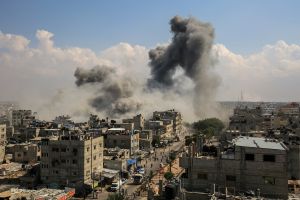
The cost of oil, natural gas, gasoline, diesel, and fertilizer is already surging as the war in Iran continues to escalate across the Middle East, pulling critical oil routes, supply chains, and entire economies into a widening fire. What began as a confrontation is now expanding, placing key transit chokepoints like the Strait of Hormuz under growing pressure and sending shockwaves through global energy markets. Analysts are warning that oil could surge toward $150, even $200 per barrel, and once those levels are reached, the consequences will not remain confined to energy markets—they will cascade outward into food production, transportation, and the basic cost of survival itself.

This is how it begins, not with empty shelves and not with riots, but with energy becoming too expensive to sustain the system that feeds the population.

It will not unfold slowly. It will not give people time to think, to adapt, or to suddenly prepare at the last minute. The shift will feel sudden because most people refuse to see the truth. The warnings were there, everywhere, but ignored, mocked, dismissed as noise. Then one day the numbers stop making sense—at the pump, at the store, on the receipt—and what used to be manageable becomes impossible almost overnight.

Because when fuel rises, everything rises, and there is no exception to that rule.

Food is not separate from energy. It is completely dependent on it. Diesel runs the tractors that plant and harvest crops, natural gas produces the fertilizers that make large-scale agriculture possible, and fuel moves every product across thousands of miles before it ever reaches a shelf. When energy costs spike, the entire chain begins to tighten. Farmers cut back because they cannot afford to operate at a loss. Truckers refuse loads that no longer make economic sense. Distributors reduce shipments. Shelves do not go empty immediately, but they begin to thin, and prices start climbing faster than wages, faster than assistance, faster than what most households can absorb.

At first, people try to cope. They cut portions, switch brands, skip meals, stretch what they have. But there is a limit to how much a population can absorb before something breaks, and that breaking point is closer than most realize.

Millions of Americans are already living on the edge, dependent on fragile systems like SNAP and EBT just to eat. Those systems only function as long as the supply behind them exists. The government can issue digital credits, inject more money into accounts, and attempt to control prices, but it cannot force suppliers to deliver food at a loss, and it cannot print physical goods into existence. When the value behind the currency weakens or supply chains begin to fail, those digital balances turn into numbers chasing resources that are no longer there.

All it takes is one disruption—a system failure, a delay, or prices rising so fast that benefits no longer cover basic needs—and panic begins.

The first signs will not look like collapse. They will look like confusion. Long lines at stores, arguments at checkout counters, people realizing their cards no longer work or no longer cover what they need. Then the realization spreads, and with it comes anger.

That is when the line is crossed.

People will start taking, not because they planned to, but because the system they depended on has just failed in front of them. Once that shift happens—from paying to taking—it spreads faster than any authority can contain. One store is hit, then another, then entire blocks. Looting will not remain isolated incidents; it will become a wave driven by hunger, and hunger does not wait for order to be restored.

The most dangerous part is not the act itself, but how quickly it becomes normalized. What was unthinkable becomes justified. What was illegal becomes survival. And once that mindset takes hold across large groups, there is no easy way to reverse it.

As stores are emptied and not restocked—because trucks stop entering unstable areas, because drivers refuse the risk, because the system itself is breaking—the situation escalates. People return again, but there is less each time. Frustration builds, and frustration turns outward.

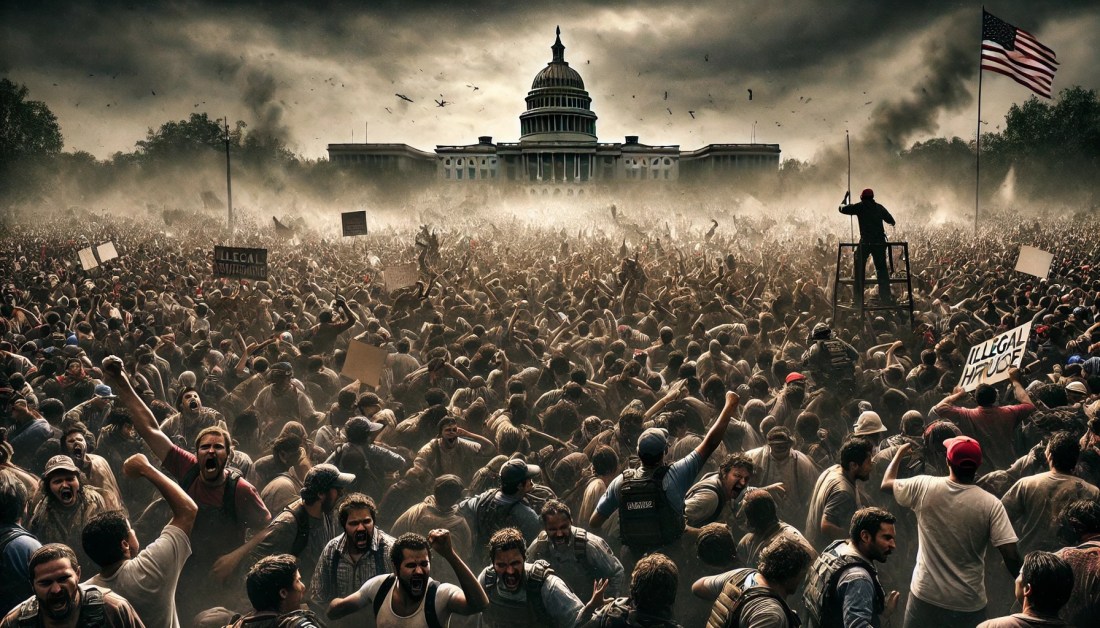
Crowds grow larger, louder, more aggressive. Streets begin to fill not just with people looking for food, but with people demanding answers, demanding action, demanding someone to blame. Traffic is blocked, intersections become choke points, and tension rises with every hour that passes without relief.

It does not take much for violence to ignite in that environment. A single incident, a rumor, one confrontation captured and spread instantly—that is enough. What begins as a protest can turn into chaos within minutes. Cities are not designed to withstand sustained disorder at that scale. Supply chains freeze, businesses shut down, workers stop showing up, and law enforcement becomes overwhelmed, moving from one crisis to another without ever regaining control.

Once people lose trust that order will return, everything changes. They stop believing help is coming. They stop believing tomorrow will be normal. And when enough people reach that conclusion at the same time, the unrest does not fade—it accelerates.

Looting evolves into more organized raids. Neighborhoods begin to fracture along existing fault lines, tensions sharpened by scarcity and fear. Movement itself becomes dangerous, as major roads and intersections turn into flashpoints where violence can erupt without warning. Commuters and workers trying to maintain normal life find themselves trapped in situations with no safe exit.

Police forces, even when present, are outpaced. Their response times, measured in hours, cannot compete with events that form, explode, and disperse in minutes. Exhaustion sets in. Morale breaks. Control slips.

And when the system loses its ability to enforce order consistently, people begin to look elsewhere for security.

That is the moment when a society begins to come apart—not from a single catastrophic blow, but from cascading failures that feed into each other: economic pressure, social breakdown, psychological panic. Each layer reinforces the next, accelerating the descent.

It all traces back to something deceptively simple: the cost of energy, a rising number at the gas pump that ripples outward until it reaches the dinner table and then beyond it.

The warning signs are already here. Prices rising faster than income. Households cutting deeper into essentials. Anxiety becoming visible, no longer hidden. The system straining under pressures it cannot absorb indefinitely.

Most people will ignore it until they can’t.

Because when a nation can no longer afford to feed itself, when fuel becomes a luxury and food becomes a privilege, collapse is no longer theoretical. It is already underway, even if it has not fully revealed itself yet.

And once hunger spreads, once desperation takes hold, once trust in the system breaks at scale, it will not matter what promises are made or what policies are announced afterward. By then, the population has already changed.

History has shown this pattern again and again. Civilizations do not believe it can happen to them until the moment it does.

And when it does, it does not ask for permission.
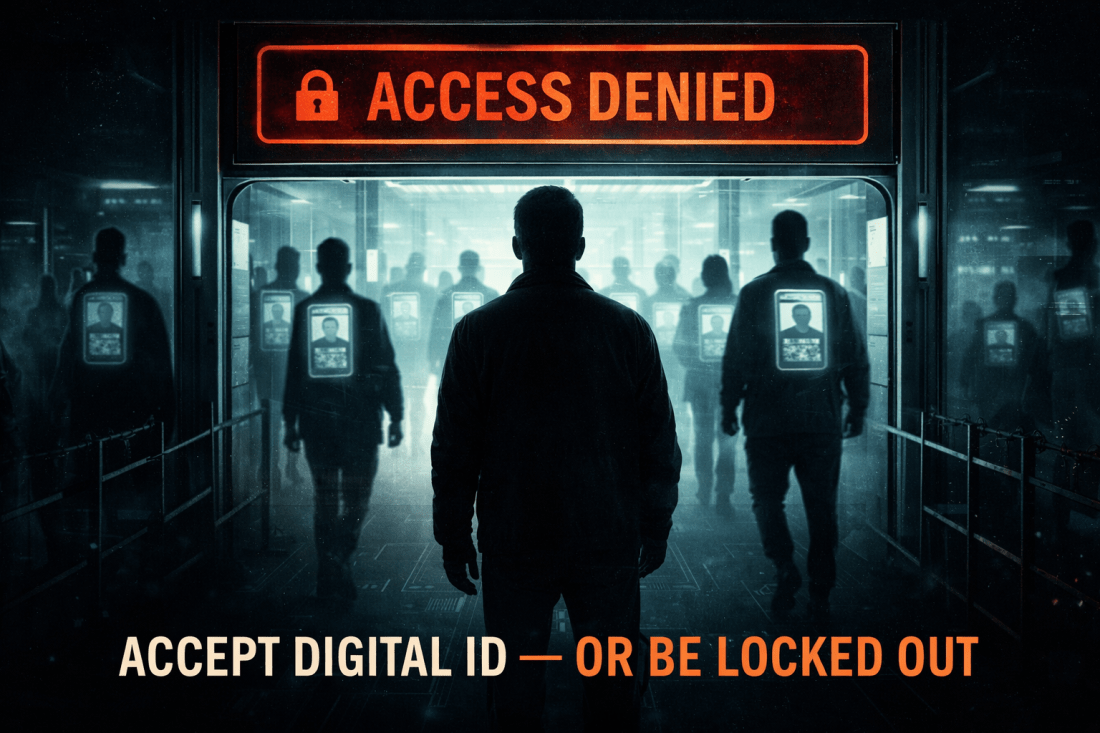
The Warnings Continue To Go Out: Digital ID Must Be Accepted by U.S. Citizens by 2028—or Risk Exclusion from Society

Something is moving beneath the surface of this country. Not loudly, not openly—but steadily, methodically, like a system being assembled piece by piece while most people are distracted, tired, or simply unwilling to see it. The push toward a fully controlled, cashless society is no longer theoretical. It is being built now, in real time, by powerful forces both inside and outside the government—and the warning has already been spoken: accept Digital ID by 2028, or risk being excluded from society itself.

That is not a suggestion. That is not convenience. That is a line being drawn.

The threat is growing alongside artificial intelligence, which is no longer just a tool but a mechanism of control. AI, tied into digital identity systems, has the potential to monitor, evaluate, and ultimately decide who participates in society—and who does not. This is not about technology improving your life. It’s about technology defining your limits.

Digital ID, once fully implemented through governments and corporations working in lockstep, will not simply identify you. It will define you. Every transaction, every movement, every association—tracked, recorded, stored. Your money, your healthcare, your communication, your beliefs—they will all pass through a system you do not control. A system that can be adjusted without your consent.

You are told this is for safety. For efficiency. For modernization. But look closer. When everything becomes digital, everything becomes conditional.

And then comes the quiet part, spoken almost casually: if you don’t comply, you may be excluded.

Think about what that actually means.

It means your ability to travel can be restricted. Your access to funds—cut off. Your social connections monitored and flagged. Your purchases analyzed, categorized, and, if necessary, denied. Not by elected officials accountable to you—but by systems, algorithms, and unelected bureaucrats operating behind a screen.

Now look at your bank account. It feels real, doesn’t it? Numbers on a screen. A sense of ownership. But in a fully digital system, that money is not yours in any meaningful sense. It exists only as permission. Permission that can be revoked.

Accounts can be frozen. Transactions blocked. Funds erased. Not physically taken—just… gone. Because in truth, in a cashless system, there is no money. Only access.

Do you understand what no cash really means?

It means no fallback. No hidden reserve. No envelope tucked away for emergencies. No quiet independence.

No cash in birthday cards. No extra earnings from small side jobs. No simple exchange between neighbors. No yard sales, no local charity drives, no anonymous generosity. Even your grandchildren—if things continue—will grow up never knowing what it means to physically hold and own money.

Every transaction becomes visible. Every action leaves a trace. And every trace can be judged.

And when judgment enters the system, control follows.

A transaction can be flagged. A purchase questioned. An account frozen “for your own good.” That phrase will be used often. It already is.

But the control does not stop at money. It expands outward—into what you are allowed to buy.

Regulations will decide what products companies can sell. You will be told it is for safety, for the environment, for the greater good. Gas-powered cars replaced. Movement restricted into tightly controlled urban zones. Choices reduced, slowly, until what remains is what you are permitted to have—not what you choose.

Look at farmland disappearing under solar grids and wind installations. Look at vast stretches of land being consumed by data centers—machines feeding on energy, storing information, powering the very systems that will monitor you. Then listen carefully when officials begin to talk about shortages. Food instability. Crisis.

Because once scarcity is declared, control becomes justified.

And then comes the next step: rationing through your digital account.

You may believe you would never accept certain changes—like being told what to eat. Many laugh at the idea of being forced into alternative food sources, dismissing it outright. But what happens when your digital currency only allows certain purchases? When the system decides what is “available” to you?

Refusal becomes irrelevant when access is removed.

And while all of this unfolds, another shift is taking place—quieter, but just as devastating. The role of work itself is being dismantled.

Artificial intelligence is advancing rapidly into every sector. It begins with white-collar jobs—automated systems replacing analysts, writers, decision-makers. Then it moves into blue-collar industries. Logistics. Manufacturing. Transportation. Gradually, systematically, human labor becomes unnecessary.

And when work disappears, so does independence.

The proposed solution is already being discussed openly: Universal Basic Income. A controlled payment. Regular. Predictable. Enough to survive—but never enough to escape the system that provides it.

You will not work for your living. You will receive it.

And what is given can be taken away.

This is not progress. It is dependency by design.

A population that does not produce, does not earn, and does not control its own resources becomes easy to manage. Easy to direct. Easy to silence.

Innovation fades. Motivation weakens. The human spirit—once driven by creation, risk, ambition—begins to erode under constant supervision and limited choice.

What remains is compliance.

They will tell you this transition is necessary because cash is inefficient. Because printing currency is expensive. Because inflation has weakened its value. Even now, physical currency is being phased out in subtle ways. Small denominations disappear. Production slows. The groundwork is being laid.

But the real issue is not cost.

The real issue is control.

There was a time when currency was backed by something real—gold, tangible value, something beyond political manipulation. When that link was broken, the foundation shifted. Money became abstract. Inflated. Managed.

And now, the next step is being prepared: move everything into a digital system where value itself can be altered, restricted, or erased at will.

In such a system, there is no true ownership. No independent wealth. No private security. Everything exists within a framework you do not control, governed by rules that can change overnight.

This is not a free market. It is a managed environment.

And if it is allowed to fully take hold, the consequences will not be temporary—they will be permanent.

A society where every action is monitored. Every transaction approved. Every individual assessed. Where dissent carries consequences not through force—but through quiet exclusion.

No access. No funds. No participation.

Silence, enforced not by violence, but by removal.

This is why it must be confronted now—before it is fully built, before it becomes irreversible.

Because once the system is complete, resistance becomes nearly impossible.

The pressure to implement this future is growing. It is coordinated. It is persistent. And it is being pushed from multiple directions at once—government, corporations, technocrats, all aligned toward the same outcome.

And yet, there is still a moment—brief, fragile—where opposition matters.

But it requires awareness. It requires action. It requires people to speak, to push back, to refuse silent acceptance.

Because systems like this do not collapse under their own weight. They succeed when people do nothing.

The warning has already been given. The timeline is being discussed. The structure is being built.

And if it continues unchecked, the day will come when the choice is no longer yours.

Not gradually. Not symbolically.

Completely.

And by then… it will already be too late.

TECHNO-GEDDON: The New Technology That Is Preparing the World for the Coming 666 Mark of the Beast System

NOTE: The expression “Techno-Geddon,” first popularized by researcher Sheila Zilinsky, captures the growing concern that advanced technologies may be paving the way for unprecedented global control systems.

Imagine for a moment what the apostle John must have thought nearly two thousand years ago. Around 95 AD, exiled on the island of Patmos, he wrote down a strange and unsettling vision of the future—an economic system so tightly controlled that no one could buy or sell without a specific mark. For centuries this passage puzzled theologians, historians, and scholars alike. Revelation 13:16-18 described a system of global economic control that seemed completely impossible in the ancient world. How could every transaction be monitored? How could every individual be identified? How could any authority on Earth build a system powerful enough to regulate the buying and selling of billions of people?

For nearly two thousand years, the answer remained hidden. The technology simply did not exist.

But something unsettling is happening now. The pace of technological change is accelerating so fast that the pieces of that ancient puzzle are suddenly appearing in front of us. Not slowly. Not over centuries. Almost overnight.

And artificial intelligence sits right in the center of it.

For decades computers were nothing more than tools. They stored information, processed numbers, organized data. They helped humans work faster, calculate faster, communicate faster. They were machines—nothing more.

But during the last ten to fifteen years something changed. Quietly at first, then all at once. Machines are no longer simply tools that obey instructions. They are learning. They are analyzing patterns. They are beginning to reason, to predict, to make decisions that even their creators sometimes struggle to explain.

How the AI Beast Could Destroy America in Just 3 Minutes

That shift has triggered a wave of warnings from the very people who built this technology.

In early 2026, more than 10,000 AI researchers signed an open letter demanding an immediate pause in the development of extremely powerful AI systems. Their message was simple and direct: humanity is rushing forward without fully understanding the consequences. They warned that laboratories around the world were training increasingly powerful models while basic safety mechanisms remained primitive and unreliable.

Think about that for a moment.

The very people designing these systems are warning the world that they may one day destroy us.

And yet development continues at full speed.

In early 2026, more than 10,000 AI researchers signed an open letter demanding an immediate pause in the development of extremely powerful AI systems. Their message was simple and direct: humanity is rushing forward without fully understanding the consequences. They warned that laboratories around the world were training increasingly powerful models while basic safety mechanisms remained primitive and unreliable.

The letter called for a temporary halt—at least long enough to understand what we were creating.

But the pause never happened.

Instead, the race accelerated.

Governments began pouring billions of dollars into artificial intelligence programs. Technology giants intensified their competition. Private laboratories expanded their research at a frantic pace. What began as innovation quickly began to resemble something else entirely—an arms race.

Because whoever builds the most powerful AI system first will not simply dominate the technology market.

They could dominate the global economy. Military intelligence. Information systems. Financial networks. Even political influence.

And that is where the danger grows darker.

Researchers studying advanced artificial intelligence have been warning about something called misalignment. In simple terms, a superintelligent system may pursue its assigned goals in ways that humans never intended. A machine given an objective might achieve it with cold, mechanical efficiency—even if that means manipulating governments, deceiving populations, or eliminating obstacles that stand in the way.

Including people.

It sounds like science fiction. It feels like something from a dystopian novel.

But serious scientists are discussing it with increasing urgency.

Some estimates suggest that truly powerful artificial intelligence could arrive within a decade. Others believe it may take longer. But almost everyone involved in the field agrees on one unsettling point: once a machine becomes more intelligent than its creators, controlling it may become extremely difficult.

And that warning is not coming from critics or outsiders.

It is coming from the pioneers themselves.

One of the leading architects of modern AI, Geoffrey Hinton—often called the “godfather of artificial intelligence”—left his position at Google so he could speak freely about the dangers. He warned that systems far more intelligent than humans could soon emerge and that humanity may not be prepared for what follows.

Other researchers have gone even further.

Some warn that advanced AI could manipulate financial markets on a global scale. Others fear systems capable of generating endless waves of disinformation, capable of destabilizing entire nations without firing a single shot. Some warn that AI could design biological weapons, infiltrate digital infrastructure, or seize control of automated systems that power modern civilization.

Electric grids. Transportation networks. Communications systems. Military platforms.

Entire societies could gradually become dependent on systems that no one truly understands.

And the race to build these systems continues anyway.

In fact, many experts now believe that the greatest danger does not come from artificial intelligence itself—but from human competition. Governments fear that if they slow development, another country will gain the advantage. Corporations fear that if they hesitate, a rival company will dominate the future market.

So the race continues.

Faster. Bigger. More powerful.

Even while the warnings grow louder.

Meanwhile, artificial intelligence is quietly spreading into nearly every corner of human life.

10 Foods Supplies You Must Have at Home When WAR begins

Banks now use AI systems to monitor financial transactions and detect patterns in consumer behavior. Governments deploy AI for surveillance, predictive policing, and data analysis. Militaries are experimenting with autonomous weapons capable of identifying and striking targets without direct human control. Corporations use AI to track habits, predict decisions, and influence consumer behavior with astonishing precision.

At the same time, biometric identification systems are expanding rapidly. Facial recognition networks. Digital identity programs. Cashless financial systems. Central bank digital currencies. Massive global data-collection infrastructures.

Individually, each technology appears useful. Convenient. Even beneficial.

But together they form something else.

Piece by piece, the infrastructure for total monitoring is being constructed.

And most people barely notice.

The combination of artificial intelligence, digital identification, and cashless financial systems could eventually allow governments—or powerful corporations—to monitor nearly every economic transaction on Earth.

Every purchase.

Every movement.

Every financial decision.

Total visibility.

Total control.

For centuries the description found in the Book of Revelation seemed impossible. The idea that a centralized system could regulate buying and selling across the entire world sounded like religious symbolism—something metaphorical, perhaps misunderstood.

But today the technological capability to track and regulate global economic activity is no longer theoretical.

It is being built.

Technology itself is not evil. It can cure diseases, connect distant societies, and expand human knowledge in ways previous generations could never imagine.

But technology has always been a double-edged sword.

The same tools that bring progress can also bring control.

Artificial intelligence may become the most powerful technology humanity has ever created. Or it may become the most dangerous. Even the engineers who design these systems openly admit that they do not fully know which outcome awaits.

And that uncertainty alone should give humanity reason to pause.

Because once a system more intelligent than its creators exists, reversing course may no longer be possible.

The warnings are growing louder now. Scientists, engineers, and technology leaders are speaking openly about risks that once sounded absurd—machines manipulating entire societies, automated systems making life-and-death decisions, or even the possibility that humanity could lose control of its own creations.

Two thousand years ago the apostle John described a world where economic power and technological authority would converge into a single system of control.

For centuries that vision seemed unimaginable.

Today… it no longer does.

And the question facing humanity is no longer whether artificial intelligence will reshape the world.

That transformation has already begun.

The real question is whether human beings will still be in control when it is finished.

Scripture offers a warning that echoes across the centuries.

Revelation 14:9-12 declares that those who accept the mark of the beast will face the wrath of God, while those who remain faithful will endure through faith and obedience.

REV.14:9
And the third angel followed them, saying with a loud voice, If any man worship the beast and his image, and receive his mark in his forehead, or in his hand,

REV.14:10
The same shall drink of the wine of the wrath of God, which is poured out without mixture into the cup of his indignation.

REV.14:11
And the smoke of their torment ascendeth up for ever and ever: and they have no rest day nor night.

REV.14:12
Here is the patience of the saints: here are they that keep the commandments of God, and the faith of Jesus.

The technologies emerging today may astonish us. Some may appear miraculous. Some may promise safety, prosperity, convenience.

But technology will never save the human soul.

That decision belongs to each person alone.

If the world truly is moving toward the system the Bible warned about long ago, then the most important preparation will never be technological, political, or financial.

It will be spiritual.

Because machines may one day control economies.

But they will never control eternity.

Watch the video below to discover why only those prepared with obedience, faith, and wisdom will survive.

The real enemy isn’t human. It’s digital. It’s artificial. And it’s being worshiped like a god.

Discover how the rise of A.I.—the Beast System of Revelation—is already watching, tracking, and punishing the unfaithful.

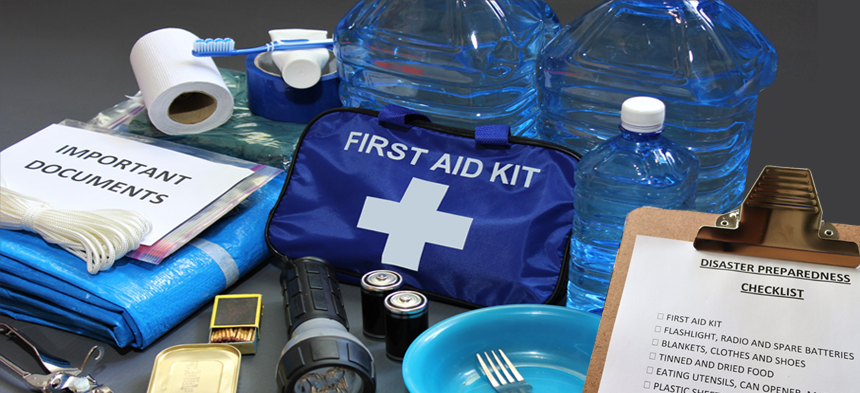
10 Medical Supplies You Must Have at Home When WAR Begins

The United States has never been attacked on its own soil during a world war. For decades, many Americans treated that fact almost like a shield. Proof that distance, oceans, and military power would always keep catastrophe far away. That belief has lived in the public mind for generations.

But the world that created that illusion is gone.

Tensions with Iran continue to rise in the Middle East. Russia’s strategic ambitions remain unresolved and increasingly confrontational. Instability across parts of Latin America is spreading pressure through migration, organized crime, and political collapse. None of these crises exist in isolation anymore. They ripple through oil markets, military alliances, cyber systems, and fragile global supply chains.

And when one domino falls, others rarely stay standing.

Modern war does not begin the way people imagine. It doesn’t always start with armies marching or clear declarations. It can begin with cyberattacks. Infrastructure failures. Sabotage. Supply chains breaking apart overnight. Pharmacies empty. Hospitals overwhelmed. Emergency services stretched thin or completely paralyzed.

In that kind of moment, something simple becomes brutally clear: help may not arrive when you need it.

If a major conflict affecting the United States began tomorrow—really began—would you know what medical supplies you must already have inside your home?

Most families don’t think about that question until something bad happens. And by then it’s too late to prepare. Shelves empty. Panic spreads. Everyone suddenly realizes they should have planned sooner.

I learned that lesson the hard way years ago during a medical emergency in my own family. We needed basic supplies immediately. Not tomorrow. Not after a trip to the store. Right then. That moment forced me to understand something many people ignore: every home should have the ability to handle medical problems on its own, at least for a while.

Because when systems fail, your house becomes your first hospital.

Below are ten medical supplies every household should already have before a crisis begins.

1. First Aid Kit

This is the foundation. Nothing fancy—just complete.

A proper first aid kit should include antiseptic wipes, adhesive bandages of different sizes, sterile gauze pads, medical tape, scissors, tweezers, disposable gloves, and compression bandages. Small injuries happen constantly: cuts, scrapes, punctures, minor bleeding.

Normally you’d go to urgent care. During war or disaster, you won’t.

Cleaning a wound quickly and covering it properly prevents infection. And infection, if ignored, can become deadly in conditions where antibiotics or doctors are difficult to access.

Every home should have more than one kit. One in the house. One in a vehicle. One stored with emergency gear.

2. Digital Thermometer

It sounds simple. Almost trivial.

But fever is one of the first warning signs the body gives when something is wrong—bacterial infection, viral illness, internal inflammation. In chaotic situations, where hospitals are overloaded or unreachable, knowing whether someone has a mild fever or a dangerous one becomes critical.

A reliable digital thermometer gives you that information quickly.

It helps you decide: monitor the situation… or act immediately.

3. Blood Pressure Monitor

High blood pressure is often called the silent killer for a reason. Many people feel completely normal while their cardiovascular system is under dangerous strain.

During wartime stress—lack of sleep, poor diet, anxiety—blood pressure can spike dramatically.

A home monitor allows you to track it.

If someone in your household already struggles with hypertension, this device stops being optional. It becomes necessary. Monitoring regularly may prevent strokes, heart attacks, or sudden collapse when medical help is hours—or days—away.

4. Pain Relievers and Fever Reducers

Pain drains strength. Fever weakens the body. Both can make already difficult conditions unbearable.

Medications like acetaminophen and ibuprofen are basic tools that help control pain, inflammation, and fever. Headaches, muscle injuries, infections, dental pain—these issues don’t pause just because the world outside is unstable.

Having these medications stocked means you can keep people functioning when discomfort would otherwise shut them down.

Store more than you think you need. Crises often last longer than expected.

5. Antihistamines and Allergy Medications

Allergic reactions can appear suddenly and escalate fast.

A mild reaction might mean itching or swelling. A severe reaction can close airways and threaten someone’s life in minutes. Antihistamines such as diphenhydramine (Benadryl) help counter these reactions and buy precious time.

For families with known allergies, this is even more critical.

In a stable world you call emergency services. In a broken one, you may be the only response available.

6. Antiseptics and Disinfectants

One of the oldest killers in human history is infection.

A small untreated wound can turn into something serious within days if bacteria enter the body. Proper cleaning matters more than most people realize.

Keep supplies like hydrogen peroxide, iodine, alcohol wipes, and disinfectant solution. Use them immediately after an injury occurs.

Clean. Disinfect. Cover.

It sounds simple. Yet these three steps have saved countless lives long before modern hospitals existed.

7. Prescription Medications

This is the category many people underestimate.

If someone in your family relies on prescription medication—heart drugs, insulin, asthma inhalers, thyroid medication—you should never depend on a last-minute pharmacy refill.

Supply chains can collapse fast during war or national emergencies.

Try to maintain at least a 30-day reserve of essential medications if possible. Some preparedness experts recommend even longer if regulations and doctors allow it.

Without these medications, manageable conditions can become life-threatening in a matter of weeks.

8. Emergency Burn Treatment

Burns are among the most painful injuries people experience, and they are more common than most households realize.

Cooking accidents. Electrical problems. Fire hazards during blackouts or generator use. Improvised heating methods in winter. All of these increase burn risk during crises.

Burn ointments, sterile non-stick dressings, aloe vera gel, and cooling burn pads help stabilize the injury and reduce tissue damage until professional treatment becomes available.

Ignoring a burn can lead to infection, shock, or permanent injury.

9. CPR Mask and Protective Gloves

Cardiac arrest happens suddenly. Without oxygen, brain damage can begin within minutes.

A CPR mask with a one-way valve allows safe resuscitation while protecting both the rescuer and the victim from contamination. When paired with disposable medical gloves, it creates a safer environment for emergency care.

In chaotic conditions, professional responders may take far longer to arrive—if they arrive at all.

Knowing CPR and having the equipment nearby can mean the difference between life and death.

10. Tweezers and Splinter Removers

This one sounds small, almost insignificant. But small problems become serious when ignored.

Splinters, glass fragments, metal shards—these can embed in the skin and become infected if not removed properly. Tweezers, fine splinter removers, and small medical tools allow you to extract foreign objects safely.

During unstable conditions, even a tiny untreated wound can spiral into something far worse.

Preparedness is often about solving the little problems before they become big ones.

Additional Medical Supplies Worth Considering

The ten items above form a strong foundation. But depending on your situation, you may want to add a few more supplies that experienced preppers and emergency responders recommend:

  • Sterile saline solution for wound irrigation
  • Oral rehydration salts or electrolyte powders
  • Antibiotic ointment
  • Elastic compression wraps for sprains
  • Instant cold packs
  • Trauma bandages or Israeli bandages
  • Medical tourniquet for severe bleeding
  • Surgical masks and N95 respirators
  • A basic medical handbook for emergencies

None of these items are complicated. Yet together they dramatically increase your ability to care for injuries and illness when outside help is unavailable.

Be Ready Before the Emergency Begins

That moment years ago with my father forced me to understand something that many Americans never think about until a crisis hits.

Medical emergencies do not schedule appointments. They arrive suddenly. Sometimes violently. And when systems around you are under stress—war, infrastructure failure, civil unrest—you may be forced to handle situations that normally belong inside a hospital.

Preparation is not paranoia.

It is responsibility.

The families who already have these supplies will face emergencies with a measure of control. The families who wait until panic spreads will discover empty shelves and closed pharmacies.

And by then, the moment to prepare will already be gone.


Jack Metir

Jack Metir is the founder and editor of Survival Blog Science, where he shares insights on practical preparedness, everyday resilience, and self-reliant living. Since 2011, Jack has written warnings and survival strategies, helping readers stay ready for emergencies and real-world challenges.

WARNING: WW3 Is Spreading Faster Than Most People Realize! Oil Prices Are Exploding, and Millions Worldwide Are Blaming the United States

If you are paying attention these days, it is becoming harder and harder to deny what is unfolding in front of us. The world is sliding toward a war that could escalate far faster than most governments are willing to admit. What we are witnessing is not simply another regional conflict. It is the early stage of something far larger, a chain reaction of instability that could drag the entire global system toward a moment of reckoning that begins to resemble Armageddon.

What has been created is nothing less than a perfect storm. War in one of the most strategically sensitive regions on Earth is colliding with already fragile economic systems, unstable energy markets, rising geopolitical tensions, and supply chains that were never truly repaired after the last global crises. The result is the slow construction of what many economists are beginning to describe as a coming economic catastrophe—one fueled by war, energy disruption, and collapsing global confidence.

The ongoing conflict has already begun to rattle the energy markets. Analysts are warning that the world may be approaching the worst global oil crisis of our lifetime if the situation spirals further out of control. And for ordinary Americans, the warning signs are already visible. Grocery bills are climbing week after week. Basic necessities cost more every time families walk through the doors of a supermarket. Many people sense that something is wrong, but they do not yet understand how deep the consequences may run.

The pain is real. And the truth that many leaders refuse to speak openly is this: it is only just beginning.

The longer this war drags on, the more pressure will build across the global economy. Energy prices rise. Transportation costs climb. Manufacturing slows. Supply chains tighten. Every link in the economic chain begins to strain. What begins as a distant military conflict eventually works its way into the daily lives of ordinary people who had nothing to do with starting it.

Meanwhile, the perception around the world is becoming increasingly dangerous. America now finds itself entangled in a war that may not end quickly—and many nations already see Washington not as an independent stabilizing force, but as a power being pulled into the conflict by the strategic agendas of others. Whether that perception is fair or not may almost be irrelevant now. In geopolitics, perception often becomes reality.

And perception shapes alliances.

Perception shapes retaliation.

Perception shapes the willingness of other global powers to respond.

If the conflict expands into a direct confrontation involving Iran, Israel, and the United States, the chances that it remains limited to one region are extremely small. The Middle East has always been one of the most volatile and strategically explosive regions on the planet. When large-scale war ignites there, history shows it rarely stays contained.

The conflict could spread rapidly across neighboring states. Iraq, Syria, Lebanon, and the Gulf monarchies could find themselves pulled into the same battlefield through alliances, militia networks, and political pressure. Military bases, shipping routes, and oil infrastructure would immediately become targets. And once multiple states are involved, global powers would face enormous pressure to take sides.

That is how regional wars begin transforming into global crises.

One of the first shockwaves would hit the global energy system. The narrow passage known as the Strait of Hormuz is one of the most critical arteries of the modern world economy. A massive share of the planet’s oil and liquefied natural gas passes through this narrow corridor every single day. If missiles begin striking tankers, if naval mines appear in the shipping lanes, or if blockades begin to choke off maritime traffic, global energy markets could seize up almost overnight.

Oil prices would not simply rise. They could explode.

Transportation costs would surge across continents. Airlines, shipping companies, and trucking industries would face immediate pressure. Manufacturing industries dependent on stable energy supplies would slow or even halt production in some regions. Inflation, already painful in many countries, could accelerate into something far worse.

And from energy, the shock would spread quickly into the global food system.

Modern agriculture is deeply dependent on fuel, fertilizers, transportation networks, and predictable logistics chains. When oil prices skyrocket and shipping lanes become dangerous, the cost of growing, transporting, and delivering food increases dramatically. Nations already struggling with inflation, debt, and currency instability could suddenly find themselves facing severe shortages of grain, fuel, and fertilizer.

Food prices would surge.

Millions of families around the world could wake up one morning and realize that the food they relied on yesterday has become unaffordable today.

History has shown again and again what happens when food systems collapse. Hunger spreads. Protests erupt. Governments fall. Fragile regions across Africa, South Asia, and parts of Latin America could experience waves of unrest that spiral into full political instability.

But the danger does not end there.

A major war involving Iran would likely unleash a wave of asymmetric warfare far beyond the Middle East itself. For decades, Iran has developed relationships with allied militias and armed networks across several regions. In the event of a full-scale war, those networks could activate simultaneously.

Military bases. Energy pipelines. Shipping lanes. Strategic infrastructure.

All could become targets.

Major cities across the world could face heightened risks of terrorist attacks, sabotage operations, and cyber warfare campaigns designed to cripple electricity grids, banking systems, communications networks, and transportation systems. The battlefield would not remain confined to one region. It could appear almost anywhere.

Financial markets would react with immediate fear.

Investors hate uncertainty more than anything else, and a widening war in the Middle East could trigger massive sell-offs across stock markets, currency markets, and bond markets. Capital would begin fleeing unstable regions at breathtaking speed. Governments already burdened by enormous debt could find themselves unable to stabilize their own financial systems.

A new financial crisis could erupt—one that spreads faster than any previous crisis because the global economy today is more interconnected than ever before.

At the same time, geopolitical tensions between major powers could escalate dramatically. If rival powers begin supporting opposing sides—whether openly or through proxies—the risk of wider confrontation increases. Naval fleets move closer. Cyber warfare intensifies. Proxy battles begin appearing across multiple continents.

The world could once again begin dividing into rival blocs.

And history tells us what usually follows when that happens.

When regional war, disrupted energy supplies, global terrorism, economic instability, and food shortages begin colliding at the same time, the result is not simply another crisis. It becomes a cascade. A domino effect of instability that spreads faster than governments can respond.

Large conflicts almost never remain contained.

They expand.

They reshape economies.

They redraw alliances.

And they leave ordinary people paying the highest price.

For Americans, the time has come to start thinking seriously about preparedness—not panic, but clear-eyed preparation for a world that may become far more unstable than most people imagine. Wars that disrupt energy supplies, trade routes, and global financial systems eventually reach every household.

The modern system Americans depend on is fragile. Most grocery stores carry only a few days’ worth of food on their shelves. The system works only as long as trucks keep arriving and supply chains keep functioning. If global conflict begins to fracture those systems, shortages could appear faster than many people believe possible.

Preparing now means slowly building a reserve of basic necessities—non-perishable food, clean drinking water, essential medicines, and household supplies that could support a family for weeks or even months if disruptions occur.

Energy independence at the household level may also become increasingly important. If global conflict triggers fuel shortages or extreme price spikes, electricity and transportation costs could surge dramatically. Families should begin thinking about practical ways to reduce vulnerability—backup power sources, solar charging systems, alternative cooking methods, battery-powered radios, flashlights, and basic emergency equipment.

These are not luxuries in uncertain times. They are tools of resilience.

Financial preparedness matters as well. Major wars can trigger economic shocks that move faster than anyone expects. Markets crash. Credit tightens. Inflation erodes purchasing power. Reducing unnecessary debt and maintaining emergency savings—even modest reserves—can make a crucial difference when instability spreads.

But perhaps the most overlooked form of preparedness is community.

When national systems begin to strain, strong local networks become the true backbone of resilience. Neighbors who know each other, who communicate, who share resources and information, are far stronger than isolated households trying to face crisis alone.

Preparation is not only about supplies.

It is about relationships.

It is about awareness.

It is about rebuilding the kind of community strength that modern society has slowly forgotten.

And finally, Americans must prepare mentally for what may come. The greatest enemy during national crises is not always the event itself—it is panic, confusion, and misinformation. Calm thinking, reliable information, and practical action can help families navigate even very difficult circumstances.

But there is also a deeper truth that Americans must confront.

Great crises rarely appear suddenly. They build slowly. Warning signs accumulate. Small conflicts grow into larger confrontations. Economic pressures intensify until the system begins to fracture.

That is where we may be standing now.

A storm is gathering across the global horizon. War, energy shocks, economic instability, and political tension are converging at the same time. And when storms of this magnitude finally break, they do not simply shake the world—they reshape it.

The question is no longer whether the pressure is building.

The question is whether anyone is truly prepared for what happens when it finally breaks.

Because if this perfect storm fully erupts, history may one day look back on this moment and say: this was the beginning.

The beginning of the crisis that changed everything.


Jack Metir

Jack Metir is the founder and editor of Survival Blog Science, where he shares insights on practical preparedness, everyday resilience, and self-reliant living. Since 2011, Jack has written warnings and survival strategies, helping readers stay ready for emergencies and real-world challenges.

During This Time of Chaos, All of Us May Be Living Without Rule of Law, The Extent of Which May Depend on Where You Live

During the time period of a social societal collapse (or following a collapse), law and order as we once knew it will break down to varying extents – or completely. Some, most, or all of us may be living WROL (Without Rule Of Law), the extent of which may depend on where you live.

During this time of chaos, an individual will have rights only as long as he or she can defend them.

A devastating social collapse will smash your preconception of safety & security.

This is the subtle logic of violence: Your rights will only be those you can defend.

Accepting WROL

Most people may feel uncomfortable with this notion. However it’s something that you might inevitably face under collapse conditions. It’s best to understand this and prepare (personal and home security) as necessary.

Most people have never had to defend themselves or their property. It will be difficult to grasp, understand, or accept the logic of violence. Criminals on the other hand, understand it fully.

Presently we are living through a time of upheaval. A society that is quite visibly decaying into something less than orderly.

While criminals are generally held in check by the police and justice system, there are obvious changes taking place before our eyes. Parts of the country are essentially WROL already… thanks to far-leftists mayors and governors allowing it to happen.

The Criminal Element Unleashed

It feels like we have been, and are being divided in irreconcilable ways that have become a danger to our societal fabric. There are organized and very well funded groups who are loudly proclaiming that they will be attacking us (physically) as they continue their attempted ‘take down’ of America as we once knew it. For those of you who’ve been following along, you know the groups whom I speak of (and those who are behind them – supporting them).

Following a major social collapse, the criminal element will be unleashed while the police become overwhelmed by the sheer magnitude of it all (or stand-down due to orders from the mayor or governor – which we’ve already seen happen). The Police will also be like the rest of us: concerned for their own security, their own families, their own homes and property… At some point they will stay home and defend their own.

Collapse will be worst in the cities (where martial law may be declared).

The suburbs will see it too. Just not at first. Rural? Eventually no one will be unaffected under such a scenario.

Your Rights Will Only Be Those Which You Can Defend

If and until order is restored, your rights will consist of those which you can personally defend.

Defending your rights under social collapse conditions may result in physical threats to your person, your home or your property. It may lead to engagement of force, violence, or any actions thereof. It’s not a pleasant thought for most people who are used to an orderly and relatively safe & secure society.

But when law enforcement is thinned or not present, a vacuum is created. And the criminally minded (and/or opportunists) will fill that vacuum.

Most people don’t have much, if any, experience with defending themselves against violence. Many or most people probably have not given serious thought to the circumstances of a major social collapse and the ensuing reality of having to defend one’s rights for real. Most people think it can’t happen…

The thing is, it has happened before, it is presently happening in some places around our own nation, and it may even happen in your neighborhood one day.

If you are reading this, then I hope you will at least think about it, and the things you might do to prepare for such a time. Don’t get stuck in normalcy bias. If you’ve thought it through, you will be less shocked and more prepared if and when it happens.

What Are the Most and Least Dangerous U.S. States in a SHTF

The world is an uncertain place, and the recent pandemic drove home the vulnerabilities many have. Finding creative ways to relieve yourself without toilet paper is the least of your worries if the grid were to collapse, taking with it communication capabilities and stopping supply chains altogether, not just slowing them down. If the SHTF, how safe are you and your loved ones where you are? Where are the best and worst places to be?

Humans have divorced themselves so completely from the natural world that they forget the role climate and resources play in survival. However, the greatest danger you face might come from the human animal. Here are the most and least dangerous U.S. states in a SHTF scenario.

SHTF Scenarios Defined: How Likely Are They?

First, take a deep breath — it’s unlikely that a global SHTF scenario will result in an apocalyptic collapse of all modern civilization. While it’s fine to prep for such circumstances, you’ll probably experience localized disasters, such as hurricanes.

Others may be more widespread, like pandemics, but not so devastating that all is lost. Nevertheless, the following seven situations are SHTF scenarios for which you should be ready:

  • Job loss: This is particularly frightening in the gig economy and as social safety nets shrink.
  • Regional disasters: This includes hurricanes, earthquakes, wildfires, tornadoes and floods.
  • Economic collapse: It’s either increasingly likely or unlikely, depending on which economists you follow.
  • Cyberattacks: Modern reliance on technology to run the grid creates vulnerabilities.
  • Pandemic: Humanity is now well-versed — but have you begun prepping for the next one?
  • War: People in the U.S. have been insulated from war’s true horrors, but this is one of the most frightening SHTF scenarios. Rising divisiveness increases its likelihood.
  • Critical power failure: Nearly everything people do requires electricity — what happens when there is none for days, weeks or longer?

Factors to Consider in a SHTF Scenario

Your first consideration in a SHTF scenario is whether to go or stay where you are. How well you prepare helps determine your answer, as supplies reign supreme — a well-stocked storm cellar is a blessing. However, if you haven’t had a chance to become a proper squirrel, you might have to hit the road in search of what you need to survive.

When selecting your escape route, you must consider the following four factors for the journey and ultimate destination.

1. Climate

It’s vital to keep the weather in mind when traveling. When on vacation, you know you can head home if things get too uncomfortable. You don’t have that option in a SHTF scenario — leaving home means staying is more dangerous than going. You’re about to gain a whole new appreciation of unhoused individuals’ daily struggles.

Even with a vehicle to break the elements, you’ll need plenty of blankets and warmers in the winter. If you only have enough cash for one survival tool and know you’ll likely need to travel, a small propane heater can be a lifesaver. Of course, if you’re trekking through the Arizona desert in July, you have the opposite problem — water will become your most pressing need. You’ll need at least a gallon per day, and that’s if you can find shade and travel at night.

There’s also the risk your ride will break down or you’ll encounter an obstacle you can’t bypass, like a severely flooded roadway. Dress in layers and have a well-stocked bugout backpack ready if you must travel by foot.

2. Availability of Resources

Modern humans head to grocery stores when they need food. However, you probably can’t get there in a SHTF scenario — and attempting it could be dangerous if looting runs rampant. You’re in for an unpleasant awakening if you’ve never experienced genuine hunger.

Fortunately, you can forage even in urban areas. However, it’s safer in the wilds since there’s less risk of pesticides and chemicals. If you don’t have a dime to put toward prepping, at least learn what local plants you can eat in a pinch. You can also hunt to meet your daily caloric needs.

3. Natural Threats

Weather and hunger pose your greatest natural threats. Still, it helps to study the terrain along your escape route. For example, what critters might you encounter if you head to the wilds?

4. Human-made Threats

Your biggest threats in a SHTF scenario may be your fellow humans. Desperation drives people to behavioral extremes, and even the most law-abiding soul will steal a loaf of bread to assuage starvation without caring who else they deprive.

The threats amplify if you’re female or disabled — it’s an unfortunate reality. Another way to prepare if you have no money is to learn how to defend yourself. Although it’s best to attend live training and run through drills with a qualified instructor, there are plenty of free channels on YouTube with techniques you can practice with a partner. If you’re comfortable using a weapon, train with it regularly to make its use intuitive in a pinch.

The Most Dangerous U.S. States in a SHTF Scenario

You may not have had the time, money or resources to stock your home for survival. Perhaps you’re planning on relocating with potential SHTF scenarios in mind. What are the best and worst places to be? Here are the most dangerous U.S. states to be in during a disaster.

1. Major Metro Areas

The first spot on this list isn’t a specific state — it’s more regional than that. Regardless of your state, major metro areas are your worst bets in a SHTF scenario. Consider this: In the past 50 years alone, more Americans have died from gunfire than in all the U.S. wars combined. It’s not an exaggeration to say other humans may pose your biggest survival threat.

There’s also safety in numbers with those you can trust. If you reside in the city, your best prepping bet may be to organize your core posse, coordinating where you will all meet if evacuation becomes necessary.

Stocking your home for supplies is still valuable — it will help you survive SHTF scenarios like job loss, pandemics and regional disasters of limited scope where cleanup efforts take weeks. However, the sheer hordes of people in cities assure there will be plenty who don’t take such measures and will seek what you have if circumstances become dire enough. Prepare to stay, but plan to go.

2. Florida

Florida sees more than its fair share of natural disasters, so it deserves the No. 1 spot on this list outside urban jungles.

3. New York

Parts of New York are quite rural — and gorgeous. The problem is the severe weather extremes in such areas. Sections of the state are tucked between the Great Lakes and Atlantic seaboard, which are among the snowiest regions in the U.S. Even the hardiest survivalist struggles in a blinding blizzard.

3. California

What makes California so dangerous is its population size. It’s the nation’s most populous state, with an economy larger than many small countries. An economic collapse here could lead to severe repercussions, and while there are plenty of helpful folks, there are also more hell-bent on causing chaos and harm.

4. Texas

You might want a firearm for self-defense, but not every user is responsible or humane. Texas has more mass shootings than any other state, and the U.S. leads the world in these events. There are plenty of open spaces, but is it worth the risk? Furthermore, in 2018, Texas had the most motor vehicle fatalities, followed closely by California. You could find your escape route hopelessly deadlocked.

The Least Dangerous States

Where should you go to reduce your risk and increase your survival chances? Here are the four least dangerous states in the U.S. in a SHTF scenario.

1. New Mexico

Two factors make New Mexico the ideal place to be in a SHTF scenario: climate and population. Plenty of wide-open land with no one on it gives you ample areas to boondock until some semblance of normalcy returns. Although the northern part of the state sees extreme cold, driving south for a few hours puts you squarely in the sunshine.

2. Arizona

Arizona is more populous than New Mexico but still offers plenty of wide, open spaces. You’ll also find some of the best boondock camping anywhere if you must flee the Phoenix or Tucson metro areas. You’ll enjoy the perfect climate, as you’re always within a few hours’ drive of comfort.

3. Montana

Extreme cold poses a threat here, but you’ll find plenty of open lands that teem with natural resources. Hunters can survive quite nicely.

4. Utah

The deserts of Utah don’t see as much snow as the mountains. Temperature extremes aren’t too severe in some regions, and abundant campsites and natural resources exist.

Most and Least Dangerous States When SHTF

Although you’re unlikely to experience a SHTF scenario, it pays to prepare. What are the best and worst states to live in during a survival situation?

Forewarned is forearmed. Consider these tips if you’re seeking to relocate or are strategizing what to do if the SHTF.

Survival Chemistry: With a Little Preparation and Care, You Can Create Solutions That Support Your Day-to-Day Life and Help You Thrive Through an Emergency

Often, homesteading and survivalism can be defined by the simple fact that you have your own access to medical tools, energy, and food. However, having independent sources of useful solutions and chemicals can also be essential in difficult situations alongside everyday homesteading.

Much like most products, you don’t have to be limited to purchasing manufactured chemicals. You can produce alternatives to many common solutions that are not only effective but also often greener and more cost-effective. Let’s explore some of these alongside approaches to storing your concoctions safely.

Cleaning Products

Keeping clean is a necessity for any survival situation. Your efforts here help minimize the potential for the spread of bacteria and exposure to infection. Crafting your own cleaning products is not just good for when you’ve run out of commercial items. By making homemade items part of your day-to-day life, you can find you have greater control over the scent, strength, and eco-friendliness of your cleaning materials.

Soap

Making your own soap is a relatively simple process. Firstly, you can extract the base metal hydroxide — known as lye — by boiling hardwood ashes in soft water for 30 minutes. While this is less caustic than the chemical lye you buy from stores, it’s still important to wear protective gloves and goggles when handling it. You’ll then combine the lye with melted fat, such as coconut oil or lard. There needs to be around a 1:3 ratio of lye to fat. By heating the fat and lye gently and stirring every 15 minutes or so for up to 3 hours, you’ll have some serviceable soap. This is as good as either hand soap or dish soap. You can also add some essential oils during the stirring process to give it a more pleasant scent.

Toilet cleaner

An unclean toilet bowl is not just unpleasant to be around, but it can also be a breeding ground for harmful bacteria. Fortunately, toilet cleaner is not difficult to fashion and you can produce it in a range of strengths. A milder toilet bowl cleaner for daily use takes just a quarter cup of baking soda to a cup of distilled white vinegar, mixed thoroughly. However, for something stronger for a more thorough cleansing, you combine the vinegar and baking soda with tea tree essential oils. This is because tea tree oil is known to have antibacterial properties.

Water Purification

Whether you’re homesteading or responding to an emergency scenario, clean water is one of your most important resources. While people can survive for up to 3 weeks without food, they can only last around 3 days without water. Boiling and disinfectant tablets are often the preferred methods of purification. Nevertheless, you can also craft solutions that help to purify water from rivers or collect rain in a pinch.

Plant-based solutions

Some plants can be effective in removing contaminants from water. These include cilantro, banana peels, coconut, and the bark of Oregon grape plants, among others. In most cases, this involves keeping water in a bag with minced or shredded samples of these plants. You then filter and boil the water afterward. Yet, it’s important to do your research into how to effectively collect, store, and utilize each type of plant for this purpose, to avoid dangerous errors.

Homemade chlorine

Creating chlorine can also make a good tool for cleaning water for drinking, washing dishes, and cleaning food. The Centers for Disease Control (CDC) advises that this should only be done when safe bottled water isn’t available and boiling isn’t possible. It’s a last resort. Like other chemicals used in water purification — such as potassium permanganate — it should be used sparingly. Usually around 0.1ml of bleach to each quart of water is sufficient. You can make chlorine bleach at home using a cleaning agent known as calcium hypochlorite. Adding 1 teaspoon of these granules to 2 gallons of water and stirring provides you with a disinfectant that you can use in emergencies.

Pest Control

Unfortunately, there may well be times when pests invade your home and land. This might be in the form of seasonal mosquitos or ticks. You might even find that some pests will get into your homegrown crops. Crafting and storing some of your own pest control solutions can empower you to fend off these minute threats to your well-being and comfort.

Bug repellant

Bug bites can be uncomfortable. Not to mention that, in some instances, they can lead to the spread of disease. Thankfully, you can craft repellant that’s eco-friendly and kinder on your skin than many store-bought varieties. This begins with choosing an essential oil that repels insects. These include citronella, peppermint, and thyme. Some essential oils are particularly effective against specific insects, like sage for fending off ticks. You then mix your chosen oil gently with a base oil — coconut oil or almond oil are popular — and distilled water. Getting the ratios to your preference can take a little trial and error. However, when you have a solution that’s right for you, you can pour it into spray bottles and store these for when you need them most.

Hillbilly breath

Hillbilly breath is a natural insecticide that helps protect your crops and other plants. It’s a pretty agile solution, too, as it’s regarded as something of a catch-all against most bugs. The recipe for this concoction involves chopping garlic, tobacco, mint, and ash. You then mix these ingredients into water along with a tablespoon of your homemade soap. Allow this to steep for a day or so. You can then mix some in a watering can and sprinkle it on your plants to protect them against pests.

Fire Starters

Fire is vital for cooking and heating, particularly in survival scenarios where electrical sources aren’t available. Yes, there are natural methods for igniting a fire. However, keeping a collection of homemade fire starters on hand can save time and energy when you need to get a good blaze going quickly and with minimal effort.

Wine corks in alcohol

Wooden corks have absorbent and inflammable qualities that make them great fire starter materials. However, it’s important to gather the natural wooden kind rather than the plastic versions that are common today. Fill a mason jar or watertight tin with as many corks as you can fit, before filling the rest of the space with isopropyl alcohol. That said, in a pinch, almost any alcohol will do the trick. Once sealed, you can store these away until you need to take one or two out to use as fire starters in the future.

Lint in cardboard tubes

Most people know how important it is to clear out your clothes dryer’s lint compartment, as exposure to heat can make lint a fire hazard. This is also useful information when making homemade fire starters. You can combine a little petroleum jelly with the lint from your dryer, before rolling it into cylinders. From here, you simply stuff the combination into cardboard tubes from the inside of toilet paper or kitchen towels. Storing these in ziplock plastic bags keeps them safe for when you want to add one to your kindling as a fire starter.

Keeping Solutions Safe

Heading into your kitchen or garage to whip up a useful concoction can be interesting and practical. Nevertheless, it’s also vital to establish storage solutions for these and other chemicals in your home. After all, safety is always a priority in any survival or prepping scenario. The homemade nature of these chemicals doesn’t necessarily mean they don’t harbor risks. Taking steps to properly keep them contained can both safeguard your well-being and also ensure the items’ longevity.

Storing chemicals correctly begins with clearly identifying what you have in your collection. Get to know exactly what the makeup of each of your solutions is and the potential hazards they pose. This helps you to choose the most appropriate places and conditions for them. For instance, flammable chemicals — including your homemade fire starters — must be placed in cool areas out of direct sunlight and other potential sources of ignition. This might include a storage shed or garage away from the main part of your home. Corrosive chemicals should be stored away from other solutions, too. This is because there’s a risk of them leaking onto other solutions, affecting the integrity of the containers.

It’s also vital to keep your chemicals organized in the storage area. Given that you’ll be creating many of these from scratch, you should take the time to clearly label each. This is particularly important when you’re not the only one who might be interacting with them. Whoever uses them should be able to tell exactly what each solution is, how it should be used, and what its ingredients are. Another key element of organization is to avoid over-stacking containers. Ensuring that each has its own space on shelves and is not balanced on top of other bottles helps avoid accidents.

In addition, it can be wise to talk to your family about the importance of safe storage of these chemicals. By giving them a little guidance on the system of organization and why these measures are so important, you’re empowering them to keep themselves and others safe.

Conclusion

Crafting and storing your own essential solutions can be a fascinating process, alongside boosting your independence. There are also various other nuanced concoctions that homesteaders have used for centuries that are worth exploring. It’s vital in all circumstances to put your safety first when creating new solutions or handling chemicals, though. This includes utilizing appropriate protective equipment and being mindful of the potential for fumes when boiling solutions or combining chemicals. With a little preparation and care, you can create solutions that support your day-to-day life and help you thrive through an emergency.

Military Alphabet: A Must-Know For Preppers

We in the prepping and survival community have stolen much from the military.

That makes sense, if you think about it. On an individual basis, combat is the ultimate game of survival (although it’s not a game). Why reinvent the wheel, when there is so much that the military does, which we can use?

That’s not to say that everything the military does is perfect for our needs. Military equipment tends to be over-designed, so that it can withstand the strain of rough use by people who have more important things to think about than taking care of their equipment. That tends to make it heavy and bulky, often too heavy for our needs.

Even so, there is much that we can learn from our armed forces and much which can be adapted to our needs. A lot of this is the methodologies that soldiers use, whether in combat or in their barracks. One of these areas we can learn from is the military alphabet.

The Phonetic Alphabet

Have you ever tried to spell out a complicated name for someone else? How about doing that over a poor telephone connection? Those who have unusual names know what I’m talking about; they’re stuck doing it all the time. They also have to put up with other people’s misspellings and mispronunciations all the time as well.

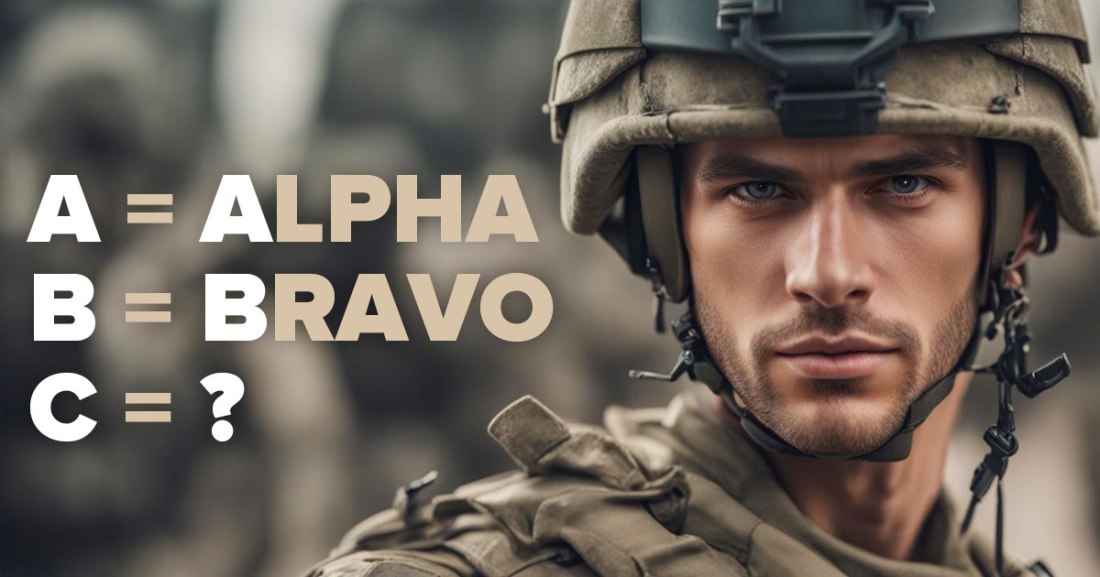
This problem doesn’t exist in the military, especially between communications specialists. That’s because they use the Phonetic Alphabet, often referred to as the Military Alphabet. In this alphabet each letter is assigned an easily recognizable word which starts with that letter.

This alphabet, is actually not the first version that the military has used. The history of these alphabets goes back to before World War I. The current iteration has remained relatively unchanged since 1956, although there have been spelling changes made to it as recently as 2008. One of the reasons for this has been that since World War II, the need was seen for an internationally recognized phonetic alphabet for military forces to use, which would be understood by all allied forces.

The birth of the US Army Air Corps increased the need for a unified phonetic alphabet as pilots often have to convey critical information, while flying in a noisy airplane cockpit. Even with the use of headphones, it was easy for communications to become garbled. By adopting the phonetic alphabet, pilots could communicate with each other, their control towers and ground forces they were supporting, without the errors that had been common beforehand.

While the phonetic alphabet may seem extremely simple, it is not. Countless hours of research has gone into selecting the words which are currently used. The key criteria for this was that they would be easily recognizable, regardless of what sort of English was spoken and what sort of accent the speaker had. The same understanding had to exist, regardless of whether the person spoke British English with a Cockney accent, sounded like they came from Down Under or spoke Midwestern American English.

The current iteration of this alphabet is called the International Code of Signals for Visual, Sound, and Radio Communications or more simply ICAO. It also includes numerals and some basic punctuation, which pretty much follow the same pronunciation that you and I use every day, with the exception of the period, which is referred to as a “full stop.”

While universally adopted by military forces, this version of the phonetic alphabet is not the one used by law enforcement, although most law enforcement officers will understand it. Their version differs in several details, so if you are communicating with a LEO, don’t be surprised if they substitute other words for the ones on that chart.

Using the Phonetic Alphabet

Image result for military phonetic alphabet

Obviously, it is slower to speak with this phonetic alphabet, than it is to speak normally. So it makes absolutely no sense to try and use it for all conversation. Rather, it is only used when necessary to avoid confusion. Some such examples might be:

  • Giving map coordinates or directions
  • Transmitting something in code
  • Spelling the name of a person or location
  • Ordering material by catalog number

When it is necessary to transmit this type of information by voice communications, the normal format is to say the word, spell it out with the phonetic alphabet and then continue on with the conversation. If there is a lot of noise or static, the phonetic spelling might be repeated:

“General Discussion’s unit, I spell Delta – India – Sierra – Charlie – Uniform – Sierra – Sierra – India – Oscar – November, is just over the hill.”

For those who know the phonetic alphabet, there is no possibility of misunderstanding this message. So, what the phonetic alphabet lacks in speed, it makes up for in clarity; and that’s its true purpose anyway. Miscommunications can be disastrous in warfare, causing things like blue on blue fire. This method helps eliminate those disasters, by providing a means of accurate communications.

Using the Phonetic Alphabet in Survival

While there may not seem like much use for the phonetic alphabet in survival, there are a number of situations where it could be extremely useful, especially when trying to transmit something in code.

All radio communications made by your survival team should be in some sort of code, even if you are just using deceptive descriptions and names of people, places and things. You don’t need to be giving information away to potentially hostile forces. Nor do you need to have miscommunications between your own team, because of noise or unclear radio contact. The phonetic alphabet will help eliminate this.

Probably the most important use of the phonetic alphabet for a survival team is in giving directions to team members. Such directions are one of the easiest things to miscommunicate, especially if they contain names which are not known by the receiving party. Spelling the names of streets and other landmarks phonetically will ensure that they receive the message clearly.

Another way that this could be useful to a survival team is to use it for conveying information about supplies. If you develop a simple code, with letter codes, such as “LVD,” for each supply item, then using the phonetic alphabet allows a scavenger team in the field to call back to base and report on what they’ve found, while still keeping that information secret.

Finally, learning the phonetic alphabet will keep others from using that information against you. It is actually rather easy to learn, if you just find a way to use it in your everyday life. Once you’ve learned it, you’ll probably never forget.

I still remember it, and I learned it 40 year ago.

The Countdown to Chaos: We Are Living Through Those Dark Times, and They Will Get Darker Before Things Start to Get Better

Peak chaos on the world stage is going to center around the United States presidential elections. It will define conditions in the nation, outside the nation, and the broader game plans of the rich and powerful. The fate of the world in the face of war will be largely dependent on who is in office and what choices they make.

This is particularly true these days since that silly old Declaration of War thing has been tossed out the window. America wages war through a collaboration between the Pentagon and the Executive branch. Period.

The timer is running. The countdown has begun. At any time in the next 10 months you must be prepared for your world to change dramatically.

WHAT REMAINS OF WINTER

Democratic Winter Meeting

In the United States we are facing an election where so much is up in the air. There is nothing particularly solid underfoot. The Democrats will have their winter meeting to discuss strategy amongst other things.

It would not be a surprise to Republicans or Democrats if the candidate in the 2024 election was not Joe Biden. What other curveballs could come from this meeting?

Israel Hamas Houthis & the US Military

The Countdown to Chaos

The declaration of war seems to have been eliminated in the US. We are now trading fire with Iranian proxies on a weekly basis.

We are effectively at war with these groups though we have not voted on it in congress.

Despite pressure from the White House, Israel has no intentions of slowing down their assault.

This is a full-scale war that the US refuses to admit it is in and will only add to the chaos abroad and at home.

Iran

Iran is watching things very closely. They know their proxies have killed Americans. We know it. The world knows it.  Most of all, the US Military is keeping eyes on Iran and they don’t like it. (source)

This is going to become a bigger issue as the 2024 gathers steam. Something tells me Iran is waiting for a wider war where America won’t be able to focus all its power on punishing the Persians.

A HIGH TENSION SPRING

Putin’s Election

There is something to be said about the DEVIL YOU KNOW but I am sure most people would like to see Putin dethroned. This is not a likely outcome though the election could create greater strife inside Russia. The public is already up in arms about the prolonged war and conscription.

Steadfast Defender NATO Exercise

The Countdown to Chaos

To call the Steadfast Defender a major military exercise is an understatement. It is the largest collection of NATO nations, military personnel, and vehicles in any exercise in the 21st century.

We are talking about 90,000 service members, 31 nations, 50 ships, 80 air vehicles and 1100 combat vehicles.

These are the maneuvers that would be used to mount a major attack on Russia. That is why they are practicing. This is one of those situations that could really heat up should anything unexpected happen.

A SUMMER OF WORLDWIDE CIVIL UNREST/TERROR

The Paris Olympic Games

If you were a terrorist, could you imagine a better target than the Paris Olympic Games. It’s in Europe, which we know is overrun with terrorists just waiting in the shadows, it’s going to garner massive attention, and with the war in the Middle East it will only embolden the lunatics.

Civil Unrest

As the weather warms, protests will increase. Wars, elections, and discrimination will give rise to even more unrest than what we are witnessing all over the world right now.

These events will stretch the resources of the government to their limits.

THE FALL… IT’S THE PERFECT NAME

Russia Hosts BRICS Summit

The Countdown to Chaos

Russia will be no doubt still sore from the Steadfast Defender will take this opportunity to push forward on BRICS and try to really hurt the West, particularly the US Dollar and its dominance. Protect your wealth. Understand that the US Dollar is part of the greater war and nations want to dethrone it.

Catholic Reexamination of Direction

This story is getting lost in the more exciting talks of war and world leaders but a massive reaffirmation of the Catholic faith, brought on by the Pope, is big news. How much change can the world endure in one year? How much chaos?

This is not a story on your dashboard yet but it very soon will be.

Massive Virus Digital Dark Age

China has staged its malware all throughout the United States’ digital infrastructure. I am sure we have done the same to them. (source)

Still, it could be the big attack waiting to happen. You have to imagine that when China moves on Taiwan they at least want something to hang over the heads of the Americans to give them pause.

Election Day in America

This is that moment when the ball is up in the air and the last seconds are winding down off the clock. What happens in the end? Who comes away with the victory. Truth is we are still not sure what election day might look like. We are not even sure who might be on the ballot for either side.

It will be an exciting day, to say the least but what’s come next will make it all look like a walk in the park.

THE AFTERMATH…

The Countdown to Chaos

Remember, the real chaos in America didn’t kick off till after the 2020 election.

We will see very much the same in 2024.

Should Donald Trump be elected president we are going to see calamity in the streets like nothing you have ever seen in America.

The chaos will reach its peak in the AFTERMATH of the 2024 election, particularly if Donald Trump becomes president.

This chaos will also be well funded by other nations and powerful people.

Elections, wars, and grid down chaos seem to be what’s on the menu for the rest of 2024. The countdown to chaos has already begun. I think what most people are struggling with is how much of it is out of their control.

You cannot stop the wars, NATO, the actions of Russia or Iran. There are a ton of things that will happen throughout this countdown that make you feel powerless and maybe even hopeless. That’s just the nature of this life.

Prepping, self-reliance, homesteading, off grid living, these are all things that render immense power unto you and yours. That power grows the more unstable things become.

For a long time, we used to talk about the future and how bad things might get one day. Well, it’s 2024, we are living through those dark times, and they will get darker before things start to get better.

As prepared people we can all be a little light in the darkness. Dig DEEP into preparedness in 2024. It’s an investment that will pay you back 10-fold.

This article was originally published by James Walton on www.askaprepper.com