America: The Future Third World Country

The purchasing power of Americans has been unequalled for the past several decades. This has been made possible by the high paying jobs created by our manufacturing sector. These jobs insured a wealthy middle class that could buy anything they wanted.

These high paying jobs meant that some of the wealth created by making things went to the workers. Before long, corporations began working on ways to keep more of that wealth. Enter the free trade agreement. By drafting and passing a number of free trade agreements, the corporations created a way to make their goods cheaper with overseas labor and keep more of the profit for themselves and their Wall Street owners. The deep pockets of the middle class began to dry up.

A thinking person might eventually come to the conclusion that destroying middle class jobs and the purchasing power of the middle class would be shooting themselves in the foot. With less income and purchasing power, the corporations would create a shrinking American market for themselves eventually. That is what we are seeing now.

So, what do you do when your cash cow begins to dry up? You turn it into hamburger. Just like all of the other third world countries that provided raw materials for these corporations to prosper, America will now become a supplier of raw materials for the next rising power to use. That rising power will likely be China with its large untapped populace. They have the gold and the manufacturing capability now. All they need is a good supply of raw materials and they can develop their own middle class and the corporations will be in the clover once again.

America is in debt up to its eyeballs but we still have large amounts of natural resources. Multinational corporations are chomping at the bit to get their hands on these resources so they can renew their ponzi economic model with another rising economy.

Between here and there they must break the American consumer and take everything they have and then get them out of the way so the strip mining can begin in earnest. When you look at the larger picture that is taking shape, that is where we are headed. Chinese corporations are gobbling up everything they can get their hands on right now all over the world including in America.

Those who say the U.S. will be invaded are a little late. The invasion has already started and the invaders have taken the form of corporations. If anything gets in the way of this resource extraction, that is when you will see the troops arrive under some pretence to help the people. Actually their main goal will be to secure the resources.

When troops start arriving that is when Americans will start fighting back by any means at their disposal. For all intents and purposes it will be an all out war on American soil. Regardless of what people perceive the reasons for this war to be it will ultimately be for resources.

You may ask why they do not just keep America prosperous and continue the gravy train. The main reason is that entitlement programs have gotten out of control. They are now spending too much money supporting people who do not work or produce any value in society. To simply take this money away would cause the same chaos that will erupt by destroying the economy but economic destruction will enable them to secure the resources with few people realizing what is really happening. Its all about controlling the amount of blowback from the people and the best way to redirect and contain it.

In the end America will become a third world economy or something worse. The people have the means to retain control of the nation and someday rebuild some of our infrastructure but that depends on the people and how much they want to remain free and in control of their future. As long as half of the population can get paid to sit at home and do nothing we will not change the course we are on. Change will only come when it is forced on the people and they decide to set a new course. Unfortunately, many may elect to do as they are told by the government and hope the free stuff will once again start to flow. Those people will be very disappointed, at least as long as they remain alive.

Scientists Identify Part of The Brain That Gets Creeped Out By Robots

I’ve never wanted to end something so bad as when I stepped into the grocery store and saw, for the first time, Marty the robot. I know, I know, property destruction is wrong. I didn’t act on it, but seeing those googly eyes peek over the mangoes filled me with a deep and primal blood lust (oil lust?) that’s been locked up in my DNA since before the flood. I saw Marty the robot and I saw that it must not be. So I left before I made a scene. I’m no freedom fighter.

There seems to be a very real and very deep repulsion inherent in humans’ feelings towards robots. We don’t like robots, as evidenced by the growing trend of people acting on that atavistic urge to murder them. But we also aren’t creeped out by all robots equally. There’s a concept called the “uncanny valley” which shows the point of maximum creepiness. A new study published in the Journal of Neuroscience  has found the part of the brain responsible for the uncanny valley effect and what’s going on in our primitive monkey brains as we meet our replacements.

The uncanny valley was first described by Japanese roboticist Masahiro Mori. It’s where something, in this case a robot, is made to look like a human but falls a bit short. People tend to like robots more as they become more humanoid, but at a certain point there is a dramatic dip in likability, the so-called valley, before becoming more likable again as they get closer to a perfect facsimile of a human.  According to a new study that has located the part of the brain responsible for the uncanny valley, different people may react to the uncanny valley with varied intensity. This may explain why a robot that’s essentially a rolling traffic cone almost landed me in jail. I blame the googly eyes.

To figure out the physical location in the brain of the uncanny valley, researchers hooked up 21 volunteers to MRI machines and gave them some tests that involved pictures of various kinds of robots and humans combined with likability decisions. In one experiment, the volunteers were shown pictures of humans, artificial humans, android robots, humanoid robots and mechanoid robots, and were asked to assign values to how likable each was. Then they were asked to pick one of these humans or robots to complete a task: selecting a gift that a hypothetical human may like. The volunteers chose either real humans or human-like robots, but they did not choose the robots in which the difference between human and robot was the hardest to make out.

According to the study, researchers found a link between the uncanny valley and both the prefrontal cortex and amygdala. The prefrontal cortex is the part of our brain that is the most different from other primates. It’s the part that makes executive decisions that go against our primal urges. It was my prefrontal cortex that weighed the risk-reward balance for murdering Marty the robot. The amygdala is a very primitive part of our brain responsible for the “fight-or-flight” response, fear, anxiety, all those fun things. It was my amygdala that made me want to do a robot murder.

The prefrontal cortex showed a dip in activity when volunteers were shown robots in the uncanny valley, and conversely the amygdala seemed to show more of a reaction to the robots in the uncanny valley.

The researchers think that understanding how humans react to the uncanny valley is key to a future where humans and robots coexist peacefully. According to Astrid Rosenthal-von der Pütten, from the RWTH Aachen University in German:

“This is the first study to show individual differences in the strength of the uncanny valley effect, meaning that some individuals react overly and others less sensitively to human-like artificial agents. This means there is no one robot design that fits – or scares – all users. In my view, smart robot behaviour is of great importance, because users will abandon robots that do not prove to be smart and useful.”

So regardless of our repulsion, they hope to be able to make robots that even stubborn cranks like myself will tolerate. To that I say: good luck.

The Nuclear Holocaust: How To Survive One Second After

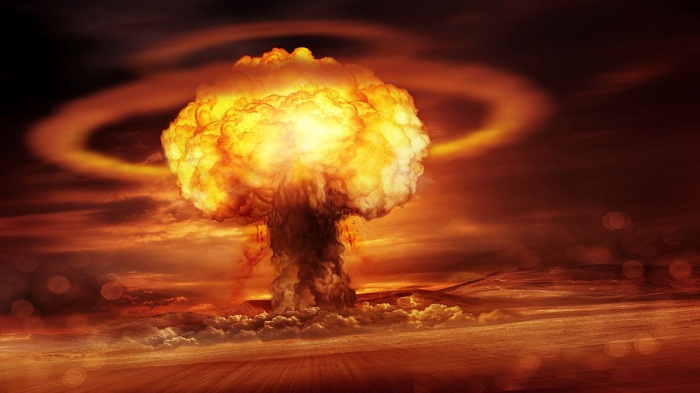
When it comes to a social collapse based on a nuclear crisis, mushroom clouds created during a ground based incident may well come to mind.

Even though most people think they know what an exploding nuclear device may look like, there are actually many sources of based nuclear contamination. Each source of nuclear material will cause different visual, auditory, and other effects.

Therefore, when it comes to preparing for a nuclear incident, you must be aware of where the radiation will come from as well as how to deal with it as safely as possible.

 The Air Based Nuclear Incident

Oddly enough, even with a full scale hostile detonation of a nuclear device, you may first need to recognize that an incident has occurred.

Consider a situation where a 1 kiloton bomb exploded in the air 30 or 40 miles away. Chances are, you would not even hear the blast let alone see the cloud rising up. Unfortunately, streams of radiation will already be headed your way. Even though they may not deliver lethal doses of radiation, you may still suffer from burns and mild to moderate radiation sickness if you are outdoors.

Since an air based explosion may well trigger an EMP, your first indicator may be that your car or cell phone stops working. If you are indoors, do not go outside to see if you will get a better reception.

Instead, ask others if their cell phones are working. If everyone seems to have lost service, stay indoors and head for the basements and lower levels as quickly as possible.

Without communications and information about where the blast has occurred, you could be running deeper into the radiation belt. You are better served by putting as much concrete and dirt between you and the fallout as you can. Needless to say, if you are in a vehicle, get into a building and to the lower levels as quickly as you can.

Once you reach a suitable shelter, follow the usual routine of squatting facing a wall with your forehead resting on knees and arms shielding the back of your neck. If you have Potassium Iodide and other cellular shields on hand, be sure to take those.

An air based nuclear incident will spread contaminated material further, and since air tends to be much lighter than dirt and ground based debris, it may also take longer for it to finish falling to the ground.

In small scale, relatively localized scenario, it is likely that you can get medical attention and reasonable care without fear of larger plans and complex scenarios. You may also be given information about where you can pick up Potassium Iodide tablets and other cellular shields.

With regard to air based nuclear explosions, your first few days will primarily be concerned with coping with radiation sickness, finding food, finding water, and washing as much radioactive material from your body as you can.

You will more than likely find it harder than usual to travel because cars will literally be stopped in the streets. If you have to leave a city, try to do so using underground subway, storm water, and old tunnel systems.

Try to avoid going above ground as much as possible. Even though heavy rains will come down as a result of a nuclear explosion, tunnels and similar systems may still protect you from some of the radiation. Just make sure that rainwater and sewage are not actively being shifted into the system or you will wind up with all kinds of nuclear debris in the same tunnels that you are in.

It is also important to realize that tunnel systems and subways may be shut off by government agencies that want to prevent nuclear waste from getting into underground chambers. Whether they know of your presence or not, you may simply become collateral damage because they feel the “big picture” they have been trained to uphold is more important.

And if you are planning to leave an area, be prepared to travel 5 – 6 times the distance that you would travel to get out of the radiation bands created by water and ground based nuclear incidences.

The Nuclear Detonation on the Ground

Over the years, prevailing views on what to do during an attack have changed. In particular, older advice revolved around staying in place and trying to get as far below ground as possible. Today, most experts say that you have approximately 1/2 hour after a blast to reach a place of safety. Instead of staying in place, you should use that time to get as far away from ground zero as possible. This makes sense if you are in a mid to outer area of the incident site.

Depending on how fast you travel, it may be possible to get into a less dangerous band, or away from the problem altogether. Once you reach the 20 – 25 minute post incident mark, you will need to take cover and then stay in that location for at least 24 hours, after that time the worst of the radiation will be dispersed. You may want to stay an additional 2 – 3 days depending on supplies and the durability of your shelter.

When you cannot get to a shelter, any standing object will have to do. Make sure that your shield is between you and the explosion point being affected by the nuclear blast so that it will absorb as much radiation as possible. If you think about how shadows work, then you can readily understand why your position in relation to the blast is so important.

Never look at the flash from a nuclear explosion as it can cause blindness in less than a second. Individuals living in cities or areas with larger populations can also try taking refuge in subways, sewer systems, and any other areas where there is plenty of concrete, brick, or dirt to absorb the radiation.

Once you reach the shelter, squat down on the floor as far away as possible from windows, doors, and beams. Sit so that you are facing a main wall and put your head on your knees. Use your hands and arms to shield your neck. Look downward as much as possible. If you look upward, your eyes may be blinded by the flash from any detonation that happens to occur.

Unfortunately, there are many situations where you may be stuck outside and have no shield or building to hide in. The best thing you can do is get as close to the ground as you can. If the ground is soft, then dig with rocks or your hands to get as far into the ground as possible. While you are working, do not look at the incident site.

During the first few hours, you are very likely to experience heavy winds and thermal blasts. The thermal blasts can set just about anything on fire as they pass.

Keep non-flammable, white or silver heat shields on hand. Put those on to try and keep as much heat as possible away from your body. As you work, also be aware that objects from miles away can easily strike you. Should concrete or something else suitable land nearby, do not take shelter behind it unless you know that it is not contaminated by radioactive debris.

If you receive warning of a pending nuclear blast, and you are indoors, you will need to get underground or into a basement as quickly as possible. Brick and cement structures will absorb the most radiation, so they are likely to offer the best shelter. Just remember to put as many walls or as much dirt as possible between you and the explosion point.

Always aim to be as close to the ground or below it as possible. Needless to say, if you are building a homestead, you can always insulate walls with dirt and lead, or just build your home as far underground as possible.

No matter whether you are indoors or out, it is very important to limit the amount of dust that gets into your nose, mouth, and on your skin. While a dust mask will be of immense benefit, even a handkerchief over your nose and mouth is better than nothing.

You should also cover up your skin as much as possible using white or the lightest colors possible. Remember that black and dark colors will absorb radiation. This, in turn, can easily lead to burns on parts of your body where the darker colors were covering.

You should also carry Potassium Iodide, Vitamin C, and Vitamin E tablets with you at all times. Take them as directed on the bottle as soon as you learn of a nuclear blast in your area. This medication will protect your thyroid from uptaking nuclear materials.

Typically, the thyroid is the first organ that determines how sick you will get from the radiation. One small pill can truly make the difference between serious radiation sickness and death even if your exposure levels are in the upper ranges.

You can obtain free Potassium Iodide tablets and instructions for taking them if you live near a nuclear power plant. Representatives in charge of readiness for nuclear emergencies in these areas may also have the tablets available for free. While these tablets may not be recommended for “prophylactic” or daily use, having them with you at all times is extremely important.

Just make sure that you follow dosing instructions because taking too much Potassium Iodide can poison the thyroid. Use iodized table salt or Himalayan Salt before nuclear blasts to ensure you are getting enough iodine in your diet. It should be noted that Vitamin C and Vitamin E can also shield other cells from some radiation damage.

Typically, radiation sickness will start within the first few hours after exposure to nuclear radiation. If you are not dealing with a detonation or large scale crisis scenario, it is very important to get medical attention as quickly as possible.

When it comes to a larger scale nuclear crisis, you will need to take a shower as soon as possible after the blast. Use soap that does not contain conditioners or oils that prevent dust and radioactive debris from being washed away. If you have scissors it may be of some use to cut your hair.

Shaving after a shower can also help get rid of some debris. Just take extra care to avoid razor burn as you don’t want to embed more radioactive material into your skin. Follow up with another shower using plenty of soap and water. If you have plenty of water pressure and water, then go ahead and shave while you are washing.

Do not put old clothes back on. Try to get rid of them so that you do not have radioactive materials in your living space. This includes getting rid of shoes, jewelry, weapons, and anything else that you were wearing during the incident. Once you are ready to leave the shelter, it will be time to think about long term survival. You may need to get medical attention or find your way out of the area.

It is fair to say that anyone growing up during the Cold War era is very aware of nuclear power, nuclear war, and all the chaos that it can bring. Regardless of your age, knowing how to survive both hostile and non-hostile releases of nuclear material are extremely important.

Never overlook the hazards associated with nuclear medicine, nuclear power plants or other industries just because they don’t make huge mushroom clouds or kill in a matter of moments. In fact, the slow, hidden damage and death from these sources may be far worse and far more troublesome than a nuclear war.

As you learn more about the daily hazards of exposure to land based nuclear radiation, you may well conclude that you need to be as prepared for these issues as you would be for a full blown war situation.

The Nuclear Incident on Water

If you happen to be swimming, in a boat, or otherwise in the water during a nuclear event, your first task will be to head for land. Depending on your distance from the explosion, you may only have a few minutes to half an hour to reach land and find suitable shelter.

During your escape from the explosion site, try to put anchors made of lead or brick between your body and the explosion. If possible, squat down and cover yourself with plastic or anything else that will keep water from seeping through your garments and onto your skin. The plastic should also be thick enough to prevent as much water vapor as possible from seeping in.

You should also have a mask on hand that will allow you to breathe without absorbing steam or water vapor into your lungs. While these aides will not stop radiation from passing through your body, it will limit the ability of radioactive debris from binding to your skin. This, in turn, will make it easier to wash the debris away later on.

As with land based explosions, you should always have Potassium Iodide tablets on hand. Take one as soon as you know an explosion or other event has occurred. If you are in marine or brackish waters, this precaution is even more important because these bodies of water may have higher levels of iodine in them.

As radiation moves out from the initial incident area, it will contaminate iodine present in the water. This iodine, in turn, can be quickly absorbed by the thyroid. Since the half-life of most iodine isotopes is under 10 days, you may need to take the potassium iodide tablets for a few weeks if you are exposed to a water based nuclear incident.

This may be distinctly different from land and air based explosions where the nuclear material may not produce as much iodine, or lower amounts are available to contaminate.

It should be noted that Potassium Iodide is not recommended for prophylactic treatment unless you are directed to do so during a nuclear power plant leak or there is other creditable reason to believe that some type of nuclear strike is going to occur in a matter of minutes or hours.

If you want to protect your thyroid from radioactive iodine before an event, simply make sure that you are getting enough iodine in your diet. Even though most people consume large amounts of table salt, there is also a high tendency towards deficiencies in the diet.

During a nuclear explosion or active leak scenario, radiation in the form of heat and light will be absorbed more readily by dark or black colors than white and light colors. Therefore, it is very important to keep white tarp, or even white bed sheets on hand to cover yourself with. If land is involved in the blast, this one minor thing may save you from more serious burns.

Once you reach land and a safe location, it is very important to shower. Make sure that you use soap and shampoo that do not contain skin conditioners, softening oils, or hair conditioners. All of these chemicals will only make it harder to wash radioactive materials away from your body.

You should also dispose of all contaminated clothing and jewelry. While this may be difficult, remember that even a single spec of dust can be radioactive for thousands of years and wreak mayhem during that time.


You Have Lessons To Learn From Those That Survived The Great Depression: When SHTF it Will be Unlike Anything we Have Lived Through Before – No Announcements will be Made, no Warnings Will be Given by the Establishment, it Will Just Suddenly Happen!

The Great Depression was an era in American History that people who lived through it would remember indefinitely. They remember how hard the times were, the poverty most people suffered, and just life in general at the time. For most people who remember living through this time, the lessons stuck with them for the rest of their life.

For those who experienced the worst of The Great Depression, they never forgot. They do not or did not like talking about life during that time, but the lessons they learned were life-changing. Most people now would not necessarily notice the impact made until they looked closer at these people.

They do not throw out anything. The only things in their garbage (scrap) pails were items that could not possibly use anymore, be fed to animals, or composted. They were on board with recycling before recycling was the cool thing to do. Their homes will appear very neat and tidy, but their closets are packed full of items they could not part with including old clothes, newspapers, fabric, boxes, baskets, jars, string and twine, rubber bands, twist ties, plastic bags, and more. During the Great Depression, you would never know if and when you might need something to repair or fix another item.

They were basically hoarders because they had to be, but you would have never known it by looking at their homes. Now that the minimalist movement is in full swing, some people look down their noses at these older people who lived through the Depression. However, we must realize that they did not have the possessions then we have now. They just didn’t have the pure junk and cheaply made goods we have now. They were minimalists in their own way because they did not have the money or the means to have more possessions. They just refused to throw out anything that could be used again.

Notice how most older people do not buy new clothes unless they have to? Their shoes are usually repaired, worn until they fall apart, and/or are still kept in case they need a pair for the garden or other chores. They probably have a good pair that is kept for special occasions or church, but when that pair is no longer good, they get used for every day. The same goes for coats and more. You will also notice they do not buy trendy clothing items either – most of their items are of good quality that will last years. In this age of disposable clothing, this seems odd, but they probably would see us as wasteful.

People during this time lost their fortunes. People also lost their savings as banks closed. While most people who lived during this time continued to save money after the Depression and World War II, many were leery of banks. They would keep cash at home, have accounts at multiple banks, and not have all their eggs in one basket. Most of them would also go on to save a large amount of money because they lived so simply and frugally.

They also went on to birth the Baby Boomer generation. They wanted to give their children a better life than what they had. They saved money for their kids to go to college because they wanted their kids to have an education and succeed. They would go on to help their children buy their first farm and possibly their first home. They would invest in their businesses to help them get a start because very few of those that lived during the Depression had that luxury.

Many people during the Depression lost their homes and their businesses. They would have to move for jobs and just to find work. People would have to move in with other family members or rent a couple rooms for a roof over their heads. Kids were expected to help out any way they could with the understanding any money they earned would probably go to the family. If they were given payment at all, that money was not spent frivolously. Not to say that the kids were not given a special treat once in a while, but they did not expect this all the time like kids do now.

While there has always been poverty in this country, during the Great Depression, poverty was acute and affected nearly everyone in some way. When we think of poor now, we think of either the homeless or just living paycheck to paycheck. However, poverty is the circumstances of being extremely poor. Most people did not have enough money for rent/mortgage payment, food, clothing, and other necessities. Children were sent to live with other relatives or were taken to orphanages because their parents could afford to take care of them. Many adolescents were sent to live at other households as hired girls or men and worked for a roof over their heads and food to eat.

People leaned on bartering and trading during this time also. People would help each other bring in the crops, bale hay, tend the sick and the infirmed, do heavy housework, and more. You might have given the neighbor some produce from your garden in exchange for eggs. Like my grandmother, you might have worked as a hired girl so you could stay in town and go to high school. Many people traded and bartered services and goods just to stay alive and stretch their money even more. To do this, you can still see this generation doing this. They also instilled these lessons into their children.

People who lived during this time did what they had to do to survive. We all hear stories about the Great Depression that we think we could never do now. However, when you are faced with a choice to survive or not, you would think differently. This time in history is also very romanticized by those who think it will happen again. They want to live like that. Most of them could not do it.

How could you survive another Great Depression? Most of us preppers would like to think we could survive anything, but in reality, the Great Depression lasted until World War II started. For most people, nothing changed when we went to war because of the rationing system and the unavailability of goods. Jobs were on the rise due to wartime production, but the money still barely covered the necessities. There is not really any way to be reasonably prepared for ten years or longer unless you practice self-sufficiency now.

What saved many people during the Great Depression was the ability to grow their own food, raise animals for eggs and meat, have large gardens, and preserve as much as they could to get through the winter. They knew how to sew their own clothes, mend almost anything, and think creatively to solve problems or fix anything. Nothing was wasted which is a huge problem nowadays. They made only one trip to town a week for anything that needed to be purchased if they could afford to go. They would have also taken in any extra produce or eggs to the local grocer which he would have paid them for if the quality was right.

In short, the skills this generation knew is what saved them. They still have these learned lessons in their memories. You see that most of them still practice what they can, but this generation is dying out quickly. When they are gone, the lessons will be forgotten. If experts are right, we could be headed towards another financial and economic upheaval. We have more people living in this country than ever.

While there is a trend towards self-sufficiency right now, most people would be suffering until they could get back on their feet again. I have faith in people helping other people, but the resources might not be there to help everyone. FDR was accused of socialism and more when he rolled out the New Deal to create programs which created jobs to help people get back on their feet again. Now, if that happened, it would be wrapped up in Congress for months. With all the regulations we have now, it may never happen.

If you have a chance, please sit down with the generation who lived during this time. Ask them how they or their parents survived the time. You will hear different accounts because their experiences were different. Some people went through this time just fine because they were already used to living the self-sufficient life. Some people had to learn it. Some people lived in abject poverty and were basically homeless. If you can’t directly talk to someone who lived during the Depression, read some first-hand accounts. What they had to do to live may surprise you.

There Is The Potential For Many Types Of Catastrophic Events Occur, What Would You Need In Advance To Insure Your Survival?

Those that are aware of the EMP commissions report have probably also heard the statement that this type of event would suddenly transport everyone involved back to the 1800’s almost instantly. It is also possible that up to 90% of the population could die within 2 years due to the sudden lack of modern technology. It does not matter if it is an EMP, CME, cyber attack or terrorist attack on the grid, the results will be largely the same.

This is a sobering notion that you can either believe or disbelieve. If you think it is all hype you need only to go back to your daily activities and hope it never happens and leave your survival to someone who will do something if it ever happens. For those hardy souls that take responsibility for their own fate and that of their family, it falls to you to determine what this type of event will mean for you. An event of this magnitude will affect different people in different locations in different ways.

It is important to first realize what changes you will likely see following this event. To understand this you must look at what a 19th century lifestyle would look like to you. Understanding these differences will help you to determine what plans you need to make ahead of time to adjust to these changes in a way that will allow you to survive. Here are some of the things you will face with a collapse in modern technology and this does not even take into account problems you will face from the ill prepared.

19th Century support systems included the following

Sailing ships for cargo and human transport
Steamships for cargo and human transport
Steam locomotives for cargo and human transport
Horses and wagons for cargo and human transport

Horses, mules and oxen for cultivation and harvesting
Root cellars for common storage
Ice houses to store ice cut in winter
Open pollinated seeds for planting
Livestock manure for fertilizer
Local mills for processing grains
Shallow dug water wells for fresh water
Manual tools for building and repairs

Developed systems for kerosene, whale oil and candle making for lighting
Mechanical power systems for factories and machinery
Telegraph lines for communication
Local craftsmen to build and repair items
Human and animal means to produce coal

Wood stoves for cooking and heating
Outhouses for sanitation needs
Buildings designed for natural ventilation

Limited clean water systems
Limited hospitals and doctors
Limited drugs, medications and medical equipment
Limited firefighting capabilities
Limited law enforcement capabilities

Physical currency of silver and gold
Banks utilizing paper records

Many of these systems exist today only in museums or historical sites and in insufficient quantities to support the population we now have. So simply going back to 19th century living standards would be impossible for the vast majority of people even under the best of circumstances. This brings to light the conclusion that 90% of the population would not survive long term under these conditions.

Assuming this type of event did occur, what would you need in advance to insure your survival? That is a question many people need to ask but most will not simply because their belief system would be shattered if they acknowledged potential threats and that they need to be responsible for their own lives.

There is the potential for many types of catastrophic events that we may never see but the potential should be enough to cause reflection on the individuals part to at least ask the important questions for their own survival. To prepare mentally as well as physically is important to survive the worst of the potential events we could face. You may not find yourself living in the 19th Century tomorrow, but what if?

Some scientists fear that the solar maximum that will peak in 2020 will spawn another CME similar to the Carrington Event causing catastrophic results on Earth

20171017_emp1

In 1859, an event unlike anything experienced before by modern man, occurred. A massive Coronal Mass Ejection occurred on the sun sending vast quantities of solar particles on a collision course with Earth. The result of this collision caused severe disruptions with the only major electrical equipment then in existence, the telegraph system. Magnetic observatories recorded disturbances in the Earths magnetic field that were literally off the scale.

Auroras were seen as far south as the Caribbean, gold miners in the Rocky Mountains were awakened by a light so bright they thought it was morning and those in the northeast could read news papers by the light.

Telegraph systems throughout Europe and North America failed and in some cases shocked telegraph operators. Telegraph lines threw sparks, paper in some telegraph offices caught fire and some lines continued to send messages even after the battery power had been removed from the line. The electrical effects were severe but the lack of electrical devices in use at this time allowed society to continue as normal and this disturbance was viewed as nothing more than a curiosity.

Scientists believe events of this size can occur every 500 years and events of a lesser but still destructive magnitude can happen several times per century. Scientists are getting better at predicting space weather but mother nature often times ignores our best forecasting and throws us a curve.

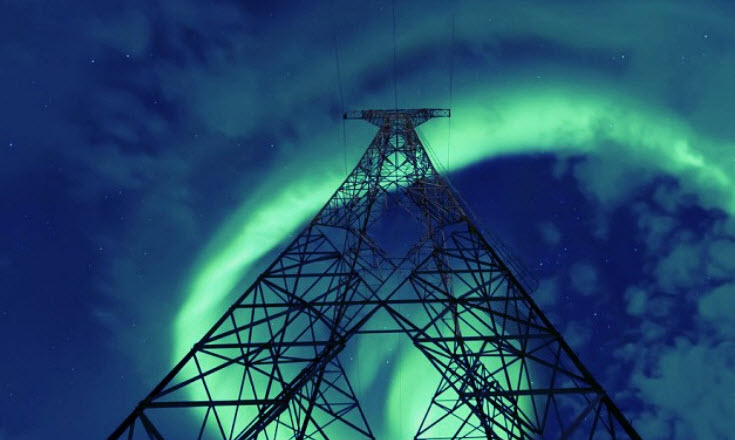
What would happen if a storm of this magnitude were to strike the Earth today? The biggest worry we have is the power grid. Satellites would be affected preventing most communications and financial transactions but if the grid goes down due to transformer blowouts, it could be a long time before we get it back up. The larger transformers 500+ KV in size cost millions of dollars and take 1 to 3 years to get even in normal times. Very few of these are kept in supply and the loss of dozens or hundreds at one time could be a disaster as only a small number are made every year and none are currently made in the U.S.

If many of these large transformers went down, it would take down our high tech society with it. Many of our cars and computers and appliances would probably still work, but how would we run them without power? How would we pump water to cities and pump fuel so trucks and trains could deliver food and medicine? How would our medical system operate without the high tech gadgets we depend on to keep people alive and diagnose them? How would we communicate and conduct financial business without our computers? Yes, we have backup generators but how long will they last before they run out of fuel that we can no longer process, pump and deliver?

This is the nightmare scenario we need to address before it happens. Currently we can detect CMEs about 20 hours before they reach Earth. The current plan is to notify power companies of the danger so they can shut down parts of the grid and protect the transformers before they get burnt out. It’s a plan but I feel the need to ask, is this really the best plan we can come up with? What happens if mother nature throws us a curve and we don’t have time to power down the transformers? A report from the EMP commission stated that it would cost about $60 to $100 million to protect the 300 largest transformers that power the grid and an additional $400 to $600 million to protect an additional 3,000 transformers but our leaders don’t think that would be the best use for our money. A NASA report indicates that within 90 seconds of a Carrington Event reaching Earth, the 300 largest transformers in the U.S. would go down and recovery would take 4 to 10 years and some estimates place the death toll in the tens of millions of people.

If the grid goes down civilized society as it is will disintegrate rapidly due to the lax moral standards we now have as a society. The pictures of Japanese citizens patiently waiting in line to get supplies after the 2011 tsunami is a stark difference from what you could expect in the U.S. As with many potential problems, if the government would only discuss it in public and offer the public some simple preparedness tips and discuss how we as a nation would repair the damage, the public knowledge would help mitigate the damage and aid in recovery operations. Unfortunately, that’s not how we do things in the 21st century.

So how do we know how bad it was in 1859 if we didn’t have electronic devices back then to measure it?

To be maximally geoeffective , ie: to drive a magnetic storm, a CME must
(1) be launched from near the center of the sun onto a trajectory that will cause it to impact Earths magnetic field,
(2) be fast (1000 km/sec + ) and massive, thus producing large kenetic energy and
(3) have a strong magnetic field where orientation is opposite that of Earth.

Solar Energetic Particle events dominated by shock-accelerated particles traveling near the speed of light are channeled along geomagnetic field lines into the upper atmosphere above the poles where they can initiate ozone depleting chemistry in the middle atmosphere. Nitrates produced by SEP bombardment settle out of the atmosphere within weeks and are preserved in polar ice, allowing the magnitude of the SEP to be estimated many years later. This is how we can estimate the magnitude of the Carrington Event and apply it to modern technology.

Some scientists fear that the solar maximum that will peak in 2020 will spawn another CME similar to the Carrington Event causing catastrophic results on Earth (SOURCE). The recent uptick in solar storms may give some credence to our newfound concerns. The problem with a solar event as opposed to a man-made event is the possibility that we could be hit multiple times over the course of months before it diminishes. This could make recovery efforts many times more difficult. It is possible for individuals to prepare for an event like this to limit the hardships but this is something that must be done well in advance. The problem is that the vast majority will not prepare and they will cause this disaster to become a catastrophe if it happens. Those that are not prepared to live through a situation like this face a life threatening situation. Those that are prepared, face the danger posed by the unprepared.

The preparations that you make for this situation are similar to many other disasters and will require similar items and planning. As I always stress, knowledge is the most important thing to have in a disaster and everyone needs to develop a plan that will work best for them. If the grid goes down besides not being able to travel or communicate, banking records could be frozen or destroyed taking your electronic money along with it. In this situation, the only money you may have access to is what you have on hand in cash and even then you may be limited as to what you will be able to buy. The only safe position is to already have supplies on hand. For this type of disaster, there is no such thing as being prepared too early or having too many supplies.

One final item that you need to plan for is the potential for a nuclear incident following a grid down event. The loss of power to maintain coolant can result in a meltdown of reactor fuel and the more serious problem of spent fuel coolant ponds going dry igniting radioactive fires. In this situation you have two choices, evacuate or shelter in place. Evacuation would be difficult at best and sheltering in place would present its own problems. An uncontrolled radioactive fire can spew radiation for decades so each person would need to evaluate the hazard to their location and plan accordingly. A modern day Carrington Event would be nothing short of Armageddon for the people of this planet

Russia’s New Generation of Nuclear Weapons Ready For WW3: Considering the potential effectiveness of this system, such missiles would give the Russians a distinct advantage over anyone

The arms race is an old one. Ever since our cavemen ancestors started using sticks and stones to attack each other, mankind has constantly sought to create more effective weapons. Some have sought this to use in attacking their enemies, while others only to defend themselves. Offensive warfare and defensive warfare are two sides of the same coin.

This arms race has also fueled technological research and development through the ages. Much of the technology that we depend on, every day of our lives, came from the Department of Defense (DOD). Many things which don’t have an obvious military application were in fact invented for the military, such as the Internet, the Global Positioning System and many modern emergency room techniques.

Much of the last century was overshadowed by this arms race, specifically involving nuclear arms. While there are still only a few countries who own these weapons, a huge amount of money has been invested in their development. That investment hasn’t stopped, as we can see from a recent announcement.

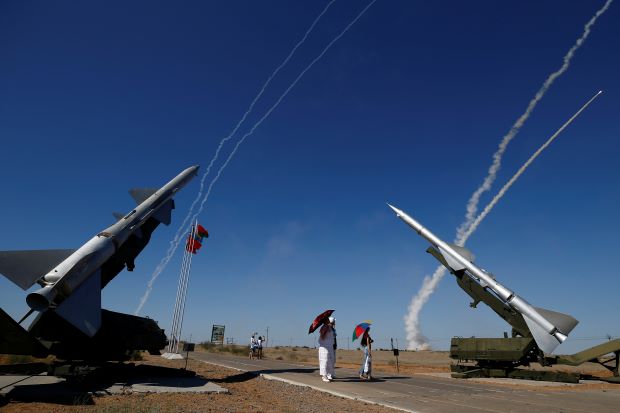
During his State of the Nation address, President Vladimir Putin of Russia announced the creation of five new, but interrelated, weapons systems. Amongst these are hypersonic, nuclear capable, cruise missiles, which are unstoppable by any current defense technology.

The idea of these missiles is obviously to defeat existing anti-missile systems, such as Israel’s Iron Dome system or the US THAAD system. It does this by operating in a different way than those systems are designed to defend against.

Current Anti-Missile Systems

In the contest between offensive and defensive systems, offensive systems always hold the upper hand, with defensive systems struggling to catch up. Such is the case with missiles as well. Current anti-missile systems are built to defend against the threat of yesterday, which might very well mean that Putin’s announcement was correct and they are totally ineffective for these new weapons.

There are two basic types of missiles we are talking about here; ballistic missiles and cruise missiles. Ballistic missiles are fired up into the upper atmosphere, just like a rocket putting a satellite into orbit. When they run out of thrust, they fall back towards the earth, their path of travel creating a huge arc and with their payload hitting the target. Amazingly enough, these missiles are highly accurate, even after crossing oceans.

Since the start of the Cold War, this was the type of nuclear missile which anti-missile systems needed to defend against. In the event of a nuclear war, ICBMs (intercontinental ballistic missiles) would be carrying nuclear warheads anywhere from a few hundred miles to the other side of the globe. The abovementioned Iron dome and THAAD systems, as well as others, are designed to defend against these kinds of missiles.

Different anti-missile systems recognize, target and attack these missiles during different parts of their flight trajectory. They can be designed to work on the boost phase, during the apogee of their flight or the terminal part of the flight. Each system only works against one part; not all three parts of the flight trajectory.

Cruise missiles could be said to be the direct opposite of ballistic missiles in that they don’t fly high up into the sky. Rather, they fly at altitudes which are typically lower than 100 meters. This allows them to defeat the radars and defensive missile systems which are designed to recognize ballistic missiles. They are also quite effective at defeating normal air traffic control radars and other short-range radar systems, as they can often fly under the radar’s minimum effective altitude.

Since there is no ballistic track and the radar visibility of these missiles is considerably shorter than that for ballistic missiles, defending against them is quite different. There are two basic types of systems used for this. One is anti-missile missiles which are also able to fly a cruise missile flight path, low to the ground. The other is point defense systems, which fire slugs (bullets) at the missiles at close range.

What’s Different About Russia’s New Missiles

There is little public information about these new missile systems, other than what Vladimir Putin said in his speech. However, the little bit that he did say is enough to show that if these missiles do exist, the Russians have made some major technological breakthroughs that the world should take note of.

First of all, these new missiles are supposed to fly at a speed of 10 times the speed of sound. That’s over 7,000 miles per hour, almost 14 times as fast as other cruise missiles out there. That speed makes for a much more difficult targeting solution, as the anti-missile systems have much less time to react. While they may still be able to hit the missile in a head-on defense, their cross-range (with the missile crossing in front of the defensive system) capability would probably be virtually nil.

Secondly, these missiles are designed for carrying nuclear warheads. While all cruise missiles are capable of that, their range is greatly reduced, due to the heavier weight of the warhead. While such warheads are generally smaller to make up for this,

Thirdly, these missiles are designed for long-range use. Typically, cruise missiles have a 1,000 km (621 mi) range. While no specific information was given about the range of these new missiles, it appears that they have intercontinental range, something that has never been possible before with cruise missiles.

The reason given for this great range was that these missiles use a nuclear powered engine, rather than a solid-fuel rocket motor. That was looked at, many years ago, by our own scientist and engineers, who concluded that it was impractical. If the Russians have managed to overcome the technical problems which were encountered then, they might have created a missile that can be launched in Russia and fly to wherever they want.

A Whole Weapon’s System

While I’ve been discussing this as if it were one type of missile, there are actually several variants of it, including a land based version, an air deployable one, and a sea-launched one. Considering the potential effectiveness of this system, such missiles would give the Russians a distinct advantage over anyone.

In addition to the missiles the Russians have supposedly developed a new type of submarine, which would carry the naval version of this missile. This submarine is supposed to have the capability of diving to much deeper depths than any other. That would allow it to escape from other countries submarines and travel to where it wanted, without being followed.

The deeper a submarine dives, the less cavitation noise the propeller produces. This noise is caused by air bubbles forming on the trailing edge of the propeller or “screw.” As they collapse from the pressure, they make noise. But the deeper the submarine dives, the faster the screw can turn, without cavitation.

What Does It All Mean?

While this weapons system gives the Russian military a distinct advantage; it only does so if it is ready for deployment. Considerable doubt has been raised as to whether or not these weapons actually exist. The only imagery that Putin used with his speech were computer generated; not actual photographs. So it is quite possible that these weapons are still under development or just plans for the future.

Even if these weapons have completed their testing and are ready to be manufactured, it could still take several years before enough of them have been built and issued to the military. In the mean time, you can be sure that other countries will be hard at work to develop an effective means of countering this new threat, whether by modifying existing weapons systems or developing new ones

Preparation Is Key to Adapting to Future Events, and Those Without Resources Will Reap a Bitter Harvest as they Struggle to Survive

Those that are aware of the EMP commissions report have probably also heard the statement that this type of event would suddenly transport everyone involved back to the 1800’s almost instantly. It is also possible that up to 90% of the population could die within 2 years due to the sudden lack of modern technology. It does not matter if it is an EMP, CME, cyber attack or terrorist attack on the grid, the results will be largely the same.

This is a sobering notion that you can either believe or disbelieve. If you think it is all hype you need only to go back to your daily activities and hope it never happens and leave your survival to someone who will do something if it ever happens. For those hardy souls that take responsibility for their own fate and that of their family, it falls to you to determine what this type of event will mean for you. An event of this magnitude will affect different people in different locations in different ways.

It is important to first realize what changes you will likely see following this event. To understand this you must look at what a 19th century lifestyle would look like to you. Understanding these differences will help you to determine what plans you need to make ahead of time to adjust to these changes in a way that will allow you to survive. Here are some of the things you will face with a collapse in modern technology and this does not even take into account problems you will face from the ill prepared.

Nineteenth Century support systems included the following:

Sailing ships for cargo and human transport

Steamships for cargo and human transport

Steam locomotives for cargo and human transport

Horses and wagons for cargo and human transport

Horses, mules and oxen for cultivation and harvesting

Root cellars for common storage

Ice houses to store ice cut in winter

Open pollinated seeds for planting

Livestock manure for fertilizer

Local mills for processing grains

Shallow dug water wells for fresh water

Manual tools for building and repairs

Developed systems for kerosene, whale oil and candle making for lighting

Mechanical power systems for factories and machinery

Telegraph lines for communication

Local craftsmen to build and repair items

Human and animal means to produce coal

Wood stoves for cooking and heating

Outhouses for sanitation needs

Buildings designed for natural ventilation

Limited clean water systems

Limited hospitals and doctors

Limited drugs, medications and medical equipment

Limited firefighting capabilities

Limited law enforcement capabilities

Physical currency of silver and gold

Banks utilizing paper records

Many of these systems exist today only in museums or historical sites and in insufficient quantities to support the population we now have. So simply going back to 19th century living standards would be impossible for the vast majority of people even under the best of circumstances. This brings to light the conclusion that 90% of the population would not survive long term under these conditions.

Assuming this type of event did occur, what would you need in advance to insure your survival? That is a question many people need to ask but most will not simply because their belief system would be shattered if they acknowledged potential threats and that they need to be responsible for their own lives.

There is the potential for many types of catastrophic events that we may never see but the potential should be enough to cause reflection on the individuals part to at least ask the important questions for their own survival. To prepare mentally as well as physically is important to survive the worst of the potential events we could face. You may not find yourself living in the 19th Century tomorrow, but what if?

Many people have read the reports that claim we would be sent back to 19th century living levels following an event and many simply think they could bear that for a short period until things get fixed. The problem is we no longer have 19th century infrastructure to support that level of existence. We do not have the transportation systems based on horses and steam locomotives, the ability to grow, harvest and process food the 19th century way, the local water sources to support populations, the sanitation systems or the medical systems that do not rely on technology or the ability to heat and cook the 19th century way. We have the knowledge to build these systems but that takes time and resources we may not have especially in the large cities. Without these types of systems waiting on the sidelines to be readily put into action, society as it is would collapse into tribal warfare as groups fight for the few resources that still exist. Even with these systems we could not support the number of people we now have. In short, many people would die even in the best of circumstances. Those that have these types of systems would have the ability to survive if they could protect these resources long enough.

If you own a large boat and suddenly sink for some reason many miles from shore, there is an easy way to survive this situation and a hard way to survive. You can have a good life boat, supplies and a radio to call for help and wait in relative safety or you can float around in the ocean with nothing but a life jacket hoping somebody finds you in time.

Any type of disaster can be looked at in these terms. Preparation makes all the difference when things happen. With all of the talk about a possible EMP happening it is important to think in these terms and provide yourself the best possible way to survive events should they happen. This means realizing what could happen and what supplies you need that can survive the initial effects of the disaster.

An EMP has its own special problems when it comes to storing supplies, especially equipment, to survive the aftermath. The special nature of an EMP make many types of equipment unreliable following an event without proper storage. Even with proper storage the use of a super EMP could overwhelm many basic storage devices such as homemade faraday cages. The U.S. hardened some of its military infrastructure to withstand a pulse of 50 kilovolts/meter. The problem is that Russia has weapons that can produce up to 200 kilovolts/meter which would likely overwhelm our most hardened components. Until it actually happens you don’t really know what will survive. This is the crux of the problem trying to decide what to store to survive an EMP.

I go about this in a twofold manner. I store electronic devices in the safest manner I can but I also have a non-electric backup system in the event that fails. As with any preparations, two is always better than one. This means if one system fails you have another to go to you can be sure will work when needed. This means preparing systems in depth to assure availability.

Just as an example, if you know you will need transportation following an event you could have an older vehicle stored in a metal building to protect it and certain electronic components for that vehicle stored with additional shielding in the event the vehicle is damaged. This will allow repairs following the event. Then you could have a secondary mode of transportation such as horses, a bicycle or a boat depending on your circumstances. This provides you with many options no matter how bad the event was. Just keep in mind that the simpler the system, the more likely it will still work when needed.

You need to determine what critical systems you will need or want following an event and determine what you will need to store to have those capabilities. This prior planning is essential so you do not waste time and limited resources on items you do not need or will not survive the initial phases of the event.

If you want power following an event you need to do a good assessment and determine what components will give you the most bang for the buck. A generator is good but you would also want to store electronic components that can break or burn out as well as items like carburetor kits and spare spark plugs. You would need a good fuel supply on hand and possibly an alternative fuel source like propane or wood gas. If this system fails to work following an event you would need a secondary energy source. Solar or wind is good but you would need all of the components to make a complete energy system including charge controllers, batteries and power inverters.

If you have solar panels and batteries and these are the only things to survive you will still have generating and energy storage capability. Having panels hooked directly to batteries would require close monitoring to prevent damage and a simple voltage meter would be helpful in this regard. This would give you 12v or 24v power to utilize in an emergency and there are many products out there that run on these voltages. This would provide you with a viable energy system as a backup and some capabilities even if you only had a 12v lighting system and a 12v absorption refrigerator to use. Planning ahead and breaking it down to the most likely components to survive will avoid wasted time and money.

Propane appliances are a good way to go when planning for electrical disruptions. Old school propane appliances that lack a lot of electronics will insure operability when you need it. A good supply of propane is also easy to get at this time allowing you to run appliances for months or years depending on your storage capacity. This can give you the time needed to survive and adjust to long term realities.

At the bottom tier of your alternatives should be manual tools and equipment that can replace electrical and energy dependent devices to accomplish the tasks you deem necessary following an EMP event. These are the systems you can depend on to work no matter what happens. This is your last line of defense in a worst case scenario. When planning systems I try to buy the manual items first simply because they are usually cheaper and if something happens before I buy everything I want, I know what I have will work.

Thinking ahead and identifying the weak links now will allow you to survive much easier than the general population will if such an event comes to pass. Having even a handful of backup systems that still function following an event will give you a definite edge when survival becomes a daily task. Every capability you have following an event gives you that much more to insure survival. Surviving an EMP event will be no piece of cake by any means but would you rather be afloat in relative safety or simply fighting to keep your head above water?

What Do You Do When Your Supplies Run Out? When The World Suddenly Changes Overnight You Need To Be Ready To Adjust To It

The small percentage of the population that keeps extra supplies on hand in the event of a disaster have taken the necessary steps to insure their family will not suffer as most others will following an event. This is the act of intelligent people that realize we live in a dangerous world with many unknowns.

It does not matter if you are prepared for two weeks, two months or two years of societal disruptions. At some point, if the event goes on long enough, you will eventually come to the end of your supplies. When that happens, what will you do?

Having a two year store of supplies is exceptional but as we have seen, some disasters can last far beyond that. The food scarcity we see in places like Venezuela have taken years to unfold and some past wars have raged on for more than a few years. When that happens even your best efforts may fall short and leave you in want.

Those that store a certain amount of supplies for a set period of time need to think beyond that period of time and imagine what they will do when the disaster lasts longer than they had planned on.

When you plan for an event, you need to think of the worst possible scenario and have a plan to handle it. A worst possible case may entail more supplies than you have the ability to buy or store but you should consider what your actions will be if you find yourself in that situation. Thinking about it now while you have the time to find solutions and determine a course of action will help you to stay calm and prevent you from making mistakes that might harm you later.

When an event happens, your greatest asset is your own mind. You need to program it with all of the answers you will need to get you through difficult times when they appear. This is the most basic level of preparing for difficult times that you can do.

Once you think through the possible troubles you may have in the future you will hopefully have answers at the ready when they are needed. Once you do this you will also be able to come up with a list of specific items that can help you the most if you get in that situation.

It may be tools, seeds, relocation sites or friends you can turn to that will make all the difference when the time comes. It costs you nothing but your time to sit down and think about these things now so there is no reason for you not to do it. When you are in need or in danger it is the little things that can make all of the difference.

Having supplies to care for your family buys you time and peace of mind when something happens. This time allows you to assess the situation and determine what your next move needs to be. It is impossible to plan for all of the potential unknowns you could be faced with which is why you need the time to adjust your plans and determine a course of action.

What works for one person may not be possible for someone else because people and situations are so vastly different. That is why you need to determine what will work for you and have a plan that you can follow. Looking at the plans of others can give you some good ideas but simply taking the plans of someone else and depending on that with no adjustments can be disastrous. You do not want to put yourself in a situation that is outside of your knowledge base.

When the world suddenly changes overnight you need to be ready to adjust to it. You need the resources to buy you the time to adjust and a plan that allows you the ability to survive and prosper long term

People Today Believe Anything But Reality And That Will Catch Up To Them All Very Soon In A Very Painful Way

As the world begins its next adventure in financial chaos and rolls over to expose its soft underbelly of lies and deceit that have been perpetrated on the public, those that see the truth have been warning the people once again. You can give people the truth but you cannot make them believe it. That is for them to come to grips with.

Trade wars are usually bad for all parties in the end but between the beginning and the end there can be some surprising developments. Human actions and delusions on the part of the public can produce strange results at times. All of our systems are based on trust. When that trust is lost, everything will come crashing down. Until then, things will go on.

If trade tariffs with China have the short term effect of creating American jobs, that could have a wealth effect by creating more disposable income in American pockets. That in turn can have a positive effect on the stock market and consumer confidence. Also, commodities are set to soar in price soon and this could carry the stock market up with it for a while.

I think you already know the answer to this, our government is preparing for a crisis – A MAJOR CRISIS. 
So make sure you watch this presentation while it’s still online…

bnr

Richard Russell once said he believed we would have a third leg in the current bull market before the bears take charge. He was right in the past and could be right again, only time will tell. This situation can not last long due to the enormous mal-investment built up in the system over many decades. A house of cards will eventually fall and the taller the house the longer and harder the fall will be.

One thing that could destroy the temporary high could be the destruction of the financial system due to loss of the reserve currency status and the replacement of the petrodollar system. If and when that happens things will not be looking good for America for a very long time. China is taking actions that could result in just that type of outcome. Their new silk road initiative and oil trading system utilizing Yuan to gold will eventually have serious consequences for Americas standard of living.

Total debts and derivatives in the world amount to 30-50 times of world GDP. The bulk of this is derivatives and when they fail they will become worthless. The 250 trillion or so in global debt will default when asset prices implode and interest rates explode. When the debt bubble explodes stocks could decline by as much as 95%. Interest rates could exceed the 20% rates we saw in the 1970’s.

In the last 100 years the value of major currencies have declined by 97-99 % relative to purchasing power in gold. The last 1-3% will follow very soon. When the financial system collapses due to losses from derivatives and stocks it will erase all of the savings, and retirement funds people were expecting to get at some future date. This will instantly impoverish the bulk of the population.

As the system collapses the banks will likely try to re-inflate assets by massive money printing which will only cause hyperinflation at some point. As hyperinflation kicks in the price of many assets like stocks, bonds, investment properties and art will likely collapse in real terms. Items like gold, silver and productive farmland will likely fare better.

Eventually deflation will carry all asset prices down as the world falls into a global depression, possibly for decades. All of these things will likely result in social unrest and wars as people become hungry and angry at a system they took for granted for so many years. The trust will be broken and people will look for something else to believe in.

One thing is for certain. People today believe anything but reality and that will catch up to them all very soon in a very painful way. Things work until they don’t. Our economy has been rolling along for decades on the stored wealth of previous generations but that is about to run out of steam very soon. When it does it will be a shock to all but a few. You can ignore reality but you cannot ignore the consequences of ignoring reality.

If you’re interested in learning more old remedies, you should read The Lost Book Of Remedies.

Lost Book of Remedies pages

The physical book has 300 pages, with 3 colored pictures for every plant and for every medicine.It was written by Claude Davis, whose grandfather was one of the greatest healers in America. Claude took his grandfather’s lifelong plant journal, which he used to treat thousands of people, and adapted it into this book.

Lost Book of Remedies cover

Learn More…

Want To Prep But Not Sure Where To Begin?