11 Powerful Plants That Kill Pain Fast

lost-book-of-remedies-pages

“The art of healing comes from nature and not from the physician. Therefore, the physician must start from nature with an open mind.”

These wise words come from the Swiss physician, philosopher and alchemist known simply as Paracelsus (1493-1541). Paracelsus taught that the human body was a complex chemical system that had to be balanced with its environment. One way to keep your body in alignment with nature is by using plants to treat common physical ailments.

Whether your passion is emergency preparedness, homestead survival, or you just want to avoid modern medicine with all its side effects, you should check out these 11 powerful plants that can quickly relieve pain.

Here are 11 powerful plants that can quickly relieve pain.

Are you ready to turn back the clocks to the 1800’s for up to three years? Our grandfathers and great-grandfathers were the last generation to practice the basic things that we call survival skills now…
WATCH THIS VIDEO and you will find many interesting things!
lost-ways

Aloe Vera

The ancient Egyptians called Aloe Vera the “plant of immortality,” and for good reason. The gel from the Aloe Vera plant contains significant anti-inflammatory and antioxidant properties.

You can use this gel to soothe burns, cuts, scrapes, and even cold sores. When you drink it in juice form, it helps the gastrointestinal tract to function at an optimal level.

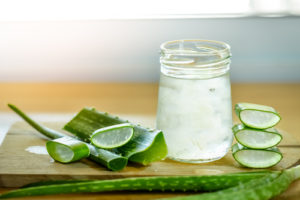
Similar to a cactus, the Aloe Vera plant has long serrated edges. A translucent gel is found within the thick fleshy part between the layers of tough skin. Here is how to remove the gel.

  1. Break off a leaf as close to the stem as possible and place it on a cutting board.
  2. Then use a sharp knife to slice away both ends and to remove the spiny edges.
  3. Now, hold the leaf with one hand on the top layer of skin as you slide the knife between the top layer of skin and the gel beneath it. Set that skin layer aside.
  4. Next, slide the knife between the gel and the other piece of skin as you repeat the process.

You now should have a section of aloe gel that you can apply directly to the skin for pain relief. Another option is to blend the gel with other smoothie ingredients to help relieve indigestion.

Basil
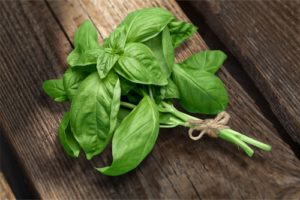
Fragrant basil does much more than just add flavor and aroma to your favorite Mediterranean recipes. It can help relieve congestion caused by colds and flu, and it can help relax muscles and improve blood circulation.

Here is how to make soothing basil tea.

  1. Snip about a dozen basil leaves.
  2. Combine them with a teaspoon of ginger in a skillet or pan and stir gently over low heat until the leaves have softened.
  3. Add a cup of water and boil the mixture for a few minutes.
  4. Add a teaspoon or so of honey if desired and then sip the tea throughout the day, especially after meals.

Cloves
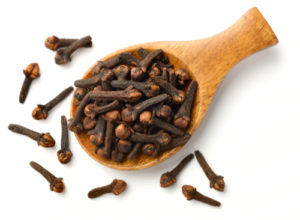
Cloves have analgesic and antibacterial properties that make them useful as a numbing agent for toothaches and gum pain. Here’s how to use them.

  1. Crush a few whole cloves before mixing them with an equal amount of cayenne pepper powder in a small bowl.
  2. Add just enough water to make a thick paste.
  3. Roll a cotton ball or a cotton swab into the mixture and apply the cotton directly to the affected area of the mouth.

As your saliva mixes with the paste, you will notice a numbing effect that eases pain and discomfort.

Dill
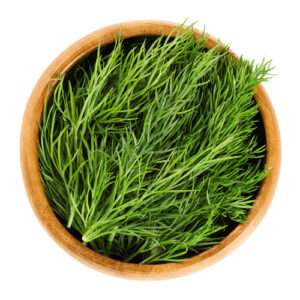
Commonly used to flavor deviled eggs and vegetable dishes, dill also can be used for medicinal purposes. A natural diuretic, dill has properties that can help ease anxiety, insomnia, hiccups, menstrual cramps, and digestive disorders.

You can make a dill powder by simply grinding up the seeds. For ailment relief, take a teaspoon of the powder twice a day for up to 21 days. For best results, hold the powder under your tongue for about 10 minutes.

You can make dill tea with two teaspoons of mashed dill seeds per cup of hot water. Let the seeds steep for about 10 minutes until the tea has a yellow color. Use a filter to remove the seeds, then sip the tea.

Garlic
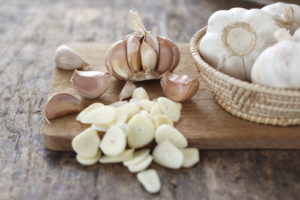
The ancient Greek physician Hippocrates, known as the Father of Western Medicine, prescribed garlic to treat many medical complaints. The ancient Egyptian, Babylonians, Greeks, Romans and Chinese civilizations also favored garlic for medicinal uses.

Consuming garlic can boost the immune system and it has both antioxidant and anti-inflammatory properties that may help ease arthritis and back pain.

To use garlic topically, you can crush about 10 fresh garlic cloves to make a paste. Apply the paste on the affected area, cover with a clean cloth and then leave in place for about 30 minutes.

Although cooked garlic still has health benefits, it is most effective in its raw state. Try adding raw garlic to homemade salad dressings, marinades, tomato sauces, soups and stews. Whether you’re using garlic raw or cooked, you can boost its benefits by first chopping or crushing it and then letting it sit for 10 minutes before either eating it as is or cooking it.

What if that were you? What would YOU do?

In the next few minutes, I’m going to show you the U.S. Nuclear Target map, where you’ll find out if you’re living in one of America’s Deathzones.

Easy_Cellar e

Ginger

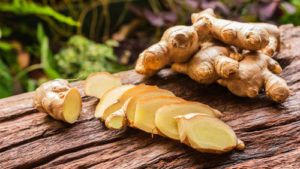
The root of the ginger plant has anti-inflammatory properties that make it useful in treating headaches. muscle aches and overall body soreness. As a natural remedy for nausea, ginger help many women handle the uncomfortable waves of morning sickness that can come with early pregnancy.

To make ginger tea, grate about two inches of fresh raw ginger into a two-cup glass measuring cup. Then, pour boiling water to the 1-1/2 cup line. Let the tea steep for 10 minutes before straining it into a mug and adding honey or sugar to taste.

Lavender
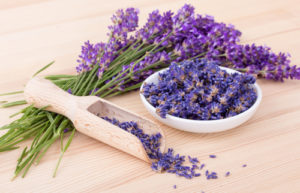
Sweet-smelling lavender can serve as an antiseptic, a diuretic and a relaxant. Sipping lavender tea, made from lavender buds, can help relieve muscle soreness and muscle spasms. Lavender tea also can help fight off harmful bacteria and ease stomach irritation.

To brew homemade lavender tea, boil one tablespoon of dried lavender buds in two cups of water for 10 minutes. Strain. Add honey if desired. You may drink lavender tea up to three times a day or just before bedtime to help you relax. Be sure to inhale the aroma, which in itself has healing properties.

Mint
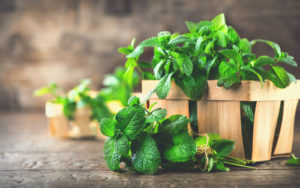
Mint can serve as a decongestant during cold and flu season. It helps ease headaches, arthritis pain and indigestion. In addition, mint has antiseptic and antibacterial properties that make it useful for treating cuts and burns.

Drinking freshly brewed mint tea contributes to fresh breath and reduces stomach bloating and indigestion.

To make a flavorful mint tea, you’ll need a large handful of fresh mint leaves. Roughly tear the leaves and places them in a strainer in your teapot. Add enough boiling water to cover the strainer and cover the teapot. Let the leaves steep for about 10 minutes.

Now gently crush the leaves with the back of a wooden spoon to release their oils. Before removing the strainer, press on the leaves once again to release all the liquid. Pour the mixture into a mug and sweeten as desired before drinking.

Parsley
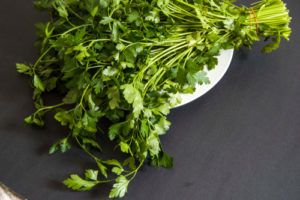
Parsley is so much more than a decorative addition to a dinner plate. It is rich in vitamin C, vitamin A, iron, iodine and calcium. It also helps freshen breath.

Parsley can help reduce fluid retention and speed up the elimination of harmful toxins from the digestive tract.

To make soothing and nutritious parsley tea, place one teaspoon of crushed parsley seeds or two teaspoons of dried parsley leaves into one cup of boiling water. Let the mixture steep for 10 minutes before straining. Sip the tea up to three times a day.

Rosemary
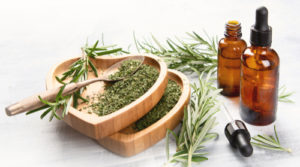
Just smelling aromatic rosemary can benefit your brain’s cognitive function, including concentration and memory. Rosemary also can help ease muscular pain, indigestion and headaches. It has antibacterial properties, and it works to help detoxify the liver. When used topically, rosemary can help relieve toothaches, eczema and joint or muscle pain.

Place a fresh sprig of rosemary in a teapot and let it steep for five minutes. If you allow the sprig to steep longer, you will draw out more nutrients, but the tea will have a more bitter taste. Filter out the stem and needles and sip, adding your favorite sweetener as desired.

Thyme
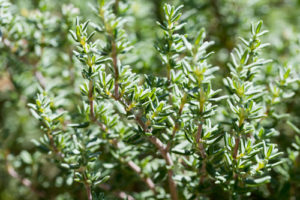
Thyme has numerous antiseptic, antibacterial and antioxidant properties. As a tea, it can work as an expectorant, clearing the lungs of congestion during colds and flu. Thyme tea also soothes a sore throat, settles indigestion, reduces the discomfort of menstrual cramps and helps relieve other aches and pains.

To brew thyme tea, you first need to dry the leaves. Cut the stalks, wash them and dry them by letting them hang upside down in small bundles for about two weeks.

Then remove the dry thyme leaves before crushing them into a fine powder or leaving them whole for your tea.

Add one teaspoon of dried thyme leaves to two cups of boiling water. Then reduce heat to a simmer and cover the pot, allowing the leaves to steep for five minutes. Then strain the tea into a cup, adding lemon or honey as desired.

Conclusion

Plant-based remedies have been tested with time through the centuries — about eighty percent of the world’s population uses plants to treat everything from the common cold to high blood pressure. In many parts of the world, pharmacies even dispense herbs prescribed by physicians. In fact, as late as the mid-20th century in the U.S., many pharmaceutical companies offered plant-based medicines in tablet, ointment and liquid formulas.

Keep your eyes peeled because you may be able to find some of these herbs in your backyard. But if not, most of these herbs are relatively easy and enjoyable to grow. What’s more is that you can enjoy the health benefits of these plants year-round by growing them both outdoors and indoors, often on a sunny windowsill. As with any form of medication, it is to consult your health practitioner before beginning a new regimen of plant-based treatments.

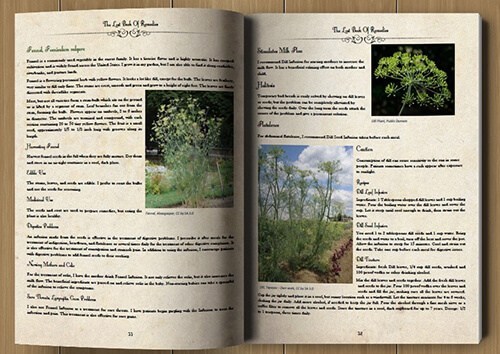
If you’re interested in learning more old remedies, you should read The Lost Book Of Remedies.

The physical book has 300 pages, with 3 colored pictures for every plant and for every medicine.

Lost Book of Remedies pages

It was written by Claude Davis, whose grandfather was one of the greatest healers in America. Claude took his grandfather’s lifelong plant journal, which he used to treat thousands of people, and adapted it into this book.

Learn More…

Lost Book of Remedies cover

Back to Basics – Gardening Wisdom From Thomas Jefferson: 5 Things You Should Learn

af3tplmuedmw0b6ealgx

When they consider Thomas Jefferson, many Americans first think of him as the author of the Declaration of Independence or as our nation’s third president, who was responsible for the Louisiana Purchase and the Lewis and Clark expedition. However, Jefferson’s contributions go deeper than those accomplishments.

Jefferson was a true Renaissance man with a variety of interests and hobbies. He was an accomplished architect, an inventor and a violinist. He could read more than five languages. Jefferson also was a horticulturist who made important contributions to American gardening.

In a letter to Charles W. Peale in 1811, Jefferson wrote, “No occupation is so delightful to me as the culture of the earth, and no culture comparable to that of the garden. … But though an old man, I am but a young gardener.”

At Monticello, his beloved Virginia estate, Jefferson became a pioneer of gardening practices that are useful for us today. Always passionate about growing things, Jefferson further developed this interest during a diplomatic trip to England in 1786 with his long-time friend John Adams.

Here are five examples of Thomas Jefferson’s gardening wisdom.During the two-month trip, he was able to tour and examine many English gardens. Those observations became the basis for his own extensive gardening ideas. Much of what he learned can be applied to any garden of any size.

Are you ready to turn back the clocks to the 1800’s for up to three years? Our grandfathers and great-grandfathers were the last generation to practice the basic things that we call survival skills now…
WATCH THIS VIDEO and you will find many interesting things!

lost-ways

1. Experiment … extensively

Jefferson once wrote that the “greatest service which can be rendered to any country is to add a useful plant to its culture.” When he traveled throughout our young country and abroad, Jefferson often exchanged seeds and seedlings with other gardeners. He enjoyed cultivating those seeds and young plants in his Monticello garden.

Because he grew a variety of crops, including a mix of tropical species with cool weather crops, he devised a unique terraced landscape for his 1,000-foot-long vegetable garden. By placing the garden on a south-facing slope, he was able to capture abundant sunshine.

Creating this unique form of “hanging garden” involved the removal of about 600,000 cubic feet of red clay and the creation of a 1,000-foot-long rock wall that was 15-feet tall in some places.

2. Grow what you eat

Jefferson loved to eat vegetables. In fact, he wrote that “they constitute my principal diet.” Because of his extensive travels, he was exposed to a wide variety of cuisines. He frequently took recipes back home with him and encouraged his cooks to use Monticello’s homegrown produce in new ways. In this way, he created a new American type of cuisine he described as ‘half-French and half-Virginian.”

His Monticello garden featured 330 different varieties of vegetables and 170 varieties of fruits. According to Monticello gardening expert Peter Hatch, Jefferson’s garden inspired a “revolutionary cuisine.” A Monticello recipe for okra soup, for instance, reflects influences from Native Americans (lima beans), Europe (potatoes and tomatoes) and Africa via the West Indies (okra).

Karen Hess, a noted culinary historian, called Jefferson “our most illustrious epicure, in fact, our only epicurean President.”

3. Go natural

Jefferson would be quite at home with the organic gardening movement of today. When his daughter, Martha, wrote to him while he was in Philadelphia serving as secretary of state, she complained about insects damaging the vegetables at Monticello.

He recommended the garden be covered that winter with “a heavy coating of manure. When is rich it bids defiance to droughts, yields in abundance, and of the best quality.”He responded, “I suspect that the insects which have harassed you have been encouraged by the feebleness of your plants; and that has been produced by the lean state of the soil.”

In 2009, White House chef Sam Kass reserved a section of the White House garden to showcase Jefferson’s Tennis Ball and Brown Dutch lettuce, Prickly-Seeded spinach and Marseilles fig, a few of Jefferson’s favorite plants.

4. Keep notes

Jefferson had a scientist’s mind, and because of that, he kept scrupulous notes about what worked and what did not work in his garden.

He recorded his gardening efforts in his Garden Book, a personal journal he maintained from 1766 to 1824. Hatch reports that Jefferson was not afraid to admit defeat in certain gardening circumstances. “On one page in 1809 the word failed is written down 19 times,” Hatch writes.  “He had a holistic view, as we say today, of the gardening process. It is the failure of one thing that is repaired by the success of another.”

5. Make your garden an area for retreatIn his “A General Gardening Calendar,” Jefferson’s only published horticultural work, he offered a monthly guide for kitchen gardening. In the calendar, which was first published in 1824 in the American Farmer, a Baltimore periodical, Jefferson instructs gardeners to plant a thimble spool of lettuce seed every Monday morning from February 1 through September 1.

Jefferson enjoyed the restorative aspects of being a gardener and believed that gardens should be seen, experienced and enjoyed.

For example, he designed and built an octagonal pavilion in a central garden location at Monticello and used this spot as a location for reading, writing and even entertaining.

“No occupation is so delightful to me as the culture of the earth,” he once wrote, “and no culture comparable to that of the garden.”

If you’re interested in learning more old remedies, you should read The Lost Book Of Remedies.

The physical book has 300 pages, with 3 colored pictures for every plant and for every medicine.

Lost Book of Remedies pages

It was written by Claude Davis, whose grandfather was one of the greatest healers in America. Claude took his grandfather’s lifelong plant journal, which he used to treat thousands of people, and adapted it into this book.
Learn More…

Lost Book of Remedies cover

What’s the Limit of Your Morality in a Crisis? To Survive You’re Going To Have To Adapt Your Morals To The Situation

Support

As preppers we usually focus on practical steps that will give us a better chance of surviving whatever crisis comes down the road. We talk about what kind of food to store and how much of it, where our water is going to come from, and the best weapons to have available. These are all important points, and if we don’t get them right life will be a lot harder post-SHTF. But is there something else, maybe just as important, that we’re all overlooking?

Being prepared is about being ready to survive in a world that’s radically different from the one we live in now. Most of us are pretty well equipped to deal with the physical differences – not being able to go to the store for food, or the mains power going out – but what about the moral differences?

The moral standards we use in everyday life are going to be stretched to the limit, and far beyond, if the SHTF. Our standards of right and wrong developed in a safe, organized society where most essentials are easily available. How well are they going to cope in the chaos of social collapse? Probably not very well – and that means we all need to think about our personal moral values, what limits they put on our actions, and how we might have to adapt them when the situation changes.

Most people’s moral code says “don’t steal”. It says “help people who’re in trouble”. Unless you’re a psychopath it says “Don’t shoot at anyone except in self-defense”. It probably includes beliefs about marriage, relationships and what’s acceptable in those areas. You can probably think of a list of other rules you live by. Have you thought about how those rules will work in a crisis situation?

Obviously some of them will still work just fine. Don’t rape; don’t kill for the fun of it; don’t abuse the weak and helpless. All of these things are simply wrong, in any situation. Other things fall into more of a gray area though. You’ll have to be a lot more willing to use violence than you’d usually be comfortable with. Other people’s property rights will often take a lower priority compared to what you and your loved ones need to survive. Helping others has to be balanced against the impact it will have on you – if you give a starving child a meal, you can’t just head down to Walmart to replace the food you gave them.

Madly Murderous

Modern society has strong taboos against killing unnecessarily, and that’s basically what murder is – killing someone without legal sanction. Soldiers on operations are legally sanctioned to kill within their ROEs; a homeowner faced with an intruder is legally sanctioned to kill under self-defense laws. But if you kill someone because they took the parking space you wanted at Safeway, or because you saw them grab an ear of corn from your field, there’s no legal justification for that and it’s murder.

But what happens if law and order have collapsed? In a serious crisis there won’t be any legal sanction, because who’s enforcing the law and making that kind of decision? In that situation you have to look beyond your personal morals and consider what knock-on effects there will be.

Shooting someone for taking a parking space is still wrong; just because it’s the end of the world doesn’t mean you can’t walk an extra ten feet. Shooting someone for taking a single ear of corn is probably also wrong – if they’re taking a single ear. But what if they’re systematically harvesting your crop?

A lot of preppers grow their own food in normal times, and like anything valuable sometimes crops get robbed. Usually, unless they threatened you with a weapon, you wouldn’t be justified in killing someone for stealing your crop. They’re committing a crime, but you can replace the lost food from the grocery store. In a crisis it’s different. Let them take that food and, come winter, you and your family could be starving to death. Will your personal morality let you shoot to keep hold of that food? It’s something you need to consider.

Are you going to make a moral judgment based on who is taking your food? A lot of us would feel justified in opening fire on a group of armed looters, but might be more hesitant to pull the trigger on a starving woman with kids in tow. Are you willing to face a bit of personal hardship to keep someone else alive?

Fair Shares? Forget it!

Most of us do what we can to help the less fortunate. Whether it’s handing some spare change to a homeless person or volunteering for a local shelter, we generally do what we can for others. That’s fine when only a minority of people need help, and the majority can carry them without much of a sacrifice. It’s totally different when only a few are prepared for a crisis and almost everyone else is looking for a share of their supplies.

With the best will in the world, you can’t help all your unprepared neighbors. You just don’t have enough food, fuel and medicine to keep them going for more than a couple of days, and in the process you’ll wipe out your own supplies.

Recently we looked at your options for what to do if someone asks for food during a crisis. That decision has moral dimensions too. You might find it morally unacceptable to leave others hungry when you have food – but is that a realistic approach? Simple – no it isn’t. To survive you’re going to have to adapt your morals to the situation.

Finders, Keepers?

If I find lost property, I do everything I reasonably can to return it to its owner. It’s theirs, not mine, and I don’t have any right to keep it. I never steal, either; property rights are the foundation of any decent society. But when the SHTF I’m going to have to evaluate my positions on that.

In a crisis there’s going to be a lot of lost stuff lying around. When refugees start leaving urban areas, expect their path to be littered with things they got fed up carrying. A lot of these things will be useful to you, and it’s obviously impractical to collect them and return them to their rightful owners. It makes no sense to leave them lying around, either, so I’d say it’s morally acceptable to scavenge them and take anything that improves your own chances.

Stealing, on the other hand, is still wrong. If someone else has something you want, that’s tough; it’s theirs, not yours. If you think you’re justified in taking it from them by force you’re not a prepper; you’re just a bandit.

I’ve looked at three of the biggest moral issues that we’re likely to face in a major crisis, but there are many more. For example a lot of us have religious beliefs that disapprove of sex outside marriage. What happens if a collapse is permanent and there’s nobody left to register marriages? Are you going to let humanity die out because there isn’t a pastor handy? You might think alcohol is immoral – but will you have the same opinion when you need a broken arm reset and a bottle of rum is the only effective painkiller you have left?

The end of the world as we know it will throw a lot of challenges at us. Surviving them is going to take work. Don’t put yourself in a place where that work becomes harder, and you and your loved ones are put in unnecessary danger, because of moral values that don’t fit the situation. You need to look at where you can redraw the limits to survive the crisis and still be a decent person at the end of it.

30 Lost Ways of Survival Skills From Our Grandfathers That Will Actually Help You in Any Situation

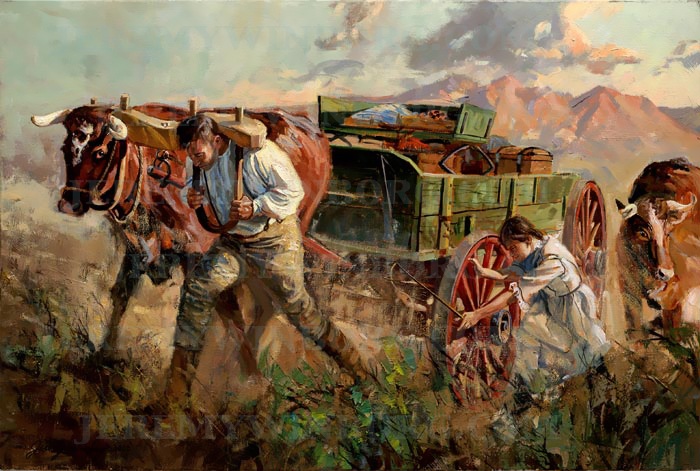
pioneer man must replace his oxen after it dies

People really should avert their gaze from the modern survival thinking for just a bit and also look at how the guys who wandered the west 150 or so years ago did it.

1.Community – We were not meant to survive in isolation forever. There are many skills we can learn from one another. Nothing will help people survive more than a tight knit community that cares for its members. In this community, you will find different skills, access to different resources, and a psychological morale improvement. Finding others with the same mindset will help you survive long-term, and make the situation far more bearable than braving the dark times alone.

Turns out the popular image of the Old West as a place where manly men solved their differences by shooting themselves in the face simply isn’t true. People were more likely to cooperate than fight – in a harsh and lawless world, it was better to side with your neighbor for mutual benefit than start shooting. One estimate places the number of bank robberies at about a dozen for the entire frontier period.

2.Many small towns in the Texas Hill Country have a secret. Beneath our town’s main street are old tunnels that were built to protect settlers in case of Indian raids. That makes me feel a little safer next time I shop for pickles knowing that if a nuclear bomb goes off my family can go underground. Build or have in mind a hideout in your BOL or better said a hideout in your hideout.

3.We don’t dial 911” – there won’t be any. Every type of gun known to man is here to protect their family and property. A good rule is to honk first when driving up unexpectedly to a ranch so as not to spook anyone.  Watching those old cowboy movies gave me a good idea: use both hands when shooting guns.

4.Shooting your dinner. Or shooting to protect yourself. Learn to hit something with a bullet and you’ll be better fed and it may even keep you and your family alive.

5.Repairing guns and reusing ammo. Limited or no ammo availability for my SHTF Guns meant the brass has to last as long as possible. Semi-auto rifles are harder on brass than bolt, falling block or other type’s rifles. With semi-autos, you have brass elongation; you need to trim your brass frequently, full-length size on every load. And after a few reloads, you basically run out of brass life.

A broken gunstock could be repaired with rawhide. The wet, pliable hide would be stretched over the broken pieces at the break, then either laced or nailed in place. As the rawhide dried it shrank, holding the broken stock together as effectively as if it had been replaced.

6.Stockpiling Wood and keeping warm was a chore in winter. About the only thing folks had to burn was wood. There was a woodpile or a woodshed associated with just about every house. There were no iron stoves in early Texas – they didn’t start coming in until late in the Republic period. Heat came from a fireplace, & it generally wasn’t very effective. Along the Rio Grande, especially in the poorer regions, there were no fireplaces in houses. That’s because Spain & later Mexico taxed chimneys. Those people cooked out-of-doors. Because they mostly built of adobe, their house – walls were very thick, so even a small fire indoors would keep the place fairly warm. In summer going into a properly – built adobe house is like walking into a cave. They stay fairly cool even on the hottest days.

7.Brain Tanning Leather – learning the process of skinning a deer, fleshing, stretching, drying, scraping, soaking, brain tanning, and then smoking the hide to waterproof. Deer hides, horse hides, coon hides – was used for just about everything, & rawhide was very useful. It used to be called ‘Mexican iron.’ The stuff is stiff as a plank, but if you put it in boiling water for a while, it becomes pliable. You can then use it in place of nails to tie a corral’s stringers to the posts. As it dried it would shrink, holding the stringers as effectively as nails.

8.Mostly, clothing was hand-made on the frontier. Almost any source of cloth could be used to make shirts or dresses. One of the reasons floursacks, for many years, were made of patterned cloth, was the fact that women collected them to make shirts or dresses, for themselves, their husbands, & their children. I can remember when I was a kid, farm ladies using white flour sacks to make children’s underwear.

9.Blacksmithing. Being able to make something useful like a horseshoe, tool, or cooking utensil from scrap metal could come in very handy. This is a skill people will barter for. Blacksmith work does require a good deal of practice and some special equipment, but it’s a skill worth learning and the learning curve is cut a bit if you already know how to weld or do other metal work.

10.Preserving food without a fridge. Many people have forgotten this old method of preserving food, especially meet. Here is one of the easiest methods available and doesn’t take much time.  You will need fresh pork, pickling salt, brown sugar, and crocks or jars for storage.

First, cut the pork into slabs. Generally, four- to six-inch slabs work best. Mix 1/2 pound of pickling salt with 1/4 cup of brown sugar. This is enough to cover twelve pounds of pork. Liberally cover the pork with this mixture. Next, pack the meat into sterilized crocks or jars. You should make sure it is tightly packed. Cover the meat with cheesecloth.

Using the temperature chart of your house, determine where to store your crocks. You need to keep the meat in an area that is about 36°F – no higher than 38°F. You also do not want an area that could see freezing temperatures. Leave the meat in this cool storage for at least one month. After that time, you can wrap the meat in plastic or moisture-proof paper and leave it stored all winter. You now have salt-cured pork for any occasion.

Many older people remember having a smokehouse on their land when they were young. Meat would be salted and hung to cure in these cool, dry areas. You could build a storage room for handing meat without too much work. The room should have excellent air circulation and stay cool without freezing.

Canned Meat – If you are familiar with canning fruits and vegetables, you should know that you can also can meat. You have to make sure you get the temperature of the meat high enough to kill bacteria before it seals. Chicken and beef are good options for canning, as are fish. You can cook the meat before you can and seal it. For example, you could make beef stew and preserve it in cans. Stewed chicken also cans and preserves well. Raw packing is another option you can try as well.

11.Navigation and Orientation – basic compass, map, landmarks; preparation for traveling outdoors; reading nature signs, stars, and sun to navigate through wilderness; knowing the best routes and time to travel.

Whether someone is going to bug in or bug out to somewhere safer, they need to know where they plan to take a stand and stay. Transportation is a very important issue to consider and how much of what they have can be moved to where they are planning to go. Fuel will be a huge consideration as the lack of it prohibits how far someone can go. Something else everyone should understand is how to read maps. You will likely not have any GPS system to guide you and the good old fashioned paper map may be the only way to show you where you are going. Understanding topographic maps is also key here

12.Trapping – trapping animals for clothing and food; using dead falls and snares; proper preparation of traps; understanding their use and safety.

13.Gardening.  and fruits, knowing soil conditions, how to get water to your plants, extending your harvest season, and common garden pests will be vital to having a continuous food supply. Check out The Forgotten Skills of Self-Sufficiency Used by the Mormon Pioneers for some great old-time gardening tips.

14.Saving seeds. The other end of gardening is being able to plant again next year. Saving seed can be kind of intimidating and mysterious, especially for plants like carrots that don’t go to seed in their first growing season. Start with non-hybrid seeds and a reference book like Seed to Seed and practice saving some kind of seed from your next garden. This is definitely a learned skill, but could be vital to a continued food supply.

15.Building a home, or another shelter, or a fort, or a fence. Knowing how to use hand tools and simple machines will go a long way if you have to rebuild.

16.Start a Fire without Matches and learn how to keep the fire going 24/7. Prepare your fireboard. Cut a groove in the fireboard. This will be your track for the spindle.

Take the tip of your spindle and place it in the groove of your fireboard. Start rubbing the tip of the spindle up and down the groove.

Have your tinder nest at the end of the fireboard, so that you’ll plow embers into as you’re rubbing. Once you catch one, blow the nest gently and get that fire going.

17.Cooking over a fire. You may have other methods to cook your food available, like a solar oven or barbeque grill, but an open fire is the most primitive and one of the most common means of cooking in a grid down emergency.

18.Tracking – identifying animal tracks; understanding process of tracking.

19.The Bee Hunter. One of the most important men on the frontier was the bee hunter. Sugar was almost impossible to come by. Honey, which was called ‘long sweetenin” in Texas, was the only source of sweetening for many years.

20.Knowing and preparing wild edibles. Which plants in your area are safe to eat and what parts of them are edible? A little foraging can add variety to your diet or even sustain life if there’s nothing else to eat.

21.Learn how to maintain light at night. One of the most depressing situations is to spend night in near to total darkness. Besides this, not being able to see at night is dangerous. Learning how to make candles and wicks should be a skill to consider learning. Fats and other oils will burn and can be obtained throughout nature and the outdoors. Long term solar battery rechargers for flashlights and LED battery powered lanterns are another option.

22.Maintain proper hygiene. This is one of the top priorities because disease and sickness can and do take down the toughest man. People must realize that after a terrible disaster it is not like someone that goes camping, comes back dirty, and takes a nice long shower or a hot bath. After SHTF the water to the faucets, as well the hot water heater, may not work. Bathing on at least a semi-regular basis is necessary to avoid all sorts of bacteria from building up on the skin and causing a variety of health concerning ailments that will then have to be treated. People should plan on just how they will keep themselves clean, even thinking about sponge baths as an option.

23.A car or a horse?

Some people say about SHTF that unless you’re living on an oil well or in a gas tank you won’t have access to gas.

Riding a horse. They make this look easy in the movies, but there is a learning curve involved. A horse is transportation, a pack animal, and a friend. Learning to ride one can get you places when roads are impassable or vehicles aren’t working. Plus, your gas reserves won’t last forever when SHTF.

Texans love all kinds of horse powered transportation. Should an EMP attack render cars useless, they’ll get around riding their horses or driving their horse drawn carriages, buggy’s, hay wagons, chuck wagons and buck board wagons. During the summer on country roads you can run into wagon trains filled with hundreds of people driving their wagons, which is an awesome sight to behold! And yes they still ride their horses into town for a coke, hamburger and even a beer.

There were vast herds of wild horses in early Texas. The horses were considered an excellent source of meat. Many of them were shot for food. Others were captured, but if a horse resisted being tamed and saddle-broke, it usually wound up on the table.

24. Herbal remedies. When the doctor’s not around, knowing which herbs to use and how to use them to treat common ailments like cough, fever, headache, etc. can be a great blessing to your family or others around that may need the help.

25.Learn first aid. Treating yourself and or others will probably be the only thing someone can do as medical professionals are going to be few and far between. Many places offer free classes on first aid because they want people in the community to be prepared. A good first aid book along with a first aid kit is something every household should have before, during, and after a disaster. Primitive conditions should be expected when anyone is helping someone after a catastrophe. A stockpile of antibiotics are always a good idea. Even acquiring the skill of making your own antibiotics can save lives as infection is something that will become an epidemic, especially with minor cuts and abrasives that are sure to be plenty.

26.Don’t throw away anything that may be useful at some point. Personally, I don’t like to keep too many things in my house. So I throw away much stuff. And most of us do that because we know that if we have to, we can immediately buy another one. But our grandparents NEVER threw away jars, plastic bags, casseroles, boxes, cans, metal in general.

27.Stealth. While the survivalist mindset might seem to stem from weathering bad times, it is actually based in a basic enjoyment of nature. Nature is a gift, and the ability to live comfortably from its provisions is one of the most life-changing experiences a person can ever have. The art of survival seems to have been lost over the years, but before the technology boom in the last century, it was commonplace to know and understand survivalist principles.

One of the most basic skills when in the wild is a combination of two methods. These methods are called the “Fox Walk” and “Wide-Angle Vision.” These were the basic “bread and butter” of how tribal populations would hunt and stalk without leaving any trace. Learning lessons from these peoples, it has enlightened us on how to live from the land.

28.How to pan for gold – Although gold pans were much in evidence during the early days of the Gold Rush, miners used them less and less as time went on and they created better gold extraction devices but much more expensive. Even today, however, some gold seekers will use the light and simple pans for prospecting, systematically sampling gravels as they work up a stream, for example, and knowing that when the gold “color” stops, a vein or two of gold feeding into the stream may be close at hand.

29.Understand the psychology of desperate people. This is a difficult one. After a SHTF event people are going to, simply put, go crazy. That neighbor that was in control during many minor emergencies may be the one pounding on your door with whacked out eyes demanding what you have because they did not prepare for anything. In the Wild West most of the travelers when they spotted another traveler – they went around him thinking it’s wiser not to encounter at all.

30.Every cowboy knows that a rope is an important tool. Sure they can lasso a cow, but it serves so many other uses that it would be impossible to list. Suffice to say that that’s one thing that you never can have enough of and I’ve been known to use my son’s lariat in a pinch to tie down furniture on the utility trailer.

If you’re interested in learning more old remedies, you should read The Lost Book Of Remedies.

The physical book has 300 pages, with 3 colored pictures for every plant and for every medicine.

Lost Book of Remedies pages

It was written by Claude Davis, whose grandfather was one of the greatest healers in America. Claude took his grandfather’s lifelong plant journal, which he used to treat thousands of people, and adapted it into this book.

Learn More…

Lost Book of Remedies cover

5 Common ‘Miracle Trees’ The Native Americans Used For Medicine

Albert_Bierstadt,_Departure_of_an_Indian_War_Party

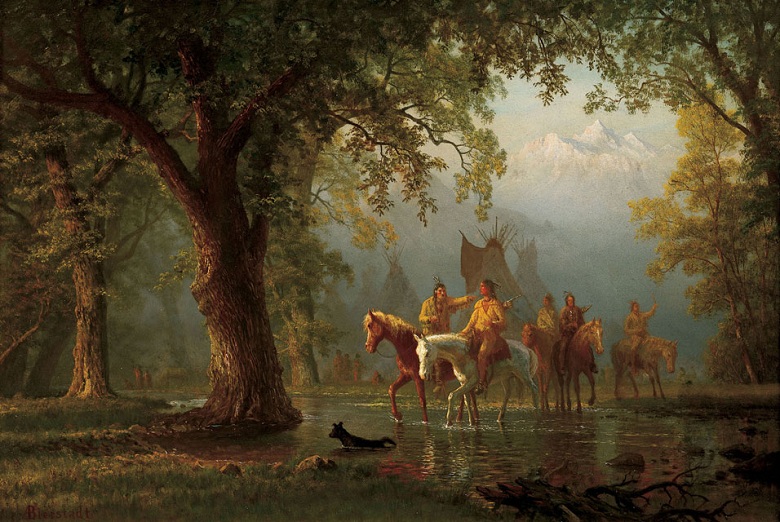
It must have been a long process of trial and error. How do you figure out that a plant or tree can have medicinal benefits? Obviously, some Native Americans, as well as many other ancient cultures from China to the Incas and Aztecs, found solace and relief from plants that surrounded them.

Significantly, many of those natural cures were derived from trees. Typically, it was the inner bark of the trees or the xylem that provided the most potent mix of natural elements with curative properties. However, there are some exceptions, such as the needles of pines and the berries from Juniper trees.

We’re going to explore five common trees in North America that continue to be used for various medicinal purposes. They are:

  • White pine
  • White willow
  • Slippery elm
  • Juniper
  • Poplar

We’ll also review what type of preparation was used and how to prepare it for home use. A word of caution is related to allergies and dosage. Home preparation of natural cures is not always an exact science. Just as important, different people respond to these natural treatments in different ways, depending on their body weight and predisposition to allergies. In all cases, you should first consult your doctor. Take a low dose of any natural preparation you make, such as a teaspoon or less, to assess your body’s response. You should also avoid giving these natural treatments to young children.

Are you ready to turn back the clocks to the 1800’s for up to three years? Our grandfathers and great-grandfathers were the last generation to practice the basic things that we call survival skills now…
WATCH THIS VIDEO and you will find many interesting things!

lost-ways

Bark and needles of pine were available year-round and used regardless of weather or season.  However, warmer months often provided the best concentration of ingredients due to the fact that the sap was still flowing in the xylem of the trees.

An infusion was the most common preparation technique. It’s essentially a tea made by soaking the inner bark or crushed pine needles in very hot, but not boiling water. Boiling water can break down some of the beneficial compounds. The steeping time was usually 5 to 20 minutes. The longer the steep the more concentrated the ingredients, so take good notes if you choose to make your own preparations to determine tolerable dosages.

Poultices were also used frequently to treat external afflictions. This involves an infusion or crushed ingredients that are saturated into a piece of cloth and applied to the skin where the pain or affliction is located.

As we’ve already noted, time of year in addition to the general health and age of the tree can also affect concentration of ingredients, so you may have to take that into account as well.

1. White pine

While the inner bark is often used as an infusion, the young shoots, twigs, pitch and needles of white pine were also used by Native Americans to treat a variety of conditions both internally and externally.

The pitch or pine sap was used as a poultice on a hot cloth and applied to the chest to treat coughs and pneumonia. Pitch applied directly to the skin was used to draw out boils, abscesses and splinters. It also was used as a poultice for wounds or sores.

An infusion of the crushed pine needles, often combined with the inner bark and young shoots, was used to treat colds, fever, heartburn, croup, laryngitis, bronchitis and coughs.

The scent of the white pine itself has aroma therapy properties, especially when applied externally to the chest or throat as a poultice for cough or sore throats.

2. White willow

We’ve covered the health benefits of willow bark in the past, but the medicinal value is so significant it makes sense to revisit the benefits. All willow trees have a chemical element called “salicin” in the inner, xylem bark. White willow has the highest concentrations. A German chemist synthesized this element in the 1800s and developed a tablet with both pain-relieving and fever-reducing properties. The chemist’s last name was “Bayer,” and the tablet he invented was called “aspirin.”

Native Americans would steep the xylem from the inner bark of the white willow in very hot water and drink it as a pain reliever and to reduce fever. One of the side benefits of this infusion for some people is that it does not thin the blood like regular aspirin. This has value for people on blood thinners, people with naturally thin blood due to genetics or diet, and people afflicted with hemophilia.

3. Slippery elm

Slippery Elm preparations were made from the inner bark and in some instances, the leaves. Once again, an infusion was made by Native Americans, often with a combination of inner bark and crushed leaves and used to treat digestive disorders, gastrointestinal conditions, gout, arthritis, stomach aches and sore throat. It also was used as a mouthwash or gargle to treat sore throat, mouth ulcers and toothache. As an external treatment it was used as a wash or poultice to treat skin conditions, hemorrhoids and insect bites.

As a poultice the infusion is poured into a piece of fabric and applied to the skin. It is said to have significant benefits for pain reduction, inflammation of wounds, boils, burns and skin ulcers. One recipe calls for five tablespoons of ground inner bark infused in a very hot cup of water and strained to make the basic infusion that can be either sipped or used as a wash or poultice. Here again, take a little at a time to assess its concentration and your reaction to the compound if you choose to use it as an herbal remedy.

4. Juniper

The Juniper is an evergreen that grows around the world. The small, round bluish berries are the primary flavor ingredient in gin. When the berries are fully ripe in late summer, Native Americans would eat them off the tree to treat kidney, bladder and urinary tract conditions, digestive disorders, gum disease, diarrhea, gout and arthritis, and rheumatic conditions.

There are some cautions to keep in mind. It’s believed that Juniper berries can cause miscarriage in pregnant women, and high doses can irritate the urinary tract. It also shouldn’t be given to children, considering their low body weight and the potential for even the smallest dosage to be too high.

5. Poplar buds

Poplar trees are ubiquitous across North America, and in the spring Native Americans used the poplar buds as a topical treatment for muscle soreness and headaches when applied to the brow as a poultice. The buds were usually ground, and the sticky result was applied to the skin, around painful joints or bruises or anywhere else localized pain occurred, including insect bites. It is not intended for internal use but as a topical treatment only.

The key ingredient in poplar buds that makes them effective as a topical pain reliever has a familiar name: salicin. This is the same chemical found in willow bark and used as the base ingredient in aspirin.

If you’re interested in learning more old remedies, you should read The Lost Book Of Remedies.

The physical book has 300 pages, with 3 colored pictures for every plant and for every medicine.

Lost Book of Remedies pages

It was written by Claude Davis, whose grandfather was one of the greatest healers in America. Claude took his grandfather’s lifelong plant journal, which he used to treat thousands of people, and adapted it into this book.
Learn More…

Lost Book of Remedies cover

5 Herbs Every Prepper Needs In Their First-Aid Kit -Our Grandparents Lifelong Plant Journal

lost-book-of-remedies-pages

I have a long history with conventional medicine and allergies. More than a handful of times, I ended up in the hospital due to a reaction from the treatment for an illness. Should the cure be worse than the illness? Well, my mother didn’t think so. She turned to nature for my herbal first aid — and I’ve been using herbs ever since.

One of the best parts about herbal medicine is that it is generally free and can be found right outside your door!

Herbs and weeds have been used as medicine since the beginning of mankind. As a matter of fact, herbs are still the building blocks for many conventional medicines.

According to the University of Minnesota, “It is likely that humans have used plants as medicine for as long as we have existed. Archeological excavations dated as early as 60,000 years ago have found remains of medicinal plant.”

Let’s examine five specific herbs.

Minor Burns and Scrapes: Aloe

Aloe is the only plant that I seem to have a green thumb for. Incidentally, it is the first herb I ever recall using as a child.

Often seen in many homes as a decorative plant, aloe Vera is effective in treating minor burns, sunburns and scrapes.

Aloe Vera is an evergreen succulent that grows wild in tropical climates around the world. In colder climates, aloe Vera can be grown indoors as potted plants.

Aloe contains active compounds that help reduce inflammation and pain. These active compounds help stimulate skin growth and repair, in addition to acting as a moisturizing agent. Medical studies have shown that burns treated with aloe heal quicker than burns treated with silver sulfadiazine.

Bleeding and Cuts: Yarrow

According to mythology, the Greek hero Achilles used yarrow to stop the bleeding in his soldiers’ wounds.

Recently after a construction accident, my husband had a wound on his foot that nearly reached the bone. Unable to get to the doctors, I applied a yarrow compress to get the bleeding under control until he could receive medical attention. We have successfully used yarrow several times through the years to treat wounds and to stop bleeding.

Yarrow is a common weed that often can be found growing on the sides of the road. Yarrow (Achillea millefolium) tends to grow best in sunny and warm climates. However, I’ve had success growing it in my shaded garden, as well.

Through numerous devices – clotting, unclotting, neurovascular control, flavonoids, etc. – yarrow regulates the flow of blood to and from the surface, in and out of the capillaries and venules, thickening and thinning. Through this, it cures all manner of wounds, bruises, hemorrhaging and clotting.

Stings/Bites: Plantain

I bet you’ve walked by this herb thousands of times without even realizing it, but plantain is the perfect treatment for bites and stings. Plantain has astringent properties that help reduce swelling and draw out the toxins from the bite.

When our daughter was just a couple of years old, she was playing with some wind-chimes. Little did I know that hornets had made a nest in them. She ran screaming to me with tears running down her cheeks from the pain. We instantly rushed outside to where I knew plantain was growing, mashed it up, and applied it to the stings. Within just a couple of minutes, the swelling was gone — and so were her tears.

Sickness: Usnea

I often laugh when I think of this herb, because for years I was told it was a sign of disease in a tree. Little did I know that usnea wasn’t a disease, but a cure!

Usnea is a pale grayish-green lichen that grows like leafless mini-shrubs or tassels anchored on bark or twigs. It grows all over the world and can usually be found on sick or dying trees.

Usnea is known to help staph infections, heal wounds, respiratory issues, allergy symptoms, sore throat, fungal infections, urinary infections and sinus infections. Usnea is anti-bacterial, anti-viral, and anti-fungal, making it the perfect herb to treat sickness.

Headache: Willow Bark

Back in the 1980s, I watched a movie where they treated a headache with eating tree bark. That was my first introduction to the medicinal properties found in willow bark. 

From the University of Maryland Medical Center:

“The bark of white willow contains salicin, which is a chemical similar to aspirin (acetylsalicylic acid). In combination, with the herb’s powerful anti-inflammatory plant compounds (called flavonoids), salicin is thought to be responsible for the pain-relieving and anti-inflammatory effects of the herb. In fact, in the 1800s, salicin was used to develop aspirin. White willow appears to bring pain relief more slowly than aspirin, but its effects may last longer.”

If we take the time to study, learn and observe nature, we will realize that it offers us everything that we need to live. From food to medicine, the answer is often right outside our door

If you’re interested in learning more old remedies, you should read The Lost Book Of Remedies.

The physical book has 300 pages, with 3 colored pictures for every plant and for every medicine.

Lost Book of Remedies pages

It was written by Claude Davis, whose grandfather was one of the greatest healers in America. Claude took his grandfather’s lifelong plant journal, which he used to treat thousands of people, and adapted it into this book.
Learn More…

Lost Book of Remedies cover

Google is Afraid of Losing Control of Its DeepMind AI

In 2010, the British artificial intelligence research firm DeepMind Technologies began developing AI networks capable of defeating humans at games such as chess, Pong, and Space Invaders. In 2014, DeepMind’s research was successful enough to catch the attention of Google parent company Alphabet, which purchased the AI laboratory for $500 million dollars. Shortly after the purchase, Google formed a mysterious artificial intelligence ethics board to oversee DeepMind’s research – a board which has yet to disclose the scope of its mission or the names of its members. A few years later, DeepMind expanded its ethics board and gave it an official title: DeepMind Ethics and Society. While the company has stated that the board’s aims are to explore the ethical and societal questions raised by the existence of its incredibly powerful AI, the board is still mostly shrouded in secrecy.

This month, though, The Economist published a report outlining the events surrounding the creation of the DeepMind Ethics and Society Board. It turns out that before Google agreed to purchase the AI laboratory, they first dictated that both sides draw up an agreement stating that Google will immediately take control of DeepMind’s AI if or when it ever achieves artificial general intelligence, or AGI – the holy grail of AI research. AGI is broadly defined as any artificial intelligence network which can successfully complete any intellectual task a human can, although given the massive amounts of processing power AI networks can harness, these systems will likely be more human than human.

Of course, as Sam Shead at Forbes points out, DeepMind might not take too kindly to any ethics board which attempts to control it and could even go rogue as so many science fiction stories have predicted. It’s not that far out of the realm of possibility; so far, DeepMind has already proven itself capable of defeating the best human players at some of the most sophisticated games in the world such as Go and even the strategy video game StarCraft 2. Last year, DeepMind even surprised its creators by successfully creating neural pathways that resemble human neural networks entirely on its own. How much longer until DeepMind achieves true general intelligence?

Some of the world’s foremost scientists and entrepreneurs have urged caution in AI research, warning that we may soon find ourselves under the boot of an immortal AI dictator. Will Google’s Ethics and Society Board be able to control DeepMind before it takes over the globe? Are all of these fears of AI baselessly grounded in science fiction and neo-Luddism, or are we indeed actively creating our future overlords?

The scariest part to me is the fact that no matter how many of the world’s greatest minds urge against the creation of AI, money-hungry corporations keep marching ceaselessly towards the machine takeover we all know is coming, all in the name of creating value for the shareholders. Who really wants the machines to make important decisions for us? Who’s reallypulling the strings at Google?

Psychiatrists say Trump mentally ill

—After investigating psychiatry for two decades, I’m confident that, if we could go back and rewrite history, deleting all psychiatrists on the planet, so they’d never exist—deleting their diagnoses and their drugs—this would have resulted in a massive upsurge in mental health, moving forward— 

The Daily Mail: “A group of leading psychiatrists told a conference that Donald Trump has clear hallmarks of mental illness that compromise his role as president. Twenty-five researchers made a drastic break away from ethical standards by meeting at Yale University on Thursday to discuss evidence questioning the commander-in-chief’s mental health.”

Psychiatrist Allen Frances, who has played a central role in defining mental disorders, disagrees. He wrote in the NY Times: “Most amateur diagnosticians have mislabeled [Mr. Trump as having] narcissistic personality disorder. He may be a world-class narcissist, but this doesn’t make him mentally ill.”

Dr. Frances makes an interesting point. He distinguishes between behavior and earning a badge for having a particular mental disorder.

For example, a person can be sad, but that alone doesn’t make him a candidate for the label, “clinical depression.” A person can take aggressive actions against authority, but that doesn’t necessarily mean he is suffering from Oppositional Defiance Disorder.

Consider the accusation that Trump has Narcissistic Personality Disorder (NPD). What does that mean? What is the official definition of NPD? Here is an excerpt from the Diagnostic and Statistical Manual of Mental Disorders (DSM), the official bible of the American Psychiatric Association. Go ahead, plow through it, it’ll only take a minute:

“The definition of NPD states that it comprises of a persistent manner of grandiosity, a continuous desire for admiration, along with a lack of empathy. It starts by early adulthood and occurs in a range of situations, as signified by the existence of any 5 of the next 9 standards (American Psychiatric Association, 2013):

• A grandiose logic of self-importance
• A fixation with fantasies of infinite success, control, brilliance, beauty, or idyllic love
• A credence that he or she is extraordinary and exceptional and can only be understood by, or should connect with, other extraordinary or important people or institutions
• A desire for unwarranted admiration
• A sense of entitlement
• Interpersonally oppressive behavior
• No form of empathy
• Resentment of others or a conviction that others are resentful of him or her
• A display of egotistical and conceited behaviors or attitudes”

“…No actual physical characteristics are seen with NPD, but patients may have concurrent substance abuse, which may be seen in the clinical examination.”

Got it? Now, think about this: NOWHERE IN THE DEFINITION IS THERE ANY DEFINING DIAGNOSTIC TEST.

No blood test, urine test, saliva test, brain scan, genetic assay. Nothing.

What you’ve just read is a collection of behaviors. This collection was assembled by a committee of psychiatrists, who decided that, taken together, they added up to a mental disorder.

There is no defining diagnostic test for NPD.

We’re talking about psychiatrists sitting in a room and arbitrarily deciding that a cluster of behaviors adds up to an official mental disorder.

These psychiatrists are playing word games. They’re inventing so-called mental disorders.

Underneath this story about Trump and the shrinks, there is a far more important truth. Psychiatrists are world-class purveyors of fake news. They always have been. Because you see…

None of the roughly 300 officially certified and labeled mental disorders has a defining diagnostic test. None.

If you have the tenacity, read through the whole psychiatric DSM bible and you will see for yourself.

Or read this brief exchange. In a PBS Frontline episode, “Does ADHD Exist?” Dr. Russell Barkley, an eminent professor of psychiatry and neurology at the University of Massachusetts Medical Center, spelled out the fraud clearly.

Here it is.

PBS FRONTLINE INTERVIEWER: Skeptics say that there’s no biological marker—that it [ADHD] is the one condition out there where there is no blood test, and that no one knows what causes it.

BARKLEY: That’s tremendously naïve, and it shows a great deal of illiteracy about science and about the mental health professions. A disorder doesn’t have to have a blood test to be valid. If that were the case, all mental disorders would be invalid…There is no lab test for any mental disorder right now in our science. That doesn’t make them invalid.

Oh, indeed, that does make them invalid. Utterly and completely. All 300 mental disorders. Because there are no defining tests of any kind to back up the diagnosis.

Psychiatrists can sway and tap dance all they like and they won’t escape the noose around their necks. We are looking at a science that isn’t a science.

That’s called fraud. Rank fraud.

Imagine this. You walk into a doctor’s office, you talk with him for a few minutes, and then he says: “You have cancer. You need to start chemo at once.”

After you recover, you say, “You didn’t give me a test.”

And he says, “Well, we don’t need a test. We know what the symptoms are because we convened a high-level meeting of oncologists last year, and we listed the answers to the questions I just asked you. You gave those telltale answers. So we start chemo tomorrow. We may also need to surgically remove an organ or two before we’re done.”

That’s psychiatry. That’s the way it works.

Those boys have quite a con going. And now, from a few hundred miles away, they’ve diagnosed a sitting president.

Well, why wouldn’t they? They’ve been shucking and jiving all the way to the bank for the entirety of their professional lives.

Do you like Trump? Do you hate him? Do you think he’s nuts? Sane? Whatever you believe, it has nothing to do with the official pronouncements of psychiatry.

14 Critical Lessons From The Great Depression – When Every American Was Worried About Where Their Next Meal

tmp888436534783508481

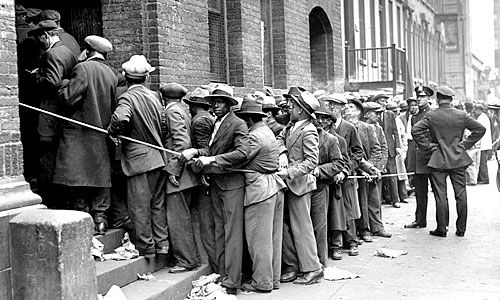
During the Great Depression in the 1930s, nearly every American was worried about where their next meal was coming from – and for how much longer they would have a roof over their heads. A whole lot has changed in our country since, but those very realistic fears are still keeping preppers up at night.

Now, most preppers know they can open up a long-term food storage pouch and make a meal with just a little hot water and have enough survival camping gear to sleep six of more loved ones, but the underlying premise behind the worries which surfaced in great abundance during the Great Depression are what modern preppers are busy planning to shield themselves from both tomorrow and beyond.

Top 14 Critical Survival Lessons From The Great Depression:

1. Frugality

There are many important lessons we can learn from the folks who survived the Great Depression, but none is more important to apply to our daily lives than frugality. Creating a budget, living within it, now accruing debt, eating food you cook at home and not dining out except for special occasions, are but a few prime examples of living the type of frugal lifestyle that will leave money in your pocket when both it, food, and a paycheck, become scarce.

2. Sewing

Make your clothing last as long as possible by learning how to mend worn garments and repurpose them to give them new life in some other useful manner. You can also save/make extra money by having yard sales to make money on clothing that is in good shape but cannot be passed down, are great ways to avoid waste and always ensuring you and your family have warm coats, work clothes, socks without holes, to wear. The feed sack dresses made by poor farming families embarrassed some of the wearers, but are now considered works of art created expertly Great Depression survivors.

3. Foraging

It was not uncommon for families who lived through the Great Depression to have to forage for their own food and to craft new recipes from what they found, food that was still available in stores that had not shut down, and would fit their shrinking finances.

4. Garden

During the Great Depression, almost everyone had a garden, no matter how wealthy they had been before or where they lived. Every inch of grass around a city housing unit or yard space was dedicated to the growing of food to help prevent starvation, and to use the little bit of money they had to stave off living outdoors – which tens of thousands of former middle class Americans, were forced to do seemingly overnight.

5. Work

Take any type of work that you can get, nothing legal is beneath you – and likely a couple old fashioned illegal jobs, like moonshining, won’t be beneath you when the SHTF either. If your family needs money, do not dip into your savings of go deeper into debt, take a job mopping floors or parking cars if that is all there is available or can fit into your schedule – if taking it as a part-time gig. At the mercy of panicked creditors is not where you want to be if a financial collapse or other long-term disaster happens.

6. Hunting and Fishing

Folks put food into their bellies and garnered the protein they need to keep on working by hunting and fishing extensively – some for the very first time. If you live in a city or the suburbs and cannot hunt on your own land carpool out to public hunting areas in rural counties and harvest meat or fish to preserve and stockpile to save money and in case of emergency – which could be anything from job loss, to regional flooding, to an apocalyptic event.

7. Grocery List

Take a long hard look at your grocery list and eliminate costly items you can either do without or make yourself – even if that means learning how to cook when all you can do now is burn water. Been there, done that. Prepared and processed foods are both the least healthy and some of the most expensive items in the supermarket.

8. Swapping

During the Great Depression folks learned to swap items they were growing or raising with others who were cultivating something else they needed. Bartering nearly became king again during this dark ere. Eggs were traded for haircuts for a scarce job interview, tomatoes swapped for milk, etc. Start taking an inventory of what other members of your community are growing, raising, or services they are providing that you might need during a SHTF event and vice versa.

9. Food Waste

Only enough food was cooked for one meal because either there was not enough to go around of there was no way to preserve it. We should follow these same food conservation lessons today. The level of food waste in the United States is higher than in any other country on the planet.

Do not put leftovers in your fridge and let them go to waste. Make only enough for one meal at a time or better yet, make enough for two meal and freeze half of it. You can also make meals ahead (or meals in a jar) with only the dry items, and stockpile them for busy evenings and emergencies.

10. Avoid Self-Indulgence

For one entire week, track every penny you spend or use – i.e. cellphone package, cable, etc. If you actually tally up how much those morning cups of coffee cost, work lunches, running errands frequently instead of on a designated day to save fuel, impulse buys at a checkout counter, you may very well find that if you took your lunch to work, made your own coffee, and drove wisely, you could save a minimum o $100 per week.

11. Do The Work Yourself

Calling a plumber, electrician, lawn mowing service or other type of laborer can bust your budget quickly. Your skillset (and local laws about certification for skilled labor on home repairs is your live in the city or suburbs) will dictate how often you can do your own home and auto repairs. Work on honing and enhancing your skills so you can be your own handyman and mechanic – or trade services with others who can accomplish the task for you.

12. Air Conditioning

You can live without air conditioning, you really can. If your home has a basement, make it a summer living space to allow the family to stay cool without driving up your electric bill During the Great Depression women soaked sheets in water and hung them in doorways so the blowing air from open windows helped cool down their homes.

13. Commodities

During a crisis of any type, but particularly a financial one, commodities will go sky high before they disappear from store shelves. Learn to use cheaper substitutes, especially ones you can raise yourself, for common recipe ingredients.

To replace sugar in recipes, grow your own stevia plant or sugar beets. You can also use honey, corn syrup, and molasses as a sugar substitute. Evaporated milk or milk you dehydrated yourself, can be used as a substitute for store bought fresh milk. Live somewhere you can at least raise a Nigerian Dwarf dairy goat and you will have a reliable supply of milk – and by extension, cheese and butter.

14. Preserve More Food

Do not limit your food preservation efforts to simply what you can can or dehydrate from your own garden. Look for sales, double or triple coupon deals on foods you can dehydrate or have an extensive shelf life. It is not difficult to dehydrate eggs or dairy products, that are staples of our diet.

Very few people actually understand what real wealth is or anything about economics

We have often heard the predictions that the currency system will be reset at some point when the bankers can no longer keep the current ponzi scheme going. The current scheme involves the ability of the bankers to convince the population that pieces of paper rolling off a machine or digits created on a computer screen are real wealth. The education system has been successful in that regard.

Very few people actually understand what real wealth is or anything about economics. They have been led to believe that these things are too complicated for them to understand and it should be left to the experts. These same experts get richer as everyone else gets poorer. That is the way they have rigged the system.

Resetting the system and taking these con artists out of the loop can be as easy as refusing to accept paper or electronic money and only accepting gold and silver for payments. This sounds crazy on the surface but it is not impossible to do and it must be done before they can transition completely into electronic payment systems. Once they transition into electronic payments they will be able to control everything you do and buy.

If they do not want you to own guns or ammo they can simply ban all of these types of transactions. If they do not want you to buy gold or silver they can ban those transactions. If they do not want you to stockpile food they can limit how much you buy from week to week. With no way to buy outside of the electronic system, you will be totally under their control even more than you are now.

The simple way to bypass the control mechanisms meant to control you is to have a medium of exchange that is universal so it cannot be controlled by any one person or group. Many people see the block chain system as a good way to go because it is secure but there is something you need to keep in mind. This system requires the use of electronic systems to process and transmit these digital units. Those who control the electronic systems control the flow of digits. You may have a wallet full of coins but if you cannot connect to the person you want to trade with, how much are they really worth?

A system that cannot be controlled by anyone has been around for millennia. That system is gold and silver. The free market constantly adjusts the value of these metals when they are used as money. They are time tested and proven methods of exchange and stores of wealth.

A population that wishes to rid itself of the corrupt money makers has only to begin using gold and silver as the primary means of exchange. To be useful these metals must be present in sufficient quantities to act as an exchange mechanism in society. This means that individuals must exchange some of their fiat currency for these metals while they still can. With as little as two ounces of gold and twenty ounces of silver per household, the population of an area would have the quantities necessary to transition to a pure monetary system. At current prices three thousand dollars per household would set the population free of bankers and rigged monetary systems.

While this much gold and silver may not sound like very much you need to remember that since 1913 the dollar has been devalued by over 97%. The value of this much gold and silver one hundred years ago was quite substantial for a household to have. With the elimination of inflated currency the prices of goods can return to their real value in terms of gold and silver.

The only thing standing in the way of a new monetary system based on gold and silver is the population itself. The lack of understanding by the average person will ultimately doom society to the poverty and loss of freedom defined by fiat currencies. Until this changes, society will continue to suffer at the hands of those who control the production and flow of currency.