How To Survive The Nuclear Apocalypse – Security Considerations: Direct Attack, Accident And Hacking

hds4ui6tab121

Preparing for a Nuclear Plant Accident

The Nuclear Regulatory Commission, or NRC, is the U.S. agency responsible for protecting public health and safety related to nuclear energy. They oversee a great many elements related to operation and administration of nuclear plants and have furnished guidelines and policy for response and safety in the event a release of nuclear material does occur.

Almost 3 million Americans live within 10 miles of an operational nuke plant, and many more could potentially be affected in a major accident. If you live anywhere near a plant, this section goes doubly important for you. Before we do anything else, take the time to study that map above, and determine where the closest plant is to you and your relative position to it. You need to know how many, how far and what the prevailing winds and jet stream are like between you and the plant. Being typically downwind of a plant is bad, bad news in the unlikely event a meltdown occurs.

Any good crisis response plan will include a pre-, during and post-event phase, and that is exactly what we will do here.

Should an accidental release of nuclear material occur, you can expect sirens and full-tilt emergency alert systems to activate. Local television and radio stations will broadcast instructions on exactly what you should do.

At any rate, follow all instructions from the emergency alert system, but your priority is to increase the distance between you and any radioactive material as quickly as you can. This might mean evacuating if you have a quick egress route or it might mean sheltering in place in your home. Whichever solution you choose, you must take steps to prevent airflow into your shelter or vehicle that could carry radioactive material with it.

This is accomplished by closing all doors, windows, vents, chimney flues and other apertures. Shut down all heaters, air conditioners venting fans, intakes and similar appliances. If you have time, seal cracks and crevices with your plastic sheeting and tape.

Remember, we want as much material, and as dense as we can get, between ourselves and the radiation as possible. If you can go underground, do so. If not, head to the innermost part of the structure.

No matter what happens, stay out of the affected zone! Radiation loses strength fairly quickly, but a fresh release of hot radioactivity can cook you fairly quickly, or at the very least give you severe radiation poisoning.

If you suspect you have been exposed, it is vital you decontaminate as quickly as possible: strip all clothing, wrap it carefully in your heavy plastic to prevent secondary release of material, and keep it as far away from you as possible. Next wash your body and hair thoroughly with soap or shampoo (no conditioner! – that will bind radioactive material to you) and change into fresh clothing.

Post-event

Tune in to the EAS for updates and instructions on evacuation and seeking aid. If you have been exposed to radioactivity, or begin to feel unusual symptoms like nausea, aches or burning, seek medical attention as quickly as you can. Radiation is an insidious and persistent killer, and timely aid may reduce or at least blunt the worst of its affects.

Assume anything outdoors or in an unsealed building was contaminated. This goes for objects, food, water supplies, anything. Radioactive fallout that comes to rest on an otherwise sealed container can dangerously irradiate the contents, creating a secondary hazard that can sicken or kill.

If you have evacuated, only return home when authorities tell you it is safe. There will be an enormous amount of investigation, monitoring, checking and sampling going on in the wake of an accident, and it will take time to collate the data and make a determination about the safety and habitability of the surrounding area and environment.

Your Nuclear Meltdown Survival Kit

Your nuclear fallout survival kit will be instantly recognizable to any prepper. Turns out most life support functions in any major disaster remain more or less constant. The following list is published as the minimum guideline by FEMA in cooperation with the NRC.

  • Water – one gallon per person, per day. Minimum 3 day supply. Covers drinking and sanitation.
  • Food – three day supply of non-perishable, shelf stable food. Aim for 2000 k/cal day for an adult.
    • Don’t forget your can opener.
  • Disposable Eating Utensils – this is definitely one time you do not want to be worried about washing dishes. Eat and toss it.
  • Emergency Radio –Crank or battery powered. Make sure it receives NOAA and all EAS alerts.
  • First-Aid Kit – For minor boo-boos and basic trauma care.
  • Flashlights
    • Include extra batteries
  • Whistle – For signaling.
  • Plastic Sheeting – Heavy mil, for sealing and airlocking shelter location as well as containing contaminated clothing, etc.
  • Duct Tape – For attaching and sealing sheeting, and miscellaneous other tasks.
  • Sanitation Kit
    • Baby Wipes, garbage bags and plastic ties
    • 5 Gallon Bucket for containing waste. Fill it with sawdust or kitty litter to help control odor. Make sure you have an o-ring sealing lid.
  • Wrench or Vise Grips –For turning off utilities.
  • Maps
  • Gas mask (NBC or CERN approved)
  • Cell Phones – Include chargers, backup batteries or alkaline-powered power cells to maintain charge.
  • Prescription Meds and Glasses/Contacts –You will be up a creek if you lose your only set or run out of meds when trapped somewhere.
  • Feminine Products
  • Baby and Pet Needs – Food, formula, diapers, leashes, etc.
  • Cash – Assume all cards will be frozen or not accepted. Cash money always speaks.
  • Sleeping Bags and Blankets
  • Complete Change of Clothes for all Family/Group members – you must assume someone will be exposed and contaminated. Make sure they are environmentally appropriate.
  • Bleach and eye dropper – Useful for general disinfection and disinfecting water.
  • Fire Extinguisher – In the event a fire breaks out while under a radioactive emergency, assume there will be no fire dept. coming.
  • Matches and lighters –for fire starting.

Considering how rapidly a nuclear accident can escalate, it pays to keep a kit of the above at home and in the office, and perhaps one in your car also. You may not be able to make it home or even evacuate in time should the alert go out. If you have to pick a random building to shelter in, your kit may mean the difference between a safe and reasonably comfortable stay and death.

Security Considerations: Direct Attack, Hacking, etc.

For some years, the talk around national security concerns has revolved significantly around America’s aging infrastructure and our all-around vulnerability to hacking across many civil and government domains. Our power grid in particular is a tenuously fragile thing, and experts will be quick to regale you with horror stories about how easy it would be for professional, even amateur terrorists to plunge significant portions of our country into darkness and chaos.

As of March this year the U.S. Computer Emergency Readiness Team confirmed that Russian hackers penetrated government entities and private companies in the energy, nuclear and aviation sectors, another proof positive that cyber attacks will be a weapon aimed at our heart should hostilities erupt.

The obvious concern when it comes to nuclear plants is that a remote hacking operation could access critical infrastructure or operational controls in the plant, allowing terrorists to cause a meltdown without ever setting foot in the facility.

Mercifully, that is the realm of fiction. Yes, anything that is connected to a network, or the internet at large is vulnerable to hacking, but that does not apply to nuclear plants: they have purposefully been designed as and remain analog-operated facilities. This means that there is nothing to hack, nothing to remotely take control of. They are islands unto themselves, informationally.

That does not obviate the risk of a direct attack by motivated groups taking over a plant physically, then using general mayhem or special expertise to trigger a meltdown. All nuclear facilities are guarded, but the quality of the security teams varies wildly, and there is considerable controversy over how prepared they will be against the special threat posed by a hardcore terrorist cell.

Practically speaking, a physical attack on a site that is not squashed utterly at the outset should be treated as an imminent release of nuclear material for your purposes.

Bugging Out

A common thread when discussing a nuclear plant accident is the topic of bugging out, and the folks that claim they will simply jackrabbit the hell out of town at the first puff of glowing green vapor. It’s a fair idea, but one that must be braced by reality.

First, you very simply may not be able to bug out, at least not at the outset of the event. It may occur too quickly, and you may be caught flat-footed or unable to make your way past thronging masses of other people going to the same place as you are: away. This means you must have a viable plan to shelter in place, even if it is just a backup. Getting caught in a car or in the open is a bad thing.

Second, where will you go? If you plan to hit a piece of property or dwelling far, far away from the plant, you had better know what the situation is with prevailing winds and the prognosis on expected fallout lest you settle into a nice warm shower of ionizing radiation. Fallout from a nuke plant is usually the nuclear fuel itself, melted and mixed with boiling steam exhaust into a vaporous cloud of deadly radiation which readily travels with the wind.

Lastly, you simply may not need to bug out. The plant may be far enough away and the wind favors your position, in which case you can stay put as long as you stay on your toes. You might actually put yourself at greater risk by joining a mass exodus of panicked, fleeing people. Use your head and your reason; be smart.
5 Lessons to Learn from Vietnam About Security, Defense and Personal Safety Measures

Untitled

Although different catastrophic/emergency and disaster events require different strategies and appropriate levels of preparation, they all share a single concept.

Security. Security, defense, and personal safety measures also span different levels of preparation effort and expense.

This is a good idea in any case even before an apocalyptic scenario, and the harder and more time consuming you make it for a predator to attack and invade your city home or apartment the better the odds they’ll get caught at the door by police. Or give you time to escape at another egress or ‘gun-up’ in defensive counter attack mode behind some concealment/cover and take them out ambush style as they break in.

But in a doomsday scenario such as a major power grid collapse, sudden universal economic collapse, or super bad disease outbreak, there won’t BE any Police response, at least not for you. Fortifying your home’s doors and windows and stocking up on a few weeks’ worth of extra food and water won’t help you that much in the long run.

The first myth is that you can survive in place relatively easy if you read certain books. That might work through a hurricane, super blizzard, or local power outage that traps people for many days, but not in an all pervasive major social and economic, and resource breakdown that would last months and even years. This is an entirely different prep than surviving in place strategies. Do not make the mistake of not realizing the difference.

In the worst case SHTF event, you must be as isolated as you can from congested metropolitan areas if you want any chance for safety and survival. Period. Because sooner or later desperate and extremely psycho dangerous “zombies” will target your urban dwelling place and get through your home fortifications one way or another, and kill you, or burn you out.

Almost any house can be breached and broken into by determined attackers given enough time if there’s no worry about police showing up on the scene and the occupant/defender’s name is anything other than Rambo. And I don’t mean days, but more like only a few siege hours.

Even brick houses with bars or steel break in shades like you see on business storefronts in high risk areas. And if you somehow manage to kill them before they get in the first time, there will just be another group, even scarier, right after that in most large urban environments. That’s the reality.

Bug Out and Live!

The best way to initially survive a worst case scenario is to NOT to be around anything for very long that can kill you. Then remaining low profile if not completely secluded off the predator radar and out of targeting sight. Because why would anybody of sound mind, except in certain unfortunate personal circumstances, want to stay in a burning high rise hoping the sprinkler system will work when they could take the emergency exit out immediately?

So bugging out should be your primary plan. And the only place to go is out in the rural areas where contact with others is as limited as possible along with minimal profile footprint concealment. Once you’ve attained that, then the next part is making sure the “zombies” can’t just easily take it all away from you if they do stumble upon your hideout.

If you chose a decent BOL, some professionals with experience in this think it’s easier and more advantageous to your safety and security to make a virtually impenetrable perimeter barrier around your dwelling than it would be to seriously fortify a house/apartment in the city or town.

The factual truth is that these types of bad human relations as violent social conflicts have been going on since Biblical times and always contain certain elements. It always boils down to attackers and defenders. Fortified compounds, camps or castles, and superior firepower and tactics which change the advantage and even the whole game.

5 Lessons to Learn from Vietnam About Perimeter Defense

The art of this type of social warfare evolved to a stagnation point during the Middle Ages and then became obsolete during the evolution of the military industrial complex and modern world warfare that included airpower and massive tank warfare. It was not revisited and perfected until the mid-20th century, in a small country police action in a faraway country called Viet Nam.

Ironically, as I draw from personal empirical knowledge and on the job experience and historic record on the comparisons and similarities, the best paradigm for survival perimeter combat preparedness comes from the Vietnam war, both when the French and the Americans were fighting it.

The lessons learned and strategies and tactics ultimately deployed became so refined and successful they remained in military application even to the modern Afghanistan war, and American mountain base camps and varies only due to advanced technology in weaponry and early anti-intrusion detection.

The Viet Nam conflict draws parallels similar to apocalyptic anarchy because political perspective notwithstanding, the typical American defenders hunkered down in camp compounds and defended against mainly ground forces who won‘t have air or naval power or sophisticated precision electronic detection or aiming technology.

The Viet Nam ground war was relatively primitive terms of force multipliers and its success, or lack of it, depended mostly upon small unit engagement with relatively basic weaponry.

Amazingly, today this type of fortification can be replicated on a smaller civilian but equally effective outcome on the private BOL compound today, and in a couple tactical applications, even better! Obviously the scale of enhanced force would be somehow different but the essential principles of applied dynamics and what works best are the same.

Here’s how to get started in the simplest, least expensive way.

  1. Local Threat Evaluation

A combination of the likelihood of indigenous harmful contact and the random plain view discovery level of your BOL determine the odds of you getting approached by marauding “zombs”.

If they can’t see you from any road, there simply is not that much of a chance of many roaming predators getting into your area, because most of the area is inhabited by good people, more exposed than you but pretty self-reliant and well-armed, and they would pro-actively interfere with any groups of predators before they would ever get to your neck of the woods. So the likelihood of your BOL getting hit is very low.

Setting up a protective live defense perimeter barrier would virtually guarantee your long term survival of the rare one time attack if that happens, because almost any well prepared and armed prepper will have enough firepower, ammo and resources on hand to handle that. That is opposed to a long duration regular siege and total destruction type environment that would be common in anarchy ruled urban environments.

  1. Barrier Protection

What does the Great Wall of China, the Berlin Wall, 13th century castle walls and other heavy barriers have in common? Walls are the most difficult obstacles to penetrate or breach by humans without heavy destructive equipment, but they also are the most expensive.

If your intruder simply can’t move forward and gain access to you in your inner protective shelter without getting stopped one way or another by formidable outside barrier, then your perimeter security succeeded and you survived. That’s why it’s better to have an outside perimeter circle of defense rather than allow them to get too close to your main retreat.

Again, the Vietnam War proved beyond doubt that you don’t need a castle or great solid wall to get the job done. There are other, even better ways…

  1. Perimeter Alarms

Aka anti-intrusion alerts and early warning devices. In Nam, we used anything and everything for perimeter alert from our empty beer and soda cans filled with pebbles, to the latest state of the art (at the time) forward terrain radar units and seismic ground sensors spread out even beyond the perimeter along with trip flares, and booby trapped grenades, and of course a healthy amount of pre-positioned Claymore mines if some of the attackers somehow get too far into the perimeter kill zone.

IF YOU KNOW WHAT YOU ARE DOING you can easily replicate most of that with modern electronic battery operated noise alerts either with PIR detection triggers or pull pin type trip wire activation along with careful use of pyrotechnics, or both. There are pros and cons with each, mostly depending upon if you have a lot of animals especially deer in your area.

Pyrotechnics are a very good tried and true method of alert and can be enhanced to perform double duty as a shock deterrent ONLY IF YOU KNOW WHAT YOU ARE DOING. The old saying is that there are only two types of pyromaniac powder monkeys: those who are already missing some fingers or eyeballs, and those that are getting ready to.

The other thing is the potential forest fire hazards if you live in a dry area especially if you are using the trip flares, instead of a flash bang alert.

There’s also the legality factor. Most states have strict laws on the amount of powder you can legally shoot off in a non-commercial/professional display personal firework. I believe the max is an ounce of retort/bang powder that you can shoot off or purchase without a commercial license. But check it for yourself before trying anything else!

Plus, if the DNR is snooping around your land and you made an oversized flash bang on a trip wire that damaged his eardrums that will become cause for arrest.

I know there is advice out there on how to booby-trap your doorways but I seriously don’t recommend doing that with anything that can kill or maim (stick with loud siren alerts or flashing lights only) because not only is it illegal virtually everywhere, but it will be only a matter of time before you yourself or someone you care about trips the booby-trap.

And I strongly recommend that you don’t get into that with common store bought fireworks, which could easily blind or burn an innocent victim or start your house on fire.

On a perimeter defense, the common larger over the counter fireworks like the bursting skyrockets and rapid fire mortar tube clusters pre-loaded shooting and bursting shells could be used just to wake up the group of invaders.

The burst charges are not black powder loaded, but contain the silver flash powder which provides a potentially dangerous hyperbaric close concussive effect even in only a cardboard tube with the legal maximum amount of powder.

Again, these are legal to own, but you can’t shoot them at people without getting into trouble. Just like guns.

But in an all-out lawless society where nothing will be adjudicated anymore in any system but God’s court after you’re dead, these are formidable perimeter counter attack devices because they also can be enhanced for maximum damage and launched on demand electronically from a secure rear position or even tripped by wire.

So it wouldn’t hurt to stock up on these because they’re legal and fun on the 4th, and would definitely come in handy on a doomsday “holiday” as well, both as an alert and force deterrent out to a hundred meters or so. Like shooting mini-RPGs and a mini grenade launcher barrage on egress/entry routes backed up by hidden wireless security cameras, which now can reach distances out to five hundred meters or better.

But if you are just getting started, stick with the pull pin or PIR battery security sound alert/alarm devices.

You’ll immediately get why I caution you on this after your nephew or YOU forgot about it while out squirrel hunting, trip it yourself creating embarrassing Hershey Squirts in your under drawers, and your children or grandchildren will laugh at you mercilessly.

You absolutely need a lot of training and experience before you start playing with things that go bang. After you think you are safely proficient with the mind set of perimeter security devices, you can graduate yourself and augment to the trip wire re-loadable retort devices like the 12 ga. shotgun shell blaster.

These are on the internet for about $40. They can take a shotgun shell right out of the box but these don’t work well because it is designed to be used with a barrel.

By itself it just pop bursts not even loudly below the shot/slug, and doesn’t even become any shrapnel because the powder is a slow burning type and it just splits the sides. Waste of good ammo. But you can get louder blank shells and commercial screaming flares and loud bangers from specialty ammo vendors on line. Pricey but very effective alert and deterrent effect.

There are also other good and even cheaper percussive devices that use only .22 caliber blanks, shotgun primers, or the nail gun blanks which also work decently on a lesser scale.

  1. Perimeter Intrusion Obstructions

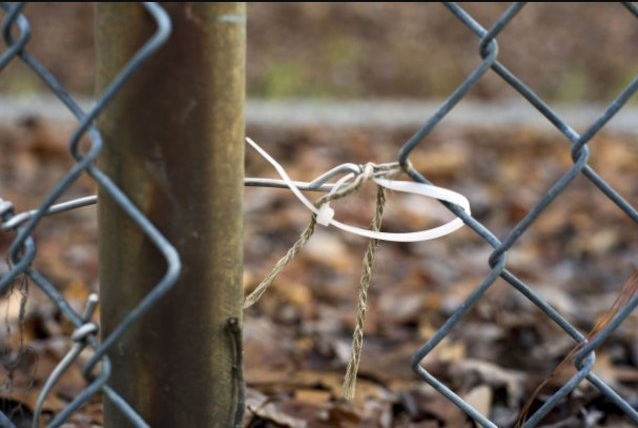
Of course a high chain link or barbed wire fence always helps slow down people you don’t want coming in on your property, but these are easy to breach if you are a good climber or have a pair of wire cutters.

You can make it look like a FEMA prison camp and it will feel like one also, but it won’t do much good against anything but animals maybe, unless you electrify it, and I don’t mean horse/cattle fence. I mean you’ll need sizzling frying high amp prison fence to stop “zombs” using only a fence. Not to mention it will be pretty obvious to passers-by unless you camo paint it or something.

The next best thing is pyramids of concertina type barbed/razor wire rolls. Harder to breach without having heavier tarps or plywood which “zombs” certainly won’t have in their back packs. Easy to set up.

Or, you can do it cheaper and less labor intensive with something that worked so well in the Nam that we almost felt sorry for the enemy who tried to get through it because it always was like the proverbial shooting of fish in a barrel. We called it snag wire and/or tangle foot and as their moniker imply, once ensnared, they were almost impossible to get untangled from.

And all it amounted to was regular barbed wire rolled out on the ground in crisscross or lattice pattern on the ground at intersects less than an average human step, and propped up with stakes at various heights from ankle to knee level.

Enhanced by anything imaginable from punji spikes to tripwire grenades to napalm bombs along the way. Not to mention backed up by the secondary defensive firepower towers, and bunkers armed with heavy machine guns and LAW rockets and inner perimeter mortars.

Tangle foot would be comparatively easy and less expensive to set up in conjunction with the ’creative’ use of ‘passive’ natural terrain obstruction like tree limbs and boulders and heavy brush on your perimeter. You’d only need about an eight foot width across the part of the perimeter you were setting it up at.

Look closely at the seemingly natural and innocent looking forest pictures to the untrained eyes. In the pictures of downed trees and branches which were intentionally created as an egress obstruction.

You can’t walk or climb over that without falling, tripping, and twisting yourself to injury and entrapment while not getting far, as it stretches for several yards straight ahead and several yards to the flanks before you can make it through but hidden in the grass are also stretches of tangle foot.

So you would naturally walk around it until you found a pathway/clearing to continue on. This turns out to be a funnel zone which essentially lures the intruders into going where you WANT them to be herded. Which is replete with trip alerts, more serious booby traps, cameras, or whatever else you like when the SHTF and you no longer casually walk around in the area because you’re now in full defense mode.

And these funnel areas–which actually control the locations of entry to your compound–then become pre-set up dedicated fields of cross fire counter attack kill zones. Where you can lay a heavy ambush backed in and covered from the entry way or snipe them as they try to get all the way through and closer if they aren’t immediately deterred and retreat away.

If you look closely at the woods picture with the path on the right side, there is also a natural passive tree barrier on both sides going outside the picture for fifty or so meters either way.

It looks like storm/weather damage caused the blockage but it’s actually a clever expedient perimeter hack by bending down horizontally and staking down smaller trees cross wise which continue to grow and can’t be penetrated except by chopping through. The path is normally used for egress but can be tightly sewn up and protected fairly quickly.

  1. Defensive Counter Attack Booby Traps and Other Devices

Don’t waste time getting into man-trapping devices like large snares, dead falls, punji pits, etc. These are so labor intensive, time consuming, and mostly don’t work, that it’s not cost effective in this day and age. And it will be a pain in the ass pulling out dead animals all the time.

Yes, they were used in guerilla warfare but only because the Cong were so piss poor and resource impoverished that they couldn’t do anything else. And good Point man could spot them a lot easier than trip wired grenades. When they got their little rice ball hands on better explosive ordnance, they quickly forgot about these primitive sticks and stones methods.

First and foremost and probably least expensive is a passive perimeter far enough away from your main compound/shelter that’s too far for an easy pick off gunshot or throwing of firebombs, usually over fifty meters and ideally about a hundred meters, with anti-intrusion alerts and deterrents.

Then augmented by tangle foot and strategic counter attack defense zones that can be upgraded later in a bad SHTF scenario with extra more effective counter attack equipment that you can make with legal supplies you already have in your stockpile.

Obviously we only touched the subject of base camp perimeter security, and what you still need to know if this article piqued your interest would fill volumes. But if you do have a serious interest in this I’ll answer any questions you have in the comments section and/or point you in the right direction for further edification on the subject.

Getting Back To Grandparents: What Would It Really Be Like To Have No Running Water, Electricity, Sewer, Newspaper Or Internet?

What would it really be like to have no running water, electricity, sewer, newspaper or Internet?  No supermarket or fire department close at hand?

I have a good imagination but I decided to talk to someone who would know first hand what it was like: my mother.  She grew up on a homestead in the middle of Montana during the 1920s and 1930s.  It was a two room Cottonwood cabin with the nearest neighbor three miles away.  She was oldest at 9, so she was in charge of her brother and sister.  This was her reality; I feel there are lessons here for the rest of us.

There was a Majestic stove that used wood and coal.  The first person up at four thirty A.M., usually her father, would start the fire for breakfast.  It was a comforting start to the day but your feet would get cold when you got out of bed.

A crosscut saw and axe was used to cut wood for the stove and after that experience, you got pretty stingy with the firewood because you know what it takes to replace it.  The old timers say that it warms you when you cut it, when you split it, and again when you burn it.  The homes that were typical on homesteads and ranches of the era were smaller with lower ceilings than modern houses just so they could be heated easier.  The saw and axe were not tools to try hurrying with.  You set a steady pace and maintained it.  A man in a hurry with an axe may loose some toes or worse.  One side effect of the saw and axe use is that you are continuously hungry and will consume a huge amount of food.
Lights in the cabin were old fashioned kerosene lamps.  It was the kid’s job to trim the wicks, clean the chimneys and refill the reservoirs.

The privy was downhill from the house next to the corral and there was no toilet paper.  Old newspaper, catalogs or magazines were used and in the summer a pan of barely warm water was there for hygiene.  During a dark night, blizzard, or brown out from a dust storm, you followed the corral poles-no flashlights.

There were two springs close to the house that ran clear, clean, and cold water.  The one right next to it was a “soft” water spring.  It was great for washing clothes and felt smooth, almost slick, on your skin.  If you drank from it, it would clean you out just as effectively as it cleaned clothes.  Not all clean water is equal.

The second spring was a half mile from the cabin and it was cold, clear, and tasted wonderful.  The spring itself was deep – an eight foot corral pole never hit bottom- and flowed through the year.  It was from here that the kids would fill two barrels on a heavy duty sled with water for the house and the animals.  They would lead the old white horse that was hitched to the sledge back to the buildings and distribute the water for people and animals.  In the summer, they made two trips in the morning and maybe a third in the evening.  In the winter, one trip in the morning and one in the evening.  They did this alone.

Breakfast was a big meal because they’re going to be working hard.  Usually there would be homemade sausage, eggs and either cornmeal mush or oatmeal.  More food was prepared than what was going to be eaten right then.  The extra food was left on the table under a dish towel and eaten as wanted during the day.  When evening meal was cooked, any leftovers were reheated.  The oatmeal or the mush was sliced and fried for supper.  It was served with butter, syrup, honey or molasses.

The homemade sausage was from a quarter or half a hog.  The grinder was a small kitchen grinder that clamped on the edge of a table and everybody took turns cranking.  When all the hog had been ground, the sausage mix was added and kneaded in by hand.  Then it was immediately fried into patties.  The patties were placed, layer by layer, into a stone crock and covered with the rendered sausage grease.   The patties were reheated as needed.  The grease was used for gravies as well as re-cooking the patties.  Occasionally a fresh slice of bread would be slathered with a layer of sausage grease and a large slice of fresh onion would top it off for quick sandwich.  Nothing was wasted.

Some of their protein came from dried fish or beef.  Usually this had to be soaked to remove the excess salt or lye.  Then it was boiled.  Leftovers would go into hash, fish patties, or potato cakes.

Beans?  There was almost always a pot of beans on the stove in the winter time.

Chickens and a couple of milk cows provided needed food to balance the larder.  They could not have supported a growing family without these two resources.

The kitchen garden ran mostly to root crops.  Onion, turnip, rutabaga, potato and radishes grew under chicken wire.  Rhubarb was canned for use as a winter tonic to stave off scurvy.  Lettuce, corn, and other above ground crops suffered from deer, rats, and gumbo clay soil. Surprisingly, cabbage did well.  The winter squash didn’t do much, only 2 or 3 gourds.  Grasshoppers were controlled by the chickens and turkeys.  There was endless hoeing.

Washing clothes required heating water on the stove, pouring it into three galvanized wash tubs-one for the homemade lye soap and scrub board, the other two for rinsing.  Clothes were rinsed and wrung out by hand, then hung on a wire to dry in the air.  Your hands became red and raw, your arms and shoulders sore beyond belief by the end of the wash.  Wet clothing, especially wool, is heavy and the gray scum from the soap was hard to get out of the clothes.

Personal baths were in a galvanized wash tub screened by a sheet.  In the winter it was difficult to haul, heat and handle the water so baths weren’t done often.  Most people would do sponge baths.

Everybody worked including the kids.  There were always more chores to be done than time in the day.  It wasn’t just this one family; it was the neighbors as well.  You were judged first and foremost by your work ethic and then your honesty.  This was critical because if you were found wanting in either department, the extra jobs that might pay cash money, a quarter of beef, hog or mutton would not be available.  Further, the cooperation with your neighbors was the only assurance that if you needed help, you would get help.  Nobody in the community could get by strictly on their own.  A few tried.  When they left, nobody missed them.
You didn’t have to like someone to cooperate and work with him or her.

Several times a year people would get together for organized activities: barn raising, butcher bee, harvest, roofing, dance, or picnics.  There were lots of picnics, usually in a creek bottom with cottonwoods for shade or sometimes at the church.  Always, the women would have tables groaning with food, full coffee pots and, if they were lucky, maybe some lemonade. (Lemons were expensive and scarce)  After the work (even for picnics, there was usually a project to be done first) came the socializing.  Many times people would bring bedding and sleep out overnight, returning home the next day.

A half dozen families would get together for a butcher bee in the cold days of late fall.  Cows were slaughtered first, then pigs, mutton, and finally chickens.  Blood from some of the animals was collected in milk pails, kept warm on a stove to halt coagulation and salt added.  Then it was canned for later use in blood dumplings, sausage or pudding.  The hides were salted for later tanning; the feathers from the fowl were held for cleaning and used in pillows or mattresses.  The skinned quarters of the animals would be dipped into cold salt brine and hung to finish cooling out so they could be taken home safely for processing.  Nothing went to waste.

The most feared occurrence in the area was fire.  If it got started, it wasn’t going out until it burned itself out.  People could and did loose everything.

The most used weapon was the .22 single shot Winchester with .22 shorts.  It was used to take the heads off pheasant, quail, rabbit and ducks.  If you held low, the low powered round didn’t tear up the meat.  The shooters, usually the kids, quickly learned sight picture and trigger control although they never heard those terms.  If you took five rounds of ammunition, you better bring back the ammunition or a critter for the pot for each round expended. It was also a lot quieter and less expensive [in those days] than the .22 Long Rifle cartridges.

If you are trying to maintain a low profile, the odor of freshly baked bread can be detected in excess of three miles on a calm day.  Especially by kids.

Twice a year the cabin was emptied of everything.  The walls, floors, and ceilings were scrubbed with lye soap and a bristle brush.  All the belongings were also cleaned before they came back into the house.  This was pest control and it was needed until DDT became available.  Bedbugs, lice, ticks and other creepy crawlies were a fact of life and were controlled by brute force.  Failure to do so left you in misery and maybe ill.

Foods were stored in bug proof containers.  The most popular was fifteen pound metal coffee cans with tight lids.  These were for day to day use in the kitchen.  (I still have one. It’s a family heirloom.)  The next were barrels to hold the bulk foods like flour, sugar, corn meal, and rice.  Everything was sealed or the vermin would get to it.  There was always at least one, preferably two, months of food on hand.  If the fall cash allowed, they would stock up for the entire winter before the first snowfall.

The closest thing to a cooler was a metal box in the kitchen floor.  It had a very tight lid and was used to store milk, eggs and butter for a day or two. Butter was heavily salted on the outside to keep it from going rancid or melting.  Buttermilk, cottage cheese and regular cheese was made from raw milk after collecting for a day or two.  The box was relatively cool in the summer and did not freeze in the winter.

Mice and rats love humanity because we keep our environment warm and tend to be sloppy with food they like.  Snakes love rats and mice so they were always around.  If the kids were going to play outside, they would police the area with a hoe and a shovel.  After killing and disposing of the rattlesnakes- there was always at least one-then they could play for a while in reasonable safety.

The mice and rats were controlled by traps, rocks from sling shots, cats and coyotes.  The cats had a hard and usually short life because of the coyotes.  The coyotes were barely controlled and seemed to be able to smell firearms at a distance.  There were people who hunted the never-ending numbers for the bounty.

After chores were done, kid’s active imagination was used in their play.  They didn’t have a lot of toys.  There were a couple of dolls for the girls, a pocket knife and some marbles for the boy, and a whole lot of empty to fill.  Their father’s beef calves were pretty gentle by the time they were sold at market – the kids rode them regularly.  (Not a much fat on those calves but a lot of muscle.)  They would look for arrow heads, lizards, and wild flowers.  Chokecherry, buffalo berry, gooseberry and currants were picked for jelly and syrups.  Sometimes the kids made chokecherry wine.

On a hot summer day in the afternoon, the shade on the east side of the house was treasured and the east wind, if it came, even more so.

Adults hated hailstorms because of the destruction, kids loved them because they could collect the hail and make ice cream.

Childbirth was usually handled at a neighbor’s house with a midwife if you were lucky.  If you got sick you were treated with ginger tea, honey, chicken soup or sulphur and molasses.  Castor oil was used regularly as well.  Wounds were cleaned with soap and disinfected with whisky.  Mustard based poultices were often used for a variety of ills.  Turpentine, mustard and lard was one that was applied to the chest for pneumonia or a hacking cough.

Contact with the outside world was an occasional trip to town for supplies using a wagon and team.  A battery operated radio was used very sparingly in the evenings.  A rechargeable car battery was used for power.  School was a six mile walk one way and you brought your own lunch.  One school teacher regularly put potatoes on the stove to bake and shared them with the kids.  She was very well thought of by the kids and the parents.

These people were used to a limited amount of social interaction.  They were used to no television, radio, or outside entertainment. They were used to having only three or four books.  A fiddler or guitar player for a picnic or a dance was a wonderful thing to be enjoyed.  Church was a social occasion as well as religious.

The church ladies and their butter and egg money allowed most rural churches to be built and to prosper.  The men were required to do the heavy work but the ladies made it come together.  The civilizing of the west sprang from these roots.  Some of those ladies had spines of steel.  They needed it.

That’s a partial story of the homestead years.  People were very independent, stubborn and strong but still needed the community and access to the technology of the outside world for salt, sugar, flour, spices, chicken feed, cloth, kerosene for the lights and of course, coffee. There are many more things I could list.  Could they have found an alternative if something was unavailable?  Maybe.  How would you get salt or nitrates in Montana without importing?  Does anyone know how to make kerosene?  Coffee would be valued like gold.  Roasted grain or chicory just didn’t cut it.

I don’t want to discourage people trying to prepare but rather to point out that generalized and practical knowledge along with a cooperative community is still needed for long term survival. Whatever shortcomings you may have, if you are part of a community, it is much more likely to be covered.  The described community in this article was at least twenty to thirty miles across and included many farms and ranches as well as the town.  Who your neighbors are, what type of people they are, and your relationship to them is one of the more important things to consider.

Were there fights, disagreements and other unpleasantness?  Absolutely.  Some of it was handled by neighbors, a minister or the sheriff.  Some bad feelings lasted a lifetime.  There were some people that were really bad by any standard and they were either the sheriff’s problem or they got sorted out by one of their prospective victims.
These homesteaders had a rough life but they felt they had a great life and their way of life was shared by everyone they knew.  They never went hungry, had great daylong picnics with the neighbors, and knew everyone personally within twenty miles.  Every bit of pleasure or joy was treasured like a jewel since it was usually found in a sea of hard work.  They worked hard, played hard and loved well.  In our cushy life, we have many more “things” and “conveniences” than they ever did, but we lack the connection they had with their environment and community.

The biggest concern for our future: What happens if an event such as a solar flare, EMP, or a plague takes our society farther back than the early 1900s by wiping out our technology base.  Consider the relatively bucolic scene just described and then add in some true post-apocalyptic hard cases.  Some of the science fiction stories suddenly get much more realistic and scary.  A comment out of a Star Trek scene comes to mind “In the fight between good and evil, good must be very, very good.”

Consider what kind of supplies might not be available at any cost just because there is no longer a manufacturing base or because there is no supply chain.  In the 1900s they had the railroads as a lifeline from the industrial east.

How long would it take us to rebuild the tools for recovery to the early 1900 levels?

One of the greatest advantages we have is access to a huge amount of information about our world, how things work and everything in our lives. We need to be smart enough to learn/understand as much as possible and store references for all the rest.  Some of us don’t sleep well at night as we are well aware of how fragile our society and technological infrastructure is.  Trying to live the homesteader’s life would be very painful for most of us.  I would prefer not to.  I hope and pray it doesn’t ever come to that.

No, You Can’t Come To My House After The SHTF: Most preppers have thought about this topic and while some have an idea or plan of what they would do, it is hard to really say until you are in the thick of it

no-you-cant-come-to-my-house-after-the-shtf-pin-2

A disaster occurs. People have been without power or running water for a week and are now out of food, too. They show up at your house and ask you to share. What do you do?

I have had this article topic in my ‘drafts’ for about 6 months now. It is a touchy subject that I, quite frankly, did not want to touch on due to the controversy that it can cause. Ironically, that is the very reason that I decided to: it is a subject that is unpleasant therefore it needs to be discussed. Learning how to sail a boat during a storm is a surefire way to get yourself killed. Trying to decide what to do in this situation while it is happening can have some negative consequences.

I do not claim to be an expert on any of this stuff. I do, however, have some very strong feelings about it and tend to look at the situation in a black and white, logical manner. Of course, logic will have little to no bearing when you have 5 people at your door, begging for food they think you have to spare (whether you do or not does not matter). So, let’s dive in.

Most preppers or survivalists have thought about this topic and while some have an idea or plan of what they would do, it is hard to really say until you are in the thick of it. Part of preparing is having the skills and plan to deal with the ugly side of humanity who will be knocking on your door. Even if you have 100% solid OPSEC and there isn’t another soul who knows about your 6 month supply of necessities, they will come knocking. Even if you are like us and aren’t ‘preppers’ per se but lean more on the side of homesteading, they will come knocking. Or just break your door in. Are you ready for that?

For those who have tried to talk to people and wake them up to the need to have some food and whatnot set back just in case, only to hear them say, “If something bad happens, I’ll just come to your house.” you need to tell them loud and clear.

“NO, YOU CAN’T COME TO MY HOUSE.”

It doesn’t matter if they are saying it in a joking manner. It doesn’t matter if it will tick them off or offend them. They need to understand that you are serious and that you are not FEMA, the local government, or their parents. Here is a real conversation I had not too long ago about this very topic at my day job. It was with one of the paraprofessionals I know.

_________

THEM: “Well, if it all goes crazy, I will just come to your house since you have all I would need!”

ME: “Uh, no. I don’t think so. That would not be a good move on your part. I don’t have anything for you at my house or anywhere else.”

THEM: “But you just said you are building a 3 month food supply up. That is plenty extra to share.” (It was at this point my temper started to rise. I took a deep breath and kept my calm.)

ME: “You’re right. I am trying to build a 3 month supply of food for TWO people. How long do you think that will last if you and your 3 kids come? Not only that, even if I only had enough extra for two weeks, what makes you think it is acceptable to come to my place and expect me to take care of you and your children with my resources? Resources that I worked for, saved for, and put up.”

THEM: “But we’ve known each other forever. Would you really turn me and my hungry kids away?”

ME: “Yes, yes I would. You acknowledge that there is a need to prepare and yet don’t. You assume that it is OK for you to come to my house and eat up my food and resources without offering anything in return?” (Of course, the smile was gone from their face at this point and they did not look very happy.)

THEM: “Wow… I guess I never expected you to be so greedy.”

ME: “Greedy? How is it being greedy to work, save, and plan for my family to make it through some hard times and not want to just give it away to someone who didn’t take care of their own?”

THEM: “Well, not sharing when others are in need…”

ME: “OK, let me ask you something. I am out of ammo for my .22 rifle. You have some and I want you to share it. You know you can’t get anymore but since I am in need, I think you should give it to me.”

THEM: *Scoffing* “Well, you should have stocked some up like we did! We need it for ourselves.”

ME: *Looks at them…waiting*

THEM: “That is completely different than if my kids were starving.”

ME: “No, it isn’t. You stocked up when you could and now you have supplies. I am stocking food a little at a time so I will have it if needed. It is not my responsibility to prepare for my family and yours. I am not FEMA and I am certainly not the local charity. I worked, I planned, I have. A lack of planning and foresight on your part does not make a responsibility, emergency, or obligation on mine.”

THEM: *Looking at me, slightly aghast that I would be so inhumane and ‘greedy.’*

ME: “You are an able bodied person who can choose to do the same thing I am or you can expect that the government will swoop in and hand over whatever you need in the quantity you are used to. Because, we all saw how well thatworked during Katrina and Sandy. What world do you live in that makes you think that is acceptable? I am not the government, I am not FEMA and I don’t have the supplies you think I do. Why should I be expected to just freely give over what I have to you? How can you even expect that would be a given or normal thing? Do you just hand over what you have to people without expecting anything in return?”

THEM: “Well no but you are talking about the grid being down or some other disaster. People need to help each other get through it.”

ME: “Yes, people do have to help each other to make it. But first, they need to help themselves. I’m not saying that I would be ‘that guy’ who just turns people away on principle. If people are willing to work with me and the group for the betterment of all, then I am right there next to them but the people who just expect you should share without contributing anything or even trying to barter, will not be welcome.”

__________

Needless to say, that person is much less friendly toward me than they used to be. I consider it worth it if they started to think about what I said and began planning for their own family’s needs.

Now consider having this conversation with family members. Your lazy cousin who spends more time trying to get free entitlements from the government than they would if they just got a job. The aunt who lives high and mighty in her huge home worth half a million dollars but only shops for food once a week and never has anything extra. Your siblings who tease you constantly about being a ‘doomsday prepper’ while they go into debt just to get the latest iPhone. All of these people will come to your home when they run out of food (or even before, hoarding what they have but expecting you to share all you have) and other supplies. How will you handle it? There is no perfect answer here. The worst solution you can go with is to just freely let them in because it puts your immediate family in jeopardy of not surviving the disaster.

There are solutions that can be worked out beforehand though! Offering to store supplies for them (if able) is one. Giving them a shopping list of extra stuff to buy here and there and then storing it at your home is a great way to make sure that the people you know will come have been accounted and planned for. Even if it is a little, that is better than nothing! One of the things I have personally done is to buy preparedness items as Christmas and birthday gifts.

Of course, these are only to those I really care about and worry over (or just know in my heart that they will come running if the SHTF). I explain to them what it is and why I am giving it to them. I explain that since they will not listen, the items are their ‘key’ to being let in. They will not come empty handed and will contribute to the group overall. They were very grateful actually. More than one commented about how it was kind to think of their emergency needs and supplies. I would like to believe that people will band together and do whatever they can to help each other and there will certainly be that….at first. When your 3 year old is so hungry that they don’t even cry for food anymore and just stare with a dull, blank look – what would YOU do? That’s right, whatever it took.

There is a large risk with any of the above suggestions, of course. It is likely that these people will tell others “I have 20 pounds of rice and beans stored at my cousin’s house in case of a disaster.” That causes less security for not only them but you as well. The people they told will show up either with them or alone, and when you tell them you have nothing for them, will say, “But so and so told me you have all this food.” When you tell them no again, they will likely get ticked off and come back with more people to take what you may or may not have. You could be telling the truth when you say you have nothing left but hungry people aren’t thinking logically. They will not believe you (or care) and are bent on getting inside to take whatever they believe you have. It is really easy for people to be generous with supplies they took from someone else (or were given by the government).

I find myself getting hardened to the prevalent mindset of people today. Particularly those who only consume and do not create or contribute. They don’t try to learn how to preserve food or provide for themselves at all, only consume. What really gets me is the people on food stamps who spend a fortune on steak and lobster dinners but refuse to get a 20# bag of rice, beans, and oats to make sure they have enough food in a bad situation (like when there are no more food stamps accepted or the stores are wiped clean).  Now, before you get all twisted and think I am getting down on people who use food stamps, just stop right there. I use it to make a point of how people these days focus primarily on the now and never consider the later because there will be more on the card the next month.

The majority of the population never considers that during martial law, stores can and likely will be shut down completely. In a large disaster, there may be no 911 to call. No police will come to your rescue when hungry mobs are breaking into your house to take the last grains of rice. Law officials will be either dealing with something else or taking care of their own family. If the power goes out for a long time, say goodbye to having clean, running water.

When people get desperate enough, they will go out looking for whatever they can find. That sweet teenager who helps mow your lawn every summer could turn into a gun toting looter if hungry and desperate enough. We here in America are so used to seeing these things happen on TV and in ‘other places’ that they couldn’t possibly fathom it actually happening here and to them.

And that is their first mistake.

17 NATURAL ANTIBIOTICS OUR GRANNIES AND GRANDPARENTS USED INSTEAD OF PILLS

f05944bc6fbead3fd585c7ed8d1dd023

For hundreds of years, maybe even longer, our grannies and grandfathers relied on simple household items to heal. For that purpose, they picked different natural antibiotics, which they mostly found in home, gardens or meadows and woods nearby.

Much of this came out of necessity. Rather than using an antibacterial facial scrub, our Nanas massaged honey deep into their pores. By using proven old home remedies, we can treat and cure various health problems and do a lot for our health avoiding unpleasant medications side effects, too.

Some of these remedies even date back thousands of years, as far back as the tribes of Central and South America. Now, perhaps with the advent of slow-living, these products are slipping back into style. Many appreciate the remedies for their simplicity, price, or their low-impact on the earth. Rather than spend $8 on sea salt spray, you can simple mix some salt with water and spritz it into your hair. You save money as well as a package.

In honor of our ancestors, we’ve gathered some of our favorite time-honored traditions. These timeless products have earned a permanent place in our pantries.

Garlic

Raw garlic when crushed or chewed contains a compound called allicin – which has similar properties to penicillin.

This superfood member of the onion family is antibiotic, anti-inflammatory, anti-viral, anti-parasitic, anti-fungal, and antioxidant (mopping up free radicals that have been proven to cause cancer).

For more than seven millennia, it has been used internally and externally to treat mild illness to serious diseases.

Everything from inflammation to colds to serious infections is minimized and/or obliterated with the addition of garlic and for those who don’t enjoy the taste, there are supplements as well. Check into “aged” garlic supplements for the best results.

Garlic is not only potent, it contains a host of vitamins, nutrients, and minerals that are beneficial to total body wellness. Not to mention the cost is pennies in comparison to doctor visits and prescriptions!

Unlike chemical antibiotics that kill millions of friendly bacteria your body needs, its only goal is bacteria and microorganisms. Garlic also encourages and increases the level of healthy bacteria. It is a powerful antifungal agent and destroys any antigen, pathogen, and harmful disease-causing microorganisms.

  • Garlic packs a punch with phytochemicals and healing sulfur components. These sulfur compounds even chelate toxic heavy metals (like lead & cadmium), binding with them for excretion out of the body.
  • It has antibacterial, anti-fungal, and even antiviral qualities.
  • It promotes the growth of healthy intestinal microflora by acting as a prebiotic (food for probiotics).
  • Garlic helps keep fats from oxidizing.
  • Garlic acts as a strong antioxidant and guards against DNA damage.
  • It protects against radiation & sunlight damage.
  • Garlic fights worms and parasites.
  • It benefits digestion, which is good for the whole body.
  • It contains many nutrients such as vitamins (C, B1, B2, B3), minerals (calcium, folate, iron, magnesium, manganese, phosphorus, potassium, selenium, zinc, and phytochemicals (Allicin, beta-carotene, beta-sitosterol, caffeic acid, chlorogenic acid, diallyl-disulfide, ferulic acid, geraniol, kaempferol, linalool, oleanolic acid, p-coumaric acid, phloroglucinol, phytic acid, quercetin, rutin, s-allyl-cysteine, saponin, sinapic acid, & stigmasterol).

Honey

Herbalists consider honey as one of the best natural antibiotics. It also contains antimicrobial, anti-inflammatory and antiseptic properties. A 2014 study presented at a meeting of the American Chemical Society found that honey has the ability to fight infection on multiple levels, making it more difficult for bacteria to develop resistance to it.

Ancient Romans used honey on the battlefield to treat wounds and prevent infection.

Civilizations all over the world continue to consider honey one of the best natural antibiotics, antimicrobials, anti-inflammatories, and antiseptics known to man after thousands of years.

Its unique combination of hydrogen peroxide, acidity, osmotic effect, high sugar concentration and polyphenols help kill bacterial cells. To get the antibiotic benefit of honey, always use raw, organic honey.

Olive leaf extract

This substance has been used for a number of centuries to battle bacterial infections and is now currently being used as well to fight MRSA infections in some European hospitals. It provides immune system support while fighting antibiotic-resistant infections. Olive leaf extract also has anti-inflammatory properties. Additionally, it exhibits free-radical scavenging abilities.

  • You can make olive leaf extract for external use at home. Put a handful of finely chopped fresh olive leaves into a glass jar with a lid. Pour vodka over the leaves until they are completely covered. Close the lid and keep the jar in a dark place for 4 to 5 weeks. Using a cheesecloth, strain the liquid into another glass jar and your homemade olive leaf extract is ready to use.
  • Another option is to take olive leaf extract in supplement form. 250 to 500 mg capsules twice daily is the standard dosage. However, consult a doctor before taking the supplement.

Turmeric

This herb has been used in Ayurvedic and Chinese medicine for many thousands of years to treat a wide range of infections. The antibacterial and anti-inflammatory qualities have been known to be highly effective in the treatment of bacterial infections. The antimicrobial activity of curcumin against helicobacter pylori showed positive results. Curcumin is the active ingredient in turmeric.

  • Mix 1 tablespoon of turmeric powder and 5 to 6 tablespoons of honey. Store it in an airtight jar. Have ½ teaspoon of this mixture twice daily.
  • You can also take turmeric supplements of 400 to 600 mg, twice daily. However, consult your doctor first.

Echinacea

With similar effects to garlic, it was traditionally used to treat open wounds, as well as blood poisoning, diphtheria and other bacteria-related illnesses. Echinacea is well tolerated and able to stimulate the immune system by naturally boosting infection fighters in your blood stream. Native to North America, Echinacea has been used for centuries in tribal medicine to treat pain and sickness.

Unlike garlic, this antibacterial, anti-fungal, anti-viral solution is generally used at the first signs of illness and should not be taken for more than ten days. It is available in liquid and capsule form.

Echinacea is also used against many other infections including the urinary tract infections, vaginal yeast infections, genital herpes, bloodstream infections (septicemia), gum disease, tonsillitis, streptococcus infections, syphilis, typhoid, malaria, and diphtheria.

Cayenne peppers

Cayenne peppers are the most powerful circulation stimulators. They just send their antibiotic properties to fight the disease where it is mostly needed.

Onion

Onion is garlic’s closest relative and it has a similar but milder action. Together they create a strong fighting duo.

Raw apple cider vinegar

The far-reaching benefits of daily doses of apple cider vinegar (ACV) include antibiotic and antiseptic properties, naturally alkalizing your system, and can aid you in everything from managing your weight to lowering cholesterol and your risk of cancer.

A chemical-free astringent, ACV can be used topically to disinfect and sterilize.

Oregano oil

Oil of oregano is considered anti-microbial, antibacterial, anti-parasitic, anti-viral, and anti-fungal.

It can be used internally and externally in the treatment of wounds, respiratory problems, digestive upset, and even the common cold.

  • For treating foot or nail infections, add a few teaspoons of oregano oil to a tub filled with warm water. Soak your feet in it for a few minutes daily for a week.
  • For sinus and other upper respiratory infections, put a few drops of the oil of oregano in a pot of boiling water and inhale the steam. Do this once daily until you get rid of the infection.

Colloidal Silver

While colloidal silver is highly antibiotic in nature, I suggest only using it for external uses such as gargling, ear infections like swimmers’ ear and skin.  The reason is that ingestion of colloidal silver does damage the delicate gut microbiome by killing beneficial bacteria though not as extensively as drug based antibiotics. If you need the assistance of natural antibiotics to consume internally, choose another one on this list, not colloidal silver.

Grapefriut seed extract(GSE)

Grapefruit seed extract (GSE) effective against more than 800 forms of viruses and bacteria, more than a hundred strains of fungus, and many parasites.

High in many antioxidants, GSE boosts immunity, alkalizes the body naturally, and aids in digestion by improving your beneficial gut flora.

Ginger

Ginger’s natural antibiotic property helps prevent and treat many health problems caused by bacteria. Fresh ginger has an antibiotic effect against food-borne pathogens like salmonella. It also has an antibacterial effect on respiratory and periodontal infections.

So, if you are going to eat something that has the potential for food borne illness such as sushi or raw oysters, always best to eat some fresh ginger (raw and pickled is most potent) too in order to make use of its natural antibiotic properties.

  • Ginger tea is a great preventive measure against bacterial infections. To make the tea, grate 1 inch of fresh ginger and boil it in about 1½ cups of water for 10 minutes. Strain, add honey and lemon juice for taste and drink it.
  • Also, include dry or fresh ginger in your cooking. You can also take ginger capsules, after consulting your doctor.

Manuca Honey

What would this list of natural antibiotics be without raw honey which has been used as an infection fighter since ancient times?  Of all the raw honey on the planet, Manuka honey from New Zealand is the best when it comes to resolving infections. An enzyme found in honey releases hydrogen peroxide. This process helps your body fight infection and prevents the growth of bacteria. Soothing to the digestive system, honey removes toxins from the blood and helps your liver operate more efficiently.

A great boost to the immune system, consider combining honey with cinnamon to strengthen your white blood cells! Raw, organic honey is the best option since most pasteurization methods kills the antioxidant effects.

Cabbage

What many people don’t realize is how much vitamin C is found in cabbage. One cup provides 75% of what you need every day.

Naturally antibacterial, eating shredded raw cabbage in your salad, as a side dish in the form of slaw, or drinking fresh cabbage juice (with honey added to sweeten) is an excellent way to improve digestion, prevent disease, and even manage your weight!

Extra virgin coconut oil

There is not enough that can be said for the benefits of coconut oil. It has naturally occurring anti-fungal and anti-microbial properties and is packed with antioxidants you can’t find anywhere else in nature.

Use it to boost your immune system, balance thyroid, cholesterol, and blood sugar levels, and even improve brain function. Safe to use internally and externally, coconut oil is one of the most versatile and unique gifts from Mother Nature.

Goldenseal

Goldenseal’s natural antibiotic property works well for both topical and internal bacterial infections. Goldenseal contains a compound called berberine that helps kill many types of bacteria that cause many health problems.

Berberine also activates white blood cells, making them better at fighting infection and strengthening the immune system.

  • For internal use, prepare a cup of herbal tea by steeping 1 teaspoon of goldenseal powder in 1 cup of hot water. Strain and drink it while it is still warm. Drink this tea once daily.
  • For external use, prepare a mixture with 1 teaspoon of goldenseal powder and the oil of a few vitamin E capsules. Apply it to the affected area 3 times a day.

Note: Do not take this herb internally for more than a few weeks at a time.

Indian lilac or neem

Neem, also known as Indian lilac, is another natural antibiotic. In addition, due to its antibacterial nature, neem keeps different types of oral problems like cavities, plaque, gingivitis and other gum diseases at bay.

  • To prevent skin infections, use cosmetics and skin care products that have neem as one of the main ingredients.
  • Take neem tablets to help remove accumulated toxins in the body and any parasitic organisms. Consult your doctor for the correct dosage.

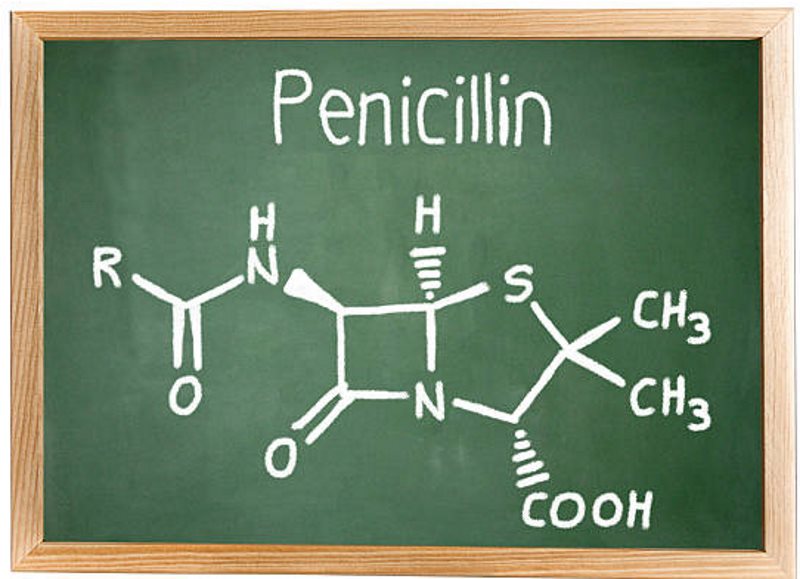
How to Make Penicillin at Home (Just in Case SHTF)

Penicillin

What’s rotting in your kitchen right now? How about we grab it, and make life-saving antibiotics with it? We’ll take you through the steps, and you’ll be prepared if the world ends by Sunday.

Penicillin, the most famous antibiotic of all time, has saved millions of lives. And it’s quietly lurking in your kitchen right now. If you have that moldy piece of bread in a bag at the back of the fridge, or a rotting cantaloupe or orange in the crisper, you’re most likely growing penicillin by accident. In fact, penicillin’s whole discovery hinged on the fact that it was easy to grow accidentally.

The Accidental History of Penicillin

Infection has always been a killer, and while soap and water could prevent it externally, when it went internal humans were often helpless. Any anti-bacterial agent injected into the body would kill a person more quickly than the infection would. Then Alexander Fleming had the nasal drip felt round the world. He was working with a plate of bacteria when his nose dripped into them. The bacteria around the dripping died off, and he was encouraged by the idea that the body could tolerate internally a substance that could fight off bacteria.

Are you ready to turn back the clocks to the 1800’s for up to three years?
WATCH THIS VIDEO and you will find many interesting things!

Fleming’s next stroke of luck came when he lost his assistant. When dishes of bacteria were no longer useful, they were put in a sort of tub of bleach. Without his assistant, Fleming’s dirty dishes formed towers in the tub. The highest dishes sat well above bleach, and remained filthy. They grew even filthier when mold which had floated up from the lab downstairs started growing on them. And then they stopped being as filthy, when the mold, one of the many types of penicillium fungi, killed off the bacteria.

That was all the luck Fleming got. It took years to find a way to cultivate the right strain of penicillium, and to extract the right parts of it to make penicillin.

How to Make Your Own Penicillin

The strains that we have are from the mold grown on a cantaloupe in the 1940s, so you can grab some cantaloupe if you’re feeling like a traditionalist. Otherwise, a leftover crust of bread or the peel of some citrus fruit will do fine. The mold will start out gray, but as it develops will turn a bright blue-green. Once it gets started, cut the bread up into pieces and put it in a sterilized flask. (You can sterilize a flask by putting it in an oven at 315 degrees for an hour.) Incubate it in the flask for about a week at around seventy degrees.

Some people just stop there. Folk recipes for “penicillin tea” or “penicillin soup” abound, with people just boiling up the molded bread or adding the citrus to tea with honey, and serving it to sick people. (Note: Do not do this.)

If you want to get more involved, you can extract the penicillin by sterilizing yet another jar and, according to the experts, adding the following:

Into 500ml of cold tap water put 44.0 grams Lactose Monohydrate, 25.0 grams cornstarch, 3.0 grams sodium nitrate, 0.25 grams magnesium sulfate, 0.50 grams potassium phosphate mono, 2.75 grams glucose monohydrate, 0.044 grams zinc sulfate, 0.044 grams manganese sulfate. Then add enough cold tap water to make one liter. Use hydrochloric acid to adjust the pH to between 5.0 and 5.5.

Then you add the spores from the moldy bread. Another seven days incubation will leave the penicillin floating in the liquid portion of the results. A quick filter and you have penicillin.

Urgent Medical Disclaimer!

In theory, at least, you have penicillin. I must stress at this point that you should not use this homemade penicillin on any limb that you want to keep. Although you did probably get a lot of penicillium mold growing on the bread, you also got other molds. Even with the right kind of fungi growing, filtering out everything but the penicillin is difficult, and best left to the professionals. Molds make a lot of different things to kill bacteria, and many of them are harmful to humans. While there are plenty of survivalist websites that recommend clapping whatever grows on bread or citrus to your wound, and while that might even be an option sometimes after the world ends, there are better options right now, and you should take advantage of them. If you want to see how well you’ve done making penicillin, try growing a tray of bacteria and using the penicillin on that.

If you’re interested in learning more old remedies, you should read The Lost Book Of Remedies.

The physical book has 300 pages, with 3 colored pictures for every plant and for every medicine.

Lost Book of Remedies pages

It was written by Claude Davis, whose grandfather was one of the greatest healers in America. Claude took his grandfather’s lifelong plant journal, which he used to treat thousands of people, and adapted it into this book.

Learn More…

Lost Book of Remedies cover

American Anomalophobia: Does the U.S. Have a Greater Bias Against the Unexplained?

“What has happened to that vaunted American pioneering spirit? We suppose that an American scientist cannot paddle too far out of the scientific mainstream without jeopardizing his or her funding.”

These were questions asked by the late William R. Corliss, a longtime champion of the scientific study of anomalies in nature, in the May-June 1996 edition of his Science Frontiersnewsletter. Corliss spent several decades of his life combing through scientific journals, periodicals, and a host of other publications in search of oddities that might be worthy of some degree of scientific scrutiny. On occasion, he might include slightly more “questionable” entries too, but generally only for their novelty, and often with additional commentary that he added to clarify it as being such.

In the aforementioned edition of Science Frontiers, the late physicist commented on a common theme that arose between the listing of publications in that particular edition, under the heading “American Anomalophobia.”

“Isn’t it interesting that of the 21 sources used above 14 are from British publications?” Corliss asked.

Even in 1996, this may not have been a new trend. A look back at some of the scientific luminaries over the years who have been advocates of science applied to the unexplained does seem to show a disproportionate number from European countries.

In 2012, John Horgan wrote in a blog at Scientific American about a number of innovative scientists who are “open-minded about paranormal stuff.” In Horgan’s list, he included computer scientist and all-around genius Alan Turing, who was interested in the psychic phenomena famously studied by J.B. Rhine. Others who made Horgan’s list included Swiss psychologist Carl Jung, as well as his former colleague Sigmund Freud. Wolfgang Pauli also made the list, and so as not to refer exclusively to past luminaries of the sciences, Freeman Dyson (an English-born American) and Brian Josephson (hailing from Wales) were also included on the list.

“My guess is that many more scientists believe, at least tentatively, in paranormal phenomena,” Horgan wrote, “but they are loath to disclose their views for fear of harming their reputations—and even science as a whole.”

I would say this is probably likely. While I realize this is supposition, rather than any kind of statistical certainty, in my own personal experience I have known many professionals in the sciences who would never discuss or publicly advocate any sort of “fringe” ideas, though in private they may indeed confess to having at least measured interest in such things.

The list goes on well beyond those mentioned on Horgan’s blog. Physicist Max Planck also dipped his toe into the unusual when he proposed the idea that, rather than the universe conforming strictly to a materialistic state of being, perhaps matter and physicality could have its root someplace else; perhaps even in a non-physical “realm” that is synonymous, essentially, with our idea of consciousness.

One final example that warrants mention here–though his inclusion is almost sure to be disputed–would be Carl Sagan. As one of the most prominent scientists and educators of the last century, he was unquestionably skeptical. However, Sagan also wrote famously in his book The Demon Haunted Worldabout the possibility, however remote it seemed, that certain phenomena deemed “paranormal” could have a basis in reality. Among these, he cited children who claim to possess memories of “past lives.”

Writing for The Atlantic in 2014, Jake Flanagin wrote about the Division of Perceptual Studies at the University of Virginia’s School of Medicine. Founded in 1967 by Dr. Ian Stephenson (best known for his pioneering research into chronicling such “past life” claims), the work has continued under Dr. Jim Tucker, who has spoken frequently over the years in various media appearances about the impressive number of cases the UVA’s studies have collected and studied.

However, perhaps one of the more salient quotes from Flanagin’s Atlantic piece actually came from Jesse Bering, a research psychologist and blogger for Scientific American on behavioral science. Bering, in response to the kinds of studies undertaken by Stevenson and Tucker over the years, said:

“I’m happy to say [Stevenson’s work is] all complete and utter nonsense. The trouble is, it’s not entirely apparent to me that it is. So why aren’t scientists taking Stevenson’s data more seriously?”

It’s a good question. Whether or not this has to do with the idea of there being a greater degree of bias against the unexplained in America in particular, it certainly shows that even when good science is being done in relation to more offbeat topics, that doesn’t necessarily mean it will be noticed, let alone well received.

Coming back to Corliss’s original observation about the prevalence of paranormal interest in British science publications, one might argue that the country’s history with paranormal research is part of the reason for its continued popularity there. Organizations like the Society for Psychical Research have helped maintain this presence (although that’s not to say there haven’t been American counterparts, such as the aptly-named American Society for Psychical Research).

However, if there’s truly one thing that the United States seems to have in greater amounts than most other countries, that might well be its paranormally-themed entertainment. The motion picture business only really began booming in the early 20th century thanks to a burgeoning American industry being built around it, and with the resulting prevalence of film and television entertainment produced in the U.S. over the last century, it is only natural that the amount of paranormal-themed programming would be higher here too.

Could it be that largely credulous paranormal television shows and “science made for TV” style programming has helped contribute to a more negative attitude toward the subject, which even carries over when actual science is being applied?

It’s just a thought… but it certainly puts a different spin on the old idea that, “there’s no such thing as bad press.”

China Looks at Ways to Root Out Corruption — Using Artificial Intelligence to Root out Corruption, Only to Find That Many of the Corrupt People it’s Finding are Employed by the Government!

chinasocialcredit.jpg

Good conspiracy theorists know that they’re getting close to the truth when the government tries to shut them down. However, what does it mean when the conspiracy theorist turns out to be part of the conspiracy itself? That seems to be the case in China where the government has been using artificial intelligence to root out corruption, only to find that many of the corrupt people it’s finding are employed by the government! Could this be why the program is being shut down before it can be rolled out nationwide?

Kudos to the whistleblowers at the South China Morning Post for exposing this Chinese Catch-22 by publishing both the results of the artificial-intelligence-driven investigation and the subsequent shutdown by heat-fearing government officials. China has an estimated 64 million people working in government jobs (2016 figure), which mean almost 5 percent of its population is part of the governing bureaucracy at some level. To manage this monster, parts of it are implementing technological tools. The foreign ministry is using machine learning to aid in risk assessment and decision-making major investment projects overseas. The province of Guizhou has a system that tracks the movement of its entire police force. And it’s well-known that China is the world leader in implementing ubiquitous surveillance cameras and a nationwide facial recognition system for a wide variety of both good and questionable purposes. However, some think it went too far when it pointed the cameras and the AI technology on itself in 2012 with the anti-corruption Zero Trust system.

A joint venture by the Chinese Academy of Sciences and the Communist Party, Zero Trust ’s internal control institutions to monitor and evaluate the personal lives of public servants using over 150 protected government databases and social relationship maps. Zero Trust looks for indicators such as unusual large bank account deposits or major purchases, government contracts being awarded to friends or relatives, and other behaviors it deems suspicious indicators of possible embezzlement, abuse of power, misuse of government funds and nepotism. How well is it working?

“Despite being restricted to just 30 counties and cities, artificial intelligence system has already helped snare 8,721 officials.”

That represents just one percent of the population. Some of the crimes were serious enough to warrant prison terms, but South China Morning Post found that most just received warnings and were allowed to keep their jobs under the assumption (provided by an unnamed computer scientist) that the exposure and further monitoring would keep them from “going down the road of no return with further, bigger mistakes.” With that kind of efficient AI machinery keeping workers on the straight and narrow path, management must be thrilled with Zero Trust, right?

“Still, some governments – including Mayang county, Huaihua city and Li county in Hunan – have decommissioned the machine, according to the researchers, one of whom said they “may not feel quite comfortable with the new technology.””

Is Zero Trust getting too close to the top? Some officials (all unnamed for obvious reasons) are hiding behind the claim that there are no laws governing AI access to sensitive databases. Computer scientists designing and implementing Zero Trust counter that the system has been proven right most of the time and claim that no accusations are made without a human reviewing them first. A human? We’re talking oversight of 64 million government employees by … other government employees! What could possibly go wrong … or right?

Another unnamed researcher exposed the Catch-22 by pointing out that the idea of Zero Trust was to “avoid triggering large-scale resistance among bureaucrats”, especially the most powerful ones, to the use of bots in governance. In other words, exactly what happened.

The deal between Big Brother and its new tool, Big AI, is turning into a battle instead, with China as the first battleground. Which one will win? Which one deserves to win? Should there even be a winner? What do you think YOUR government would do?

Zero trust … it goes both ways.

World War 2 Continued By Other Means – Nazi Roots Of The European Union

5C4CD3E8-90AB-46A9-BFA8-1569D83BEF8E

This is an intelligence briefing. Here I present the bare bones of what has been happening before our eyes…if we would see it.

Once upon a time, there was an industrial combine in Nazi Germany called IG Farben. It was the largest chemical/pharmaceutical octopus in the world. It owned companies, and it had favorable business agreements with companies from England to Central America to Japan.

The author of The Devil’s Chemists, Josiah DuBois, traveled to Guatemala, on a fact-finding mission, in the early days of World War 2, and returned with the comment that, as far as he could tell, Guatemala was “a wholly owned subsidiary of Farben.”

The pharmaceutical empire was and is one of the major forces behind the European Union (EU). It is no accident that these drug corporations wield such power. They aren’t only involved in controlling the medical cartel; they are political planners.

This is how and why Big Pharma fits so closely with what is loosely referred to as the New World Order. The aim of enrolling every human in a cradle-to-grave system of disease diagnosis and toxic drug treatment has a larger purpose: to debilitate, to weaken populations.

This is a political goal. It facilitates control.

IG Farben’s main component companies, at the outbreak of World War 2, were Bayer, BASF, and Hoechst. They were chemical and drug companies. Farben put Hitler over the top in Germany as head of State, and the war was designed to lead to a united Europe that would be dominated by the Farben nexus.

The loss of the war didn’t derail that plan. It was shifted into an economic blueprint, which became, eventually, the European Union.

The European Commission’s first president was Walter Hallstein, the Nazi lawyer who, during the war, had been in charge of post-war legal planning for the new Europe.

As the Rath Foundation reports: In 1939, on the brink of the war, Hallstein had stated, “The creation of the New Law [of the Nazis] is ONLY the task of the law-makers!”

In 1957, with his reputation sanitized, Hallstein spoke the words in this manner: “The European Commission has full and unlimited power for all decisions related to the architecture of this European community.”

Post-war, IG Farben was broken up into separate companies, but those companies (Bayer, Hoechst, and BASF) came roaring back, attaining new profit highs.

I refer you to the explosive book, The Nazi Roots of the Brussels EU, by Paul Anthony Taylor, Aleksandra Niedzwiecki, Dr. Matthias Rath, and August Kowalczyk. You can also read it at relay-of-life.org. It is a dagger in the heart of the EU.

At the Rath Foundation, you can also read Joseph Borkin’s classic, “The Crime and Punishment of IG Farben.”

In 1992, I was deeply engaged in researching the specific devastating effects of medical drugs. Eventually, I concluded that, at the highest levels of power, these drugs weren’t destructive by accident. They were intended to cause harm. This was covert chemical warfare against the population of the planet. The Rockefeller-Standard Oil-Farben connection was a primary piece of the puzzle.

It was, of course, Rockefeller (and Carnegie) power that had forced the birth of pharmaceutical medicine in America, with the publication of the 1910 Flexner Report. The Report was used to excoriate and marginalize Chiropractic, Homeopathy, Naturopathy, and other forms of traditional natural practice, in favor of what would become the modern juggernaut of drug-based treatment.

In an article about the FDA, “Medical Murder in the Matrix,”  show the fact that this federal agency has permitted at least 100,000 deaths of Americans, per year, from the direct effects of drugs it, the FDA, has certified as safe. (See, for example, JAMA, July 26, 2000, ‘Is US Health Really the Best in the World,’ Dr. Barbara Starfield.)

The FDA knows these death figures. “Unintended” and “accidental” can no longer be applied to this ongoing holocaust.

The pharmaceutical industry itself also knows those death figures.

To understand the dimensions and history of the ongoing chemical warfare against the population, in the form of medical drugs (and of course pesticides), one must factor in the original octopus, IG Farben.

World War 2 never ended. It simply shifted its strategies.

In any fascist system, the bulk of the people working inside the system, including scientists, refuse to believe the evidence of what is happening before their own eyes. They insist they are doing good. They believe they are on the right side. They see greater top-down control as necessary and correct. They adduce “reasonable” explanations for inflicted harm and death.

World War 2 is still underway. The battleground has been changed, and the means are far cleverer.

Sun Tzu wrote: “Hence to fight and conquer in all your battles is not supreme excellence; supreme excellence consists in breaking the enemy’s resistance without fighting… The best victory is when the opponent surrenders of its own accord before there are any actual hostilities…It is best to win without fighting.”

This is what has been happening: invisible warfare.

What To Do When a Pandemic Starts: This Infectious Disease Spreads Quickly To Other Continents, Basically Causing Disease Globally, Most Likely Resulting In High Fatality Rates

gh-inquiry-banner

The world is an open book in terms of transportation, economy and immigration. This also means its open to disease as well.

A highly communicable pandemic would have the potential to travel this world and back again in a matter of 48 hours. I make this bold prediction just based on international business travel. This does not take into account tourism. If it reared its head in a place like China or the US, it would be the worst-case scenario. The blessing with something like Ebola is that it is in Africa and the population as well as tourism and business travel pales in comparison to places like US and China

Viruses More Likely to Cause a Pandemic

Why are these viruses more likely to cause a pandemic?

All of these viruses are so-called RNA (not DNA) viruses. This means there are more mutations happening every time the virus replicates in a cell. More mutations lead to more changes in the viral genome, potentially making the virus more virulent– better at infecting humans, replicating more efficiently and therefore making people sicker. Another thing these viruses have in common is the fact that they are usually present in animals and might not necessarily cause disease in those carriers but adapt to humans at some point, causing severe disease. These viruses also tend to cause high mortality because they affect several organs causing them to shut down.

When a Pandemic Starts

When a pandemic starts, don’t panic right away. You might hear on the news about new cases of avian flu in China or other Asian countries. They will be the most likely source of a pandemic flu, due to the presence of unregulated live bird markets that can spread the disease quickly, and the close contact people have with these animals. The same is true for respiratory infections such as SARS or MERS, which usually have adapted to humans after going through several animal species, starting with bats but then transmitting to agricultural animals and finally to humans.

The adaptation phase can be slow, but when the time comes that a virus transmits between humans, these infections will be rapidly spreading. Human-to-human transmission is the most critical barrier. So far, avian flu has not caused a pandemic simply due to the fact that almost all infections happened through contact with the animals themselves. At the most, family members transmitted among themselves due to close and prolonged contact. However, when human transmission becomes easy, it will be bedlam.

Human Cases

Most likely you will hear something about some human cases first, followed by rapid growing numbers in the country of origin and around. From there it won’t be long to hear about the first cases in the U.S. or Europe, maybe just a few days. This part is difficult to predict, as some infections are contagious at very early to slightly later stages of infection, but typically when people start to sneeze they are contagious. So, if you are relatively sure that a pandemic is at hand, call in to work sick, take your kids out of school, ensure you got supplies to sit it out, and rather enjoy some vacation days.

(Disclaimer: I am a scientist working with viruses, and that is what I will do). Folllowing this procedure, the worst case scenario is that you get some vacation days and the kids do too. That is better than going to work because you think you are overreacting and catching something by a colleague who just returned from his vacation, sat in an airplane, and is starting to sneeze into your general direction when trying to show you some pictures of that great landmark he visited (with many other people) on his cell phone.

Virus Transmission

So how does a virus like the flu or SARS transmit?

Transmission of a respiratory virus happens by droplets, so this is sneezing and coughing but also when somebody sneezes into his/her hands and then touches the shopping cart, the door knob, the debit/credit card checkout, et cetera. In other words, transmission happens extremely easily. You got more germs on your cell phone than there are on a public toilet seat, true story. Ebola is harder to transmit, as it is through bodily fluids, so people most affected were in close contact with patients, such as medical personnel and relatives. But again, there is a potential for a critical mutation making transmission easier.

Do’s and Don’ts of Biosecurity Measures

So, you decided to stay home, and it turns out there really is an avian flu or other virus spreading rapidly. You realize that even though you planned ahead, there are a few items you still want to get in a last-ditch effort. If you really have to go to a public place, take Lysol wipes with you in the car. Put on that NIOSH 95 mask. Don some nitrile or latex gloves. If people look at you funny, cough a bit, so they think you are being very considerate trying not to spread something or alternatively tell them the end is near. You could also ignore them; do whatever works for you. Just don’t be too embarrassed and take it off.

It is supposed to keep 95% of infectious particles out, so if somebody coughs or sneezes directly at you, you got a fighting chance. If you want 100% protection, you need to be prepared to spend a lot of money on a biohazard suit, go through the pain of putting it on and walking into the store looking like an alien, and be prepared to possibly cause a panic and deal with a 911 call while there. When you grab what you need, be aware of your hands.

Touching Your Face

Most people don’t realize that they tend to touch their faces unconsciously many times during the day, and you do not want to touch a surface containing the virus and then get your hand in contact with eyes, nose, or mouth, which will give the virus access to your body. Put those Lysol wipes in your cart and use them throughout, particularly after checkout and again when you arrive at your car. Give the steering wheel and the gear shift a wipe down just to make sure. If you wore gloves, take them off before entering your car.

General Biosecurity Measures

General biosecurity measures include: stay home! If you have to leave your house, use personal protection equipment, including the following:

  • Gloves. Wear gloves if you go anywhere near potentially contaminated surfaces. Take them off when done! They might get contaminated and you will just distribute the virus evenly around. Gloves are able to protect you from virus touching your skin, but if that virus sits on the glove, you can still get sick if you are not careful. Picture that you are touching a surface with glowing green or red paint with those gloves and then continue to use them. Where is that paint going to end up? It will be on a lot of things that you touch afterwards.
  • Mask. Wear a NIOSH 95 mask if venturing among people. Surgical masks won’t do a lot really.
  • Hand Washing. Wash your hands frequently.
  • Wipes. Keep up with wiping down surfaces that you and others touch frequently, particularly doorknobs and appliances.
  • Keep Your Distance. Droplets can travel several feet, so try to stay a distance of six feet or more from somebody who is actively sneezing or coughing.

For respiratory viruses, these measures are the most effective ones.

Disinfectants

If you do not have a commercial disinfectant, a dilution of bleach does the trick. Generally, a 10% dilution is very effective, especially if it sits for 10 minutes, but on metal surfaces such as those on appliances that can be a bit problematic after a while. I use the metric measurements on my pitcher, 50 ml of bleach with 450 ml of tap water added for a total volume of 500 ml. It is just more precise, but if you are allergic to metric measurements, 0.2 cups (so a little less than 1/4 cup) in a bit over 2 quarts is approximately the same.

You want to use gloves, nitrile or latex is fine, and a 10% bleach solution won’t destroy your skin right away, but it will be irritating to some people, especially if you keep using it. Rubbing alcohol and hydrogen peroxide work too. Influenza and coronaviruses (the ones that cause SARS- or MERS-like infections) are not as stable in the environment due to their structure. On the outside these viruses have what is called an envelope, made out of components of the cell wall from the cell they were replicating in, in other words a human cell. This envelope makes the virus actually more susceptible to disinfectants, UV light, and other environmental factors.

Evading Your Immune System

However, it also makes it better at evading your pesky immune system. Although not extremely stable in the environment, enveloped viruses, like the flu or SARS, can survive on some surfaces for up to 24 hours. This is why wiping down frequently is important, but of course you don’t have to do that if nobody goes in and out. The virus does not appear out of nowhere; you have to pick it up from somebody.

In summary, if you can avoid going out after a pandemic hits, stay at home. Don’t let neighbors or family in (especially the in-laws), and you will be fine, assuming you are self-sufficient in regards to food and water.