USA needs help. Let’s face it: our democratic institutions aren’t working well; our president is behaving like a depraved, spiteful monarch; our police, with almost 19,000 independent units nationwide, are unmanageable; our unprecedented social and economic divides are growing; the health of our citizens is declining; new digital platforms are sources of unprecedented hate and threats; our media is so polarized, we don’t know whom to believe. (Then there’s Covid-19.)
Across the globe, wherever a nation is in crisis—by hurricane or earthquake, mounting disease or plunging poverty, military attack or teetering government— whether requested or not, others are alerted and assistance from abroad mobilized. The U.S. (as projected by American media) is in the forefront of concern for others (except those on its sanctions list— e.g. North Korea, Syria, Venezuela, Iran, Cuba, Yemen). Genuine humanitarian aid is dispatched from NGOs and private, religious and government agencies. Assistance flows in cash, in materials and advisors, observers and medical experts (along with military intelligence and troops where it’s determined to be advantageous to American policy).
Today America itself is a nation under internal threat and in dire need. Along with signs that the U.S.healthcare system and its leaders cannot control the Covid-19 disease, more examples of police brutality are exposed. Underpinning and exacerbating both ailments is political instability (although few would identify it as such).
If Americans will not admit that they’re engulfed by this unprecedented crisis, outside observers note it with growing alarm. Countries close their borders to Americans while the pandemic spirals out of control. Across the world, people are questioning the very idea of American democracy. Longtime U.S. allies are flummoxed by its unpredictable foreign policy. Even before these multiple crises emerged, commentators pondered our teetering democracy.
We’ve had flawed, embarrassing state primary elections in Georgia and Wisconsin; we had the Democratic National Committee interrupt the presidential primaries to install its preferred candidate Joe Biden. Public doubts are increasing about how November’s election can be legitimately conducted. Every week presents us with more fears about this democracy. Management of the pandemic is undermined when the CDC, one of America’s most highly regarded health agencies, is bypassed by a White House order to divert medical data to a branch of Homeland Security. Most recently we have unidentified paramilitaries circumventing state and local authorities to confront protesters, first in D.C. now in Portland, with threats of similar directives to other cities.
This slide towards greater political instability looks unstoppable.
Another country experiencing a similar crisis will surely be the object of outside assistance, or interference. There’ll be offers of economic assistance, dispatch of intelligence advisors; international peacekeepers might be sent; a U.N. Security Council resolution would be proposed.
I can think of just three states—Israel, Australia and the U.K.– who might offer assistance. Israel is a dependable training site for American police, and a highly valued intelligence service for the U.S. Australiamaintains an opaque but firm military alliance with America, readily falling in with the Pentagon’s needs. On intelligence sharing, the U.K is a solid partner. Although one wonders how much economic assistance England could offer, preoccupied with its own pandemic. Plans for new U.S-U.K. trade agreements to thwart the European Union are delayed. As for guidance from England on democracy, its parliamentary system differs markedly from U.S. federalism and few British understand America’s election processes. The White House occupant might reach out to Russia; but that would raise other problems, even among Republicans.
What about India? Historically beset by discord between two major ethnic groups, multi-cultural India might be a model. But the rise of Hindu nationalism under Modi has been fiercely uncompromising. Advice from India is out.
Maybe South Africa would step up to guide us. The U.S. backed the anti-apartheid struggle there, and South Africa’s victory established an exemplary racial reconciliation system.
Scanning the rest of Africa, the Middle East, and South America, we find few candidates who might help us.
But wait! We have billionaires, lots of them—609 out of 2,208 globally.
Billionaire Michael Bloomberg and his peer Apple’s Tim Cook responded to Governor Cuomo’s call for help during New York’s Covid-19 crisis, and George Soros promises more support for Black Americans’ struggle for justice. Some very wealthy Americans offer to pay more taxes.
The alternative to all these solutions is: people in the streets.
U.S. stocks and bonds are at all time highs in a relentless ‘melt-up’ that seems to ignore anything you can throw at it: Iran, Hong Kong or the Trump’s war on China mean nothing. It’s the longest bull run in history, surpassing its 10th year in December.
How long can this go on? …and are we at the peak yet?
Certainly, it doesn’t comfort anyone that some of the most respected investors of all times have turned to prolific writers on the subject. Ray Dalio, for one, seems to be on a march to prove everyone that we are at the precipice of an epic social meltdown.
John Templeton famously warned of the four most dangerous words in investing (“this time it’s really different”) in 1933. Since then, people couldn’t stop, but trying to come up with reasons why it is.
So is it this time? Well, it’s not impossible. Even John Templeton admits that when people say things are different, 20% of the time they are right.
It is hard to put finger on anything systemic that could cause the next recession. Instead, something much more sinister is lurking under the surface — the colossal levels of cheap money in the system. All this easy money is looking for home, being pushed into all asset classes in investors’ desperate search for yield. Markets are ‘melting up’, propped by the free money. It is sinister because we don’t control it, nor do we understand it — we don’t have a historical precedent for it.
Feeding off the historically low rates, corporate debt is up 50% from the 2008 levels. All of this debt is funded by insurers, pension funds and other institutional investors who have been forced to push their money into private markets because the rates on treasuries and other government debt are so low that they simply can’t fulfill obligations to their customers.
As a result, corporate debt is cheap, very cheap. Tesla’s $1.8 billion high-yield bond just touched its full face value again this week, meaning demand for corporate debt is surpassing all expectations again, and companies can fund their growth at near zero rates.
It is a C-suite dream come true: management is using cheap borrowed money to fund buybacks and acquisitions, further propelling market prices to all time highs. All this does, of course, increase risks of a sudden deep collapse should there be a change in rates pushing thousands of zombie companies into delinquency in what could become a self-feeding downward spiral.
But how could this happen?
There is nothing structural that could cause such a reversal. We are all hyper-alert to any signals that the next recession is coming. The 2007/08 crisis has left us with deep scars, and thanks to its cataclysmic nature, it was also a great topic in a new world dominated by the rise of social media. This near paranoia feeds through all levels of society, so that regulators and authorities feel acute need to prevent and stop any wrongdoing.
Nor does the economy show any signs of overheating. Yes, it was the longest, but also the slowest bull market in history. In FED’s chair Jerome Powell own words: “There’s nothing that’s really booming that would want to bust, … ”. For now, FED has absolutely no reason to be concerned about inflation that would force it to start hiking. Wages simply can’t pick up despite low unemployment levels. Numbers show that jobs are being added in the lower-earning groups. Better and newer technology means that same amount of work can be done with fewer people, a phenomenon that is increasingly finding its way to higher-skill jobs. There is also the argument that consumers are more clever and less demanding: the mantra of the post-2008 age is less is more.
Yes, everything seems to be ticking along just nicely. But wait a minute.
A lot of that record corporate debt we’ve mentioned above comes from private investors: private equity groups and other institutional investors. Should things really go bad, delinquent companies would fall right back to private hands. What this means in theory is that even in case of a large public default, it shouldn’t get contagious, as it would stay on private books.
But that doesn’t solve anything, does it? When WeWork failed its IPO, it fell right back to Softbank’s hands. And what did they do? Print more money (Softbank is planning to issue $3 billion loan to mend WeWork’s failure).
More importantly, WeWork’s debacle shook the market to its core, not due to its size, but because of its structural significance. Private investments in venture capital have been the primary source of gains for large investors in the post-crisis years. In the era of free money, the creeping realization that the likes of WeWork and UBER may not be worth their ballooned valuations is troublesome because they were the last bastion of superior returns.
So it’s different this time, but it is not. Crises are certain; they are inevitable like death and taxes because we are all driven by the crave to earn superior return. It is human to chase sensations. Last time it was the subprime mortgages and derivatives that no one understood; this time it is the tech sector.
We all needed some excitement after the depth of 2007/08, and the start-up economy gave us just that — the promise to create an infinitely more efficient and cleaner way of doing things, exchanging factories and steel for smartphones and abstract products.
It all went well until now. Companies like WeWork and UBER have become the religion of future, and people forgot to value them on the cold basis of profits & losses. They have freed themselves from the dryness of discounted cash flow to take the investors on a trip to forever, growing to billion-dollar valuations buoyed by private money.
Scarred by 2007/08, people are looking for the next big short; the next Collateralized Debt Obligation that could bring the market down. But there might not be one this time round. All crises are caused by some form of a market bubble; a moment when no price is too high, which eventually leads to a reversal and a downward spiral. WeWork, UBER and other utopian giants have infected markets with a profound belief that they are about to revolutionize world. Cash-burning giants with a zero cost of capital.
Their eventual (and unavoidable) collapse may prove to be systemic, dragging down the market, not because of their size (which is insignificant), but because investors will reprice the market, taking thepromise of infinitely more efficient tomorrow out of the equation.
Ray Dalio’s dark prophecies may just be right: when the ‘dream companies’ (UBER, WeWork) fail to deliver on their promise, and the only way for pension funds to make good on the obligations is to chase debt, there might be a moment when investors say enough and began pulling their money out of the system, causing massive repricing and a surge in rates.
It would be impossible to time exactly when this happens, although Dalio seems to be trying to do just that — his fund is rumored to have bet $1.5B against the stock market in November.
We bring to the attention of our readers, this timely and incisive article by Radhika Tikku, Ph.D candidate at Queen’s University, Kingston, Ontario.
millions of people Worldwide are suffering from depression as a result of the global crisis which is affecting humanity.
The pandemic is based on fear. it’s a big lie.
People are being manipulated. They have accepted the consensus imposed upon them: economic collapse, social engineering, poverty, despair and depression.
The impact of this crisis on mental health is beyond description. The Anti-dote is “Reconnection”: Solidarity and Mass Social Action against this diabolical project.
***
Depression is a global problem that’s on the rise.
In Lost Connections, Johann Hari offers practical solutions for how to tackle it. Unfortunately, he misses the crucial point that personal sacrifice is the only way we can discover what makes us content.
Hari explores the sources behind depression and anxiety.
Knowing depression, Hari considers two main explanations for why depression occurs. Each blames the individual. One is that depression is the result of overactive imagination, or weakness of the will. The other is that depression is caused by brain malfunction. The brain’s chemistry is “off” and needs to regain equilibrium.
Hari scrutinizes both explanations. For the first, the sheer numbers suggest depression is not the effect of false consciousness, or that depressives lack fortitude. The second is not supported by science. So, Hari offers an alternative explanation.
Depression requires us to revise the way we live in the world. In fact, we should ask: What does it mean to be human?
Depression “is a normal response to abnormal life experiences”. [1] It’s like grief. Grief is human suffering that stems from loss. Grief is relational. We grieve the death of a loved one because we stand in a bi-directional relationship with them.
Death is not an abnormal life experience; however, modern culture has made it so.
We intellectually know that death occurs, but we do not live as if we ourselves will die.
We live out of joint with the world, as if we’re invincible. Thus, Hari’s alternative explanation is that depression is a social problem. Depression is the illness we contract when disconnected from sources of meaning. The disconnection is disorienting because we lose a part of ourselves. The antidote: Reconnection.
Hari offers sources from which we might draw meaning. All involve the individual changing life in substantive ways and becoming part of a community, closer to the soil. Our ancestors understood this fact better than we today.
Hari is skirting around the problem of the ego. It has practical, political consequences. Hari looks at ways to overcome depression, but he could have gone further: We have to change our relationship with ourselves. We need to talk about identity and how it negatively impacts us.
For instance, we’re not the “author” of our own stories. That slogan is false, because it doesn’t account for the way the world actually is. It cloisters us from the very freedom and choice we so desperately desire. Identity functions like a map; it aids in the navigation of familiar and uncharted territory.
But there’s no use clinging to a moth-eaten map, where a portion of the legend and other key elements are missing. Ancient scholars understood that a person’s identity can be self-imprisoning, which is why they advocated for the renunciation of the self. Thinking yourself the hero of your life—just like thinking yourself the victim of all that’s happened to you—can obscure real knowledge about yourself.
Hari doesn’t go that far. He should have touched on renunciation of the self and how to go about it.
Renunciation of self has three dimensions. First, it requires a relentless on-going engagement between self and the world. This includes ideas. Maps are always subject to revision or wholesale rejection given new conventions or interests.
For example, Hari’s case of the reconstitution of Kotti, the tenement housing in Berlin, leaves this out. When people create a neighbourhood to force recognition of prohibitive rental increases, Kotti’s struggle was not over when the German government made concessions. But living in community, if it is really about connection, is constant negotiation toward rejuvenation of the group and ideas presupposed in one’s identity as a group. Otherwise, old ideas remain in place, obstructing real constructive change.
There has to be a constant forsaking if the objective is really to discover what it means to be human because we live in a dehumanizing world, the full nature of which is not always evident.
It’s a risky prospect.
Second, renunciation involves personal sacrifice. You have to actually give something of value up to discover new ways of living and being in the world. Sacrifice is not valued, culturally. The global pandemic forces us to do without that which we believed to be essential. New social conditions compel us to decide what is essential and give up the rest.
Third, this matters to truth. Just because map-makers reconfigure maps in light of new conventions and interests doesn’t mean anything goes. Maps are accurate or they are not; they either aid in the wayfinding experience, or they don’t. Similarly, personal sacrifice can lead us to living life more truthfully, thriving instead of merely existing.
Hari’s conclusion about a return to community and to nature to heal ourselves, to become self-possessed in ways that were previously impossible, shouldn’t be surprising but it is. It has consequences that challenge other beliefs, some cherished.
There’s more to be said though because we have to confront ourselves to get past ourselves. The ancients understood this point on a much deeper level than us.
If we can all agree on one thing, it’s that the government and disaster organizations alike grossly underestimate how dependent the majority of the population is on them during and after a disastrous event takes place. We need not look any further than the last major disasters that have occurred to find our answers: the Haitian earthquake that occurred in 2010, Hurricane Katrina in 2005, the 2011 super tornado of Joplin, MO, and now we are facing a pandemic, known as Covid-19.
As preppers are well aware, when the needs of the population cannot be met in an allotted time frame, a phenomenon occurs and the mindset shifts in people. They begin to act without thinking and respond to changes in their environment in an emotionally-based manner, thus leading to chaos, instability and a breakdown in our social paradigm.
When you take the time to understand how a breakdown behaves and how it progresses, only then can you truly prepare for it.
The Anatomy of a Breakdown
This glimpse into a systemic breakdown is based on an isolated, limited disaster or event where emergency responders have been deployed. I must emphasize that all bets are off if the event is widespread, affecting multiple tens of millions of people simultaneously.
Phase 1: The Warning
Although disasters such as earthquakes and tornadoes can come on so quickly that timely warnings are not always given, for the most part, governments typically provide adequate time to get a population ready in advance. Local governments even go as far as to err on the side of caution and sternly warn the citizens to evacuate.
For one reason or another, there will be a select group that stays behind. Some of these citizens are prepared and ready for what may come and may feel the need to stay to defend what is rightfully theirs but the majority of the population will not be ready for what they are about to endure. Those that are in this unprepared majority who choose to ride out the disaster do so because they are either unaware of how to fully prepare for disasters, have become complacent or numb to the needs of warning from the local government and news media, or are overly confident.
This is the point in this cycle where herds of people go to the grocery stores frantically grabbing supplies. Most grocery stores will not be able to meet the demand of the people’s need for supplies, and many could go home empty-handed.
Bracing for the disaster, the prepared and unprepared will be hoping for the best outcome. What many do not realize is the hardest part of this event is soon to be upon them. Within days, the descent into the breakdown will begin.
Phase 2: Shock and Awe (1-2 Days)
After the initial shock wears off of the disaster, many will have difficulty in coping and adapting to what has just occurred. This is also what many refer to as the normalcy bias, and is actually a coping mechanism to help us process and deal with the changes that have occurred. Many will cling to any normal thought and habit until their brain begins to accept the changes it has witnessed. As they are trying to wrap their thoughts around the severity of the disaster, their losses and what their future holds, local government leaders are scrambling for answers and trying to assess the situation, all the while dealing with their own normalcy bias issues.
At this point, the unprepared survivors will be expecting organizations and local government to step in to meet their immediate needs at any moment. The reality of the situation becomes bleaker when they realize that due to downed power lines or debris blocking roadways and access points, emergency organizations, emergency response and distribution trucks supplying food, water, fuel, and other pertinent resources will be unable to get to the area. Once the realization hits that resources are scarce and the government leaders are incapable of helping them in a timely fashion, desperate citizens will take action into their own hands.
The breakdown has begun.
Phase 3: The Breakdown (3-7 Days)
Have you ever heard the saying, “We’re three days away from anarchy?” In the wake of a disaster, that’s all you have is three days to turn the crazy train around before crime, looting, and chaos ensue. In reports during the aftermath of Hurricane Sandy, residents from Staten Island were pleading for help from elected officials, begging for gasoline, food, and clothing.
“We’re going to die! We’re going to freeze! We got 90-year-old people!” Donna Solli told visiting officials. “You don’t understand. You gotta get your trucks down here on the corner now. It’s been three days!”
Similar stories of looting occurred during the Hurricane Irma in Miami, during hurricane Harvey in Huston and during any other disasters that we had to face.
‘Miami area police arrested more than 50 suspected looters during Hurricane Irma, including 26 people who were accused of breaking into a single Wal-Mart (WMT.N> store, authorities said on Tuesday.’
‘We’ve already arrested a handful of looters. We’ve made it real clear to our community we’re going to do whatever it takes to protect their homes and their businesses.’
Multiple factors contribute to societal breakdowns including the failure of adequate government response, population density, citizens taking advantage of the grid being down and overwhelmed emergency response teams.
For whatever reason, 3-5 days following a disaster is the bewitching hour. During this short amount of time, the population slowly becomes a powder keg full of angry, desperate citizens. A good example is a chaos that ensued in New Orleans following the absence of action from the local government or a timely effective federal response in the aftermath of Hurricane Katrina. In such troubled times, people were forced to fend for themselves and their families, by any means necessary. This timeline of Hurricane Katrina effectively illustrates “the breakdown,” and within three days, the citizens of New Orleans descended into anarchy, looting, and murder.
If this scenario isn’t bad enough, at the end of this time frame, there will be an increase in illnesses due to cramped living quarters from emergency shelters, sanitation-related illness, compromised water sources and exposure to natural elements. In the aftermath of the Haitian earthquake, sanitation-related epidemics became a large concern for the disaster victims. In fact, the outbreak erupted into the world’s largest cholera epidemic despite a huge international mobilization still dealing with the effects of the Jan. 12, 2010, earthquake.
Victims from Hurricane Sandy are also beginning to see their share of illnesses. Due to the horrible weather plaguing the area, many of the evacuation shelters in Brooklyn were closed last week for sterilizing due to a vicious viral outbreak that struck.
Phase 4: Recovery (8-30+ Days) Despite what we want to believe, most recoveries are slow and difficult in progression and require long-term planning. On average it takes a city around 1-2 weeks after the event took place to start this phase of the cycle. Every disaster is different and the length of recovery efforts vary greatly on the nature of the incident.
7 years after Hurricane Katrina leveled parts of Louisiana, the state is still in the recovery phase, “We are in a process of long-term rebuilding,” said Christina Stephens, spokeswoman for the Louisiana Recovery Authority. “There is at least another 10 years of recovery.”
Within this recovery phase, essential goods and resources could still be hard to come by, thus forcing local officials to implement the rationing of resources to ensure there is enough for the population.
It could be months before the destruction caused by Hurricane Sandy is cleaned up. Damaged communities are coming to terms with the devastation that delivered an unprecedented punch to the region’s economy, causing more than an estimated $50 billion in losses and forcing hundreds of thousands to rebuild their lives.
Now that you understand what we’re dealing with, there are ways you can use this information to prepare for the next event so that you will be a part of the population that is ready for what may come.
Trust yourself. Learn to be self-sufficient and rely on yourself. When it is all said and done, you are the only one who can care for yourself and your family the best. You will be the one who has your family’s best intentions at heart. Having a stock of your family’s favorite canned or dry goods, a supply of water and a simple medical kit can maintain your basic needs for a short-lived disaster. This simple preparedness supply could set you apart from the unprepared.
If you live in a highly populated area, understand that resources will diminish quickly, so preparing beforehand can circumvent this. You can always start out with the basic 10 preparedness items you will need to skirt through a disaster:
Food and alternative ways to cook food
Water
Fuel for generators, cooking stoves, and mantels, charcoal for outdoor grills
Batteries and battery charger
Generator
Emergency lighting
Ice
Medical supply
Baby formula
Sanitation supplies
Educate yourself. Learn from the disasters, folks! Each time there is a disaster, the same pattern occurs…the warning, shock, and awe, the breakdown and recovery. Study the effects of disasters that affect your area and what items you will need to get through the event. Further, find the weak points in your preparedness supply and correct them. Supply inventories twice a year can do wonders in this area.
Get into the mindset. Learning what to do in the face of a disaster or how to care for your family during extended grid-down emergencies can put you well ahead of the race. The more prepared you are, the faster you are at adapting to the situation. You can learn anything as long as you research, gather and apply the information. For example, while many on the East coast were still in shock from Hurricane Sandy and were sitting in their homes panicking and watching their perishable food items go bad, those that had learned how to survive in off-grid, cold environments were well prepared for this type of disaster, and had already begun packing their perishable items in the snow to preserve them. It’s that simple!
Practice makes perfect. Practice using your skills, your preps and prepare emergency menus based on your stored foods. The more you practice surviving an off-grid disaster, the more efficient you will be when and if that event occurs. Moreover, these skills will keep you alive! For a list of pertinent skills to know during times of disaster, click here. Further, to make your family or group more cohesive, cross-train members so they can compensate for the other during a disaster.
In summation, only until we see the cycle for what it is and the effects it has on society will we be able to learn from it. There is always a breakdown in some form or fashion after a disaster. If you can prepare for this, you will be able to adapt more quickly to what is going on around you.
The cycle is there and we can’t look past it. Prepare accordingly and do not overlook ensuring you have your basic preps accounted for.
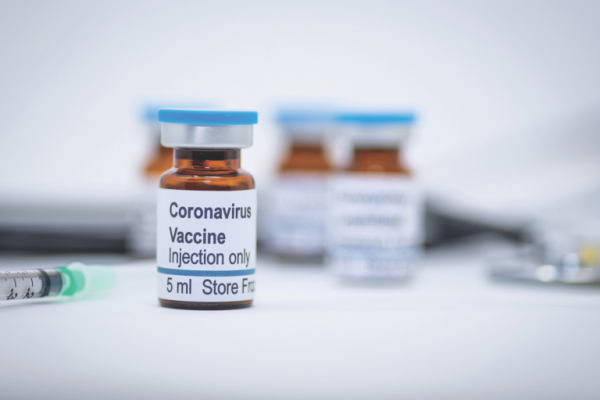
Apparently, that mean old Putin is stealing our magic vaccine to fight the “deadly virus”.
The Guardian, and all the other predictable voices, are currently reporting that Russian “state sponsored hackers” have been attempting to steal “medical secrets” from British pharmaceutical researchers.
At this stage they offer no substantiation, but it does serve as good teaching exercise in the techniques of modern propagandists.
First the lack of evidence. Observe the Guardian article, note the complete absence of sources or references. There’s not a link in sight. There’s no content there beyond the parroted words of UK government officials, whose honesty and/or competence is never interrogated.
Second, the lies by omission. They don’t mention, for example, the Vault 7 revelations from Wikileaks that the CIA/Pentagon have developed technology to make one of their own cyber-attacks appear to come from anywhere in the world, Russia obviously included. This is clearly vital information.
Third, the multitasking. When you splash a huge red lie on your front pages, it’s always best to make it serve several agendas at once. In fact, an unsupported statement which serves multiple state-backed narratives at the same time is one of the telltale signs of propaganda.
With this one completely unverified claim, the Guardian – or rather the people who tell the Guardian what to say – back up three narratives:
The further demonisation of an “enemy”. Russia is portrayed as pursuing “selfish interests with reckless behaviour”, whilst we (and our allies) are “getting on with the hard work of finding a vaccine and protecting global health.”
Promoting the vaccine. The vaccine is coming. It will likely be mandatory, it will certainly have been insufficiently tested, if tested at all. They need some pro-vaccine advertising, and nothing sells better than “our vaccine is so good, people are trying to steal it”.
Most importantly – Enhancing the idea that Sars-Cov-2 is a unique global threat which puts us all in danger. The unspoken assumption is that Russia needs to steal our research because the virus is so dangerous we all need to be afraid of it…despite it being harmless to the vast majority of people.
Nothing shows just how much the Guardian has become the voice of the Deep State more than its coverage of anything Russia-related. And nothing serves as a better exemplar of how modern propaganda works.
The US economy at mid-year 2020 is at a critical juncture. What happens in the next three months will likely determine whether the current Great Recession 2.0 continues to follow a W-shape trajectory—or drifts over an economic precipice into an economic depression. With prompt and sufficient fiscal stimulus targeting US households, minimal political instability before the November 2020 elections, and no financial instability event, it may be contained. No worse than a prolonged W-shape recovery will occur. But should the fiscal stimulus be minimal (and poorly composed), should political instability grow significantly worse, and a major financial instability event erupt in the US (or globally), then it is highly likely a descent to a bona fide economic depression will occur.
The prognosis for a swift economic recovery is not all that positive. Multiple forces are at work that strongly suggest the early summer economic ‘rebound’ will prove temporary and that a further decline in jobs, consumption, investment, and the economy is on the horizon.
A Second Wave of Permanent Job Losses
Through mid-June to mid-July, the COVID-19 infection rate, hospitalization rate, and soon the death rate, have all begun to escalate once again. Daily infections consistently now exceed 60,000 cases—i.e. more than twice that of the earlier worst month of April 2020. Consequently, states are beginning to order a return to more sheltering in place and shutdowns of business, especially retail, travel, and entertainment services. The direction of events cannot but hamper any initial rebound of the economy, let alone generate a sustained economic recovery.
Exacerbating conditions, a second wave of job layoffs is clearly now emerging—and not just due to economic shutdowns related to the resurging virus.
This presentation PROOVES WITHOUT DOUBT that America is in for a major fight that will put you and your family in the firing line, literally… So make sure you watch this presentation while it’s still online…
Reopening of the US economy in June resulted in 4.8 million jobs restored for that month, according to the US Labor Department. That number included, however, no fewer than 3 million service jobs in restaurants, hospitality, and retail establishments. These are the occupations that are now being impacted again with layoffs, as States retrench once more due to the virus resurgence underway. But there’s a new development as well: A second jobless wave is now emerging in addition to the renewed layoffs due to shutdowns not only of the resumed service and retail occupations, but reflecting longer term and even permanent job layoffs across various industries.
Household consumption patterns have changed fundamentally and permanently in a number of ways due to both the virus effect and the depth of the current recession. Many consumers will not be returning soon to travel, to shopping at malls, to restaurant services, to mass entertainment or to sport events at the levels they had, pre-virus.
In response, large corporations in these sectors have begun to announce job layoffs by the thousands. Two large US airlines—United and American—have announced their intention to lay off 36,000 and 20,000, respectively, including flight attendants, ground crews, and even pilots. Boeing has announced a cut of 16,000, and Uber in just its latest announcement, a cut of 3,000. Big box retail companies like JCPenneys, Nieman Marcus, Lord & Taylor, and others are closing hundreds of stores with a similar impact on what were formerly thousands of permanent jobs. Oil & gas fracking companies like Cheasepeake and 200 other frackers now defaulting on their debt are laying off tens of thousands more. Trucking companies like YRC Worldwide, the Hertz car rental company, clothing & apparel sellers like Brooks Brothers, small-medium independent restaurant and hotel chains like Krystal, Craftworks—all are implementing, or announcing permanent layoffs by the thousands as well.
Reflecting this, since mid-June new unemployment benefit claims have continued to rise weekly at a rate of more than 2 million—with about 1.3 million receiving regular state unemployment benefits plus another 1 million independent contractors, gig workers, self-employed receiving the special federal government unemployment benefits. The latter group’s numbers are rising rapidly since mid-June.
As of mid-July no fewer than 33 million are receiving unemployment benefits, with another 6 million having dropped out of the labor force altogether and no longer even being counted as unemployed. Unemployment therefore remains at what will likely be a chronically high number, at around 40 million—with about 25% of the US labor force unemployed—as renewed service-retail sector layoffs, plus new permanent layoffs, both loom on the horizon.
Added to the growing problem of renewed service layoffs and the 2nd wave of permanent layoffs in the private sector is the growing likelihood of significant layoffs in the public sector, as states and cities facing massive budget deficits are forced to lay off several millions of the roughly 22 million public sector workers in the US. This potential public employee layoff wave will accelerate and occur sooner, should Congress in summer 2020 fail to bail out the states and cities whose budgets have been severely impacted by the collapse of tax revenues while facing escalating costs of dealing with the health crisis. Estimates as of last May are that the states and cities will need $969 billion in bailout funding this summer—roughly two-thirds for the states and the rest for cities and local governments.
The resurgence of layoffs from all these sources is a sure indicator that the economy’s rebound—let alone recovery—is in trouble. Rising joblessness means less wage income for households and therefore less consumption and, given that consumption is 70% of the economy, a slowing of the rebound and recovery. Problems in consumption in turn mean business investment suffers as well, further slowing the economy and recovery. Exacerbating the decline in personal income devoted to consumption due to unemployment is the evidence that even those fortunate enough to return to work after spring 2020’s economic shutdown are doing so increasingly as part time employed—which means less wage income for consumption compared to the pre-COVID period before March 2020.
Overlaid on these negative prospects for employment, consumption, business investment is the intensification of economic crisis-related problems.
Rent Evictions, Child Care & Education Chaos
There is an imminent crisis in rents affecting tens of millions. At the peak in April, it is estimated that roughly one-third of the 110 million renters in the US economy had stopped making rent payments due to the COVID-related shutdowns of the economy. The CARES ACT, passed in March, provided forbearance on rental payments, although perhaps as many as 20 states failed to enforce it. That forbearance directive expires at the end of July, with as many as 23 million rent evictions projected in coming months. A major housing crisis is thus brewing, as well as the second wave of job layoffs.
A combined education-child care crisis is about to occur almost simultaneously. The K-12 public education system is approaching chaos, as school districts plan to introduce remote learning on a major scale in order to deal with the renewed COVID-19 infection and hospitalization wave. The heart of the crisis is that tens of millions of US working class families dependent on two paychecks to survive economically cannot afford to accommodate school district practices for remote learning—especially for young children in the K-6 grade levels. Even if such families could afford to pay for expensive child care, the current US child care system is far from being able to accommodate them. Many minority and working class households, moreover, lack the computers and networking equipment, or even the requisite skills to set it up, to enable their children participate in remote learning.
The Lost Ways is a far–reaching book with chapters ranging from simple things like making tasty bark-bread-like people did when there was no food-to building a traditional backyard smokehouse… and many, many, many more!
Several forces are driving the shift to remote learning: school district fears of liability actions by parents if children become ill, the significant cost of ensuring disinfected classrooms, the lack of classroom space to allow distance learning on site, and the growing concern of teachers regarding their own exposure to infection. At least 1.5 million public school teachers are over age 50 and have health conditions that put them at greater risk of serious infection, should they attend closed-in classroom environments.
The child care plus K-12 education crisis will likely erupt within months on a major scale. Chaos in education is around the corner.
This fall, higher education—colleges and universities—will also experience chaos of their own kind. While distance learning will not be as serious an implementation problem as it will in K-12 levels, costs from the pandemic will force many smaller, private colleges into bankruptcy, consolidation or closure. Public colleges’ funding problems will require them to sharply reduce available services. Remote education will create a two-tier system of higher education—educational services delivered remotely and those of a more traditional nature on campus; or a hybrid of both.
However, demand for higher education services will likely decline sharply in the short term, during which higher education will experience a devastating decrease in tuition and other sources of college revenues. Some estimates show a third of freshmen plan to take what’s called a ‘gap year’: i.e. accept entrance but not attend for a year. That’s a massive revenue loss. Some estimates foresee a 15%-30% decline in new student attendance, with another 5%-10% decline in transfer students, and a similar decline of 5%-10% in continuing students. In addition, the attendance by international students, the ‘cash cow’ for most colleges, will also decline sharply due to the Trump administration’s new rules.
Still other developments will sharply reduce college revenues. Students forced to attend classes via remote learning will demand lower tuition. One can expect a wave of legal suits as students seek to ‘claw back’ full tuition expenses. Other secondary sources of college revenues—from fees, on-campus room and board, endowment earnings and gifts, and sports revenues—also spell a looming revenue crunch.
A wave of college consolidations and closures is inevitable. And with student loan debt at $1.6 trillion it is unlikely that the federal government will introduce new aid through that channel. Nor will States increase their subsidization of public colleges, given the severe state budget deficits on the horizon.
In short, the economic crisis is about to assume more socio-economic dimensions and character: rent, child-care, education chaos will soon overlay the continuing unemployment problem and worsening recession. Social and political discontent, frustration, and anxiety are almost certainly to rise in turn in coming months as a consequence.
Global Recession & Sovereign Debt Defaults
The weakness of the global economy is yet another factor likely to ensure the US economy’s W-shape trajectory. As noted previously, with 90% of other countries in recession, global demand for US exports will remain weak or declining. In addition, global supply chains have also been severely disrupted by the health crisis, or even broken, and will not be restored soon. The global economy is suffering from deep problems of both demand and supply. This too is a unique historical event. Never before have demand and supply problems occurred congruently. Together, they increase the potential for a global depression.
Commodity producing economies have been hard hit, especially oil and metal producing countries. Many were in a recession well before the COVID health crisis. Global trade in general had stagnated, registering little to no growth in 2019, for the first time since modern records were kept. Many countries had over-extended their borrowing, expanding their sovereign debt loads during the last decade. This was money capital borrowed largely from western banks and capital markets (i.e. shadow banks).
Now, with global trade flat and declining, and prices for their export goods deflating in price as well, these debt-extended countries cannot earn sufficient income from exports in order to pay the principal and interest on their debt. As a result, several countries in the worst shape may soon default on their debt payment to western banks, hedge funds, private equity firms, and so on. Debt defaults potentially mean the same western financial institutions that loaned the funds now experience financial crises in turn. In such a manner, financial instability events abroad are often transmitted to the domestic US economy through its banking system. It would not be the first time, moreover, that foreign bank crashes have spilled over the US and rest of the world economy and in the process significantly exacerbated a recession already underway.
Theoretically, countries experiencing severe sovereign debt crises could borrow from the International Monetary Fund. However, the IMF has nowhere near the funds to accommodate multiple large sovereign defaults that occur simultaneously. Nor is it likely that the US and Europe will increase the IMF’s funding to enable it to do so. Once it becomes clear the IMF cannot handle a crisis of such potential dimensions, the global capitalist economy will slip even further toward global depression.
The further deterioration now already occurring in economic relations between the US and China may also potentially impact the Great Recession in the US, and ensure its continued W-Shape recovery. Trump’s trade pact with China signed December 2019 has proven thus far a colossal failure. The president declared at the deal’s signing it would mean $150 billion in China purchases of US goods in 2020—especially farm products, oil & gas, and manufactured goods. At mid-year, China has purchased only $5 billion of the agreed $40 billion in farm products and only $14 billion of $85 billion in US manufactured goods. Trump’s promised $150 billion was never agreed to by China, even before the Covid pandemic struck the US economy in 2020. China never agreed to a dollar value of purchases of US exports, but announced it would purchase based on conditions in 2020-21. Trump’s $150 billion was typical Trump misrepresentation of a deal never made. At best China would purchase perhaps $40 billion in agricultural goods—i.e. about the level of it purchases before Trump launched a trade war with it in March 2018. Failure to deliver his exaggerated public promise in 2020 Trump turned on on China and embraced further his anti-China hard line advisors on trade and other matters. The former ‘trade war’ with China will likely transform now, in the wake of Covid, into a broader economic war with China. Furthermore, the deterioration of relations with China, set in motion by the current recession and the collapse of global trade, shows signs of spilling over to other political and even military affairs.
Permanent Industry Transformations
The COVID health crisis is accelerating the transformation of entire industries and sectors of the economy, US and global. As noted above, household consumption patterns are already changing fundamentally and will continue as changed even after the health crisis passes. Entire industries will shrink as a consequence. Company consolidations and downsizing are inevitable in airlines, cruise lines, and even public land transport. So too will companies fail, consolidate and restructure in the hospitality, leisure and hotel industries, in mall-based retail establishments, inside entertainment (movies, casinos, etc.) to name but the obvious. Sports and public entertainment companies are struggling to redefine their business models and how they bring their ‘product’ to the public for consumption. Even education—public and private—is undergoing a radical shift. Not so obvious is similar fundamental change in oil & energy industries, and later as well in manufacturing as supply chains are slowly returned to the US economy.
Not only will these changes significantly (and often negatively) impact employment levels and wage incomes, but business practices as well. Already businesses are instituting new cost cutting practices under the pressure of the health crisis and shutdowns. These practices will become permanent. And since much of the practices and cost cutting will focus on workers’ pay and benefits, more of what economists call ‘long term structural unemployment’ will result—in addition to the current ‘cyclical unemployment’ occurring due to the current recession.
An historic consequence of the current Great Recession precipitated by the COVID-19 health crisis is the accelerating introduction underway of what some call the Artificial Intelligence revolution. AI is about cost-cutting. It’s about new data accumulation, data processing and statistical evaluation, to allow software machines to make decisions previously made by human beings. AI will eliminate millions of low level decision-making by workers in both services and manufacturing. A 2017 report by the business consulting firm, McKinsey, predicted no less than 30% of all workers’ occupations will be severely impacted by AI by the end of the present decade. 30% of jobs will either disappear or have their hours reduced significantly. That means less wage income and less consumption still.
The important linkage to the current Great Recession 2.0 is that the introduction of AI by businesses will now speed up. What McKinsey formerly predicted for the late 2020s decade will now take place by mid-decade. The economic consequences for the next generation of US workers, the late Millennials and the GenZers will be serious, to say the least. After decades of the permeation of low pay, low benefits ‘contingent’ part time and temp jobs since the 1990s, after the impact of the 2008-09 crash and aftermath on employment, after the acceleration of ‘gig’ jobs with the Uberization of the capitalist economy since 2010, and after the even more serious negative economic effects of the current Great Recession 2.0, the tens of millions of US workers entering the labor force today and in coming years will have to face the transformation of another 30% of all occupations. The future does not portend very well for the 70 million millennials and GenZers. US neoliberal economic policies and the Great Recession 2.0 is accelerating the long term structural unemployment crisis of both the US and the global capitalist economy.
Return of Fiscal Austerity
The US federal budget deficit under Trump averaged more than a trillion dollars annually during his first three years in office. The federal national debt at the end of 2019 was $22.8 trillion. As of July 2020 it has risen to $26.5 trillion—and rising. Earlier projections in March were that it would increase by $3.7 trillion in 2020. That has already been exceeded. So, too, will projections for 2021, or another $2.1 trillion. The deficit and debt will likely rise to more than $4 trillion in this fiscal year and another $3 trillion in 2021. That means the current national debt within 18 months will reach $30 trillion. And that’s not counting the debt level rise for state and local governments, already $3 trillion; nor the debt carried on the US central bank, the Federal Reserve, balance sheet which is scheduled to rise another $3 trillion at minimum.
The point of presenting these statistics is that the US elites, sooner or later, will introduce a major austerity program. It will likely come later in 2021. And it will make little difference whether the administration that time is headed by Democrats or Republicans. It will come and it will target social security, Medicare, Medicaid, Obamacare, education, housing, transport and other social programs.
A The first Great Recession provides a historical precedent. Obama’s recovery program in January 2009 provided for $787 billion in stimulus. But the joint Republican-Democrat austerity agreement introduced in August 2011 took back nearly twice that stimulus, or $1.5 trillion, in 2011-13. That austerity contributed significantly to the W-shape recovery from the 2008-09 economic crash and contraction—i.e. the first Great Recession. With the current deficit surge of $6 trillion to date, likely to increase to $9 to $10 trillion, the US economic elites will no doubt pursue a new austerity regime at some point within the next few years. That austerity will, like its predecessor, ensure at best a W-shape recovery typical of Great Recessions. At worst, it may prove the final event that pushes the US economy into another Great Depression.
Those who deny that the US and global economy have already entered a second Great Recession offer the argument that the 2008-09 crash and recession was caused by the banking and financial crash of 2008-09, and therefore, since there has not yet been a financial crash, the economy at present is not in another Great Recession. But they are wrong.
Great Recessions are always associated with a financial crisis, but that crisis need not precede the deep contraction of the real, non-financial economy. The COVID-19 pandemic has played the role of a financial crash in driving the real economy into a contraction that is both quantitatively and qualitatively worse than a ‘normal’ recession. Furthermore, a subsequent banking system-financial crash is not impossible in the coming months, although not yet likely in 2020.
The preconditions for a financial crisis are in development. It won’t be precipitated by a residential mortgage crisis, as in 2007-08. But there are several potential candidates for precipitating a financial crash once again. Here are just a few:
The commercial property sector in the US is in deep trouble. Commercial property includes malls, office buildings, hotels, resorts, factories, and multiple tenant apartment complexes. Many incurred deep debt obligations as they expanded after 2010 or just kept operating by accruing more high cost debt when they were unprofitable. Today they are unable to continue servicing (i.e. paying principal and interest) on their excessive debt load. Many have begun the process of default and chapter 11 bankruptcy reorganization. Banks and investors hold much of the commercial property debt that will never be repaid. Excess derivatives (credit default swaps) have been written on the debt. A debt crisis and wave of defaults and bankruptcies in 2020-21 in the commercial property sector could easily precipitate a subprime mortgage-like debt crisis as occurred in 2008-09. And derivatives obligations could transmit the crisis throughout the banking system—as it did in 2009. Regional and small community banks in the US are particularly vulnerable.
The oil and gas fracking industry, where junk bond and leverage loan debt had already risen to unstable levels by the advent of the COVID crisis. The collapse of world oil and gas prices—which began before the COVID-19 impact and continues—will render drillers and others unable to generate the income with which to service their debt. Already more than 200 companies in this sector are in default and bankruptcy proceedings. Again, regional banks that financed much of the expansion of fracking in Texas, the Dakotas, and Pennsylvania will be impacted severely by the defaults. Their financial instability could easily spread to other sectors of banking and finance in the US.
State and local governments, should Congress fail to appropriate sufficient bailout funding in its next round of fiscal spending in July 2020. State and local governments are capable of default and bankruptcy—unlike the Federal government, which is not. The US has a long history of state defaults associated with the onset of Great Depressions. This time around, state financial instability will quickly spill over to public pension funds, and from public to private pensions, and from there to the municipal bond markets with which state and local governments raise revenue by borrowing to fund deficits.
Global sovereign debt markets, as previously noted. Defaults on massive debt accumulated since 2010 by many countries could result in serious contagion effects on the private banking systems of the advanced economies, including the US, Europe, and Japan. Should the IMF fail to contain a chain of sovereign debt crises that could follow in the wake of the current Great Recession, a chain reaction of defaults across emerging market economies in particular has the potential to precipitate a global financial crisis.
History shows that financial crises often originate from unsuspected corners of the economy. The above candidates are the ‘known unknowns’. There may also lurk in the bowels of the capitalist global financial system still more ‘unknown unknowns’—i.e. what are sometimes called ‘black swan’ events.
Political Instability
The US and other countries are on new ground in terms of potential political instability. The piecemeal curtailment of democratic and civil rights has been progressing at least since the mid- 1990s. In the 21st century it has been accelerating, both in the US and across the globe. Recent years have seen a growing public confrontation between contending wings of the capitalist elites and their political operatives. Institutions of even limited capitalist democracy are under attack and atrophying. And now political instability is growing as well at both the institutional and grass roots levels. One should not underestimate the potential for even more intense political confrontation among elites, or between segments of the US population itself, from having a negative impact on the current economic crisis and 2nd Great Recession. A Trump ‘October Surprise’ or a November 2020 constitutional crisis are no longer beyond the realm of the possible, but even likely.
The expectations of both households and business may serve as transmission mechanisms propagating political instability into more economic and financial instability. Political instability has the effect of freezing up business investment and therefore employment recovery. It has the further effect of causing households to hoard what income they have and raise the savings rate—at the expense of consumption. It also leads to government inaction on the policy necessary to provide stimulus for recovery.
On a global front, political instability may even assume a global dimension. History in general, and US history in particular, reveals that US presidents seek to divert public attention from domestic economic and social problems by provoking foreign wars. Targets for US attack, in the short term, are Iran and Venezuela—especially the latter, which is more susceptible to US military action. But tomorrow, in 2021 and after, it could well be Russia (Ukraine or Baltics US provocations), North Korea (a US attack on its nuclear facilities) or China (a US naval confrontation in the South China sea)—irrespective of the unlikely success of such ventures.
Like another financial-banking crash, a major political instability event—domestic or foreign—could easily send an already weak US economy struggling in the midst of a Great Recession into the abyss of the first Great Depression of the 21st century.
The physical book has 300 pages, with 3 colored pictures for every plant and for every medicine.It was written by Claude Davis, whose grandfather was one of the greatest healers in America. Claude took his grandfather’s lifelong plant journal, which he used to treat thousands of people, and adapted it into this book.
For those wondering what will come after the Covid19 pandemic has successfully all but shut down the entire world economy, spreading the worst depression since the 1930s, the leaders of the premier globalization NGO, Davos World Economic Forum, have just unveiled the outlines of what we can expect next. These people have decided to use this crisis as an opportunity.
On June 3 via their website, the Davos World Economic Forum (WEF) unveiled the outlines of their upcoming January 2021 forum. They call it “The Great Reset.” It entails taking advantage of the staggering impact of the coronavirus to advance a very specific agenda. Notably enough, that agenda dovetails perfectly with another specific agenda, namely the 2015 UN Agenda 2030. The irony of the world’s leading big business forum, the one that has advanced the corporate globalization agenda since the 1990s, now embracing what they call sustainable development ,is huge. That gives us a hint that this agenda is not quite about what WEF and partners claim.
The Great Reset
On June 3 WEF chairman Klaus Schwab released a video announcing the annual theme for 2021, The Great Reset. It seems to be nothing less than promoting a global agenda of restructuring the world economy along very specific lines, not surprisingly much like that advocated by the IPCC, by Greta from Sweden and her corporate friends such as Al Gore or Blackwater’s Larry Fink.
Interesting is that WEF spokespeople frame the “reset” of the world economy in the context of the coronavirus and the ensuing collapse of the world industrial economy. The WEF website states, “There are many reasons to pursue a Great Reset, but the most urgent is COVID-19.” So the Great Reset of the global economy flows from covid19 and the “opportunity” it presents.
In announcing the 2021 theme, WEF founder Schwab then said, cleverly shifting the agenda:
“We only have one planet and we know that climate change could be the next global disaster with even more dramatic consequences for humankind.”
The implication is that climate change is the underlying reason for the coronavirus pandemic catastrophe.
To underscore their green “sustainable” agenda, WEF then has an appearance by the would-be King of England, Prince Charles. Referring to the global covid19 catastrophe, the Prince of Wales says,
“If there is one critical lesson to learn from this crisis, it is that we need to put nature at the heart of how we operate. We simply can’t waste more time.”
On board with Schwab and the Prince is the Secretary-General of the UN, Antonio Guterres. He states,
“We must build more equal, inclusive and sustainable economies and societies that are more resilient in the face of pandemics, climate change and the many other global changes we face.”
Note his talk of “sustainable economies and societies”—more on that later. The new head of the IMF, Kristalina Georgieva, also endorsed The Great Reset. Other WEF resetters included Ma Jun, the chairman of the Green Finance Committee at the China Society for Finance and Banking and a member of the Monetary Policy Committee of the People’s Bank of China; Bernard Looney, CEO of BP; Ajay Banga, CEO of Mastercard; Bradford Smith, president of Microsoft.
Make no mistake, the Great Reset is no spur-of-the moment idea of Schwab and friends. The WEF website states, “COVID-19 lockdowns may be gradually easing, but anxiety about the world’s social and economic prospects is only intensifying. There is good reason to worry: a sharp economic downturn has already begun, and we could be facing the worst depression since the 1930s. But, while this outcome is likely, it is not unavoidable.” The WEF sponsors have big plans:”…the world must act jointly and swiftly to revamp all aspects of our societies and economies, from education to social contracts and working conditions. Every country, from the United States to China, must participate, and every industry, from oil and gas to tech, must be transformed. In short, we need a “Great Reset” of capitalism.” This is big stuff.
Radical changes
Schwab reveals more of the coming agenda: “…one silver lining of the pandemic is that it has shown how quickly we can make radical changes to our lifestyles. Almost instantly, the crisis forced businesses and individuals to abandon practices long claimed to be essential, from frequent air travel to working in an office.” These are supposed to be silver linings?
He suggests that those radical changes be extended: “The Great Reset agenda would have three main components. The first would steer the market toward fairer outcomes. To this end, governments should improve coordination… and create the conditions for a “stakeholder economy…” It would include “changes to wealth taxes, the withdrawal of fossil-fuel subsidies, and new rules governing intellectual property, trade, and competition.”
The second component of the Great Reset agenda would ensure that, “investments advance shared goals, such as equality and sustainability.” Here the WEF head states that the recent huge economic stimulus budgets from the EU, USA, China and elsewhere be used to create a new economy, “more resilient, equitable, and sustainable in the long run. This means, for example, building ‘green’ urban infrastructure and creating incentives for industries to improve their track record on environmental, social, and governance (ESG) metrics.”
Finally the third leg of this Great Reset will be implementing one of Schwab’s pet projects, the Fourth Industrial Revolution: “The third and final priority of a Great Reset agenda is to harness the innovations of the Fourth Industrial Revolution to support the public good, especially by addressing health and social challenges. During the COVID-19 crisis, companies, universities, and others have joined forces to develop diagnostics, therapeutics, and possible vaccines; establish testing centers; create mechanisms for tracing infections; and deliver telemedicine. Imagine what could be possible if similar concerted efforts were made in every sector.” The Fourth Industrial Revolution includes gene-editing biotech, 5G telecommunications, Artificial Intelligence and the like.
UN Agenda 2030 and the Great Reset
If we compare the details of the 2015 UN Agenda 2030 with the WEF Great Reset we find both dovetail very neatly. The theme of Agenda2030 is a “sustainable world” which is defined as one with income equality, gender equality, vaccines for all under the WHO and the Coalition for Epidemic Preparedness Innovations (CEPI) which was launched in 2017 by the WEF along with the Bill & Melinda Gates Foundation.
In 2015 the UN issued a document, “Transforming our world: the 2030 Agenda for Sustainable Development.” The Obama Administration never submitted it to the Senate for ratification knowing it would fail. Yet it is being advanced globally. It includes 17 Sustainable Development Goals, extending an earlier Agenda21. The 17 include “to end poverty and hunger, in all their forms and dimensions… to protect the planet from degradation, including through sustainable consumption and production, sustainably managing its natural resources and taking urgent action on climate change…“ It calls for sustainable economic growth, sustainable agriculture (GMO), sustainable and modern energy (wind, solar), sustainable cities, sustainable industrialization… The word sustainable is the key word. If we dig deeper it is clear it is code-word for a reorganization of world wealth via means such as punitive carbon taxes that will dramatically reduce air and vehicle travel. The less-developed world will not rise to the developed, rather the other way, the advanced civilizations must go down in their living standards to become “sustainable.”
Maurice Strong
To understand the double-speak use of sustainable, we need to go back to Maurice Strong, a billionaire Canadian oilman and close friend of David Rockefeller, the man who played a central role back in the 1970s for the idea that man-made CO2 emissions were making the world unsustainable. Strong created the UN Environment Program, and in 1988, the UN Intergovernmental Panel for Climate Change (IPCC) to exclusively study manmade CO2.
In 1992 Strong stated,
“Isn’t the only hope for the planet that the industrialized civilizations collapse? Isn’t it our responsibility to bring that about?” At the Rio Earth Summit Strong that same year he added, “Current lifestyles and consumption patterns of the affluent middle class – involving high meat intake, use of fossil fuels, appliances, air-conditioning, and suburban housing – are not sustainable.”
The decision to demonize CO2, one of the most essential compounds to sustain all life, human and plant, is not random. As Prof. Richard Lindzen an MIT atmospheric physicist puts it,
“CO2 for different people has different attractions. After all, what is it? – it’s not a pollutant, it’s a product of every living creature’s breathing, it’s the product of all plant respiration, it is essential for plant life and photosynthesis, it’s a product of all industrial burning, it’s a product of driving – I mean, if you ever wanted a leverage point to control everything from exhalation to driving, this would be a dream. So it has a kind of fundamental attractiveness to bureaucratic mentality.”
Lest we forget, the curiously well-timed New York pandemic exercise, Event 201 on October 18, 2019 was co-sponsored by the World Economic Forum and the Gates Foundation. It was based on the idea that, ”it is only a matter of time before one of these epidemics becomes global—a pandemic with potentially catastrophic consequences. A severe pandemic, which becomes “Event 201,” would require reliable cooperation among several industries, national governments, and key international institutions.” The Event201 Scenario posited, “outbreak of a novel zoonotic coronavirus transmitted from bats to pigs to people that eventually becomes efficiently transmissible from person to person, leading to a severe pandemic. The pathogen and the disease it causes are modeled largely on SARS, but it is more transmissible in the community setting by people with mild symptoms.”
The declaration by the World Economic Forum to make a Great Reset is to all indications a thinly-veiled attempt to advance the Agenda 2030 “sustainable” dystopian model, a global “Green New Deal” in the wake of the covid19 pandemic measures. Their close ties with Gates Foundation projects, with the WHO, and with the UN suggest we may soon face a far more sinister world after the covid19 pandemic fades.
We must make clear that it is imperialism that degrades and destroys the earth, makes water a commodity, food a luxury, education an impossibility, and health care a distant dream.
The following is excerpted from a presentation by Ajamu Baraka to a national webinar Electoral School of the Black Is Back Coalition for Social Justice, Peace and Reparations, June 13 and 14.
***
The Context of Struggle:
The great African revolutionary, Amilcar Cabral, reminded us that without revolutionary theory there can be no revolution.
His reminder was not a call for abstract theorizing, quite the contrary. What he meant was that one cannot advance in practice unless that practice is guided by the most advanced understanding of the material and ideological conditions that revolutionary forces face.
Over the next two days we will ground ourselves in our particular realities as they relate to our strategic and tactical engagement with bourgeois electoral system in the United States.
Let’s begin:
The ongoing and current capitalist crisis has created the most serious crisis of legitimacy since the collapse of the capitalist economy during the years referred to as the Great Depression.
The economic collapse comes on the heels of the deep crisis of the economy that occurred in 2007-8. With the economic instability and the increasing economic competition among capitalist states, divisions have emerged among the nations that those of us in BAP refer to as the U.S./EU/NATO Axis of Domination.
The U.S. has responded by moving toward a more confrontational posture, not only with its allies in Europe. It has also elevated China and Russia as national security threats.
Domestically, the African working class never recovered from the collapse of 2007-8. The continued restructuring of the U.S. economy to a low-wage economy has resulted in the African working class being relegated to the lower rungs of the labor force joining undocumented migrants, immigrants, and other colonized workers.
We are now seeing with the economy the genocidal implications of economic conditions, in which young Black workers have more value as human generators of profit locked up in prisons than as participants in the economy as low-wage workers. This reality is one of the factors driving the obscene phenomenon of Black and Brown mass incarceration in the largest prison system on the planet.
Astronomical youth unemployment, millions of Africans without health care, poisoned environments, and crumbling schools reflect the objective conditions that, with COVID-19, are ravaging the Black communities.
This is the colonial/capitalist system in its neoliberal stage. And that was before the coronavirus pandemic!
The Pandemic pulled the ideological curtain from the system and exposed the brutal realities of a rapacious system of greed, human exploitation and degradation, social insecurity, corruption, and the normalization of coercive state violence.
Bipartisan support for neoliberal capitalist policies over last four decades revealed the devastating impacts of neoliberal policies – the closing of public healthcare facilities, including hospitals as giant for-profit hospital chains consolidated; millions, disproportionately Africans, living precarious lives at the bottom of the labor markets and as gig workers with no benefits, no sick leave, no vacation, no security when ordered to shutter in place by capitalist state because the privatization of healthcare resulted in a healthcare system unable to respond to a national healthcare crisis.
Hundreds of Africans are dying unnecessarily from the virus because of conditions of colonial oppression, which amounts to state-sanctioned murder!
So, the murders of Floyd, Breonna Taylor, Ahmaud Aubrey and the phenomenon of vicious killer cops are just the tip of the iceberg
But because there was no video of grandma, alone and shoveled into a corner of the hospital taking her last breath on a ventilator, along with all of the other thousands of Africans who are unnecessarily dying from COVID-19, it took the video of George Floyd to bring the people out of their houses and into the streets.
This is context for the current Black is Back election school as we approach the next round of bourgeois elections. This context informs the ideological, political, and economic issues of the bourgeois electoral arena, and how we see and approach the electoral system.
The Context Determines the Strategy:
Let me share a few points that I believe must inform how we see and engage the electoral arena in a way that develops and advances our forces.
1. There can be no ideological confusion – we must be clear in language that cannot be co-opted or commodified by the state or its associated institutions like liberal funders. So, we must state in unequivocal language that it is the Western colonial/capitalist imperialist system, now led by the U.S., that is responsible for the billions of human beings living in poverty. It is imperialism that degrades and destroys the earth, that makes water a commodity, food a luxury, education an impossibility, and health care a distant dream. It is the rapacious greed and absolute disregard for human life by imperialism that drives the arms trade, turns human incarceration into a profitable enterprise, and transforms millions into migrants and refugees because of war and economic plunder. This parasitic imperialist domination would be impossible without imperialism’s core instrument of enforcement and control – state violence. Beginning with the European invasion of the Americas’ in 1492 to this very moment, previously unimaginable brutality and systematic violence was used to enslave, commit genocide, steal lands, despoil cultures and assault the earth, all in the service of what became the Pan-European colonial/capitalist white supremacist patriarchal project. When you start from that foundation, not only are you clear but everyone that you engage with will be clear where you stand.
2. The struggle is for power not reform. We make demands against the state and the system, but it is clear that those demands are in context of a program for winning power. Demands are strategic – participation in electoral system must be seen as an aspect of the process of building dual and contending power. The BIB 19-point program represents a useful roadmap for building and shifting power to the people.
3. The entry point for participating in electoral process must be through organization. Reject candidate centered politics. Engagement with electoral system by progressive forces must be informed by a collective power-building strategy that is part of a broader strategy for building independent popular power. Individualistic, candidate-centered politics lacks accountability and is inherently corruptible.
Issue selection – focus on issues that if won will reflect a significant shift in power to the people. Defund the police – questionable, but if linked to community control of the police, stopping Israeli training of police, cutting the military budget and transferring money to the people; and electoral proportional representation represent demands that can’t be easily co-opted by the state.
4. Focus on local races – county commissions, city councils, school board, mayors. The emphasis on the local is connected to what I see as the inevitable disintegration of the U.S. state. As a settler colonial state, the U.S. is, and has always been, a fragile and inauthentic state. That is precisely why a civil war was fought just 70 years after its inception as a constitutional republic in 1791.
We remember the importance of having some degree of local control with the Katrina crisis, where the surrounding white municipalities used their local power to prevent Black people, escaping from the hurricane, to enter their communities. And we watched how regional coalitions were formed during COVID-19 crisis as the Federal Government failed to provide national leadership.
As national and state power become increasingly unable to hold on to a centralized power and there is generalized descent into chaos, having some degree of local control of the state apparatus will be especially important.
In closing.
We are facing some difficult times, but we have faced difficult times before. As we ground ourselves over these next two days during our electoral school, we acknowledge that we are an African people and we are at war! We did not ask for this war – and it has been a one-sided war so far – but we do not intent for that situation to last that long because we do not intend to lose. We understand that we must win this war – for ourselves and for global humanity!
Beans and rice, a significant staple in a prepper’s pantry…or, should be. And, if the 2020 pandemic has shown us anything, it’s that we can never be too prepared for shortages of any kind. Prepping or pandemic aside though, I just happen to love having beans and rice in the house. There are so many things you can do with them.
In addition to the many recipes you can use beans and rice in, there’s my dog. Every once in a while, he needs to go on a very strict diet for his digestive system, and that includes mostly rice. Unfortunately, he hit one of those times in the last couple weeks, and sure enough rice was the latest shortage in the stores in my area.
So in this article, I will be letting you know a very simple way to dry can rice and beans to last you for at least 20 years on the shelf. And as soon as the shortage is over, I will be doing a much larger batch than I currently am able to do for this demonstration and article.
Sure, you could store the beans and rice in plastic storage bins. But that won’t prevent bugs and larvae from getting in eventually. In fact, when you open the bags and boxes of beans and rice before dry canning, inspect them thoroughly. However, this process will kill off unseen bugs or larvae that you might miss.
The Lost Ways is a far–reaching book with chapters ranging from simple things like making tasty bark-bread-like people did when there was no food-to building a traditional backyard smokehouse… and many, many, many more!
Supplies for Dry Canning Beans and Rice
Not only is the process quite simple, but the supply list is quite short. Here is what you will need or want:
Dry Beans – any type of dry beans, or a variety
Rice – any type of rice will work
Canning Jars and lids – whatever size you prefer
Funnel – not necessary, but might make it easier
Oven.
I need instant white rice for my dog, so that’s what we typically purchase. But it could be long grain, brown, flavored, instant or long cook. It doesn’t matter, any type can be dry canned.
For the beans, I love all beans, but I’m using pinto beans for this demonstration. I will also do this with black beans, and split peas in the future, because I use both quite often. You could also do some jars of mixed beans for bean soups.
It’s also good to know too, that both rice and beans can be purchased in bulk. So, if you want dozens of jars of each, no problem. Just know that if you are in an area similar to mine right now, you might have to wait until the shortages are over, before you can do large batches.
Step 1
Place the jars into a pot with about 1” of water and a splash of vinegar for a steam bath (about 15 minutes), to sterilize them. Let them steam for about 15 minutes, with the cover on the pot.
Step 2
Thoroughly dry the jars by first wiping them with a clean cloth, then placing them in the oven at 220° until they are thoroughly dry (about 30 minutes). Let the jars cool down completely before the next step.
Step 3
Fill the jars with the rice or beans, with about ¾ air space at the top. Make sure that the rice and beans are not wet or moist at all. If there is any moisture, it will start to cook in the next step, which defeats the entire purpose of dry canning. It will also wipe out the main perk of all the work, because it will not result in a good shelf life.
Step 4
Place the jars (without lids) in the oven at 220° for about 60-90 minutes, depending on the size of the jars. The larger the jar, the longer the time.
You can place the lids in a small pan and then place the pan in the oven for the last 15 minutes, which will sterilize them, as well as heat them up for a good seal.
Step 5
Pull the jars out of the oven, one at a time if you have a large batch. Wipe the rim of the jar to make sure you don’t have any debri on it, that could prevent an appropriate seal from taking hold.
Step 6
Tighten the lids securely, and place the jars aside. Wait for the popping to begin! The seals will start to pop, but if they have not popped (center of lid’s dome pops down) then you don’t have a seal. You should start the process again, if they have not sealed after 12 hours.Now that the beans and rice have been dry canned, you can store the unopened jars for at least 20 years. Some people swear that they have had success for up to 30 years.
Other items you could dry can include the following: dry pasta, dry oats, dry flour, dry spices, baking soda, baking powder.
You can even dry-can some baking mixes, as long as they don’t contain any nuts, shortening, oils, or brown sugar.
The physical book has 300 pages, with 3 colored pictures for every plant and for every medicine.It was written by Claude Davis, whose grandfather was one of the greatest healers in America. Claude took his grandfather’s lifelong plant journal, which he used to treat thousands of people, and adapted it into this book.
Most of the time, we think about survival in terms of having a pack filled with equipment and supplies. That’s the ideal way to do it, but you can’t always count on the ideal. There’s just as good a chance that you’ll find yourself stuck in a situation where all you have is a pocket knife and a lighter.
Survival in such a situation is much harder than with a well-filled backpack. Nevertheless, as long as it is possible, then it’s a good idea to know how to survive, using just what you can find around you.
This is where the pine tree comes in handy. While a pine tree can’t do everything for you, it can do a lot. You can use a pine tree for food, medicine, shelter and fuel, covering a lot of your needs. Learning how to use pine trees, as well as other trees and plants you find in the wilderness, could keep you alive.
1. The Pine Tree as Shelter
Pine trees make one of the easiest natural shelters you can find. The branches come out horizontally from the tree, and as the tree grows, the larger, lower branches will bend down from their weight, brushing the ground. The very bottom branches often end up dying, because they don’t get any sunlight.
If you crawl under a large pine tree, you’ll probably find a nice, soft bed of dried pine needles and a bunch of dry, dead branches. Cut those branches out of there, and you can use that space for shelter. If you don’t have enough head space, you can cut off some of the lowest live branches, and then cut the boughs off of them and put the boughs around the edges of the area covered by the branches, making walls for your shelter. A few extra branches from nearby pine trees will make this wall area even better.
The Lost Ways is a far–reaching book with chapters ranging from simple things like making tasty bark-bread-like people did when there was no food-to building a traditional backyard smokehouse… and many, many, many more!
The tree itself will do a good job of shedding rain and snow, keeping most of it off of you. While you will get an occasional drop, it won’t be anywhere near as bad as being outdoors. If there is snow, you can pile some of the snow against the “walls” of your shelter, making it even more windproof.
It is possible to light a fire in this shelter, but you must be careful. Too large a fire will light your shelter up, with you in it. Not a good way to end your night. Be sure to dig down to bare earth, moving the needles aside, wherever you are going to build the fire. If you can, move some rocks to act as a hearth.
2. The Pine Tree for Food
I remember a commercial from years ago, where Euell Gibbons asked the question, “Have you ever eaten a pine tree?” In actuality, there are several parts of a pine tree which you can eat. While it may not supply all of your needs, it can be a big help.
To start with, you can use the needles of many pine trees for making a tea, which is high in vitamin C. Be careful, though, as the pine needles from the Norfold Island Pine and the Ponderosa Pine are poisonous. Be sure to accurately identify the pine trees in the area.
The inner bark of the pine tree is edible, as well. You want to be careful doing this, though, because if you peel the bark off all the way around, you’ll kill the tree. Better to use the inner bark from deadfalls. This inner bark can be eaten raw, boiled, fried or cooked over an open flame. Know any good pine bark recipes?
The story continues below the video
The pine nuts are also edible. You can find them in pine cones — if critters haven’t gotten to them first. To harvest them, start with fresh pine cones that haven’t had time to decompose. If you are in an area with pine trees, there will probably be plenty from which to choose. To get the pine nuts out of the cone, just tap the pine cone on a large, flat rock, rotating the pine cone as you go. The nuts should fall out.
Pine nuts that have holes in them should probably be avoided, as insects have already gotten to them. The others need to be cracked between your teeth and shelled; the nut inside is waxy, high in protein and high in fiber, as well.
Finally, the resin from the pine tree can be eaten. Make sure that it is clean and doesn’t have anything extra stuck in it.
3. Medicine from a Pine Tree
Pine trees produce resin as their own “bandage,” to cover and protect areas that are damaged, whether it is because of a critter damaging the bark or a storm breaking a branch off. You can often find this resin already on the tree, or you can peel off some bark to get it to start forming.
The resin is a natural antiseptic and disinfectant, and has antimicrobial and antifungal properties. As such, it can be applied directly to cuts, abrasions and rashes to protect them and keep germs out. In the case of bleeding, the pine resin works as a bandage to staunch blood flow and protect the wound.
Another good use for pine resin is for extracting splinters. Just dab some pine resin on the splinter, cover it and in a couple of days it will come out on its own.
Other Uses for Pine Trees
Pine resin is useful for a lot of other things, too. In olden times, they used it for waterproofing. Cover your boots or gloves with pine resin to do this. You can also put it on the seams of a tent to waterproof it.
If you need a good glue, pine resin can be used as-is. To improve it, heat it up and mix in ashes from your fire. Once cooled, the glue will harden, but like hot melted glue, will soften whenever it is heated.
If you need a fire starter in wet weather, use pine resin. Of course, the tree will provide fuel, although pine doesn’t provide as much heat per cubic foot as other, denser types of wood. Nevertheless, it is easy to start a fire made with pine wood and it will keep you warm. There are usually plenty of deadfalls or dead branches, so that you don’t need to use green wood.
Finally, you can use pine boughs for bedding, as well as for insulation. Pine boughs make one of the most comfortable mattresses you can find in the wild. If you need an extra layer of insulation to help keep you warm, cut off the tips of the branches and stuff them down inside your coat or pants. You’ll itch a lot, but you’ll be warmer, too.
The physical book has 300 pages, with 3 colored pictures for every plant and for every medicine.It was written by Claude Davis, whose grandfather was one of the greatest healers in America. Claude took his grandfather’s lifelong plant journal, which he used to treat thousands of people, and adapted it into this book.