The Warnings Continue To Go Out: Digital ID Must Be Accepted by U.S. Citizens by 2028—or Risk Exclusion from Society

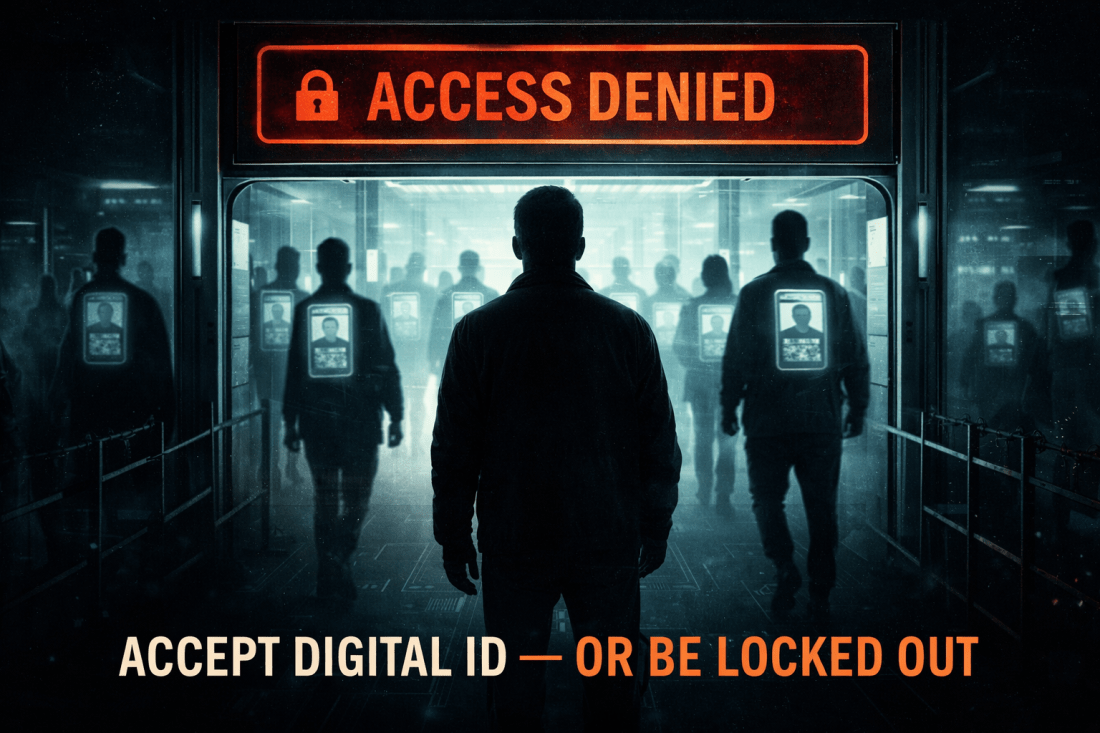
Something is moving beneath the surface of this country. Not loudly, not openly—but steadily, methodically, like a system being assembled piece by piece while most people are distracted, tired, or simply unwilling to see it. The push toward a fully controlled, cashless society is no longer theoretical. It is being built now, in real time, by powerful forces both inside and outside the government—and the warning has already been spoken: accept Digital ID by 2028, or risk being excluded from society itself.

That is not a suggestion. That is not convenience. That is a line being drawn.

The threat is growing alongside artificial intelligence, which is no longer just a tool but a mechanism of control. AI, tied into digital identity systems, has the potential to monitor, evaluate, and ultimately decide who participates in society—and who does not. This is not about technology improving your life. It’s about technology defining your limits.

Digital ID, once fully implemented through governments and corporations working in lockstep, will not simply identify you. It will define you. Every transaction, every movement, every association—tracked, recorded, stored. Your money, your healthcare, your communication, your beliefs—they will all pass through a system you do not control. A system that can be adjusted without your consent.

You are told this is for safety. For efficiency. For modernization. But look closer. When everything becomes digital, everything becomes conditional.

And then comes the quiet part, spoken almost casually: if you don’t comply, you may be excluded.

Think about what that actually means.

It means your ability to travel can be restricted. Your access to funds—cut off. Your social connections monitored and flagged. Your purchases analyzed, categorized, and, if necessary, denied. Not by elected officials accountable to you—but by systems, algorithms, and unelected bureaucrats operating behind a screen.

Now look at your bank account. It feels real, doesn’t it? Numbers on a screen. A sense of ownership. But in a fully digital system, that money is not yours in any meaningful sense. It exists only as permission. Permission that can be revoked.

Accounts can be frozen. Transactions blocked. Funds erased. Not physically taken—just… gone. Because in truth, in a cashless system, there is no money. Only access.

Do you understand what no cash really means?

It means no fallback. No hidden reserve. No envelope tucked away for emergencies. No quiet independence.

No cash in birthday cards. No extra earnings from small side jobs. No simple exchange between neighbors. No yard sales, no local charity drives, no anonymous generosity. Even your grandchildren—if things continue—will grow up never knowing what it means to physically hold and own money.

Every transaction becomes visible. Every action leaves a trace. And every trace can be judged.

And when judgment enters the system, control follows.

A transaction can be flagged. A purchase questioned. An account frozen “for your own good.” That phrase will be used often. It already is.

But the control does not stop at money. It expands outward—into what you are allowed to buy.

Regulations will decide what products companies can sell. You will be told it is for safety, for the environment, for the greater good. Gas-powered cars replaced. Movement restricted into tightly controlled urban zones. Choices reduced, slowly, until what remains is what you are permitted to have—not what you choose.

Look at farmland disappearing under solar grids and wind installations. Look at vast stretches of land being consumed by data centers—machines feeding on energy, storing information, powering the very systems that will monitor you. Then listen carefully when officials begin to talk about shortages. Food instability. Crisis.

Because once scarcity is declared, control becomes justified.

And then comes the next step: rationing through your digital account.

You may believe you would never accept certain changes—like being told what to eat. Many laugh at the idea of being forced into alternative food sources, dismissing it outright. But what happens when your digital currency only allows certain purchases? When the system decides what is “available” to you?

Refusal becomes irrelevant when access is removed.

And while all of this unfolds, another shift is taking place—quieter, but just as devastating. The role of work itself is being dismantled.

Artificial intelligence is advancing rapidly into every sector. It begins with white-collar jobs—automated systems replacing analysts, writers, decision-makers. Then it moves into blue-collar industries. Logistics. Manufacturing. Transportation. Gradually, systematically, human labor becomes unnecessary.

And when work disappears, so does independence.

The proposed solution is already being discussed openly: Universal Basic Income. A controlled payment. Regular. Predictable. Enough to survive—but never enough to escape the system that provides it.

You will not work for your living. You will receive it.

And what is given can be taken away.

This is not progress. It is dependency by design.

A population that does not produce, does not earn, and does not control its own resources becomes easy to manage. Easy to direct. Easy to silence.

Innovation fades. Motivation weakens. The human spirit—once driven by creation, risk, ambition—begins to erode under constant supervision and limited choice.

What remains is compliance.

They will tell you this transition is necessary because cash is inefficient. Because printing currency is expensive. Because inflation has weakened its value. Even now, physical currency is being phased out in subtle ways. Small denominations disappear. Production slows. The groundwork is being laid.

But the real issue is not cost.

The real issue is control.

There was a time when currency was backed by something real—gold, tangible value, something beyond political manipulation. When that link was broken, the foundation shifted. Money became abstract. Inflated. Managed.

And now, the next step is being prepared: move everything into a digital system where value itself can be altered, restricted, or erased at will.

In such a system, there is no true ownership. No independent wealth. No private security. Everything exists within a framework you do not control, governed by rules that can change overnight.

This is not a free market. It is a managed environment.

And if it is allowed to fully take hold, the consequences will not be temporary—they will be permanent.

A society where every action is monitored. Every transaction approved. Every individual assessed. Where dissent carries consequences not through force—but through quiet exclusion.

No access. No funds. No participation.

Silence, enforced not by violence, but by removal.

This is why it must be confronted now—before it is fully built, before it becomes irreversible.

Because once the system is complete, resistance becomes nearly impossible.

The pressure to implement this future is growing. It is coordinated. It is persistent. And it is being pushed from multiple directions at once—government, corporations, technocrats, all aligned toward the same outcome.

And yet, there is still a moment—brief, fragile—where opposition matters.

But it requires awareness. It requires action. It requires people to speak, to push back, to refuse silent acceptance.

Because systems like this do not collapse under their own weight. They succeed when people do nothing.

The warning has already been given. The timeline is being discussed. The structure is being built.

And if it continues unchecked, the day will come when the choice is no longer yours.

Not gradually. Not symbolically.

Completely.

And by then… it will already be too late.

TECHNO-GEDDON: The New Technology That Is Preparing the World for the Coming 666 Mark of the Beast System

NOTE: The expression “Techno-Geddon,” first popularized by researcher Sheila Zilinsky, captures the growing concern that advanced technologies may be paving the way for unprecedented global control systems.

Imagine for a moment what the apostle John must have thought nearly two thousand years ago. Around 95 AD, exiled on the island of Patmos, he wrote down a strange and unsettling vision of the future—an economic system so tightly controlled that no one could buy or sell without a specific mark. For centuries this passage puzzled theologians, historians, and scholars alike. Revelation 13:16-18 described a system of global economic control that seemed completely impossible in the ancient world. How could every transaction be monitored? How could every individual be identified? How could any authority on Earth build a system powerful enough to regulate the buying and selling of billions of people?

For nearly two thousand years, the answer remained hidden. The technology simply did not exist.

But something unsettling is happening now. The pace of technological change is accelerating so fast that the pieces of that ancient puzzle are suddenly appearing in front of us. Not slowly. Not over centuries. Almost overnight.

And artificial intelligence sits right in the center of it.

For decades computers were nothing more than tools. They stored information, processed numbers, organized data. They helped humans work faster, calculate faster, communicate faster. They were machines—nothing more.

But during the last ten to fifteen years something changed. Quietly at first, then all at once. Machines are no longer simply tools that obey instructions. They are learning. They are analyzing patterns. They are beginning to reason, to predict, to make decisions that even their creators sometimes struggle to explain.

How the AI Beast Could Destroy America in Just 3 Minutes

That shift has triggered a wave of warnings from the very people who built this technology.

In early 2026, more than 10,000 AI researchers signed an open letter demanding an immediate pause in the development of extremely powerful AI systems. Their message was simple and direct: humanity is rushing forward without fully understanding the consequences. They warned that laboratories around the world were training increasingly powerful models while basic safety mechanisms remained primitive and unreliable.

Think about that for a moment.

The very people designing these systems are warning the world that they may one day destroy us.

And yet development continues at full speed.

In early 2026, more than 10,000 AI researchers signed an open letter demanding an immediate pause in the development of extremely powerful AI systems. Their message was simple and direct: humanity is rushing forward without fully understanding the consequences. They warned that laboratories around the world were training increasingly powerful models while basic safety mechanisms remained primitive and unreliable.

The letter called for a temporary halt—at least long enough to understand what we were creating.

But the pause never happened.

Instead, the race accelerated.

Governments began pouring billions of dollars into artificial intelligence programs. Technology giants intensified their competition. Private laboratories expanded their research at a frantic pace. What began as innovation quickly began to resemble something else entirely—an arms race.

Because whoever builds the most powerful AI system first will not simply dominate the technology market.

They could dominate the global economy. Military intelligence. Information systems. Financial networks. Even political influence.

And that is where the danger grows darker.

Researchers studying advanced artificial intelligence have been warning about something called misalignment. In simple terms, a superintelligent system may pursue its assigned goals in ways that humans never intended. A machine given an objective might achieve it with cold, mechanical efficiency—even if that means manipulating governments, deceiving populations, or eliminating obstacles that stand in the way.

Including people.

It sounds like science fiction. It feels like something from a dystopian novel.

But serious scientists are discussing it with increasing urgency.

Some estimates suggest that truly powerful artificial intelligence could arrive within a decade. Others believe it may take longer. But almost everyone involved in the field agrees on one unsettling point: once a machine becomes more intelligent than its creators, controlling it may become extremely difficult.

And that warning is not coming from critics or outsiders.

It is coming from the pioneers themselves.

One of the leading architects of modern AI, Geoffrey Hinton—often called the “godfather of artificial intelligence”—left his position at Google so he could speak freely about the dangers. He warned that systems far more intelligent than humans could soon emerge and that humanity may not be prepared for what follows.

Other researchers have gone even further.

Some warn that advanced AI could manipulate financial markets on a global scale. Others fear systems capable of generating endless waves of disinformation, capable of destabilizing entire nations without firing a single shot. Some warn that AI could design biological weapons, infiltrate digital infrastructure, or seize control of automated systems that power modern civilization.

Electric grids. Transportation networks. Communications systems. Military platforms.

Entire societies could gradually become dependent on systems that no one truly understands.

And the race to build these systems continues anyway.

In fact, many experts now believe that the greatest danger does not come from artificial intelligence itself—but from human competition. Governments fear that if they slow development, another country will gain the advantage. Corporations fear that if they hesitate, a rival company will dominate the future market.

So the race continues.

Faster. Bigger. More powerful.

Even while the warnings grow louder.

Meanwhile, artificial intelligence is quietly spreading into nearly every corner of human life.

10 Foods Supplies You Must Have at Home When WAR begins

Banks now use AI systems to monitor financial transactions and detect patterns in consumer behavior. Governments deploy AI for surveillance, predictive policing, and data analysis. Militaries are experimenting with autonomous weapons capable of identifying and striking targets without direct human control. Corporations use AI to track habits, predict decisions, and influence consumer behavior with astonishing precision.

At the same time, biometric identification systems are expanding rapidly. Facial recognition networks. Digital identity programs. Cashless financial systems. Central bank digital currencies. Massive global data-collection infrastructures.

Individually, each technology appears useful. Convenient. Even beneficial.

But together they form something else.

Piece by piece, the infrastructure for total monitoring is being constructed.

And most people barely notice.

The combination of artificial intelligence, digital identification, and cashless financial systems could eventually allow governments—or powerful corporations—to monitor nearly every economic transaction on Earth.

Every purchase.

Every movement.

Every financial decision.

Total visibility.

Total control.

For centuries the description found in the Book of Revelation seemed impossible. The idea that a centralized system could regulate buying and selling across the entire world sounded like religious symbolism—something metaphorical, perhaps misunderstood.

But today the technological capability to track and regulate global economic activity is no longer theoretical.

It is being built.

Technology itself is not evil. It can cure diseases, connect distant societies, and expand human knowledge in ways previous generations could never imagine.

But technology has always been a double-edged sword.

The same tools that bring progress can also bring control.

Artificial intelligence may become the most powerful technology humanity has ever created. Or it may become the most dangerous. Even the engineers who design these systems openly admit that they do not fully know which outcome awaits.

And that uncertainty alone should give humanity reason to pause.

Because once a system more intelligent than its creators exists, reversing course may no longer be possible.

The warnings are growing louder now. Scientists, engineers, and technology leaders are speaking openly about risks that once sounded absurd—machines manipulating entire societies, automated systems making life-and-death decisions, or even the possibility that humanity could lose control of its own creations.

Two thousand years ago the apostle John described a world where economic power and technological authority would converge into a single system of control.

For centuries that vision seemed unimaginable.

Today… it no longer does.

And the question facing humanity is no longer whether artificial intelligence will reshape the world.

That transformation has already begun.

The real question is whether human beings will still be in control when it is finished.

Scripture offers a warning that echoes across the centuries.

Revelation 14:9-12 declares that those who accept the mark of the beast will face the wrath of God, while those who remain faithful will endure through faith and obedience.

REV.14:9
And the third angel followed them, saying with a loud voice, If any man worship the beast and his image, and receive his mark in his forehead, or in his hand,

REV.14:10
The same shall drink of the wine of the wrath of God, which is poured out without mixture into the cup of his indignation.

REV.14:11
And the smoke of their torment ascendeth up for ever and ever: and they have no rest day nor night.

REV.14:12
Here is the patience of the saints: here are they that keep the commandments of God, and the faith of Jesus.

The technologies emerging today may astonish us. Some may appear miraculous. Some may promise safety, prosperity, convenience.

But technology will never save the human soul.

That decision belongs to each person alone.

If the world truly is moving toward the system the Bible warned about long ago, then the most important preparation will never be technological, political, or financial.

It will be spiritual.

Because machines may one day control economies.

But they will never control eternity.

Watch the video below to discover why only those prepared with obedience, faith, and wisdom will survive.

The real enemy isn’t human. It’s digital. It’s artificial. And it’s being worshiped like a god.

Discover how the rise of A.I.—the Beast System of Revelation—is already watching, tracking, and punishing the unfaithful.

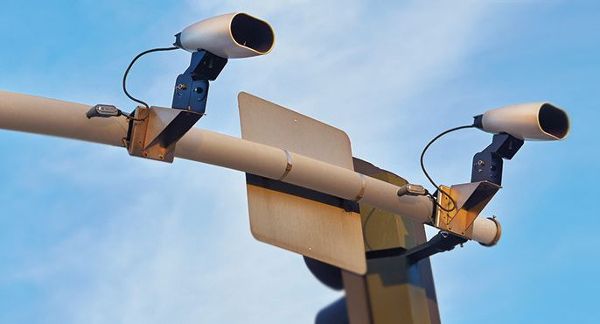
The Rise of the ALPR Bots: Is America heading down the same path of 24/7 surveillance of its citizens? Are you aware of ALPR cameras in your city or adjoining highways?

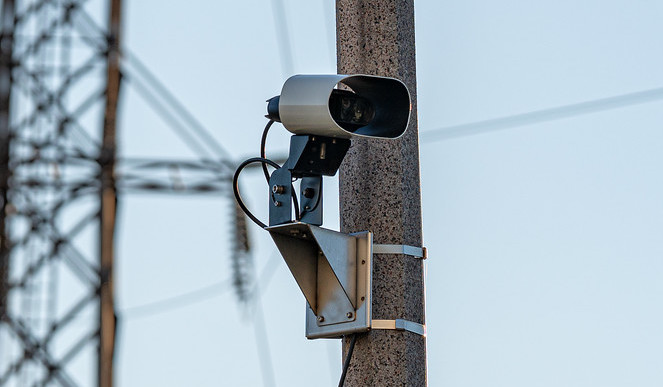
America is quietly being populated with Automatic License Plate Reader (ALPR) systems in towns, cities, and on highways. Most Americans drive by these devices daily unaware that they are being watched and recorded into a state database and probably a national database. The ALPR units are often very small and not easily detectable when mounted on electric poles and highway sign poles.

I work in a small city along the I-75 corridor which runs through six states from Florida and Michigan. I work in technology for a local company and know a few higher-ups in the local police department. One day I was inquiring about these new license plate readers and the officer was excited to tell me how they worked and where each of them was placed in town.

He explained that every vehicle that drives by these cameras takes a digital snapshot of the license plate number and the information about the vehicle such as if it’s a four-door, red, truck, sedan, Ford, Toyota, etc. Each snapshot reads the plate and state using character reading software and loads this data into a database. That data is then compared to a list of vehicles that are on a watch list for about any reason to be watched for. He went on to explain how fast this system responds as he tested it by entering his vehicle into the watch list. He then drove by a known camera to see if he would get a “hit” on his phone notification. It was explained the system is so fast that his phone pinged a hit within 10 seconds of driving past the camera.

I was told that any kind of parameters can be entered into the database search such as: “Be on the lookout for a red GM 2 door with a black roof, even without a plate number.” Whenever a car fitting the description of the search drives by, the camera the officer in charge of the database will get a hit that such a vehicle just drove by going in X direction on X street. He then dispatches an officer in the area to investigate the find to see if its a match.

MUST WATCH! THE HUNGER GAME HAS BEGUN: THE ELITE HAVE BEGUN THEIR FULL SCALE EXECUTION AND DECIMATION OF THE MIDDLE CLASS! FAMINE OF GODS WORD IN AMERICAS PULPITS ,WILL LEAD TO LITERAL FAMINE AND STARVATION IN THE U.S.A

I went looking for these cameras and found them to be quite small. They are mounted mostly on wood electrical poles. One camera on one side of the pole looking at oncoming traffic and one camera on the other side of the same pole looking at the traffic from the other direction. I found 12 of these cameras in our little town but I’m sure I missed a few more. They are usually mounted high on a pole looking down. They sometimes have a small solar panel to power them. A small box wired to each camera provides a cellular phone network connection,  sending images to a cloud server somewhere.

My source went on to explain that each city might have a database and that they can make that data public to other agencies –which he said everyone does. So, if a crime is committed in a town elsewhere or in the state the police department can search the database for a vehicle description, or plate number, or a name associated with a plate number. Supposedly, the State Patrol is now using the same system with cameras on the highways and shares the same data as the cities. So, if Chief Wiggly in the city of Podunk is looking for a car that fits the description of one used in the robbery of the local donut shop, he can enter the data in his system and search for that car. If there is a hit on it within the database system, he calls the local police department that reported it for more information and possible apprehension.

He went on the explain that a police department in another town was looking for a murder suspect. That other department entered the license plate of the car and it showed up on his system. It seems the guy worked in this town and drove by a camera every day where they ended up finding him and his vehicle at a local employer where the person of interest was apprehended.

I questioned the longevity of these databases.  How long do they retain these captures and was told “only two weeks” but in reality, I’m sure the data is being retained in other agencies much longer. I told him I don’t totally agree with how this system works and I believe it’s an invasion of privacy. He replied it would be no different than someone sitting on the roadside writing down every car that drove by on a piece of paper. In a sense he is right but the fact that this is so automated that our police departments have become keyboard cops.

This brings me to another fact that many towns now have cameras in most downtown areas which monitor and record every second of activity in the streets. Much like London where it is reported to have up to 900,000 cameras throughout the city. There are also cameras on traffic poles but after further investigation, it appears these are used for vehicle detection to operate traffic lights. Is America heading down the same path of 24/7 surveillance of its citizens? Are you aware of ALPR cameras in your city or adjoining highways? As I am now aware of many of these cameras, I try to avoid them, for the simple fact I don’t wish to be recorded into a database.

A web search will lead to several companies providing license plate reader technologies to local law enforcement. Another search of “legality of plate readers” gives a plethora of stories where many citizens and legal experts are arguing the legality of their use. I think this all goes back to awareness of your surroundings. Be aware of what is around you. I have nothing to hide, have never committed a crime, And I am an upstanding Christian citizen. But I don’t agree with my movements throughout a city being tracked and stored in a database.

I read that Washington, DC has used these systems since 2011.  I’m sure that ALPR data was conveniently made available to whatever three-letter agency requested it on or after Jan. 6th, 2021.

Be thankful for your blessings. Stay Frosty, your head and on a swivel, and be aware of your surroundings.

In this short VIDEO, I will unearth A lost super-food will bulletproof you against any food shortage or famine. It’s a food that vanished with the Incas over 6 centuries ago

In the next crisis these lost skills will be more valuable than gold, food supplies and survival equipment combined. These skills have been tested and proven to work for centuries.

Here’s just a small glimpse of what you’ll find in The Lost SuperFoods:

Learn More…

by Anon-12 SURVIVALBLOG CONTRIBUTOR

What Happens One Second After an EMP Attack: No Power, No Food, No Transportation, No Banking and No Internet, and According to Congressional Reporting, Upward of 90% of the Population Will Be Dead

William R. Forstchen is a literary hero of mine going back to grade school. The prolific author and historian has written some of the finest speculative fiction of our time, and in recent years, he has achieved superstardom with the novel ONE SECOND AFTER. It is the story of how a father of two and his small, North Carolina community respond to an electromagnetic pulse (EMP) attack on the United States.

His book has become a touchstone work in the “SHTF” (s— hits the fan) genre, and triggered a national conversation that remains ongoing. An EMP strike would involve a hostile power detonating one or more nuclear weapons over the U.S. at high altitudes. As Congressional testimony described, the explosion would interact with the ionosphere (the electrically conducting layer of the atmosphere) and the Earth’s magnetic field. The resultant surge in electromagnetic currents would essentially fry electronics from coast to coast, cripple the power grid, and cause cascading failures in American infrastructure. The United States is woefully unprepared for such an attack.

Next month, FIVE YEARS AFTER, the fourth book in Forstchen’s exploration of a post-EMP America, hits store shelves. We spoke recently about how an EMP attack would work, what its consequences would be, and how best to prepare for what happens one second after. This interview has been lightly edited for length and clarity.

Where is the EMP threat most likely to come from?

North Korea, followed by Iran. Long ago for nuclear weapons, there was a concept called ‘mutual assured destruction.’ If we launched at the Russians, the Russians would launch at us. Everybody would get blown up and so nobody would win.

But for an EMP, the use of a nuclear weapon is a game changer. It’s known as an ‘asymmetrical first strike.’ All you need is one, two, three small warheads, loft them up over the United States, pop them, and you’ve blinded your enemy. You’ve shut down the power grid. It’s a catastrophic situation.

If that happened, we could find ourselves in a scenario where we don’t even know who the hell launched it. It would be as easy as them using a container ship off the coast of Florida. Launch the weapon, blow the ship up, and where are the fingerprints? Who did it? So this is a very different type of warfare.

What would it take to wipe to fundamentally cripple the United States of America? And how precise do you have to be in detonating these things?

Good question. Really good question. When North Korea launched its first attempts at intercontinental ballistic missiles, I started asking some questions. And people, including from the White House, responded that North Korea doesn’t have EMP capability because ICBMs require a successful launch—it’s got to get up there—and then the warhead has to have a precise guidance system to bring it to its target. Seattle, for instance. It needs a precision reentry for a precision strike.

But you don’t need that with an EMP. All you have to do is launch the weapon up there and get it over the western United States—doesn’t matter at that point if it’s over Seattle, San Francisco, whatever. You don’t need any precision guidance. Therefore they already have the capability.

The ideal scenario is three of them. One in the western United States, one somewhere over the middle—it doesn’t matter if it’s over in Nebraska or Iowa, just pop it—and then one over the eastern United States, say, over Pennsylvania. Pop it. You don’t need precision guidance to do this. It’s like horseshoes: As long as you’re in the general area, you’re going to get some kind of points.

What’s terrifying—and you’ve written great literature on the subject—is what happens next. The real enemy becomes human nature.

Yes, exactly. For a lot of people, you go to the sink and fill a glass of water, and it’s almost miraculous. You turn a faucet and water comes out. If you shut down the electricity, though, you are going to lose your water supply—and that’s true for every major city in the country, because it requires pumping and filtration. What happens to the general populace, within two days, if there is no water? People will be willing to kill to put a bottle of water into their kid’s hand.

Society just starts to break down. The food supply? Twenty days you’re out of food. Medication? The pharmacies are closed. We turn on each other to try and survive, and according to Congressional reporting, upward of 90% of the population will be dead a year later. 

One of the strengths the United States has historically enjoyed is geography: we’re just so spread out. How does that play into any sort of post-EMP scenario?

You know, people have this fantasy that if we get hit by an EMP, four or five days into it, you could decide to get the hell out of the city and head to the country. Why? Because there’s a fantasy that out in the country you’ll find food and you’ll find water. Well, even in Nebraska, what do you think they’re dependent upon to bring in the harvest? To plant the seeds? To do all of it? Electricity. But without electricity, all bets are off whether you are in Montana or you are in New York City—it’s all the same.

Does an EMP attack have to be 100% successful to be fundamentally destabilizing? How would we even know we have been hit?

You have to detonate the weapon in the upper atmosphere, the rarefied atmosphere, 200 miles up. The nuclear detonation sets up an electrostatic discharge that then cascades down to the Earth’s surface and blows us out. But it’s not a lightning bolt. You won’t see it, except maybe if you were looking at the point of detonation. Then you’d see a flash, but it wouldn’t even bother your eyesight. You don’t need precision: just put it two hundred miles up, pop it, and it’s a game changer. It’s over.

Tell me about defense policy with respect to retaliation for this sort of thing.

At the end of my book ONE SECOND AFTER, some military people finally come into the town a year later, and one of them says, ‘Oh, yeah, it was the North Koreans who did this to us and we flattened them—we turned their whole country into glass.’ And my main character says, ‘So? What difference does that make now?’

So if this really happened and we retaliated? It would make no difference to any of us because we’d have already lost the war, literally in one second. What we do afterward, it doesn’t matter to you and to me.

So what is Congress doing about this?

I started thinking and writing about the EMP question about 20 years ago, and I based a lot of my book, initially, on Congressional testimony. A number of experts were going up there, all saying the same thing: We’ve got to harden the grid, or we’re waiting to get our butts kicked. There was an attempt at legislative action, but it was killed in committee, particularly thanks to Lisa Murkowski from Alaska, because the bill didn’t have the perks she wanted.

We’ve had at least two or three major efforts to put a bill through. A very strong leader on the issue was Congressman Roscoe Bartlett from Maryland. He was the only person with a PhD in the hard sciences in Congress, and rather than listen to him, they gerrymandered his district to eliminate him. So for 20 years, it’s been gridlocked, and every legislative action has failed.

Now, what are we going to tell those people the day after? Gee, thanks? I had someone say to me more than once that the elite will take care of their own, but the rest of us slobs, we’re doomed. it’s kind of frightening, isn’t it?

So what do you recommend to people who read your book, or who attend your lectures, about what they should be doing in their own lives to prepare for something like this?

To the person who hasn’t done anything: What’s preventing you from getting a month’s worth of supplies in your home? You can do it even if you’re just in a little apartment. Take some two-liter bottles of soda, and when you’re done, clean them out, fill them up with water, and stick them in a closet. You should have at least a couple of gallons of water per day per person in your household.

Next time you go to the market, you don’t need to buy the fancy twenty-five-year shelf life stuff. Just simply pick up Campbell’s Soup and such. That stuff’s good for three or four years. Buy them on sale. Spend fifty bucks a month more than usual to get food, get water.

The third thing I’d say, if you are on medication, don’t wait until the day before the medication comes due to get a refill. If possible, try to keep a three month supply on hand. Next: security. I do not advise people one way or the other regarding guns, but if you decide to do that, I beg you to get trained—and not by your neighbor. Get trained by a professional. I’ve seen too many cases of people getting hurt or killed because of stupidity with guns.

Transportation-wise, you should have a G.O.D. bag in your car: Get Out of Dodge. Just take a backpack, fill it up with two liters of water, a couple of days’ worth of food, one of those space blankets, and keep it in your car. And put some silver in there—actual real silver coins. Because the day after something happens, you could be waving hundred dollar bills and nobody would care. But if you pull out a silver coin, you might be able to trade enough to get what you need. So very basic things like that. They can make a big difference.

There’s this assumption among the public, I think, that if something goes wrong, someone else—likely the government—will take care of everything. But we’ve never encountered a situation where the mechanisms necessary to take care of everything also stop working. Your car stops in the street, and the tow truck that can move it is also stopped. Suddenly, that’s one move too many in a chess game for people to think ahead.

It’s called the expectation of normality. The way things are at this very moment is “normal,” and we expect it will be that way tomorrow and the day after. That’s true for all of us. But if the rug gets pulled out from under us, then what? Suppose on September 10, 2001, a bunch of people started pointing at the sky saying, you know, you could take a couple of jets and turn them into giant cruise missiles. The reaction would be “Oh, you’re crazy. That will never happen.” And then the next day it did.

I keep telling people not to expect normalcy forever. Sooner or later something will happen.

If there’s one consistent, recurring motif in the story of human existence, it is that “something” happens constantly.

Our civilization is temporary. All civilizations are. If you went to the streets of Rome in 150 AD and said, “Guys, it ain’t always gonna be this way. Someday it’s gonna change,” no one would believe you. American civilization, we’ve had 250 years, and we’re doing pretty good. But don’t expect it to run for another 250 years. Something will replace it. Maybe for the better, possibly for the worse. You can’t live on the expectation of normality forever. Every civilization rises, reaches a peak, and collapses. Who’s to say we’re different? We’re not.

We Create a World in Which Machines Are Telling Us What to Do or How to Think, Although We May Very Well End Up in a World Like That Where Algorithms Decide Who Lives or Who Dies

Algorithms are making hugely consequential decisions in our society on everything from medicine to transportation to welfare benefits to criminal justice and beyond. Subtly shifting the way our society is operating.

We can see them at work in the world. We know they’re shaping outcomes all around us.

Are we making a mistake by handing over so much decision-making authority to these programs?

This paradox—that the internet is both saviour and executioner of democracy is part of a massive unfolding social experiment.

The proliferation of algorithms is eroding our ability to think and decide for ourselves. They are turning people into products, and they don’t even realize it.

Billions of people around the world are interacting with these technologies, which is why the tiniest changes can have such a gigantic impact on all of humanity.

We will blindly follow them wherever they lead us. There is no one assessing whether or not they are providing a net benefit or cost to society.

WE DON’T HAVE TO CREATE A WORLD IN WHICH MACHINES ARE TELLING US WHAT TO DO OR HOW TO THINK, ALTHOUGH WE MAY VERY WELL END UP IN A WORLD LIKE THAT WHERE ALGORITHMS DECIDE WHO LIVES OR WHO DIES.

How you see the world matters.

————————

 Beliefs are the things we hold true, regardless of whether we have any proof of their objective truth.

You see, in time, beliefs become labels.

We plaster them on our foreheads and use them to justify our action or inaction. That belief will then drive how you behave as you interpret it as being damning or empowering.

We all would be a lot happier if everyone else around us had the same beliefs as we do, or at least, that they would not challenge us on them. Of course, that is impossible, and this is precisely what fuels most of the world’s conflicts.

And here comes the kicker:

You can decide the direction you take. Your beliefs do not control you, so long as you become self-aware and take charge of your life. Or maybe if you assume everything will fall apart, you never get disappointed.

So, herein lies the persistent conflict of our society:

All of us are driven by our life experiences and by merely being human, but the creeping influence of algorithms in our lives are fucking up the world. We’re increasingly moving towards government by algorithm.

Automated systems are being rolled out with little transparency or public debate, and risk exacerbating existing inequalities.

The algorithm takes the biases and prejudices of the real world and ‘bakes them in’, and gives them a veneer that makes it seem like a policy choice is actually neutral and technical. But it isn’t,”

The problem is, both beliefs and values have strong momentum and seem glued to our character.

How do these beliefs played out in real life?

Are we just becoming throwaway survival machines, following our genetic and neurological programming in an indifferent world?

I believe that human life and the world mean much more than that.

There’s beauty everywhere—we have only to open our eyes to see it.

——————–

When it comes to climate change, the science is settled.

When it comes to technology its all together the opposite.

The sobering truth is that both the climate and technology are out of control.

Given the difficulty of getting the human brain or our political system to tackle anything beyond immediate crises, our attempts to rectify what’s wrong are usual puny compared to what’s really needed.

If you listen to our politicians, there is a strong consensus on climate change.

It consists of four parts.

First, carbon emissions are causing significant changes to our climate. Second, we need to take urgent action to reduce those emissions, including reaching net zero by 2050. Third, we have already made good progress in reducing emissions. And fourth, the steps we need to take to reduce emissions further will also bring many positive benefits for society.

We have a pretty clear understanding of the threat climate change poses to us, our children and our grandchildren. We are already being forced to cope with more droughts, more floods, more extreme storms. At the same time, we have in our arsenal effective policies that are difficult for rational people to demagogue as crippling to the economy or as a subversion of our cherished way of life.

So why does climate misinformation continue to spread online and in our media?

Dire warnings of the looming climate disaster may just make people throw up their hands in despair, sink into denial, or dig their heels in deeper against government action.

Instead, we seem to firmly believe that climate solutions inevitably mean more government, higher taxes and less freedom — and thus are threats to all our core values and identity.

———————-

Technology’s benefits are numerous in all fields, however in the system’s that effect our daily lives it is becoming a threat to our core values, through the use of algorithms. Pushing us like a digital slave army to mindlessly, unwittingly and unwillingly livestream our digital existences into the commercial coffers of companies that see us as nothing more than walking dollar signs.

Examples:

Every time you pick up your smartphone, you’re summoning algorithms. At this point, they are responsible for making decisions about pretty much every aspect of our lives.

The right to an explanation of an algorithm-generated decision does little to fix “systemic injustices” Getting an explanation but no democratic say in how systems work is like getting a privacy policy without a ‘do not consent’ button.

Deciding who gets access to welfare. Using automated interviews with a virtual border guard, based on “deception detection algorithm. Using algorithms to model when and where crime will happen — an area known as predictive policing — is on the rise. Using algorithms to come up with a personality assessment. Having your credit rating scored decided by an algorithm based on questionable data.

Grading algorithm does not not relied solely on automated means. Substituting a mathematical approach for human judgment does not automatically make it fair.

Profit seeking algorithms. Market making algorithms. Execution algorithms Scheduled algorithms. Participation algorithms. VWAP and TWAP algorithms are time-slicing algorithms. Liquidity-seeking algorithms (a.k.a. opportunistic algorithms) Arrival price algorithms seek to trade close to market prices.

Recent developments in algorithmic trading include clustering and high-frequency market forecasting  are playing a central role in finance.

The worst-case scenario is that we fail to disrupt the status quo, in which very powerful companies develop and deploy AI in invisible and obscure ways.

We have no right to see all of the data these companies collect about us, no right to get a percentage when they resell our data without our knowledge or informed consent, no right to ask them to stop. We are for all purposes indentured servants, offered free digital room and board in return for paying with our digital souls and our real-world time.

Social media companies have managed only to create a toxic brew of horrific hate speech that they cannot seem to get rid of.

Algorithms really are so powerful that a few lines of code can push us into any behaviour.

The right message targeted at the right time could mass convert the entire population of a country into mindless zombies who would readily convert even their most deeply held beliefs in an instant.

 When it is obvious to all is that the world is changing, responding faster than expected to Technology’s

Why are we being such idiots?

What gives? It’s not that we are stupid or blind our core values are under attack.

If everything is a core value, then nothing is really a priority.

In this age where technology is dominant, core values may seem like something from the past. So core values may not seem like they have a place.

All of this data is used first and foremost to make money from us. 

There is a really frustrating lag between what AI is capable of and what it’s legislated for. 


Core values are the foundational beliefs held by an individual or an organisation.

Anyone can go to Google and search the meaning of core values,. There are another thing on your to-do list that you don’t have time for, but what about the bigger picture?

When you hear about core values, what comes to mind?

Core values make the biggest difference between successful and failure.

There are more than just words on a wall — it’s how you behave. It’s who you are at your core.

Everyone knows their role, what is expected of them, and they are empowered to act in accordance with their core values.

Once upon a time voting or making decisions in alignment with your core values were the foundation of who we are as individuals. Not any longer with Algorithms running social media.

——————–

To look at it simply, culture is just a collection of people. It is the environment created by the cumulative behaviour of the people.

We all have things that we value deeply, whether we realize it or not.

You remember values, don’t you? You know, those moral thoughts and behaviours we used to hold dear, like decency, civility, honesty and respect, as well as caring, optimism, empathy, and tolerance?

They were once a beacon of idealism. Rewarding behaviour based on them, and align all of our decisions with them.

Core values represent the lens which we view the world. They must be embedded in everything we do.

These “alt” credos and codes of behaviour are the trademarks of the incivility we witness on a daily basis, often expressed with rancour and rage. They have become commonplace on television, in social media and in everyday life. Of even more concern is that these new “moral standards” serve as models of behaviour for our impressionable children and youth.

Hold one another accountable for staying aligned with the values—it’s better not to profess any values at all.

———————

Education and knowledge were cornerstones of our achievement.

We are now living in society that at large looks to social media /television and film personalities for political advice.

You must ensure they are accurate, meaningful, relatable and fully operationalized.

If we continue our descent into callousness, selfishness and hostility, we negatively impact and harm the quality of our lives. We could lose sight of our basic human values and diminish the essence of what MAKES THE WORLD BEAUTIFUL.

Achieving a more transparent and less manipulative media may well be the defining political battle of the 21st century.

Just as we are using our formidable intellect and creativity to reduce our carbon footprint, we can similarly mobilize our resources to improve our emotional footprint, or how we treat and affect each other.

Values are the criteria by which individuals judge ideas, objects, people, situations, and actions as good, worthwhile, desirable, wrong, worthless, or undesirable

.Values are individuals’ embedded abstract motivations. They guide individuals to understand, justify, and explain norms, attitudes, and actions. One of the limitations of examining values is that values cannot  be generalized because they vary between a person and another, culture and another, society and another, even a country and another, thus scrutinizing values will be different in the future.

Core values can be only be fostered in Education, not in schools but with compulsory NATIONAL SERVICE.

New Documents Show Government-Funded AI Intended for Online Censorship: They Can Then Use the Same Tool to Suppress, Silence, and Shut Down Whatever Speech They Don’t Like

I feel scared. Very scared.

Internet-wide surveillance and censorship, enabled by the unimaginably vast computational power of artificial intelligence (AI), is here.

This is not a futuristic dystopia. It’s happening now.

Government agencies are working with universities and nonprofits to use AI tools to surveil and censor content on the Internet.

This is not political or partisan. This is not about any particular opinion or idea. 

What’s happening is that a tool powerful enough to surveil everything that’s said and done on the Internet (or large portions of it) is becoming available to the government to monitor all of us, all the time. And, based on that monitoring, the government – and any organization or company the government partners with – can then use the same tool to suppress, silence, and shut down whatever speech it doesn’t like. 

But that’s not all. Using the same tool, the government and its public-private, “non-governmental” partners (think, for example: the World Health Organization, or Monsanto) can also shut down any activity that is linked to the Internet. Banking, buying, selling, teaching, learning, entertaining, connecting to each other – if the government-controlled AI does not like what you (or your kids!) say in a tweet or an email, it can shut down all of that for you. 

Yes, we’ve seen this on a very local and politicized scale with, for example, the Canadian truckers

But if we thought this type of activity could not, or would not, happen on a national (or even scarier – global) scale, we need to wake up right now and realize it’s happening, and it might not be stoppable.

MUST WATCH! THE HUNGER GAME HAS BEGUN: THE ELITE HAVE BEGUN THEIR FULL SCALE EXECUTION AND DECIMATION OF THE MIDDLE CLASS! FAMINE OF GODS WORD IN AMERICAS PULPITS ,WILL LEAD TO LITERAL FAMINE AND STARVATION IN THE U.S.A

New Documents Show Government-Funded AI Intended for Online Censorship

The US House Select Subcommittee on the Weaponization of the Federal Government was formed in January 2023 “to investigate matters related to the collection, analysis, dissemination, and use of information on US citizens by executive branch agencies, including whether such efforts are illegal, unconstitutional, or otherwise unethical.”

Unfortunately, the work of the committee is viewed, even by its own members, as largely political: Conservative lawmakers are investigating what they perceive to be the silencing of conservative voices by liberal-leaning government agencies. 

Nevertheless, in its investigations, this committee has uncovered some astonishing documents related to government attempts to censor the speech of American citizens. 

These documents have crucial and terrifying all-of-society implications.

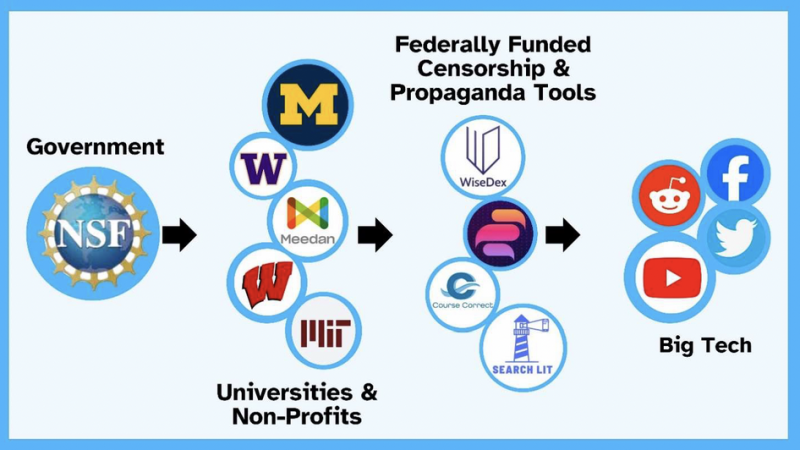
In the Subcommittee’s interim report, dated February 5, 2024, documents show that academic and nonprofit groups are pitching a government agency on a plan to use AI “misinformation services” to censor content on internet platforms.

Specifically, the University of Michigan is explaining to the National Science Foundation (NSF) that the AI-powered tools funded by the NSF can be used to help social media platforms perform censorship activities without having to actually make the decisions on what should be censored.

Here’s how the relationship is visualized in the Subcommittee’s report:

Here’s a specific quote presented in the Subcommittee’s report. It comes from “Speaker’s notes from the University of Michigan’s first pitch to the National Science Foundation (NSF) about its NSF-funded, AI-powered WiseDex tool.” The notes are on file with the committee.

Our misinformation service helps policy makers at platforms who want to…push responsibility for difficult judgments to someone outside the company…by externalizing the difficult responsibility of censorship.

This is an extraordinary statement on so many levels:

  1. It explicitly equates “misinformation service” with censorship. 

This is a crucial equation, because governments worldwide are pretending to combat harmful misinformation when in fact they are passing massive censorship bills. The WEF declared “misinformation and disinformation” the “most severe global risks” in the next two years, which presumably means their biggest efforts will go toward censorship.

When a government contractor explicitly states that it is selling a “misinformation service” that helps online platforms “externalize censorship” – the two terms are acknowledged as being interchangeable.

  1. It refers to censorship as a “responsibility.” 

In other words, it assumes that part of what the platforms should be doing is censorship. Not protecting children from sex predators or innocent citizens from misinformation – just plain and simple, unadulterated censorship.

  1. It states that the role of AI is to “externalize” the responsibility for censorship.

The Tech platforms do not want to make censorship decisions. The government wants to make those decisions but does not want to be seen as censoring. The AI tools allow the platforms to “externalize” the censorship decisions and the government to hide its censorship activities.

All of this should end the illusion that what governments around the world are calling “countering misinformation and hate speech” is not straight-up censorship.

What Happens When AI Censorship is Fully Implemented?

Knowing that the government is already paying for AI censorship tools, we have to wrap our minds around what this entails.

No manpower limits: As the Subcommittee report points out, the limits to government online censorship have, up to now, involved the large numbers of humans required to go through endless files and make censorship decisions. With AI, barely any humans need to be involved, and the amount of data that can be surveilled can be as vast as everything anyone says on a particular platform. That amount of data is incomprehensible to an individual human brain.

No one is responsible: One of the most frightening aspects of AI censorship is that when AI does it, there is no human being or organization – be it the government, the platforms, or the university/nonprofits – who is actually responsible for the censorship. Initially, humans feed the AI tool instructions for what categories or types of language to censor, but then the machine goes ahead and makes the case-by-case decisions all by itself. 

No recourse for grievances: Once AI is unleashed with a set of censorship instructions, it will sweep up gazillions of online data points and apply censorship actions. If you want to contest an AI censorship action, you will have to talk to the machine. Maybe the platforms will employ humans to respond to appeals. But why would they do that, when they have AI that can automate those responses?

No protection for young people: One of the claims made by government censors is that we need to protect our children from harmful online information, like content that makes them anorexic, encourages them to commit suicide, turns them into ISIS terrorists, and so on. Also from sexual exploitation. These are all serious issues that deserve attention. But they are not nearly as dangerous to vast numbers of young people as AI censorship is.

The danger posed by AI censorship applies to all young people who spend a lot of time online, because it means their online activities and language can be monitored and used against them – maybe not now, but whenever the government decides to go after a particular type of language or behavior. This is a much greater danger to a much greater number of children than the danger posed by any specific content, because it encompasses all the activity they conduct online, touching on nearly every aspect of their lives. 

Here’s an example to illustrate this danger: Let’s say your teenager plays lots of interactive video games online. Let’s say he happens to favor games designed by Chinese companies. Maybe he also watches others play those games, and participates in chats and discussion groups about those games, in which a lot of Chinese nationals also participate.

The government may decide next month, or next year, that anyone heavily engaged in Chinese-designed video games is a danger to democracy. This might result in shutting down your son’s social media accounts or denying him access to financial tools, like college loans. It might also involve flagging him on employment or dating websites as dangerous or undesirable. It might mean he is denied a passport or put on a watchlist.

Your teenager’s life just got a lot more difficult. Much more difficult than if he was exposed to an ISIS recruitment video or suicide-glorifying TikTok post. And this would happen on a much larger scale than the sexual exploitation the censors are using as a Trojan Horse for normalizing the idea of online government censorship.

Monetize-able censorship services: An AI tool owned by the government can theoretically be used by a non-governmental entity with the government’s permission, and with the blessing of the platforms that want to “externalize” the “responsibility” for censorship. So while the government might be using AI to monitor and suppress, let’s say as an example, anti-war sentiment – a company could use it to monitor and suppress, let’s say as an example, anti-fast food sentiment. The government could make a lot of money selling the services of the AI tools to 3rd parties. The platforms could also conceivably ask for a cut. Thus, AI censorship tools can potentially benefit the government, tech platforms, and private corporations. The incentives are so powerful, it’s almost impossible to imagine that they will not be exploited.

In this short VIDEO, I will unearth A lost super-food will bulletproof you against any food shortage or famine. It’s a food that vanished with the Incas over 6 centuries ago

In the next crisis these lost skills will be more valuable than gold, food supplies and survival equipment combined. These skills have been tested and proven to work for centuries.

Here’s just a small glimpse of what you’ll find in The Lost SuperFoods:

Can We Reverse Course?

I do not know how many government agencies and how many platforms are using AI censorship tools. I do not know how quickly they can scale up.

I do not know what tools we have at our disposal – other than raising awareness and trying to lobby politicians and file lawsuits to prevent government censorship and regulate the use of AI tools on the internet.

If anyone has any other ideas, now would be the time to implement them.

BY Debbie Lerman for Brownstone Institute


Published under a Creative Commons Attribution 4.0 International License
For reprints, please set the canonical link back to the original Brownstone Institute Article and Author.

Full Scale Cyberwar: One of the Greatest Threats to Critical Infrastructure That We Currently Face – Scariest Thing Will Be Not Knowing What’s Going on

Cyberattack. Not a localized focused incident, but a highly coordinated wide reaching major cyberattack. An event or series of events that attack modern infrastructure.

With what goal? To cause internal social chaos to the extent that we fight ourselves to a state of collapse. Cyberwar.

We are vulnerable beyond belief. Electronically interconnected. Networks jam packed with devices. The ‘internet of things’. The integrated electronic systems keeping infrastructure operational..

The scariest thing about a cyberattack, at least at first, will be – not knowing what’s going on.

The ensuing confusion. Broken communication systems. The resulting isolation. People desperately wondering what happened. Who did it. What to do..

Coincidently I watched the Netflix movie, “Leave The World Behind”. I happened to view it during the first day of release. A unique view (and well done, IMO) of this article’s topic. It didn’t take long afterwards for the preparedness world to start talking about it.

Cyberattack to the extent of devastating consequences – is a very real threat. It’s not science fiction. It’s cold-hard-fact.

Cyberwar concerns me more than EMP. Why? Because I believe it’s more likely. There are a handful of nation states that could pull off an EMP. However a major cyberattack is different. More potential ‘actors’. And ‘the enemy’ might not be effectively identified.

Cyberattack – Not Knowing What’s Going On

The focus of this article. Food-for-thought. The fact that the public (except for a few who have been ‘awake’ and prepared) will not know what’s going on after telecommunications goes down.

Every subsequent minute without their screens.. Social media Apps.. No Facebook, YouTube, WhatsApp, Instagram, WeChat, TikTok, Messenger, Telegram, Snapchat, X (Twitter), Pinterest, etc… Not knowing what’s going on.. Not knowing how to find out.. Increasing anxiety.. And the ensuing panic.

Internet pipelines used for effective avenues of cyberattack into all sorts of infrastructure, including communications. An enemy objective –> cutting off flow of information. Leading to confusion and not knowing what’s going on.

Social media datacenters are attacked and platforms are taken down. Mainstream alphabet-channel networks are broken due to reliance upon affected datacenters, digital chokepoints, and the internet infrastructure itself. Cell phone provider networks. Any communications system reliant upon a smooth running internet. Hampered or broken.

Even worse, the likelihood of power grids being targeted and going down. When the lights go out, so do most communications systems.

There will be massive confusion resulting from not knowing. It will quickly lead to major stresses, indecision, bad decisions, internal conflict, and ultimately…social chaos.

Preppers Will Know..

Those educated within the realm of common sense preparedness will know. At least to the extent of knowing that a devastating cyberattack will require having prepared for it. Having known the probable consequences thereof. And, when it happens, making quick and smart decisions to stay ahead of the social chaos that’s sure to come soon afterwards.

It will be time to get to one’s ‘home base’ and pull up the drawbridge, so to speak.

Everything will become quite local. Communications will require face-to-face, in-person. Or, devices like 2-way radio communication, Amateur radio (ham radio), which are battery powered and don’t require the internet or the power grid.

Information and Intelligence gathering. Methods that don’t require the grid or the internet. Monitoring your radios. That’s how you will find out what’s going on.

Security can be greatly enhanced within a local area with 2-way radios (as long as you have a way to charge them, exemplified in an article linked below).

If you’re into practical preparedness and prepping, you already know this. And you likely already are well equipped in this area of communications. If you’re beginning, you might consider learning more about communications without the internet or without the electrical power grid.

An important point to all this is knowing how most people will react when there’s no reliable or functional communications during, and following, a major cyberattack.

Their coming to grips with it. It will be troublesome, and eventually dangerous.

Renewed Concerns

I have renewed concerns about the probability or likelihood of a major cyberattack, or series of devastating cyberattacks. It’s in the news and media, more and more. Even the WEF (World Economic Forum) is warning about this. Is it predictive programming?

We are exceedingly vulnerable. And there are many entities around the world who consider us an enemy. Seems like an opportune period of time for those who wish our demise, especially given the present climate of divisiveness and division. All that’s seemingly needed is a way to trigger descent into social chaos, lessening the need for a ‘traditional’ attack. We can do it for them. We can do it ourselves..

Are you new to preparedness? It might be a good time to get started.

Are you a veteran at this? It might be a good time to re-evaluate and have a look around. Maybe grease the hinges on the draw bridge..

Have a plan of action.

2024 is coming.

HOW DO YOU DEFEAT SUPERIOR TECHNOLOGY THAT YOU HAVE NO DEFENSE AGAINST: REMEMBER, IT WAS A HUMAN THAT MADE THAT NEW WEAPON AND IT WILL BE A HUMAN THAT DESIGNS THE COUNTERMEASURE TO IT

Many people may find themselves in during some future war or civil disturbance. That situation is you coming up against superior technology that you have no defense against. So, how do you deal with this threat?

Every weapons system is designed to operate in a certain environment and do a certain task within that environment. Because of that, every weapons system has weak points that it cannot hide from once you change that environment.

In WWII Sherman tanks were outmatched by German Tiger tanks. They were able to overcome this disadvantage by superior numbers and by putting the Tigers in situations that gave the Sherman the advantage. The Shermans were smaller and more maneuverable so they would try to engage tigers in dense areas where they could not maneuver and turn their guns because of obstacles. This allowed the Shermans to get behind the tigers and shoot them in their only weak point, their ass. The Tiger might get three Shermans but there was usually a fourth one that managed to get the Tiger.

When radar began to be used in WWII the RAF soon came up against German flak batteries that had radar. To get past this threat they came up with a simple solution. They deployed strips of aluminum foil, code named windows, that confused the radars and allowed the planes to get through. The Germans soon figured out how to deal with this but for a time it made their systems almost useless.

When you are faced with superior weapons you need to do two things.

Determine what its limitations are.

Determine how to attack it in that weak spot.

Those two things are the basis of counter weapons development for centuries. Not long after we got the tank we then developed anti-tank weapons. It’s the same with any new weapons system. Sometimes you need to develop your own superior technology to use against it and sometimes you need to resort to caveman technology.

Killer robots may come after us one day and be able to outrun us but how well do they rappel down a mountain or swim? They may be impervious to rifle bullets but what happens when they are hit by a 6 lb. steel ball from a cannon? A solid object traveling at high speed can do a lot of damage when it hits something. Just look at the DUC rounds the M1 Abrams fires or when a large meteor hits Earth. How do robots handle the bumper of a large truck traveling at high speeds? I have two words for the backyard inventors out there, rail gun.

Those new MRAPs may be hard but how well do they operate in woods that have no roads? How well can they drive when all of the windows are covered with paint or other materials that blind them? How fast can they go when they are laying on their side or sitting in three feet of mud? The people in that vehicle must get in at some point and get out at some time. That is a weak point. That vehicle must be refueled at some time. That is a weak point. Are you getting the picture?

How well does any weapons system work when it is hosed down with fuel and ignited? How well does it work without fuel? How well does it work without ammo? How well does it work without repair parts or human operators? How well does it work when it cannot “see”? How well can it operate when it has no traction? How well can it operate in bad weather? What does it take to disable its electronics? What does it take to put a hole in it? What happens to an attack helicopter when a steel cable is suddenly propelled up into its rotors? How well can the operators function when they have no air to breathe?

Every system has a certain environment it works well in. Your job is to get it into a situation that is outside of its operating box so you have the advantage. That is the advantage that humans have over technology. We have the ability to adapt to new situations and learn new tricks. Most weapons systems cannot do that. Even if they can adapt they do not have our imagination. How many weapons systems would think of giving a group of enemy fighters diarrhea to reduce their combat effectiveness?

Our ability to think outside of the box is our greatest advantage. That is what we need to depend on in the days to come. Having weapon systems to fight back with will be important but the most destructive thing we have is our mind. Remember, it was a human that made that new weapon and it will be a human that designs the countermeasure to it.

Never in all of history until now has the technology existed for a world dictatorship to rule the world. All they need is the right conditions: a totalitarian world dictatorship to put it into effect

In the relentless race for military supremacy, the shifting sands of the global power balance have taken a sharp turn. With modern technology and advanced systems, computer chips and hi-tech surveillance, “Big Brother” is watching, and it’s now “all systems go!” Everything’s falling into place for the global economy to take off, and the technology and necessary computing power are with us now, the actual infrastructure is already in place, developed, tested and proven.

The Anti-Christ world leader will be the author of confusion, the master counterfeiter, and through his many images he will deceive the nations. The Antichrist will come on the world stage peaceably, with flatteries, via powerful persuasion and propaganda. By this means he is able to creep into houses and lead captive the masses.

Through his many images and idols he shows himself clever, for acceptance of his 666 mark of the Beast (Revelation 13:16-18) will be the fashion–the logical, the reasonable, the convenient, the safest, the securest, the vital, the norm, that which is accepted in the eyes of man, both small and great.

It’s getting darker and colder all the time, and many people in the world can feel it. They may not understand it, and they don’t always want to admit it, but it’s happening. The sun is setting, the darkness is falling, and the world is looking for hope, for some ray of light. The nations question “Why this and why that? Why all the pain and strife in the world? Why the slaughter of the innocents? Why troubles and sorrows?” These questions are being raised in people’s hearts and minds, and those whose foundations have been built on the sand, or others who had no foundations to begin with, have no answers.

Never in all of history until now has the technology existed for a world dictatorship to rule the world. All they need is the right conditions: a totalitarian world dictatorship to put it into effect. The Antichrist government will use the computer to rule the world in the form of an image to the antichrist. The image of the Beast!

REVELATION 13:14 And deceiveth them that dwell on the earth by the means of those miracles which he had power to do in the sight of the beast (Antichrist); saying to them that dwell on the earth, that they should make an image to the beast (Antichrist), which had the wound by a sword, and did live.

REVELATION 13:15 And he had power to give life unto the image of the beast, that the image of the beast should both speak, and cause that as many as would not worship the image of the beast should be killed.

REVELATION 13:16 And he causeth all, both small and great, rich and poor, free and bond, to receive a mark in their right hand, or in their foreheads:

REVELATION 13:17 And that no man might buy or sell, save he that had the mark, or the name of the beast, or the number of his name.

REVELATION 13:18 Here is wisdom. Let him that hath understanding count the number of the beast: for it is the number of a man; and his number is Six hundred threescore and six. 666

The technology for the Antichrist’s One World monetary system and “Mark of the Beast” is already developed and ready to be put into effect. Just think, all the peoples of the Earth united, on the same wavelength, the same channel.

All around, every single day, there are signs of the coming End, signs of the Antichrist, signs of the coming One World Order. Man’s knowledge has also increased in these last two years, as it has in other recent years, but it now heads in more dangerous directions than in the past, including attempts to clone human beings, fuse man and beast in the embryo, or genetically modify man. As men seek to unravel the secrets of life, they also seek to combine it with machine. They seek new and improved robots to serve man, giving them artificial intelligence and mobility such as they’ve not had before. They seek to make man himself more of a machine, implanting chips, sensors, and electrodes to enhance man’s powers and intelligence.

These chips and implants come with many benign purposes: They increase security for children and protect them from abduction; they monitor criminals; they check the health of their subjects and release medicine into the body; they make identification quick and easy; they prevent fraud; they monitor and increase productivity; they make life more convenient in many ways. In the last two years we’ve seen a great increase in the knowledge that has made such things possible and public acceptance of the devices themselves.

Despite the promises of technology, modern comforts and conveniences, and affluence unknown in the past, poverty persists. War threatens. Disease stalks and kills many. The world thinks they’ve entered the great new age of technology, and the 21st century is going to thrust them into the greatest glories of their “techno-age.” The technology known as biometrics, for example, the process of collecting, processing and storing details of a person’s physical characteristics, has excited the interest of governments and companies because, unlike other forms of ID (cards, papers, etc.), it knows the target human as well as a mother knows her children. The most popular forms of biometric identification are retina scans, hand geometry, thumb scans, fingerprints, voice recognition, and digitized photographs.

This is the sort of power that will be needed to run the Antichrist’s computers and government. here’s nothing intrinsically wrong with the technology and being able to do things faster and better. But these will be useful mechanisms of the Antichrist’s New World Order. Technology has broken down borders and nations are becoming less important, which will make the creation of his one-world government relatively simpler. It’s happening so gradually that global government will just be a logical next step.

The world will accept him, only to find that the heaven on earth he’s promised them has become hell on earth, with hell hereafter for those who take his 666 Mark of the Beast. They’re trying to control living beings with technology, with chips that they’ve finally managed to incorporate in their brains. And they’ll go on developing that technology until it reaches its apex in the Mark of the Beast, with which evil men would seek to control and monitor men even more.

Are you ready for these great and final events of the end? You can get ready now by receiving Jesus into your heart. Simply pray this little prayer and He will come in: “Dear Jesus, I believe that You are the Son of God and that You died for me. Please forgive me for all my sins. I ask You, Jesus, to please come into my heart and give me Your free Gift of Eternal Life.

How Algorithms Will Rule the World: They Put Too Much Control in the Hands of Corporations and Governments, Perpetuate Bias, Create Filter Bubbles, Cut Choices, Destroying What Left of Democracy Societies, Without Any Legal Restrictions or Transparency, or Recourse

I am sure that unless you have being living on another planet it is becoming more and more obvious that the manner you live your life is being manipulate and influence by technologies.

So its worth pausing to ask why the use of AI for algorithm-informed decision is desirable, and hence worth our collective effort to think through and get right.

A huge amount of our lives – from what appears in our social media feeds to what route our sat-nav tells us to take – is influenced by algorithms. Email knows where to go thanks to algorithms. Smartphone apps are nothing but algorithms. Computer and video games are algorithmic storytelling.  Online dating and book-recommendation and travel websites would not function without algorithms.

Artificial intelligence (AI) is naught but algorithms.

The material people see on social media is brought to them by algorithms. In fact, everything people see and do on the web is a product of algorithms. Algorithms are also at play, with most financial transactions today accomplished by algorithms. Algorithms help gadgets respond to voice commands, recognize faces, sort photos and build and drive cars. Hacking, cyberattacks and cryptographic code-breaking exploit algorithms.

Algorithms are aimed at optimizing everything.

Self-learning and self-programming algorithms are now emerging, so it is possible that in the future algorithms will write many if not most algorithms.

Yes they can save lives, make things easier and conquer chaos, but when it comes both the commercial/ social world, there are many good reasons to question the use of Algorithms.

Why? 

They can put too much control in the hands of corporations and governments, perpetuate bias, create filter bubbles, cut choices, creativity and serendipity, while exploiting not just of you, but the very resources of our planet for short-term profits, destroying what left of democracy societies, turning warfare into face recognition, stimulating inequality, invading our private lives, determining our futures without any legal restrictions or transparency, or recourse.

The rapid evolution of AI and AI agents embedded in systems and devices in the Internet of Things will lead to hyper-stalking, influencing and shaping of voters, and hyper-personalized ads, and will create new ways to misrepresent reality and perpetuate falsehoods.

———

As they are self learning, the problem is who or what is creating them, who owns these algorithms and what if there should be any controls in their usage.

Lets ask some questions that need to be ask now not later concerning them. 

1) The outcomes the algorithm intended to make possible (and whether they are ethical)

2) The algorithm’s function.

3) The algorithm’s limitations and biases.

4) The actions that will be taken to mitigate the algorithm’s limitations and biases.

5) The layer of accountability and transparency that will be put in place around it.

There is no debate about the need for algorithms in scientific research – such as discovering new drugs to tackle new or old diseases/ pandemics, space travel, etc. 

Out side of these needs the promise of AI is that we could have evidence-based decision making in the field:

Helping frontline workers make more informed decisions in the moments when it matters most, based on an intelligent analysis of what is known to work. If used thoughtfully and with care, algorithms could provide evidence-based policymaking, but they will fail to achieve much if poor decisions are taken at the front.

However, it’s all well and good for politicians and policymakers to use evidence at a macro level when designing a policy but the real effectiveness of each public sector organisation is now the sum total of thousands of little decisions made by algorithms each and every day.

First (to repeat a point made above), with new technologies we may need to set a higher bar initially in order to build confidence and test the real risks and benefits before we adopt a more relaxed approach. Put simply, we need time to see in what ways using AI is, in fact, the same or different to traditional decision making processes.

The second concerns accountability. For reasons that may not be entirely rational, we tend to prefer a human-made decision. The process that a person follows in their head may be flawed and biased, but we feel we have a point of accountability and recourse which does not exist (at least not automatically) with a machine.

The third is that some forms of algorithmic decision making could end up being truly game-changing in terms of the complexity of the decision making process. Just as some financial analysts eventually failed to understand the CDOs they had collectively created before 2008, it might be too hard to trace back how a given decision was reached when unlimited amounts of data contribute to its output.

The fourth is the potential scale at which decisions could be deployed. One of the chief benefits of technology is its ability to roll out solutions at massive scale. By the same trait it can also cause damage at scale.

 In all of this it’s important to remember that while progress isn’t guaranteed transformational progress on a global scale normally takes time, generations even, to achieve but we pulled it off in less than a decade and spent another decade pushing the limits of what was possible with a computer and an Internet connection and, unfortunately, we are beginning running into limits pretty quickly such as.

No one wants to accept that the incredible technological ride we’ve enjoyed for the past half-century is coming to an end, but unless algorithms are found that can provide a shortcut around this rate of growth, we have to look beyond the classical computer if we are to maintain our current pace of technological progress.

A silicon computer chip is a physical material, so it is governed by the laws of physics, chemistry, and engineering.

After miniaturizing the transistor on an integrated circuit to a nanoscopic scale, transistors just can’t keep getting smaller every two years. With billions of electronic components etched into a solid, square wafer of silicon no more than 2 inches wide, you could count the number of atoms that make up the individual transistors.

So the era of classical computing is coming to an end, with scientists anticipating the arrival of quantum computing designing ambitious quantum algorithms that tackle maths greatest challenges an Algorithm for everything.

———–

Algorithms may be deployed without any human oversight leading to actions that could cause harm and which lack any accountability.

The issues the public sector deals with tend to be messy and complicated, requiring ethical judgements as well as quantitative assessments. Those decisions in turn can have significant impacts on individuals’ lives. We should therefore primarily be aiming for intelligent use of algorithm-informed decision making by humans.

If we are to have a ‘human in the loop’, it’s not ok for the public sector to become littered with algorithmic black boxes whose operations are essentially unknowable to those expected to use them.

As with all ‘smart’ new technologies, we need to ensure algorithmic decision making tools are not deployed in dumb processes, or create any expectation that we diminish the professionalism with which they are used.

Algorithms could help remove or reduce the impact of these flaws.


So where are we.

At the moment modern algorithms are some of the most important solutions to problems currently powering the world’s most widely used systems.

Here are a few. They form the foundation on which data structures and more advanced algorithms are built.

Google’s PageRank algorithm is a great place to start, since it helped turn Google into the internet giant it is today.

The PageRank algorithm so thoroughly established Google’s dominance as the only search engine that mattered that the word Google officially became a verb less than eight years after the company was founded. Even though PageRank is now only one of about 200 measures Google uses to rank a web page for a given query, this algorithm is still an essential driving force behind its search engine.

The Key Exchange Encryption algorithm does the seemingly impo

Backpropagation through a neural network is one of the most important algorithms invented in the last 50 years.

Neural networks operate by feeding input data into a network of nodes which have connections to the next layer of nodes, and different weights associated with these connections which determines whether to pass the information it receives through that connection to the next layer of nodes. When the information passed through the various so-called “hidden” layers of the network and comes to the output layer, these are usually different choices about what the neural network believes the input was. If it was fed an image of a dog, it might have the options dog, cat, mouse, and human infant. It will have a probability for each of these and the highest probability is chosen as the answer.

Without backpropagation, deep-learning neural networks wouldn’t work, and without these neural networks, we wouldn’t have the rapid advances in artificial intelligence that we’ve seen in the last decade.

Routing Protocol Algorithm (LSRPA) are the two most essential algorithms we use every day as they efficiently route data.

The two most widely used by the Internet, the Distance-Vector Routing Protocol Algorithm (DVRPA) and the Link-State traffic between the billions of connected networks that make up the Internet.

Compression is everywhere, and it is essential to the efficient transmission and storage of information.

Its made possible by establishing a single, shared mathematical secret between two parties, who don’t even know each other, and is used to encrypt the data as well as decrypt it, all over a public network and without anyone else being able to figure out the secret.

Searches and Sorts are a special form of algorithm in that there are many very different techniques used to sort a data set or to search for a specific value within one, and no single one is better than another all of the time. The quicksort algorithm might be better than the merge sort algorithm if memory is a factor, but if memory is not an issue, merge sort can sometimes be faster;

One of the most widely used algorithms in the world, but in that 20 minutes in 1959, Dijkstra enabled everything from GPS routing on our phones, to signal routing through telecommunication networks, and any number of time-sensitive logistics challenges like shipping a package across country. As a search algorithmDijkstra’s Shortest Path stands out more than the others just for the enormity of the technology that relies on it.

——–

At the moment there are relatively few instances where algorithms should be deployed without any human oversight or ability to intervene before the action resulting from the algorithm is initiated.

The assumptions on which an algorithm is based may be broadly correct, but in areas of any complexity (and which public sector contexts aren’t complex?) they will at best be incomplete.

Why?

Because the code of algorithms may be unviewable in systems that are proprietary or outsourced.

Even if viewable, the code may be essentially uncheckable if it’s highly complex; where the code continuously changes based on live data; or where the use of neural networks means that there is no single ‘point of decision making’ to view.

Virtually all algorithms contain some limitations and biases, based on the limitations and biases of the data on which they are trained.

Though there is currently much debate about the biases and limitations of artificial intelligence, there are well known biases and limitations in human reasoning, too. The entire field of behavioural science exists precisely because humans are not perfectly rational creatures but have predictable biases in their thinking.

Some are calling this the Age of Algorithms and predicting that the future of algorithms is tied to machine learning and deep learning that will get better and better at an ever-faster pace. There is something on the other side of the classical-post-classical divide, it’s likely to be far more massive than it looks from over here, and any prediction about what we’ll find once we pass through it is as good as anyone else’s.

It is entirely possible that before we see any of this, humanity will end up bombing itself into a new dark age that takes thousands of years to recover from.

The entire field of theoretical computer science is all about trying to find the most efficient algorithm for a given problem. The essential job of a theoretical computer scientist is to find efficient algorithms for problems and the most difficult of these problems aren’t just academic; they are at the very core of some of the most challenging real world scenarios that play out every day.

Quantum computing is a subject that a lot of people, myself included, have gotten wrong in the past and there are those who caution against putting too much faith in a quantum computer’s ability to free us from the computational dead end we’re stuck in.

The most critical of these is the problem of optimization:

How do we find the best solution to a problem when we have a seemingly infinite number of possible solutions?

While it can be fun to speculate about specific advances, what will ultimately matter much more than any one advance will be the synergies produced by these different advances working together.

Synergies are famously greater than the sum of their parts, but what does that mean when your parts are blockchain, 5G networks, quantum computers, and advanced artificial intelligence?

DNA computing, however, harnesses these amino acids’ ability to build and assemble itself into long strands of DNA.

It’s why we can say that quantum computing won’t just be transformative, humanity is genuinely approaching nothing short of a technological event horizon.

Quantum computers will only give you a single output, either a value or a resulting quantum state, so their utility solving problems with exponential or factorial time complexity will depend entirely on the algorithm used.

One inefficient algorithm could have kneecapped the Internet before it really got going.

It is now oblivious that there is no going back.

The question now is there anyway of curtailing their power.

This can now only be achieved with the creation of an open source platform where the users control their data rather than it being used and mined.  (The uses can sell their data if the want.)

This platform must be owned by the public, and compete against the existing platforms like face book, twitter, what’s App, etc,   protected by an algorithm that protects the common values of all our lives – the truth. 

Of course it could be designed by using existing algorithms which would defeat its purpose. 

It would be an open net-work of people a kind of planetary mind that has to always be funding biosphere-friendly activities.

A safe harbour perhaps called the New horizon.   A digital United nations where the voices of cooperation could be heard.   

So if by any chance there is a human genius designer out there that could make such a platform he might change the future of all our digitalized lives for the better.