American Pravda: Holocaust Denial

A few years ago I somehow heard about a ferocious online dispute involving a left-leaning journalist named Mark Ames and the editors of Reason magazine, the glossy flagship publication of America’s burgeoning libertarian movement. Although I was deep in my difficult programming work, curiosity got the better of me, so I decided to take a look.

During the Immigration Wars of the 1990s, I’d become quite friendly with the Reason people, frequently visiting their offices, especially during my “English” campaign of 1998, when I’d located my own political headquarters in the same small Westside LA office building they used. As my content-archiving software project began absorbing more and more of my time during the early 2000s, I’d gradually lost touch with them, but even so, the 40-odd years of their magazine archives had become the first publication I’d incorporated into my system, and I was now pleased to discover that both sides in the ongoing feud had put my system to good use in exploring those old Reason issues.

Apparently, the libertarians grouped around Reason had successfully been making political inroads into Silicon Valley’s enormously wealthy technology industry, and had now organized a major conference in San Francisco to gather together their supporters. Their left-leaning rivals decided to nip that project in the bud by highlighting some of the more unsavory ideological positions that mainstream libertarian leaders had once regularly espoused. Perhaps Ron Paul and other libertarians might oppose overseas wars and drug laws, and support cutting taxes and regulations, but they and their Republican Party allies were unspeakably vile on all sorts of other issues, and all “good thinkers” should therefore stay very far away.

The debate began in rather mundane fashion with an article by Ames entitled “Homophobia, Racism, and the Kochs” denouncing Reason for sharing a platform with a high-ranking Republican Congresswoman of Christian conservative views, as well as the magazine’s reliance upon Koch funding and its alleged support for Apartheid South Africa during the 1970s and 1980s. The response by the Reason editor seemed quite persuasive, and he rightfully dismissed the guilt-by-association attacks. He also outlined the gross errors and omissions in the charges regarding South Africa, and ridiculed Ames as a notoriously error-prone “conspiracy theorist.” Surely few outsiders would have paid any attention to such a typical exchange of mudslinging between rival ideological camps.

But then things took a very different turn, and a week later Ames returned with a 5,000 word article bearing a title sure to grab attention: “Holocaust Denial.” He claimed that in 1976 Reason had published an entire special issue devoted to that explosive topic.

Surely everyone on the Internet has encountered numerous instances of Holocaust Denial over the years, but for a respectable magazine to have allotted a full issue to promoting that doctrine was something else entirely. For decades, Hollywood has sanctified the Holocaust, and in our deeply secular society accusations of Holocaust Denial are a bit like shouting “Witch!” in Old Salem or leveling accusations of Trotskyism in the Court of the Red Czar. Progressive Sam Seder’s Majority Report radio show devoted a full half-hour segment to the charges against Reason, and Googling “Reason Magazine”+”Holocaust Denial” today yields thousands of hits. This substantial explosion of Internet controversy was what caught my own attention at the time.

My initial reaction was one of puzzlement. Reason had been the first periodical I had digitized in my system a dozen years earlier, and surely I would have noticed an entire issue promoting Holocaust Denial. However, I soon discovered that February 1976 had been excluded from the supposedly complete set the magazine had shipped me for processing, an omission that itself raises serious suspicions. But Ames had somehow located a copy in a research library and produced a full PDF, which he conveniently placed on the Internet to support his accusations.

Carefully reading his article and then glancing through the contents, I decided that his accusation was technically false but substantially true. Apparently the actual theme of the issue was “Historical Revisionism” and except for a couple of paragraphs buried here and there among the 76 pages, Holocaust Denial never came up, so characterizing it as a Holocaust Denial issue was obviously a grotesque exaggeration. But on the other hand, although few of the authors were familiar to me, it seemed undeniably true that they were numbered among America’s more prominent Holocaust Deniers, and most of them were deeply associated with organizations situated in that same camp. Furthermore, there were strong indications that their positions on that topic must certainly have been known to the Reason editors who commissioned their pieces.

The clearest case comes when Ames quoted the explicit statements of Dr. Gary North, a prominent libertarian thinker who had served as one of Ron Paul’s earliest Congressional aides and later became his longtime partner in politics and business:

Probably the most far-out materials on World War II revisionism have been the seemingly endless scholarly studies of the supposed execution of 6 million Jews by Hitler. The anonymous author [Hoggan] of ‘The Myth of the Six Million’ has presented a solid case against the Establishment’s favorite horror story—the supposed moral justification for our entry into the war…The untranslated books by the former Buchenwald inmate Prof. Paul Rassinier, have seriously challenged the story…A recent and very inexpensive book in magazine form, Did Six Million Really Die?, appeared in 1973, written by Richard Harwood.

A later issue carried a thousand word letter by Prof. Adam Reed of Rockefeller University, a past Reason contributor, strongly affirming the mainstream Holocaust narrative by quoting from standard works, and taking Dr. North to task for his citation of Holocaust Denial works of doubtful quality. But North firmly stood his ground:

“The second point, that about 6 million Jews really did die in the concentration camps, is one that will be open until the records of the period become fully available. I am not convinced yet, one way or the other. I am happy to have Dr. Reed’s interpretation of the data, but until the publishing companies and academic guild encourage the re-examination of the data, I shall continue to recommend that those interested in revisionist questions read The Myth of the Six Million and Did Six Million Really Die? as reasonable (though not necessarily irrefutable) pieces of historical revisionism. If a person can’t make up his mind, he should do more reading.”

Dr. James J. Martin was the lead contributor to the February Revisionism issue, and the preceding January issue had featured an extended Q&A by the editors, with one of the queries directly addressing the controversial topic:

REASON: Dr. Martin, do you believe (1) that the specific charge against the Nazis of having a mass extermination program of several million Jews is true, and (2) that the Allied atrocities were as great or greater than those of the Germans, from your study of the question?

MARTIN: Well, I never made a head count of all who lost their lives in the War-we’ve seen a wide variety of statistical materials, some of which have been pulled out of thin air. As a consequence, it’s hard to make any kind of estimate of this sort, whether ten more were killed on the one side or the other is not a particularly entrancing subject as far as I’m concerned. Whether allegations can be proven it remains to be seen. I don’t believe that the evidence of a planned extermination of the entire Jewish population of Europe is holding up. I have been influenced over the years by the works of Paul Rassinier, and he still has to be reckoned with. His works have been ignored for a long time, and sooner or later somebody’s going to have to do a decent job of coping with what he has presented. I think Rassinier’s general case is sound at the moment and I haven’t seen any strong evidence to upset his allegations or his assertions that there was no planned program for the extermination of European Jews. His other main case is that there were no gas chamber extermination programs. The fact that a great many people lost their lives is incontrovertible—that the German concentration camps weren’t health centers is well known-but they appear to have been far smaller and much less lethal than the Russian ones.

Another major contributor to the issue was Dr. Austin J. App, and just three years earlier he had published a short book bearing the lurid title The Six Million Swindle: Blackmailing the German People for Hard Marks with Fabricated Corpses.

In a follow-up column by Ames’ own editor, the stunned reactions of various journalists are listed, with one of them Tweeting out “I had no idea that Reason Magazine was once a haven for Holocaust Revisionism. Holy Moly.” Despite the angry obfuscations of present-day Reason staffers, this description seems quite correct.

Indeed, there seems considerable circumstantial evidence that around that time “Holocaust Skepticism” extended rather broadly within the entire nascent libertarian movement. Aside from the sharp critique of the aforementioned Prof. Reed, the overwhelming majority of the reader responses seemed totally favorable, with Samuel Konkin III, editor of New Libertarian Weekly and various similar publications, suggesting that the February issue was one of the best they had ever published. David Nolan, founder of America’s Libertarian Party, also praised the issue as “outstanding.”

The two editors of the issue in question even today remain quite prominent figures at Reason and within American libertarianism, while the masthead then carried names such as David Brudnoy and Alan Reynolds, who both later became influential figures in conservative and libertarian politics. There seems no evidence of any resignations or angry recriminations following the issue’s publication, which seems to have been digested with total equanimity, apparently arousing less rancor than might have been generated by a dispute over monetary policy.

I’d never paid much attention to Holocaust discussions over the years, but the name of Murray Rothbard on the 1976 Reason masthead prompted a memory. Rothbard is widely regarded as the founder of modern libertarianism, and I recalled in the 1990s reading somewhere that he had often ridiculed the Holocaust as being total nonsense, which had stuck in my mind as a typical example of libertarian eccentricity. A quick Google search seemed to confirm my recollection that Rothbard was an avowed Holocaust Denier.

Although the whole controversy regarding Reason’s editorial line of the mid-1970s soon died down, it remained a nagging puzzle in the back of my mind. I’d always been quite skeptical of libertarian ideology, but my Reason friends from the 1990s had certainly seemed like smart and rational people to me, hardly raving lunatics of any sort, and two of the ones I’d known best had been the co-editors of the controversial issue in question.

I could easily understand how zealous libertarian ideologues might be swept past the point of rationality on certain matters—perhaps arguing that the police and the army should be abolished as statist institutions—but the factual question of what had or had not happened to the Jews of Europe during World War II hardly fell into that sort of category. Furthermore, libertarianism had always attracted a very large Jewish contingent, especially in its upper ranks, and one of the issue editors came from that background, as did Rothbard and numerous others featured on the masthead. While deranged anti-Semitism is not impossible among Jews, I would think that it is somewhat less likely. Clearly something very odd must have been going on.

I was then too busy with my work to focus on the matter, but some months later I had more time, and began a detailed investigation. My first step was to carefully read the Reason articles produced by those controversial writers previously unknown to me. Although those pieces were not Holocaust-related, I thought they might give me a sense of their thinking.

To my surprise, the historiography seemed outstandingly good, and almost certainly accurate based on what I had picked up over the years from perfectly mainstream sources. Dr. Martin’s long article on the notorious framing of “Tokyo Rose” was probably the best and most comprehensive treatment I had ever encountered on that topic, and Dr. App’s analysis of the tragedy of the Sudeten-Germans was equally strong, raising several points I had previously not known. Percy Greaves effectively summarized many of the very suspicious aspects of the Pearl Harbor attack, and although his case for the prosecution against FDR was certainly not airtight, it accorded with the views presented by numerous scholars in other books on the subject. Moreover, his position was seconded by a young Bruce Bartlett, later a prominent Reagan and Bush official, and still later a strong Republican opponent of George W. Bush, routinely feted by the New York Times. Most of the other writings also seemed of very high quality, including Dr. North’s summary of World War II Revisionism. In general, the academic scholarship of those articles greatly surpassed anything found in opinion magazines of more recent decades, Reason itself included. Those so interested can click on the above links, read the articles in question, and decide for themselves.

Back then, Reason was a young and struggling magazine, with a shoestring staff and budget. Publishing articles of such obvious quality was surely a remarkable achievement for which the editors could feel justifiably proud, and the overwhelmingly positive letters they received seemed absolutely warranted. Meanwhile, the nasty attacks by Ames appeared to be those of a mere political hack who may not have even bothered actually reading the articles whose authors he vilified.

As a further sign of Ames’ dishonesty, he flung the epithet “Nazi” some two dozen times in his hack-job, along with numerous uses of “anti-Semitic” as well, and Greaves was certainly the subject of many of those slurs. But although Greaves and Bartlett wrote back-to-back articles on exactly the same Pearl Harbor topic, and according to Wikipedia, the former was the academic advisor to the latter on that subject, Bartlett’s name appears nowhere in Ames’s hit-piece, presumably because denouncing a prominent policy expert much beloved by the New York Times as an “anti-Semitic Neo-Nazi” might prove self-defeating. Even leaving that aside, accusing the Jewish libertarians running Reason of being Nazi propagandists must surely be the sort of charge that would strain the credulity of even the most gullible.

With Ames’ credibility totally shredded, I decided to carefully reread his article again, looking for what clues I could find to the whole bizarre situation. Academic scholars who publish very good history on certain subjects might still have totally irrational views on others, but normally one would assume otherwise.

It appeared that much of Ames’ understanding of the issue had come from a certain Deborah Lipstadt, whom he characterized as a great Holocaust expert. Her name was very vaguely familiar to me as some sort of academic activist, who years before had won a major legal victory over a rightwing British historian named David Irving, and Irving himself received further denunciations in the Ames article.

However, one name did stick out. Apparently based on Lipstadt’s information, Ames described Harry Elmer Barnes as “the godfather of American Holocaust denial literature” and Martin’s “Holocaust denial guru.”

A dozen years earlier, the name “Barnes” would have meant almost nothing to me. But as I produced my content-archiving system and digitized so many of America’s most influential publications of the last 150 years, I had soon discovered that many of our most illustrious public intellectuals—Left, Right, and Center—had been suddenly purged and “disappeared” around 1940 because of their stalwart opposition to FDR’s extremely aggressive foreign policy, and Barnes, an eminent historian and sociologist, had been among the most prominent of those. He had been one of the earliest editors at Foreign Affairs and for many years afterward his important articles had graced the pages of The New Republic and The Nation, while even after his fall, he had edited Perpetual War for Perpetual Peace, an important 1953 collection of essays by himself and other once-prominent figures. But to have a figure of such intellectual stature accused of being a Holocaust Denier, let alone the “godfather” of the entire movement, seemed rather bizarre to me.

Since Ames was merely an ignorant political hack transmitting the opinions of others, I moved on Lipstadt, his key source. Anyone who has spent much time on the comment-threads of relatively unfiltered websites has certainly encountered the controversial topic of Holocaust Denial, but I now decided to try to investigate the issue in much more serious fashion. A few clicks on the Amazon.com website, and her 1993 book Denying the Holocaust arrived in my mailbox a couple of days later, providing me an entrance into the mysterious world.

Reading the book was certainly a tremendous revelation to me. Lipstadt is a professor of Holocaust Studies with an appointment in Emory University’s Department of Theology, and once I read the opening paragraph of her first chapter, I decided that her academic specialty might certainly be described as “Holocaust Theology.”

The producer was incredulous. She found it hard to believe that I was turning down an opportunity to appear on her nationally televised show. “But you are writing a book on this topic. It will be great publicity.” I explained repeatedly that I would not participate in a debate with a Holocaust denier. The existence of the Holocaust was not a matter of debate. I would analyze and illustrate who they were and what they tried to do, but I would not appear with them…Unwilling to accept my no as final, she vigorously condemned Holocaust denial and all it represented. Then, in one last attempt to get me to change my mind, she asked me a question: “I certainly don’t agree with them, but don’t you think our viewers should hear the other side?”

Lipstadt’s absolute horror at having someone actually dispute the tenets of her academic doctrine could not have been more blatant. Surely no zealous theologian of the European Dark Ages would have reacted any differently.

The second chapter of her book supported that impression. Since many of the individuals she castigates as Holocaust Deniers also supported the Revisionist perspective of the underlying causes of the First and Second World Wars, she harshly attacked those schools, but in rather strange fashion. In recent years, blogger Steve Sailer and others have ridiculed what they describe as the “point-and-sputter” style of debate, in which a “politically-incorrect” narrative is merely described and then automatically treated as self-evidently false without any accompanying need for actual refutation. This seemed to be the approach that Lipstadt took throughout her rather short book.

For example, she provided a very long list of leading academic scholars, prominent political figures, and influential journalists who had championed Revisionist history, noted that their views disagree with the more mainstream perspective she had presumably imbibed from her History 101 textbooks, and thereby regarded them as fully debunked. Certainly a Christian preacher attempting to refute the evolutionary theories of Harvard’s E.O. Wilson by quoting a passage of Bible verse might take much the same approach. But few evangelical activists would be so foolish as to provide a very long list of eminent scientists who all took the same Darwinist position and then attempt to sweep them aside by citing a single verse from Genesis. Lipstadt seems to approach history much like a Bible-thumper, but a particularly dim-witted one. Moreover, many of the authors she attacked had already become familiar to me after a decade of my content-archiving work, and I had found their numerous books quite scholarly and persuasive.

Barnes, in particular, figured quite prominently in Lipstadt’s chapter and throughout her book. The index listed his name on more than two dozen pages, and he is repeatedly described as the “godfather” of Holocaust Denial, and its seminal figure. Given such heavy coverage, I eagerly examined all those references and the accompanying footnotes to uncover the shocking statements he must have made during his very long scholarly career.

I was quite disappointed. There is not a single reference I could find to his supposed Holocaust Denial views until just the year before his death at age 79, and even that item is hardly what I had been led to believe. In a 9,300 word article on Revisionism for a libertarian publication, he ridicules a leading Holocaust source for claiming that Hitler had killed 25 million Jews, noting that total was nearly twice their entire worldwide population at the time. In addition, Barnes several times applied the word “allegedly” to the stories of the Nazi extermination scheme, an sacrilegious attitude that appears to have horrified a theologian such as Lipstadt. Finally, in a short, posthumously published review of a book by French scholar Paul Rassiner, Barnes found his estimate of just 1 million to 1.5 million Jewish deaths quite convincing, but his tone suggested that he had never previously investigated the matter himself.

So although that last item technically validated Lipstadt’s accusation that Barnes was a Holocaust Denier, her evidence-free claims that he was the founder and leader of the field hardly enhances her scholarly credibility. Meanwhile, all the many tens of thousands of words I have read by Barnes has suggested that he was a careful and dispassionate historian.

A notorious incident that occurred soon after the Bolshevik Revolution came to my mind. Eminent philologist Timofei Florinsky, one of Russia’s most internationally renowned academic scholars, was hauled before a revolutionary tribunal for a public interrogation about his ideas, and one of the judges, a drunken Jewish former prostitute, found his answers so irritating that she drew her revolver and shot him dead right there and then. Given Lipstadt’s obvious emotional state, I have a strong suspicion that she might have wished she could deal in a similar fashion with Barnes and the numerous other scholars she denounced. Among other things, she noted with horror that more than two decades after his 1940 purge from public life, Barnes’ books were still required reading at both Harvard and Columbia.

All of us reasonably extrapolate what we already know or can easily check against what is more difficult to verify, and the remaining chapters of Lipstadt’s book left me very doubtful about the reliability of her work, all of which was written in a similar near-hysterical style. Since she had already been vaguely known to me from her well-publicized legal battle against historian David Irving more than a dozen years earlier, I was hardly surprised to discover that many pages were devoted to vilifying and insulting him in much the same manner as Barnes, so I decided to investigate that case.

I was only slightly surprised to discover that Irving had been one of the world’s most successful World War II historians, whose remarkable documentary findings had completely upended our knowledge of that conflict and its origins, with his books selling in the many millions. His entire approach to controversial historical issues was to rely as much as possible upon hard documentary evidence, and his total inability to locate any such documents relating to the Holocaust drove Lipstadt and her fellow ethnic-activists into a frenzy of outrage, so after many years of effort they finally managed to wreck his career. Out of curiosity, I read a couple of his shorter books, which seemed absolutely outstanding historiography, written in a very measured tone, quite different from that of Lipstadt, whose own 2005 account of her legal triumph over Irving, History on Trial, merely confirmed my opinion of her incompetence.

Lipstadt’s first book Beyond Belief, published in 1986, tells an interesting story as well, with her descriptive subtitle being “The American Press and the Coming of the Holocaust, 1933-1945.” Much of the volume consists of press clippings from the American print media of that era interspersed with her running rather hysterical commentary, but providing little analysis or judgment. Some of the journalists reported horrifying conditions for Jews in pre-war Germany while others claim that such stories were wildly exaggerated, and Lipstadt automatically praised the former and denounced the latter without providing any serious explanation.

Lenni Brenner’s remarkable book Zionism in the Age of the Dictators had been published three years earlier. Although I only discovered it very recently, surely any half-competent specialist in her own topic would have noticed it, yet Lipstadt provided no hint of its existence. Perhaps the reality of the important Nazi-Zionist economic partnership of the 1930s, with Nazi officials traveling to Palestine as honored Zionist guests and leading Nazi newspapers praising the Zionist enterprise might have complicated her simple story of fanatic German Jew-hatred under Hitler steadily rising towards an exterminationist pitch. Her faculty appointment in a Department of Theology seems very apt.

Lipstadt’s wartime coverage is just as bad, perhaps worse. She catalogs perhaps a couple of hundred print news reports, each describing the massacre of hundreds of thousands or even millions of Jews by the Nazis. But she expresses her outrage that so many of these reports were buried deep within the inside pages of newspapers, a placement suggesting that they were regarded as hysterical wartime atrocity propaganda and probably fictional, with the editors sometimes explicitly stating that opinion. Indeed, among these under-emphasized stories was the claim that the Germans had recently killed 1.5 million Jews by individually injecting each one of them in the heart with a lethal drug. And although I don’t see any mention of it, around that same time America’s top Jewish leader Rabbi Stephen Wise was peddling the absurd report that the Nazis had slaughtered millions of Jews, turning their skins into lampshades and rendering their bodies into soap. Obviously, separating truth from falsehood during a blizzard of wartime propaganda is not nearly as easy as Lipstadt seems to assume.

Ordinary Americans were apparently even more skeptical than newspaper editors. According to Lipstadt:

Writing in the Sunday New York Times Magazine, [Arthur] Koestler cited public opinion polls in the United States in which nine of ten average Americans dismissed the accusations against the Nazis as propaganda lies and flatly stated that they did not believe a word of them.

Lipstadt convincingly demonstrates that very few Americans seem to have believed in the reality of the Holocaust during the Second World War itself, despite considerable efforts by agitated Jewish activists to persuade them. Over the years, I have seen mention of numerous other books making this same basic point, and therefore harshly condemning the American political leaders of the time for having failed “to save the Jews.”
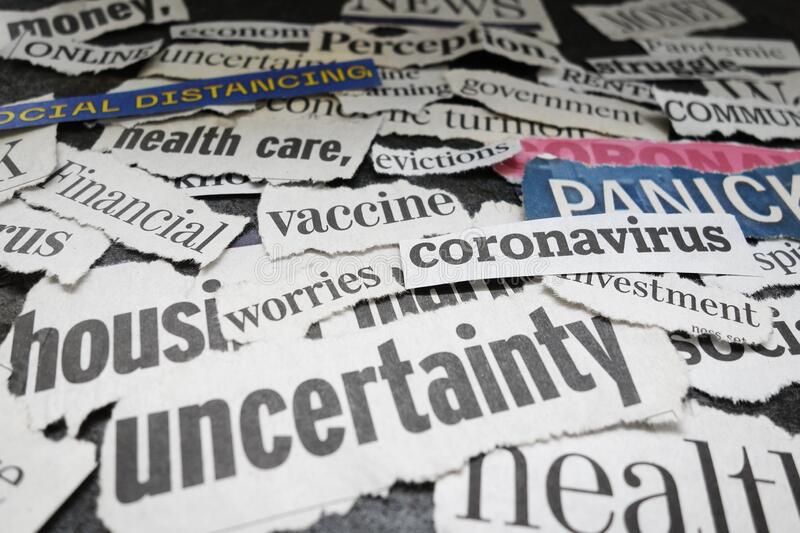

COVID-19 Pandemic: The Real Danger is Agenda ID2020-force vaccination, under police and/or military surveillance

What is the infamous ID2020? It is an alliance of public-private partners, including UN agencies and civil society. It’s an electronic ID program that uses generalized vaccination as a platform for digital identity.

It seems, the more there is written about the causes of the Coronavirus – the more the written analyses are overshadowed by a propaganda and fear-mongering hype. Questions for the truth and arguments for where to look for the origins and how the virus may have spread and how to combat it, are lost in the noise of wanton chaos. But isn’t that what the “Powerful financial elites” behind this intended pandemic want – chaos, panic, hopelessness, leading to human vulnerability – a people becoming easy prey for manipulation?

Today WHO declared the coronavirus COVID-19 a “pandemic” – when there is not the slightest trace of a pandemic. A pandemic might be the condition, when the death to infection rate reaches more than 12%. In Europe, the death rate is about 0.4%, or less. Except for Italy which is a special case, where the peak of the death rate was 6% (see below for further analysis).

China, where the death rate peaked only a few weeks ago at about 3%, is back to 0.7% – and rapidly declining, while China is taking full control of the disease – and that with the help of a not-spoken-about medication developed 39 years ago by Cuba, called “Interferon Alpha 2B (IFNrec)”, very effective for fighting viruses and other diseases, but is not known and used in the world, because the US under the illegal embargo of Cuba does not allow the medication to be marketed internationally.

WHO has most likely received orders from “above”, from those people who also manage Trump and the “leaders” (sic) of the European Union and her member countries, those who aim to control the world with force – the One World Order.

This has been on the drawing board for years. The final decision to go ahead NOW, was taken in January 2020 at the World Economic Forum (WEF) in Davos – behind very much closed doors, of course. The Gates, GAVI (an association of vaccination-promoting pharmaceuticals), Rockefellers, Rothschilds et al, they are all behind this decision – the implementation of Agenda ID2020 – see below.

After the pandemic has been officially declared, the next step may be – also at the recommendation either by WHO, or individual countries, “force vaccination”, under police and/or military surveillance. Those who refuse may be penalized (fines and / or jail – and force-vaccinated all the same).

If indeed force-vaccination will happen, another bonanza for Big Pharma, people really don’t know what type of cocktail will be put into the vaccine, maybe a slow killer, that acts-up only in a few years – or a disease that hits only the next generation – or a brain debilitating agent, or a gene that renders women infertile …. all is possible – always with the aim of full population control and population reduction. In a few years’ time, one doesn’t know, of course, where the disease comes from. That’s the level of technology our bio-war labs have reached (US, UK, Israel, Canada, Australia…).

Another hypothesis, at this point only a hypothesis, but a realistic one, is that along with the vaccination – if not with this one, then possibly with a later one, a nano-chip may be injected, unknown to the person being vaccinated. The chip may be remotely charged with all your personal data, including bank accounts – digital money. Yes, digital money that’s what “they” are aiming at, so you really have no control any more over your health and other intimate data, but also over your earnings and spending. Your money could be blocked, or taken away – as a ‘sanction’ for misbehavior, for swimming against the stream. You may become a mere slave of the masters. Comparatively, feudalism may appear like a walk in the park.

It’s not for nothing that Dr. Tedros, DG of WHO, said a few days ago, we must move towards digital money, because physical paper and coin money can spread diseases, especially endemic diseases, like the coronavirus. A precursor for things to come? – Or for things already here? – In many Scandinavian countries cash is largely banned and even a bar of chocalate can be paid only electronically.

We are moving towards a totalitarian state of the world. This is part of Agenda ID2020 – and these steps to be implemented now – prepared since long, including by the coronavirus computer simulation at Johns Hopkins in Baltimore on 18 October 2019, sponsored by the WEF and the Bill and Melinda Gates Foundation.

Bill Gates, one of the chief advocates of vaccinations for everybody, especially in Africa – is also a huge advocate of population reduction. Population reduction is among the goals of the elite within the WEF, the Rockefellers, Rothschilds, Morgens – and a few more. The objective: fewer people (a small elite) can live longer and better with the reduced and limited resources Mother Earth is generously offering.

This had openly been propagated already in the 1960s and 70s by Henry Kissinger, Foreign Secretary in de Nixon Administration, a co-engineer of the Vietnam war, and main responsible for the semi-clandestine bombing of Cambodia, a genocide of millions of unarmed Cambodian civilians. Along with the CIA-Kissinger engineered coup on 9/11, 1973, in Chile, killing the democratically elected Salvador Allende and putting the military dictator Pinochet in power, Kissinger has committed war crimes. Today, he is a spokesman (so to speak) for Rockefeller and their  “Bilderberger Society”.

Two weeks after the computer simulation at Johns Hopkins Medical Center in Baltimore, Maryland, that “produced” (aka simulated) 65 million deaths (!), the COVID-19 virus first appeared in Wuhan. By now it is almost certain that the virus was brought to Wuhan from outside, most likely from a bio-war lab in the US.

What is the infamous ID2020? It is an alliance of public-private partners, including UN agencies and civil society. It’s an electronic ID program that uses generalized vaccination as a platform for digital identity. The program harnesses existing birth registration and vaccination operations to provide newborns with a portable and persistent biometrically-linked digital identity. GAVI, the Global Alliance for Vaccines and Immunization, identifies itself on its website as a global health partnership of public and private sector organizations dedicated to “immunization for all”. GAVI is supported by WHO, and needless to say, its main partners and sponsors are the pharma-industry.

The ID2020 Alliance at their 2019 Summit, entitled “Rising to the Good ID Challenge”, in September 2019 in New York, decided to roll out their program in 2020, a decision confirmed by the WEF in January 2020 in Davos. Their digital identity program will be tested with the government of Bangladesh. GAVI, the Vaccine Alliance, and “partners from academia and humanitarian relief” (as they call it), are part of the pioneer party.

Is it just a coincidence that ID2020 is being rolled out at the onset of what WHO calls a Pandemic? – Or is a pandemic needed to ‘roll out’ the multiple devastating programs of ID2020?

Here is what Anir Chowdhury, policy advisor of the Bangladesh government program, has to say:

“We are implementing a forward-looking approach to digital identity that gives individuals control over their own personal information, while still building off existing systems and programs. The Government of Bangladesh recognizes that the design of digital identity systems carries far-reaching implications for individuals’ access to services and livelihoods, and we are eager to pioneer this approach.”

Wow! Does Mr. Anir Chowdhury know what he is getting into?

Back to the Pandemic and the panic. Geneva, the European seat of the United Nations, including the headquarters of WHO, is basically shot down. Not unlike the lock-down that started in Venice and later expanded to northern Italy until a few days ago – and now the lock-down covers all of Italy. Similar lock-down may soon also be adopted by France – and other European vassal states to the Anglo-Zionist empire.

Numerous memoranda with similar panic-mongering contents from different UN agencies in Geneva are circulating. Their key message is – cancel all mission travel, all events in Geneva, visits to the Palais des Nations, the Geneva Cathedral, other monuments and museums. The latest directives, many agencies instruct their staff to work from home, not to risk contamination from public transportation.

This ambiance of panic and fear – outstrips any sense of reality, when the truth doesn’t matter. People can’t even think any more about the causes and what may be behind it. Nobody believes you (anymore), when you refer to Event 201, the coronavirus simulation, the Wuhan Military Games, the closing last August 7, of the high-security biological war lab at Fort Detrick, Maryland…. what could have at one point been an eye opener for many, today is sheer conspiracy theory. The power of propaganda. A destabilizing power – destabilizing countries and people, destroying economies, creating hardship for people who may lose their jobs, usually the ones who can least afford it.

Also, at this time it becomes increasingly important to remind people that the outbreak in China was targeting the Chinese genome. Did it later mutate to transgress the ‘borders’ of Chinese DNA? When did that happen, if it happened? Because at the beginning it was clear that even the infected victims in other parts of the world, were to 99.9% of Chinese descent.

What happened later, when the virus spread to Italy and Iran, is another issue, and opens the way to a number of speculations.

(i) There were various strains of the virus circulated in sequence – so as to destabilize countries around the world and to confound the populace and media, so that especially nobody of the mainstream may come to the conclusion that the first strain was targeting China in a bio-war.

(ii) In Iran, I have a strong suspicion that the virus was an enhanced form of MERS (Middle East Respiratory Syndrome, man-made, broke out first in Saudi Arabia in 2012 , directed to the Arabic genome) – which was somehow introduced into government circles (by aerosol spray?) – with the goal of “Regime Change” by COVID19-caused death. Its Washington’s wishful thinking for at least the last 30 years.

(iii) In Italy – why Italy? – Maybe because Washington / Brussels wanted to hit Italy hard for having been officially the first country to sign a Belt and Road (BRI) accord with China (actually the first was Greece, but nobody is supposed to know that China came to the rescue of Greece, destroyed by Greece’s brothers, the EU members, mainly Germany and France).

(iv) The hype about the high death to infection rate in Italy, as of the time of this writing: 10,149 infections vs. 631 deaths = death rate of 6.2 (comparatively Iran: 8042 infections vs. 291 deaths = 3.6 death rate). The death rate of Italy is almost double that of Iran and almost ten-fold that of average Europe. (Are these discrepancies the result of failures in the establishing reliable data pertaining to “infections”, see our observations pertaining to Italy below).

Why? – Was is Italy being affected with virus panic? Was there a much stronger strain introduced to Italy?

The common flu in Europe in the 2019 / 2020 season, has apparently so far killed about 16,000 (in the US the death toll is, according to CDC between 14,000 and 32,000, depending on which CDC website you look at).

Could it be that among the Italian coronavirus deaths there were also common flu victims, as the affected victims are mostly elderly with respiratory preconditions? Also, symptoms are very similar between coronavirus and the common flu, and nobody questions and checks the official authorities’ narrative?

Maybe not all the coronavirus strains come from the same laboratory. A journalist from Berlin of Ukrainian origin, told me this morning that Ukraine is host to some 5 high security US bio-war labs. They test regularly new viruses on the population – yet, when strange diseases break out in the surroundings of the labs, nobody is allowed to talk about it. Something similar, she says, is happening in Georgia, where there are even more Pentagon / CIA bio-war labs – and where also new and strange diseases break out.

All of this makes the composite picture even more complicated. Overarching all is this super hype is profit driven, the quest for instant profit, instant benefits from the suffering of the people. This panic making is a hundred-fold of what it’s worth. What these kingpins of the underworld, who pretend to run the upper world, perhaps miscalculated, is that in today’s globalized and vastly outsourced world the west depends massively on China’s supply chain, for consumer goods, and for intermediary merchandise – and, foremost for medication and medical equipment. At least 80% of medication or ingredients for medication, as well as for medical equipment comes from China. The western China dependence for antibiotics is even higher, some 90%.  The potential impacts on health are devastating.

During the height of the COVID-19 epidemic China’s production apparatus for everything was almost shut-down. For deliveries that were still made, merchandise vessels were regularly and categorically turned back from many harbors all around the world. So, the west has tricked itself into a shortage-of-everything mode by waging a  de facto “economic war” on China. How long will it last? – Nobody knows, but China’s economy which was down by about half, has rapidly recovered to above 80% of what it was before the coronavirus hit. How long will it last to catch up with the backlog?

What is behind it all? – A total crackdown with artificially induced panic to the point where people are screaming “help, give us vaccinations, display police and military for our security” – or even if the public despair doesn’t go that far, it would be easy for the EU and US authorities to impose a military stage of siege for “health protection of the people”. In fact, CDC (Center for Disease Control in Atlanta), has already designed harshly dictatorial directives for a “health emergency”.

Along with forced vaccination, who knows what would be contained in the cocktail of ‘’mini-diseases” injected, and what their long-term effects might be. Similar to those of GMOs, where all sorts of germs could be inserted without us, the commons, knowing?

We may indeed be just at the beginning of the implementation of ID2020 – which includes, forced vaccination, population reduction and total digital control of everybody – on the way to One World Order – and global financial hegemony – Full Spectrum Dominance, as the PNAC (Plan for a New American Century) likes to call it.

A windfall for China. China has been purposely targeted for “economic destruction”, because of her rapidly advancing economy, an economy soon to overtake that of the now hegemon, the US of A, and because of China’s strong currency, the Yuan, also potentially overtaking the dollar as the world’s main reserve currency.

Both occurrences would mean the end of US dominance over the world. The coronavirus disease, now in more than 80 countries, has crashed the stock markets, a decline of at least 20% over the last few weeks – and rising; the feared consequences from the virus of an economic slow-down, if not recession, has slashed petrol prices within about two weeks almost in half. However, without China’s central bank interference, the Yuan’s value vis-à-vis the dollar has been rather stable, at around 7 Yuan to the dollar. That means, the Chinese economy, despite COVID-19, is receiving still much trust around the globe.

Advice to China – buy all the US and European corporate shares you can at current rock-bottom prices from the stock markets that collapsed by a fifth or more, plus buy lots of oil futures. When the prices recover, you have not only made billions, probably trillions from the west, but you also may own or hold significant and influence-yielding amounts of shares in most of the largest US and European corporations – and will be able to help call the shots of their future endeavors.

There is however, one little silver lining oscillating at the horizon full of dark clouds. It could miraculously be an awakening of consciousness of a critical mass that could put an end to it all. Although, we seem to be far from such a miracle, somewhere in a hidden corner of our brain, we all have a spark of consciousness left. We have the spiritual capacity to abandon the disaster path of western neoliberal capitalism, and instead espouse solidarity, compassion and love for each other and for our society. That may be the only way to break the gridlock and doom of western egocentric greed.

What Really Happens When the Lights Go Out: “When the ventilators failed, the nurses and doctors had to do it manually by squeezing a rubber lung,“ They were taking it in turns to keep these patients alive

As hospital patients in Venezuela found out last year during a five-day nationwide blackout, power cuts can do more than just turn out the lights.T

There was nothing the doctors could do. In almost total darkness, broken only by the beam of a couple of torches and the glow from their mobile phones, the hospital staff watched helplessly as their patient died in front of them. The elderly woman was suffering a blood clot in her lungs – a common, but life-threatening problem that can be treated with the right drugs and equipment. 

Everything the doctors needed to save the woman – including a mechanical ventilator – was tantalisingly close, in the intensive care unit several floors below. But with no power in the nine-floor hospital in Maracay, they had no way to reach it. Without electricity the lifts did not work. 

It was a situation being played out in hospitals dotted all over Venezuela in March 2019 during a five-day nationwide power black out that accompanied the growing political and economic crisis facing the South American country. Unprepared for the sudden loss of power, back-up generators in some hospitals failed while others only had enough energy to keep a few of the most vital wards functioning. 

By the end of the five days an estimated 26 people had died in the country’s hospitals as a result of the power outage, according to figures collated by Doctors for Health, a group of concerned medics that have been monitoring the growing health crisis in Venezuela. Among those who died were kidney failure patients who could not get the vital dialysis treatment they needed, and gunshot victims on whom surgeons could not operate in the near darkness.

Alongside the deaths were stories of pregnant women giving birth in dark hospital wards, doctors treating patients and surgeons performing operations using their mobile phones as torches, and babies in failing incubators.

“These babies need special care and without electricity for the incubators staff in neonatal units had to find blankets to keep the babies warm,” says Julio Castro, from the school of medicine at the Central University of Venezuela, who has been compiling the data for Doctors for Health, describing some of the stories that hospital staff had told him about the power outages.

“When the ventilators failed, the nurses and doctors had to do it manually by squeezing a rubber lung,” he says. “They were taking it in turns to keep these patients alive.”

The problems extended beyond the hospitals. Elderly people in high-rise flats had to be carried down stairs. People cooked food with fire and ate by candlelight. Without power, food spoiled in warming refrigerators, traffic lights failed and transport systems ground to a halt. The pumps that drove running water to people’s homes stopped, sending residents on a desperate search for water in nearby rivers, streams and even sewers. 

Throughout the year, Venezuela has been plagued with power outages. Some are short and localised, lasting just a few minutes, others take hours for the power to come back, but some go on for days. As they have continued, Castro and his colleagues have recorded more deaths as a result.

“If you have even four hours without electricity in a hospital, it is far from normal,” says Castro. “The situation with the water is even worse. There are some hospitals that are having to ask patients to bring in their own water with them because they simply cannot get enough supply.”

The situation he describes seems almost apocalyptic in a country that until a few years ago was one of the richest in South America and has the largest proven oil reserves in the world. Although the Venezuelan government blames sabotage and terrorists for the blackouts, others have pointed to years of poor investment and neglect of the country’s power grids as the cause.

But such widespread and long lasting power cuts, known as black sky events, are not restricted to countries teetering on the brink of collapse. Each year millions of people in the US and Canada are plunged into darkness by passing storms that bring down power lines. 

In June 2019, almost all of Argentina, Uruguay and Paraguay were hit by a power outage that left nearly 40 million people without electricity. In August, almost a million people in the UK were left without power, trapping commuters on busy trains, when lightning strikes caused a gas-fired power plant and an offshore wind farm to shut down simultaneously.

These events, however, are minor in comparison to the kind of power outages that experts fear could be in store in the future. Growing demand on our electricity supplies from rising populations and new technologies like electric cars will face increasing instability as we shift to more renewable, but intermittent energy sources like wind and solar power. Extreme weather events driven by climate change will only heighten the risk to our power supplies further.

We used to use the phrase ‘When the lights go out’, but the lights not working are the least of our worries now – Juliet Mian

“So much of our lives and almost everything we do is now dependent on energy, and particularly on our electricity supplies,” says Juliet Mian, technical director of the Resilience Shift, an initiative to help organisations and individuals prepare for failures in critical infrastructure. “We used to use the phrase ‘when the lights go out’, but the lights not working are the least of our worries now.”

She is right. While the term “black sky” events illustrates perhaps the most visible impact of widespread power failures, it fails to convey the scale of the impact these can have. In our modern world, almost everything, from our financial systems to our communication networks, are utterly reliant upon electricity. Other critical infrastructure like water supplies and our sewer systems rely upon electric powered pumps to keep them running. With no power, fuel pumps at petrol stations stop working, road signs, traffic lights and train systems go dead. Transport networks grind to a halt. 

Our complex food supply chains quickly fall apart without computers to coordinate where produce needs to be, or the fuel to transport it or refrigeration to preserve it. Air conditioning, gas boilers and heating systems also rely upon electricity to work.

A little over 100 years ago, our cities ran on human and animal muscle power to ferry goods and waste around. Modern infrastructure is now utterly reliant upon electricity. 

“In today’s world, our systems are highly interdependent and it is very hard to find many systems that are not fundamentally reliant upon power,” says Mian. “A black sky scenario will affect everyone.”

The causes of a black sky event are many. They vary from natural disasters like hurricanes or earthquakes to geomagnetic storms triggered by enormous flares from the Sun, or coronal mass ejections, that send a barrage of electrically charged particles racing across the Solar System and can overload electrical grids. One intense geomagnetic disturbance caused a nine-hour outage across large areas of Canada in 1989.

The Electric Infrastructure Security Council, an international body that reviews threats to power grids, also lists a number of human threats that can trigger a mass black out. These include cyberterrorism attacks or coordinated physical assaults on energy infrastructure such as power stations, and electromagnetic pulses that can disable electricity grids.

“Our national power grids are tremendous feats of engineering and operations that have supported rapid economic growth around the world,” say Melissa Lott, a research fellow at the Center on Global Energy Policy at Columbia University in New York. “But more investment is needed if electric power grids are going to keep up with rapid technology shifts and increasingly extreme weather events.”

She says that while true black sky events are mercifully rare, the deep impact they have on businesses and people means more needs to not only update grid technology and management, but also improve infrastructure so it can be more resilient against physical threats like flooding. 

“In the summer of 2012, blackouts in India cut power to more than 600 million people over two days. In Puerto Rico, Hurricane Maria crippled infrastructure across the island, leaving people in the dark and triggering a humanitarian crisis. In 2018, an earthquake on Japan’s Hokkaido island left more than 5 million people without power.  In order to keep these events from becoming more common and to minimise their impact, we need to invest in our grids.”

Putting measures in place to counter all of these potential threats is difficult and expensive. Critical systems can be guarded from human attacks and they can be shielded from electromagnetic pulses with enough money being spent on them. Building new systems for protecting transformers from coronal mass ejections can also help to keep systems safe. 

But there are some events that cannot be planned for and the complex, interconnected nature of our electricity grids are remarkably vulnerable. Take what happened in September 2003 when a fallen tree brought down a power line in Switzerland’s Lukmanier Pass over the Alps into Italy and 24 minutes later another tree came down onto a line in the nearby Great St Bernard pass. The sudden failure of these two key lines caused other connections to Europe’s electricity network to trip, which triggered power plants across Italy to shut down. The whole of Italy was left without power because of two fallen trees starting a cascade of events.

Modern electricity grids are increasingly interconnected and complicated, making failures like this difficult to predict. Most of Europe now runs off a massive interconnected power grid – probably the largest in the world – that supplies more than 400 million customers in 24 countries. The USA is made up of five different grids. 

But there are some that are seeking ways of anticipating potential power failures and are enlisting the help of artificial intelligence to help them grapple with this highly complex problem. 

When a power plant goes down, for example, it causes an abrupt spike in load on others on the network, which in turn slows down the generators at these plants and causes the frequency held on the grid to decrease. This risks destabilising the delicate balance that electricity grids are held in, and operators have to deploy countermeasures rapidly – often within milliseconds – to prevent sections of the grid being cut off. 

Researchers at the Fraunhofer Gesellschaft research institute in Ilmenau, Germany, recently revealed they are developing an AI system to automatically detect these disturbances and take steps to address them.

The US Department of Energy is also funding $7m (£5.4m) of research into using artificial intelligence to not only predict potential outages and spot anomalies that might lead to larger problems, but also to help find ways of keeping supplies constant in the event of a problem.

General Electric is using machine learning to help analyse weather forecasts past outage history and information on the ground from its response crews to predict the impact that impending storms might have on its networks. It is also using it to predict where its repair crews might need to be so that downed lines can be restored more quickly.

Power grids can also help to protect themselves by increasing the amount of energy storage such as large scale batteries they have available so that supplies can be supplemented when generators do go off-line unexpectedly. 

But completely protecting our power networks from failures is almost impossible, says Mian. 

“We can’t necessarily design our systems so that failures don’t happen,” she says. “There’s so much complexity in our systems these failures can cascade and they can become much more widespread, which means the failure is quite often unavoidable. But what we can do is design our systems so that they can respond and recover quickly.” 

This is what the Resilience Shift is now trying to improve. It has been organising exercises in collaboration with the Electric Infrastructure Security Council (EIS) that help large organisations, universities, schools, community groups and even families prepare themselves for an event that might lead to mass power cuts for several days at a time.

The Emergency All-sector Response Transnational Hazard Exercise, or Earth Ex, is an online exercise that allows people to rehearse the decisions they need to make and put in place the plans they need should the worst happen. (Try Earth Ex for yourself and see how prepared you are.)

When the electricity grid fails, there is this risk of cascading impacts from what might seem to be a relatively minor event – John Heltzel

“We want people to be thinking about these things long before there is a problem,” says John Heltzel, director of resilience planning at the EIS. “It’s important because when the electricity grid fails, there is this risk of cascading impacts that can occur from what might at first seem to be a relatively minor event. 

This cascade effect is where the real damage can be done. As the people of Venezuela have discovered, even basic service like water can stop when the power goes out. 

“It’s effectively [like going] back to the dark ages,” says Heltzel.

A report by scientists at University College London mapped out how the loss of power can filter through communities, from the loss of health care provision and sanitation services to citizens trapped in lifts and disruption to transport systems. 

Then there are the social consequences that percolate out. Crime rates often go up during blackouts as they provide opportunities for theft and fraud. The supply of cash and credit – particularly in our modern societies so reliant upon electronic and card payments – dry up meaning people have to rely on whatever cash they happen to have squirreled away. Communication networks and the ability to contact loved ones disappear, while vulnerable people like the elderly are often left stranded in their own homes. 

Businesses are also left largely unable to operate, resulting in huge economic impacts. In 2004, the Department of Energy estimated the annual cost of power outages in the US to be around $80bn (£62bn) annually. When two million customers in California had their supplies cut for two days in October this year, experts estimated the cost to the economy to be around $2.5bn (£1.9bn).

Heltzel knows first hand the kind of chaos large-scale power outages can cause. He is a retired brigadier general who spent 33 years in the Kentucky National Guard and also served as the deputy commander of the Kentucky Joint Force Headquarters. In 2009, the state was hit by a series of ice storms that brought powerlines tumbling down under the weight of rime ice and snow building up on the wires.

“On one day we got an ice storm, followed by a snow storm, followed by another ice storm,” recalls Heltzel. The build up of ice was so great it even brought down steel utility structures designed to withstand hurricane force winds and snapped wooden power poles “like toothpicks”, according to a later Congressional hearing. 

“We lost power in all of western Kentucky,” says Heltzel. “From a state perspective, of 120 counties, we had 114 placed into a state of emergency. It meant that people were stuck in their houses and couldn’t get to the stores to buy food. So, we had people that were going hungry and we had people whose wells were frozen over. They could not get water through the normal municipal water systems. At the same time the communications networks weren’t working, so they could not call for help.”

The Kentucky National Guard mobilised 12,000 soldiers and airmen to go door-to-door delivering food to people. They also requested emergency generators to get the water supply back up and running. Emergency communication stations were brought in from other states to restore the telephone and radio network. 

Even so, the hardest hit areas were without power for weeks.

“We were flying people who managed the electricity grid up and down their power lines in our helicopters so they could assess how many poles and cables they needed,” says Heltzel. “But even with all the resources we brought to bear, it took four and half weeks for the last house to be reconnected.”

Around 35 people in Kentucky and 30 in neighbouring states lost their lives. At least eight of the deaths were due to carbon monoxide poisoning due to diesel generators and kerosene heaters being used indoors without proper ventilation. 

This is why Heltzel believes planning for a black sky event before one happens is so important. Organisations like hospitals, water suppliers and large companies can make sure they regularly service their back-up generators, and have a sufficient supply of fuel to keep them running. Churches and schools can make sure they have blankets on hand and other facilities to help those who might become stranded and need shelter.

On an individual level, we can all take steps too. From simple things like having torches with plenty of spare batteries to hand, to ensuring we have adequate supplies of bottled water to fall back on – the EIS recommends having two weeks worth of water with two litres a day per person and one litre for pets. Keeping cupboards stocked with non-perishable foods like rice, pasta and canned vegetables, is also advised.

But the Heltzel and his team also have some more unusual tips for families looking to prepare for a black sky event. Baby formula, for example, is a good source of nutrition even if you don’t have young children. A good supply of rubbish bags is also important – these can be tucked under the toilet seat if the water stops running, allowing you to bury your waste outside.

Keeping a stash of emergency cash could also be a life saver.

We want people to be part of the solution rather than the problem – John Heltzel

“One of the things we talk about for individuals and families is turning yourself from being a survivor into someone who can help with the restoration,” adds Heltzel. “We want people to be part of the solution rather than the problem. That might be being part of wider community efforts to build resilience or simply helping others who are not as prepared.”

In Venezuela, the medical staff have become a perfect example of this. Following the first nationwide black outs, the number of deaths in hospitals have declined with each subsequent black out. Julio Castro, from Doctors for Health, puts this partly down to the shorter length of the power outages, but also to the preparations that hospital staff put in place.

“Now they are aware of the problem they have put procedures in place,” says Castro. “They have made sure they have fuel and the back up generators are working. They have rotas for when they need to do manual ventilation and manual back ups for their equipment.

“It is keeping people alive.”

This article was edited on 28 October 2019 to include quotes from Melissa Lott, research fellow at Columbia University, New York.

Technological Armageddon: A Wake-Up Call – HOW ARE WE GOING TO DEAL WITH ROBOTS THAT HAVE NO CONSCIOUSNESS

When we think about the future our horizons are constrained by present day ideologies and social systems.

For instance Democracy encourages us to believe in a democratic future with globalised capitalism.

If we think in months we focus on immediate problems such as the present day wars, the Covid crisis, the Donald Trumps, the economy, if we think in decades, the climate, the growing inequality, the loss of jobs to automation.

But if we look at life in total, science is converging on data processing and AI that is developing itself with algorithms, (which we are losing control over.)

Intelligence is decoupling from consciousness and soon rather than later it will be consigned to Google, Facebook, Twitter, Smartphones and the like.

You might think that the above question is stupid but it won’t be long before we will be witnessing the most unequal societies in history.

We humans will soon be living with robots that process data without any subjective experiences or consciousness or moral opprobrium.

This presentation PROOVES WITHOUT DOUBT that America is in for a major fight that will put you and your family in the firing line, literally… So make sure you watch this presentation while it’s still online…

They will have no notion of self, existing only in the present unaware of the past or future and therefore will be unable to consciously plan for future eventualities. Unconscious algorithms in their brains rather than conscious images in a mind.

We are already living with large AI platforms that are monopolizing the fruits of globalisation with billions being left behind.

With us accepting this as if natural.

The promise of globalisation is a lie, when it comes to AI and prosperity for all. We are all becoming redundant with biotechnology becoming only available to the riches of us.

You might say so what that has always been the case. And you would be right up to now.

Take for instance, when someone says algorithmic trading, it covers a vast subject not just buying and selling large volumes of shares automatically at very high speeds by unsupervised learning algorithms.

They are fighting with each other for supremacy on the market, prey on other algorithms in order to blunder the world exchanges for profit to such an extent that they now effectively in control of capitalism.  

There are four major types of trading algorithms.  There are:

  • Execution algorithms
  • Behavior exploitative algorithms
  • Scalping algorithms
  • Predictive algorithms.

or look at Google an Algorithm’s company that now owns most of the largest data sets in the world stored in its cloud.

It will be too late when we are asking ourselves. What’s more valuable – intelligence or consciousness?

Then ask yourselves what happens to society, politics, and daily life when non-conscious but highly intelligent algorithms know us better than we know ourselves?

Whatever view one takes on artificial Intelligence ethics. You can rest assured that we will see far more nut cases blowing themselves up, far more wars over finite resources, with vast movements of people.

We are only on the outskirts of mind science that presently knows little about how the mind works never mind consciousness.  We have no idea how a collection of electric brain signals creates subjective experiences however we are conscious of our dreams.

99% of our bodily activities take place without any conscious feelings.

The first problem that arises when examining consciousness is that a conscious experience is truly accessible only to the person who is experiencing it. Despite the vast knowledge we have gained in the field of mathematics and computer science, none of the data processing systems we have created needs subjective experiences in order to function.

None feel pain, pleasure, anger or love.

These emotions are vanishing into algorithms that are having an effect on how we see the world but also how we live in it.  If not address now all moral and political value will disappear, turning consciousness into a kind of mental pollution. After all computers have no minds.

When intelligence is approached in an incremental manner, with strict reliance on interfacing to the real world through perception and action, reliance on representation disappears. It won’t be long before we will not be unable to distinguish the real world from the virtual world.

Since there is only one real world and there can be infinite virtual worlds the probability that you will inhabit this sole world is zero. So it won’t matter whether computers will be conscious or not.

Is starting to feel like it’s every man for himself, Is possible that right now, a global crisis is upon us, Without even knowing… And the virus may not be the biggest threat, but the crisis that follows, Everyday goods that keep us alive will be gone, I’m talking, food, fresh water, medicine, clothes, fuel…

bnr

It will only matter what they think about you.

As neuroscientists acquired more and more data about the workings of the brain, cognitive sciences, and their stated purpose is to combine the data from numerous disciplines so as better to understand such diverse phenomena as perception, language, reasoning, and consciousness.

Even so, the subjective essence of “what it means” to be conscious remains an issue that is very difficult to address scientifically.

To really understand what is meant by the cognitive neurosciences, one must recall that until the late 1960s, the various fields of brain research were still tightly compartmentalized.

Brain scientists specialized in fields such as neuroanatomy, neurohistology, neuroembryology, or neurochemistry. Nobody was yet working with the full range of investigative methods available, but eventually, the very complexity of the subject at hand-made that a necessity.

Today, the neurosciences include disciplines such as neurophysiology (the functioning of the neurons), neuroanatomy (the anatomical structure of the nervous system), neurology (the clinical effects of pathologies of the nervous system), neuropsychology (the clinical effects of pathologies of the nervous system on cognition and emotions), and neuroendocrinology (the relations between the nervous system and the hormonal system), and research centres tend to house several such disciplines under the same roof in order to encourage ongoing exchanges and joint publications.

Cybernetics is tells us, life is both a system and information, whereas a machine is a system that feeds on information.

If you cut the power to a computer, it will no longer be able to use the information supplied to it, but it will still be a computer, ready to work again when the power comes back on. But if you cut off a plant’s sunlight or an animal’s food, it will quickly become an inert body and start to decompose. Its structure coincides with the energy that feeds it and that it transforms or, more precisely, informs.

Because cybernetics is so closely linked with the concepts of structures and levels of organization, this new science quickly turned into artificial intelligence which is turning creativity a fundamental feature of human intelligence into mundane like button clicking.

Creativity is not a special “faculty”, nor a psychological property confined to a tiny elite. Rather, it is a feature of human intelligence in general. It is grounded in everyday capacities such as the association of ideas, reminding, perception, analogical thinking, searching a structured problem-space, and reflective self-criticism. It involves not only a cognitive dimension (the generation of new ideas) but also motivation and emotion, and is closely linked to cultural context and personality factors.

Current AI models of creativity focus primarily on the cognitive dimension of intelligence called short term pleasure.

At the moment an algorithm is nothing else than an extremely formalised set of beliefs translated into routines.

The ultimate vindication of AI-creativity would be a program that generated novel ideas which initially perplexed or even repelled us, but which was able to persuade us that they were indeed valuable.

We are a very long way from that.

However my main concern is whether the AI techniques will develop into quantum algorithms totally out of control.

The difficulty of predicting the future is not just a cliche’, it’s a basic fact of our existence. Part of the hypothesis of the Singularity is that this difficulty is just going to get worse and worse.

Yes, creating AGI is a big and difficult goal, but according to known science it is almost surely an achievable one. There are sound though not absolutely confident arguments that it may well be achievable within our lifetimes.

If Artificial general intelligence is on the not too distant horizon, surely we should be insuring that it is not owned by any one corporation and that at its core it respects our core values.

To achieve this we cannot surely let wealth to be concentrated in fewer and fewer hands, or to be let to the market place, or any world organisation that is not totally transparent and self financing.

We therefore as a matter of grave urgency need a new world organization that vets all technology, algorithms. (See previous posts)

As long as the algos don’t go to war with each other and cause something even more difficult to diagnose than a crash on the stock markets they are safe is as naive as saying ” It’s going to be Great.”Algos are increasingly in charge of a world that is precious to us all. Basically we’re entering the era of the machines controlling everything.

If we want to create new different societies with human dignity for all  we need to do something about it.

Our forefathers lost knowledge must be kept alive by all means. So before you go please take a second and think how you can benefit from their wisdom.

In the next crisis these lost skills will be more valuable than gold, food supplies and survival equipment combined. These skills have been tested and proven to work for centuries.

This is wild lettuce also known as opium lettuce… for a good reason. It has side effects similar to Morphine but milder, being by far the strongest natural painkiller that grows in your backyard.

We Are Headed for Violent Civil War- The warnings continue to go out. The situation continues to deteriorate

On October 1st, with little fanfare, Politico published an extraordinary opinion piece that may be the most important thing I’ve read all year. Titled “Americans Increasingly Believe Violence is Justified if the Other Side Wins,” the essay was penned by three “senior fellows” at the Hoover Institution, New America, and the Hudson Institute, as well as a professor of “political communication” at Louisiana State University and a professor of government at the University of Maryland (that’s five authors, in case you lost count).

The major takeaway is presented in the graph that appears below:

Way back in November of 2017 (my, how long ago that seems . . . ) a mere 8% of both Democrats and Republicans held that it is legitimate to use violence to advance their political goals. Actually, there’s nothing “mere” about it. It ought to surprise us that such a sizeable percentage of both parties could hold such a radical view. Also surprising is Republicans running neck and neck with Democrats. Contrary to how they are perceived by Leftists, conservatives are slow to embrace the idea of violence, or any sort of punitive measures against their opponents. Their Achilles heel, in fact, is commitment to “fair play.”

We must remember that when these numbers were compiled it had been a year since the 2016 election. A year of unhinged rhetoric by the Left, and repeated calls for Trump to be assassinated. Madonna spoke about her fantasies of blowing up the White House, and “comedian” Kathy Griffin held up an effigy of Trump’s severed head. Of course, those were the unserious, tongue-in-cheek threats. Countless other people made similar threats, quite openly, and seemed to be pretty serious about it. To my knowledge, none of them was charged with a crime.

As Trump Derangement Syndrome continued to spread, it was actually a healthy sign that more Republicans began to entertain the idea of using violence as a political tool. Leftists presented themselves as having no boundaries. There was no low to which they would not stoop, no trick too dirty. They were threatening to attack and kill not only the President, but his supporters, and, in fact, the entire white race. They made it quite clear that they could not be reasoned with. Faced with an enemy like this, violence was bound to become more attractive, or at least more justifiable, in the eyes of even the most mild-mannered Republican voter.

Almost a year later, in October 2018, the percentage of Democrats condoning violence had jumped to 13. It had become obvious to them, at this point, that the results of the 2016 election were not going to be reversed, though many still held out the hope that Robert Mueller would uncover some dirt that would prove Trump’s undoing. True to form, conservatives lagged behind (see what nice people we are?), with a mere 11% condoning violence. Still, the number had risen. At least part of this has to be attributed to the Kavanaugh hearings (of September-October), which were a wakeup call for many Republicans, including Lindsay Graham, who seems to have sort of lost his innocence as a result. The hearings proved once and for all, if any more proof had been needed, that liberals have no principles whatever, and that attempts to play fair with them will only backfire. One can’t really blame Republicans for that 11%. Please pass the ammo.

But we hadn’t seen anything yet. That was before COVID and BLM. By June of the current year, these percentages had doubled, and Dems and Republicans were now equally in favor of breaking heads: 30% of both groups now condoned violence to advance political goals. Let us pause to consider this number once more: 30%. Let us also pause to consider that this poll was conducted at the beginning of June, when the George Floyd riots had just gotten going.By December 2019, things had gotten genuinely scary. The trend had continued. And how. This was the month that the House approved articles of impeachment against Trump. Earlier in the year, in April, the Mueller report was made public, revealing that we had been subjected to two solid years of hysteria about “Russia collusion” for absolutely no reason whatever. The libs were frustrated, to put it mildly. 16% of them now condoned violence. Republicans were behind the curve again, but not by much, with 15% of them thinking the same way.

By September 1st, the percentage of liberals condoning violence had risen by just three points. Still, at 33% this constitutes one third of all Dems. The more interesting result came from the Republicans, however. The percentage in question had risen to 36%, and for the first time Republicans rated as more violence-approving than Dems. If you will read the fine print, you will find that the September poll’s margin of error is 2.0 percentage points. Thus, the three percentage points separating Republicans from Democrats are statistically significant; conservatives are now demonstrably more in favor of violence than liberals.

Has the sleeping giant awakened?

We were slow to consider violence an option. Unlike liberals, after all, we really do have principles, and we did not want to be like them. But they have pushed us to this point, and it’s difficult to see how there can be any debate about that. Months of watching our cities burn. Months of our history being torn down. Months of draconian lockdowns and arbitrary rules imposed by Democrat governors and mayors. Months of being told that we had to shelter in place, while BLM was given free rein to loot and burn. Months of being told we have no right to defend ourselves; that if you are white, you are automatically guilty. Countless lives and businesses destroyed. Given all of this, and more, it’s surprising that the number isn’t 56% — or 76% or 86%. But since many conservatives are probably afraid to say they might condone violence, I think we can round that 36% up a bit. Quite a bit.

The other day I spoke with a friend who lives in New York. He told me that he recently drove to his local rifle range, which he has visited many times in the past. He had not been there for several months, however, and when he arrived he was shocked to find a line stretching out the door (made up entirely of white people) and what wound up being a 45 minute wait. When he finally got inside, he asked the proprietor about the large turnout and was told that it had been like this every weekend since the BLM riots began, and that the numbers were increasing. I hope all those folks brought their own ammo, because my friend also told me the store was completely sold out. And this was New York, not South Carolina.

Two weeks prior to the Politico essay, The Hill published an opinion piece by a former federal prosecutor titled “Why Democrats Must Confront Extreme Left-wing Incitement to Violence.” It’s a weak and cowardly piece of writing but is nevertheless interesting on multiple levels. The author begins by asserting that Right-wing groups “by far pose the greatest threat of violence.” He bases this on a study by something called the Center for Strategic and International Studies (CSIS). This group looked at 900 cases of politically motivated plots or attacks since 1994, and concluded that Right-wing extremists had claimed the lives of 329 people, whereas “Antifa members haven’t killed any.”

This is like somebody saying, in January of 2020, “Over the last 25 years, seasonal flu has claimed the lives of 890,000 Americans,[1] but COVID-19 hasn’t killed any Americans. Therefore, the flu is the real threat.” This would have been a ridiculous position, because COVID was something new and entirely unknown. We had no way of knowing, in January, how dangerous COVID was going to be. And, since then, it has, in fact, claimed far more American lives than the flu ever takes in a given year.

Similarly, since May we have seen Left-wing violence the likes of which this country has not seen since the 1960s. And this phenomenon is fundamentally new because it has been condoned and encouraged by state and local officials, prominent Democrats in Congress, and establishment journalists and pundits. The authors of the CSIS study warn of the dangers posed by groups like the “boogaloos,” a group of “Right-wing, anti-government extremists” bent on “creating a civil war in the United States.” Oddly enough, I’d never heard of the boogaloos until reading this article, and I think I’m pretty “plugged in.”

I know nothing about this group, but I do know one thing for certain: if the boogaloos, or any other “Right-wing extremists” took to the streets and behaved as BLM and Antifa have behaved – looting, burning, assaulting, threatening, or even just blocking traffic – they would have been crushed within twenty-four hours. All the might of state and local police forces and federal law enforcement would have been unleashed against them, and the cops would not have played nice. Many “Right-wingers” would have wound up dead or injured, and the survivors would have faced extensive criminal charges.

This, gentle reader, is why “Right-wing violence” is not the greater threat. Left-wing violence is taking place with the approval and support, financial and otherwise, of the establishment. It is a threat to all ordinary Americans, especially white Americans. Right-wing violence only poses a threat (so far, a very mild one) to the establishment.

The author of The Hill piece, while claiming that Right-wingers pose the greatest threat, wishes nonetheless to warn liberals that their own people are becoming far more violent and that they need to address this problem. This is after referring to the riots we’ve seen since May as “overwhelmingly peaceful social justice protests.” But he fears Democrats aren’t listening:

Perhaps Democrats are afraid of leaving the impression of a false equivalency between extreme right- and left-wing violence. Perhaps they are fearful that acknowledging the threat posed by extreme left-wing incitement gives credibility to Trump’s false narrative that Democrat-run cities are burning because of left-wing violence (they are not burning) and his promotion of outlandish conspiracy theories, such as that people in “the dark shadows” allegedly control Joe Biden.

In other words, the author, a Leftist in deep denial about the threat posed by the Left, wonders why the Left is in such deep denial about the threat posed by itself. You can’t make this stuff up.

If Biden does win, and if the Democrats manage to gain complete control of Congress, we can look forward to an assault on the first and second amendment rights of Americans, in the form of hate speech legislation and gun control. Further, Biden and Harris have signaled that they will pack the Supreme Court – simply by repeatedly refusing to answer the question of whether they will. Democrats are also likely to grant statehood to the District of Columbia (thus increasing their numbers in Congress), amnesty millions of illegals and put them on a fast track to citizenship, and abolish the Electoral College.In August, Joe Biden asked “Does anyone believe there will be less violence in America if Donald Trump is reelected?” This was widely interpreted by conservatives as a threat. The truth is that the violence will continue regardless of who wins the election. Trump’s reelection will guarantee further violence by the Left. But since Democrats have encouraged the violence and done nothing to contain it, there is every reason to believe that it will continue if Biden wins. Indeed, the “hands off” attitude the establishment has taken to Left-wing violence makes it almost inevitable that the violence will escalate, meaning that it will become more deadly. The Far Left has been emboldened.

This is, quite simply, a recipe for civil war – of some kind or other. It is certainly a recipe for the further fragmentation of the country. 62% of white men voted for Trump in 2016, and none of them wants what I have just indicated the Democrats have to offer. The elimination of the Electoral College, if it happens, could be the country’s tipping point toward dissolution. It would mean that millions of Americans in the heartland of the country (most of them white) would be politically disenfranchised. The situation in the US is already volatile; the disenfranchisement of large numbers of citizens would make it much worse. This is particularly true given that those citizens are the backbone of the country: their decency, hard work, and tax money keep it afloat. It is unlikely that those people would readily accept living at the mercy of a combination of urban elites and non-white freeloaders.

Of course, the same situation would be created if demographic projections are borne out, and whites become a minority by 2044, regardless of what happens to the Electoral College. And the re-election of the hapless Trump would not even slow this process. Given demographics, our long-term prospect is a Democratic takeover. So that even if Democrats lose in 2020 – even if they lose big – everything I projected above about what the Democrats will do when they take power is still going to happen, it just may take a little longer.

My own prediction for what will happen to the US is that it will eventually split up along racial and political lines. Already, there is hardly any “union” to assess the state of. Further, all signs now indicate that this is not going to be a peaceful process. The Left began the violence, and they have now succeeded in pushing a whopping 36% of conservatives to approve of answering violence with violence.

My readers on the Right, who are far more discerning than average folks, may be skeptical for different reasons. According to some of them, the chances of violent civil war or revolution are zero, since the establishment has far greater firepower. As I said above, if the Right took to the streets like BLM, they would be mercilessly crushed. But suppose they did it again. And again. And suppose the anger that sent them out into the streets did not diminish, but increased. It is naïve to think that determined individuals, through persistent guerilla warfare and other forms of resistance, cannot destabilize a government – especially when the government is run by decadent, out-of-touch elites who inhabit an ideological and social bubble. It has happened before, and can happen again.Some of my readers will greet these claims with skepticism. Average Americans find it impossible to imagine their country disintegrating in violent conflict. This is the result of years of propaganda about the “stability” of our Republic, the “miracle” of our peaceful transfer of power every four years, yada yada. Average Americans are bizarrely oblivious to just how violent this country really is and always has been (something that has not escaped the notice of the rest of the world): sky-high rates of murder, rape, and assault; urban riots every few years; the assassination of political figures; regular “spree killings”; and a civil war that claimed the lives of around 700 thousand people. Average folks may not want to think about it, but a second civil war is quite plausible.

Of course, the goal should not be “revolution.” There is no reason to want to “take over” the United States, because it is not desirable that the United States should continue to exist. We don’t want to live with these people anymore, even if we are the ones “in charge.” Instead, what we should aim for is independence – in other words, the partitioning of the country; carving our own country out of this country and saying goodbye to those other people. Folks, it’s either that or persuade the Europeans that we have the right of return. But that’s not going to happen.

So here are my predictions for the near future:

Left-wing violence will continue, indeed it will escalate. However, white conservatives will be increasingly willing to challenge Leftists in the streets. The Politico numbers persuasively suggest that this is likely, and we already see signs of it (notably, the Kyle Rittenhouse episode). A Trump loss will further radicalize many white conservatives. A Trump win will also radicalize white conservatives, because the response will be even more violence from Leftists. The continued anti-white rhetoric, which shows no signs of abating, will also do the work of radicalization. I predict that we will see more acts of domestic terrorism perpetrated by Right-wing groups, and that many new such groups will spring up in the next several years. These acts will be heavily condemned by all the usual suspects, but this will have little effect, since the double standard is now too obvious. Even Mom and Dad, drinking Snapple and watching Hannity, will now approve of Right-wing violence. Unlikely? Look at that chart above and think again. How likely is it that the trend has peaked at 36%?

I also predict that we will see cases of mini-secessions, in which towns, cities, and counties that are largely white and Republican will begin resisting the power of state and federal governments (e.g., not enforcing certain laws). This will make parts of the country hard to govern. These areas will become a mecca for white conservatives. They will grow in population and geographic reach, as new arrivals take residence just over county or city lines. Tired of the dirty looks they get, many non-whites and liberals will go elsewhere. In short, there will be de facto secession before secession is ever made official.

By the way, had I made prognostications about “civil war” as little as a year ago, I would have done so with the caveat “probably not in our lifetime.” Now I am definitely not so sure. It’s hard to believe, but the scenario envisioned by Chuck Palahniuk in Adjustment Day is becoming more plausible with each passing week.

Note

[1] A guestimate: each year the flu claims the lives of between 30,000-50,000 Americans.

The economic impact of COVID-19 will cut deeper than any recession in living memory. Experts warn the next recession will be ‘worse than the Great Depression

The nation I grew up in long ago no longer exists, the disturbing reality of today’s US.

As a boy, adolescent and youth with nothing special going for me, advantages I had are gone.

On Wednesday, the Economic Policy Institute (EPI) said workers in the US aged-16 to 24 “face high unemployment and an uncertain future,” adding:

Countless millions of US workers “of all ages” are enduring high unemployment — at a time of economic collapse that could be long-lasting.

Job prospects for new grads are bleak. Dire economic conditions “may persist for years.”

“Young workers have experienced worse outcomes than older workers leading up to and during the” the current depressed conditions.

“Over one-third of young workers (with jobs) are underemployed.”

Women are impacted more than men, Blacks and Latinos hit hardest.

In a weeks earlier column, former Reagan budget director David Stockman described the Wall Street owned and controlled Fed as follows:

It’s “a rogue institution that comprises a clear and present danger to the future of prosperity and liberty in America,” adding:

Wall Street speculators and US politicians don’t grasp the danger of “the most egregiously inflated financial bubble ever.”

“(W)e’re on the cusp of a economic crisis that could eclipse anything we’ve seen before. And most people won’t be prepared for what’s coming.”

When Stockman was appointed Reagan budget director in 1980, “US public debt was…$863 billion.”

It took “192 years and 39 presidents to get there.”

During a 30-day period last summer, Washington borrowed more than the nation’s lawmakers fom inception of the republic in 1776 through 1980.

According to the US Debt Clock, the national debt today exceeds $27 trillion and keeps exploding higher.

Current US federal spending is more than double federal tax revenues.

On October 1, Wall Street on Parade explained that the Fed handed Wall Street over $9 trillion this year that produced speculative excess.

From 2007 – 2010, the Fed doled out $29 trillion in “secret bailouts.”

Something similar is going on today — secretive emergency lending, giveaways to monied interests.

The Fed isn’t “provid(ing) information on to whom or how much it” handed out trillions of dollars.

How much more free money for speculative excess will follow ahead?

In the run-up to and following the 2008-09 financial crisis, the Fed “arbitrarily decided to provide an unlimited money spigot to Wall Street’s trading houses whenever they are at risk of blowing themselves up as a result of their own hubris,” Wall Street on Parade explained.

Conditions today are far more dire than then. The open-ended Fed money spigot most likely will pour out countless more trillions of dollars than already.

A day of reckoning awaits one day. The greater the speculative excess, the more damaging the eventual price to pay.

Like always before, ordinary people will be hardest hit.

Current hard times may continue for years, the lives and welfare of countless millions of Americans adversely affected.

According to the Economic Collapse blog, citing Social Security Administration 2019 wage data,  median annual income for Americans was $34,248.

With current unemployment at nearly 27% today — based on the pre-1990 calculation model, median income is much lower.

When I was at a young working age, single-income households could support middle class living standards — no longer.

To get by today, households need two or more jobs. According to the Social Security Administration:

Nearly one-third of US workers earned less than $20,000 annually last year.

Around 45% of US workers made less than $30,000.

Over 56% earned under $40,000.

Around two-thirds of US workers made less than $50,000 annually.

Unemployment, underemployment, and poverty affect millions of US households, things likely to worsen ahead.

For years, especially during the new millennium, America has been systematically thirdwordized.

The nation is heading toward becoming a full-blown ruler-serf society — controlled by police state harshness.

At a time of economic collapse, hard times are especially hard for most people to get by.

Analyst Doug Casey calls what’s happening today “one for the record books.”

The “house of cards (US economy is) built on quicksand, with a tsunami on the way,” he stressed in his latest commentary.

Casey predicts a “Greater Depression” ahead — to be “(m)uch different, much longer lasting, and much worse than the unpleasantness of 1929-1946.”

If Trump v. Biden November election results are disputed no matter who wins, what Casey considers likely, “mass unrest…stock market convulsions, a dollar collapse, and much more” could happen in the post-election period.

Clearly these are no ordinary times.

Endless US wars by hot and other means rage abroad.

State-sponsored health and welfare harm affects ordinary Americans.

Around 100,000 small business suspended operations or shut down permanently. Growing numbers of medium-sized and large ones filed for bankruptcy.

At a time of Depression-level unemployment, growing hunger and homelessness, along with deepening deprivation overall, US politicians prioritize their own interests, and those of corporate America they support — at the expense of essential to life and welfare needs of ordinary people.

Looking ahead to next year and beyond, things may get much worse for a protracted period with little relief for most Americans in need.

It took global war 2.0 to end the 1930s Great Depression.

Will something similar happen in the 2020s at a time when super-weapons can to kill us all if their full destructive power is unleashed?

It’s the wrong time to be young or working-age at a time when future prospects in America may be dire for a protracted period.

Instead of bipartisan efforts in Washington to turn things around, the worst of times are likely to continue.

Will they exceed Great Depression hardness throughout the 2020s?

No one of Franklin Roosevelt’s stature exists in Washington today.

There’s no likelihood of all-out efforts to create jobs for unemployed workers — no matter which right wing of the one-party state controls the White House and/or Congress.

Ordinary Americans are largely on their own during the hardest of hard times, likely to get harder in the months ahead.

Note:

So what can you do to ensure you and your family can survive the next Great Depression? There is plenty! Many of us had grandparents who survived this period and told us bits of wisdom that we can share with others. My great-grandmother lived on a farm in the middle of the Great Depression, and she shared with me her hardships and the valuable lessons she learned.

Here are some things that you can do.

1. Have Multiple Streams of Income

Gone are the days of having one stream of income to support your family, and unfortunately, no job is truly recession-proof. No one has 100% job security, even if we like to think so.

You can have your primary source of income. For our family, that would be my husband’s full-time job outside of the home, but that might look different for your family.

Then, it’s time to find different ways to make money. Think about the skills you have or the education that you have. My husband works part-time as an EMT and firefighter. We sell products that we grow out of the garden and jams and jellies I create in the kitchen. I started a blog to earn money on the side.

You can find numerous ways to make money! Be creative and think about things people will need that you can provide for them.

2. Start a Garden

Food is, without a doubt, the number one concern for any individual when the idea of facing a depression comes up. How would you feed yourself and your family?

That’s why you need to have a garden. You should start small because gardening is a skill that takes time to learn and cultivate, but I suggest stockpiling seeds if an emergency happens before your skills develop.

Be smart about the plants that you grow if you’re gardening for survival. Do you like eggplants? Sure! Can you preserve and feed your family on eggplants? Not really.

Survival gardening means focusing on different staple crops and adding healthy greens that you can grow throughout the year for additional vegetables. Corn, potatoes, tomatoes, beans, and squash are crucial to using your garden to survive. You have to think about foods with plenty of calories.

3. Learn To Preserve Food

If you have all of this food that you have grown, you need to be able to save it. Canning is the most obvious choice for food preservation, but you can also try your hand at dehydrating, freezing, fermenting, salting, and more.

People preserved food for thousands of years before the invention of refrigerators, so it’s definitely possible. Try your hand at it now and find the methods you prefer the most.

4. Raise Some Backyard Animals

I remember my great-great-grandmother – yes, really! – and she told me stories about raising chickens and meat rabbits in the backyard of her city home. It wasn’t unusual a century ago to have a few chickens and other poultry or meat rabbits.

My grandfather grew up in the same area and told me that there used to be a cart that came around each day, and you could grab a live chicken off of it to cook. Yes, it came alive, but everyone knew how to butcher back then.

See if your city allows some chickens or rabbits. While I live outside of the city limits, those who do live in the city limits near me are allowed six hens. That’s a few eggs a day, and when food is low, that’s valuable!

5. Take Up Hunting and Fishing

You might live in an area where hunting isn’t possible, or you would have to go too far out of the city to hunt. Not everyone feels comfortable hunting, but fishing is a beloved pastime for many families.

Turn that hobby into a way to feed your family. You might not think about eating the fish that your kids pull out of the small lake, but when food is scarce, you can. Fishing for subsistence happens all over the world, and you can do so right in your neck of the woods.

6. Learn How to Filter Water

While we hope that our access to freshwater isn’t jeopardized by the depression, it’s certainly possible. You might not be able to afford your water bill, in which case you’ll need to start collecting water elsewhere for your family.

I suggest that you build a rainwater collection system to gather the rain that happens throughout the week. Then, learn how to filter that water.

You might also want to learn how to filter water from a creek or lake if you find that you need to learn your home.

7. Stockpile Non-Perishable Foods

While you’re still employed and financially stable, it’s the perfect time to stockpile non-perishable foods. Learn how to store those foods correctly. Foods such as flour should be stored in mylar bars and in buckets to increase their lifespan.

Don’t go too crazy with stockpiling, and remember to only stockpile foods your family really eats. There is no point in storing tuna if your family hates it. It’s wasteful not to eat it at some point.

Also, don’t break the bank. There are dozens of ways that you can stockpile food without blowing your budget.

8. Be As Resourceful As You Can

Something I always admired about my grandparents was their ability to use whatever they had available. Their ingenuity helped them survive difficult times, and we need to find that same spark inside of us.

Instead of buying something new, we need to see what we have that can be a substitute. If we can’t find a replacement, is there a way to make it or a version of whatever we need for cheaper? Buying new should be the last resort.

9. Stop Relying on Credit Cards – Live Within Your Means

Credit cards are the norm for our society, but most usage means you’re living outside your means. If you can’t afford it in cash, it has to wait until you can.

Pay off your credit cards and lock them away. Teach yourself and your family how to save and wait for what you really want. It makes you more appreciative of what you have.

10. Stock Up on Clothing

If the economy is about to tank, you need to think about things you and your family will need, and clothing is on that list. Now is a good time to stockpile essentials like socks and underwear, along with some basic shirts in a variety of sizes.

At the end of seasons, snatch up the clearance clothes in the next sizes up for your kids. It’s one of my favorite ways to reduce how much money I spend on clothing. Go to thrift stores and find used clothes or shop consignment sales.

11. Learn How to Mend

Your clothing will eventually wear out. Mending is a skill that most women had during the Great Depression. They had to fix their kids’ clothing to make it last as long as possible.

You can do the same! Don’t toss out shirts with holes; fix them. You can buy pants that are too long and hem them (then take out the hems later when the child grows). Not only is mending and sewing a valuable skill, but it can help you save money when each penny counts.

12. Find a Tradeable Skill

Skills are nearly as valuable as items. No one can do everything, so having a few tradeable skills is a serious asset. You might understand construction, plumbing, electrical work, or work in the medical field.

Anything can be a skill to someone else. Your ability to garden, can, and preserve food could be something that another person wants to learn. You could teach them the ins and outs in exchange for them to fix your leaky faucet.

It seems like a strange idea, but this was something that worked for centuries. It’s very much the mentality of you scratch my back, and I will scratch your back.

13. Stockpile Medications

When the pandemic first started, I needed some pain medication for my kids; my toddler’s molar popped through, and she was uncomfortable. I headed to the store, and all of the children’s medicine was sold out.

You might not think about medication as one of the first things people buy out, but they do. This was proof that we need to make sure we have all of the medications our family needs on hand.

It’s hard to get a stockpile of prescription medication; it takes time and refilling at the right time, but it can be done. You can focus on stocking all of the OTC medications that you will need.

14. Learn How to Barter

How do you buy things when the value of currency plummets?

The answer is bartering. Bartering was the critical form of currency for centuries, and one day, it will take back over as the primary way to get the items needed for your family.

Right now, we do have time to prepare and get ready for a potential economic crash, so now is the ideal time to stockpile barter items. These items often are luxury items, but they also can be inexpensive items that people don’t think that they will need, but they really do.

Most preppers know things like alcohol, coffee, and chocolate would be barter items, but don’t forget the value in hygiene products and medication. A bottle of ibuprofen would be more valuable than chocolate for many families who want to swap with you.

15. Save Now While You Can

Saving is crucial while you have your primary source of income, but saving doesn’t just have to be in the form of money. I consider stockpiling food and essentials a form of savings because it’s less money you need to spend in the future.

Start living a frugal lifestyle. Don’t eat out (at least not as often) and find ways to save money. Learn to do without for non-essential items, and if you do want something, learn to delay your gratification. Wait a week or two to buy it to decide if you still want it, and search for better prices in the meantime.

16. Find Likeminded People to Help

Last but not least is to find people in your life who are worried about the future just as much as you are. No one can do everything, and you will need a form of community to help you survive.

Family and friends helped each other survive during the Great Depression, and it will happen again in the future. Don’t be surprised if you have to move in with family members or if they need to move in with you. These things were far from uncommon a century ago to help each family survive and live within their means.

You Will Survive

No one wants our worries or predictions about the next Great Depression to come true, but it’s a possibility looming over our heads. We need to be smart now while things are okay for our families. If you’re still employed, count your blessings and start to prepare now.

THE WORLD ECONOMY ABOUT TO GO INTO WORST RECESSION. THAT’S BECAUSE THE SIGNS ARE EVERYWHERE BUT PEOPLE REFUSE TO SEE

Here is why.

Because according to the Institute of International Finance global debt, including borrowing by households, governments and companies have jumped to more than three times the size of the global economy.

Because consumption has been subsidized w/debt borrowed.

Because preparedness for Pandemic is low.

Because in an increasingly fractured world where nationalism is often prized over cooperation.

Because multinational institutions have little or no teeth.  

Because there will be a bloodbath on the world stock markets.

Because without trucks, ships, etc goods don’t move.

Because of runaway cost inflation. Less consumption, idle factories, broken global supply chains.

This presentation PROOVES WITHOUT DOUBT that America is in for a major fight that will put you and your family in the firing line, literally… So make sure you watch this presentation while it’s still online…

Because of the purchasing power of money. Without the massive government subsidies, there would be no banking profits, no management bonuses, no functioning finance. 

Because you can’t print your way out of debt. 

Because what we have is all government spending is debt because most are borrowed from the magical money machine called the Central Bank

Because No one knows what to do. We are in new territory here. By the time we figure out how to do it climate change will produce billions of refugees

Because clickbait headlines flooded the Internet.

Because anyone who doesn’t think the outbreak of the virus will not have a huge impact on their way of life, our economy and the world economy is truly ignorant of the situation. The opiate of the uncultivated herd.

Because right now it is interfering with the production of all sorts of things that most of us take for granted every single day.

Because it’s not possible to quarantine the world and the virus will probably with us beyond this year. a new mutation of the coronavirus will hit us every year, and it will keep coming back.

Because let’s call a spade a spade it’s going to get very ugly over the next few months. Do you know where your money really is?

My personal opinion is to keep your natural immune system at the highest working levels. I cannot prescribe anything. Ignore the click-bait headlines meant to get you on some web site. 

The moment of truth is yet to come we will be all offline however perception drives reality.

If the people on this planet believe that their health is threatened by this virus, the global economy, already on thin ice, will collapse. 

It is going to cost the global economy more than money unfortunately some of us will never know what hit it.  Covid-19 another word for Inequality.

Assuming markets don’t go into a tailspin, the economic impact of the virus this year will vary from nation to nation, depending on how much stimulus the government can afford. Investors are confident that Beijing will spend whatever it takes to keep China’s economy moving, and that the Fed will provide enough easy money to keep growth alive in the United States. High in the at-risk category: Europa and USA, both hard hit by the coronavirus, and hard pressed to fund new stimulus measures.

Whatever course the coronavirus takes, it is already accelerating de-globalisation, which began when countries turned inward after the global financial crisis of 2008 and cross-border flows of people, goods and money slowed. Fear of contagion is likely to deepen the conviction of populist politicians who want to block imports and immigrants anyway.

The trend towards localisation – companies looking to produce more locally, and consumers looking to buy from local brands – is likely to pick up speed. The roster of manufacturers who are moving factories out of China, in search of lower wages and a less risky business environment, will grow.

The longer the virus lasts and the farther it spreads, the bigger these impacts will be. Hopefully, history repeats itself and like other epidemics this one too peaks and passes quickly. But one thing the coronavirus has already shown is that the market is a fickle beast and its daily medical opinions need to be read with caution.

Our forefathers lost knowledge must be kept alive by all means. So before you go please take a second and think how you can benefit from their wisdom.

In the next crisis these lost skills will be more valuable than gold, food supplies and survival equipment combined. These skills have been tested and proven to work for centuries.

This is wild lettuce also known as opium lettuce… for a good reason. It has side effects similar to Morphine but milder, being by far the strongest natural painkiller that grows in your backyard.

How to Manufacture a Pandemic Using a Little Bit of Science and a Lot of Propaganda

1] The Repetitive Use of Deceptive Imagery
2] Management of the News
3] Lying About the Worth of PCR Test Kits

 “I ate breakfast once with the president of a network news division (at CBS) and he told me that during non-election years, 70% of the advertising revenues for his news division come from pharmaceutical ads. And if you go on TV any night and watch the network news, you’ll see they become just a vehicle for selling pharmaceuticals. He also told me that he would fire a host who brought onto his station a guest who lost him a pharmaceutical account.”
— Robert F. Kennedy Jr.

27 Sep 2020 – And here are some bits of wisdom from an esteemed virology researcher and pioneer in electron microscopy about a past heavily-propagandized pandemic:

 “Since AIDS had become big business, the stocks of involved giant pharmaceutical companies could not be jeopardized! It had to be saved at all cost, even at the cost of trusting non-specific molecular markers… Fear is good business, and viruses generate fear most efficiently… So, the HIV flag had to be maximally agitated. In worldwide media outlets, with thousands of computer-generated, colorful caricatures of an idealistic retrovirus… By contrast, the media has been dominated by the most rigorous censorship when it comes to informing the public about the views of thinking dissidents. This total censorship put a safety lock on any information that could jeopardize the colossal…profits of the major pharmaceutical companies.”
— Etienne De Harven, MD – Belgian pathologist and electron microscopist who published data refuting the alleged connection between the HIV virus and AIDS, instead logically attributing the disease to lifestyle and environmental factors

“Gallo, Fauci, and others…invented molecular markers to compensate for the missing HIV particles…This would have been acceptable if the specificity of these new molecular markers would have been clearly established. Unfortunately, this was not the case. The most misleading molecular marker was probably the first one, i.e. the reverse transcriptase (RT). Following Temin and Baltimore’s 1970 papers in ‘Science’, the RT enzymatic activity has been (deceptively) used as a specific retroviral marker.”
 – Etienne De Harven, MD

“This digitally colorized electron microscopic image (from 1975), depicts four human coronavirus particles, which are members of the Coronaviridae family. The outer membrane of each virus is derived from the host cell membrane. The coronavirus derives its name from the fact that under electron microscopic examination, each virion is surrounded by a corona or halo, due to the presence of “spikes” emanating from its proteinaceous envelope.” Photo Source

(GGK note: The CDC’s website contains no such images of SARS-CoV-2 viruses, substantiating the evidence that the virus that is allegedly causing COVID-19 in the United States has not yet been isolated from verifiably-infected patients; nor has the industry been able to successfully culture the SARS-CoV-2 virus in living cells – which is the usual first step in mass production of anti-viral vaccines.)

“Electron microscopic image of an isolate from the first U.S. case of COVID-19. The spherical extracellular viral particles contain cross-sections through the viral genome, seen as black dots.”  SOURCE

(GGK note: It may or may not be true that the viral particles in the photomicrograph are SARS-CoV-2 viruses. Given the fact that the photomicrograph is not at a high enough level of magnification to show the spikes of a coronavirus, these viruses may not even be coronaviruses at all. Interestingly, the CDC’s website does not currently have any digitally-enhanced, colorized electron microscopic photos of viruses like the one in the 1975 photos above.)

A CDC artist’s rendition of the “novel” Severe Acute Respiratory Syndrome coronavirus-2 (SARS-CoV-2). Photo image Source

(GGK note: This now famous, totally imaginery, artist’s version of the SARS-CoV-2 virus was digitally-created by two artists (Alissa Eckert and Dan Higgins, neither likely to have much science background) who worked for the CDC. They were ordered by higher-ups to add to the planned CDC propaganda COVID-19 campaign in mid-January 2020 – within days of Chinese virologists claiming to have positively identified a “novel” coronavirus as the cause of the cluster of infections in Wuhan, China. The artists themselves chose – with official CDC approval – the color combinations for dramatic effect, even though anybody with any science background should know that viruses have no color.

******************

PCR Testing Can’t Differentiate Between Benign Common Cold Coronaviruses and the Coronavirus Causing COVID-19!!

By Julian Rose – Global Research, June 29, 2020

“The idea that the Mickey Mouse test kits (which are being sent out to hospitals) can isolate a specific virus like COVID-19 is nonsense. The following is from a medical forum. The writer, who is a widely respected professional scientist in the US, prefers to stay anonymous, because presenting any narrative different than the official one can cause you a lot of stress in the toxic environment caused by the scam which surrounds COVID-19 these days.”
– Julian Rose

I work in the healthcare field. Here’s the problem, we are testing people for any strain of a Coronavirus. Not specifically for COVID-19.

There are no reliable tests for a specific COVID-19 virus.

There are no reliable agencies or media outlets for reporting numbers of actual COVID-19 virus cases.

This needs to be addressed first and foremost. Every action and reaction to COVID-19 is based on totally flawed data, and we simply cannot make accurate assessments.

This is why you’re hearing that most people with COVID-19 are showing nothing more than cold/flu like symptoms.

That’s because most Coronavirus strains cause nothing more than cold/flu like symptoms. The few actual novel Coronavirus cases do have some worse respiratory responses, but still have a very promising recovery rate, especially for those without prior issues.

The ‘gold standard’ in testing for COVID-19 is laboratory isolated/purified coronavirus particles free from any contaminants and particles that look like viruses but are not, that have been proven to be the cause of the syndrome known as COVID-19 and obtained by using proper viral isolation methods and controls (not the PCR that is currently being used or serology /antibody tests which do not detect virus as such).

PCR basically takes a sample of your cells and amplifies any DNA to look for ‘viral sequences’, i.e. even bits of non-human DNA that seem to match parts of a known viral genome.

The problem is that PCR tests are known not to work.

It uses ‘amplification’ which means taking a very tiny amount of DNA and growing it exponentially until it can be analyzed. Obviously any minute contaminations in the sample will also be amplified leading to potentially gross errors of discovery.

Additionally, it’s only looking for partial viral sequences, not whole genomes, so identifying a single pathogen is next to impossible even if you ignore the other issues.

The New Coronavirus Outbreak, COVID-19, Sounds Menacing and Is, BUT

The Mickey Mouse test kits being sent out to hospitals, at best, tell analysts you have some viral DNA in your cells.

Which most of us do, most of the time.

It may tell you the viral sequence is related to a specific type of virus – say the huge family of coronavirus (which includes benign common cold coronaviruses). But that’s all.

The idea these kits can isolate a specific virus like COVID-19 is nonsense.

PCR Test Kits Cannot Measure Viral Load!

And that’s not even getting into the other issue – viral load.

If you remember the PCR works by amplifying minute amounts of DNA.

It therefore is useless at telling you how much virus you may have.

And that’s the only question that really matters when it comes to diagnosing illness. Everyone will have a few viruses kicking round in their system at any time, and most will not cause illness because their quantities are too small.

For a virus to sicken you, you need a lot of it, a massive amount of it.

But PCR does not test viral load and therefore can’t determine if it is present in sufficient quantities to sicken you.

If you feel sick and get a PCR test any random viral DNA might be identified even if it isn’t at all involved in your sickness – which leads to a false diagnosis.

And coronaviruses are incredibly common. A large percentage of the world’s human population will have coronavirus DNA in them in small quantities even if they are perfectly well or ill with some other pathogen.

Do you see where this is going yet? If you want to create a totally false panic about a totally false pandemic – pick a coronavirus.

Coronaviruses are incredibly common and there’s many different strains. A very high percentage of people who have become sick by other means (flu, bacterial pneumonia, anything) will have a positive PCR test for coronavirus even if the testing is being done properly – simply because such viruses are so common

 How to Manufacture a Pandemic Using a Little Bit of Science and a Lot of Propaganda

There are hundreds of thousands of flu and pneumonia victims in hospitals throughout the world at any one time.

All you need to do is select the sickest of these in a single location – say Wuhan, China – administer PCR tests to them and claim anyone showing viral sequences similar to any coronavirus (which will inevitably be quite a few) is suffering from a ‘new’ disease.

Since you already selected the sickest flu cases (especially in the elderly and infirm), a fairly high proportion of your sample will naturally go on to die.

You can then say this ‘new’ virus has a Case Fatality Rate (CFR) higher than the flu and use this to infuse more concern and do more tests which will of course produce more ‘cases’, which expands the testing, which produces yet more ‘cases’ and so on and so on.

Before long you have your ‘pandemic’, and all you have done is use a simple test kit trick to convert the worst (non-Covid) flu and pneumonia cases into something new that doesn’t actually exist.

Now just run the same scam in other countries. Making sure to keep the fear message running high so that people will feel panicky and less able to think critically.

Your only problem is going to be that – due to the fact there is no actual new deadly pathogen but just regular sick people – you are mislabeling your case numbers, and your deaths are going to be way too low for a real new deadly virus pandemic.

But you can stop people pointing this out in several ways.

  1. You can claim this is just the beginning, more deaths are imminent and then use this as an excuse to quarantine everyone – claiming that the quarantine prevented the expected millions of dead.
  2. You can tell people that ‘minimizing’ the dangers is irresponsible and bully them into not talking about numbers.
  3. You can make up numbers hoping to blind people with pseudoscience.
  4. You can start testing well people (who, of course, will also likely have shreds of coronavirus DNA in them) and thus inflate your ‘case figures’ with ‘asymptomatic carriers’ (you will of course have to spin that to sound deadly even though any virologist knows the more symptom-less cases you have the less deadly is your pathogen.

Take these 4 simple steps and you can have your own entirely manufactured pandemic up and running in weeks.

They cannot “confirm” something for which there is no accurate test.

BANNED DISNEY UFO DOCUMENTARY: Alien Encounters From New Tomorrowland

This film was shown only once, and with no advance notice on stations in only five US cities. The original Michael Eisner intro hit me right in the nostalgia.

Lost Walt Disney UFO Documentary, Alien Encounters: In March of 1995, Walt Disney Television aired an intriguing UFO special. This highly unusual UFO video special presents UFOs and alien visitation to our planet as a matter of fact.

At first glance, the special appears to be a promotion of the “New Tomorrowland” area, in particular the new “Alien Encounters” ride. This was in the mid 90’s. (This venture was cancelled almost immediately)

However, upon closer inspection…it is much more. The entire program, which opens with a short segment by Disney CEO Michael Eisner, does not even question the existence of UFOs and a major UFO cover-up. In fact, at times it has A Tone Of ridicule Towards Those Who Still Deny That UFO’s exist; quite unique ___
“”It’s easily located today online, but the circumstances of its production and (highly limited) distribution, and its oddly firm view of the reality of the phenomenon, make it decidedly weird and unique.””

This presentation PROOVES WITHOUT DOUBT that America is in for a major fight that will put you and your family in the firing line, literally… So make sure you watch this presentation while it’s still online…

“”If all Disney wanted to do was promote its new theme park ride with an alien theme, they needn’t have gone to nearly as much trouble. As it is, it’s almost like the ride-promo mission was used as a Trojan horse / excuse to deliver a lot more subversive and revolutionary information. Maybe this really was a disclosure exercise gone awry, maybe it was out-of-control filmmakers who produced an end product the Disney chiefs didn’t know what to make of. But it sure is fun speculating, and the show has since become a UFO conspiracy’ staple — another tantalizing hint of the truth, allegedly.””

**** This documentary was used as an promotional video for a new (shut-down before opening) feature at Disneyland, despite the format. This (promotional video) was distributed as such after a limited airing and prior to the feature’s opening. Due to the nature of the process and distribution, this video is and has been for over two decades to be reflected (across the internet in a multitude of locations) as residing within the public domain lexicon.

“Alien Encounters From New Tomorrowland” BANNED DISNEY UFO DOCUMENTARY In March of 1995, without warning, Disney aired a family special. the documentary was so controversial that it was pulled from the airwaves and banned from ever being shown again. Robert Urich, the legendary Jim Street in S.W.A.T. (1975), is the host of this voyage around the UFO’s and its mystery.

From New Tomorrowland, in Disneyland, Urich talks about UFO, contacts, evidence of it arrives, abductions, military documents, and other things that surround this controversial thematic. From the 30′s years ahead, the UFOs always have been there very close to us, every day, every time. Exist the aliens?,in truth, they come to planet Earth? Could it be a fiction created by the military?

And the last and most important question: if they exist, would they will be our friends…or our enemies? Written by Chockys

Our forefathers lost knowledge must be kept alive by all means. So before you go please take a second and think how you can benefit from their wisdom.

In the next crisis these lost skills will be more valuable than gold, food supplies and survival equipment combined. These skills have been tested and proven to work for centuries.

This is wild lettuce also known as opium lettuce… for a good reason. It has side effects similar to Morphine but milder, being by far the strongest natural painkiller that grows in your backyard.

Russia’s Technological Backwardness: The absurdly low levels of robotization in industry raise serious questions about Russia’s political economy and its economic future

In his September 1, 2017 speech to incoming Russian schoolchildren, Putin made waves by proclaiming that whoever becomes the leader in AI will become “ruler of the world.” This provoked a variety of reactions, from Elon Musk commenting on his belief that competition for AI superiority will be the likeliest cause of World War III to discussions of the geopolitical aspects of the “control problem” at the more esoteric rationalist venues like /r/slatestarcodex. Many of the reactions were skeptical, citing Russia’s traditional weaknesses at commercializing its inventions. Nonetheless, Bloomberg columnist Leonid Bershidsky, who can hardly be called a Russia optimist, cautioned that Musk’s concerns be taken seriously, citing a range of civilian and military AI applications being developed in Russia.

But here’s another story that happened to unfold on the same day. Back in 2015, Sergey Chemezov, the head of Rostekh state technology corporation – one of Putin’s KGB chums from their time in 1980s East Germany – proudly presented the Russian President with one of his company’s latest “innovatory” offerings: A thin, double-screen, YotaPad-based tablet which was “of entirely Russian make”, meant to be used as an electronic textbook in schools. But they were actually made in Taiwan, and when the devices were distributed to some Russian schoolchildren at the start of the school year, it emerged that they took three minutes to start up, only worked with a stylus, and weighed 1.5 kilograms. According to an investigation by the online journal Znak, the device in question was actually a slightly rebranded version of the American device enTourage eDGe, an outdated and unsuccessful product from 2009 that could be bought wholesale for $20 apiece as of 2015 (you can still get it for $30 on Ebay today). Meanwhile, the official cost of the 8,000 tablets in the trial electronic textbook program was 24o million rubles, which translates to around $500 apiece. This isn’t even very impressive innovation so far as siphoning away taxpayer money into private pockets is concerned, to say nothing of technology.

So which of these stories best reflects the real state of Russian science and technology?

The one in which a technologically adept elite are seriously driving the development of things like strong AI and pondering on its world-historical consequences – or the one in which a clique of kleptocrats pay lip service to innovation while skimming off even the modest resources they bother investing into science and technology?

As per usual, I believe that the best guide aren’t anecdotes, which are the singular of “statistics,” but numbers, numbers, and more numbers in international comparison, as I did in 2006 with respect to China’s scientific/technological convergence with the United States in terms of indicators like published scientific articles published, the prevalence of industrial robots, and the number of supercomputers. I will repeat the same exercise, but with Russia.

Scientific Articles

The SJR maintains a database of scientific publications by country and subject for the past 20 years.

russia-global-scientific-articles

The Soviet Union in 1986 produced around 7.6% of the world’s scientific articles, which was a quarter of the American rate and comparable to other leading industrialized countries like the UK, Japan, West Germany, and France. In the wake of the brain drain and financial collapse in the wake of the USSR’s dissolution, this figure plummeted to below 3% by the mid-1990s and below 2% by the mid-2000s, in a drop made all the more remarkable by the absence of a “publish or perish” scientific culture in the erstwhile USSR. It was only in 2014 that Russia’s relative standing began to recover.

However, with 73,000 articles published in 2016, Russia remains far below the United States (602,000) and China (471,000), as well the bigger European countries like the UK (183,000), Germany (166,000), and France (113,000). As the 13th most scientifically productive country in the world, it is wedged in between South Korea and Brazil. This is true across the board. For instance, even in the sphere where Russia does best, in the Soviet mainstay of “Physics and Astronomy”, it is still only fourth in the world with 23,000 articles, well behind both China (79,000) and the United States (59,000).

Moreover, even the very modest overall figures conceal a yawning gap in some of the most recent and prospective spheres of modern science. Before worrying about the dangers of AI “eating us” – let alone fantasizing about “sharing this know-how with the entire world” – it would have perhaps served Putin better to first concern himself with the question of why Russia only published 552 papers in the field of AI in 2016, relative to 11,800 in China and 6,700 in the US. Another important sphere that is seeing blistering progress are the genomic sciences, some of whose applications – for instance, human germline engineering for higher IQ – will be world-transforming. Could Russia lead the world in producing “[genetically] spellchecked supermen“? With 690 published papers on Genetics to America’s 13,600 and China’s 9,600, 386 in Biotechnology to China’s 7,100 and America’s 6,400, and 350 in Bioengineering to China’s 6,600 and America’s 4,900, this question answers itself.

The state of affairs in the social sciences is even worse. While Russia’s two (sic) published articles in Women’s Studies in 2016 are nothing to worry about – sooner the converse – that’s about where the happy news ends. Not only do the social sciences suffer from all the other weaknesses of Russian science, but the Soviet legacy there is, if anything, negative value added.

For instance, one sphere that I am personally highly familiar with, psychometrics – the science of measuring mental capacities and processes – was declared a “bourgeois pseudoscience” in 1936, with research in it banned up until the 1970s (though they, unlike the geneticists, seem to have at least largely escaped Stalin’s murderous gaze). Consequently, pretty much all of it had to be re-imported wholesale from the West. While there are now some very good people working on psychometrics in Russia, they have to do it on ageing computers in a creaking building, and financed almost exclusively by European grants.

Far from atypical, this is a steady pattern in the social sciences. To take another example, consider Sinology. Many of the USSR’s leading Orientalists were executed in the late 1930s on spying charges (trumped up ones, I hope it goes without saying). Today, as China expert Alexander Gabuev explained in a couple of articles in Kommersant several years ago, which I summarized in a recent article for The Unz Review (The State of Russian Sinology: Past Chequered, Present Dismal, Future Uncertain), the field of China Studies in Russia is a minnow relative both to China Studies in the West, and to Russia Studies in China. And why should it be otherwise? As of when Gabuev wrote his overviews, the average salary of a docent at the prestigious Moscow State University’s Institute of Asian and African Studies was around $500. Consequently, there is a near total lack of expertise in the country that Kremlin talking points describe as Russia’s “strategic partner.” Though one can cite any number of amazing anecdotes from Gabuev’s articles, I will limit myself to just one. During the Russian-Chinese military exercises “Maritime Cooperation 2012,” the Chinese had nearly 200 young officers with a solid knowledge of Russian at hand to provide linguistic support; the Russians could only muster three translators, and presumably, the Russian GRU intelligence service’s sole China analyst wasn’t one of them. Consequently, not only is the Russian military’s degree of China expertise incomparably lower than America’s, but it is also likely far lower than the PLA’s understanding of the Russian military.

One observes a catastrophic lack of understanding of China across the entirety of the Russian ideological spectrum, not least as regards the extent to which their own country is falling behind.

Scientific Articles: Adjusted for Quality

But if Russia’s raw research output is nothing to write home about, it diminishes to near irrelevance when adjusted for quality.

Here’s one important thing you should know about our world if it were a Civilization playthrough: The Anglo-Saxons have won the Cultural Victory. The majority of cultural output in the world happens in the English language, and this rises to at least 95% so far as science and technology are concerned. The Germans were competitive earlier in the century, before the Nazis (and American demographics) ruined everything, and the Soviet Union maintained a technical mini-civilization partly secluded from the global mainstream, but since its collapse, the Anglo system has become the only game in town.

Most of the really important scientific research gets published in a handful of high-impact factor journals. If there is a proxy for modern day scientific productivity adjusted for quality, and without the generational lag problems that you encounter with the Nobel Prizes, then it is the number of articles an institution or country manages to publish in those elite journals, which are proxied by the Nature Index.

#CountryPhysicsChemLifeTotal
1USA43074567667415157
2China197040257956380
3Germany141113729403593
4UK96594711263039
5Japan87911165812538
6France7555424681811
7Canada3154214831229
8Switzerland4003453191019
9South Korea462542141990
10Spain373442190980
11Italy503234171909
12Australia243268280835
13India30040881804
14Netherlands275234245744
15Sweden152140181452
16Israel175132162442
17Singapore15023280404
18Russia2529827377
19Belgium123114112336
20Taiwan13415757332
21Denmark10879111299
22Austria11082105285
23Brazil1443457246
24Poland1147418204
25Finland704252160

SourceNature Index, WFC 2016

The US absolutely dominates high-quality research, producing about a third of the world’s total, even though China has gained considerably ground, going from 9% of the global total in WFC 2012 to 14% as of today.

russia-global-share-nature-index

Despite modest improvements since 2012, Russia remains a complete minnow, accounting for less than 1% of elite global scientific research. It is worth noting that it lags China not only absolutely, but in per capita terms as well. In total, Russia produces as much elite level science as does Singapore, Belgium… and the University of Cambridge.

It is hard to imagine any plausible adjustment which would cardinally improve its position. Although it is possible that Russia’s scientific potential is somewhat underestimated by linguistic insularity and its incomplete integration with the global science scene, this is unlikely to be a major factor; since Russia is not actually a world scientific leader in any sphere but a few rather narrow areas of metallurgy and nuclear physics, much of the conversations that take place in exclusively Russian language journals will be outdated and useless. It is also likely that a significantly larger chunk of Russian scientific research relates to military applications than in most other countries, and is effectively “black.” That said, even we assume – very generously – that this underestimation is on the order of 50%, that would still mean that 146 million Russians produce fewer Science Points than the 8 million citizens of Switzerland. Even in Physics, its area of greatest relative strength, Russia barely manages to match Australia; as for the Life Sciences, it is nestled in between Czechia and Argentina.

This analysis is backed up by the performance of individual Russian institutions and scientists.

russia-top-10-nature-index

The most productive (and elite) Russian university, Moscow State University, is in 254th place on the Nature Index, alongside the likes of Oregon State University and the University of Liverpool; fine institutions though they might well be, they do not have a reputation as academic powerhouses. Although Russians tend to complain about the low positions of their universities on international rankings – and I will admit to having once espoused such beliefs myself – it is worth noting that since Moscow State University is 93rd on the latest ARWU Shanghai Ranking and 194th on the THES ranking, it would seem that if anything, the rankings overstate Russia’s performance.

There are a grand total of three Russia-based researchers in Clarivate Analytics’ database of highly cited researchers (of whom only one, Sergey V. Morozov, has his primary affiliation there; the other two primarily work in Spain and the United States). Amazingly, this means that there are as many Russian highly cited researchers in just one American university, U.C. Berkeley – Alexey Filippenko, Igor Grigoriev, Natalia Ivanova – as there are in the whole of Russia! In fairness, Russia’s BRICs rivals Brazil and India don’t do substantially better. However, China has long left its colleagues behind; there are almost 200 highly cited researchers who have their primary affiliation in the Heavenly Kingdom, who are producing 20% of the world’s high-impact academic publications as of 2016.

R&D/Academic Personnel

Russia spends a relatively low but far from catastrophic 1.1% of its GDP on R&D, which is similar to the Mediterranean and Visegrad countries. It also used to have one of the highest concentrations of researchers in the world, with almost 8/1,000 workers employed in R&D, which was higher than the equivalent figures in all the major OECD countries except Japan. Since then, this figure has declined to 6/1,000 even as the average OECD figures went up, so here Russia, too, now keeps company with the Mediterranean and Visegrad. Even so, this was hardly a disaster – the USSR overproduced “researchers” in the same way as it overproduced “doctors” and “engineers”, many of whom would have been mere nurses or technicians in the West. So the thinning out of a good fraction of those fake “researchers” should in theory have been a good thing, assuming that the system was purging itself of dead wood. But the reality was sooner the other way round. Due to the utter lack of prospects in Russian academia, the most talented either continued to emigrate West (with the bulk of that outflow occuring in the 1990s), or went into the private sector.

Many explanations have been proposed as to why Russian science has been in an unending death spiral. Some of the more ideological works cite factors such as the lack of democracy and human rights, and its estrangement from the West – as if Yeltsin’s Russia was a fount of innovation (or democracy, for that matter), while the scientific explosion in modern day China is a mirage (not to mention countless historical counterexamples, e.g. the most scientifically dynamic country in the world prior to World War I was authoritarian Wilhelmine Germany). In Becky Ferreira’s recent profile of Russian science for VICE, one researcher is quoted as saying the following: “If people really only went to countries which do not invade other countries and respect human rights, then they would stick to countries like Andorra or Bhutan… Maybe it sounds a bit cynical, but in my observation, most people in science are driven by opportunities. Regardless of whether such an attitude is moral or not, it is clear that science should be free of any politics.

No, the real reasons are much more banal: Money, or rather the lack thereof.

According to an exhaustive study of global academic salaries published in 2012, the average Russian academic received 2-4x less money than his equivalents in Visegrad, the Baltics, and even Kazakhstan, and an order of magnitude less than in the developed world.

academic-salary-by-country

SourcePaying the Professoriate by Philip G. Altbach et al. (2012).

Here is what the authors have to say about the practical consequences of this breadcrumbs-based approach to scientific funding:

In Russia, young faculty earn approximately 70 percent of the average wage in the workforce; professors’ salaries often fall 10 percent below the average wage of others in the workforce who have completed higher education. In most countries, a middle-class income generally depends on additional employment, either within the same institution, at another academic institution, or in nonacademic employment. All of this added pressure decreases the attractiveness of the academic career and will further deter the “best and brightest” from choosing academe.

Finally, it would be remiss not to mention the astounding prevalence of corruption in Russian academia. According to a Slate article by Leon Neyfakh, the Russian plagiarism detection project Dissernet has found improper borrowing in around 4% of all the dissertations defended in Russia. This doesn’t include plagiarism-free ghostwritten work: Ararat Osipian, a specialist in academic corruption, estimates that around a quarter of all dissertations written in Russia after the collapse of the Soviet Union were purchased.

There have also been private complaints of “ethnic capture” of certain Russian academic departments, primarily by Caucasians. To the best of my knowledge, this is an unquantified phenomenon (though it would not surprise me if this was true, since such a pattern has been confirmed in Italy, where as you go south – which is more corrupt – the incidence of identical surnames within university departments increases, indicating rising nepotism). However, consider the case of the Ingush. They produced six times fewer scientists per capita than Russians during the less corrupt Soviet period; today, their homeland is the highest unemployment, most subsidized region in Russia. And yet they somehow manage to have the highest concentration of postgrads per capita in all of Russia, around 50% more than in second-place Moscow. I will leave readers to draw their own conclusions.

As if the poverty level wages were not enough, the corruption and cronyism also cannot help but discourage the more talented and conscientious from academic careers.

R&D Equipment

The age when enthusiasts could jerry-rig their own scientific equipment are long gone. You need powerful supercomputers to simulate protein folding, climate change, and the integrity of your nuclear arsenal. You need high throughput sequencers to do serious experimental work in genetics.

But money isn’t any more forthcoming here than it is for salaries.

Supercomputers

Twice a year, the Top 500 website compiles a list of the world’s five hundred most powerful supercomputers. Since 2010, China has exploded out of the margins to overtake the United States – as of November 2017, it had 202 top supercomputers to America’s 143, and that included the world’s most powerful supercomputer, the Sunway TaihuLight, which runs on entirely Chinese processors.

top500-supercomputers-2017-nov

TableCountry Share of Top 500 supercomputers in November 2017

Russia’s performance is… rather underwhelming – its measly 0.6% global share of the world’s top 500 supercomputers is equivalent to Switzerland, and lower than that of Sweden, Ireland, and Saudi Arabia.

russia-top-500-supercomputers

Nor are the trends encouraging. While there was an uptick in Russia’s numbers of top 500 supercomputers to around 2% of the world total around 2010-2011, those figures have been dwindling ever since.

High Throughput sequencers

James Hadfield maintains a reasonably up to date map of the world’s high throughput DNA sequencers. The current version of the map isn’t easily readable, but here is a screenshot from 2013.

map-world-dna-sequencers

This is a very typical picture: A modest cluster in Moscow, while the rest of North Eurasia is a scientific desert.

Commercialization

Russia’s performance in patent applications isn’t too bad by global standards – comparable in per capita terms to the UK and France, much higher than in the BRICS minus China (and it’s not exactly a secret that many East Asian patents are of a spurious nature).

Patent applications (2015)
China968,252
United States288,335
Japan258,839
Korea, Rep.167,275
Germany47,384
Russian Federation29,269
United Kingdom14,867
France14,306
India12,579
Turkey5,352
Poland4,676
Brazil4,641

But you can’t realize ideas without money, and despite growing by leaps and bounds in the past decade, the Russian venture capital industry remains tiny from a global perspective.

europe-vc-funding-2016

In 2016, VC funding in Russia (€295 million) was at the level of Ireland (€367 million) and Finland (€324 million) in absolute terms, though a bit above sluggish and overly bureaucratic Italy (€162 million).

And this is relative to Europe, a continent that grossly underperforms relative to its wealth and demographics. According to another source, the old continent had just $14.4 billion worth of VC activity in 2015, relative to $72.3 billion in the United States, $49.2 billion in China, and $8.0 billion in India.

In per capita terms, this means that VC funding in Russia it is at just around 5% of the Chinese level and 1% of the American level.

This expresses itself across the entire range of the hi-tech sphere, but we will just focus on one of the most important and “hip” applications.

Artificial Intelligence Startups

Let’s go back to artificial intelligence, the brains behind the coming wave of automation. How does Russia stack up?

map-europe-artificial-intelligence-startups

It accounts for 13 of Europe’s estimated 409 AI startups as of mid-2017…

map-world-artificial-intelligence-startups

… or just 0.7% of the world’s 1951 total.

The US enjoys near total dominance in this sphere – with more than a thousand AI startups, it accounts for more than half of the world total. China is assuredly moving into second place position, hurtling past Japan and the major European countries.

Meanwhile, Russia is once again in the company of countries like Sweden, Finland, and Switzerland, who have less than 10% of its population.

ai-funding-china-triumph

According to a just released report by CB Insights, in 2017 China leapfrogged past the US to dominate global equity funding to AI startups. They are fast becoming the only two relevant countries in this sphere, with countries that are not China or the US accounting for a mere 13% of the global total.

Robotics

For all the lunacies of the Soviet economic system, their planners did at least appreciate the importance of robotics and their role in enhancing productivity in manufacturing.

world-robotics-history

SourceInternational Federation of Robotics – World Robotics 2005

At the time of its collapse, the USSR had an operational stock of around 60,000 multipurpose industrial robots. In practice, this is a very inflated figure – a large percentage were simple, even hand-operated tools that would not have been counted as industrial robots anywhere in the capitalist world. Still, the Soviet level of industrial robotization in the 1980s was at least broadly comparable to the developed world, and several orders of magnitude higher than in a China just emerging out of its Maoist slumber.

Until the early 2000s, the publicly available databases generally didn’t even include the numbers of industrial robots in Chinese factories, so small and insignificant were their quantities. But from the late 2000s, the robotization of Chinese industry began to explode. As of 2016, it accounted for about 30% of the world industrial robots marketovertook Japan to become the country with the world’s largest operational stock of multipurpose industrial robots, and leveled with the United Kingdom in robot density.

Conversely, it has since become hard to even find any specific data for Russia… According to the World Robotics 2013 – Industrial Robots report, Russia had an operational stock of around 1,771 multipurpose industrial robots as of 2012.

operation-stock-industrial-robots-2012

SourceWorld Robotics 2013 – Industrial Robots

world-robotics-2013-robot-density

Source: World Robotics 2013 – Industrial Robots (2011 data)

Russia’s (total!) figures are slightly higher than in Slovenia, but lower than in Slovakia. In per capita terms, the rate of robotization per worker in Russia in Russia hovers between that of India and Iran, and is far behind middle-income industrial countries like Turkey, Brazil, and Mexico, to say nothing of a China fast gallivanting its way up to the levels of its super-automated East Asian peers.

ifr-2018-robot-density

SourceInternational Federation of Robotics – Feb 2018 press release on robot density (2016 data)

The state of affairs today isn’t any better. A 2016 report from the Russian robotics association NAURR presents two different datasets about the rate of introduction of new robots onto the Russian market in recent years.

world-robotics-2015-russia-robots

Sales of robots in Russia, 2005-2014
Graph: World Robotics 2015

fanuc-russia-robots

Sales of robots in Russia, 2011-2014
Source: FANUC

Although they diverge somewhat in their assessments, the underlying picture is clear – only around 500 industrial robots are introduced into Russian industry per year as of 2014, accounting for a dismal 0.25% of the global total. This is about thrice less even than Brazil’s 1,300, and two orders of magnitude lower than in China, where 57,000 were sold in the same year. It is likewise highly unlikely that Russia saw any improvements since 2014, considering that this was when it fell into a two year recession.

According to the NAURR report, the top five countries for scientific publications about robotics are the United States, followed by China, Japan, Germany, and South Korea. While figures for Russia aren’t given, it is probably safe to say that it is about as irrelevant here as it is in AI.

Machine Tools

It would also be worthwhile to briefly survey the machine tool industry – a sector of special interest not only because of this its inherent technological sophistication, but also because of its strategic importance as the only part of the industrial economy that actually reproduces itself and makes everything else possible.

gardener-machine-tool-production

SourceGardener Research – World Machine Tool Survey 2016

As you might expect, the lists of countries that dominate industrial robots and machine tools production – Japan, Korea, the Germanic lands, Italy, and increasingly, China – are highly similar. Russia is not an exception, accounting for just 0.6% of world machine tool production.

As with elite level science and robots, China has left Russia in the dust not only in absolute, but even per capita, terms.

world-share-machine-tool-production

Global share of machine tool production 1913-1995 (Brown – USA; Black – Germany; Green – Britain; Red – Russia; Purple – Japan; Yellow – China)
Sourcegenby

The Russian Federation also massively lags even the late USSR. As an autarkic military-industrial empire, the USSR understood the necessity of being able to make the machines that make all the other machines, bequeathing the Russian Federation with 2.8 million machine tools in 1992 upon its dissolution. Since then, that machine tool stock has inexorably depreciated, and as of 2013 constituted just 760,000 pieces, with the average age almost doubling from 12 years to 21 years.

Analysis

Since the end of the USSR, it has become clear that a chasm has opened up in in terms of scientific and technological output between Russia and the developed West.

This video juxtaposing the lumbering Robot Fyodor versus the agile Atlas built by Boston Dynamics seems like a good metaphor for what is perhaps the single biggest failure of Putinism in the past 18 years.

In comparison, any successes or failures in the Middle Eastern military adventures that pundits and commenters obsess over are basically irrelevant.

This is not to say that things are unremittingly bleak and getting worse.

The government has a strategic goal to get five of its universities into the global top 100 by 2020, to which end it has lavished significantly greater funding on its 21 most prospective universities. Consequently, academic salaries have greatly improved since 2013, at least in the elite institutions. They still don’t compare to the caviar feasts served up to Western professors, but at least they now constitute solid hunks of bread instead of the measly crumbs that were served up before.

There’s no very obvious reasons why Russia can’t succeed more at science. The average IQ relative to British norms is around 97, which might fall significantly short of Germanic and Anglo-Saxon (native!) averages, but isn’t really out of place relative to Mediterranean or East-Central European standards. Moreover, there are signs that Russia continues to enjoy a Flynn Effect, and besides, surely any minor disadvantage with respect to raw IQs is cancelled out by Russia’s traditionally very strong performance in international programming and mathematics contests.

Meanwhile, as regards industry, it is worth pointing out that Russia does consume around 2.7% of the world’s machine tools – it is, after all, the world’s eighth (or so) manufacturing power, not the gas station masquerading as a country of John McCain’s imagination. Infrastructure – roads, rail, airports – has genuinely gotten much better in the past decade, and with post-Soviet inflation finally tamed, Russia looks set for fairly vigorous growth.

But the problems holding Russia back are severe, and possibly intractable.

There remain strong financial and ultimately institutional barriers to unlocking Russia’s scientific potential. Putin and his clique seem to prefer lavishing resources on expensive status-signalling sporting events and white elephants as opposed to serious science and supercomputers. The former burnishes his prestige amongst simple people and provides endless opportunities to siphon away money to his Ozero chums – the latest lunatic project is to built a bridge for $10 billion to Sakhalin and its 500,000 people (a contract won by Arkady Rotenberg – who else?), which is about what the federal government spends on the Ministry of Education in a year – while the latter will only cause political trouble.

Ending corruption within academia would likewise seem a quixotic endeavor. While one can say much more on this topic, consider that PhD’s are no less a status symbol for the Russian elites than Mercedes cars and English boarding schools for their children. High-flyers found to have plagiarized their doctoral dissertations include no less than one in every nine members of the State Duma, and for that matterVladimir Putin himself. Waiting for these people to solve the problem of academic fraud is about as realistic as expecting them to solve corruption, or training foxes to guard hen houses. Nor is it possible to imagine a serious response to ethnic nepotism in academia in the land of Article 282, where you can be prosecuted just for arguing that the Caucasian republics should get fewer federal subsidies.

Finally, the absurdly low levels of robotization in industry raise serious questions about Russia’s political economy and its economic future. Why are Russian businesses loth to make serious moves towards automation in industry, even though Russia is, despite everything, a reasonably high IQ and well educated country? Is it because these require big capital investments that they are not willing to risk because of what they perceive as Russia’s environment of legal nihilism? It is correlated with Russian elites being the most apatride of any major civilization?

The importance of finding good answers and good solutions to these questions will only increase in the coming years and decades, as industry moves towards greater and greater automation. It seems likely that the countries that will be most successful at this will also be those who are succeeding at robotization today. Will Russia fall into a low-income trap where low wages preclude automation, and low automation preclude greater productivity and wages? At any rate, it doesn’t seem to be the case that anyone in Russia is seriously thinking about this, at least beyond empty electoral slogans – even as Putin runs for his fourth and hopefully final term, his promise to create 25 million hi-tech jobs during the 2012 Presidential elections has been conveniently forgotten.

Now this is not to say that the problem is with the Putin regime and that its removal will improve things. The pro-Western liberal elites are at least as rapacious as the kremlins, no less authoritarian in spirit, and far less patriotic to boot. Although this post was primarily about Russia, feel free to go back through the hyperlinks and study the case of the Ukraine, where liberal “lustrators” have repeatedly won; it is almost Sub-Saharan Africa so far as advanced science, native hi-tech (as opposed to offshored work), and any sort of capital-intensive manufacturing that wasn’t bequeathed to it by the USSR is concerned. Even the Visegrad and Baltic nations don’t have much to write home about. While most of them – especially, Czechia, Estonia, and Poland – do substantially better than Russia on most of these metrics, they still hugely lag the developed West and have been left behind in the dust by the Chinese juggernaut.

I don’t propose any great over-arching solution to these problems. “More money for RAN, less money for the Rotenbergs” might be a nice slogan, but as they say, the devil is in the details.

However, a solid start would be to look at the statistics and acknowledge that a very big problem exists, which, unresolved, will continue to degrade Russia’s economic, industrial, and eventually military competitiveness.