The Societal Effects Of Inflation – Things Are Really Going Bad. This is No Longer About Prices – It’s About Survival

Historically speaking, inflation or stagflation have always been disastrous affairs. One is hard pressed to find any legitimate examples of a country that experienced an aggressive inflationary episode that came out better for it. A rare scenario would be one in which a nation inflates to fund a war that they then win, but usually negative consequences still happen later down the road.

The problem is that the effects of inflation can be subtle and far reaching, quietly creeping up on a population until suddenly there’s a tidal wave of societal crises. In the U.S. (and much of the western world) we are already witnessing elements of inflationary disaster; there’s a good reason why around 60% of Americans now have a pessimistic view of the future. A majority of people say life is worse for them today than it was in the past.

These kinds of dark sentiments usually coincide with inflationary or deflationary pressures. Inflation in particular can be devastating because it represents an ever expanding hidden tax on the life of each citizen. Not only that, but the cure is often worse than the disease, with central banks instituting interest rate hikes that continue longer than most people expect, which eventually lead to an engineered deflationary kick in the gut for the economy. For a time, prices will remain high on an array of necessities while wages stagnate, consumer demand shrinks and businesses go bankrupt as borrowing becomes impossible.

A system might be able to absorb this shock as long as it is not burdened with immense debt. In the case of the U.S., we are heavily burdened with over $33 trillion in national debt (officially) and over $17 trillion in consumer debt. The damage from stagflation and the Federal Reserve’s inevitable response will make matters worse.

So what should we expect?

More labor strikes

Labor strikes tend to occur in inflationary environments because, at least initially, demand for labor is high, giving labor more leverage against businesses. When people know they can easily jump into another job tomorrow the temptation is to leave their current job at the drop of a hat today.

Strikes were a common crisis in Weimar, Germany and Yugoslavia among others, in some cases because of legitimate concerns and in other cases because of communist provocateurs. The stagflation of the 1970s led to what is known as the “decade of strikes” in the U.S., with labor seeking higher wages to offset rising prices. The strikes sometimes lead to higher wages, which then in turn only lead to even higher prices as production shrinks and the costs are transferred to the consumer.

Wages are stagnant in the U.S., even after the minimum wage unofficially doubled due to labor shortages. Labor demand is high (for now), but the difference in our era compared to previous inflation events is that the vast majority of labor is focused into superfluous markets. It’s not as if manufacturing is a major component of the U.S. economy anymore. Rather, most employment is in the service sector.

No one really cares if McDonalds workers or Walmart workers or Hollywood writers go on strike. This does little to affect their daily lives. What it does do, though, is wear down the business sector over time until a portion of employers eventually downsize operations. If you have enough strikes and businesses can’t find workers in certain regions, they will close up shop and cut their losses. There were multiple incentives for major manufacturers to leave the U.S. for places like China in the 1970s and 1980s, but the constant union strikes during that period played a large part in the decision.

Today, you will have retail and food deserts; places where no businesses will dare set down roots because they can’t keep their stores staffed. In the end, the jobs disappear entirely.

Rising crime and government lies

Speaking of retail deserts, spiking crime rates are another factor that drives employers away from certain neighborhoods and cities.

Obviously this is a situation we are seeing play out in the past couple of years, but the interesting thing is the level of disinformation and denial that public officials have displayed in response. There has been a conspiracy among certain leftist state and local governments and the corporate media to dismiss or hide the rising crime problem in the U.S. The most important aspect of this has been the bizarre overhaul in the way U.S. cities report crime stats to the FBI and to the public.

It’s just a coincidence I’m sure, but starting around the beginning of the Covid pandemic there was a shift in procedures for criminal data reporting within the federal government. That change has allowed a number of cities to withhold crime stats until the new system is finished; this means that some cities will not be reporting reliable stats until 2024-2025.

So, when a leftist journalist says “Gee, conservatives keep complaining about rising crime in San Francisco, but crime is actually going down…” this is a lie. Cities like San Francisco are simply not required to provide full criminal reports for another year.

The crime rate is not only a symptom of high prices. That is a part of it, but the atmosphere of chaos that surrounds inflation also acts as a kind of signal to the mentally unstable and morally corrupt. Bad people will slither out of the woodwork because they view the instability as good cover for their criminal activities. With enough crime overwhelming police, a larger percentage of miscreants are likely to escape scrutiny.

More looting

Again, this is happening right now, but it is generally limited to short bursts in compact urban settings. As inflationary heat boils over, looting will become a daily occurrence and it will move away from retail areas into residential areas.

The fascinating thing about looting is that if you have one man stealing from a store, he is considered a criminal. If you have a group of people stealing from a store, suddenly they become “activists” that are fulfilling their “right to reparations.” There is a political weaponization of looters in the midst of inflation.

The looters are not looting because prices are higher and they need the resources, they are looting because inflation gives them an excuse to loot and political elements are encouraging them to do so.

Population migrations

Inflationary effects can move awkwardly through an economy, with some places far more damaged than others depending on how local governments respond. The worst governments will react with higher taxes in order to offset falling revenues in other areas. They will also reduce public services in order to save money, and this includes reductions in police even in the face of higher crime.

As people realize they are living in a dead zone that is draining their bank accounts dry, they will try to leave if they can. In the U.S., people have migrated by the millions away from blue states in the past few years, but this was more to do with them escaping Covid mandates and lockdowns than escaping economic malaise. The next wave of migrations will happen because of financial decline and the crime that comes with it.

This happens during most economic crisis events. It was common during the Great Depression to see Americans moving around like nomads to places they thought had more work and more prosperity – just like in John Steinbeck’s novel The Grapes of Wrath. Men left their families for jobs across the country so they could send money back home. The homeless spread out from urban areas into the countryside to beg for work or food from farmers.

During inflation, the cost of relocation can be debilitating. There will come a point when moving will be impossible. Until then there will be a swell of populations flowing like water from one place to the next seeking relief from the storm. Expect to see nomadic cultures return to the U.S. with RV caravans, tiny home meccas, tent cities and Hoovervilles (called “Bidenvilles” this time, perhaps).

Balkanization

In the former Yugoslavia, economic disaster accelerated existing social and political divisions to the point of national breakup. “Balkanization” is the fragmentation of a nation into smaller, mutually-hostile (or at least uncooperative) regions.

These kinds of conditions might be a way down the road for the U.S., or, they might be a lot closer than you think. In our case, the divisions will be between the people that want to continue going down the path that is taking us to oblivion, and the people who want to stop and reverse course.

It might seem like insanity, but a large part of the American populace still thinks the direction we are going is necessary and beneficial. They think the destruction of western culture is part of the greater good, that economic calamity is a means to an end and that they will be largely unaffected. There are also people who are just plain stupid and don’t realize that they’re supporting policies which will end up making their lives significantly worse.

Inflation creates chaos, but it can also bring clarity. That which is truly important moves to the forefront of the public mind. The decadent and the vile can no longer hide, but float to the surface like so much putrid ocean froth. People figure out quickly what they can live with and what they’d rather live without. Take steps now to prepare yourself and your family from the chaos ahead. Make certain you have untrackable, uninflatable and totally anonymous stores of wealth (necessities like food and water for survival, barter goods for trade and physical gold and silver for everything else). When you depend others for your very necessities, you’re at their mercy. They have you right where they want you.

Entire subcultures will form and separate to survive and thrive while other groups will try to stop them. Conflict is probably inevitable (as it was in Yugoslavia) but the point remains: Inflationary crisis has the ability to change almost everything.

This is no longer about prices – it’s about survival.
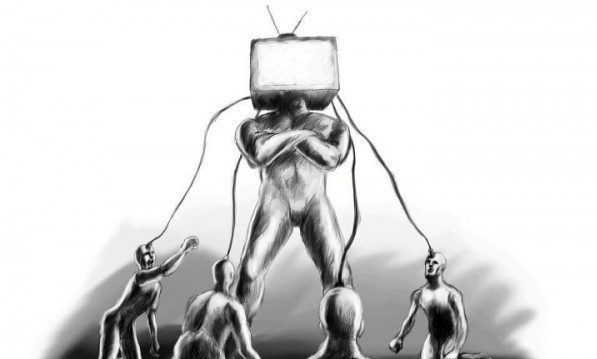
DISPLACE AND DESTROY HUMANITY: WILL ARTIFICIAL INTELLIGENCE MERGE WITH HUMANS? HOW LONG DO YOU BELIEVE THE HUMAN RACE WILL BE ABLE TO RESIST TAKING THAT NEXT STEP?

When we think about the future our horizons are constrained by present day ideologies and social systems.

But if we look at life in total, science is converging on data processing and AI that is developing itself with algorithms, (which we are losing control over.)

Intelligence is decoupling from consciousness and soon rather than later it will be consigned to Google, Facebook, Twitter, Smartphones and the like.

You might think that the above question is stupid but it won’t be long before we will be witnessing the most unequal societies in history.

We humans will soon be living with robots that process data without any subjective experiences or consciousness or moral opprobrium.

They will have no notion of self, existing only in the present unaware of the past or future and therefore will be unable to consciously plan for future eventualities. Unconscious algorithms in their brains rather than conscious images in a mind.

We are already living with large AI platforms that are monopolizing the fruits of globalisation with billions being left behind.

With us accepting this as if natural.

The promise of globalisation is a lie, when it comes to AI and prosperity for all. We are all becoming redundant with biotechnology becoming only available to the riches of us.

You might say so what that has always been the case. And you would be right up to now.

Take for instance, when someone says algorithmic trading, it covers a vast subject not just buying and selling large volumes of shares automatically at very high speeds by unsupervised learning algorithms.

They are fighting with each other for supremacy on the market, prey on other algorithms in order to blunder the world exchanges for profit to such an extent that they now effectively in control of capitalism.  

There are four major types of trading algorithms.  There are:

  • Execution algorithms
  • Behavior exploitative algorithms
  • Scalping algorithms
  • Predictive algorithms.

or look at Google an Algorithm’s company that now owns most of the largest data sets in the world stored in its cloud.

It will be too late when we are asking ourselves. What’s more valuable – intelligence or consciousness?

Then ask yourselves what happens to society, politics, and daily life when non-conscious but highly intelligent algorithms know us better than we know ourselves?

Whatever view one takes on artificial Intelligence ethics. You can rest assured that we will see far more nut cases blowing themselves up, far more wars over finite resources, with vast movements of people.

We are only on the outskirts of mind science that presently knows little about how the mind works never mind consciousness.  We have no idea how a collection of electric brain signals creates subjective experiences however we are conscious of our dreams.

99% of our bodily activities take place without any conscious feelings.

The first problem that arises when examining consciousness is that a conscious experience is truly accessible only to the person who is experiencing it. Despite the vast knowledge we have gained in the field of mathematics and computer science, none of the data processing systems we have created needs subjective experiences in order to function.

None feel pain, pleasure, anger or love.

These emotions are vanishing into algorithms that are having an effect on how we see the world but also how we live in it.  If not address now all moral and political value will disappear, turning consciousness into a kind of mental pollution. After all computers have no minds.

When intelligence is approached in an incremental manner, with strict reliance on interfacing to the real world through perception and action, reliance on representation disappears. It won’t be long before we will not be unable to distinguish the real world from the virtual world.

Since there is only one real world and there can be infinite virtual worlds the probability that you will inhabit this sole world is zero. So it won’t matter whether computers will be conscious or not.

It will only matter what they think about you.

As neuroscientists acquired more and more data about the workings of the brain, cognitive sciences, and their stated purpose is to combine the data from numerous disciplines so as better to understand such diverse phenomena as perception, language, reasoning, and consciousness.

Even so, the subjective essence of “what it means” to be conscious remains an issue that is very difficult to address scientifically.

To really understand what is meant by the cognitive neurosciences, one must recall that until the late 1960s, the various fields of brain research were still tightly compartmentalized.

Brain scientists specialized in fields such as neuroanatomy, neurohistology, neuroembryology, or neurochemistry. Nobody was yet working with the full range of investigative methods available, but eventually, the very complexity of the subject at hand-made that a necessity.

Today, the neurosciences include disciplines such as neurophysiology (the functioning of the neurons), neuroanatomy (the anatomical structure of the nervous system), neurology (the clinical effects of pathologies of the nervous system), neuropsychology (the clinical effects of pathologies of the nervous system on cognition and emotions), and neuroendocrinology (the relations between the nervous system and the hormonal system), and research centres tend to house several such disciplines under the same roof in order to encourage ongoing exchanges and joint publications.

Cybernetics is tells us, life is both a system and information, whereas a machine is a system that feeds on information.

If you cut the power to a computer, it will no longer be able to use the information supplied to it, but it will still be a computer, ready to work again when the power comes back on. But if you cut off a plant’s sunlight or an animal’s food, it will quickly become an inert body and start to decompose. Its structure coincides with the energy that feeds it and that it transforms or, more precisely, informs.

Because cybernetics is so closely linked with the concepts of structures and levels of organization, this new science quickly turned into artificial intelligence which is turning creativity a fundamental feature of human intelligence into mundane like button clicking.

Creativity is not a special “faculty”, nor a psychological property confined to a tiny elite. Rather, it is a feature of human intelligence in general. It is grounded in everyday capacities such as the association of ideas, reminding, perception, analogical thinking, searching a structured problem-space, and reflective self-criticism. It involves not only a cognitive dimension (the generation of new ideas) but also motivation and emotion, and is closely linked to cultural context and personality factors.

Current AI models of creativity focus primarily on the cognitive dimension of intelligence called short term pleasure.

At the moment an algorithm is nothing else than an extremely formalised set of beliefs translated into routines.

The ultimate vindication of AI-creativity would be a program that generated novel ideas which initially perplexed or even repelled us, but which was able to persuade us that they were indeed valuable.

We are a very long way from that.

However my main concern is whether the AI techniques will develop into quantum algorithms totally out of control.

The difficulty of predicting the future is not just a cliche’, it’s a basic fact of our existence. Part of the hypothesis of the Singularity is that this difficulty is just going to get worse and worse.

Yes, creating AGI is a big and difficult goal, but according to known science it is almost surely an achievable one. There are sound though not absolutely confident arguments that it may well be achievable within our lifetimes.

If Artificial general intelligence is on the not too distant horizon, surely we should be insuring that it is not owned by any one corporation and that at its core it respects our core values.

To achieve this we cannot surely let wealth to be concentrated in fewer and fewer hands, or to be let to the market place, or any world organisation that is not totally transparent and self financing.

We therefore as a matter of grave urgency need a new world organization that vets all technology, algorithms. (See previous posts)

As long as the algos don’t go to war with each other and cause something even more difficult to diagnose than a crash on the stock markets they are safe is as naive as saying ” It’s going to be Great.”Algos are increasingly in charge of a world that is precious to us all. Basically we’re entering the era of the machines controlling everything.

If we want to create new different societies with human dignity for all  we need to do something about it.

When War Comes Right to Your Door: Many People Will Wake Up to Reality and Struggle to Be Human ‘If I Had to Be an Animal, I Was an Animal. It Was About Survival’

Our friend Selco at SHTF School will change everything you may think about your life in a post-collapse world. For many of us, the idea that the world around us may fall apart and lead to the worst that humanity has to offer is mostly theoretical. For Selco, it was a reality. He experienced a total grid-down collapse in war-torn Sarajevo during the 1990’s – and he lived to tell the tale. He has shared his knowledge with our community over the last few years, and in the article below he changes our perceptions once again. Just because we are making preparations – stocking food, or supplies or guns – means nothing if the mind is not prepared to comprehend the absolute horrors that may come.

Do you want to know what it will be like when law and order break down, when people turn on each other, and when there is no one to depend on except for those in your inner circle?

Then keep reading.

THIS IS REALITY.

As many long term reader or members of my survival course know, I like to talk about important but some maybe call “not so spectacular” part of survival that is not so much fun like for example talking about latest guns and gadgets.

Today I want to talk about dignity and what it means in survival scenario. Before I talk from own experience, read the extract below from the diary of Lieutenant Colonel Mervin Willett Gonin who describes what happened after his unit freed the Bergen-Belsen concentration camp during second world war.

At the moment of his writing every day hundreds of people still died and it was place of pure horror.

It was shortly after the British Red Cross arrived, though it may have no connection, that a very large quantity of lipstick arrived. This was not at all what we men wanted, we were screaming for hundreds and thousands of other things and I don’t know who asked for lipstick. I wish so much that I could discover who did it, it was the action of genius, sheer unadulterated brilliance. I believe nothing did more for those internees than the lipstick. Women lay in bed with no sheets and no nightie but with scarlet red lips, you saw them wandering about with nothing but a blanket over their shoulders, but with scarlet red lips. I saw a woman dead on the post mortem table and clutched in her hand was a piece of lipstick. At last someone had done something to make them individuals again, they were someone, no longer merely the number tattooed on the arm. At last they could take an interest in their appearance. That lipstick started to give them back their humanity.

Importance of still being human and not become complete animal is often overlooked part for people who prepare for long term survival. I had over one year to fight against becoming like rats around our house during war.

EXPECT TO BECOME MORE LIKE ANIMAL

You can have all equipment ready for SHTF, ammo, weapon, gear… you can even be perfectly good trained in lot of different skills and fields and still when SHTF you can end up dead in the first days just because you what i call „refuse to believe“ whats happening.

It is that state of mind when man simple do not want (or not able) to comprehend new situation.

It can be one quick life threatening situation like folks attacking your home and you just waited few seconds too long to shoot some attacker, and then you are dead, end of the story. Or it can be whole process of failing to recognize new world around you and new rules (or absence of rules) and then again you just not doing correct things for the situation, and again you end up dead.

Example would be that when SHTF you are trying desperately to have and use power generator and light all rooms in your houses just because it mean normal life for you. And that normal life is gone, and trying to bring it back in that situation usually means more troubles.

Holding onto all comforts and behavior you are used to can be dangerous.

To make long story short, what I am trying to say is that you may be trained and equip like SEAL member and still you can be killed easily from some 70 years old dude, with even older rifle just because you were surprised when SHTF with amount of destruction and violence and you did not seen that old dude coming (or being so evil).

On the other side that old dude maybe lived through couple of SHTF events in his life, and he knows when it is time to act without hesitation and mercy.

There is still fine line you have to walk between losing your human side and becoming pure animal.

One of the things that changed a lot when SHTF is fact that everything became really dirty.

It was something like slow process, first people tried to keep it as clean they could, but without all normal services, like garbage trucks, running water and all other community services that make normal living soon it simple became impossible.

Later all garbage was used somehow, but in beginning it started piling up everywhere, when you add to that ruins on the street, human waste and dead bodies it was very ugly picture.

After some time, we started to accept dirt outside and it then was priority to stay clean and keep clean only inside that small circle inside your home, and when I say „clean“ I do not mean „clean“ like today. Maybe as clean as we could be.

For example simply moving through the city in the middle of the night meant that you needed to crawl, jump, hide, walk or run trough all kind of things, and very often some real nasty and dirty things.

Many times I was hiding on places so dirty that stench was almost paralyzing, once in the middle of the night I jumped behind some wall because sudden shelling, and when I jumped there I realized that I landed on dead guy.

His face was smashed with broken wall, and partially buried, place there was so small that I had to actually lay on him for some 20 minutes. He died probably when wall from the house collapsed after some shelling, who knows.

Fire from the shelling was so strong that I actually loved that dead guy and that place in that moment. I almost hug him while I was trying to be as small as possible because pieces of steel and rock were flying around me just like some crazy rain, while my stomach was rising and floating from the detonations and smell.

All I was saying at that moment was „thank you, thank you, thank you“ like some magic words, and I even was not aware who do I thank to, that dead stinky guy, my brain for noticing that small space, or God for saving me.

Today years and years later I still carry that smell inside my nose. But I did not move from there before danger was gone. It is survival and luckily I was already used to dirt enough to just stay with that dead guy.

Some folks just stopped to care about cleanliness and hygiene completely. So for them washing and cleaning become something like not wanted luxury. They went complete animal.

They simply stopped to care about these things, so I also knew some guys with look and smell so awful that even dead guy smelled like parfume store.

It was easy to surrender to stuff like that, I mean in trying to keep yourself clean.

But it was stupid not only in terms of the hygiene and illnesses, also by surrendering yourself you admit that you do not care anymore, and when you admit that you are only few steps from becoming animal with what you do too. People give up on themselves.

For me being as clean as I could be had something like preserving one of the last connection with “normal” life, with life before sh!t hit the fan, when things like neighbors, breakfast, car etc, were just things we took for granted, like things that always gonna be there unchanged.

Of course I was aware that being clean is important in order to stay alive because all diseases problem, no doctors hospitals etc. but on some psychological level it kept me sane and it kept me normal man.

Even in survival situation you need to still care about few little things to keep your dignity, to keep spirit up, to not lose yourself. If you stop caring about everything it is like disease that eats you.

When I came back from trading or scavenging in the city, I would clean or wash myself thoroughly in my yard before entering my house, again of course because common sense, hygiene and diseases, but maybe even more important I tried to keep all chaos and violence, suffering outside of my home on some psychological level.

I try to stay out of the everything, or actually I tried to keep everything outside of my home, like some ritual. I would keep the clothes for outside in bag, my boots were in one corner, never entering my room in it etc.

One of my relative wears pink slippers (mittens) when he was home sometimes, he would say that he just felt that everything is fine when he wear it. It was spooky and strange to see him in pink slippers while outside world is going to hell, but we all have some strange ways I guess to keep ourselves sane. Maybe wearing those slippers after he was forced to shoot some folks kept him sane, reminded him on some normal times when grandma wear it in the evenings.

On the other side, like I said in beginning if you stick too much to old habits you are not doing best for survival too.

So if I had to be animal, I was animal. It was about survival. For example there was a period when I eat just to survive, like animal, without paying attention what I eat or how. If I found some food I ate it in quick way, if there was some food with worms in it, I would eat it in dark, without looking what I eat etc.

Point was (and still is) to be man, but to be ready to be animal if you are forced to be animal, and thats it. It comes down to being flexible, adapting to situation and I hope this helps to crush the idea some Hollywood or fantasy survival scenarios show that survival is about being complete animal. No, it is fine line to walk.

You can (and you have to) have as much hand sanitizers, soap, disposable face masks etc. as you can but you can still end up dead if you are not ready to accept fact that one day you might be forced to „hug“ dead guy in order to survive, or eat roast rat or pigeon.

Once next collapse comes many people will wake up to reality and struggle to be human like they were or become animals and as skilled survivalist I hope you will walk fine line in between. The people who were walking that path were and Im sure will be those who have biggest chances to survive.

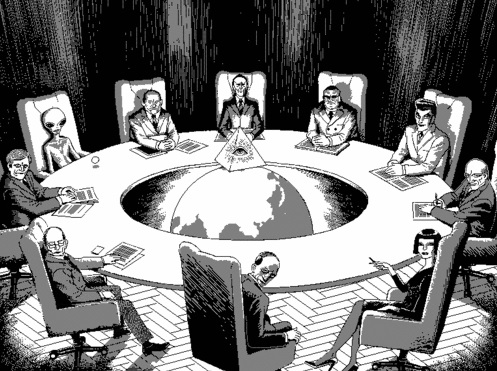
The Globalists Have Had a Hand in Shaping and Financing All the Terrorist Organizations of the Twentieth Century, Including the Muslim Brotherhood of Egypt, the Hamas of Palestine

“The Globalists have had a hand in shaping and financing all the terrorist organizations of the twentieth century, including the Muslim Brotherhood of Egypt, the Hamas of Palestine, and the Afghan Mujahideen. But the history of their duplicity dates farther back still, to the eighteenth century, when British Freemasons created the Wahhabi sect of Saudi Arabia itself, to further their imperialistic objectives by dividing and conquering its targets.

Following the dictates of the Hegelian dialectic, the Globalists have created two antagonizing forces, the “Liberal-Democratic” Zionist West, against Terrorism, or “political Islam”, to force us into the acceptance of their final alternative, a New World Order.

The West and Islam have had a long era of compatibility, but this history has been denied to foster the myth of a “Clash of Civilizations”. In order to inflame the sentiments of the West against Islam, our attention has been focused on the specter of fanatical Wahhabism, and more specifically, its most notorious exponent, Ossama bin Laden.

However, as outlined in an excellent article by Peter Goodgame, “The Globalists and the Islamists” the Globalists have had a hand in shaping and financing all the terrorist organizations of the twentieth century, including the Muslim Brotherhood of Egypt, the Hamas of Palestine, and the Afghan Mujahideen. But the history of their duplicity dates farther back still, to the eighteenth century, when British Freemasons created the Wahhabi sect of Saudi Arabia itself, to further their imperialistic objectives.

That a British spy by the name of Hempher was responsible for the shaping of the extreme tenets of Wahhabism was mentioned in a Turkish work, Mir’at al-Haramain , by Ayyub Sabri Pasha between 1933-1938. British policy in its colonies often involved the creation of deviant sects, in order to Divide and Conquer, as was the case with the Ahmadiyya sect of Islam in India in the nineteenth century.

The details of this conspiracy are outlined in a little-known document by the name of The Memoirs of Mr. Hempher published in series (episodes) in the German paper Spiegel, and later on in a prominent French paper. A Lebanese doctor translated the document to the Arabic language and from there on it was translated into English and other languages.

The document is a first-hand account by Hempher of his mission for his government, who sent him to the Middle East to discover ways to undermine the Ottoman Empire. Among the vices, the British were to promote were racism and nationalism, alcohol, gambling, fornication, and tempting Muslim women to uncover themselves.

But most important was the strategy to “insert heresies into Muslims’ creedal tenets and then criticize Islam for being “a religion of terror.” To this purpose, Hempher located a particularly corrupt individual by the name of Mohammed Ibn Adbul Wahhab.

To understand the brand of fanaticism that Wahhabism inculcated, it is first necessary to recognize that Islam called upon all Muslims, regardless of their race or nationality, to see themselves as brothers in faith. The killing of another Muslim was strictly forbidden. However, as part of their strategy of Divide and Conquer, the British hoped to pit the Arab Muslims against their Turkish brothers. The only way to do so was to find a loophole in Islamic law whereby the Arabs could declare the Turks as apostates.

Abdul Wahhab was the instrument by which the British were able to insinuate this vile idea into the Muslims of the Arabian Peninsula. Basically, Wahhab contrived the idea that, simply by the trivial act of offering prayers to saints, their Turkish brethren had forfeited their faith, and therefore, that it was permitted to kill all who refused to adhere to his reforms and enslave their women and children. But, that included the entire Muslim world, except for his small misguided band of followers.

But, the Wahabbi movement was insignificant without the allegiance of the Saudi family, who, despite claims otherwise, were descended from a Jewish merchant from Iraq . Orthodox jurists of the time branded the Wahhabis as heretics and condemned their fanaticism and intolerance. 

Nevertheless, the Wahhabis then demonstrated their contempt for their pretended faith by indiscriminately slaughtering Muslims and non-Muslims alike. The Wahhabis then set about destroying all the holy tombs and burial grounds. They stole the Prophet’s treasure, which included holy books, works of art, and innumerable priceless gifts sent to the city during the previous thousand years. The leather and gilt bindings of the Islamic holy books they had destroyed were used to make sandals for the Wahhabi criminals.

The Ottoman Sultan brought an end to the first Wahhabi rebellion in 1818, but the sect revived under the leadership of the Saudi Faysal I. The movement was then somewhat restored until once again destroyed at the end of the nineteenth century.

After WWI, the former regions of the Ottoman Empire were divided into varying puppets regimes. For aiding to undermine the Ottoman authority in the region, Ibn Saud was duly rewarded with the creation of the Kingdom of Saudi Arabia, in 1932. One year later, in 1933, the Saudis granted oil concessions to California Arabian Standard Oil Company (Casoc), an affiliate of Standard Oil of California (Socal, today’s Chevron), headed by Rothschild agent, and chief among Illuminati families, Rockefeller. Since that time, Saudi Arabia has been the most important ally to the West in the Middle East, not only providing ready access to its plentiful oil reserves but also tempering Arab aggression against Israel. Due to the evident hypocrisy of the regime, it has been necessary to suppress the ensuing dissent with brutality. Another important aspect has been preventing scholars from speaking of “politics”, that is, criticizing the regime.

In The Two Faces of Islam, writes Schwartz, “Their tastes led them to taverns, casinos, brothels. . . . They bought fleets of automobiles, private jets, and yachts the size of warships. They invested in valuable Western art they did not understand or like which often offended the sensitivities of Wahhabi clerics. They spent as they wished, becoming patrons of international sexual enslavement and the exploitation of children.” The result has been that, in order to nonetheless appear to be espousing Islam, the Saudi regime and its puppet scholars have evolved a version of Islam that emphasizes ceremonial details of the religion, at the expense of helping to understand broader political realities. Their manner has encouraged a literal interpretation of Islamic law, permitting the likes of bin Laden to exploit the Koran to justify the killing of innocents.

Ultimately, the profusion of Rothschild-financed petro-dollars in the coffers of the Saudi family has made it possible to for them to then propagandize their bastardized version of Islam to other parts of the world, most notably to America, where they purportedly subsidize up to 80 percent of the mosques in the country, a version of Islam that substitutes political awareness for dogmatic insistence of ritualistic fanaticism.

In 1999, King Fahd of Saudi Arabia attended the Bilderberg meeting, presumably to discuss his role in furthering the interests of world government, along with other such luminaries as Yasser Arafat and the Pope. Evidently, the Saudi family is part of the deceptive ploys of the Illuminati network. Their complicity in the accumulation of petro-dollars has gone into the financing of Global terrorism, from Afghanistan to Bosnia, merely for the purpose of fomenting the necessary animosity of the world against Islam.

THE “WAR GAME”- Israel, IMF Lead 10-Country Simulation of Major Attack on Global Financial System

Israel led another “war game” simulation that involved 10 countries.

But this tabletop exercise simulated a major cyber attack on the global financial system to analyze its impacts on global foreign exchange and international markets.

In conjunction with the International Monetary Fund (IMF), the exercise meant to ensure global cooperation to the digital attack.

Reuters reported:

The simulated “war game”, as Israel’s Finance Ministry called it and planned over the past year, evolved over 10 days, with sensitive data emerging on the Dark Web. The simulation also used fake news reports that in the scenario caused chaos in global markets and a run on banks.

The simulation — likely caused by what officials called “sophisticated” players — featured several types of attacks that impacted global foreign exchange and bond markets, liquidity, integrity of data and transactions between importers and exporters.

“These events are creating havoc in the financial markets,” said a narrator of a film shown to the participants as part of the simulation and seen by Reuters.

Israeli government officials said that such threats are possible in the wake of the many high-profile cyberattacks on large companies, and that the only way to contain any damage is through global cooperation since current cyber security is not always strong enough.

“Attackers are 10 steps ahead of the defender,” Micha Weis, financial cyber manager at Israel’s Finance Ministry, told Reuters.

Participants in the initiative, called “Collective Strength”, included treasury officials from Israel, the United States, the United Kingdom, United Arab Emirates, Austria, Switzerland, Germany, Italy, the Netherlands and Thailand, as well as representatives from the International Monetary Fund, World Bank and Bank of International Settlements.

The narrator of the film in the simulation said governments were under pressure to clarify the impact of the attack, which was paralysing the global financial system.

“The banks are appealing for emergency liquidity assistance in a multitude of currencies to put a halt to the chaos as counterparties withdraw their funds and limit access to liquidity, leaving the banks in disarray and ruin,” the narrator said.

The participants discussed multilateral policies to respond to the crisis, including a coordinated bank holiday, debt repayment grace periods, SWAP/REPO agreements and coordinated delinking from major currencies.

Rahav Shalom-Revivo, head of Israel’s financial cyber engagements, said international collaboration between finance ministries and international organizations “is key for the resilience of the financial eco-system.”

The simulated digital attack is a reminder of the World Economic Forum’s Cyber Polygon.

Klaus Schwab has made prior warnings that COVID-19 would pale in comparison to a cyber attack.

From the WEF:

What is Cyber Polygon?

Cyber Polygon is a unique cybersecurity event that combines the world’s largest technical exercise for corporate teams and an online conference featuring senior officials from international organisations and leading corporations.

Cyber Polygon 2021

Leaders of global organisations and state representatives met at the online conference to analyse the current trends and risks posed by increased interconnectivity. One of the talking points was the resilience of digital ecosystems and the promotion of a safe digital future by means of mutual efforts, justice, and equality. More than 7 million people from 78 countries tuned in to watch the Cyber Polygon online conference.

The technical training was designed for the participants to exercise their skills in repelling a massive supply chain attack on a business-critical system in real time, followed by a full-scale investigation of the incident. A total of 200 organisations from 48 countries took part in the technical training. Cybersecurity and digital sustainability are gainingmomentum across all continents, nations and trades, and even traditional industries now recognize cybersecurity as their strategic priority and seek to develop their cyber defence competencies.

The event also incorporated an expert track for field professionals which featured insightful presentations by cybersecurity experts. This track addressed an array of current cyber risks and threats, as well as the key aspects of developing a mature cybersecurity posture.

Is This the Final Solution to the Holocaust? The Dispute is Rooted in Pre-biblical Times

All wars are unpredictable. 

Israel has the military capability to wipe out Hamas, but doing so could perhaps be even riskier than not, given that an even more extreme organization could come into power — or that Israel could be put into the position of governing the territory itself.

Is this the final solution to the holocaust?

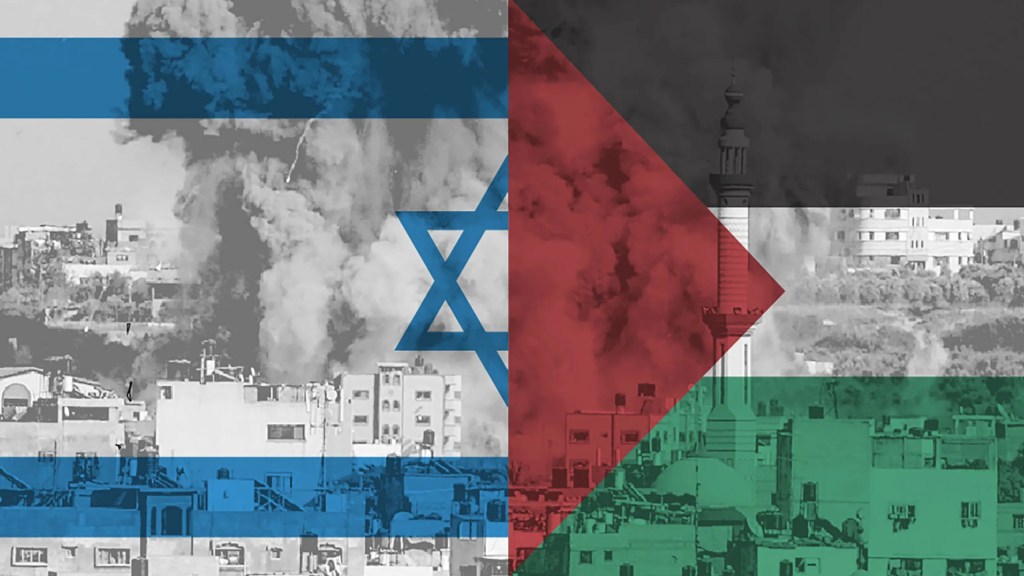
The dispute is rooted in pre-biblical times. Though its borders have shifted over the years, Palestinian territories used to be what is now Israel, Gaza and the West Bank.

The Israeli-Palestinian conflict so far has claimed tens of thousands of lives and displaced many millions of people and has its roots in a colonial act carried out more than a century ago.

More than 100 years ago, on November 2, 1917, Britain’s then-foreign secretary, Arthur Balfour,

He committed the British government to “the establishment in Palestine of a national home for the Jewish people” and to facilitating “the achievement of this object”.

In essence, a European power promised the Zionist movement a country where Palestinian Arab natives made up more than 90 percent of the population.

Both Israeli Jews’ and Palestinian Arabs’ history, culture and identity are linked to the Palestinian territories. Jewish migration from eastern and central Europe surged from 1922 to 1947 as Jews fled persecution and the destruction of their communities, most notably during World War II.

As the number of Jewish immigrants increased, many Palestinians were displaced. They began pushing back and violence resulted.

Israel was declared a state in 1948, though the land is still referred to as Palestine by those who do not recognise Israel’s right to exist. Palestinians also use the name Palestine as an umbrella term for the West Bank, Gaza and East Jerusalem.

Hamas is an acronym for Harakat al-Muqawama al-Islamiya, or Islamic resistance movement, now designated a terrorist group by Israel, the United States, the European Union and the UK, as well as other powers.

Hamas is a Palestinian militant group which rules the Gaza Strip. It is sworn to Israel’s destruction and wants to replace it with an Islamic state.

Hamas has fought several wars with Israel since it took power in Gaza in 2007.

About 80% of the population of Gaza now depends on international aid, according to the UN, and about one million people rely on daily food aid.

Hamas is backed by Iran, which funds it and provides weapons and training.

As one of Israel’s most implacable foes, Iran clearly has a vested interest in seeing the Jewish state suffer.

If it emerged that Iran was behind the attacks, it could widen the conflict into a regional confrontation.

Just five days into the war, what comes next is impossible to predict, but given what’s known about previous conflicts and the capabilities of both sides, the coming weeks are likely to be bloody.

Extreme religious nationalists who are part of Israel’s right-wing coalition government have repeatedly called for the annexation of Palestinian territory so it is hard to see how there can be a positive outcome for Hamas or Gaza from the events this weekend. The Hamas operation is a reality-changing event in the Middle East that may oblige Iran to move from the phase of ongoing support and co-ordination to a more direct involvement.

The conflict pits Israeli demands for security in what it has long regarded as a hostile region against Palestinian aspirations for a state of their own.

Israel’s founding father David Ben-Gurion proclaimed the modern State of Israel on May 14, 1948, establishing a safe-haven for Jews fleeing persecution and seeking a national home on land to which they cite deep ties over generations. In the war that followed, some 700,000 Palestinians, half the Arab population of what was British-ruled Palestine, fled or were driven from their homes, ending up in Jordan, Lebanon and Syria as well as in Gaza, the West Bank and East Jerusalem.

The simultaneous use of rockets, drones, vehicles and powered hang-gliders suggested that the operation’s planners had studied other recent examples of hybrid warfare, perhaps including Ukraine.

Iran and Hamas staunchly oppose the growing prospect of a historic peace deal between Israel and Saudi Arabia – something which might be thwarted if Israel’s military response to the attacks provokes widespread anger in the Arab world. The violence will scupper any deal between Israel and Saudi Arabia.

Up to now the war is limited to battles between Israeli and Hamas forces but as the war continues it could compel Arab nations to choose a side.

A worst-case scenario is that it could draw in the powerful Lebanese militant group, Hezbollah.

While this radical upsurge of violence is fresh, it is just the latest instalment that stems from a deeply unsettled past. Up to now Israel’s asymmetric response is supposed to serve a deterrent purpose, without   the country declared war.

What unfolds in the coming days and weeks has its seed in history.

What to Do if You Get Caught in a War: Being Prepared to Navigate Such Situations is Crucial for Personal Safety and Well-being

In today’s dynamic world, unexpected situations can arise, challenging us to think on our feet and respond appropriately. War, often fueled by social, political, or economic tensions, can erupt with little warning, leaving individuals unexpectedly caught in the midst of chaos.

Being prepared to navigate such situations is crucial for personal safety and well-being. In this article, we will explore the importance of understanding war dynamics, staying informed, and making swift decisions when faced with the daunting challenge of being caught in a war.

While we won’t delve into specific suggestions, we will emphasize the significance of being equipped with a clear mindset and the ability to adapt in order to increase the chances of making the right choices when it matters most.

How do you get caught in a war?

The question lingers: “How did circumstances lead to this point?” but people might also wonder, “What compelled you to be present in that situation?”

In contemporary times, I make a conscious effort to steer clear of becoming a focal point. My vehicle bears no political marks, and I refrain from wearing any statements on my clothing. Above all, I steer clear of gatherings where crowds unite with the purpose of making a statement.

Yet, the situation isn’t as straightforward as it seems. There are instances where you can’t be silent. The urge to stand tall and express unwavering beliefs can be overpowering. The desire to endorse a cause, to advocate for law and order, for instance, can be compelling.

However, it’s important to recognize that the chaotic frenzy of a full-fledged war is devoid of any semblance of law or order. Perhaps you find yourself in the midst of it due to occupational obligations, such as being a member of an ambulance crew. It could be that your business, your very livelihood, is situated within the war zone. Alternatively, it might be a matter of unfortunate timing, where you get caught in the middle of it, leaving no clear paths of escape.

Recognizing early signs

The propagation of violence is swift and contagious, permeating its surroundings without delay. Police officers shoulder the burden of enduring verbal abuse and even spitting incidents. They are advised to remain impervious to provocations, avoiding entanglements in debates or altercations with confrontational, vociferous protestors. This approach is sensible.

However, on numerous occasions, demonstrators frustrated by the absence of reactions will escalate the confrontation. The tolerance for their unruly conduct becomes a source of empowerment, emboldening them further.

Evident signs of an impending intensification in hostilities are not hard to identify. The moment the crowd begins to forcefully press against police lines and barricades, it’s a clear signal to step back. As projectiles like bottles, bricks, or rocks are launched toward law enforcement, a change of location becomes imperative. When opposing groups blend into the scene, fights erupt within the gathering, windows shatter, and the initial sparks of fires ignite. The window for securing your safety rapidly narrows.

You’re caught in the middle

Traditionally, seeking assistance from law enforcement is ingrained in us. Yet, this approach falters when the threat of a war looms. When the command is finally issued for police intervention, finding oneself caught between the police and the rioters is the most perilous position.

The police will be moving with a single purpose: heading directly into the turmoil. In this chaotic scenario, discerning allegiances becomes an impractical task. Their objective centers on dispersing the crowd, and those apprehended will be ushered behind the front lines for processing and transport.

Intentionally discomforting tools like pepper spray, tear gas, and rubber bullets come into play. As the realization dawns that the situation has spiraled beyond control, the window of opportunity to react effectively may have already closed.

The prospect of having to fight for survival becomes a stark reality. The allure of being an observer or becoming a part of the headline story loses its charm. It’s time to tuck away the phone and exit the scene before the mob’s actions escalate into acts of violence or trampling.

Surviving unforeseen war situations

Amid the chaos of a war, the question of survival becomes paramount. Here’s how to navigate the perilous situation:

Stay mobile: In the midst of the tumultuous commotion that characterizes a war, maintaining constant movement emerges as a fundamental strategy for survival. When confronted with aggression or being pushed, resisting the urge to stand your ground is crucial. Engaging in physical confrontations can exacerbate the situation, leading to further trouble. In cases where self-defense becomes necessary, it’s imperative to adopt a mindset of disengagement, aiming to create distance from the turmoil. Employ swift, calculated movements to break free from any potential entanglements and swiftly shift away from the immediate danger zone.

Prioritize safety over possessions: When positioned within your vehicle as a war unfolds, seizing any opportunity for an escape route takes precedence. Hesitation has no place in this scenario. Overlooking traffic rules in favor of prompt action might be necessary to ensure your safety. The moment a mob surrounds you, the window of escape could close abruptly, leaving you exposed to potential harm. In such cases, abandoning your vehicle and transitioning to a swift, foot-based exit becomes imperative, forestalling the escalation of the situation.

Break away from crowds: In the heart of a crowd that’s teeming with disorder, your path to safety involves gravitating towards the less densely populated fringes. A continuous movement away from the epicenter of danger is a strategic course of action. Even if this necessitates altering your intended route, the goal remains to distance yourself from the immediate hazard. Progressing toward the outskirts of the crowd not only minimizes your exposure to potential risks but also increases your chances of a safe exit.

Utilize cover: Amid the chaos of a war, strategically seeking refuge behind sturdy barriers becomes an essential survival tactic. Solid obstacles, ranging from discarded signs to sections of plywood or even the lid of a garbage can, can serve as makeshift shields, safeguarding you from projectiles and potential gunfire. Taking cover behind these impromptu barriers enhances your ability to shield yourself from harm, providing a tactical advantage amidst the chaos.

Stay upright: When confronted by physical aggression that leaves you on the ground, displaying unwavering resilience becomes a pivotal strategy for regaining control of the situation. Fighting back with determination is essential for re-establishing your footing. While protecting your head from potential blows, your determination to stand again is key to reclaiming a position of advantage and ensuring your continued safety.

Identify rear exits: Seeking momentary refuge within a building amid the tumultuous rioting environment requires a prudent approach. While back exits may lead to quieter streets or alleyways, caution is warranted as this option carries inherent risks. Identifying these alternative exits becomes essential, offering a potential route away from the mayhem. However, an understanding of the building’s layout is crucial to avoid potential traps and ensure safe passage.

Familiarize yourself with the area: Anticipating potential trouble before it materializes involves a proactive approach of familiarizing yourself with unfamiliar surroundings. Studying maps ahead of time grants you the advantage of understanding escape routes and identifying nearby landmarks. This geographic insight acts as a valuable reference during emergencies, allowing you to navigate confidently toward safety.

Carry essential gear: Equipping yourself with a range of protective gear serves as a frontline defense strategy. Items such as a convertible day pack with ballistic panels, a bike helmet, pepper spray, a stun gun, small impact weapons, a flashlight, and a water bottle play pivotal roles in deterring attackers and providing a level of personal protection. The combination of these tools empowers you to navigate through the chaos with a higher degree of safety.

Understand the law: Navigating the intricate legal landscape during a war requires a comprehensive understanding of the boundaries that govern self-defense. While carrying self-defense tools can offer a measure of protection, it’s imperative to recognize the limitations imposed by the use of force laws. The potential challenges of employing deadly force amid a war’s chaotic atmosphere underscore the necessity of carefully assessing the risks and implications.

Blend in: Blending into your surroundings emerges as a tactical choice, particularly when faced with a confrontational crowd. Opting for clothing that doesn’t attract undue attention is paramount. Steering clear of attire with political slogans or affiliations ensures that you don’t inadvertently become a target. Instead, choose outfits that provide coverage and comfort, featuring long-sleeve shirts, jackets, long pants, and sturdy shoes.

Stay informed: Maintaining awareness of current news and unfolding developments, especially those related to planned protests and potential unrest, assumes critical importance. This knowledge allows you to make informed decisions about alternate routes and avoidance strategies. Staying attuned to the evolving situation equips you with the information necessary to navigate through uncertain times with a heightened level of vigilance.

Secure valuables: When confronted with the prospect of unrest that threatens your business, proactively safeguarding valuables becomes a necessity. Whether through removal or relocation, implementing protective measures ensures that valuable assets remain out of harm’s way. This forward-thinking approach minimizes potential losses and reinforces your ability to adapt to the ever-changing landscape of war-related risks.

In uncertain circumstances, your ability to think on your feet and make swift decisions can make all the difference. By staying vigilant and prepared, you enhance your chances of emerging from the midst of turmoil unscathed.

Facing the reality of war aftermath

Recent wars, often ignited by protests calling for social justice, carry an ironic twist when considering the unlikely prospect of post-war justice. While the right to protest is essential, blocking roads, causing disorder, damaging property, setting fires, and inflicting harm have no place within those rights.

Unfortunately, this crucial distinction appears to elude certain figures of authority. In the aftermath of a war, the chances of witnessing accountability are slim. Should you fall victim to an attack during such turmoil or witness your business succumb to destruction, the likelihood of apprehending those responsible remains low.

Curiously, if you resort to self-defense, you may find yourself facing legal consequences while your assailants are portrayed as innocent victims. Instances abound where individuals who vandalize property or assault law enforcement officers have their charges dropped by prosecutors with left-leaning inclinations.

Escalating troubles

A glimmer of optimism in these times would be welcome, yet the future appears more ominous. The absence of substantial penalties only emboldens criminal behavior, leading rioters and anarchists down a perilous path where they sense impunity even for their most lawless actions.

This unsettling trend means that a stronger application of force might be necessary to halt this cycle of senseless destruction, should society choose to do so. The ongoing efforts by certain liberal politicians and media to vilify and defund law enforcement, coupled with constraints on officers taking appropriate measures to uphold order, exacerbate the issue. The reality dawns on citizens that their safety and security rest primarily on their own shoulders.

Concluding

In the midst of this shifting landscape, the responsibility lies squarely with individuals. Vigilance and avoidance stand as essential strategies. Being prepared becomes a paramount necessity. As we navigate through these unpredictable times, recognizing the potential outcomes and making informed choices becomes a collective imperative.

What Happens When the Stockpile is Gone and There’s Nothing Available to Eat? It Can Be Hard to Imagine a Looming Food Crisis When You Can Walk Into Your Local Grocery Store and See Shelves Overflowing With Abundance

It can be hard to imagine a looming food crisis when you can walk into your local grocery store and see shelves overflowing with abundance. You can find easily find everything you need, and plenty that you don’t.

You might even ignore those around you warning you to stock up on food while you still can. In fact, they might seem like Chicken Little desperately calling out, “The sky is falling!”

But don’t let the full shelves fool you. While the sky may not actually be falling, the world is facing a food shortage. It’s only a matter of time until it hits. Until then, the government wants you to keep walking into the stores, feeling like everything is fine.

The world’s food situation is not fine. Here are just eight of the many indicators that it’s time to stockpile food, and start growing some of your own.

1. Raising Food Prices

Have you noticed the price of groceries rising in your area? I sure have here, especially for basic staple ingredients such as butter, flour, and rice. Every time I head to the store, it seems like I have to stretch my food dollars a little further.

It’s not just in my neck of the woods where prices are creeping up. According to a study by the USDA Economic Research Service, supermarket prices are expected to rise .25-1.25 percent during 2016, and 1.0-2.0 percent during 2017. While those percentage points may seem low, they’re still moving up.

But, since the price of gas and food are intertwined, those numbers could soar past predictions if gas goes up again. Most of the food in the supermarket wasn’t grown in your local area. It was shipped there, requiring fuel.

As food prices continue rising, it’s getting harder and harder for families to buy what they need. That means the number of families now getting food assistance from the government continues to grow. It’s not a healthy outlook for our food supply.

2. Drought

Plants need water to grow and produce harvestable yields. As temperatures around the world rise, droughts are becoming more common.

Widespread droughts are hitting fertile cropland across the planet. From California to India, low rainfall and high temperatures cause devastation on crop production. Long-term forecasts indicate these weather patterns are likely to continue.

3. Diseases Wiping Out Crops & Animals

It’s not just the weather wreaking havoc on our food supply, it’s also disease. From the virulent Panama disease taking out bananas to African Swine Fever that can wipe out entire pig farms, diseases are running rampant in the food supply.

Modern food production techniques such as CAFOs create the perfect environment for peril. In a natural setting, you’d see a couple of pigs on farms across the landscape. They’d be interacting with nature, and have other animals and plant life around to help keep disease causing parasites at bay.

Instead, the majority of today’s pig farms are just pigs and concrete all around. When a disease comes in, it quickly moves through the whole herd. Often entire farms have to execute their animals to prevent the disease from spreading.

The loss of that many animals plays a role in rising food prices. Supply can no longer keep up with demand.

These issues aren’t just a problem for pigs. Cows, chickens, and other animals are being raised in conditions that make them prone for disease.

Crops are being raised in similar fashion. Instead of farmers growing a variety of crops, you see corn growing in huge fields for miles around. There are similar fields for soybeans, wheat, and other crops.

4. Food Safety Concerns

Have you noticed how often food is being recalled? From peanuts to frozen vegetables, meat to processed foods, it’s hard to trust the establishment to deliver safe food to your table. Listeria, e-coli, salmonella, and a host of other food borne illnesses are harming and killing people around the globe. Modern food handling practices have led to these food safety concerns.

Factories play a part in the production of numerous food products. When one factory has a role to play in the bulk of the food system, a containment can quickly spread.

Add transportation, storage, and unsafe handling, and you’ve got food that’s ready to play host to multiple strains of bacteria. Then there’s that whole GMO debate. Some countries don’t believe that genetically modified foods are safe for consumption. Others have drunk the GMO Kool-Aid and are pushing them on the marketplace at an astounding rate.

That’s another reason to grow your own food. You can pick heirloom varieties that haven’t been modified. No matter what you grow and preserve, be sure to inspect what you stockpile to ensure it’s safe.

5. Crops Being Used for Other Purposes

Crops aren’t just being grown to feed humans anymore. A huge portion of our food supply goes to feed cows. Cows were never meant to eat grains in the first place! Let them eat hay, and that’ll relieve a huge burden on our food supply.

Then there’s the whole ethanol thing. About a quarter of US corn is being used for fuel instead of food now. With a food crisis already in the works, using food for other purposes adds to the problem.

6. The Death of Small Farms

The family farmer is slowly become obsolete. Small family farms are being bought out by large mega-farms.

When single companies have their hands in so much of the food chain, a blow to one can cause huge problems. Conversely, when you have hundreds of small farms producing, it’s easy for the others to step in and make up the difference if one experiences loss.

But with rules and regulations definitely favoring mega-farms, it’s no wonder that small ones are selling out and shutting down. As governments continue persecuting small farmers, the number of farms producing your food will continue to shrink.

7. Mistreated Soil

The Fukushima crisis spewed nuclear material onto much of Japan. That soil isn’t safe to grow food in, and probably won’t be for a long time.

Nuclear disasters aren’t the only thing polluting our soil. Farming practices that strip all the nutrients out and dump chemicals back in also play a role.

Mega-farms don’t tend to care about the soil. They just like the money. Until sustainable practices are used in the ag industry, our soil will continue being mistreated.

Bad soil won’t grow as much food. However, it will keep bringing the food crisis closer to our reality.

8. Dependence on Processed Food

The majority of food on supermarket shelves is highly processed. This is the food that many people rely on to supply their nutrition on a daily basis. This boxed and packaged food hardly resembles real food. Because of this, people are becoming further removed from the source of their food.

Many don’t know how to make bread. They don’t know how to cut apart a chicken. They don’t know what animal hamburger comes from. For many people, food just comes from the store. That’s all they know, and this attitude is dangerous.

The further people get from their food, the easier it is for a crisis to occur. They’re totally dependent on other people to supply what they eat. When those farms or factories shut down, they simply won’t have a clue how to begin feeding themselves and their family.

How to Prepare for the Food Crisis

It’s not too late to begin preparing for the coming food crisis. You can begin taking steps to ensure your family’s survival when the grocery store shelves are empty. Here are a few important ones:

Education

Ensure you know where your food comes from. If you are currently food ignorant, make friends with some farmers. Do some research. Learn all you can. Feeding yourself doesn’t have to be complicated!

To take it a step further, you can educate yourself about local food regulations. Be on the lookout for laws that are restricting your right to feed your family. Play an active role in the political process to end the regulations that are strangling small farms.

Buy Local

Source food that’s grown as close to you as possible. Not only will you be supporting your local economy and farmers, you’ll also be eating food that’s fresher.

Local sources of food are less likely to be affected by national food shortages. If you’re already used to finding food that’s not in a supermarket, you’ll be a step ahead when the time comes.

Start Producing Your Own Food

No matter where you live, you can begin growing your own food. If you don’t have much space, put a couple of containers in your windowsills. Learn how to grow food in small spaces.

If you have more space, consider getting some livestock. Rabbits and chickens are allowed in many cities, and you’ll be producing your own meat and eggs.

You can continue to expand your survival garden as space allows. 

If you grow too much, learn how to preserve your harvest. Freezing, dehydrating, canning, and fermenting are some of the methods used to save food for later.

Producing your own food will help you lower your food bill and gain self-sufficiency. Everything you grow better prepares you for the food crisis.

Learn How to Cook

Stop buying processed food and take back your kitchen. Learn how to prepare simple, nutritious food that your family enjoys. Good food doesn’t have to be complicated!

Stockpile Food

Each time you go shopping, make it a point to buy some extra food. But, you shouldn’t just buy any food. You really need to stockpile what you actually eat.

Otherwise your family will have to adjust to both a crisis and new food when the time comes. It’s much better to have food on hand that you enjoy.

You don’t have to spend a ton of money to stock up. If your budget is really tight, try allocating just $5 or $10 a shopping trip. While it doesn’t sound like much, you’ll begin growing your reserves.

Be sure you store your stockpiles properly to keep pests and bacteria out. You also need to rotate your stores, which is why you should be eating what you’re storing. When I add to my stockpile, I put the new in the back. That way I use the older food first.

THE WINDS OF WAR ARE NOW BLOWING AROUND THE WORLD AND TO AMERICA, THOSE THAT DENY THE COMING WEATHER WILL BE LAID NAKED BEFORE IT AND WILL PAY THE PRICE

The winds of war are now blowing around the world. One day we will look back on these days with longing as one would look back on the gentle breezes of summer as the hurricane blows outside.

The winter season of the fourth turning is increasing with intensity as most people are fooled into believing that summer is just a few days off. When the winds become deadly and the snow begins to pile up, many will not be prepared to care for themselves. They will find themselves helpless and unprepared for this new weather system. Many will die and many more will suffer as they are cut off from the supplies and materials they depend on for normal living. They will become immobile and have little communication to tell them what to do. When the weather has them at their most vulnerable, the wolves will begin to show up at their door.

It cannot be over emphasized as to the amount of danger America is facing. We are being systematically cut off and separated from our allies and will eventually stand alone to face the fury of the hurricane that approaches. We are currently being set up to take a fall that some hope will be the end of this nation as we know it. The treason and treachery being perpetrated on this nation is a result of the mutation of the population from ants to grasshoppers. We are about to get exactly what we voted for and most people do not understand what that means.

Our birthright has been sold for a hand full of magic beans that will turn out to be rancid leftovers from someone’s failed business adventures. The wealth this nation has amassed over the decades is rapidly dwindling and will suddenly disappear in its entirety as the nation sleeps one night in the near future. The masses will awake one morning in a strange new land that holds no future for them or their children. They will be dumbstruck as to how they got there. The warnings will have been dismissed as insane talk by delusional people that don’t conform to societies norms.

It will be these few delusional, insane people that will determine the future of the once great nation. They will be the only ones that understand the dangers and are prepared to deal with the deadly winter weather. When the snow piles up they will have supplies and heat. When the wolves appear at the door they will have the weapons to fight them off. When the winds blow away the shelters of society the few will be safe in their structures reinforced to handle the tempest.

Those that deny the coming weather will be laid naked before it and will pay the price. No amount of facts or pleading will change the mind of most of these grasshoppers until it is too late.

There is a storm approaching and measures must be taken before it is too late to prepare. Just as you would prepare for a hurricane, the population must lay in stores of food and supplies to maintain their standard of living for the duration of the destruction. They must make sure they are in a safe location that will not get brown away or inundated with water from the storm surge. They must have the means to provide heat and cook food when the power system goes down. They must be able to protect themselves from any wolves that appear in any form. They must be prepared to rebuild after the storm passes. They must be prepared to weather this storm for 10 to 20 years until it blows itself out.

War is being fomented and when it comes the U.S. will be hard pressed to survive it. Our military is being downsized, weapons systems are being reduced and many senior commanders are being fired for dubious reasons at best. The civil population is being systematically impoverished while government operatives tell them the nation is strong and getting stronger. Our manufacturing base has been dismantled and over 17% of our food is imported today. We have bankers that are stealing hard assets with fiat funny money and plan to steal peoples savings with new government regulations and laws. We are on the verge of losing reserve currency status and our banking system as we know it.

We are being inundated by foreigners that seek government entitlements and refuse to assimilate the American culture or language further dividing the civil population into domestic tribes hostile to one another. We have terrorist training camps within our borders and a lack of border control. We have members of the Muslim Brotherhood in the highest levels of our government and leaders that are ignorant at best and treasonous at worst.

In 1996 Thomas Chittum wrote a book called Civil War Two where he describes the breakup of America into ethnic regions. Many of the things he wrote about are evident today in society and spell doom for this nation as it is, even if we were not threatened with world war we would be headed for balkanization. The increasingly dysfunctional nature of this nation as it is will provide its citizens with many difficulties to overcome in the coming years.

War is coming to the world and to America on many levels and it cannot be stopped. The best anyone can do is to prepare and try to stay out of the way of the most serious fighting and bide their time until they can get the upper hand in their locality. The world is about to change in a very radical way and many are not prepared for it either physically or mentally. The forecast has been given and the storm flags are up.

HOW DO YOU DEFEAT SUPERIOR TECHNOLOGY THAT YOU HAVE NO DEFENSE AGAINST: REMEMBER, IT WAS A HUMAN THAT MADE THAT NEW WEAPON AND IT WILL BE A HUMAN THAT DESIGNS THE COUNTERMEASURE TO IT

Many people may find themselves in during some future war or civil disturbance. That situation is you coming up against superior technology that you have no defense against. So, how do you deal with this threat?

Every weapons system is designed to operate in a certain environment and do a certain task within that environment. Because of that, every weapons system has weak points that it cannot hide from once you change that environment.

In WWII Sherman tanks were outmatched by German Tiger tanks. They were able to overcome this disadvantage by superior numbers and by putting the Tigers in situations that gave the Sherman the advantage. The Shermans were smaller and more maneuverable so they would try to engage tigers in dense areas where they could not maneuver and turn their guns because of obstacles. This allowed the Shermans to get behind the tigers and shoot them in their only weak point, their ass. The Tiger might get three Shermans but there was usually a fourth one that managed to get the Tiger.

When radar began to be used in WWII the RAF soon came up against German flak batteries that had radar. To get past this threat they came up with a simple solution. They deployed strips of aluminum foil, code named windows, that confused the radars and allowed the planes to get through. The Germans soon figured out how to deal with this but for a time it made their systems almost useless.

When you are faced with superior weapons you need to do two things.

Determine what its limitations are.

Determine how to attack it in that weak spot.

Those two things are the basis of counter weapons development for centuries. Not long after we got the tank we then developed anti-tank weapons. It’s the same with any new weapons system. Sometimes you need to develop your own superior technology to use against it and sometimes you need to resort to caveman technology.

Killer robots may come after us one day and be able to outrun us but how well do they rappel down a mountain or swim? They may be impervious to rifle bullets but what happens when they are hit by a 6 lb. steel ball from a cannon? A solid object traveling at high speed can do a lot of damage when it hits something. Just look at the DUC rounds the M1 Abrams fires or when a large meteor hits Earth. How do robots handle the bumper of a large truck traveling at high speeds? I have two words for the backyard inventors out there, rail gun.

Those new MRAPs may be hard but how well do they operate in woods that have no roads? How well can they drive when all of the windows are covered with paint or other materials that blind them? How fast can they go when they are laying on their side or sitting in three feet of mud? The people in that vehicle must get in at some point and get out at some time. That is a weak point. That vehicle must be refueled at some time. That is a weak point. Are you getting the picture?

How well does any weapons system work when it is hosed down with fuel and ignited? How well does it work without fuel? How well does it work without ammo? How well does it work without repair parts or human operators? How well does it work when it cannot “see”? How well can it operate when it has no traction? How well can it operate in bad weather? What does it take to disable its electronics? What does it take to put a hole in it? What happens to an attack helicopter when a steel cable is suddenly propelled up into its rotors? How well can the operators function when they have no air to breathe?

Every system has a certain environment it works well in. Your job is to get it into a situation that is outside of its operating box so you have the advantage. That is the advantage that humans have over technology. We have the ability to adapt to new situations and learn new tricks. Most weapons systems cannot do that. Even if they can adapt they do not have our imagination. How many weapons systems would think of giving a group of enemy fighters diarrhea to reduce their combat effectiveness?

Our ability to think outside of the box is our greatest advantage. That is what we need to depend on in the days to come. Having weapon systems to fight back with will be important but the most destructive thing we have is our mind. Remember, it was a human that made that new weapon and it will be a human that designs the countermeasure to it.