The“COVID Plan”: Economic Collapse And Societal Collapse Happening Before Our Eyes

In the over 20 articles I’ve written on the fake COVID pandemic, I’ve covered the currency reset, social credit score, universal income tied to behavior control, socialism as the gateway into a technocratic Brave New World, smart cities, wall to wall real time surveillance, Internet of Things—among MANY other subjects.

Here, I want to focus on a near-time economic and social revolution happening before our eyes:

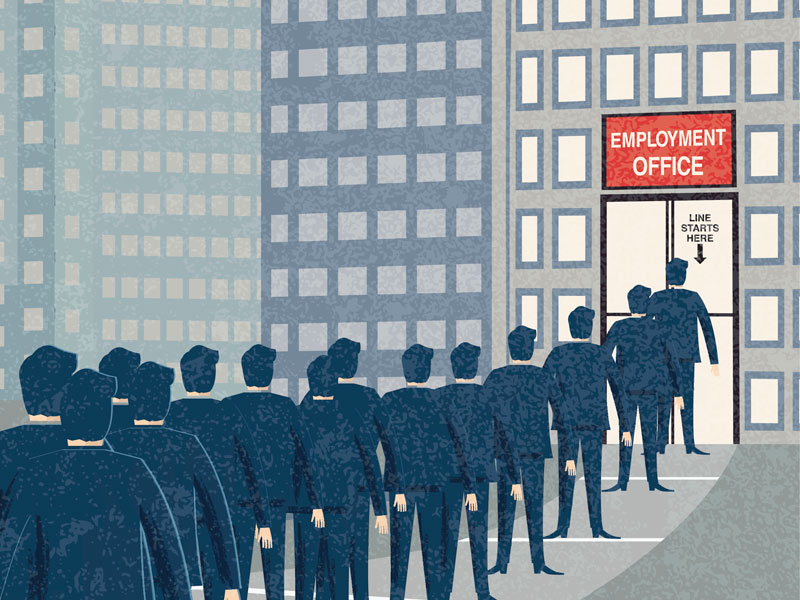
Through lockdowns and distancing, the massive destruction of small and medium-sized businesses. Millions of them.

The owners and workers will be forced to go where?

FROM those former businesses—which were hard to control through top-down methods—INTO the employment of major corporations, which will be picking up the economic slack and expanding.

That’s the pattern.

And when a person works for one of these behemoths, he is told: “Of course, you’ll either have to take the COVID vaccine or get tested every three days.”

We need to build a different kind of economy that is truly a resurrection of businesses of all kinds. To escape the trap.

Entrepreneurship is vital.

Here is an excerpt from an article I wrote in 2017:

In a future sea of darkness, the islands of light, toward which people desperately grope, are clusters of buildings occupied by mega-corporations and government agencies.

To achieve a measure of survival, people seek those islands and the jobs that come with them.

When you sign on and are accepted, you pledge a loyalty that knows no bounds, because there is no viable alternative. You cease worrying about the crimes your employer is committing, because you are safe, you are out of the darkness, and you want to stay there.

What would cause this future to come to pass? Many answers have been offered. I’ll add a factor to the list.

It concerns a method of problem-solving. Here is the premise: if a problem crops up, solve it by enlarging the scope of the “relevant factors.”

More precisely, ARTIFICIALLY enlarge the scope of the relevant factors. Go from a smaller problem to a bigger solution that encompasses more territory and control the bigger territory.

This is Elite Problem Solving.

In 1996, Hillary Clinton’s book, It Takes a Village, appeared. In it, she argued that a whole community must solve the problem of raising a child. Of course, this was pretentious nonsense. It runs parallel to the idea that no entrepreneur can prosper without infra-structure that is built with public money, and therefore the entrepreneur and his output should be the property of the State.

Starting with the individual child, Clinton offers a solution that encompasses a town or a community or even a city…or who knows…maybe a planet.

But the original problem isn’t solved (if it was a problem to begin with), and the solution is an artifact designed to regulate and control a larger environment. To put it another way, Clinton’s model makes it necessary to put everyone under the gun because a child may be a problem.

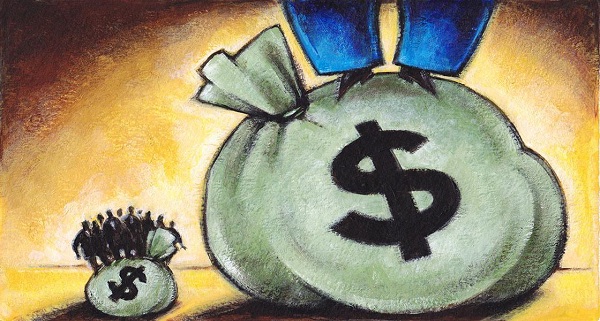
If the free market gives birth to 12 million companies, this creates the “problem” of uninspected potential crimes. Therefore, we have to put the world under the regulatory eye and nose of agencies, whose ultimate objective is to wipe out those enterprises, or weaken them to the point at which they will be absorbed in much larger corporations—until, finally, there are 400 mega-corporations that are responsible for 80% of all international trade and production.

Of course, when 400 corporations do constitute the productive engine of Earth, they will have bought off governments so they can do exactly as they like. They will partner with governments to share the spoils. Which was part of the idea in the first place.

Again, the method is: whatever the size of the original purported problem, make the solution bigger and more encompassing.

If one gun (fired by one person) killed one person, confiscate all guns everywhere.

Here is another example: if you foment and prepare and fund and supply a war between two major powers, in the aftermath you will solve the problem of reconstruction by welding those powers together as one Complex…in which case, you end up with larger unified organizations than when you started, and you control that unified whole.

In Europe, that whole is called the totalitarian European Union.

—-end of excerpt from 2017—

And our response to that elite, artificial method of “problem-solving”: go the other way. Build, in every way possible, small businesses. Entrepreneurship.

No one said it would be easy.

Neither is liberty. Neither is freedom.

Slavery is easy. Until the consequences hit home.

How an “Act of God” Pandemic Is Destroying the West-The U.S. is Saving the Financial Sector, not the Economy

Before juxtaposing the U.S. and alternative responses to the corona virus’s economic effects, I would like to step back in time to show how the pandemic has revealed a deep underlying problem. We are seeing the consequences of Western societies painting themselves into a debt corner by their creditor-oriented philosophy of law. Neoliberal anti-government (or more accurately, anti-democratic) ideology has centralized social planning and state power in “the market,” meaning specifically the financial market on Wall Street and in other financial centers.

At issue is who will lose when employment and business activity are disrupted. Will it be creditors and landlords at the top of the economic scale, or debtors and renters at the bottom? This age-old confrontation over how to deal with the unpaid rents, mortgages and other debt service is at the heart of today’s virus pandemic as large and small businesses, farms, restaurants and neighborhood stores have fallen into arrears, leaving businesses and households – along with their employees who have no wage income to pay these carrying charges that accrue each month.

This is an age-old problem. It was solved in the ancient Near East simply by annulling these debt and rent charges. But the West, shaped as it still is by the legacy of the Roman Empire, has left itself prone to the massive unemployment, business closedowns and resulting arrears for these basic costs of living and doing business.

Western civilization distinguishes itself from its Near Eastern predecessors in the way it has responded to “acts of God” that disrupt the means of support and leave debts in their wake. The United States has taken the lead in rejecting the path by which China, and even social democratic European nations have prevented the corona virus from causing widespread insolvency and polarizing their economies. The U.S. corona virus lockdown is turning rent and debt arrears into an opportunity to impoverish the indebted economy and transfer mortgaged property and its income to creditors.

There is no inherent material need for this fate to occur. But it seems so natural and even inevitable that, as Margaret Thatcher would say, There Is No Alternative.

But of course there is, and always has been. However, resilience in the face of economic disruption always has required a central authority to override “market forces” to restore economic balance from “above.”

Individualistic economies cannot do that. To the extent that they have a strong state, they are not democratic but oligarchic, controlled by the financial sector in its own interest, in tandem with its symbiotic real estate sector and monopolized infrastructure. That is why every successful society since the Bronze Age has been a mixed economy. The determining factor in whether or not an economic disruption leaves a crippled economy in its wake turns out to be whether its financial sector is a public utility or is privatized from the debt-strapped public domain as a means to enrich bankers and money-lenders at the expense of debtors and overall economic balance.

China is using an age-old policy common ever since Hammurabi and other Bronze Age rulers promoted economic resilience in the face of “acts of God.” Unless personal debts, rents and taxes that cannot be paid are annulled, the result will be widespread bankruptcy, impoverishment and homelessness. In contrast to America’s financialized economy, China has shown how natural it is for society simply to acknowledge that debts, rents, taxes and other carrying charges of living and doing business cannot resume until economic normalcy is able to resume.

Near Eastern protection of economic resilience in the face of Acts of God

Ancient societies had a different logic from those of modern capitalist economies. Their logic – and the Jewish Mosaic Law of Leviticus 25, as well as classical Greek and Roman advocates of democratic reform – was similar to modern socialism. The basic principle at work was to subordinate market relations to the needs of society at large, not to enrich a financial rentier class of creditors and absentee landowners. More specifically, the basic principle was to cancel debts that could not normally be paid, and prevent creditors from foreclosing on the land of debtors.

All economies operate on credit. In modern economies bills for basic expenses are paid monthly or quarterly. Ancient economies operated on credit during the crop year, with payment falling due when the harvest was in – typically on the threshing floor. This cycle normally provided a flow of crops and corvée labor to the palace, and covered the cultivator’s spending during the crop year. Interest typically was owed only when payment was late.

But bad harvests, military conflict or simply the normal hardships of life frequently prevented this buildup of debt from being paid. Mesopotamian palaces had to decide who would bear the loss when drought, flooding, infestation, disease or military attack prevented the payment of debts, rents and taxes. Seeing that this was an unavoidable fact of life, rulers proclaimed amnesties for taxes and these various obligations incurred during the crop year. That saved smallholders from having to work off their debts in personal bondage to their creditors and ultimately to lose their land.

For these palatial economies, resilience meant stabilization of fiscal revenue. Letting private creditors (often officials in the palace’s own bureaucracy) demand payment out of future production threatened to deprive rulers of crop surpluses and other taxes, and corvée labor or even service in the military. But for thousands of years, Near Eastern rulers restored fiscal viability for their economies by writing down debts, not only in emergencies but more or less regularly to relieve the normal creeping backlog of debts.

These Clean Slates extended from Sumer and Babylonia in the 3rd millennium BC to classical antiquity, including the neo-Assyrian, neo-Babylonian and Persian Empires. They restored normal economic relations by rolling back the consequences of debts personal and agrarian debts – bondage to creditors, and loss of land and its crop yield. From the palace’s point of view as tax collector and seller of many key goods and services, the alternative would have been for debtors to owe their crops, labor and even liberty to their creditors, not to the palace. So cancelling debts to restore normalcy was simply pragmatic, not utopian idealism as was once thought.

The pedigree for “act-of-God” rules specifying what obligations need not be paid when serious disruptions occur goes back to the laws of Hammurabi c. 1750 BC. Their aim was to restore economic normalcy after major disruptions. §48 of Hammurabi’s laws proclaim a debt and tax amnesty for cultivators if Adad the Storm God has flooded their fields, or if their crops fail as a result of pests or drought. Crops owed as rent or fiscal payments were freed from having to be paid. So were consumer debts run up during the crop year, including tabs at the local ale house and advances or loans from individual creditors. The ale woman likewise was freed from having to pay for the ale she had received from palace or temples for sale during the crop year.

Whoever leased an animal that died by an act of god was freed from liability to its owner (§266). A typical such amnesty occurred if the lamb, ox or ass was eaten by a lion, or if an epidemic broke out. Likewise, traveling merchants who were robbed while on commercial business were cleared of liability if they swore an oath that they were not responsible for the loss (§103).

It was realized that hardship was so inevitable that debts tended to accrue even under normal conditions. Every ruler of Hammurabi’s dynasty proclaimed a Clean Slate cancelling personal agrarian debts (but left normal commercial business loans intact) upon taking the throne, and when military or other disruptions occurred during their reign. Hammurabi did this on four occasions.

Bronze Age rulers could not afford to let such bondage and concentration of property and wealth to become chronic. Labor was the scarcest resource, so a precondition for survival was to prevent creditors from using debt leverage to obtain the labor of debtors and appropriate their land. Rulers therefore acted to prevent creditors from becoming a wealthy class seeking gains by impoverishing debtors and taking crop yields and land for themselves.

By rejecting such alleviations of debts resulting from economic disruption, the U.S. economy is subjecting itself to depression, homelessness and economic polarization. It is saving stockholders and bondholders instead of the economy at large. That is because today’s rentier interests take the economic surplus in the form of debt service, holding labor and also corporate industry in bondage. Mortgage debt is the price of obtaining a home of one’s own. Student debt is the price of getting an education to get a job. Automobile debt is needed to buy a car to drive to the job, and credit-card debt must be run up to pay for living costs beyond what one is able to earn. This deep indebtedness makes workers afraid to go on strike or even to protect working conditions, because being fired is to lose the ability to pay debts and rents. So the rising debt overhead serves the business and financial sector by lowering wage levels while extracting more interest, financial fees, rent and insurance out of their take-home pay.

Debt deflation and the transition from finance capitalism to an Austerity Economy

By injecting $10 trillion into the financial markets (when Federal Reserve credit is added to U.S. Treasury allocation), the CARES act enabled the stock market to recover all of its 34 percent drop (as measured by the S&P 500 stocks) by June 9, even as the economy’s GDP was still plunging. The government’s new money creation was not spent to revive the real economy of production and consumption, but at least the financial One Percent was saved from loss. It was as if prosperity and living standards would somehow return to normal in a V-shaped recovery.

But what is “normal” these days? For 95 percent of the population, their share of GDP already had been falling ever since the Obama Depression began with the bank bailout in 2009, leaving an enormous bad-debt overhead in place. The economy’s long upswing since World War II was already grinding to an end as it struggled to carry its debt burden, rising housing costs, health care and related monthly “nut.”

This is not what was expected 75 years ago. World War II ended with families and businesses rife with savings and with little debt, as there had been little to buy during the wartime years. But ever since, each business cycle recovery has started with a higher ratio of debt to income, diverting more revenue from business, households and governments to pay banks and bondholders. This debt burden raises the economy’s cost of living and doing business, while leaving less wage income and profit to be spent on goods and services.

The virus pandemic has merely acted as a catalyst ending of the long postwar boom. Yet even as the U.S. and other Western economies begin to buckle under their debt overhead, little thought has been given to how to extricate them from the debts and defaults that have accelerated as a result of the broad economic disruption.

The “business as usual” approach is to let creditors foreclose and draw all the income and wealth over subsistence needs into their own hands. Economies have reached the point where debts can be paid only by shrinking production and consumption, leaving them as strapped as Greece has been since 2015. Rejecting debt writedowns to restore social balance was implanted at the outset of modern Western civilization. Ever since Roman times it has become normal for creditors to use social misfortune as an opportunity to gain property and income at the expense of families falling into debt. Blocking the emergence of democratic civic regimes empowered to protect debtors, creditor interests have promoted laws that force debtors to lose their land or other means of livelihood to foreclosing creditors or sell it under distress conditions and have to work off their debts.

In times of a general economic disruption, giving priority to creditor claims leads to widespread bankruptcy. Yet it violates most peoples’ ideas of fairness and distributive justice to evict debtors from their homes and take whatever property they have if they cannot pay their rent arrears and other charges that have accrued through no fault of their own. Bankruptcy proceedings will force many businesses and farms to forfeit what they have invested to much wealthier buyers. Many small businesses, especially in urban minority neighborhoods, will see yeas of saving and investment wiped out. The lockdown also forces U.S. cities and states to cope with plunging sales- and income-tax revenue by slashing social services and depleting their pension funds savings to pay bondholders. Balancing their budgets by privatizing hitherto public services will create monopoly rents and new corporate empires

These outcomes are not necessary. They also are inequitable, and instead of being a survival of the fittest and most efficient economic solutions, they are a victory for the most successfully predatory. Yet such results are the product of a long-pedigreed legal and financial philosophy promoted by banks and bondholders, landlords and insurance companies reject economy-wide debt relief. They depict writing down debts and rents owed to them as unthinkable. Banks claim that forgiving personal and business rents would lead absentee landlords to default on their mortgages, threatening bank solvency. Insurance companies claim that to make their policy holders whole would bankrupt them. So something has to give: either the population’s broad economic interests, or the vested interests insisting that labor, industry and the government must bear the cost of arrears that have built up during the economic shutdown.

As in oligarchic Rome, financial interests in today’s world have gained control of governments and captured the political and regulatory agencies, leaving democratic reformers powerless to suspend debt service, rent arrears, evictions and depression. The West is becoming a highly centrally planned economy, but its planning center is Wall Street, not Washington or state and local governments.

Rising real estate arrears prompt a mortgage bailout

Canada and many European governments are subsidizing businesses to pay up to 80 percent of employee wages even though many must stay home. But for the 40 million Americans who haven’t been employed during the closedown, the prospect is for homelessness and desperation. Already before the crisis about half of Americans reported that they were living paycheck to paycheck and could not raise $400 in an emergency. When the paychecks stopped, rents could not be paid, nor could other normal monthly living expenses.

America is seeing the end of the home ownership boom that endowed its middle class with property steadily rising in price. For buyers, the price was rising mortgage debt, as bank credit was the major factor in raising property prices. (A home is worth however much a bank will lend against it.) For non-whites, to be sure, neighborhoods were redlined against racial minorities. By the early 2000s, banks began to make loans to black and Hispanic buyers, but usually at extortionately high interest rates and stiffer debt terms. America’s white home buyers now face a fate similar to that which they have long imposed on minorities: Debt-inflated purchase prices for homes so high that they leave buyers strapped by mortgage and compulsory insurance payments, with declining public services in their neighborhoods.

When mortgages can’t be paid, foreclosures follow. That causes declines in the proportion of Americans that own their own homes. That home ownership rate already had dropped from about 58 percent in 2008 to about 51 percent at the start of 2020. Since the 2008 mortgage-fraud crisis and President Obama’s mass foreclosure program that hit minorities and low-income buyers especially hard, a more landlord-ridden economy has emerged as a result of foreclosed properties and companies bought by speculators and vast absentee-owner companies like Blackstone.

Many businesses that closed down did not pay the landlords. Realizing that if they are held responsible for paying full rents that accrued during the shutdown, it would take them over a year to make up the payment, leaving no net earnings for their efforts. That was especially the case for restaurants with compulsory limited “distance” seating and other stores obliged to restrict the density of their customers. Many restaurants and other neighborhood stores decided to go out of business. For hotels standing largely empty, some 19 percent of mortgage loans had fallen into arrears already by May, along with about 10 percent of retail stores.

The commercial real estate sector owes $2.4 trillion in mortgage debt. About 40 percent of tenants did not pay their rents for March, April and May, from restaurants and storefronts to large national retail markets. A moratorium on evictions put them off until August or September 2020. But in the interim, quarterly state and local property taxes were due in June, which also was when the annual federal income-tax payment was owed for the year 2019, having been postponed from April in the face of the shutdown.

The prospective break in the chain of payments of landlords to their banks may be bailed out by the Federal Reserve, but nobody can come up with a scenario whereby the debts owed by non-elites can be paid out of their own resources, any more than they were rescued from the junk-mortgage frauds that left over-mortgaged homes (mainly for low-income victims) in the wake of Obama’s decision to support the banks and mortgage brokers instead of their victims. In fact, it takes a radical scenario to see how state and local debt can be paid as public budgets are thrown into limbo by the virus pandemic.

The fiscal squeeze forces governments to privatize public services and assets

Since 1945, the normal Keynesian response to an economic slowdown has been for governments to run budget deficits to revive the economy and employment. But that can’t happen in the wake of the 2020 pandemic. For one thing, tax revenue is falling. Governments can create domestic money, of course, but the U.S. government quickly ran up a $2 trillion deficit by June 2020 simply to support Wall Street’s financial and corporate markets, leaving a fiscal squeeze when it came to public spending into the real economy. Many U.S. states and cities have laws obliging them to balance their budgets. So public spending into the real economy (instead of just into the financial and corporate markets) had to be cut back.

Sales taxes from restaurants and hotels, income taxes, and property taxes from landlords not receiving rents. U.S. states and localities are having a huge tax shortfall that is forcing them to cut back basic social services and infrastructure. New York City mayor de Blasio has warned that schools, the police and public transportation may have to be cut back unless the city is given $7 billion. The CARES act passed by the Democratic Party in control of the House of Representatives made no attempt to allocate a single dollar to make up the widening fiscal gap. As for the Trump administration, it was unwilling to give money to states voting Democratic in the presidential or governorship elections.

The irony is that just at the time when a pandemic calls for public health care, political pressure for that abruptly stopped. Logically, it might have been expected the virus to have become a major catalyst for single-payer public health care, not least to prevent a wave of personal bankruptcy resulting from high medical bills. But hopes were dashed when the leading torch bearer for socialized medicine, Senator Bernie Sanders, threw his support behind Joe Biden and other opponents for the presidential nomination instead of focusing the primary elections on what the future of the Democratic Party would be. It decided to focus the 2020 U.S. election merely on the personality of which candidate would impose neoliberal policy: Republican Donald Trump, or his opponent running simply on a platform of “I am not Trump.”

Both candidates – and indeed, both parties behind them –sought to downsize government and privatize as much of the public sector as possible, leaving administration to financial managers. Past government policy would have restored prosperity by public spending programs to to rebuild the roads and bridges, trains and subways that have fallen apart. But the fiscal squeeze caused by the economic shutdown has created pressure to Thatcherize America’s crumbling transportation and urban infrastructure – and also to sell off land and public enterprises, basic urban health, schools – and at the national level, the post office. Fiscal budgets are to be balanced by selling off this infrastructure, in lucrative Public-Private Partnerships (PPPs) with financial firms.

The neoliberal rent-extractive plan is for private capital to buy monopoly rights to repair the nation’s bridges by turning them into toll bridges, to repair the nation’s roads and highways by making the toll roads, to repair sewer systems by privatizing them. Schools, prisons, hospitals and other traditionally public functions. Even the police are to be privately owned security-guard agencies and managed for profit – on terms that will provide interest and capital gains for the financial sector. It is a New Enclosures movement seeking monopoly rent much as landlords extract land rent.

Having given $10 trillion dollars to support financial and mortgage markets, neoliberals in both the Republican and Democratic parties announced that the government had created so large a budget deficit as a result of bailing out the banking and landlord class that it lacked any more room for money creation for actual social spending programs. Republican Senate leader Mitch McConnell advised states to solve their budget squeeze by raiding their pension funds to pay their bondholders.

For many decades, public employees accepted low wage growth in exchange for pensions. Their patient choice was to defer demands for wage increases in order to secure good pensions for their retirement. But now that they have worked at stagnant wages for many years, the money ostensibly saved for their pensions is to be given to bondholders. Likewise at the federal level, pressure was renewed by both parties to cut back Social Security, Medicare and Medicaid, with Obama’s 2010 Simpson-Bowles Commission on Fiscal Responsibility and Reform to reduce the deficit at the expense of retirees and the poor.

In sum, money is being created to fuel the financial sector and its stock and bond markets, not to increase the economy’s solvency, employment and living standards. The corona virus pandemic did not create this shift, but it catalyzed and accelerated the power grab, not least by pushing public-sector budgets into crisis.

It doesn’t have to be this way

Every successful economy has been a mixed public/private economy with checks on the financial sector’s power to indebt society in ways that impoverish it. Always at issue, however, is who will control the government. As American and European industry becomes more debt ridden, will they be oligarchic or democratic?

A socialist government such as China’s can keep its industry going simply by simply writing down debts when they can’t be paid without forcing a closedown and bankruptcy and loss of assets and employment. The world thus has two options: a basically productive public financial system in China, or a predatory financial system in the United States.

China can recover financially and fiscally from the virus disruption because most debts ultimately are owned to the government-based banking system. Money can be created to finance the material economy, labor and industry, construction and agriculture. When a company is unable to pay its bills and rent, the government doesn’t stand by and let it be closed down and sold at a distressed price to a vulture investor.

China has an option that Western economies do not: It is in a position to do what Hammurabi and other ancient Near Eastern palatial economies did for thousands of years: write down debts so as to keep the economy resilient and functioning. It can suspend scheduled debt service, taxes, rents and public fees from having to be paid by troubled areas of its economy, because China’s government is the ultimate creditor. It need not contend with politically powerful bankers who insist that the economy at large must lose, not themselves. The government can write down the debt to keep companies in business, and also their employees. That’s what socialist governments do.

The underlying problem is finance capitalism. Its roots lie at the heart of Western civilization itself, rejecting the “circular time” permitting economic renewal by Clean Slates in favor of “linear time” in which debts are permanent and irreversible, without public oversight to manage finance and credit in the economy’s overall long-term interest.


When the World Goes to Hell: How I Plan To Offer Hospitality and Build Community

If the quarantine has taught me anything in this last year, it has taught me flexibility. I know I have been saying that over the last few posts, but flexibility has been key this year. I would like to think I was flexible before the pandemic, but I have had to reassess that. 

One of the things that happened this year was that one of my kids moved back from Sioux Falls and now lives with me. Their situation changed because of the pandemic. Sioux Falls was originally hit hard by the coronavirus and they did not think it was a good place for the little ones to be especially a newborn. Their economy is now feeling the effects of the virus and jobs are harder to find there. With a few other considerations, they made the decision to stay in Iowa for now where they are closer to family. He is still working in Sioux Falls so they are making sacrifices to keep this working.

The thing is that I always said that once my kids left home, they weren’t coming back. They could come visit, of course, but they couldn’t come back to live at home. I raised them to be living on their own and independent once they left for college or moved into their first apartment (usually the apartment). While I still have one in a dorm room at college and one at home yet, this has been mostly successful. When the pandemic hit and many things changed for all my kids, I found out I needed to reassess my attitude and my thoughts on this matter. 

One thing in the prepping world that can be a hot topic of conversation is community and hospitality. I know if something really went sideways, I would have up to thirty extra people at my property. That is a lot of people and a lot of preparations to think about. We need more beds and living quarters. We are in the process of trying to figure that out now which is also including the buildings and bins still standing on the property. I also know a few of those people will show up with their own living quarters (campers) and as many supplies as they can transport. 

I would welcome all these people with open arms because (1) I know they have skills that will be handy; (2) the extra hands will be needed; and (3) I consider them to be family if they aren’t already. I know these people and known them for a very long time. I had to think about this long and hard because I know people change when faced with difficult situations. 

I was not sold on the community idea for a long time. I am an introvert by nature. I like people, but I get tired of people. I am very careful to always have my own space to retreat to when I need some time to think. However, I also live on seven acres. If I get another place, it would similar size or a little smaller. That is a lot of work for one person. This has become easier as the kids have gotten older and can help more. The more people that are there to help with the work and the growing of food, the more we can do together. 

However, building a community is not to be confused with offering hospitality. Sometimes it is when people are worried about security and supplies. There is this idea that if someone shows up on your doorstep, they need a permanent place to stay which is not usually the case. Community is something you are trying to build to increase your workforce and chances of survival. Hospitality is something you offer to someone who is coming to visit, passing through, or just needs a place for the night. 

As preppers, we also need to think about hospitality. I take to heart the Golden Rule: “Do unto others as you would have done to you”. Otherwise, treat others how you would want to be treated. That means a lot when you are talking about hospitality. If someone was looking for a meal and a place to lay their head, what is the harm of offering that hospitality?

Many of you would say that is a good way to get yourself robbed and/or even killed. You may be right in that respect. You would have to exercise caution no matter what. However, what if you were in that person’s shoes? If you needed those things, you would be more than humbled to accept them from a stranger. You would be grateful for a hot meal. What harm is there in offering that to someone in need? You aren’t offering tours of your food storage and guns. You are giving someone a place to lay their head or a meal to give them sustenance to keep going. 

How do my kids figure into all of this? When you are raising your kids, you don’t necessarily think of them as adults. You want them to become a functional adult in the world who can hold a job and live on their own. However, your prepping plans probably cover your kids as dependents. You expect them to leave home and be prepared themselves. What happens when this changes?

My kids were not apart of my long-range prepping plans. That was an oversight on my part because they are very functional people who are very capable and have people in their lives who are also very capable human beings. When three of my four kids were home this summer, I began to see them as part of my community (that also includes the one that wasn’t home). Not only my kids but kids of good friends of mine that are very much part of my community now. We have raised our kids into adults who will be essential assets to our community if they choose to be apart of it. 

I want my kids to know that they will always be apart of my community. I also want my kids to know that hospitality is not only expected (with caution) but should always be offered even in survival situations. That if they choose to be preppers themselves (they already are in a variety of ways), treating others how you want to be treated doesn’t go in the trash. They also should know that they should always be building a community of people around them that they trust completely and can rely on in any situation. If a hospitality situation goes sideways, they will have people who will defend and help them resolve the threat. 

We are always changing in life and our plans need to keep up. We will always need people we can depend on. We also need to still treat others how we want to be treated. Some things do change, but some things don’t.

The Covid Deception

We have been deceived by public health authorities about Covid, partly from public authorities’ ignorance of the virus, its spread and treatment, but mainly on purpose.

One reason we were intentionally deceived by public health authorities, and continue to be deceived by them, is to create a market for a Covid vaccination. There are billions of dollars of profits in this, and Big Pharma wants them. The financial connections between public health authorities and Big Pharma means that WHO, NIH, and CDC also desire mass vaccinations. If there are not enough people scared out of their wits to voluntarily seek vaccination, the chances are vaccinations will be made mandatory or your ability to travel, and so forth, will be made dependent on being vaccinated.

Another intentional reason for our deception is the Covid threat justifies voting by mail from the safety of one’s home. Voting by mail means that no winner can be declared on election night. The mail-in votes will have to be counted as they come in. The delay in declaring an election winner allows time for more propaganda that Trump has (1) fraudently rigged his reelection or (2) has lost and won’t step down. As the presstitutes speak with one orchestrated voice, whether Trump wins or not will be buried in reports that he lost and refuses to step down or that he won by fraud.

Even if Trump survives the color revolution planned for him, he will be under attack as an illegitimate president just as he was during his first term when he was allegedly elected by “Russian interference.” This will suffice to prevent a renewal of his attack on the Globalist Establishment—listen to his first inaugural address—and again sideline his desire to serve peace by reducing the dangerous tensions with Russia, a policy that deprives the military/security complex of its valuable enemy.

As presidents John F. Kennedy and Ronald Reagan learned, reducing tensions with Russia threatens the budget and power of the military/security complex that President Eisenhower warned Americans against. This complex has more power than the president of the United States. As no one would any longer believe another “lone assassin” explanation, Trump is being assassinated with false accusations and a color revolution. For awhile Trump used Twitter to refute the false accusations, but now the President of the United States is censored by Twitter.

When the color revolution strikes, Trump will not be able to communicate with the American people through print, TV, NPR, or social media. There will only be charges against Trump, and no answers from him.

The Democrats are claiming that as the Postmaster General is appointed by Trump, he will rig the mail-in votes by not delivering votes from blue states. Yet polls show that the vast majority of Democrats are voting by mail and that hardly any Republicans are. This is because the postal union is a public-sector union and belongs to the Democrats. The postal workers already have their instructions: deliver no votes from red areas. Obviously, no Democrats would vote by mail if they thought the Postmaster General had any control over mail delivery. The Republicans know that the postal union will not deliver their votes and are voting in person. ( Thousands of undelivered, unopened votes from 2018 have been found in a trash dump– https://www.thegatewaypundit.com/2020/09/exclusive-california-man-finds-thousands-unopened-ballots-garbage-dumpster-workers-quickly-try-cover-photos/ ).

This should mean that on election night Trump will have a tremendous victory, but the delay to count the mail-in votes gives the Democrats the time needed to figure out how large the mail-in vote has to be to win or contest the election.

It is not only mail-in voting but also absentee ballots that don’t get delivered: https://www.zerohedge.com/markets/wisconsin-authorities-investigate-absentee-ballots-found-ditch-fbi-probes-discarded-pro

A third reason for the intentional misrepresentation of the Covid threat is to build the growing police state on more intrusions into private life. The public health threat is used to mandate unconstitutional intrusions that close private businesses or force them to operate at 50 percent capacity, thus driving them into bankruptcy and destroying the lifework of people in the name of public health. The threat is also used to accustom the public to obey mandates to wear masks that provide zero protection. Although opposition to this harmful policy is rising in the US and is strong in Germany and the UK, the fear of Covid that has been indoctrinated has caused most populations to behave as lemmings. People are being trained to obey edicts that harm them.

Now, let’s look at the misrepresentation of the Covid Threat itself.

Many medical professionals have shown, with evidence, that the Covid threat has been greatly overstated. According to the CDC’s own data, of the alleged 200,000 Americans killed by Covid, only 9,000 actually were. The remainder had 2.6 co-morbidities that in fact killed them. The CDC reports that in only 6% of the reported Covid deaths was Covid the only cause. For 94% of the Covid deaths, there were on average 2.6 comorbidities or additional causes of death–https://www.cdc.gov/nchs/nvss/vsrr/covid_weekly/index.htm?fbclid=IwAR0LhME5kaVDj5hGFZ-G5ypGdMDaGlkPi0DF8aDKL_bUDi0hJsN_Fq5zPUQ#Comorbidities

Examples of comorbidities:

The CDC concludes that the initial fatality rates were overestimated. If you have the virus, the CDC reports the survival rate by age group. As I read the report, the percentages are all Covid deaths including those with an average of 2.6 comorbidities.

Age Group Probability of Survival

0-19: 99.997%
20-49: 99.98%
50-69: 99.5%
70+: 94.6%

https://www.cdc.gov/coronavirus/2019-ncov/hcp/planning-scenarios.html

In addition to existing morbidities, many who died from Covid died from the ventilators or from being denied HCQ treatment. HCQ, a safe and certain cure, was demonized by public health officials in alliance with Big Pharma and the presstitutes, because it is inexpensive and in the way of vaccine profits. If there is a cure, there is no need for a vaccine that some experts believe will be more dangerous than Covid itself. (Doctors in Florida claim to have found a second cure– https://bgr.com/2020/09/26/coronavirus-cure-icam-protocol-florida/ )

The Covid threat is being kept alive by the presstitutes and public health officials until a vaccine can be developed. The latest claim is that the return of the young to colleges has reignited the contagation and spreading it to the adult population in a second wave. This “threat” is an orchestrated hoax. According to the data, the 48,299 Covid-19 cases reported at 37 US universities are associated with only two hospitalizations and zero deaths– https://www.thegatewaypundit.com/2020/09/scam-48299-covid-19-cases-37-us-universities-2-hospitalizations-zero-deaths-likely-killed-dog/

There is talk of returning to lockdowns and more stringent mask requirements. All of this is to keep people, especially the elderly, frightened and supportive of vaccination. Proper testing of the vaccine is suspended in an effort to rush it to market before Covid disappears ( https://www.rt.com/news/501523-western-pharma-vaccines-rush-hypocrisy/ ).

Dr. Mike Yeadon, former Chief Science Officer for Big Pharma giant Pfizer says that the pandemic is over and that the Covid test produces “false positives” and does not indicate infection with Covid. Dr. Yeadon said that we are basing a government policy, an economic policy, and a civil liberties policy on “what may well be completely fake data on this coronavirus.” According to Dr.Yeadon, a “second wave” and “any government case for lockdowns, given the well-known principles of epidemiology, will be entirely manufactured” ( https://hubpages.com/politics/Pfizer-Chief-Science-Officer-Second-Wave-Based-on-Fake-Data-of-False-Positives-for-New-Cases-Pandemic-is-Over ).

It is clear that the Covid threat was overestimated at great cost– https://www.paulcraigroberts.org/2020/09/23/covid-19-threat-was-greatly-overestimated-at-huge-cost/ . The Belgian medical profession has demanded a halt to the Covid propaganda– https://www.paulcraigroberts.org/2020/09/18/belgian-medical-profession-demands-a-halt-to-covid-pandemic-propaganda/

Of course Big Pharma and its shills such as Fauci, Redfield, and the presstitutes, will continue to keep the “Covid Crisis” alive as it is essential to Big Pharma’s vaccine profits, the Democrats’ color revolution against President Trump, and the training of populations to accept more government control over their lives.

Gates, Kissinger and Our Dystopian Future. Everywhere in the western world, freedom is collapsing faster than a corrugated lean-to in a Kansas tornado

“The further a society drifts from the truth, the more it will hate those who speak it.” George Orwell

Can we agree that there are two types of Covid-19?

The first type, is Covid-19 ,”The Virus”, which is a fairly mild infection that most people don’t even realize they’ve contracted. They remain either asymptomatic or have slight flu-like symptoms that go away after a week or so. A tiny sliver of the population– that are mainly-older, vulnerable people with underlying health conditions– can develop complications, become seriously ill and die. But, according to most analysis, the chances of dying from Covid are roughly between 1 in every 200 to 1 in every 1,000 people. (CDC-IFR- 0.26%) In other words, Covid is not the Spanish Flu, not the Black Plague and the Genocidal Planetary Killer Virus it was cracked up to be. It kills more people than the annual influenza, but not significantly more.

The second type of Covid-19, is Covid “The Political Contrivance” or, rather,CODENAME: Operation Virus Identification 20 19. This iteration of the Covid phenom relates to the manner in which a modestly-lethal respiratory pathogen has been inflated into a perennial public health crisis in order to implement economic and societal changes that would otherwise be impossible. This is the political side of Covid, which is much more difficult to define since it relates to the ambiguous agenda of powerful elites who are using the infection to conceal their real intentions. Many critics believe that Covid is a vehicle the Davos Crowd is using to launch their authoritarian New World Order. Others think it has more to do with Climate Change, that is, rather than build consensus among the world leaders for mandatory carbon reductions, global mandarins have simply imposed lockdowns that sharply reduce economic activity across-the-board. This, in fact, has lowered emissions significantly, but at great cost to most of humanity. Covid restrictions have triggered a sharp uptick in suicides, clinical depression, child abuse, domestic violence, alcoholism and drug abuse. The list goes on and on. Also, it has left economies everywhere in a shambles, increasing unemployment and homelessness exponentially, while setting the stage for massive famines in undeveloped countries around the world. Even so, key players in the Covid crisis– like mastermind Bill Gates– continue to marvel at impact these onerous restrictions have had on emissions. Take a look at this excerpt from a recent post at the Microsoft founder’s blog:

“You may have seen projections that, because economic activity has slowed down so much, the world will emit fewer greenhouse gases this year than last year. Although these projections are certainly true, their importance for the fight against climate change has been overstated.

Analysts disagree about how much emissions will go down this year, but the International Energy Agency puts the reduction around 8 percent. In real terms, that means we will release the equivalent of around 47 billion tons of carbon, instead of 51 billion.

That’s a meaningful reduction, and we would be in great shape if we could continue that rate of decrease every year. Unfortunately, we can’t.

Consider what it’s taking to achieve this 8 percent reduction. More than 600,000 people have died, and tens of millions are out of work. This April, car traffic was half what it was in April 2019. For months, air traffic virtually came to a halt.

To put it mildly, this is not a situation that anyone would want to continue. And yet we are still on track to emit 92 percent as much carbon as we did last year. What’s remarkable is not how much emissions will go down because of the pandemic, but how little.

In addition, these reductions are being achieved at, literally, the greatest possible cost.

To see why, let’s look at what it costs to avert a single ton of greenhouse gases. This figure—the cost per ton of carbon averted—is a tool that economists use to compare the expense of different carbon-reduction strategies. For example, if you have a technology that costs $1 million, and using it lets you avert the release of 10,000 tons of gas, you’re paying $100 per ton of carbon averted. In reality, $100 per ton would still be pretty expensive. But many economists think this price reflects the true cost of greenhouse gases to society, and it also happens to be a memorable round number that makes a good benchmark for discussions.

Now let’s treat the shutdown caused by COVID-19 as if it were a carbon-reduction strategy. Has closing off major parts of the economy avoided emissions at anything close to $100 per ton?

No. In the United States, according to data from the Rhodium Group, it comes to between $3,200 and $5,400 per ton. In the European Union, it’s roughly the same amount. In other words, the shutdown is reducing emissions at a cost between 32 and 54 times the $100 per ton that economists consider a reasonable price.

If you want to understand the kind of damage that climate change will inflict, look at COVID-19 and spread the pain out over a much longer period of time. The loss of life and economic misery caused by this pandemic are on par with what will happen regularly if we do not eliminate the world’s carbon emissions.” (“COVID-19 is awful. Climate change could be worse“, Gates Notes)

Isn’t it curious that Gates has spent so much time calculating the impact lockdowns have had on carbon emissions? And look at how precise his calculations are. These are not “back of the envelop” type computations, but a serious bit of number-crunching. He even takes the number of people who have died of Covid worldwide (600,000) and painstakingly compares it to the projected “global mortality rates” (“on an annualized basis”) of people who will die from “increases in global temperatures”.

Does it seem to you that Gates might have more than a passing interest in these estimations?? Does it look like he might be more than just a neutral observer impartially perusing the data?

Let me pose a theory here: In my opinion, Gates’ interest in these matters is not merely speculative curiosity. He and his fellow elites are conducting an elaborate science experiment in which we– mere mortals– are the lab rats. They are deliberately using the Covid-scare to conceal their real objective which is to prove beyond a doubt that curtailing emissions by shutting down vast swathes of the global economy will NOT stave off catastrophic climate change.

So, let’s just assume for the sake of argument that I’m right. Let’s assume that other elites read Gates report and agree with its conclusions. Then what?

This is where it gets interesting, because Gates doesn’t really answer that question, but his silence gives him away.

Let me explain: Gates says, “The relatively small decline in emissions this year makes one thing clear: We cannot get to zero emissions simply—or even mostly—by flying and driving less.”

Okay, so we cannot stop climate change by doing what we are doing now.

Then Gates says: “Let science and innovation lead the way….Any comprehensive response to climate change will have to tap into many different disciplines…. we’ll need biology, chemistry, physics, political science, economics, engineering, and other sciences.”

Right again, we’ll follow the science.

Gates then says: “It will take decades to develop and deploy all the clean-energy inventions we need.”

Okay, so we have to move fast to avoid tragedy.

Finally, Gates says: “Health advocates said for years that a pandemic was virtually inevitable. The world did not do enough to prepare, and now we are trying to make up for lost time. This is a cautionary tale for climate change, and it points us toward a better approach.”

Got that? So, on the one hand, Gates is saying ‘We must act fast and follow the science’, and on the other he is saying, ‘Shutting down the economy alone isn’t going to work.’

WTF? If it’s not going to work, then why bother? Why is Gates sending a mixed message?

Ahh, but there’s the rub. It’s not a mixed message and it is not a contradiction. What Gates is doing is leading the reader to draw the same conclusion that he has, (wink, wink) that is, if reducing economic activity isn’t going to work, then we have to find an entirely different solution, like reducing the size of the population. Isn’t that the only logical conclusion?

Yes, it is. So, the Great Lab Experiment of 2020 (Covid) has alot to do with population control; thinning the herd so our exalted Davos Overlords can ensure their blue-blooded offspring will have mild temps when they winter-over on their private islands in the Caribbean. But population control is just a small part of a much more ambitious plan to restructure the global economy, vaccinate everyone on the planet and dispose of those niggling civil liberties to which Americans have become so attached.

The elitist strategy has been dubbed the “Great Reset” which refers to the World Economic Forum’s Covid Action Platform, a program that aims at restructuring “economic and social foundations” in a way that best suits the interests of “stakeholder” capitalists. Here’s a clip from their press release:

“COVID-19 lockdowns may be gradually easing, but anxiety about the world’s social and economic prospects is only intensifying. There is good reason to worry: a sharp economic downturn has already begun, and we could be facing the worst depression since the 1930s. But, while this outcome is likely, it is not unavoidable.

To achieve a better outcome, the world must act jointly and swiftly to revamp all aspects of our societies and economies, from education to social contracts and working conditions. Every country, from the United States to China, must participate, and every industry, from oil and gas to tech, must be transformed. In short, we need a “Great Reset” of capitalism…

The level of cooperation and ambition this implies is unprecedented. But it is not some impossible dream. In fact, one silver lining of the pandemic is that it has shown how quickly we can make radical changes to our lifestyles. Almost instantly, the crisis forced businesses and individuals to abandon practices long claimed to be essential, from frequent air travel to working in an office….

Clearly, the will to build a better society does exist. We must use it to secure the Great Reset that we so badly need. That will require stronger and more effective governments, though this does not imply an ideological push for bigger ones. And it will demand private-sector engagement every step of the way.” (“The World Economic Forum’s Covid Action Platform“, WEF)

If it sounds like our illustrious leaders want to remake society from the ground-up, it’s because that’s exactly what they have in mind. And they’re not even trying to hide their real intentions. They say quite bluntly: “the world must act jointly and swiftly to revamp all aspects of our societies and economies, from education to social contracts and working conditions.”

That sounds alot like marching orders to me and, indeed, that’s exactly what they are; orders.

But how do they intend to affect these dramatic and revolutionary changes?

Why Covid, of course. They’re going to use Covid to make fundamental changes to the existing system, including accelerating privatization (“stakeholder capitalism”), merging governments into a unified global regime, intensifying the elements of social control (via mass electronic surveillance, intrusive contact tracing, security checkpoints, lockdowns, internal passports, biometric IDs etc) and taking whatever steps are required to introduce a tyrannical Brave New World.

It’s all there in black and white, they’re not even trying to hide it. In their own words, the “Great Reset” depends on the Covid Action Platform, right? In order to “build a better society” we need to “make radical changes to our lifestyles” including reductions in “frequent air travel to working in an office”. So just forget that trip to Italy next year Mr. and Mrs. WorkerBee. Ain’t gonna happen. Bill Gates says, “No.” And get used to working from home, too, because we don’t want your dog-eared Capri spewing carbon into our pristine-blue skies.

The statement also makes clear that the obliteration of millions of jobs and small businesses was not an accidental casualty of the Covid lockdowns, but the planned demolition of business and workers these Mucky-mucks consider ‘non-essential’.

And as far as who will participate in this new blueprint for Capitalist Valhalla? Well, everyone of course. According to the authors: “Every country, from the United States to China, must participate, and every industry, from oil and gas to tech, must be transformed.”

There it is from the horse’s mouth: The glorious Biosecurity Slave State is emerging right before our very eyes and we just thought we were in another Great Depression rounded off with a pandemic.

So, when we talk about Covid the “Political Contrivance”, we’re actually referring to the vehicle that elites have settled on to transition the country from its present condition to a full-blown “lock-down” police state. Covid is the smokescreen that’s being used to conceal the maneuverings of filthy-rich powerbrokers who want to implement their Grand Plan for humanity. So, if everything feels chaotic and upside-down at the present time, don’t be alarmed; it’s all by design. The more muddled and turbulent the world becomes, the easier it is to get people to submit to moronic activities like wearing a diaper on your mouth every time you leave the house or standing 6 feet apart at the grocery store so invisible pathogens don’t climb up your pant-leg and bite you. Psychologists know that –in a topsy-turvy world where uncertainty prevails — people are more apt to follow the directives of affable blockheads, like Tony Fauci, even though they may be abandoning their last-claim to personal freedom in the process.

Looking back to April of 2020, we probably should have anticipated where all this was headed, after all, Mr. NWO himself, Henry Kissinger, announced what to expect in an op-ed he posted in the Wall Street Journal. Here’s what he said:

The reality is the world will never be the same after the coronavirus. To argue now about the past only makes it harder to do what has to be done…”(NOTE– Is Kissinger clairvoyant? How did he know the “world would never be the same again”?)

“Enlightenment thinkers (argued) that the purpose of the legitimate state is to provide for the fundamental needs of the people… Individuals cannot secure these things on their own. The pandemic has prompted an anachronism, a revival of the walled city in an age when prosperity depends on global trade and movement of people.” (NOTE– In other words: Globalism is good, Nationalism is bad. The same refrain we’ve heard for the last 30 years.)

While the assault on human health (from Covid) will—hopefully—be temporary, the political and economic upheaval it has unleashed could last for generations. (NOTE–Another peek into Henry’s crystal ball, eh?) No country, not even the U.S., can in a purely national effort overcome the virus. Addressing the necessities of the moment must ultimately be coupled with a global collaborative vision and program.” (“The Coronavirus Pandemic Will Forever Alter the World Order”Wall Street Journal)

As Kissinger clearly states, globalization is still alive and well among the Davos heavyweights who now see a once-in-a-lifetime opportunity to put their plan into action. Parts of Australia and New Zealand are already under de-facto martial law while PM Boris Johnson is adding another 2,000 cops in London to enforce his goofy Covid mandates. Everywhere in the western world, freedom is collapsing faster than a corrugated lean-to in a Kansas tornado. Meanwhile in panic-stricken America, fainthearted proles continue to hide behind their sofas waiting for the faux-plague to pass. Do they even see the train-wreck just ahead? Author Gary D. Barnett summed it up like this:

“At this moment in time we are standing on a precipice with the state attempting to push us over the edge. Once over that edge, there will be no coming back. This is why if the people fight back in mass, and withhold all support from the governing demons, we can awaken from this nightmare, and regain normalcy.” (“The State’s Covid Response Is a Cancer for the Freedom of Humanity”, Gary D. Barnett, Lew Rockwell)

Bravo, Mr. Barnett. That says it all.

The battle for the soul of America: Too many in the US are losing touch with the idealism, and the spirit of freedom and democracy, that inspired the founding of a new world

Historically, US presidential elections were dominated by competing views on economic and social issues. No longer. This approaching election has increasingly been consumed by a cultural conflict, at the heart of which is a war over American history. But this is no mere disagreement over the precise details of what happened three or four centuries ago. It is a battle for the very soul of the United States.

The principal battle is being fought over the founding of the US. As we will see, this is best captured, by, on one side, the New York Times’ 1619 Project, which contends America was founded when African slaves first arrived in Jamestown; and, on the other, President Donald Trump’s mooted 1776 Commission, which reasserts the traditional, would-be inspiring narrative of revolution and independence as America’s founding moment.

All of this raises questions of the utmost importance. Why has America’s founding become such a vital issue in the 21st century? And, more broadly, how should humanity engage with the legacy of its past achievements?

The erosion of the boundary between the present and the past

History has rarely appeared more alive than it does in the West today. Even before the Black Lives Matters protests this summer, protesters had been treating symbols of the past, be they building names or statues, as if they were living things. Some protesters even claim that these inanimate objects pose a threat to their wellbeing, with some Rhodes Must Fall campaigners at the University of Oxford claiming that merely walking past Cecil Rhodes’ statue is traumatic. Many more treat these symbols of the past as if they are living adversaries, against whom every act of vandalism or toppling is a vital act.

This presentation PROOVES WITHOUT DOUBT that America is in for a major fight that will put you and your family in the firing line, literally… So make sure you watch this presentation while it’s still online…

You could see something of this when activists pulled down the statue of Edward Colston in Bristol earlier this year. They did not simply want to topple it. They wanted to defile it, humiliate it, debase it. And so they pulled it down, and then dragged it along the street before throwing it into the river. It was almost as if they were parading the corpse of a hated tyrant before his liberated people, rather than a statue of a long-forgotten slave-trading merchant who died 300 years ago.

This captures something about the nature of these protests against historical symbols. Those involved – so emotional, angry and overwrought – appear to have lost sight of any distinction between the present and the past. And they are not alone. Indeed, the erasure of the boundary that separates the present from the past is one of the most important, if rarely acknowledged, cultural phenomena of the 21st century.

This can be seen in the way our present moment, marked by Brexit and Trump, is all too frequently seen by its critics in terms of the 1930s – as if there is little-to-no difference between then and now. It is difficult to pick up a newspaper today without encountering references to the Second World War, the fall of the Weimar Republic, or the rise of fascism. The reason for this form of historical revivalism is simple enough. Opponents of Trump, Brexit and so on are using symbols of past evil to discredit their present-day opponents.

This has led to a form of fantasy-driven radicalism, whereby leftist Don Quixotes tilt endlessly at Nazi windmills. But at least Don Quixote only harmed himself by fighting imaginary enemies. Today’s delusional crusaders, with Antifa to the fore, are far more insidious and dangerous. In their eyes, every white person enjoying a meal in a restaurant is a potential fascist, and therefore a legitimate target for violent anti-fascist action.

This attempt to demonise contemporary opponents through historical association should be understood in relation to the attempt to demonise history itself. That’s why those trying to topple statues, for instance, are not merely trying to rid the world of certain physical objects. They also want to purge it of what they see as the past evil with which those objects are associated. It does not matter whether the object in question is a flag, a statue, or even a song. If it connects the present to the now demonised past, it becomes an object of vilification.

Banishing the ‘bad old days’

Debates about history are usually confined to academic and cultural circles. But not at the moment. History has rarely been more politicised, or more politically significant, than it is right now. The reason for this is that the Western cultural and political establishment has become estranged from its past. So much so, in fact, that it perceives many present-day problems as the product of a past or history that it would like to jettison. Think, for example, of Brexit, and the swiftness with which numerous establishment commentators and politicians blamed it on the electorate’s nostalgia for the British Empire. This does not just speak to the anti-Brexit crowd’s political illiteracy. It also shows how even those in positions of cultural and political power are willing to confuse the present with the past.

This estrangement from society’s historical legacy transcends conventional political divides. Even mainstream conservative thought in the West has become emotionally disconnected from the past. Thus, in response to several racist incidents at football matches back in 2012, the then Conservative prime minister, David Cameron, could declare that ‘we will not let recent events drag us back to the bad old days of the past’. His use of the phrase ‘bad old days of the past’ was telling. Rather than just reference historical football hooliganism specifically, he talked of the past in general as a problem. It suggested that as far as he was concerned there was little worthwhile to ‘conserve’ from Britain’s past. And Cameron is far from the only conservative political leader in Europe who imagines the past as ‘the bad old days’ (1). Which raises a troubling question: if even conservative politicians adopt a dim view of their nation’s history, is it any surprise that others will seize the past and use it as a weapon against the present?

It is worth noting that the metaphor of the ‘bad old days’ is often deployed as a corrective to the supposed nostalgia of, say, Brexit or Trump voters. It is a way of ridiculing them as simple and gullible people, who, unlike their arch critics, still believe the past has some value. Take Cas Mudde, an academic critical of Brexit, Trump and so on. ‘Populists will pine for an imaginary, whitewashed past’, Mudde writes, ‘until politicians offer a credible future’. This critique of nostalgia does not merely warn people of the problem of living in the past; it also seeks to delegitimate the values and customs that the past might still generate. The irony of Mudde’s position sticks in the craw. He accuses populists of whitewashing the past, yet he is all too happy to indulge in a bit of inverted white-washing himself, painting the past as little more than an unending story of oppression and hypocrisy.

The narrative of the bad old days is dominant now. Warnings accompany reruns of TV shows, even those made as recently as the 1990s or 2000s. Museums present their exhibits as sources of colonial shame. Everywhere one looks, history appears as little more than a toxic tale of racism, misogyny, abuse and degradation.

There has been very little opposition to the narrative of the bad old days. Schools encourage young people to be ashamed of their ancestors. Universities conjure up the past for students as an amoral story of power and domination. And they do so without being challenged. Having won this very one-sided battle over the past, the different wings of the identitarian movement are now using this war against the past to discredit their present-day opponents. And none are doing so with more sophistication than the New York Times is with its 1619 Project. This project doesn’t only politicise history; it also attempts to stain the moral status of the institutions of America.

The war for the soul of America

In the mainstream media, Trump is often accused of starting a culture war, or of using history to portray himself as a ‘defender of American heritage’. So, earlier this month, when Trump declared, at a White House Conference on American History, that ‘our mission is to defend the legacy of America’s founding’, he was again denounced for trying to stir up a culture war.

What Trump’s detractors overlook is that it was not him who started this current phase of the culture wars. That honour falls to the 1619 Project, which was launched by the New York Times on 14 August 2019. By the time Trump delivered his speech, more than a year later, the 1619 Project had won the support of most of Hollywood, and Nikole Hannah-Jones, its lead author, had been awarded the prestigious Pulitzer Prize.

Trump was not starting anything. He was responding, in this case to the head of cultural steam built up by the 1619 Project. No doubt he sensed that what had begun as a demonisation of America’s past had mutated into a political ideology, one that was now mobilising unrest and protest throughout the US. It was no longer just history at stake. It was the soul of the nation.

Is starting to feel like it’s every man for himself, Is possible that right now, a global crisis is upon us, Without even knowing… And the virus may not be the biggest threat, but the crisis that follows, Everyday goods that keep us alive will be gone, I’m talking, food, fresh water, medicine, clothes, fuel…

bnr

Because make no mistake – the New York Times’ 1619 Project has played a vital political role in today’s political unrest. It has done nothing less than devalue and criminalise the founding of the United States.

As the 1619 Project’s title suggests, it claims that the year 1619, and not 1776, is the true founding year of the US. This, the project argues, is because the US was founded for the purpose of entrenching slavery, and 1619 was the year African slaves first arrived in Jamestown. According to this inaccurate version of the past, the actual founding of the US in the American Revolution was a selfish attempt to preserve the exploitative and oppressive legacy of 1619. In this way, the contribution of the American Revolution to the development of the ideal of freedom is erased from history. The Declaration of Independence and the US’s then remarkably advanced liberal and democratic constitution are implicitly renounced as slave-owners’ charters.

Most significantly, the 1619 Project is a self-conscious attempt to contaminate the traditions and undermine the foundation underpinning the American way of life. It is therefore a profound political attack on the present. Indeed, Hannah-Jones herself admits that its principal objective is not to shed new light on the past, but to undermine the moral authority of the present. ‘I’ve always said that the 1619 Project is not history’, she writes. ‘It is a work of journalism that explicitly seeks to challenge the national narrative and therefore national memory. The project has always been as much about the present as it is about the past.’

Indeed. This is a project devoted to the toxification of the past in order to delegitimise the present-day institutions of the US.

The 1619 Project erases the boundary not just between the present and the past, but between truth and fiction, too. In 1619, the African slaves, like many white people sent to Virginia, in fact became indentured labourers, not slaves. This is not a nitpicking distinction. It shows that it is wholly inaccurate to claim that the US was founded to entrench slavery. Other eminent historians have also drawn attention to the numerous liberties the 1619 Project has taken with the facts. Such has been the level of historical criticism levelled at the project that the Times edited out its claim that 1619 was the ‘true founding’ of America. Hannah-Jones went so far as to deny, on CNN, that she had ever intended to replace 1776 with the new founding date of 1619. The project’s casual approach to historical fact shows just how politicised and cynical the whole thing is.

Trump himself took issue with the project’s attempt to portray America’s foundation as being based on ‘oppression and not freedom’. He countered, saying that the Declaration of Independence ‘set in motion the unstoppable chain of events that abolished slavery, secured civil rights, defeated Communism and fascism, and built the most fair, equal and prosperous nation in human history’.

The aim of Trump’s 1776 Commission is clear. It aims to counterbalance the gloomy take on America’s past now taught in American schools. ‘We must clear away the twisted web of lies in our schools and classrooms’, he said, ‘and teach our children the magnificent truth about our country’.

But it is unlikely that, by itself, the 1776 Commission can match the cultural power of its opponents. After all, the educational establishment is extremely hostile to the teaching of what sounds like patriotic history. ‘It’s disgusting’, was the predictable reaction of Randi Weingarten, the president of the American Federation of Teachers, to Trump’s speech. Others said Trump’s version of the founding ‘revolv[ed] around white males’. For educators brought up on a diet of identity politics, denouncing dead white males is something of a quasi-religious duty.

Still, although it was only one speech promising a single commission, Trump’s comments do represent an overdue attempt to join the battle for America’s soul.

The problem of foundation

In a sense, the attention the 1619 Project has drawn to the question of America’s foundation is to be welcomed. Why? Because virtually every issue raised in the course of the current phase of the culture wars is ultimately linked to the view that one takes towards the authority of foundation.

The Latin term auctoritas refers to what can best be characterised as foundational authority. Authority that is foundational is that to which a decision or opinion can be referred back as a source of legitimacy. Throughout much of modern history it is the absence of precisely this foundational authority that has haunted public life. Political instability and institutional fragility are symptoms of societies that lack an authoritative foundation on which to draw.

The founding of the US and its articulation in the Declaration of Independence and Constitution is arguably the most successful example of the act of foundation in the modern era. The political philosopher Hannah Arendt regarded the founding of America as a unique event, not just for Americans, but for humanity as a whole. In her essay ‘Founding Fathers’, she wrote that the challenge of realising freedom demanded a ‘new foundation’, a demonstration that humanity ‘can begin something altogether new’. Arendt observed that:

‘the question of the foundation of a republic was how to preserve this spirit, the revolutionary spirit, how to find lasting institutions which could prevent this experience from being the experience of only one generation’

The preservation of the spirit of foundation was successfully realised in the Constitution of the United States.

As Arendt explained, the difference between the American constitution and those of postwar Europe, ‘which were given from above, usually by experts’, is that ‘the foundation’ was ‘an event’ that was ‘absent everywhere except in America’.

What makes the US Constitution so unique is that it has been revered almost ever since it was enacted. Arendt remarked that:

‘One is tempted to conclude that the remembrance of the event itself – a people deliberately founding a new body politic dedicated to freedom – has shrouded the document in an atmosphere of reverent awe and shielded it against the onslaught of time and circumstances’

She concluded on an optimistic note:

‘One also is tempted to predict that the authority of the republic will be safe as long as the act itself, the beginning as such, is remembered as the promise it holds out, and was meant to hold out, for all those who, by virtue of birth, enter earthly life as beginners.’

Arendt wrote ‘Founding Fathers’ in 1963. At that point in time, her optimism about the future of the republic was justified, because the normative underpinning of the US’s foundation was rarely questioned. Those who questioned the dark moments of American history – such as the practice of slavery, or certain racist policies – did so on the grounds that they violated the norms of freedom and equality enshrined in the Constitution itself. The Constitution was therefore seen as a corrective to, say, racial oppression, not as its embodiment.

Today, however, the promise of America’s foundation is under constant attack. Too many in the US are losing touch with the idealism, and the spirit of freedom and democracy, that inspired the founding of a new world. That is why, contrary to Arendt, the republic is no longer safe. The toxification of the act of America’s foundation, by cultural and educational elites and self-styled radicals, is corroding the legitimacy of its constitution and institutions. The decay of the republic, the detachment of its present from its often inspiring past, will not only affect the people of America. For America’s founding is a central part of the intellectual and moral legacy of all of humanity. That is why those of us watching events in America from afar have every reason to join the battle for the soul of America.

If you’re interested in learning more old remedies, you should read The Lost Book Of Remedies.

Lost Book of Remedies pages

The physical book has 300 pages, with 3 colored pictures for every plant and for every medicine.It was written by Claude Davis, whose grandfather was one of the greatest healers in America. Claude took his grandfather’s lifelong plant journal, which he used to treat thousands of people, and adapted it into this book.

Lost Book of Remedies cover

Learn More…

The United States Is In A Time Of Great Danger-Do Nothing And You Will Make Sure Your Wife And Mother And Children Will Be Raped And Potentially Murdered

As COVID-19 continues to ravage our nation, the economic toll is racing to outstrip the toll in lives taken. While there is clearly no way of comparing the two, the millions of people who have lost their jobs due to the pandemic are the ones who are suffering the brunt of shutting down our country. Many of those people will never get those jobs back, because the companies who laid them off have gone bankrupt.

We have yet to see the full impact that COVID-19 will have on our country and the world.  Even so, it’s surprising that we haven’t yet entered into a time of economic depression. Many financial gurus are predicting that it’s just around the corner, so we’re clearly not out of danger yet. Probably the only way we’re going to see the end of that risk, is by going through the depression and coming out the other side.

Some people have been a bit too quick to dismiss the effects of the pandemic, forgetting that it has been worldwide, not just here in the United States. While there are those who may be trying to use it for political gain, they can’t be making up the disease or its effects; doing that would require creating the conspiracy of all time.

Most Americans who have been around for a while know life is nothing like it used to be. When someone wanted a job one was found with a little bit of searching. Today jobs are difficult to find, especially in small communities.

This presentation PROOVES WITHOUT DOUBT that America is in for a major fight that will put you and your family in the firing line, literally… So make sure you watch this presentation while it’s still online…

When I was growing up in the 70’s, there were several car dealers in my community. There were three tractor dealers and too many mom and pop stores to count. Today there are two used car dealers and the nearest tractor dealer is twenty miles away. So how is it that we now have more people, but fewer businesses to employ them?

A nations wealth is derived from having a product to sell. That wealth needs to circulate in towns and cities to compound the wealth effect and create jobs and businesses. When wealth is not created or it is siphoned off to other places, the wealth effect can not happen, and in many cases goes into reverse. A community needs a certain amount of service related jobs to function but it also needs some type of production jobs to bring in money from the outside. This can be mining , agriculture or manufacturing type jobs, but they must exist to insure a healthy economy.

America has two major problems today. A large amount of our production is done outside the country eliminating production jobs in local communities and many of the small local businesses that kept wealth within communities have been supplanted by large corporations that siphon wealth out of communities and send it to wall street.

In the past when a small business made profit, that profit was kept in the local community because that is where the owner lived. Now, that profit leaves the community never to be seen again. With less money to circulate within the community the businesses that depend on people spending their extra dollars, have fewer customers and eventually go out of business. With fewer jobs there is that much less money circulating and the economic situation spirals down until nothing is left.

These days corporate businesses and government jobs make up the major part of many local communities. In many cases if it were not for the government jobs, many communities would no longer exist. So what do you think would happen if the government suddenly no longer had money to pay those workers? What would happen if corporate profits dropped to the point where corporate stores decided to close and cut their losses?

To some extent we are seeing this happen now in many places. Corporate stores moved in and drove small local businesses out. Then when the profits dried up the corporate stores closed leaving the community with no jobs or products to buy. With no capital in the local communities to rebuild small businesses, the people simply drive to other areas to do their shopping.

The corporate cronies and government laggards control most of the money flowing through communities now and they want to keep it that way. Any attempt to rebuild local businesses is met with luke warm results. Any business that might make a difference is either killed outright or regulated into oblivion before it can get off the ground. The county where I live has all but abandoned local businesses. The bulk of their income comes from property taxes generated by vacation homes and retirement homes of retired government employees. As long as the government pensions and paychecks continue, they see no reason to change the status quo. The result is that the younger people leave as soon as they can and the average age of the population continues to get older. As with many places today, this area has no future.

Where I live is a microcosm of the nation. Corporate and government entities continue to siphon what little money there is out of communities and just as small communities are dying, the nation will soon follow if current trends do not change. A return to small local economics is the only way to reverse some of the damage and keep our communities livable. But, do not be deceived. There is no way to undo all of the damage that has been done and even if we survive, we will only be a shadow of what we once were as a nation

Will Americans just let this happen? Will lazy Patriots just give a minimal effort?
For readiness, the hour glass has almost run out! In the absence of your local FEMA rep (that is, local spy) organize your neighbors into groups of three and four (so they can’t be infiltrated) and get ready! There is a Wild Ride just ahead! Let’s make a swift effort of taking the Red door, now opening, and painting it black!  Death to all destroyers of America!

Our forefathers lost knowledge must be kept alive by all means. So before you go please take a second and think how you can benefit from their wisdom.

In the next crisis these lost skills will be more valuable than gold, food supplies and survival equipment combined. These skills have been tested and proven to work for centuries.

This is wild lettuce also known as opium lettuce… for a good reason. It has side effects similar to Morphine but milder, being by far the strongest natural painkiller that grows in your backyard.

America A Failed State, That’s The First Stage Of Collapse

The second stage the transition to becoming an authoritarian state. All that’s left now is the third and final stage of collapse: the permanent transformation from failed to authoritarian state

What’s happening to America? It’s a question that Americans — and people around the world — are asking, horrified and bewildered.

The answer to that question goes like this. America was a failed state. And now it’s becoming an authoritarian one. America is now 60 days from the final stage of social collapse — the terminal stage, the point of no return, at which a society goes full-blown authoritarian, permanently — and it’s looking increasingly likely to us survivors and scholars of authoritarianism that that final, terminal stage is going to happen. America is dying.

And yet that’s a classical, textbook, predictable sequence. Which, if you really want to prevent, you should probably understand. Let me explain.

What do you imagine a failed state is? If you’re a “real” American, you probably think it’s some distant, war-torn land. And in a sense, you’re right. But it was also America, and is.

A failed state is a place where people can no longer really obtain the basics of life, in any fair or decent or sane way. There is not enough to go around. The result is that people live under the rule of a kind of violence, in a state of chaos, in perpetual despair and rage and panic. Where will tomorrow’s water, food, medicine, the money to pay for it all, come from?

This presentation PROOVES WITHOUT DOUBT that America is in for a major fight that will put you and your family in the firing line, literally… So make sure you watch this presentation while it’s still online…

The state’s most basic job is to organise society in such a way that people can obtain the basics of life. We all need shelter, food, water, and medicine to live. To live well, at even a minimal level, we need safety, education, income, savings. That doesn’t mean that the state has to give those things to people necessarily — but it does have to organise society in such a way that those things can be had.

And that is precisely where America failed. Americans — especially “real” ones — are used to growing up in an atmosphere of fevered propaganda, exceptionalism. But what really happened in America from 1980 to about 2015 was this.

America became a society where people couldn’t obtain the basics of life anymore. I mean that in both absolute and relative ways. Want to have a child? That’ll cost you $50,000. Want to educate one? That’ll cost you $250,000. Need a life-saving operation? Sorry, that’ll cost you $500,000. What the? Entire cities had infrastructures which simply failed, like Flint.

Society as a whole had no functioning social systems — healthcare, retirement, pensions. So Americans’ only choice was to pay the prices that their system demanded. Want a pension? Wall St will sell you a “401K” — and take a fat cut, while hedge funds raid whatever was left of your life savings. Want healthcare? Sure, that “premium” will cost you thousands a month, for a plan that provides little care or choice at all.

Americans were locked into broken, dysfunctional systems, which no longer provided them the basics of life, at prices they could afford.

The income of the average American was scarcely $50k. How were they to afford any of this? They couldn’t, quite obviously.

The result was that many Americans began to go without the basics of life. They chose between that life-saving operation, or keeping a roof over their kids’ heads. They ate cheap, industrially processed food, and grew obese and ill, because it had little nutritional value. They worked jobs that would never lead to careers or mobility desperately just to retain some access to the meagre “benefits” only jobs now provided. Young Americans found themselves crippled by educational debt, and unable to begin independent lives of their own.

See the point clearly. America could no longer provide the basics to people. It could not feed, shelter, educate, or employ its people. Not affordably, and certainly not well. The situation was so bad, for example, that Americans just gave up looking for work, in fact, reaching a point where just above half of the working age population were employed at all. That millennials became a lost generation stuck at home forever, working crap jobs. That strangers begged one another for money to pay for medicine online.

This was a Soviet society by any other name. The Soviet Union famously had breadlines, where you’d never get the bread. America had unobtainable basics, too, in even larger and more lethal ways.

What did Americans have to do to simply even attempt to afford the basics of life — medicine, education, food, water, housing? They had to go into massive debt. Today, the average American dies in debt, meaning his or her debts are unpayable. And that means that he never in net terms really owns, saves, or earns a penny.

Those are the economics of failed states. People end up broke. A society descends into mass poverty. Nobody much can afford the basics. Meanwhile, those who have monopolies over said basics become ultra, mega rich. Vast inequality sets in. An economy becomes a kind of caste society — a large pool of hopeless and powerless proles, and a tiny number of billionaires so rich and powerful they resemble feudal lords of old.

Worse, nobody much understands — because a society’s economic statistics don’t show it. In America, like in the Soviet Union, economic statistics failed to reflect any of the real pain or despair people were beginning to live in. The stock market boomed — forever. Profits rose and rose. The unemployment rate seemed suspiciously low. Things had never been better! Then why was the average American broke, dying in debt, working a go-nowhere job, descending into poverty? These two sets of facts did not comport. One had to be lying, and the other telling the truth. But America’s intellectuals and politicians were incurious, lazy. They did not seem to care that the story economics was telling didn’t seem to be telling any remotely accurate truth about people’s living standards anymore.

Now, the difference between America and classical failed states is that all this was a choiceThere was no absolute shortage of medicine or healthcare in America — what was there, was artificial scarcity. Why? To prop up the profits of mega-corporations, bank, and hedge funds. The system had turned predatory.

The situation grew so bad that something truly ominous happened. The middle class became a minority in about 2010. That should never happen. It tells us that a society’s foundations have rotted — and the house of democracy is about to come crashing down.

Is starting to feel like it’s every man for himself, Is possible that right now, a global crisis is upon us, Without even knowing… And the virus may not be the biggest threat, but the crisis that follows, Everyday goods that keep us alive will be gone, I’m talking, food, fresh water, medicine, clothes, fuel…

bnr

Literally so. What happens when people can’t get the basics of life? Exactly what you might expect. Their life expectancy begins to fall — something we should never, ever see happening in any country, ever. America’s cratered, and still is. They die in debt — as we’ve discussed above, extorted by mafias, essentially, for artificial scarcities. Their rates of suicide and depression soar, as despair becomes endemic — which is exactly what happened in America. A sense of rage and powerlessness take hold.

What does living like that do? It loosens social bonds. Groups begin to treat other with suspicion and hostility. They blame each other for a society’s growing problems, the problem of being a failed state. The sense of easy coexistence which is there in successful societies — people treating each other with kindness, fairness, dignity — ceases to exist, because gentleness is a luxury. Life becomes a bitter, brutal battle for self-preservation, and norms of peacefulness and tolerance and acceptance give way to hostility, cruelty, rage, and aggression.

And soon enough, all of that becomes hate. All that’s needed is a demagogue who can ignite the spark of fury and produce the flames of hatred.

So a failed state is a place where despair, rage, and frustration are growing, surging, about to explode, often invisibly, like magma building beneath a caldera. And that was America, in the 2000s, as people’s lives fell apart with stunning swiftness, which loosened their social bonds to the point of a cruelty which shocked the world. People were so busy trying to obtain the basics that they began to treat one another like disposable subhumans. Sorry, I can’t care about your healthcare, sorry, I don’t care if your kids are shot at school. The world was shocked. What was happening to America?

It had become a failed state, which is a place without trust, comity, optimism, people believing in and accepting each other, as life simply fell apart, and the result of all that was predictable. A demagogue arose, who blamed the problems of the “real” American on hated minorities. Just like the Nazis did, just like the Islamic World’s dictators did, just like every demagogue in history has. “They are the cause of your woes!” Trump bellowed it at rally after rally. And the people once known as America’s white middle and working class — by now, they were broken, desperate, and hopeless enough to believe him.

Enough of them, anyways, to catapult Trump into power, in a victory that shocked America’s establishment — who still thought things had never been better. Had they ever heard of Scranton? Baltimore? Detroit? Huntington — the overdose capital? Things were good for America’s elites, sure — life in the bubbles DC and Manhattan and San Francisco was booming. But they were not the majority of America. They did not reflect America as a whole even remotely.

Trump did what anyone who’s survived or studied authoritarianism expects demagogues who rise to power in the despair and rage bred by failed states to do. He incited violence and preached hate, just like an Islamic preacher. He built camps, just like a Nazi, and threw kids in cages in them. His shock troops hunted and brutalised hated untouchables in towns and cities — just like Eastern European war criminals. Trump was the real thing, a vicious, brutal, hateful authoritarian-fascist.

But even now — through his first term — the “real” American didn’t quite understand or accept it. Many of them backed Trump, and those who didn’t seemed to often think these terrible abuses of power fell short of authoritarian-fascism. One can hardly blame them: their intellectuals and pundits were failing to educate them, and they’d never lived it. So how would they know that their society was now having a very real meltdown? Where it was leading? To the final death of democracy, freedom, hope, peace?

That brings us to now.

Trump is on the verge of making America a full-blown authoritarian state. He is one small, small step away from ending democracy in America. Over the last few days alone, he’s encouraged political violence, delegitimised free and fair voting, encouraged his followers to sabotage the election, and attacked the idea of an election itself.

Americans are slowly waking up to the fact that their democracy is about to die, at the hands of a demagogue and the fanatical minority who supports him.

What should be understood, though, is this. America isn’t about to collapse. It has been collapsing. It’s closer to the end now of collapse than the beginning. Collapse is a process, much like eruption. Tensions build up, and bang! One day, all that’s left is the wreckage and ashes that once used to be a free, prosperous, thriving society.

That process begins with a society being unable to provide the basics, proceeds through impoverishment, the despair, rage, and fury it causes, which are the loosening of social bonds — and only culminates in the explosive spectacle of a democracy being laid to rest.

America was a failed state. Now it’s about to become an authoritarian one. Its transition from failed state — a place where for the last two decades, people have not been able to access the basics of life — to an authoritarian one will be complete in about 60 days. That is the same cycle of ruin so many nations have followed before it, from Soviet Russia to Weimar Germany. America’s undoing was decades in the making.

I say that so that Americans understand what they are really up against. What “this is your last chance” means. That this is it: the culmination of decades of neglect, indifference, and ruin. Americans have only one chance — one chance — left to set America back on the path of freedom, modernity, and prosperity. Will they take it? Or will they continue to stew in the boiling water of silence? When the cycle of collapse is complete, societies don’t often or easily come back. Failed states which become authoritarian ones tend to stay that way, often for lifetimes.

Let me say it again, so that the warning is stronger.

America was a failed state. That’s the first stage of collapse. It already happened, through the 200s. The second stage the transition to becoming an authoritarian state. That happened over the last four years. All that’s left now is the third and final stage of collapse: the permanent transformation from failed to authoritarian state.

A demagogue seizes power for life, captures the state’s institutions, and uses them to both enrich himself and his cronies, reward his followers, and brutalise a society with real and extreme violence. He builds Gestapos, who beat people in the streets, SS’s, which hunt down the hated, dissent is criminalized, opposition is made treason, critics and dissidents are locked up, shock troops roam the streets, thought and expression are monitored, any kind of deviation swiftly punished, an iron curtain of entrapment falls. Freedom and fairness and equality and justice all come to a certain, swift end. Society is remade in the image of the authoritarian figurehead himself: a thing pulsing with rage, trembling with hate, ever-ready to lash out in brutality.

And that third stage is looking increasingly likely to us survivors and scholars of authoritarianism.

That is what the next 60 days will decide. Does America survive? Or does it become the new Soviet Union? The new Nazi Germany? Another Iran, North Korea, Saddam’s Iraq? The latest nation that went from failed to authoritarian state?

Do not take the warning lightly. We survivors and scholars have one message for you:

It’s much worse than you believe, and it’s much later than you think.

If you’re interested in learning more old remedies, you should read The Lost Book Of Remedies.

Lost Book of Remedies pages

The physical book has 300 pages, with 3 colored pictures for every plant and for every medicine.It was written by Claude Davis, whose grandfather was one of the greatest healers in America. Claude took his grandfather’s lifelong plant journal, which he used to treat thousands of people, and adapted it into this book.

Lost Book of Remedies cover

Learn More…

What Happens When The Stockpile Is Gone And There’s Nothing Available To Eat :It can be hard to imagine a looming food crisis when you can walk into your local grocery store and see shelves overflowing with abundance

You could argue that we are already 6 months into a shattered economy. Towards the end of March nearly half of the nation was in some form of lockdown. From that moment the wheels of the economy began to grind to a halt.

Most Americans assumed that by the summer we would be firing the economy back up, people would be spending hard on big vacations after being locked up and the economy would bounce right back. Now we are back to making tough decisions as the first wave of COVID-19 creeps into new places and cases spike as people peek out into the world to see if all is clear.

As we speak there are serious food shortages affecting our nation.

The supermarkets are doing their absolute best to keep up with it but if the supply is not there than there is not much you can do. People are eating at home like never, in recent times, and many industries are struggling.

The largest brand in beverages addressed their issues on a social media platform:

“We are seeing greater demand for products consumed at home & taking measures to adapt, working to mitigate the challenge during this unprecedented time. We appreciate your loyalty to our beverages; please know that we’re working hard to keep the products you love on the shelves.”

You have seen the shelves yourself. Despite the fact that less people are working, and less people are traveling, there is less food than ever.

Big names like Conagra, General Mills and even Campbells Soup are working overtime to meet demand but falling short.

In the aftermath of a major crisis, just about anything can happen to your food supply.  This may include unexpected spoilage, theft, or other factors that cause your food supply to go dangerously low or run out.

You will need to be successful at hunting and foraging at least two weeks before supplies run out.

Basic Nutrients and What Happens When you Miss Them

There are 6 main nutrient areas required for good health: proteins (used for building and maintaining the body), carbohydrates (used for energy), fats (used for storage), fiber (no nutritional value, but keeps bowels healthy), and vitamins and minerals (used in just about every bodily process for signaling, beginning, and ending processes).

pyramid

When you don’t have enough food, and those basic nutrients disappear from your diet, your body will react, as soon as the first signs of starvation appear.

Week 1: You become very hungry, angry, grumpy, irritable. You will begin to lose water weight, which triggers the body to start using fat reserves. Fat will burn immediately if you do not get enough carbohydrates to fuel the body.

This can set up a dangerous situation early on that causes kidney damage. Even if you are catching animals or consuming fish, it is extremely important to find a reliable source of fruit, greens, grain, or other plant based foods that will provide adequate carbohydrates since meat and fish tend to have little, if any usable carbohydrates.

Week 2: You start to get very depressed and begin to feel useless. There is an obvious loss of weight and a noticeable decline in muscle mass because the body is using muscles for protein to keep major organs functioning. Kidneys and liver will begin shutting down, eating will produce stomach pain and nausea.

Week 3: People start acting very crazy and would consider doing things that they normally would not do. Some may have starvation euphoria or other hallucinations at this stage, and perhaps even sooner depending on body weight at the beginning of the starvation period.

The body begins to swell from fluid under the skin. Victim may have bad diarrhea, and the stomach becomes unable to digest food due to decrease in stomach acid production.

Week 4: You have no energy. All that is left is to hang on and hope that you will make it. Most victims have hallucinations, go into convulsions, have horrible muscle pain, and unbelievable cramps through-out the body.

How to Survive for Two Weeks if Your Food Supply Is Gone

Once you enter the first day with reduced food, there will be less time to hunt or preserve food, and more time will be spent recovering from exhaustion and other problems.

Then what is to be done for the survival of the group?

Send out hunting, fishing, and foraging parties

These parties must be sent out as soon as possible before the first week of no food begins. These groups may have to travel long distances into new hunting, fishing, and foraging areas where they may encounter other survivors that will be hostile to them.

When assigning food, you will have to balance the needs of those left behind with those who will go out and forage. Be aware that if they are not successful within the ration limits, they too will suffer from starvation and lose their ability to bring back food.

Search for edible plants, edible insects, and edible reptiles

When people are very hungry they will eat almost anything that they would never think of eating  under normal conditions.

Plants, insects, and reptiles when eaten can keep you alive and in good condition. However, don’t forget to test any new food if you are not absolutely sure that it is edible.

What to Hunt  and Fish 

When you go hunting, always use appropriate caliber bullets or pellets. Ammo that is too large will destroy the meat while ammo that is too small will not kill effectively and make it possible for prey to escape.

Also, being successful hunting certain types of game depends on your experience and the available equipment.

Hunting and foraging parties should be out searching for food long before the stockpile is over, than you should be able to preserve food so that it will last without spoiling.

The Best Places in America to Outlive the Upcoming Economic Depression

As COVID-19 continues to ravage our nation, the economic toll is racing to outstrip the toll in lives taken. While there is clearly no way of comparing the two, the millions of people who have lost their jobs due to the pandemic are the ones who are suffering the brunt of shutting down our country. Many of those people will never get those jobs back, because the companies who laid them off have gone bankrupt.

We have yet to see the full impact that COVID-19 will have on our country and the world.  Even so, it’s surprising that we haven’t yet entered into a time of economic depression. Many financial gurus are predicting that it’s just around the corner, so we’re clearly not out of danger yet. Probably the only way we’re going to see the end of that risk, is by going through the depression and coming out the other side.

Some people have been a bit too quick to dismiss the effects of the pandemic, forgetting that it has been worldwide, not just here in the United States. While there are those who may be trying to use it for political gain, they can’t be making up the disease or its effects; doing that would require creating the conspiracy of all time.

So, as we are navigating the waters of the remainder of this pandemic, we also need to be preparing ourselves for the rough financial times to come. For those who can, moving to one of these areas might just be a good idea, as it could minimize the impact of the depression on their lives.

The Least Impacted Communities

The Best Places in America to Outlive the Upcoming Economic Depression

If we want to look at this question from the viewpoint of general areas, then rural farming communities are some of the least impacted by any recession or depression.

People will always need to eat, so if you’re working in the agricultural industry, chances are pretty high that you’ll keep your job.

The problem with this is that the actual number of jobs available in those communities isn’t really all that high. If you lose your job, there may not be a whole lot of others to choose from. So you’ll want to make sure that you pick a job which will guarantee you some security. Avoid any sort of luxury food items, as those will be one of the first places where people will make cuts to their budgets.

Besides that, rural communities are less likely to be affected by the rise and fall of economic tides, because many of the things impacted by them aren’t affected so much. Housing prices don’t suffer under population pressures and there aren’t so many economically fragile service industry jobs. So if you’re self-employed, working over the internet, where you could live anywhere, a rural community might be just the place for you.

The City with the Lowest Unemployment Rate

The Best Places in America to Outlive the Upcoming Economic Depression

For a large city, Oklahoma City has the lowest unemployment rate in the country, according to information from the US Bureau of Labor Statistics.

While this can change, and will most likely go up during a depression, chances are that even at its peak, the unemployment rate in OK City will be lower than it will be within the high-population coastal areas.

Oklahoma’s economy is based largely upon oil and gas production, which will probably remain fairly high, even during times of economic hardship. While there will be some reduction in gasoline usage, most of the oil and natural gas produced in this country is used for purposes that won’t just stop due to a downturn in the economy.

The Recession-Proof City

The Best Places in America to Outlive the Upcoming Economic Depression

Frisco, Texas is rated as the most recession-proof city in the country.

This ranking is based upon a combination of their unemployment rate, percentage of income spent on housing, and the percentage of the population who rely on social assistance.

With an economy that stable, the impact of any economic downturn will be lessened, compared to other parts of the country.

This envious ranking has been verified by various different groups, not all of which use all of those criteria. Nevertheless, the city ranks high for employment and housing, no matter what scale is being used.

The City with Plenty of Jobs

The Best Places in America to Outlive the Upcoming Economic Depression

Leigh Acres, Florida is the fastest growing city in the US, ranking very high in its jobs and economic rank, as well as its socio-demographic rank.

The high growth can very easily translate to a lower overall financial impact from any recession or depression.

Of course, to take advantage of this, you’d want to beat the rush and get there before the depression starts. Once things turn bad, there will be a lot of people looking to move to someplace where there are plenty of jobs. This will change the statistics for Leigh Acres, as well as other cities which currently rank very high for job growth.

One of the Fastest Growing Regions

During the 2008/2009 housing crash, the Rio-Grande Valley area of South Texas was one of the least impacted in the country. Where housing starts in much of the country dropped to near zero, this region was still growing, with new homes being built. It has continued to grow and has remained one of the fastest growing regions in the country.

The Rio Grande Valley is a major crossing point between the United States and Mexico, with hundreds of maquiladora factories located on the Mexican side of the border. This has boosted commerce in the area, not only due to products coming across the border, but also in providing goods and services in support of those factories.

Many of the upper management live on the US side of the border, especially in the cases of management people from other countries who have factories in Mexico.

Be Self-Sufficient

The Best Places in America to Outlive the Upcoming Economic Depression

No matter what happens, your best bet is to be living an independent lifestyle, preferably in a cabin in the mountains.

If you are self-employed and can manage to pay off that property, perhaps from the sale of your current home, you might be able to live quite inexpensively, helping you to weather any financial storm.

During the Great Depression, some of the people who were impacted the least were people living in such areas, as well as those living in rural communities. The less that people were dependant on others for their income, the easier it was for them to survive. Chances are pretty high it will be the same this time around as well.

Watch Out for These

Probably the worst place to be living with the coming economic depression is in any of the major cities, especially those along either coast. The high number of people living in those areas will mean that available aid and resources will have to be spread out over a larger number of people. While large cities generally have more resources, the amount of resources per person is generally lower.

Every job that is advertised in a large city already has a long list of applicants. That will only get worse, as the economy gets worse. Chances of finding a job will become harder, as the competition increases. There will also be more jobs lost because they are “non-essential”, leaving those people without another option, as whole industries see massive declines.

It’s also impossible to live off the land in the city. While it is not easy to live off the land anywhere, living out in the country or even in the suburbs, allows you to plant a garden and raise a few chickens, to help feed your family. That’s hard to do when living in a high-rise condo or apartment.