The Day the Coronavirus Came to Prison

In the days before he went into lockdown, John J. Lennon sent this dispatch from Sing Sing, on how the maximum-security prison was preparing for the inevitable arrival of COVID-19.

On the afternoon of March 14, in the conjugal compound at Sing Sing Correctional Facility, in New York, I was chilling out on the couch with my partner, coronavirus talk on the television in the background. The phone rang. It wasn’t count time, so I grew worried.

The voice on the line said to step outside, where the security superintendent was waiting. He told us that our conjugal weekend was cut short due to the COVID-19 pandemic. All visitations at prisons statewide were suspended until April 11.

Sing Sing was going into quarantine.

Our movement was limited. No gym. Hospital and commissary runs limited to groups of ten. Staggered seating in the mess hall.

Yet the measures appeared to roll out inconsistently. On Tuesday evening, I found as many as 150 guys gathered in the yard. Elbow bumps had replaced fist bumps and pound embraces, but all else appeared normal. They knew that wouldn’t last, and wondered why the corrections officers weren’t required to wear protective masks. That should be the priority, my peers reasoned, not preventing prisoners from getting a little fresh air.

We only later found out that while we’d talked in the yard, the Department of Corrections had confirmed that an employee at Sing Sing had tested positive for COVID-19. The virus had arrived.

The Hand Sanitizer

A couple of weeks ago, I woke up in my cell with a fever and chills. I was alarmed, like anyone feeling sick these days. I retraced my steps. A few days earlier, on line for the phone on our tier, I’d watched a fella who lives a few cells down from me talking and coughing, sloppy and phlegmy. He’d pulled a sock over the handset, an attempt to block his germs from coating the receiver.

I dropped a sick-call slip that night.

“Sick call leaving the block,” crackled a voice over the PA the next morning. I’d sweated out the bug overnight, but figured that I go for the walk anyway, curious to see how the medical unit was prepping for coronavirus.

As I walked through the white halls of the hospital, I passed a Corcraft hand-sanitizer dispenser. Corcraft supplies prisoner-made products to government agencies and affiliates—government offices, non-profits that receive tax dollars, prisons and jails. I’d seen the dispensers here and there around Sing Sing, mostly where civilians worked, never in the cellblocks where us prisoners live. The foam supposedly kills 99% of germs. I pressed the lever and nothing came out. The dispenser was empty.

I stood on a red line to see the sick-call nurse. A man with a kind face, in scrubs, called me into the office. I told him that I was feeling better. Then I went into reporter mode: “What was the plan?”

Inmates with serious flu-like symptoms, he told me, were being quarantined and swabbed for influenza.

image
Prison employees open a door to a former cell block at Sing Sing.

“But we’re concerned about coronavirus,” I told him. “Do you have those tests yet?”

“Everybody’s concerned. I have kids….” He caught himself. “But no, we don’t have the tests yet.” On my way out, he gave me a few packets of ibuprofen and a bottle of Robitussin, in case my symptoms returned, along with a few alcohol pads.

Sing Sing is on the east bank of the Hudson River, in Westchester County. Behind a thirty-foot wall, 1600 of us live in close quarters on open-tier cellblocks stacked four or five floors high. In here, there is no such thing as “social distancing.”

On March 5, a memo from the Department of Corrections was posted to the bulletin board at the front of my tier, about a few simple ways to keep safe from COVID-19: Wash your hands for twenty seconds; avoid touching your face; cover coughs and sneezes with your elbow; stay away from those who are unwell; if family or friends are sick and plan on visiting, tell them to reschedule.

I started to wonder who would unknowingly carry the virus to breach the walls of Sing Sing. A prisoner’s wife coming to visit, their kids in tow? (New York allows brief and respectable contact during visits, such as hugs and kisses.) One of the approximately nine hundred corrections officers who rotate in and out of the facility during the three shift changes each day? A teacher who sneezes on an incarcerated student’s algebra assignment before returning it? A maintenance worker, or a cook, or a commissary cashier?

On March 9, New York State governor Andrew Cuomo announced that Corcraft would ramp up the production of hand sanitizer and distribute it to communities across the state. The prisoners manufacturing it would likely be paid extra, but that wasn’t likely to amount to much. Herbert Long, who locks a few cells down from me, used to have an industrial-caustics job when he was at Great Meadow, in Upstate. “It’s like a factory job,” he told me. “Punch in, work your station. Make the quotas, punch out.” He’d made 26 cents an hour.

Now, there was even less chance that the sanitizer produced by our peers up north would end up being used to refill the empty dispensers at Sing Sing.

The Mouthpiece

Aprisoner at Sing Sing who I’ll call Pac has a patent pending on an invention to prevent the spread of germs in the joint. Prisoners come up with great ideas all the time, but few carry through. Countless times, Pac has rested his elbows on my cell bars and rambled on about his latest concepts. His thoughts come rapid-fire. Usually I nod along. This time, I’m listening.

Look down the phone line at any prison in America, and you’ll see prisoners holding socks. When it’s you’re your turn, you pull the sock over the handset. Lately, some guys have brought nasal-spray bottles filled with bleach and water, which they use to wipe everything down. A primitive form of preventative health.

Pac has designed a hypoallergenic, rubber-compound mold that fits over the handset. Prisoners could bring it with them every time they used the phone. Commissaries could sell them. Pac hopes to pitch the Department of Corrections on buying them in bulk and distributing them statewide. He knows there’s a market and he has done the math—thousands of jails and prisons, hundreds of thousands of phones between them, millions of prisoners using them.

Pac, a fifty-something Dominican dude from Washington Heights, looks like a tattooed tank. He’s been incarcerated for twenty-seven years. He grew up as a Jehovah’s Witness and then got sucked up in the life in the eighties, running with a crew who sold the crack cocaine. All of them wound up dead or in prison.

Pac filed the provisional patent on his own. It cost a few hundred bucks. Then he tapped some friends to hire InventHelp, which analyzed similar products. That cost $800. Another friend hired the law firm Holland & Knight to bring home the utility patent. That cost another $15,000. If the patent comes through, Pac should be cleared to bring the product to market.

‘The Green Shit’

Recently, a crew of porters were sent to the second floor of a building in Tappan, a decommissioned medium-security compound within the walls of Sing Sing. There, one porter told me, they received orders to “G.I.”—clean so well that the military would approve—a room with around 100 beds and a communal bathroom. The space would be used to quarantine sick prisoners.

They scrubbed the bathroom, mopped the floors, wiped the lockers and bedframes, painted the walls, and brought in new mattresses. (We are lucky, in a way—most prisons don’t have a vacant dorm conveniently available for quarantining.)

“Which cleaning agent did you use?” I asked the porter.

“You know, the green shit.”

The green shit is Germicidal Cleaner 128, also made by Corcraft. It is the go-to cleaning product in New York prisons. Barrels of the stuff are stored at Sing Sing. Lately, he said, porters have been issued twice the normal amount throughout the facility, and at a higher potency. The instructions recommend diluting 1.5 ounces with a gallon of water, but the containers going out now are 50% germicide, 50% water.

Porters assigned to the visiting room were hard at work, too. Microwave knobs, vending machine buttons, tabletops, chairs, the Legos and action figurines in the children’s area—everything was getting sprayed and wiped with Germicidal 128.

Then spray bottles of bleach were issued, the porter told me. Germicidal Cleaner 128 is powerful, but it doesn’t get rid of everything. Bleach does.

Which is why you couldn’t walk through Sing Sing in the past week without catching whiffs of germicide and bleach mixed in with body odor, cigarettes, weed.

But the virus still came. No one knows when it will go away, nor what destruction it will have left behind.

All Computer Models Show Pandemics & BioWarfare Will Produce More Deaths Than Nuclear Warheads

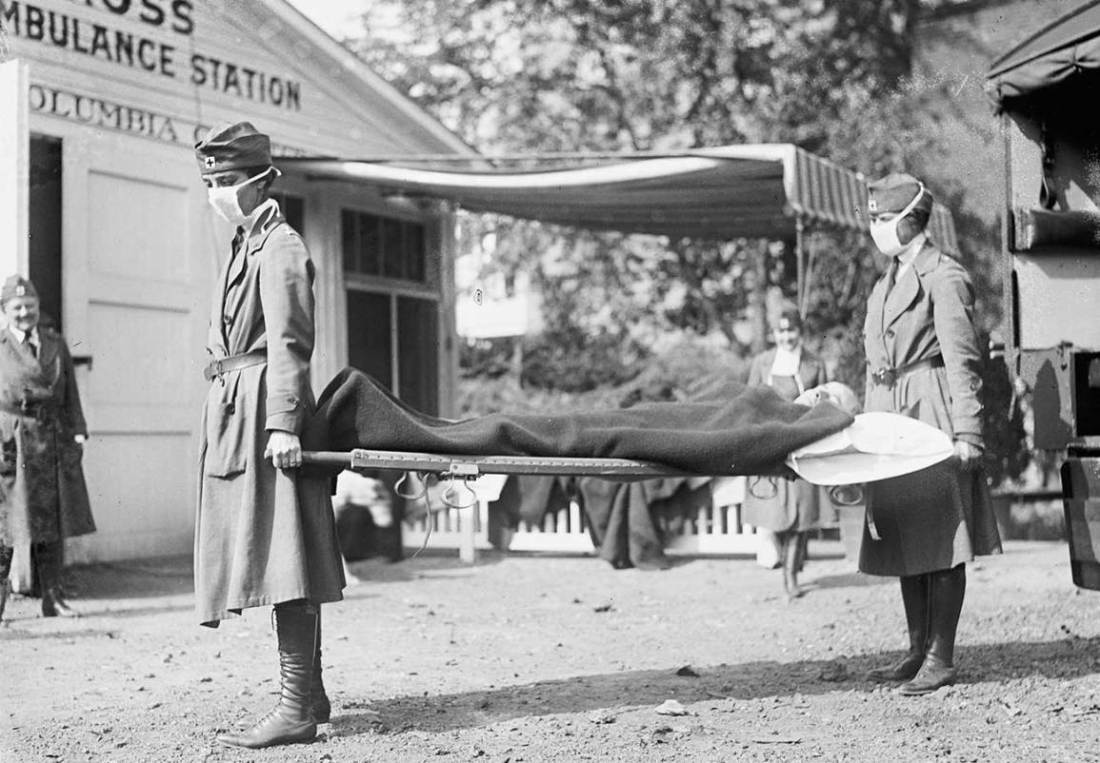
In doing some research about influenza, I came across the great Influenza Epidemic of 1918-1919. This happened during World War I and affected everyone on both sides of the ocean as well as across the world. It affected soldiers as well as citizens. It is estimated that 50 million people died during this epidemic. That is compared to the 16 million people who died during World War I.

One of the things that was missing from this epidemic was antibiotics. They simply did not exist as a medicine during this time. Antibiotics in an usable form was discovered in 1928 by Sir Alexander Fleming. However, antibiotics are rarely used for any influenza viruses. We do have some medications now that will treat influenza.

It is unlikely though that antibiotics would have been effective anyway during the epidemic of 1918. The influenza epidemic came in two phases. The first phase was less severe and most people recovered from it. It came in back a few months later and killed people within hours to a few days. Most people died from the fever and fluid filling their lungs which suffocated them. The disease affected people ages 20-40 the most.

Doctors and scientists were at a loss at how to treat this influenza. They could not control or stop the disease. Remember, there was no Center for Disease Control at the time. That was not established until 1946.

Don’t remember learning this in history class? I didn’t remember learning it either. However, what can we take away from this?

Is starting to feel like it’s every man for himself, Is possible that right now, a global crisis is upon us, Without even knowing… And the virus may not be the biggest threat, but the crisis that follows, Everyday goods that keep us alive will be gone, I’m talking, food, fresh water, medicine, clothes, fuel…

bnr

1. It was not treatable. They believe the strain during this epidemic was the H1N1. Influenza strains can be mild or develop a variant that can make them deadly. Since very little was known about influenza then, it was almost impossible to treat. Today’s influenza strains are proving harder to treat. Flu shots do not cover all strains of influenza. A strain or a variant in the strain of influenza could be strong enough to not be treatable or controllable.

2. It affected strong, healthy adults the most. The age group that was affected the most was 20-40 years old. This is a group of people who are at the peak of life in terms of health and vitality. The problem with that is this is also the group of people who would be the most social group especially in 1918. Even today, people in that age range rarely stay home. The disease would be able to spread very quickly because people are constantly going. They go to work, kids’ activities, social gatherings, and college.

3. It was not controllable. This influenza strain spread very, very quickly. People were given poor advice on how to not catch the disease and how to treat the disease. We now have the Center for Disease Control who would hopefully be on top of the disease. We also now know the best way to treat the symptoms of influenza. We also know that we need rest and to stay home to keep influenza from other people.

Do you think this could happen again? Many people do. Are you ready for the next influenza epidemic? An influenza epidemic of the proportions that occurred in 1918 would be considered a pandemic now.  We hear threats of pandemics now that could happen. How would you survive the next pandemic? What do you need to do to get ready?

1. Get a sick room ready. You should have a room, preferably a bedroom, ready to be a sick room. You should have some medical supplies ready in that room like a thermometer, ibuprofen, hot water bottle, instant cold packs, face tissues, disinfectant spray cleaner, trash bags, face masks, and disposable gloves. You may also want a pandemic flu kit in that room for the people treating the sick.

2. Have white towels, wash cloths, and white bedding ready to use. You want linens you can wash in very hot water or even put in boiling water to disinfect. You can also use bleach on white linens without issues. You want to have extra linens so you can change the sick beds quickly and wash the infected bodies without worry.

3. Have rolls of heavy plastic to cover surfaces like the bed, the floor, the windows,and the doorways. You have to think about disease control going in and out of the house. You are trying just as hard to keep the disease out as well as keeping it controlled in your home.

4. Keep some chem suits on hand. You may want to completely cover up to deal with a sick patient or having to go into infected areas. A chem suit with boots and gloves would be the ideal solution. You will also want a face mask and eye protection to keep safe.

5. Have one person who would be dedicated to taking care of the sick. The less people exposed to the sick person, the better the chances for everyone to stay healthy. Having one person designated to taking of the sick will keep everyone healthier. Having a designated respite person for the caretaker would be a good idea too.

6. Have a plan in place for death. In a pandemic, death is inevitable. What will you do if someone dies? As morbid as it seems, you may want to have a body bag on hand. You also want to have a plan for disposal of the body. Where will it be buried? Will you bury the body? Those are your decisions alone, but having a plan will make those decisions easier.

7. Do not go anywhere if you don’t have to. During a pandemic, being a homebody is your best bet for not catching the disease. Having a good food storage, water storage, and a disinfected home will be wise.

No one wants to think about getting sick much less think about a lot of people getting sick. We like to think with all the technological and medical advances we have now, another influenza pandemic will not happen again. However, new strains of diseases are being developed all the time in nature and in labs. We can not be sure this will not happen again. In fact, it is likely to happen again.

What will you do to protect yourself during a pandemic? Do you think we could have another influenza pandemic?

If you’re interested in learning more old remedies, you should read The Lost Book Of Remedies.

Lost Book of Remedies pages

The physical book has 300 pages, with 3 colored pictures for every plant and for every medicine.It was written by Claude Davis, whose grandfather was one of the greatest healers in America. Claude took his grandfather’s lifelong plant journal, which he used to treat thousands of people, and adapted it into this book.

Lost Book of Remedies cover

Learn More…

Discover The Forgotten Power of Plants: The Lost Book Of Remedies.


What Happens When the Government Becomes Your Worst Enemy: You Can Almost Guarantee That It Will Be Accompanied By Widespread Gun Confiscation

Chile has struggled to become a thriving democracy. Once a dictatorship under Augusto Pinochet, the country has gone through considerable turmoil since his death. Capitalism has not treated everyone fairly in this country, even though Pinochet was once lauded for the dynamic free-market economy he created, once cited as the “model for the developing world.”

By no means has Chile been the only country which has struggled to become a free-market democracy. Russia is still struggling, decades after the collapse of the Soviet Union. Iraq really hasn’t accepted democracy as a political model, even after enormous amounts of investment by the US government. Other countries have struggled as well, but not with the same results.

Much of the problem that Chile has been experiencing has been due to the vast income inequality that exists in that country. While there are portions of the population which are thriving, many others are still suffering, especially those who are dependent on retirements that were established under the Pinochet regime. Many schoolteachers are still working into their 80’s, because they can’t survive on their $300 a month pension.

For those working in non-skilled jobs, public transit to take them to and from their work costs as much as 21% of their weekly wages. Thus, when the government announced a 30 peso rise in the cost of the metro, it was met with anger. A student-led protest, called evasión swarmed the metro, jumping the turnstiles to avoid paying the increased fare. Workers took advantage of the opportunity to save a little money and joined the protest.

While protests are nothing new in Chile, these seem to have gained traction. A demonstration which started in the capital has now spread to many of the major cities, with continued evasión of fares and widespread protests in the streets.

It appears that socialist organizers and anarchists have joined in the protests, working to turn it to their political ends. As in many such cases, word coming out of Chile is a bit confused, with each side accusing the other of what they themselves are doing. Much of the reporting is tainted by the political leanings of the reporters who are on the scene. But one thing is certain, the government’s response doesn’t stand up under scrutiny.

The Government’s Response

President Sebastián Piñera has declared that his country is “at war.” But if it is, it’s a war between the government and the citizens. While some government response is required to the violent acts of the protesters, that should be a police response, arresting the worst of the offenders and those who are inciting others to commit illegal acts. Protests, as our own government has learned, are not the reason to call out military forces armed and equipped to use deadly force.

What Happens When the Government Becomes Your Worst Enemy

We’ve seen that before in this country; at Kent State University in 1970. National Guard troops were called out in response to a protest. Although the National Guard does receive some training in how to respond to a riot, they are first and foremost soldiers, equipped and trained to kill, not to arrest people. In this case, the results were four dead college students and another nine who were injured.

The soldiers on the streets of Chile reminded many of the older citizens of the years of Chilean dictatorship, when such sights were common; a parallel that was lost on the students who started the protest. For the older citizens, that sight struck fear in their hearts.

The government has admitted to eight people being killed in the protests, but information leaking out of the country claims over 20 killed. There are also widespread reports of police and military brutality against the population, including against people who were not protesting, but merely in the wrong place at the wrong time.

Martial law was declared by the President, early on in the protests, allowing for the use of military forces and imposing ever more restrictive curfews on the people. Interestingly enough, whenever the protesters have gotten the upper hand, troops have retreated to wealthy areas of the cities, focusing on protecting the wealth centers. It seems clear from that action alone, that the leadership of the country is only interested in protecting their financial standing, not protecting the people.

Under martial law, police and military forces have beaten hundreds or perhaps even thousands of innocent people, often plucking them off the streets in civilian clothes, in an attempt to hide their identity. Civil rights are being trampled daily, as the government attempts to regain control.

Could that Happen Here?

Regardless of where you stand politically, Americans have grown afraid of politicians on the other side, especially as the political divide has grown. Each side assumes that the other is likely to declare martial law, on the thinnest of pretexts, imprisoning those who have declared themselves aligned with the other side. Yet that sort of thing has never happened in this country. For that matter, we haven’t seen people rounded up and put in any sort of detention camps since World War II.

Those on the left decry the “oligarchy” regularly, declaring that this country is actually run by them. But I’d like to propose a different viewpoint on that. That is, every government that has ever existed has been an oligarchy of one sort or another. Even monarchies are oligarchies, as the wealth is concentrated in the hands of the royalty.

Successful merchants could buy themselves titles under such a regime, gaining political respectability. But that’s not all they bought; they bought access to the throne, the seat of power. That’s what their titles and their money did for them, just like the oligarchy we have today.

Why is this important? Because in reality it has always been the oligarchy, the elite, who have been in control. I don’t care if you’re talking about the Rothchilds, the Bilderberg group, George Soros or our own political parties, they have kept the power to themselves. Much of the reason why they hate President Trump, is that he has defied their rule and has been working to do whatever he can to overthrow it.

What Happens When the Government Becomes Your Worst Enemy

As we’ve seen in the last few years, these power-brokers will do whatever they have to, in order to keep their power. Rumors have existed for years about how the Clintons have done away with anyone who could be a whistleblower on their nefarious actions. The same sort of rumors existed about Obama when he was in office. I’m sure if we searched around the world, we would find many more examples.

The accumulation of power and money is the central focus of these people’s lives. As such, they will do whatever it takes to retain that money and power. They don’t mind if we “little people” accumulate wealth or even some local power; but they aren’t sharing theirs with us. They will use whatever they have to, in order to keep control. Whatever they have to includes military forces.

These power brokers have control of large portions of our government, just like they do in other countries. As long as things go their way, they will allow us the illusion of our freedom. But if things don’t go their way, you can be sure they will take the necessary action to retain power.

What that Means for Us

One big difference between the United States and Chile is the Second Amendment. Even though there are those who are constantly chipping away, trying to take that right, the Second Amendment guarantees our right to keep and bear arms. There is no such equivalent in Chile.

That’s not to say that the Chilean people can’t own firearms. They can; but there are huge hurdles to overcome in order to get a permit to own one. Even bigger hurdles exist to having a permit to carry that gun outside your home. On top of that, private ownership of semi-automatic arms is prohibited.

Should martial law ever be declared in the United States, you can almost guarantee that it will be accompanied by widespread gun confiscation. This happened in New Orleans, in the wake of Hurricane Katrina. Probably the only thing that kept that from turning ugly and kept armed citizens from defending their right to keep and bear arms, was that there were so few of them still in the city; government forces had them outnumbered.

Many have declared that widespread gun confiscations would result in civil war. I tend to agree with that. While there are many gun owners who would give up their guns, albeit reluctantly, rather than fight government troops, there are enough of us who would stand up for our rights. How that war would end is anyone’s guess.

Recently, the new Democrat majority in Virginia’s state legislature passed a number of very restrictive gun control laws, without taking into account public opinion. They ended up being forced to retract those laws, when citizens got up in arms about it and law enforcement officers declared that they would not enforce those laws.

The same thing has happened in other parts of the country, as Democrat controlled state legislatures have tried over and over again to tamper with our Second Amendment rights. But in each and every case, while there have been some who have complied like good little sheeple, the majority refused.

This means that any protests against government overreach here in the United States have the potential of becoming much more violent than they do in other countries. While those of us on the right, who own most of the guns, are not the kind to take violent action, there are always a few who don’t see it that way. All it takes is one or two of them to start the ball rolling, and things could turn ugly, real quickly.

A second American Civil War would be even bloodier than the first. Not only are there more privately owned guns in the hands of citizens, than there are citizens, but the level of military technology has increased by several orders of magnitude. Hunters alone have our military grossly outnumbered. On the other side, the military has all the tanks, planes and artillery. As I said, it would be bloody.

This is probably why there are those in government service who are so bent on disarming the population. It also explains why the AR-15 is the main target of these people. You can’t win a war with pistols and even trying to win it without semi-automatic rifles would be difficult. Those who want to control us don’t want us to be able to fight back.

Throughout the last century, there have been numerous examples of what happens when the government disarms the civilian population. What we’re seeing in Chile today is nothing new; it has been done time and time again. Those who want to be despotic dictators (regardless of what political name they hide behind) know they must disarm the people first. It’s much easier to get sheep to submit, than it is to get sheep dogs too. The sheep dogs have teeth.

If anything, Chile serves as one more reminder as to why we need to defend our Second Amendment rights. Otherwise, it’s much too easy for those who would take away what remains of our liberty, the freedom to do so.

Simple Prepper Hacks To AVOID Getting The Flu: Eliminate The Risk Of Getting Sick, You Eill Have A Leg Up When It Comes To Fighting The Virus!

The season of traveling is approaching and with it, comes the exposure to germs and the possibility of getting the flu.  But there are a few simple hacks preppers have that they use to prevent the sickness.

Most preppers understand that getting sick can be a big deal with the risk of a global pandemic being a tangible threat. Here are a few hacks that will keep you healthy, and most of them won’t cost you much if anything to implement.

  1. Eat Better – most preppers understand the importance of good nutrition. Eating right and maintaining a healthy body weight while staying in shape will obviously help boost your immune system keeping it tip-top shape to fight off viruses like the flu. Try to choose nutrient-dense vegetables and healthy fats with every meal.  Keep your processed food intake to a minimum and limit sugar.  Inadequate diets that are low in protein, too low in calories (less than 1,200), or contain too many processed or fast foods will lack all the nutrients necessary to maintain a healthy immune system.
  2. Get Enough Sleep – 70% of American adults report that they obtain insufficient sleep at least one night a month, and 11% report insufficient sleep every night. It’s well understood that sleep deprivation opens the door to a wide range of illnesses by weakening the body’s immune system, now and in the future. As a culture, we are becoming busier and chronically sleep-deprived and that can affect our body’s ability to fight off the flu or other viruses.  So get on a schedule and make sure you are getting enough sleep!
  3. Change Your Bedding and hand Towels Often – having clean sheets may also help you get more sleep, so this one’s doubly important! Washing your sheets and towels will prevent the spread of germs.  Use hot water to launder them, and if you have white sheets or towels, bleaching may be appropriate.  Washing your linens will keep you healthier because it kills off a good amount of the germs lingering.
  4. Sanitize Surfaces – Clean and sanitize the surfaces of your home at least once a week, and do so more often if someone in your home has been sick. The flu virus can live on hard surfaces for 24 hours! To make sure you’ve gotten the surface properly disinfected, use an antibacterial cleaner on key spots such as tabletops, countertops, remote controls, computer keyboards, doorknobs, sinks, light switches, faucet handles, sinks, countertop, tub and toilet (including the entire seat and the toilet handle). To disinfect a surface, wipe it so that the surface remains visibly wet for four minutes and then let it dry.”
  5. Wash Hands Frequently – To prevent from getting the flu, wash your hands frequently, especially while traveling and around crowds of people. To kill the germs that cause the flu, wash your hands all over with warm water and soap for at least 20 seconds.  Everyone should get in the habit of washing their hands after using the bathroom or being in contact with the sick person. You should also wash your hands before eating, and before touching the eyes, nose or mouth as that’s usually how germs enter your body and get you sick!

Hopefully, with these inexpensive hacks, you can prevent yourself and family members from coming down with the flu this year.  Even though these things won’t necessarily eliminate the risk of getting sick, you will have a leg up when it comes to fighting the virus!

The Threat Of Bio War Is Increasing – The Global Elite Have Had A Plan To Kill Off A Significant Portion Of The Worlds Population And Take Complete Control Of The Resources And People

For several years many people have had the opinion that the global elite have had a plan to kill off a significant portion of the worlds population and take complete control of the resources and people. The raping of the worlds financial assets by these people has insured that they must do something to cover their tracks in a way to avert repercussions on themselves from an irate population. A global holocaust that puts people in survival mode would lend itself nicely to the police state being erected to contain the people.

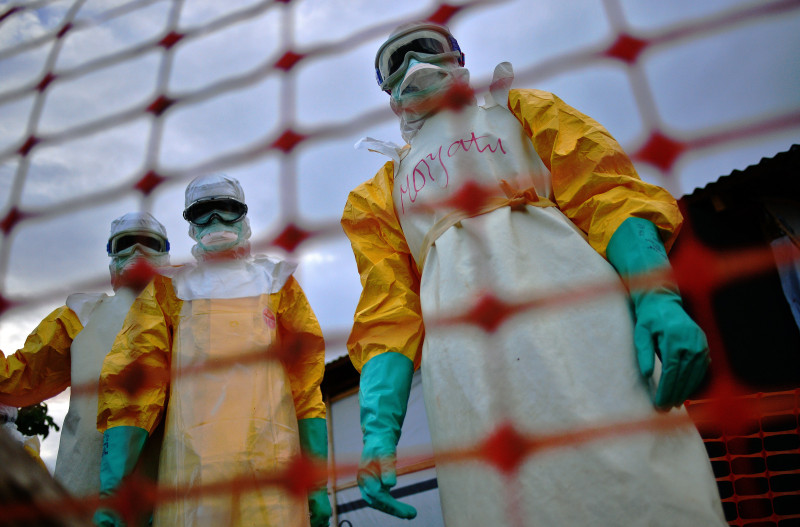
Dave Hodges has uncovered some evidence that a company named Crucell developed a fully effective Ebola vaccine in 2006. The CDC has patented the Ebola virus and can now demand to be paid royalties for any vaccine used against the virus. This means the Ebola virus is now the intellectual property of the CDC. There are reports of the government putting pressure on sectors that promote natural cures and health products that may stop or prevent this type of outbreak. Few years ago shipments of nano silver being sent to Africa have been blocked. This sounds like the elite protecting its investment.

If an enterprising group of people wanted to gain control of a country or even the world, a highly contagious and deadly virus would be a good weapon to use. When released into the population it would cause unmitigated chaos. It has the potential to collapse every major system people depend on for daily life. The healthcare system, energy, transportation, security, financial and food production of an entire country could be collapsed in a matter of months. In a previous article I noted that they war gamed a pandemic several years ago and one thing that came out was that once the economy shut down they had no idea how to start it up again.

Anyone that had the cure for this bug would be in the position to select who gets saved and who does not. That is the whole point of bio warfare. Kill the enemy while having the ability to protect your own troops. When the British had trouble with Indians in America they simply sent them small pox infected blankets and within a few weeks the Indians were ravaged with disease leaving them unable to effectively continue fighting.

There is a movie called ULTRAVIOLET that has some similar undertones to what might happen soon. The government created a virus that got out and infected some people. These people became the new enemy that allowed total government control. When these people were all but eliminated the government developed a new virus to release into the atmosphere and infect everyone else. This would force them to go to the government on a regular basis to get the necessary treatment to continue living.

Who can forget the mural at the Denver International Airport that depicts people dying at the feet of a soldier wearing a gas mask. This may be the future we have in store if this is the nefarious plan of some evil group seeking total control. If this is the plan I suspect it is only the first of a multi phase plan to wage global war and consolidate resources and land holdings for the select few. Any country infected with a deadly virus would be hard pressed to wage war or even protect its own borders against an enemy with immune soldiers.

There will no doubt be people that have natural immunity or access to natural cures that keep them healthy and these will likely be one enemy that government seeks out in the future. They cannot risk the failure to control some and prevent the control of all. The best thing that people can do at this time is to prepare for system wide failure if it should happen and educate themselves on natural remedies that are out of the control of government purveyors of ill health.

If Americans ever revolted this disease could give the government the means to control the population. Anyone who wanted the cure would have to succumb to the government healthcare system. This would leave the rebels outside the system and easier to identify.

Let us not forget that the government has promised trillions more to people than it will ever have the ability to deliver. There are only two ways to solve that problem. Either they can default on the promises in some form or they can eliminate the people that are supposed to get them. To default would cause riots and imminent danger for those in government so another way would be more palatable for them. Zbiginew Brezinski once gave a speech and said it is now easier to kill one million people than it is to control one million people. That may be part of the solution we have in store as time goes on. Obamacare will surely kill many in the years to come as healthcare is rationed and a good pandemic would help as well.

Here is another aspect of Ebola that no one has talked about. If this disease becomes rampant in America, it will most likely be picked up by other species of animals here. These animals may not die from Ebola but they can become carriers of it. With the disease spreading among the many animal species it may cause an untold number of mutations that have the capability to reinfect humans. Just like in Africa where some species now transmit the disease to humans, this could lead to Americans needing shots every year from Ebola just like they now need annual Flu shots for the prevalent strain that year.

This can also make the home production of meat almost impossible as individuals will not be able to afford the testing necessary to insure their flocks are Ebola Free. This can also put an end to hunting as we know it due to the infectious nature of this disease. This could make meat consumption in this country something only the rich and well connected will be able to afford as only government certified meat will be available for sale. The testing of this meat will raise the price considerably. That will probably make the corporations engaged in this type of activity very happy.

There are an untold number of problems this disease can cause in this country and that is the reason people should be afraid not only of the disease but of the government response to it. The government can actually make it much worse than it would otherwise be. With the lack of trust in government today the people have a great deal to be worried about. If we are entering the end game of some plot, we will most likely be inundated with multiple crises at once as time goes on. This will keep people off balance and looking to government for help. At this time people need to stay as informed as possible to keep ahead of the next planned crisis. Things will likely get worse from here so prepare yourself for that.

How to Improve Your Personal Security: The Following Tips May Help Secure You In Your Daily Life

Personal security is often overlooked, ignored, or never even thought of. Most people go about their daily lives and routines without a thought of potential danger lurking nearby.

It’s great that for the most part we don’t have to worry too much about it. The trap though is your normalcy bias towards this notion. Just because it was safe last time doesn’t mean it will be safe this time.

The following list of personal security tips may help secure you in your daily life.

These tips are just the ‘tip’ of the iceberg, so add your own to the list…

PERSONAL SECURITY TIPS

Always be alert and aware of your surroundings and of the people around you.

Make casual eye contact with people when walking.

While walking, avoid distractions from your ‘smart phone’ (e.g. ‘texting’).

Keep your head up and shoulders back while walking (confidence).

Buddy-up whenever possible while out in dark parking lots for better personal security.

Always inform family or friends if you are traveling, and give them itinerary dates and locations you will visit.

Try to stay away from the brush or trees when walking, jogging, or running. Always be prepared to run away from an attacker and scream (drawing attention to the situation).

If a stranger approaches offering a ride, TURN AROUND and go in the opposite directionof the car. If possible, write down the license plate and description of the car.

Do not respond to conversation from strangers on the street.

Walk confidently, at a steady pace, and have your keys ready in your hand.

Avoid being on a cell phone while walking out in public (or driving!). If you must (while walking), force yourself to be especially aware of your surroundings.

Avoid walking, jogging, running in public with earbuds in your ears (listening to music). It dulls the awareness of your surroundings which makes you an easier target. If you must, then at least pay extra attention around you…

Avoid dangerous places at night time, visit them during day time hours.

Stop and look around if you feel unsafe entering an area. You may want to return at a different time. Trust your instincts.

Avoid isolated bus or train stops. Otherwise, continuously look all around you. Be aware.

Don’t stay in the same spot and make yourself an easy target if at a bus or train stop and feel unsafe.

Don’t open you purse or wallet while boarding the bus; have your fare ready.

Keep flashy jewelry out of sight.

Sit as close to the bus driver as possible while on a bus during off-hours.

Check your purse or wallet if someone is jostling, crowding or pushing you.

Never leave your purse, backpack or briefcase in plain view. Lock it up when you leave your desk or office.

Keep the office door locked if you work before/after normal business hours.

Try to find another worker or a security guard to walk out with you if you work late.

Do not get in the elevator with another person if you do not feel comfortable with that person; take the next one. If you have to get in, stand next to the control panel so that if you are attacked, you can press the alarm and as many of the control buttons as possible.

Be alert for pickpockets on crowded elevators.

Be aware of escape routes for emergencies. Make yourself aware of more than one way out.

Avoid danger spots like quiet or poorly lit alleyways, subways or isolated car parks. Walk down the middle of the pavement if the street is deserted for better personal security.

Consider heading for a public place; somewhere you know there will be other people.

Avoid walking past stationary cars with their engines running and people sitting in them.

Don’t walk with your hands in your pockets unless situationally ready.

Walk facing oncoming traffic whenever possible, to avoid curb crawlers.

Keep your mind on your surroundings – remember if you are chatting on your mobile phone or wearing a personal stereo, you will not hear trouble approaching.

Be extra careful when using ATM machines. Make sure nobody is hovering nearby and don’t count your money in public.

Trust your instincts and take action if you think you are being followed. As confidently as you can, cross the road, turning to see who is behind you. If you are still being followed, keep moving. Make for a busy area and tell people what is happening.

Beware of someone (stranger) who warns you of the danger of walking alone and then offers to accompany you. This is a ploy some attackers have been known to use.

Consider carrying personal protection (firearm, pepper spray, …whatever works for you).

Don’t drive right up to the bumper of the car in front of you At a red light. Leave enough room to maneuver out of your lane in case you have to get away from there..

Use all of your senses for better situational awareness. Visually scan your surroundings. Listen to the noises around you.

Even when living in remote areas, never let your guard down. Being isolated may embolden certain opportunist criminals who may be lurking unbeknownst to you.

Keep a dog. They tend to bark…

Lock your Doors at night.

Lock your Windows too!

The more people that are around, the more danger (and risks) thereof. It’s just the odds. More opportunities for criminals.

Trust your gut. If it doesn’t feel right, it probably isn’t.

Keep your wallet in your front pocket whenever possible.

Be aware of vans parked by your vehicle with their “sliding doors” near the driver’s door of your vehicle.

Make the habit of locking the doors as soon as you get inside the vehicle.

When parking, don’t unlock your door until you’ve had a look around first.

When driving (stopped at light or traffic) make SURE you can see the tires of the vehicle in front of you. You WILL have space enough to maneuver around that stopped vehicle if you need to.

There Is No Magic Solution For The Risk Of A Pandemic: If an Extreme Global Pandemic Hits, These Are The Safest States You Can Be

In October of 1347, 12 ships from the Black Sea docked at the Sicilian port of Messina. The people who were gathered on the dock were shocked to see over half the sailors laying on the decks of those ships, dead. Even though officials ordered the ships back out to sea immediately, it was too late. The Black Plague had landed and would ravage Europe over the next five years, killing over 20 million people.

The Black Plague was a bacillus, a rod shaped bacteria. Today, we’d be able to battle this plague with the antibiotic streptomycin. But in the 14th century they not only didn’t have antibiotics, they didn’t understand how bacterial diseases were spread. The people of the world were helpless in the face of the deadliest disease that had ever struck.

Even though medical science has a better understanding of the spread of disease today, there are still diseases which we are largely helpless against. Antibiotics work well against bacterial infections, but they don’t do a thing against viruses. Hundreds of millions of people become infected with influenza per year, a viral infection, with some 61,000 dying of it, yet there is no antiviral medicine to combat this common disease. The body must defeat it on its own, or die trying.

This is why vaccines are so important. Vaccines are a less virulent form of the virus, which causes the body’s immune system to develop antibodies which can defeat it. That way, if the person becomes infected with the actual virus, their bodies are ready to defeat it.

But vaccines don’t exist for all viruses. The only vaccine that has been developed for the deadly virus Ebola will kill roughly 20% of the people who it is administered to. While that’s much better odds than the 80% mortality rate of the disease, it isn’t better for the people who wouldn’t be exposed to Ebola and contract the disease. A nationwide vaccine campaign would kill millions of people who would otherwise be safe.

There is no magic solution for the risk of a pandemic. For some, the only reason why they will live is the draw of the cards. But that’s not saying we can’t stack the deck in our favor. Based on how such diseases spread, chances for survival would probably be higher in these states:

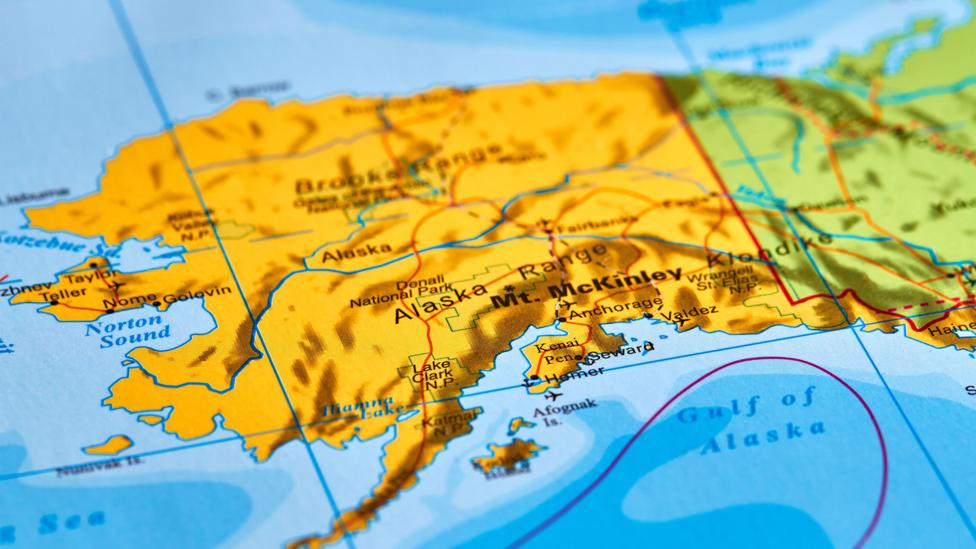
Alaska

If there’s anywhere that you could survive a pandemic, it’s probably Alaska. This state has the lowest population density of any part of the United States. Even its cities are fairly small, with Anchorage, the state’s largest city, housing over 40% of the population, having a grand total of 297,832 people.

Of course, an epidemic could spread through those 300 thousand people, just as well as it could spread through the millions living in some of our largest cities. But there are a lot of people living in remote areas of Alaska, who don’t have regular contact with the outside world. If anyone is going to survive a worldwide pandemic, it’s these people. Some may not even know what happened to everyone else.

Surprisingly, the cold in Alaska won’t kill the pathogens that cause disease. It will slow them down, but it won’t kill them. It’s actually easier to kill those microscopic pathogens with heat, than with cold. But I don’t know anywhere in the country where it reaches 158°F during the day, not even in the summer.


Wyoming

If we want the lowest population, we need to move just a little farther south, to Wyoming. Like Alaska, there are a lot of wide open spaces in Wyoming, areas where you won’t see anyone for miles. There’s lots of game, ranching and farming to provide you with food. The biggest part of the state’s agriculture is in cattle, but the state is known for growing grains, hogs and sheep as well.

Of course, you need to pick an isolated part of the state to live in, if you want to avoid the disease. But there are plenty of those to choose from. Just avoid the cities and Yellowstone National Park, and you should be okay.


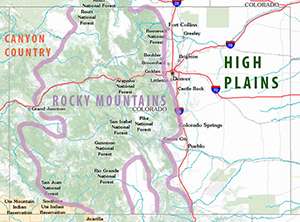
The Colorado Rockies

My personal preference is to ride out the pandemic in the Colorado Rockies. I’d avoid the eastern part of the state, even though it’s all farms. But there are plenty of places in the Rockies where you can hide out and not see anyone for days. This makes it a great bug out location for a lot of disasters.
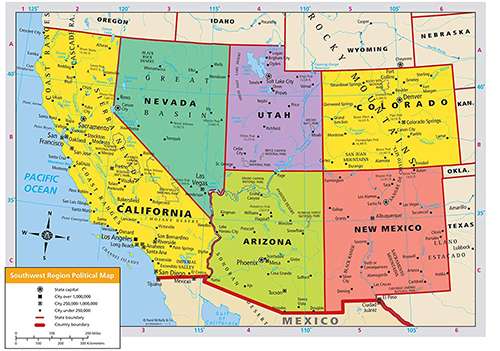
Having spent time in the Rockies, I can attest to the hunting and fishing there. While you might end up competing with a lot of other people for the opportunity to hunt and fish, if you find an isolated enough area, you should be able to live off the land well, just like in Wyoming, Montana and Alaska.


Texas

Since I live in Texas, I feel compelled to add it to this list. But there are some good reasons to do so anyway, even though Texas has a huge population. But it’s a huge state, so that population is pretty well spread out, if you avoid the major cities.

There are places in West Texas where you can drive almost 100 miles between gas stations, let alone anything else. Of course, there’s not much water in those areas, so make sure you bring plenty along. You wouldn’t want to run out… especially in the heat of the summer.

What makes Texas really attractive as a place to ride out a pandemic, or any disaster, for that matter, is that it’s the number one ranching state in the nation. More cattle are raised in Texas, than the next two biggest cattle producing states combined (Nebraska and Kansas). While I doubt that any Texas rancher will be all that happy with you killing off their herd, you can probably come to some sort of accommodation, buying a steer from them.


Southwest – Heat and Sunlight Kill Viruses

Texas has another advantage, which it shares with its neighbors to the west. That’s lots of sunlight. Temperatures are high in states like Arizona because of all the sun they receive. That’s good, from a pandemic point of view, especially if it is a viral pandemic, like Ebola or the coronavirus. You see, sunlight, especially the ultraviolet light contained in sunlight, is deadly to viruses. So all you have to do, to keep yourself safe from infection, is to spend a lot of time outdoors, especially if you’re meeting someone.

Granted, the hot climate of the southwest is a little bit difficult for us humans to live in too, but it’s not fatal to us. We can survive it, while the viruses can’t.


Georgia – CDC

Georgia is unique in all the states, in that it is the home of the CDC, the Center for Disease Control and Prevention, one of our government’s crown jewels. This research facility will be at the front lines of stopping any pandemic that occurs, regardless of where it happens. They are the ones who will be isolating and defining the organism that causes the disease, as well as developing any cure for it.

I figure that any cure will be applied there in Georgia, near where the CDC is located, in Atlanta. That’s why I’ve placed Georgia on this list. Other than that, I’d say the state isn’t ideal, as the population is too high and it’s harder to find isolated places to ride out the pandemic. But then, I know a few good old boys who have homes stuck back in some hard to get to places. Maybe I’ll pay them a visit.

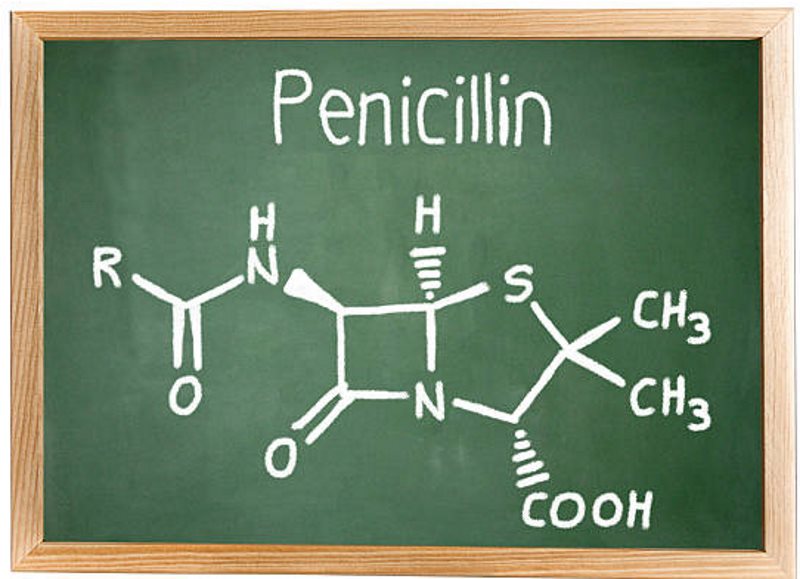
Homemade Penicillin To Survive When SHTF. ‘access to antibiotics may become limited or impossible. If that happens, it’s important to know how to make antibiotics at home’

Can you imagine dying from a cut on your finger or a scrape on your knee? How about a respiratory infection or a toothache?

Before the invention of penicillin, the first antibiotic, that could have been your cause of death. If SHTF, access to antibiotics may become limited or impossible. If that happens, it’s important to know how to make antibiotics at home.

To understand the importance of antibiotics, think of it in larger terms. They would have cured the bubonic plague, which was a bacterial infection that took 100 million lives in the 14th century. It was originally caused by infected rats and the fleas that had bitten them, and then bitten a person. Since it was highly contagious, after a person was infected by the rat or flea, the infection then spread from them to other people.

Antibiotics also cure tuberculosis, a highly contagious bacterial disease that still exists today. As a matter of fact, in 2014 alone, more than 9 million people were reported to have it. All bacterial infections are contagious to some degree, though for some, such as ones that cause an infected tooth or cut, the risk of infection is low because it’s mostly blood born. With other infections, such as tuberculosis, all you have to do is breathe the same air to become infected.

Though we think of the plague as something long behind us, we’re only protected from it because of access to antibiotics. If society collapses, pandemics like it could wreak the same havoc on humanity as they did then.

For thousands of years, Chinese medicine has used fungi to treat skin infections. World-wide, a common treatment for any skin lesion was a poultice made of dirt, which likely contained fungi. For thousands of years, people may not have known WHY something worked; they just knew that it did. Fortunately, we don’t have to depend on such blind faith anymore, so let’s get on with it.

Making penicillin at home is difficult, but possible if you have the right equipment and ingredients. First things first, though: don’t do it unless it’s truly a survival situation.

First, commercial antibiotics have been made by the pros, and they’re a known quantity. Second, making drugs at home, whether they’re legal or illegal, is frowned upon, and distributing them is illegal in most places.

How to Make Penicillin

This is a no-brainer, right? It’s made from bread mold, so you just leave a loaf out, cook up the mold or something, then take it, yes? Umm, no. Penicillin is made from the penicillium fungus found on foods such as some breads and fruits (a moldy cantaloupe played a huge role in initial experiments), but here’s the thing – the bacteria has to be stressed.

So, you have to grow the fungus, then introduce it to stressors before you can use it to make penicillin.

Very important heads up your culture has to be grown and cultivated in a sterile environment or else other bugs and nasties will contaminate it and cause a Frankin-culture instead of the pure penicillium culture that you need to make antibiotics.

There’s a simple but less reliable way of making penicillin, and then there are steps that you can take to ensure that your end result is penicillin. Warning: though: it’s complicated and requires chemicals that can be quite expensive and have limited shelf lives.

Equipment needed:

  • A gram scale
  • Separatory funnel
  • A 1-liter glass container
  • 750 ml Erlenmeyer flask with a non-absorbent plug
  • A pH test kit
  • 2 pieces of whole wheat bread
  • A cantaloupe rind, more bread, or citrus fruit

Step 1 – Set out the rind, bread or fruit and let it mold (we’ll call this the host). It will go through a few phases. First the mold will be white or gray, then it will turn blue, then a bright blue-green. This is the color you want. Note: if you choose to use bread, it’s best to make it yourself because many bakeries use an ingredient that inhibits mold growth.

Step 2 – Sterilize the flask by putting it in the pressure cooker at 15 lb. for at least 15 minutes, or bake it at 315 degrees F for an hour.

Step 3 – Cut the whole wheat bread (see note in step 1) into 1/2-inch cubes and place them in the flask, careful to be as sterile as you can.

Step 4 – scrape the blue-green mold from the host and place it in with the bread. Again, be as sterile with this step as you can, for instance, boil the tongs that you’re using.

Step 5 – Place the flask in a dark place that’s around 70 degrees and allow it to incubate for 5 days.

At this point, some people may say that you’re done and you can just slap the “penicillin” on the wound or make tea or soup from the bread. We don’t recommend it.

Step 6 – Now it’s going to get complicated. You’re going to need the following ingredients:

  • Lactose Monohydrate 44 gm
  • Corn Starch 25 gm
  • Sodium Nitrate 3 gm
  • Magnesium Sulfate 0.25 gm
  • Potassium Monophosphate 0.50 gm
  • Glucose Monohydrate 2.75 gm
  • Zinc Sulfate 0.044 gm
  • Manganese Sulfate 0.044 gm

Now, according to the instructions that I found (neither of which were actual medical sites because, as usual, there aren’t any actual medical sites that describe how to make anything like this at home), it says to dissolve these in tap water.

After researching, it seems that distilled water would be the best to use for the next step because we want to keep things as sterile as possible and tap water has unknown variables. That’s just my opinion and I’m definitely not a formally trained scientist, so use what you prefer.

Step 7 – So, back to it. Sterilize the 1+ liter container, then dissolve the above ingredients in 500 ml of cold water. Add more cold water to make it a full liter.

Step 8 – Use hydrochloric acid (HCL) to adjust the pH to 5.0-5.5 using your pH test kit.

Step 9 – Sterilize the container along with the solution as described above.

Step 10 – Allow the solution to cool, then add the mold. Incubate it for another 7 days under the same conditions as before. It’s important that the fluid isn’t jostled around so put it where it won’t be moved.

If you’ve done it correctly, you’re almost done. Now it’s time to extract the penicillin that’s infused in the fluid.

Step 11 – Filter the mix through a coffee filter or sterilized cheesecloth.

Step 12 – Adjust the pH of the solution to 2.2 using the HCL and the pH test kit.

Step 13 – Mix with cold ethyl acetate in the separatory funnel and shake vigorously for 30 seconds or so then allow it to separate. The ethyl acetate will be at the bottom.

Step 14 – Chill a beaker in an ice bath and drain the ethyl acetate into it. Add 1 percent potassium acetate and mix it again.

Step 15 – Let the ethyl acetate evaporate off while the solution is still in the beaker. You want plenty of air circulating through.

Step 16 – You have penicillin, assuming you did everything right. Actually the crystals that remain are potassium penicillin and potassium acetate.

This is a pretty scientific process and not something that you should undertake lightly, just to save yourself a few bucks on a prescription.

Because there are so many variables, making your own penicillin is tricky at best. Yes, you may have penicillin but you may have some bad bugs in there, too. But if SHTF, you’re dying from septicemia and you have no other viable options, then it’s not like this is going to make anything worse.

There are also many other sources of natural antibiotics that you can eat or even use topically, including honey, garlic, oil of oregano, and ginger. Honey is also a great preventive because in addition to killing something that may have gotten into the wound, it also acts as a barrier to keep other bugs out.

If you opt to use this recipe, it may be best to test it on a patch of your skin first to see if you have a reaction then go from there.

Try other natural recipes to treat you illnesses , as nature will always provide the best medicine one can have!

The Winds of War – THOSE THAT DENY THE COMING WEATHER WILL BE LAID NAKED BEFORE IT AND WILL PAY THE PRICE

The winds of war are now blowing around the world. One day we will look back on these days with longing as one would look back on the gentle breezes of summer as the hurricane blows outside.

The winter season of the fourth turning is increasing with intensity as most people are fooled into believing that summer is just a few days off. When the winds become deadly and the snow begins to pile up, many will not be prepared to care for themselves. They will find themselves helpless and unprepared for this new weather system. Many will die and many more will suffer as they are cut off from the supplies and materials they depend on for normal living. They will become immobile and have little communication to tell them what to do. When the weather has them at their most vulnerable, the wolves will begin to show up at their door.

It cannot be over emphasized as to the amount of danger America is facing. We are being systematically cut off and separated from our allies and will eventually stand alone to face the fury of the hurricane that approaches. We are currently being set up to take a fall that some hope will be the end of this nation as we know it. The treason and treachery being perpetrated on this nation is a result of the mutation of the population from ants to grasshoppers. We are about to get exactly what we voted for and most people do not understand what that means.

Our birthright has been sold for a hand full of magic beans that will turn out to be rancid leftovers from someone’s failed business adventures. The wealth this nation has amassed over the decades is rapidly dwindling and will suddenly disappear in its entirety as the nation sleeps one night in the near future. The masses will awake one morning in a strange new land that holds no future for them or their children. They will be dumbstruck as to how they got there. The warnings will have been dismissed as insane talk by delusional people that don’t conform to societies norms.

It will be these few delusional, insane people that will determine the future of the once great nation. They will be the only ones that understand the dangers and are prepared to deal with the deadly winter weather. When the snow piles up they will have supplies and heat. When the wolves appear at the door they will have the weapons to fight them off. When the winds blow away the shelters of society the few will be safe in their structures reinforced to handle the tempest.

Those that deny the coming weather will be laid naked before it and will pay the price. No amount of facts or pleading will change the mind of most of these grasshoppers until it is too late.

There is a storm approaching and measures must be taken before it is too late to prepare. Just as you would prepare for a hurricane, the population must lay in stores of food and supplies to maintain their standard of living for the duration of the destruction. They must make sure they are in a safe location that will not get brown away or inundated with water from the storm surge. They must have the means to provide heat and cook food when the power system goes down. They must be able to protect themselves from any wolves that appear in any form. They must be prepared to rebuild after the storm passes. They must be prepared to weather this storm for 10 to 20 years until it blows itself out.

War is being fomented and when it comes the U.S. will be hard pressed to survive it. Our military is being downsized, weapons systems are being reduced and many senior commanders are being fired for dubious reasons at best. The civil population is being systematically impoverished while government operatives tell them the nation is strong and getting stronger. Our manufacturing base has been dismantled and over 17% of our food is imported today. We have bankers that are stealing hard assets with fiat funny money and plan to steal peoples savings with new government regulations and laws. We are on the verge of losing reserve currency status and our banking system as we know it.

We are being inundated by foreigners that seek government entitlements and refuse to assimilate the American culture or language further dividing the civil population into domestic tribes hostile to one another. We have terrorist training camps within our borders and a lack of border control. We have members of the Muslim Brotherhood in the highest levels of our government and leaders that are ignorant at best and treasonous at worst.

In 1996 Thomas Chittum wrote a book called Civil War Two where he describes the breakup of America into ethnic regions. Many of the things he wrote about are evident today in society and spell doom for this nation as it is, even if we were not threatened with world war we would be headed for balkanization. The increasingly dysfunctional nature of this nation as it is will provide its citizens with many difficulties to overcome in the coming years.

War is coming to the world and to America on many levels and it cannot be stopped. The best anyone can do is to prepare and try to stay out of the way of the most serious fighting and bide their time until they can get the upper hand in their locality. The world is about to change in a very radical way and many are not prepared for it either physically or mentally. The forecast has been given and the storm flags are up.

Prepping for a Pandemic: Life-Saving Supplies, Protection Outside the Home and Plans for Surviving an Outbreak

When the experts can’t agree, it’s clear that there’s a problem. When they can’t agree about something as deadly as the coronavirus, we’re all in danger. Yet that’s the very situation we face. Top experts are delivering varied prognostications about the killer virus, ranging all the way from “less serious than the flu” to “we’re only seeing the tip of the iceberg”.

In all fairness to those experts, they really haven’t had much time to study this new disease. Many of those top experts are scrambling wildly to understand the virus, what parameters it can survive under and how it spreads. That’s usually the work of years and they’ve only had a few weeks to work at it.

Nevertheless, that lack of information just makes the coronavirus more dangerous to the rest of us. Without accurate information, we have to assume the worst, just like the doctors who are studying it do. That means a virus which is transmitted by “air” (actually by aerosol – droplets expelled from coughs and sneezes) and has a high mortality rate.

As of this writing, the coronavirus pandemic is still marching around the globe, with a total of over 60,000 confirmed cases in 28 countries. Of the 52,793 current active cases, only 15% (8,117) are considered serious or critical. But the more telling number is the closed cases, of which there are 7,604 individual people; 6,235 of them recovered and were discharged from the hospital and 1,369 resulted in the patient dying.

Officially, the fatality rate of coronavirus is listed at a meager 2%. But that figure is known to be incorrect. The problem is, it’s too early to make an actual determination. If we divide the number of deaths to date, by the total resolved cases, we get a mortality rate of 21%; but that’s not accurate either. Typically, the mortality rate of a pandemic is higher in the earlier days, with the survivor rate increasing towards the end.

But here’s the really scary statistic: the transmission rate is listed as a 3, with different studies giving answers anywhere from 1.4 and 4.0. If that number was less than 1, we could count on the epidemic burning itself out. But the higher the number, the more it will take to cause it to burn out.

Even if we take the best case figure, from the various studies, this pandemic is not going to burn out on its own. Something is going to have to happen, to make that happen, the question is what. And while we’re at it, what do we need to do in order to protect ourselves and our families? The world is an open book in terms of transportation, economy and immigration. This also means it’s open to disease as well.

There can be an overwhelming number of items to consider when preparing for a pandemic. This is particularly true for those who have little medical knowledge. It may all seem foreign. To combat this confusion, I thought it necessary that we break up our preps into three very distinct categories.

Treating a Pandemic Within the Home

  1. Plastic Sheeting is one of the most important items to have an abundance of. It can do things as simple as separate a few rooms to becoming a way to safely transport those who have died from the pandemic. The sheeting can also be used to cover windows and doors, if the pandemic gets out of hand. Have at least 200’ for all your needs.
  2. Disposable Gloves
  3. Disposable Foot Protection
  4. Disposable Aprons
  5. N95 Respirator Masks
  6. Face Shields or eye protection
  7. Tyvek Disposable Coveralls offer great body protection.
  8. Thermometers
  9. Fever Reducer
  10. Congestion Meds
  11. Antidiarrheal
  12. Throat Lozenge
  13. Inflammation Reducer
  14. Both Crystalline Vitamin C and cone flower (echinacea) will give you an option to boost the immune system. These two are critical in assuring your ability to stave off the disease, as well as fight it off once it’s attacking you.
  15. Echinacea
  16. Water Storage will be crucial and you will want to have at least 1.5 gallons per person per day. This water will play a massive role in the hydration of those who become sick.
  17. Water Filter
  18. Hydration Powder will add a little oomph to your water through things like electrolytes. You may not have an IV on hand, but that doesn’t mean you cannot stay hydrated properly.
  19. 100 Contractor Trash Bags
  20. 100 Indoor Trash Bags
  21. Cans with Tight Fitting Lids
  22. Plenty Antibacterial Soap for hand washing
  23. Quality Bodily Fluids Cleanup Kit (SUPER SORB)
  24. Hardback copy of serious medical volumes like The Lost Book of Herbal Remedies, The Survival Medicine Handbook, The Doomsday Book of Medicine.

Pandemic Protection Outside the Home

There are items that you can include for protection outside the home on a daily basis. These items would not be part of your EDC or everyday carry, but would be better suited in something like a get home bag.

  1. One of the most important pieces to have in that bag when prepping for a Pandemic is the N95 respirator. These are not very expensive and will protect your nose and throat from pathogens.
  2. You will also want some basic meds stored in your car as well. These meds should be for dealing with symptoms. Meds that will fight fever, diarrhea and something for sore throat would all be great options. A non-drowsy medication for congestion would also help.
  3. A basic trauma kit will also be vital. Remember that pathogens can enter your body through any damage in your skin or any orifice. If you are cut during a pandemic, it will be crucial that you clean and cover that cut ASAP.

Ideally, these items get you home as quickly as possible where you can survive a little more safely without the germs of the outside world.

Three Considerations for Pandemic Security

Unfortunately, even while people may be suffering from disease inside your home, you will still have others who want to get into your home to get what they need. This is particularly true for areas that are densely populated. They will be looking for meds, food and water. They will likely have people who are sick in their own lives. It’s a terrible thing to think about.

Still, if your family is safe within your home, the last thing you want is someone from the outside tracking germs inside. You must stay vigilant and try to stop threats at the doors or windows of your home. Being proactive in this method could save those in your home.

The Attack Drone is a dual-purpose technology that acts as eyes outside the home, as well as a deterrent for those who want to come on to your property. This battery powered quad-copter will not fly for very long, but you will only need to give chase once. Outfit your drone with some lightweight sharpened metals or even something that looks like a taser. This is an intimidation method more than anything else.

Perimeter Alarm will help you understand when someone has ventured too close. This will allow you some lead time so the threat does not come barreling through the front door or bashing through a window. Be sure the alarm runs of simple batteries and have a plan to change them after a while.

Any threat must be dealt with as quickly as possible. You do not want an infected person touching you or getting into your home. This is not time for a wrestling match. Be sure you have an effective firearm that will stop someone, even in light body armor, from getting into your home.

Basic preps will still be necessary in conjunction with these preps, which are more specific to the pandemic. Always start with a great base that you can build on.