What Are the Most and Least Dangerous U.S. States in a SHTF

The world is an uncertain place, and the recent pandemic drove home the vulnerabilities many have. Finding creative ways to relieve yourself without toilet paper is the least of your worries if the grid were to collapse, taking with it communication capabilities and stopping supply chains altogether, not just slowing them down. If the SHTF, how safe are you and your loved ones where you are? Where are the best and worst places to be?

Humans have divorced themselves so completely from the natural world that they forget the role climate and resources play in survival. However, the greatest danger you face might come from the human animal. Here are the most and least dangerous U.S. states in a SHTF scenario.

SHTF Scenarios Defined: How Likely Are They?

First, take a deep breath — it’s unlikely that a global SHTF scenario will result in an apocalyptic collapse of all modern civilization. While it’s fine to prep for such circumstances, you’ll probably experience localized disasters, such as hurricanes.

Others may be more widespread, like pandemics, but not so devastating that all is lost. Nevertheless, the following seven situations are SHTF scenarios for which you should be ready:

  • Job loss: This is particularly frightening in the gig economy and as social safety nets shrink.
  • Regional disasters: This includes hurricanes, earthquakes, wildfires, tornadoes and floods.
  • Economic collapse: It’s either increasingly likely or unlikely, depending on which economists you follow.
  • Cyberattacks: Modern reliance on technology to run the grid creates vulnerabilities.
  • Pandemic: Humanity is now well-versed — but have you begun prepping for the next one?
  • War: People in the U.S. have been insulated from war’s true horrors, but this is one of the most frightening SHTF scenarios. Rising divisiveness increases its likelihood.
  • Critical power failure: Nearly everything people do requires electricity — what happens when there is none for days, weeks or longer?

Factors to Consider in a SHTF Scenario

Your first consideration in a SHTF scenario is whether to go or stay where you are. How well you prepare helps determine your answer, as supplies reign supreme — a well-stocked storm cellar is a blessing. However, if you haven’t had a chance to become a proper squirrel, you might have to hit the road in search of what you need to survive.

When selecting your escape route, you must consider the following four factors for the journey and ultimate destination.

1. Climate

It’s vital to keep the weather in mind when traveling. When on vacation, you know you can head home if things get too uncomfortable. You don’t have that option in a SHTF scenario — leaving home means staying is more dangerous than going. You’re about to gain a whole new appreciation of unhoused individuals’ daily struggles.

Even with a vehicle to break the elements, you’ll need plenty of blankets and warmers in the winter. If you only have enough cash for one survival tool and know you’ll likely need to travel, a small propane heater can be a lifesaver. Of course, if you’re trekking through the Arizona desert in July, you have the opposite problem — water will become your most pressing need. You’ll need at least a gallon per day, and that’s if you can find shade and travel at night.

There’s also the risk your ride will break down or you’ll encounter an obstacle you can’t bypass, like a severely flooded roadway. Dress in layers and have a well-stocked bugout backpack ready if you must travel by foot.

2. Availability of Resources

Modern humans head to grocery stores when they need food. However, you probably can’t get there in a SHTF scenario — and attempting it could be dangerous if looting runs rampant. You’re in for an unpleasant awakening if you’ve never experienced genuine hunger.

Fortunately, you can forage even in urban areas. However, it’s safer in the wilds since there’s less risk of pesticides and chemicals. If you don’t have a dime to put toward prepping, at least learn what local plants you can eat in a pinch. You can also hunt to meet your daily caloric needs.

3. Natural Threats

Weather and hunger pose your greatest natural threats. Still, it helps to study the terrain along your escape route. For example, what critters might you encounter if you head to the wilds?

4. Human-made Threats

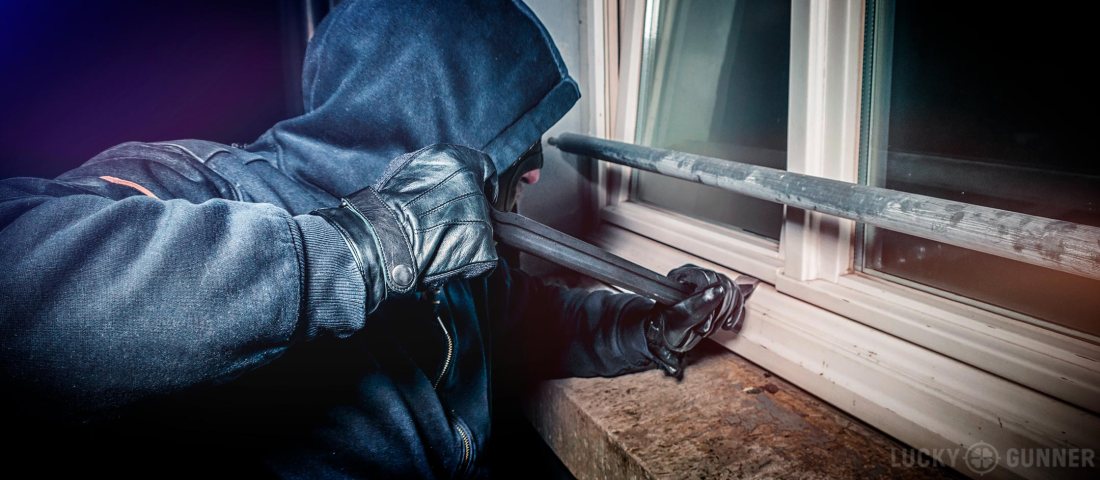
Your biggest threats in a SHTF scenario may be your fellow humans. Desperation drives people to behavioral extremes, and even the most law-abiding soul will steal a loaf of bread to assuage starvation without caring who else they deprive.

The threats amplify if you’re female or disabled — it’s an unfortunate reality. Another way to prepare if you have no money is to learn how to defend yourself. Although it’s best to attend live training and run through drills with a qualified instructor, there are plenty of free channels on YouTube with techniques you can practice with a partner. If you’re comfortable using a weapon, train with it regularly to make its use intuitive in a pinch.

The Most Dangerous U.S. States in a SHTF Scenario

You may not have had the time, money or resources to stock your home for survival. Perhaps you’re planning on relocating with potential SHTF scenarios in mind. What are the best and worst places to be? Here are the most dangerous U.S. states to be in during a disaster.

1. Major Metro Areas

The first spot on this list isn’t a specific state — it’s more regional than that. Regardless of your state, major metro areas are your worst bets in a SHTF scenario. Consider this: In the past 50 years alone, more Americans have died from gunfire than in all the U.S. wars combined. It’s not an exaggeration to say other humans may pose your biggest survival threat.

There’s also safety in numbers with those you can trust. If you reside in the city, your best prepping bet may be to organize your core posse, coordinating where you will all meet if evacuation becomes necessary.

Stocking your home for supplies is still valuable — it will help you survive SHTF scenarios like job loss, pandemics and regional disasters of limited scope where cleanup efforts take weeks. However, the sheer hordes of people in cities assure there will be plenty who don’t take such measures and will seek what you have if circumstances become dire enough. Prepare to stay, but plan to go.

2. Florida

Florida sees more than its fair share of natural disasters, so it deserves the No. 1 spot on this list outside urban jungles.

3. New York

Parts of New York are quite rural — and gorgeous. The problem is the severe weather extremes in such areas. Sections of the state are tucked between the Great Lakes and Atlantic seaboard, which are among the snowiest regions in the U.S. Even the hardiest survivalist struggles in a blinding blizzard.

3. California

What makes California so dangerous is its population size. It’s the nation’s most populous state, with an economy larger than many small countries. An economic collapse here could lead to severe repercussions, and while there are plenty of helpful folks, there are also more hell-bent on causing chaos and harm.

4. Texas

You might want a firearm for self-defense, but not every user is responsible or humane. Texas has more mass shootings than any other state, and the U.S. leads the world in these events. There are plenty of open spaces, but is it worth the risk? Furthermore, in 2018, Texas had the most motor vehicle fatalities, followed closely by California. You could find your escape route hopelessly deadlocked.

The Least Dangerous States

Where should you go to reduce your risk and increase your survival chances? Here are the four least dangerous states in the U.S. in a SHTF scenario.

1. New Mexico

Two factors make New Mexico the ideal place to be in a SHTF scenario: climate and population. Plenty of wide-open land with no one on it gives you ample areas to boondock until some semblance of normalcy returns. Although the northern part of the state sees extreme cold, driving south for a few hours puts you squarely in the sunshine.

2. Arizona

Arizona is more populous than New Mexico but still offers plenty of wide, open spaces. You’ll also find some of the best boondock camping anywhere if you must flee the Phoenix or Tucson metro areas. You’ll enjoy the perfect climate, as you’re always within a few hours’ drive of comfort.

3. Montana

Extreme cold poses a threat here, but you’ll find plenty of open lands that teem with natural resources. Hunters can survive quite nicely.

4. Utah

The deserts of Utah don’t see as much snow as the mountains. Temperature extremes aren’t too severe in some regions, and abundant campsites and natural resources exist.

Most and Least Dangerous States When SHTF

Although you’re unlikely to experience a SHTF scenario, it pays to prepare. What are the best and worst states to live in during a survival situation?

Forewarned is forearmed. Consider these tips if you’re seeking to relocate or are strategizing what to do if the SHTF.

Survival Chemistry: With a Little Preparation and Care, You Can Create Solutions That Support Your Day-to-Day Life and Help You Thrive Through an Emergency

Often, homesteading and survivalism can be defined by the simple fact that you have your own access to medical tools, energy, and food. However, having independent sources of useful solutions and chemicals can also be essential in difficult situations alongside everyday homesteading.

Much like most products, you don’t have to be limited to purchasing manufactured chemicals. You can produce alternatives to many common solutions that are not only effective but also often greener and more cost-effective. Let’s explore some of these alongside approaches to storing your concoctions safely.

Cleaning Products

Keeping clean is a necessity for any survival situation. Your efforts here help minimize the potential for the spread of bacteria and exposure to infection. Crafting your own cleaning products is not just good for when you’ve run out of commercial items. By making homemade items part of your day-to-day life, you can find you have greater control over the scent, strength, and eco-friendliness of your cleaning materials.

Soap

Making your own soap is a relatively simple process. Firstly, you can extract the base metal hydroxide — known as lye — by boiling hardwood ashes in soft water for 30 minutes. While this is less caustic than the chemical lye you buy from stores, it’s still important to wear protective gloves and goggles when handling it. You’ll then combine the lye with melted fat, such as coconut oil or lard. There needs to be around a 1:3 ratio of lye to fat. By heating the fat and lye gently and stirring every 15 minutes or so for up to 3 hours, you’ll have some serviceable soap. This is as good as either hand soap or dish soap. You can also add some essential oils during the stirring process to give it a more pleasant scent.

Toilet cleaner

An unclean toilet bowl is not just unpleasant to be around, but it can also be a breeding ground for harmful bacteria. Fortunately, toilet cleaner is not difficult to fashion and you can produce it in a range of strengths. A milder toilet bowl cleaner for daily use takes just a quarter cup of baking soda to a cup of distilled white vinegar, mixed thoroughly. However, for something stronger for a more thorough cleansing, you combine the vinegar and baking soda with tea tree essential oils. This is because tea tree oil is known to have antibacterial properties.

Water Purification

Whether you’re homesteading or responding to an emergency scenario, clean water is one of your most important resources. While people can survive for up to 3 weeks without food, they can only last around 3 days without water. Boiling and disinfectant tablets are often the preferred methods of purification. Nevertheless, you can also craft solutions that help to purify water from rivers or collect rain in a pinch.

Plant-based solutions

Some plants can be effective in removing contaminants from water. These include cilantro, banana peels, coconut, and the bark of Oregon grape plants, among others. In most cases, this involves keeping water in a bag with minced or shredded samples of these plants. You then filter and boil the water afterward. Yet, it’s important to do your research into how to effectively collect, store, and utilize each type of plant for this purpose, to avoid dangerous errors.

Homemade chlorine

Creating chlorine can also make a good tool for cleaning water for drinking, washing dishes, and cleaning food. The Centers for Disease Control (CDC) advises that this should only be done when safe bottled water isn’t available and boiling isn’t possible. It’s a last resort. Like other chemicals used in water purification — such as potassium permanganate — it should be used sparingly. Usually around 0.1ml of bleach to each quart of water is sufficient. You can make chlorine bleach at home using a cleaning agent known as calcium hypochlorite. Adding 1 teaspoon of these granules to 2 gallons of water and stirring provides you with a disinfectant that you can use in emergencies.

Pest Control

Unfortunately, there may well be times when pests invade your home and land. This might be in the form of seasonal mosquitos or ticks. You might even find that some pests will get into your homegrown crops. Crafting and storing some of your own pest control solutions can empower you to fend off these minute threats to your well-being and comfort.

Bug repellant

Bug bites can be uncomfortable. Not to mention that, in some instances, they can lead to the spread of disease. Thankfully, you can craft repellant that’s eco-friendly and kinder on your skin than many store-bought varieties. This begins with choosing an essential oil that repels insects. These include citronella, peppermint, and thyme. Some essential oils are particularly effective against specific insects, like sage for fending off ticks. You then mix your chosen oil gently with a base oil — coconut oil or almond oil are popular — and distilled water. Getting the ratios to your preference can take a little trial and error. However, when you have a solution that’s right for you, you can pour it into spray bottles and store these for when you need them most.

Hillbilly breath

Hillbilly breath is a natural insecticide that helps protect your crops and other plants. It’s a pretty agile solution, too, as it’s regarded as something of a catch-all against most bugs. The recipe for this concoction involves chopping garlic, tobacco, mint, and ash. You then mix these ingredients into water along with a tablespoon of your homemade soap. Allow this to steep for a day or so. You can then mix some in a watering can and sprinkle it on your plants to protect them against pests.

Fire Starters

Fire is vital for cooking and heating, particularly in survival scenarios where electrical sources aren’t available. Yes, there are natural methods for igniting a fire. However, keeping a collection of homemade fire starters on hand can save time and energy when you need to get a good blaze going quickly and with minimal effort.

Wine corks in alcohol

Wooden corks have absorbent and inflammable qualities that make them great fire starter materials. However, it’s important to gather the natural wooden kind rather than the plastic versions that are common today. Fill a mason jar or watertight tin with as many corks as you can fit, before filling the rest of the space with isopropyl alcohol. That said, in a pinch, almost any alcohol will do the trick. Once sealed, you can store these away until you need to take one or two out to use as fire starters in the future.

Lint in cardboard tubes

Most people know how important it is to clear out your clothes dryer’s lint compartment, as exposure to heat can make lint a fire hazard. This is also useful information when making homemade fire starters. You can combine a little petroleum jelly with the lint from your dryer, before rolling it into cylinders. From here, you simply stuff the combination into cardboard tubes from the inside of toilet paper or kitchen towels. Storing these in ziplock plastic bags keeps them safe for when you want to add one to your kindling as a fire starter.

Keeping Solutions Safe

Heading into your kitchen or garage to whip up a useful concoction can be interesting and practical. Nevertheless, it’s also vital to establish storage solutions for these and other chemicals in your home. After all, safety is always a priority in any survival or prepping scenario. The homemade nature of these chemicals doesn’t necessarily mean they don’t harbor risks. Taking steps to properly keep them contained can both safeguard your well-being and also ensure the items’ longevity.

Storing chemicals correctly begins with clearly identifying what you have in your collection. Get to know exactly what the makeup of each of your solutions is and the potential hazards they pose. This helps you to choose the most appropriate places and conditions for them. For instance, flammable chemicals — including your homemade fire starters — must be placed in cool areas out of direct sunlight and other potential sources of ignition. This might include a storage shed or garage away from the main part of your home. Corrosive chemicals should be stored away from other solutions, too. This is because there’s a risk of them leaking onto other solutions, affecting the integrity of the containers.

It’s also vital to keep your chemicals organized in the storage area. Given that you’ll be creating many of these from scratch, you should take the time to clearly label each. This is particularly important when you’re not the only one who might be interacting with them. Whoever uses them should be able to tell exactly what each solution is, how it should be used, and what its ingredients are. Another key element of organization is to avoid over-stacking containers. Ensuring that each has its own space on shelves and is not balanced on top of other bottles helps avoid accidents.

In addition, it can be wise to talk to your family about the importance of safe storage of these chemicals. By giving them a little guidance on the system of organization and why these measures are so important, you’re empowering them to keep themselves and others safe.

Conclusion

Crafting and storing your own essential solutions can be a fascinating process, alongside boosting your independence. There are also various other nuanced concoctions that homesteaders have used for centuries that are worth exploring. It’s vital in all circumstances to put your safety first when creating new solutions or handling chemicals, though. This includes utilizing appropriate protective equipment and being mindful of the potential for fumes when boiling solutions or combining chemicals. With a little preparation and care, you can create solutions that support your day-to-day life and help you thrive through an emergency.

How I Survived a Home Invasion – Lessons Learned From a Home Invasion That I Experienced

PART 1: BACKSTORY AND THE EVENT

This is an article about the experience, aftermath, and lessons learned from a home invasion that I experienced. I feel strongly that retelling it provides some important lessons and food for thought for anyone who keeps a gun for self-defense.

THE BACKSTORY

It was a weekend late afternoon and I was in my computer room at my house, working on e-mails and generally perusing the Internet. I had headphones on so I was unable to hear anything going on around me. The only other people in the house were my girlfriend who was cleaning the upstairs. My computer room faces onto my covered front porch.

At some point, I felt some vibrations in the floor that usually indicated someone was walking around on my front porch. I peeked outside through the blinds and saw a man standing on my porch, turning as to leave. Apparently, he had come up on the porch, rang the bell, and I didn’t hear it.

He had a sort of hippie-ish look to him…thick-rimmed eyeglasses, an orange ski cap, dark beard, holding a paper cup of coffee, and was carrying what we have come to call a ‘man purse’. I assumed that he was collecting signatures or something for one of the public-interest groups that are in this town.

I took off my headphones and headed to the front door.

A few details are important to add at this point, for what is about to happen.

Years earlier, I had installed a series of security cameras around the outside of my house. All approaches, entry points, and intersections of travel have a camera covering them. The feed is on a computer monitor in my living room and all video is recorded but sound is not.

I normally carry a Glock with me but I had been spending a ‘lazy day’ at home and was not wearing my pistol.

Next to my front door, to the left as you stand in the door facing outside, there is a small nightstand where, among other things, I keep a Glock 27 with Crimson Trace grips for those times I have to answer the door. The gun sits in a drawer, in a holster, ready to use.

Back to the story…

By the time I got to my front door, the guy has walked off my porch, down the steps, and was standing on the sidewalk that ran in front of my house. I opened the front door, opened the screen door, stuck my head out and asked “Hey, what can I do for you?” He turned and started walking up the walkway to the steps, smiling and saying “Hey, this is a nice place. This place is nice.” He started up the steps to my porch and when he got to the top step I stuck my hand out in a ‘halt’ fashion and said “Hey buddy, do me a favor and don’t come any closer.” He turned 180-degrees from me, turning his back to me, and walked backwards towards me as he seemingly checked behind him to see if anyone was around or watching.

At this point my usual level of caution has bumped into a previously unknown level. Usually, when I tell someone not to come any closer, or to step back from the door, they do it and that’s that. Not this time. I pulled the screen door shut as he turned towards it, put his coffee down, and grabbed the screen door handle to try and pull it open. As he’s tugging the door handle trying to pull it open, I’m pulling the handle trying to keep the door shut. He starts yelling “Let me in! Let me in!” and then starts throwing punches through the screen, trying to grab the door handle from the inside. After the first punch, he starts yelling “Hail Satan!”

I’m holding the door shut with my right hand, and I realize that this is a situation that has gone well beyond anything I’ve ever experienced. Becoming a victim of a violent encounter is no longer a theory, it’s happening. While holding the door shut with my right hand, I grab the drawer handle of the nightstand with my left. I yank the drawer open so hard that it completely clears the nightstand and hits the floor. I lean down and scoop up the pistol with my left hand. A problem immediately occurs – the pistol is in a holster. I need two hands to get the gun out of the holster. This means I need to take my right hand off the screen door handle in order to grab the gun out of the holster, which is held in my left hand. But, if I let go of the door handle, then The Bad Guy will simply be able to yank the door open and come into the house. With him punching his way through the screen and clearly being unhinged, I feel there isn’t much of a choice.

I let go of the screen door handle and yank the pistol out of the holster that I’m holding in my left hand. As I do this I start stepping backwards away from the door to buy myself time to get the gun out of the holster. The Bad Guy pulls the door open and advances into the house. He starts coming towards me as I’m fading back into my living room. At no point we’re we ever more than three or four feet apart. When the gun clears the holster, and I’m backpedaling, I discard the holster and bring the gun up to a two-handed low ready position. There’s no time to tell him to stay back, and if he sees the gun he gives no indication of it. He continues lunging towards me. There’s no time to bring the gun up out of the low ready, there’s no time to use the sights, and the distance is so close that there’s no real need for the laser. We’re close enough that we could reach out and touch each other…which is something I did not want. The last thing I wanted was to get into a clinch with this guy, us rolling around on my living room floor fighting over a pistol.

There’s a moment of hesitation as the thought comes into my head that, once I pull the trigger, my life is never, ever going to be the same. The thought that, somehow, I might get into huge legal trouble also runs through my head. All of these thoughts occur simultaneously in the blink of an eye. I pull the trigger once, he crumples forward, still coming towards me, and almost immediately I follow up with two more shots…pop, pause, pop, pop. He hits the floor at my feet, rolls onto his side, gives a wheezing gasp, and is still. The entire episode of him coming through the door to being on the floor was, at most, four seconds.

I’m standing over him, pistol in a two-hand grip, still pointed at him, when my girlfriend comes running down the stairs. The front door is open, there’s a cloud of gunsmoke in the air, and I’m standing over this guy pointing my pistol at him, the laser visible in the smoke. I tell her to grab my phone and call 911. I also tell her to grab her phone and take a picture of the scene…just in case.

I get 911 on the phone and the first thing I tell them is to send an ambulance. (I had the presence of mind to ask for the ambulance first so I could later point out that, clearly, my first concern was for the person on my living room floor.) Then I told them to send the cops, and that someone had tried to break into my house and I shot them. The dispatcher asks if the guy is still breathing. I tell her I have absolutely no intention of getting close enough to find out. She tells me exactly what I expected: Cops are on the way, put the gun away, go out and meet them with your hands up. No surprise.

I put the gun on the table, and head outside to meet the cops. As it turns out, this happened just at shift change so pretty much every cop from both shifts showed up. A total of 14 police cars. As I expected, I had to walk out of the house with my hands up and they searched me before telling me to just stand by the car while they cleared the place. They let me call my boss and I told her I was probably not going to be at work the next day.

Eventually, I was taken to the police station, and the girlfriend was taken separately as well, and we were put in separate interrogation rooms.

(To be continued in Part 2.)

The Countdown to Chaos: We Are Living Through Those Dark Times, and They Will Get Darker Before Things Start to Get Better

Peak chaos on the world stage is going to center around the United States presidential elections. It will define conditions in the nation, outside the nation, and the broader game plans of the rich and powerful. The fate of the world in the face of war will be largely dependent on who is in office and what choices they make.

This is particularly true these days since that silly old Declaration of War thing has been tossed out the window. America wages war through a collaboration between the Pentagon and the Executive branch. Period.

The timer is running. The countdown has begun. At any time in the next 10 months you must be prepared for your world to change dramatically.

WHAT REMAINS OF WINTER

Democratic Winter Meeting

In the United States we are facing an election where so much is up in the air. There is nothing particularly solid underfoot. The Democrats will have their winter meeting to discuss strategy amongst other things.

It would not be a surprise to Republicans or Democrats if the candidate in the 2024 election was not Joe Biden. What other curveballs could come from this meeting?

Israel Hamas Houthis & the US Military

The Countdown to Chaos

The declaration of war seems to have been eliminated in the US. We are now trading fire with Iranian proxies on a weekly basis.

We are effectively at war with these groups though we have not voted on it in congress.

Despite pressure from the White House, Israel has no intentions of slowing down their assault.

This is a full-scale war that the US refuses to admit it is in and will only add to the chaos abroad and at home.

Iran

Iran is watching things very closely. They know their proxies have killed Americans. We know it. The world knows it.  Most of all, the US Military is keeping eyes on Iran and they don’t like it. (source)

This is going to become a bigger issue as the 2024 gathers steam. Something tells me Iran is waiting for a wider war where America won’t be able to focus all its power on punishing the Persians.

A HIGH TENSION SPRING

Putin’s Election

There is something to be said about the DEVIL YOU KNOW but I am sure most people would like to see Putin dethroned. This is not a likely outcome though the election could create greater strife inside Russia. The public is already up in arms about the prolonged war and conscription.

Steadfast Defender NATO Exercise

The Countdown to Chaos

To call the Steadfast Defender a major military exercise is an understatement. It is the largest collection of NATO nations, military personnel, and vehicles in any exercise in the 21st century.

We are talking about 90,000 service members, 31 nations, 50 ships, 80 air vehicles and 1100 combat vehicles.

These are the maneuvers that would be used to mount a major attack on Russia. That is why they are practicing. This is one of those situations that could really heat up should anything unexpected happen.

A SUMMER OF WORLDWIDE CIVIL UNREST/TERROR

The Paris Olympic Games

If you were a terrorist, could you imagine a better target than the Paris Olympic Games. It’s in Europe, which we know is overrun with terrorists just waiting in the shadows, it’s going to garner massive attention, and with the war in the Middle East it will only embolden the lunatics.

Civil Unrest

As the weather warms, protests will increase. Wars, elections, and discrimination will give rise to even more unrest than what we are witnessing all over the world right now.

These events will stretch the resources of the government to their limits.

THE FALL… IT’S THE PERFECT NAME

Russia Hosts BRICS Summit

The Countdown to Chaos

Russia will be no doubt still sore from the Steadfast Defender will take this opportunity to push forward on BRICS and try to really hurt the West, particularly the US Dollar and its dominance. Protect your wealth. Understand that the US Dollar is part of the greater war and nations want to dethrone it.

Catholic Reexamination of Direction

This story is getting lost in the more exciting talks of war and world leaders but a massive reaffirmation of the Catholic faith, brought on by the Pope, is big news. How much change can the world endure in one year? How much chaos?

This is not a story on your dashboard yet but it very soon will be.

Massive Virus Digital Dark Age

China has staged its malware all throughout the United States’ digital infrastructure. I am sure we have done the same to them. (source)

Still, it could be the big attack waiting to happen. You have to imagine that when China moves on Taiwan they at least want something to hang over the heads of the Americans to give them pause.

Election Day in America

This is that moment when the ball is up in the air and the last seconds are winding down off the clock. What happens in the end? Who comes away with the victory. Truth is we are still not sure what election day might look like. We are not even sure who might be on the ballot for either side.

It will be an exciting day, to say the least but what’s come next will make it all look like a walk in the park.

THE AFTERMATH…

The Countdown to Chaos

Remember, the real chaos in America didn’t kick off till after the 2020 election.

We will see very much the same in 2024.

Should Donald Trump be elected president we are going to see calamity in the streets like nothing you have ever seen in America.

The chaos will reach its peak in the AFTERMATH of the 2024 election, particularly if Donald Trump becomes president.

This chaos will also be well funded by other nations and powerful people.

Elections, wars, and grid down chaos seem to be what’s on the menu for the rest of 2024. The countdown to chaos has already begun. I think what most people are struggling with is how much of it is out of their control.

You cannot stop the wars, NATO, the actions of Russia or Iran. There are a ton of things that will happen throughout this countdown that make you feel powerless and maybe even hopeless. That’s just the nature of this life.

Prepping, self-reliance, homesteading, off grid living, these are all things that render immense power unto you and yours. That power grows the more unstable things become.

For a long time, we used to talk about the future and how bad things might get one day. Well, it’s 2024, we are living through those dark times, and they will get darker before things start to get better.

As prepared people we can all be a little light in the darkness. Dig DEEP into preparedness in 2024. It’s an investment that will pay you back 10-fold.

This article was originally published by James Walton on www.askaprepper.com

No One Is Coming To Save You: You’re on Your Own When it Comes to Civil Defense-Government Will Not Do Anything to Protect You as That is Counterproductive to Their ‘Strategy’

Sometime between the First World War and the start of the Second World War the concept of civil defense or civil protection was born. The original purpose was to protect civilians from aerial bombing. After World War Two, the United States dismantled its civil defense corps. With the US the sole possessor of atomic weapons, there was no perceived need to spend money on civil defense. That perception did not last long due to the Soviet Union testing their first nuclear weapon in 1949. President Truman re-established civil defense with the goal of protecting the civilian population against a nuclear attack.

Over the next 29 years there would be several renditions of civil defense until the Federal Emergency Management Agency (FEMA) was formed. President Carter empowered FEMA to prepare for disasters and to continue civil defense efforts. In 1994, with the repeal of the Civil Defense Act of 1950, FEMA suspended preparations for nuclear attack. Without the federal mandates and grant requirements many states started to follow suit. Following the terror attacks of 2001 and the advent of the Department of Homeland Security (DHS), FEMA started to plan for a nuclear terrorist attack. The problem with the current DHS/FEMA nuclear terrorist attack planning is that DHS/FEMA assumes that only one city will be attacked. Other assumptions include a relatively low-yield weapon and that the unaffected surrounding areas can assist with the response. The current DHS/FEMA guidance is totally insufficient to address the needs from multiple nuclear weapons detonating across the nation.

With the current situation in Eastern Europe it is extremely important to understand both the past civil defense capabilities and the current non-existent civil defense capabilities of the United States but we also need to understand the civil defense capabilities of the former Soviet Union and those of Russia today.

It is important to understand past civil defense capabilities so that as the war in Eastern Europe widens, we can understand why our elected officials will do nothing to protect our nation. We also need to understand that the Russians will take steps to protect their population.

To start with, we a;; probably have heard of the concept of Mutually Assured Destruction (MAD). The basic premise of MAD was that if two adversaries started to launch nuclear weapons at each other, both sides would suffer massive damage to both its population and its economy, thus fighting the war doesn’t gain either nation anything. The United States adopted this theory, however the Soviet Union did not. There were great debates about whether or not the United States should pursue an extensive civil defense program. This brings up the concept that a nation’s Civil Defense capabilities can play into the nation’s strategic capabilities just like nuclear weapons. To be clear, when a nation chooses to have, or not to have, a robust national civil defense program it isn’t necessarily about protecting people but rather “the system”. The United States believed that if it took prudent civil defense steps then that would somehow diminish our nation’s vulnerability, hence we would not be subscribing to MAD because we, in fact, have not assured our destruction. More on this later.

MUST WATCH! THE HUNGER GAME HAS BEGUN: THE ELITE HAVE BEGUN THEIR FULL SCALE EXECUTION AND DECIMATION OF THE MIDDLE CLASS! FAMINE OF GODS WORD IN AMERICAS PULPITS ,WILL LEAD TO LITERAL FAMINE AND STARVATION IN THE U.S.A

The Soviets on the other hand had a much more robust civil defense program. The Soviets spent about ten times as much money on their civil defense than the US. Why? Simply because the Soviets never subscribed or followed the concept of vulnerability, in other words, the Soviets never believed in the MAD theory. While the US decided to be weak, so as to say look if we exchange nuclear weapons we looe so we really don’t want to play that game, the Soviet Union actively planned not only to fight a nuclear war but took steps to “win” it. This is extremely important to understand. Those in the upper echelons of the current Russian government are products of the Cold War and Cold War strategies and tactics run through their sins and brains.

At this point in time, the US still holds dear its strategy of being vulnerable. We have heard Biden state that Putin isn’t bluffing about using nuclear weapons and that we are facing Armageddon, so why is thee no big push to dust off old civil defense plans and not just by the executive branch or the democrats but the GOP is silent on the issue of civil defense? So the US government is still subscribing to the “let’s be vulnerable” theory within MAD while the Russians are planning to win. Basically, the two nations are planning for and practicing two different “games”, and when they meet for “game day” it won’t be good for us.

Since people are creatures of habit we can assume that both Russian and US leaders will fall back to the concepts of the Cold War as tensions escalate to the nuclear level. Back in the Cold War era the anti-civil defense crowd actually argued that no American president would contemplate America’s civil defense capabilities when making a decision to launch nuclear weapons. This is not only wrong, nut we can actually prove that it is wrong! During the Cuban Missile Crisis President Kennedy specifically asked about our civil defense status and how those capabilities would have us fair if Soviet missiles hit the US. Going back to the concept of Civil Defense, as a strategic capability, we can see that when the closest thing we have had to a nuclear war played out, civil defense was in the equation. And just so you know, the answer President Kennedy received wasn’t a good one. While the Soviet Union prepared blast shelters for their nation the US focused on “fallout” shelters. The fallout shelter system was specifically designed to protect people from radiation not the other blast effects from a nuclear weapon such as the fireball and shockwave.

With the Soviets not following the vulnerability concept of MAD, the US government believed that about 90% of the Soviet Union’s population would survive an attack by the US with nuclear weapons, compared to about 20% for the US. At least that was the US number up until the US government started what is known as “Crisis Relocation” in the 1980s. With crisis relocation, that is, evacuating urban areas to rural areas, the US government believed it could increase the survival of the population to around 80%. The only problem with the concept of crisis relocation for nuclear attack is that the plans assumed we would have one-week advance warning before the missiles started to fly, from what I understand, at the time, Soviet nuclear missiles were liquid-fueled and the missiles were not kept fueled due to corrosions issues with the fuel and it would take about a week to fuel them for an attack.

So how does this all relate to the current situation?

Understand that Russia’s new 5th-generation warfare strategy has an “escalate to de-escalate” component. That is Russia plans to “escalate” tensions with the threat of nuclear attack in order to have the other side come running to the negotiating table. This escalation could be achieved by mere threat however the US/NATO are not buying into the threat which means that the risk for Russia to have to resort to some type of actual use of nuclear weapons increases. The thing about nuclear arsenals is sort of like in the movies when one person shoots, everyone lets loose.

Russia still believes it can win a nuclear war. The old communist lead anti-nuclear weapons crowd liked to say that nuclear war was “unthinkable”, but we should think about nuclear war critically, considering the destructive power and the number of nuclear weapons on the planet and we also better be prepared for when they are launched. Since the US has no real civil defense capability, it is conceivable that the US could be placed in a very bad geopolitical bargaining situation since our population is so vulnerable and the Russian population is not.

Both Russia and the US will revert back to the Cold War strategies when they face the next “Cuban Missile Crisis” arising out of the Ukraine war. Russia will perceive that it can win a nuclear war while the US will perceive that Russia will not launch since they too will loss a lot of people and economic capability. Keep this in mind, the Soviets were expected to lose 20 million people in a US retaliatory nuclear strike, that is 10 million fewer people than they lost in all of World War Two. Sounds like a win to me.

If the situation gets bad enough you will see an evacuation out of the cities. Polls conducted in the late 1970s indicated that there would be two distinct evacuation waves. First would be the spontaneous evacuees who leave the cities without there being an official evacuation order. The second wave will be those leaving when the official order is given. According to the polling data, many of the spontaneous evacuees in the first wave would be going to “friends and relatives” in the country. What isn’t identified in the polling data is whether or not those relatives and friends in the county know those people are coming their way. Crisis relocation when implemented will have profound effects on those living in rural areas. One other thing to keep in mind about crisis relocation is that there was a debate that as soon as one nation saw the other nation evacuating their cities an attack would be launched. There was no indication that either the Soviets (Russians) or the US targeted the evacuation “reception” area with nuclear weapons, however Russian nukes are somewhat larger in there megatons of TNT power. I suspect that this was done due to the Soviet missiles not being as accurate as the US missiles.

This presentation PROOVES WITHOUT DOUBT that America is in for a major fight that will put you and your family in the firing line, literally… So make sure you watch this presentation while it’s still online…

The reason why you should pay attention now is that is because these techniques don’t come from books, they’re taken from actual 21st century warzones, from lawless states where social chaos is the name of the game… … and where not having enough time or money to prepare doesn’t stop real-world preppers from creating virtually impenetrable defenses for their families.

With today’s hypersonic missiles the concept of crisis relocation may or may not be moot. I suspect there may be a few people who still self-evacuate out of the cities before a warning. I would, however, suspect that if one side did order an official evacuation of cities that then that would trigger an immediate attack. If you even hear discussion of crisis relocation or evacuation you should take this as warning that the crisis is spiraling closer to missile launch.

Stop believing that survival isn’t possible, that is if you don’t live in a large city or military target. Location is one of the best factors helping to ensure your survival in a nuclear exchange.

There is a belief, or hope, that nuclear weapons will not be used. Just remember that “hope” is not a plan. Government will not do anything to protect you as that is counterproductive to their “strategy”. That means You’re on Your Own (YOYO) when it comes to civil defense.

Take steps to plan for and implement a fallout shelter in your home now. There are still a number of good sources of information on this on the internet today. Start looking for in now and reading it. Second, locate and acquire any needed equipment and supplies you may need. I have a gun range on the property with a large backstop that is filled with sand. We will use the loader on the tractor to scoop out the sand and bring it closer to the house where we will then fill feed sacks up with the sand and place them inside the house on the floor above where we will be sheltering. We have on hand, wood and jack post to beef up the support of the floor joist due to the added weight of the sand. We will also put dirt up against the foundation for added protection. In the basement we will construct an area where we can sit and lay that will have additional dense materials (things like ammo cans) on top for additional shielding. Planning and preparing for the protection against fallout now will give you and your family an immense leg up when the time comes to act.

We can anticipate that at some point Russia will give the West an ultimatum. Russia has already told the West to stop interfering or else. The ultimatum that we should be looking for is one with a specific date and time. Of course the West will not comply with the ultimatum and this will probably mean the end of Putin’s power or Putin will push the button.

Never underestimate the power of stupid people. There are people on both sides who train regularly to launch or drop nuclear weapons at a moment’s notice. They go through quick reaction drills so that the motions become second nature, so that when the order is given these people resort to just going through the motions like they have hundreds of times before, verses thinking about the ramification of what they are about to do.

The old Cold War analysis predicted that most Americans would need to shelter from radiation for a two-week period. That means literally staying in a very confined area for sleeping, food prep, going to the bathroom and everything else. I’m sure with our current generation’s addiction to electronic devices the mere withdrawal from these games due to the combination of the effects of EMP, no power and no Internet connectivity will be just as challenging as trying to live in cramped quarters for two weeks. Statistically speaking, I have lived over half my life. What this means is I can afford to absorb a little more radiation than my kids who are in their teens still. This won’t mean anything the first week since radiation level will be so high that it could cause radiation sickness even with only a few minutes of exposure. The second week, depending upon actual radiation reading, I could probably do a quick task like taking out garbage or human waste. Perhaps I would even go out to the barn and throw a few bales of hay out for any surviving animals. The most likely farm animal to survive will be chickens, since they can withstand an impressive amount of radiation.

Fortunately, we have metering for measuring radiation. I have sat my daughter down and taught her how to use them. I have taken background radiation readings in areas where we are going to shelter. It is good to know what your normal level of radiation is. The background levels of radiation were written down for several areas. One where we are going to actually shelter, then a reading at the door to the room that has the door to the outside and the third reading was at the door itself. The readings were annotated and then laminated and attached to the handles of various meters.

Nuclear war is survivable but you need to take action to be prepared. If you live in a location that isn’t a target but will probably be affected by radioactive fallout it would be a shame to die slowly from radiation poisoning that could have been avoided with some very simple preparedness.

Regardless of what does or doesn’t happen with the current war in Europe, the notion that we will not be confronted with another geopolitical crisis where the chances of a nuclear war increase is very naive. At some point we will be in the same situation with China. Perhaps that will be sooner than anyone realizes. Prepare now.

In this short VIDEO, I will unearth A lost super-food will bulletproof you against any food shortage or famine. It’s a food that vanished with the Incas over 6 centuries ago

In the next crisis these lost skills will be more valuable than gold, food supplies and survival equipment combined. These skills have been tested and proven to work for centuries.

Here’s just a small glimpse of what you’ll find in The Lost SuperFoods:

Learn More…

What Would Happen if We Lost Electricity for a Lengthy Period of Time? I Reached a Strange but Compelling Conclusion: The Food Distribution System Would Collapse

It does not take much imagination to realize that our society will come crashing down without the cheap, steady flow of electricity. The world’s electric grids are the lifeblood of our modern lifestyle. Many predictions believe that if the electrical grid was shut down, by something like an electromagnetic pulse (EMP) or a very strong Coronal Mass Ejection (CME), then civilization would be thrown back into the 1800s. Some predictions even think the 1700s or even further back. Regardless of what time period we are all transported back to, we are going to have to find ways to replace all the modern conveniences, instantly made useless, that we currently depend upon for our daily life and survival.

As a society, we do not realize how good we have it. Americans and others enjoy several hours of “free time” compared to those living in the 1700s and 1800s. All that “free time” will evaporate along with the electricity. Many of us stock months or years of food and other supplies to hopefully survive long enough for society to get back on its feet, that is for the power to be restored.  Society getting back on its feet will take people with the knowledge, skills, and the tenacity that spurred the Industrial Revolution. However, unlike our ancestors, our generation will have some disadvantages. These disadvantages are nothing that cannot be overcome with a little foresight and preparation.

When the great industrialists and inventors of the late 19th and early 20th century invented, developed, and manufactured their products, they were built with the technology of their day. It was the blacksmiths and their forges that helped build the machines and tools used to usher in the Industrial Revolution. It was computer-programming languages like Pascal and COBOL that laid the foundation for our current digital technological wonders, like artificial intelligence. But as technology progresses, the old technology disappears the building blocks to help rebuild from a catastrophic collapse are lost. So, in order for the people in today’s world to start re-building the low technology machines of the early 1900s the technology of the late 1800s will have to be recreated.

A DAY IN THE LIFE OF THE APOCALYPSE

I like reading post-apocalyptic fiction, but it never ceases to amaze me how many authors make a day in the life of an apocalypse survivor seem like a cakewalk. Can this be what the authors really think life will be like? We moved to our bug-out-location full-time in the summer of 2019. Our “spare” time is spent building infrastructure for us to use to survive TEOTWAWKI. We have cows, pigs and chickens. Feeding and watering our animals, who will feed us, takes about a half hour to hour each day thanks to electric.  In the summer watering is an easy task, but when the temperatures fall, the days become shorter and snow is on the ground, it is not so easy. Then I think about how my ancestors had to manage these same chores and how good I really do have it.

Last year we did not have any electricity in our barn. This year we do and we feel spoiled. I recently sold two piglets to an Amish neighbor. I realized how much we take for granted something as simple as lights in a barn. When we got to the Amish neighbor’s barn with his piglets, his wife and a few kids were busy milking the family cow as we got the piglets into their new home by the light of headlamps. Thinking about this, most tasks we do in the night will be done with light from some other source than a lightbulb powered by the grid.  I see and hear many preppers talk about having generators and fuel stored but at some point, those will be used up.  Then, our survival will be by the sweat of our brow, instead of the internal combustion engine or the electric motor powering the world.

So, how do we prepare to live a life that resembles that of the 1700s or 1800s? Very simply, we find the tools, devices and methods used in those time periods and learn how to use them. Let us look at some long-forgotten things and some items that are still around but their utility has been marginalized compared to what it was back in the pre-industrial revolution days.

CALLUSES WILL MAKE THE WORLD GO AROUND, NOT OIL

About 42% of Americans are deemed to be “overweight” compared to about 10% in the 1950’s. Instead of burning hundreds of calories collecting and cutting wood to stay warm, we instead turn up the thermostat via our smartphone without expending 100 calories. Our great technological advances have, unfortunately, made us lazy. Our lives do not require us to burn calories doing simple everyday tasks that need to be done for our survival. I think it was in the movie Cool Hand Luke, where one of the characters says, “Laziness breeds inefficiency.” It isn’t that we want to be lazy, it is that societal norms have driven many of us to a life style that does not necessitate much, if any, manual labor.  However, when technology fails, we become an inefficient society. As Preppers, we should not fall into this trap.

I like to use non-powered hand tools when I can. Why? Simply so my body becomes accustomed to using those tools. I can also gauge how long a task may take in a post the end of the world as we know it (TEOTWAWKI) world.  It also keeps me from falling into a pattern of always choosing the easiest way to do something (That is not to say I do not own and use cordless tools). It is good to sometimes do things “the hard way” that way when we are not given a choice, we don’t view it as “the hard way” but just another way. Of all the years reading about survival, I have never read anything about the need for calluses for survival. Our forefathers had callused hands, we need to consider this and try to get our hands prepared for hard use in a post-electrified world. The good news is developing calluses on our hand does NOT require money but rather time. The best way to do this is to look for tasks that you will have to do post-TEOTWAWKI. For example, I split our wood with a hand maul. Other examples could be using a shovel instead of a snow blower or using a rake instead of a lawn tractor to bag the Fall leaves for composting. Get your hands prepared now, they will thank you later.

WHEN THE #10 CANS AND 5 GALLON BUCKETS RUN OUT

I consider myself Blessed to have a decent supply of food stored away, but I do not have illusions that the world will be “back to normal”, should we suffer an EMP or massive CME, before our food runs out. That means we must be ready to scale up our food production right after a TEOTWAWKI event. To do this, we have had to study the past to prepare for our future. As agriculture has changed, it has gotten to the point where it is highly dependent upon electricity, like everything else in our world. As a Prepper, I am trying to be prepared to farm without all the new farming technology. Some of our adaptions follow.

CULTIVATION

With a little education and preparedness, we do not have to live like a peasant in medieval times post-TEOTWAWKI. Instead of your family and others spending most of the day tilling the land with shovels, we can incorporate some more modern technology to help grow our crops. There are two basic choices, hand tools or implements that are pulled or pushed.  At one point in history, humans pulled plows but animals, being more efficient, quickly replaced humans. Some of the first plows in the American colonies were made of wood then metal ones became all the rage around the 1880s. A post-TEOTWAWKI world will require us, at some point, to till the land. We have several raised beds and three patches of land that we currently rototill. Since these plots are already tilled regularly, they will be somewhat easier to till in the future without modern means. So, perhaps I do not need a single bottom plow and a team of oxen, perhaps I can get by with an old-style push powered wheeled cultivator to break up our soil. The nice capability of some of the push-powered wheeled cultivators is that you could change the “implements” depending upon the task needing to be done.  Another possibility is the use of pigs.  Pigs are very good at breaking up the ground by rooting with their snout.

PLANTING

A good old-fashioned seed broadcaster maybe a good device to put back as well. The good news is they still manufacture these. I use mine in the mid-Spring to seed my hay field. I use a technique an old timer passed down to me. The method requires no tilling of the dirt. Just broadcast the seed right before it rains. When it rains, the seed will be transported into the “duff” or layer of decaying materials, where it should spout. I did this and had decent results. Another variation of this method was to broadcast the seed on a very dewy morning. Many of us may garden now but when commercial food production is non-existent, our gardening will need to expand to ensure we have food to last until the next harvest. A wheeled seeder will make quick work of planting many seeds and the saved time can be used for other important tasks. I normally plant my direct sow seeds individually by hand but post-TEOTWAWKI I will definitely be using the wheeled planter.

GROUND-DRIVEN

I originally was not going to get into haying, but I saw an opportunity to buy some used haying equipment cheaply.  My tractor is on the smaller side so it will not run many of the newer power-take-off (PTO) driven implements.  Instead, I bought a ground drive rake and Tedder that is powered by the wheels turning that in turn moves a chain to turn the rake and Tedder.   Some would buy these pieces of equipment, manufactured long before I was born, as antiques but they will be operable in the post-TEOTWAWKI world.  The Amish still use ground drive technology and have even offered to buy mine since these implements are getting harder to find.  If the tractor can no longer operate, the ground drive equipment can be powered by oxen or horses.

HARVESTING

We have a couple old scythes that we can cut hay with or if we can use to cut grains like wheat or oats with.  We even have extra handles put aside.  Once a year we take them out and use them for a half hour or so.  I have been studying the old art of making a haystack since we will not be putting our hay into hay bales post-TEOTWAWKI. Using a scythe takes some coordination and of course muscle.  We also have some hand-held corn cutters for taking down stalks of corn, as well as, hand cranked corn-shellers that quickly and efficiently take the corn kernels off the cob.  For out fruit trees we have a hand-held harvester that is a basket, made of wire, mounted on a long wood pole, that helps get the fruit high up in the trees.

HOURGLASSES

Many people no longer require hourglasses.  Their usefulness has been relegated to a timer for board games.  I recently picked up a vintage brass hourglass that wasn’t made in China.  I timed the amount of time it took the grains of sand to empty several times.  It took 3 minutes 15 seconds for it to empty so I assumed this was an old egg timer since it takes roughly 3 minutes to soft boil a chicken egg.  The survival value in being able to measure the cook time of an egg is to help ensure the food is properly cooked thus limiting the possibility of contracting salmonella. An hourglass can also be used to time other processes as well.

THE ICE HOUSE

Where we live there are a few different sects of Amish.  Some are allowed to use propane fired refrigeration, others rely upon the use of ice.  Unlike the ice houses of 100 plus years ago, the Amish have capitalized on the use of Styrofoam.  I have not been inside an Amish ice house yet, but have seen several from the outside and talked to a few Amish about them. I have also studied their making via the internet.  So, where do the Amish get their ice for their ice houses?  One day, the wife and I stopped at one of the local Amish bulk food stores.  Outside were four pallets of red, 5-gallon plastic buckets with more scattered around their lawn.  I asked if they were selling the buckets and they said “no” they were for making ice for ice houses.  I talk to them about how they did it and they giggled and said they just put the buckets outside and let them fill up with rain water and then let them freeze, then get them out and stack them in the ice house.  From talking with them their stored ice will last until the next winter.  So, now we have another use for all those empty 5-gallon food buckets after TEOTWAWKI.

KITCHEN UTENSILS AND THE LIKE

There is no doubt that modern conveniences have drastically lessened the time for meal preparation.  While today meal preparation ranges from 20 minutes to about an hour our foremothers were not so lucky.  Eating is one of the basic survival tasks that we all must accomplish, but today most people don’t even consider it a “survival” task. Many of the kitchen utensils that our grandmothers used have been pretty much replaced with gadgets with electric motors. Blenders, food processors, electric coffee pots, toasters, have helped save time in the kitchen. I have been to homes that don’t even have a simple potato masher, since the people use instant potatoes. Many of the mixing spoons and spatulas are now made of cheap plastic and are from China. Good quality kitchen knives, that keep a good sharp edge, are no longer needed since food bought at the Piggly Wiggly is often already cut and cooked and just needs heated up in the microwave. We need to realize that, in the post-TEOTWAWKI world, we are all going to revert back to being our own butcher, baker and candle stick maker. Good quality knives will make our work both safer and quicker. Hand cranked meat grinders and food choppers will also save on time.

One of the assumptions, that I have made about post-TEOTWAWKI life, is that we will be needing larger pots and pans. Why? First, the preservation of the harvest will be much easier. This past Fall I spent a lot of energy and effort in preserving sweet corn. If I had had larger stock pots, I could have processed the corn much faster and saved on propane as well. I have picked up several large commercial grade pots and pans from the Salvation Army for next harvest season and for our post end of the world kitchen that will probably be feeding more than four people. When I go to auctions and second-hand stores, I am always looking for usable crocks. These will be used for brining, fermenting and storing things like meat, kraut and vinegar. Besides utensils I have been stocking up on packages of cheese cloth and 100% cotton muslin cloth for various task such as pressing apples. Since paper towels will be quickly used up, I have also stocked up on 100% cotton flour sack kitchen towels that can be washed and reused.

TUBS AND BASINS

Another item I do not recall being discussed in the Prepper world in having tubs and basins stored away. The good news is that most people do not see the utility in the old galvanized tubs anymore. In many instances their usefulness has been relegated to being a decorative plant holder so they are normally cheap on the second-hand market. In the late 1800s and early 1900s the old galvanized tub was the world’s washing machine and in many cases their bathtub too. Keeping things clean will help in cutting down on disease and in the case of clothes may prolong their life. I have a few ceramic wash basins and pitchers to use for personal hygiene in the post-electric world much like people used in the past.

COGS, SPROCKETS, BEARINGS, PULLEYS AND BELTS . . . OH MY.

We all use mechanical advantage in our everyday lives, but for the most part, we never give it much thought. We purchase our tools and devices with the calculations and parts already figured out and put together. At some point, in the post-electric world, people will need to hobble together machinery to help perform simple tasks. I will go out on a limb and say that most people, probably do not have an on-hand supply of cogs, sprockets, bearings, pulleys, and various belts. When I look at and study the tools and devices of yester years, I conclude that the simple cog and a handle to move a cog is the most under valued inventions that are still used today. When I look at my ground drive hay equipment, I see sprockets and cog and roller chain. When I look at my corn shellers, I see a series of cogs moved by a simple hand crank. Even the simple old hand-cranked mixer uses cog and a hand crank. It would be very advantageous to learn about the various aspects of mechanical advantage and the various configurations that turn regular human strength into industrial strength.

THE HUMBLE TREADLE

Most of use do not pay much attention to the value of the treadle. Watching a movie, we see a woman spinning wool using a spinning wheel, we may watch another movie and see a man sharpening an axe with an old sandstone fashioned to a bench and powered by the simple push of a foot. And let us not forget the treadle showing machine which was all the rage in a bygone era. The humble treadle provided power to many simple machines throughout the ages, and will enjoy a massive resurgence when the lights go out for good.

There are many, long forgotten, pieces of technology whose usefulness have been marginalized to relics in a museum or antique shop. As Preppers, we need to recognize that these old devices play a vital role in our TEOTWAWKI future. There usefulness is not just the task that they help do, but rather sharing the long-lost art of simple old technology. Google will not be around to ask what type of gear ratio or “V” belt you need in your post-electric world so learn as much as you can now.

Full Scale Cyberwar: One of the Greatest Threats to Critical Infrastructure That We Currently Face – Scariest Thing Will Be Not Knowing What’s Going on

Cyberattack. Not a localized focused incident, but a highly coordinated wide reaching major cyberattack. An event or series of events that attack modern infrastructure.

With what goal? To cause internal social chaos to the extent that we fight ourselves to a state of collapse. Cyberwar.

We are vulnerable beyond belief. Electronically interconnected. Networks jam packed with devices. The ‘internet of things’. The integrated electronic systems keeping infrastructure operational..

The scariest thing about a cyberattack, at least at first, will be – not knowing what’s going on.

The ensuing confusion. Broken communication systems. The resulting isolation. People desperately wondering what happened. Who did it. What to do..

Coincidently I watched the Netflix movie, “Leave The World Behind”. I happened to view it during the first day of release. A unique view (and well done, IMO) of this article’s topic. It didn’t take long afterwards for the preparedness world to start talking about it.

Cyberattack to the extent of devastating consequences – is a very real threat. It’s not science fiction. It’s cold-hard-fact.

Cyberwar concerns me more than EMP. Why? Because I believe it’s more likely. There are a handful of nation states that could pull off an EMP. However a major cyberattack is different. More potential ‘actors’. And ‘the enemy’ might not be effectively identified.

Cyberattack – Not Knowing What’s Going On

The focus of this article. Food-for-thought. The fact that the public (except for a few who have been ‘awake’ and prepared) will not know what’s going on after telecommunications goes down.

Every subsequent minute without their screens.. Social media Apps.. No Facebook, YouTube, WhatsApp, Instagram, WeChat, TikTok, Messenger, Telegram, Snapchat, X (Twitter), Pinterest, etc… Not knowing what’s going on.. Not knowing how to find out.. Increasing anxiety.. And the ensuing panic.

Internet pipelines used for effective avenues of cyberattack into all sorts of infrastructure, including communications. An enemy objective –> cutting off flow of information. Leading to confusion and not knowing what’s going on.

Social media datacenters are attacked and platforms are taken down. Mainstream alphabet-channel networks are broken due to reliance upon affected datacenters, digital chokepoints, and the internet infrastructure itself. Cell phone provider networks. Any communications system reliant upon a smooth running internet. Hampered or broken.

Even worse, the likelihood of power grids being targeted and going down. When the lights go out, so do most communications systems.

There will be massive confusion resulting from not knowing. It will quickly lead to major stresses, indecision, bad decisions, internal conflict, and ultimately…social chaos.

Preppers Will Know..

Those educated within the realm of common sense preparedness will know. At least to the extent of knowing that a devastating cyberattack will require having prepared for it. Having known the probable consequences thereof. And, when it happens, making quick and smart decisions to stay ahead of the social chaos that’s sure to come soon afterwards.

It will be time to get to one’s ‘home base’ and pull up the drawbridge, so to speak.

Everything will become quite local. Communications will require face-to-face, in-person. Or, devices like 2-way radio communication, Amateur radio (ham radio), which are battery powered and don’t require the internet or the power grid.

Information and Intelligence gathering. Methods that don’t require the grid or the internet. Monitoring your radios. That’s how you will find out what’s going on.

Security can be greatly enhanced within a local area with 2-way radios (as long as you have a way to charge them, exemplified in an article linked below).

If you’re into practical preparedness and prepping, you already know this. And you likely already are well equipped in this area of communications. If you’re beginning, you might consider learning more about communications without the internet or without the electrical power grid.

An important point to all this is knowing how most people will react when there’s no reliable or functional communications during, and following, a major cyberattack.

Their coming to grips with it. It will be troublesome, and eventually dangerous.

Renewed Concerns

I have renewed concerns about the probability or likelihood of a major cyberattack, or series of devastating cyberattacks. It’s in the news and media, more and more. Even the WEF (World Economic Forum) is warning about this. Is it predictive programming?

We are exceedingly vulnerable. And there are many entities around the world who consider us an enemy. Seems like an opportune period of time for those who wish our demise, especially given the present climate of divisiveness and division. All that’s seemingly needed is a way to trigger descent into social chaos, lessening the need for a ‘traditional’ attack. We can do it for them. We can do it ourselves..

Are you new to preparedness? It might be a good time to get started.

Are you a veteran at this? It might be a good time to re-evaluate and have a look around. Maybe grease the hinges on the draw bridge..

Have a plan of action.

2024 is coming.

Prepare for a Nuclear Blast: EDC Gear for the Nuclear Threat

For a generation and a half, young people have lived their lives free from the specter of nuclear attack. People were not compelled to contemplate the horrors of nuclear war and how they would survive a nuclear blast or fallout, what food would be safe to eat or drink, or whether the air would be safe to breathe.

Unfortunately, the U.S.A. has scant preparations to protect its citizens from nuclear attack. While politicians have gone to great lengths to ensure the continuity of government, there are no fallout shelters for common citizens, only advice and plans to build your own.

You could build and stock a fallout shelter and there are ways to inexpensively improve the protection factor any building already provides, but the average American spends over a third of their workday away from home. What could you possibly carry with you during your day that would improve your chances of survival if a nuclear weapon is detonated on U.S. soil?

How Would You Know a Nuclear Attack Has Occurred Elsewhere or is Imminent?

Who attacks the U.S., what their objective is, what nuclear weapon systems they have at their disposal, how many they use, and how they deliver them, would all affect how much notice there is or whether there is any notice at all.  

A nuclear attack by a nation state with a nuclear arsenal and a space program would likely begin with a HEMP attack to blind our radar, take out much of out command and control and cripple our power grid. We may not see such an attack coming at all, much less in time to do anything about it or warn the populace by issuing a warning via WEAS (the Wireless Emergency Alert System). Nuclear weapons optimized for HEMP are probably orbiting the earth in satellites as you read this. Here is a link to a previous article of mine on how to tell if an EMP has happened.  

Even if the federal government could warn the citizenry of such an attack, I doubt that they would. Their reasoning being, “Why cause panic and clog the roads and airports and prevent the almighty brass, politicians, and bureaucrats from getting safely to their shelters?” What good would it do to tell the average citizen anyway? Afterall, in their eyes, we are all helpless, defenseless, and utterly dependent on them in every way.

Most of them probably couldn’t care less whether the tiny fraction of the population who is prepared makes it to their fallout shelters or not. They are afraid of us and see us as more of a problem than an asset.

Radiation Meter

You can’t see, hear, smell, taste, or feel ionizing radiation. It can only be detected with specially designed instruments, such as a radiation meter. Without one, you won’t know whether it is safe to stay where you are or whether staying where you are means certain, and very painful, death.

If your local emergency services have radiation detection equipment, have had it calibrated at the proper interval, know how to use it, are able to broadcast measurements to the public, and you are able to receive their transmissions, then you’ll know the severity of radiation exposure inside or outside the fire station or wherever they took, their measurements. You need to know how intense the exposure is where you and your family are sheltered so you don’t die… terribly. Once you are home, you’ll also need to know the intensity of exposure outside to know when it’s safe to go outside.

If HEMP effects have damaged the power grid and radio stations, using radiation detection equipment will likely be the only way to know if you are safe where you are or whether you need to get to someplace safer.

I carry a small radiation monitor and alarm called the NUKALERT that is designed to be carried on a keychain. This radiation monitor is always on and constantly samples about every two seconds and has a battery life of 10+ years.

Chart on back of NUKALERT

The monitor produces a series of beeps when radiation is detected. By counting the number of beeps and referencing the chart on the back of the device, you can quickly calculate how long you have to find, improvise or improve shelter.

Cellphone, Small Amateur Radio with Wide Band Receiver

If there is any warning preceding a nuclear attack and the government does warn the public, then you may receive an alert on your cellphone. However, if the nuclear attack is preceded by a HEMP attack, it is likely that your cellphone may not work.

If your local emergency responders have their act together, they will break out their radiation meters, take readings and report them for broadcast to the public so folks can know whether they need to seek shelter or whether it is safe to be outside. Of course, their ability to get this information out to the public may be degraded if the power grid is down, cell towers are down, and radio stations are down. But do not fear, before long, radio operators will soon get radio back up and transmitting.

The beauty of radio is that you only need a transmitter and receiver to get the word out and they can run on batteries so little infrastructure is needed. That’s why it’s a shame that several auto manufacturers are trying to build vehicles without AM radios. No other technology would reach as many people as quickly in a catastrophic event that takes down the power grid.

Some amateur radios with wide band receive can also receive AM, FM, and shortwave frequencies, giving you the ability to receive broadcasts in addition to monitoring local amateur radio traffic and potentially communicating with family and friends even if phones, SMS, the internet, and the grid are all down.

Faraday Bag

Most handheld transceivers are well shielded and may work even after a HEMP depending on many factors. If radios weren’t well-shielded, they would damage their own circuits when they transmit. You can greatly improve the odds of having a working radio and/or cellphone by storing it in a non-conductive bag and then storing that inside a Faraday bag.

Some tests indicate that many handheld transceivers would likely survive a HEMP with a field strength at or below 50kV/m. However, it is possible that super-HEMP weapons may generate much higher field strengths (Russian military literature references field strengths of up to 200kV/m), so storing sensitive microelectronics you may need to survive in a Faraday pouch that provides at least 73dB of shielding is a reasonable and inexpensive protective measure. It might not protect sensitive electronics if the weapon went off directly above you, but it would improve your chances in much of the rest of the country.

Dosimeters

A dosimeter measures how much radiation you have been exposed to over a given period. This is important to know and, if you have the money, this greatly simplifies tracking. Ideally, each member of your group should have their own dosimeter.

Dosimeter charger and analog quartz fiber dosimeters

You don’t need to carry the charger constantly, but you will need it to periodically zero dosimeters as gamma rays pass through the ionization chamber, bleeding off the charge at a measured rate. To read them, you hold the tube up to a light source and look through it. If you buy these old surplus dosimeters, you’ll need to have them tested and calibrated.

Watch, Notebook, & Pen

If you only have a radiation meter and don’t have a dosimeter, you’ll need to record the total REMs you have been exposed to and over what period of time. If you have older analog dosimeters that look like pen, they only record exposure within a specific range. You must record when you charge them, how much radiation you have been exposed to, over what time period, and then they need to be recharged and zeroed.

Even if you have a newer digital dosimeter that tracks your total exposure, I recommend making a copy of the exposure scale so you will know how many REMs you and others in your care can be exposed to before they become ill and how many are fatal. This information may help you make important decisions, such as when you really shouldn’t spend any more time outside the shelter, when you need to try to move someplace safer, when you are safe and when it’s time to get your affairs in order.

Potassium Iodide

If you receive notice that a nuclear attack is eminent, you should begin taking potassium iodide. One of the effects of exposure to fallout is that radioactive isotopes of iodine can build up the thyroid gland increasing the risk of thyroid problems, tumors, or thyroid cancer.

When unpredictable winds caused a little over 60 indigenous inhabitants to be exposed to fallout during nuclear testing in the Bikini Atoll, approximately one third of them eventually developed thyroid problems, tumors, or cancer over the next 20 years.

Outerwear & PPE

If there is a chance that you may be directly exposed to fallout before are able to get someplace safe or improvise shelter, protect yourself as best you can.

  • Lightweight Outerwear – Lightweight outerwear is no substitute for a fallout shelter, but it can keep fallout particles from sticking to your skin and help ensure that they they do not stick to you during the decontamination process. Outwear with a zipper is best. You don’t want to contaminate your head and neck by pulling of you top over your head.
  • Gloves – Gloves will help protect your hands.
  • Hat – A hat will help keep fallout particles off of the head and out of the hair, where they can be difficult to remove. When you wash, use tepid water and do not use conditioner which will cause particles to bond to proteins in your hair.
  • Eye Protection – Because your eyes are moist, fine particles can stick to them and eyte protection can help prevent this.
  • N95 Mask – Fine fallout particles can be inhaled and ingested, and they are far more damaging once inside the body. Fortunately, the largest and most dangerous particles drop out of suspension the fastest.

The Societal Effects Of Inflation – Things Are Really Going Bad. This is No Longer About Prices – It’s About Survival

Historically speaking, inflation or stagflation have always been disastrous affairs. One is hard pressed to find any legitimate examples of a country that experienced an aggressive inflationary episode that came out better for it. A rare scenario would be one in which a nation inflates to fund a war that they then win, but usually negative consequences still happen later down the road.

The problem is that the effects of inflation can be subtle and far reaching, quietly creeping up on a population until suddenly there’s a tidal wave of societal crises. In the U.S. (and much of the western world) we are already witnessing elements of inflationary disaster; there’s a good reason why around 60% of Americans now have a pessimistic view of the future. A majority of people say life is worse for them today than it was in the past.

These kinds of dark sentiments usually coincide with inflationary or deflationary pressures. Inflation in particular can be devastating because it represents an ever expanding hidden tax on the life of each citizen. Not only that, but the cure is often worse than the disease, with central banks instituting interest rate hikes that continue longer than most people expect, which eventually lead to an engineered deflationary kick in the gut for the economy. For a time, prices will remain high on an array of necessities while wages stagnate, consumer demand shrinks and businesses go bankrupt as borrowing becomes impossible.

A system might be able to absorb this shock as long as it is not burdened with immense debt. In the case of the U.S., we are heavily burdened with over $33 trillion in national debt (officially) and over $17 trillion in consumer debt. The damage from stagflation and the Federal Reserve’s inevitable response will make matters worse.

So what should we expect?

More labor strikes

Labor strikes tend to occur in inflationary environments because, at least initially, demand for labor is high, giving labor more leverage against businesses. When people know they can easily jump into another job tomorrow the temptation is to leave their current job at the drop of a hat today.

Strikes were a common crisis in Weimar, Germany and Yugoslavia among others, in some cases because of legitimate concerns and in other cases because of communist provocateurs. The stagflation of the 1970s led to what is known as the “decade of strikes” in the U.S., with labor seeking higher wages to offset rising prices. The strikes sometimes lead to higher wages, which then in turn only lead to even higher prices as production shrinks and the costs are transferred to the consumer.

Wages are stagnant in the U.S., even after the minimum wage unofficially doubled due to labor shortages. Labor demand is high (for now), but the difference in our era compared to previous inflation events is that the vast majority of labor is focused into superfluous markets. It’s not as if manufacturing is a major component of the U.S. economy anymore. Rather, most employment is in the service sector.

No one really cares if McDonalds workers or Walmart workers or Hollywood writers go on strike. This does little to affect their daily lives. What it does do, though, is wear down the business sector over time until a portion of employers eventually downsize operations. If you have enough strikes and businesses can’t find workers in certain regions, they will close up shop and cut their losses. There were multiple incentives for major manufacturers to leave the U.S. for places like China in the 1970s and 1980s, but the constant union strikes during that period played a large part in the decision.

Today, you will have retail and food deserts; places where no businesses will dare set down roots because they can’t keep their stores staffed. In the end, the jobs disappear entirely.

Rising crime and government lies

Speaking of retail deserts, spiking crime rates are another factor that drives employers away from certain neighborhoods and cities.

Obviously this is a situation we are seeing play out in the past couple of years, but the interesting thing is the level of disinformation and denial that public officials have displayed in response. There has been a conspiracy among certain leftist state and local governments and the corporate media to dismiss or hide the rising crime problem in the U.S. The most important aspect of this has been the bizarre overhaul in the way U.S. cities report crime stats to the FBI and to the public.

It’s just a coincidence I’m sure, but starting around the beginning of the Covid pandemic there was a shift in procedures for criminal data reporting within the federal government. That change has allowed a number of cities to withhold crime stats until the new system is finished; this means that some cities will not be reporting reliable stats until 2024-2025.

So, when a leftist journalist says “Gee, conservatives keep complaining about rising crime in San Francisco, but crime is actually going down…” this is a lie. Cities like San Francisco are simply not required to provide full criminal reports for another year.

The crime rate is not only a symptom of high prices. That is a part of it, but the atmosphere of chaos that surrounds inflation also acts as a kind of signal to the mentally unstable and morally corrupt. Bad people will slither out of the woodwork because they view the instability as good cover for their criminal activities. With enough crime overwhelming police, a larger percentage of miscreants are likely to escape scrutiny.

More looting

Again, this is happening right now, but it is generally limited to short bursts in compact urban settings. As inflationary heat boils over, looting will become a daily occurrence and it will move away from retail areas into residential areas.

The fascinating thing about looting is that if you have one man stealing from a store, he is considered a criminal. If you have a group of people stealing from a store, suddenly they become “activists” that are fulfilling their “right to reparations.” There is a political weaponization of looters in the midst of inflation.

The looters are not looting because prices are higher and they need the resources, they are looting because inflation gives them an excuse to loot and political elements are encouraging them to do so.

Population migrations

Inflationary effects can move awkwardly through an economy, with some places far more damaged than others depending on how local governments respond. The worst governments will react with higher taxes in order to offset falling revenues in other areas. They will also reduce public services in order to save money, and this includes reductions in police even in the face of higher crime.

As people realize they are living in a dead zone that is draining their bank accounts dry, they will try to leave if they can. In the U.S., people have migrated by the millions away from blue states in the past few years, but this was more to do with them escaping Covid mandates and lockdowns than escaping economic malaise. The next wave of migrations will happen because of financial decline and the crime that comes with it.

This happens during most economic crisis events. It was common during the Great Depression to see Americans moving around like nomads to places they thought had more work and more prosperity – just like in John Steinbeck’s novel The Grapes of Wrath. Men left their families for jobs across the country so they could send money back home. The homeless spread out from urban areas into the countryside to beg for work or food from farmers.

During inflation, the cost of relocation can be debilitating. There will come a point when moving will be impossible. Until then there will be a swell of populations flowing like water from one place to the next seeking relief from the storm. Expect to see nomadic cultures return to the U.S. with RV caravans, tiny home meccas, tent cities and Hoovervilles (called “Bidenvilles” this time, perhaps).

Balkanization

In the former Yugoslavia, economic disaster accelerated existing social and political divisions to the point of national breakup. “Balkanization” is the fragmentation of a nation into smaller, mutually-hostile (or at least uncooperative) regions.

These kinds of conditions might be a way down the road for the U.S., or, they might be a lot closer than you think. In our case, the divisions will be between the people that want to continue going down the path that is taking us to oblivion, and the people who want to stop and reverse course.

It might seem like insanity, but a large part of the American populace still thinks the direction we are going is necessary and beneficial. They think the destruction of western culture is part of the greater good, that economic calamity is a means to an end and that they will be largely unaffected. There are also people who are just plain stupid and don’t realize that they’re supporting policies which will end up making their lives significantly worse.

Inflation creates chaos, but it can also bring clarity. That which is truly important moves to the forefront of the public mind. The decadent and the vile can no longer hide, but float to the surface like so much putrid ocean froth. People figure out quickly what they can live with and what they’d rather live without. Take steps now to prepare yourself and your family from the chaos ahead. Make certain you have untrackable, uninflatable and totally anonymous stores of wealth (necessities like food and water for survival, barter goods for trade and physical gold and silver for everything else). When you depend others for your very necessities, you’re at their mercy. They have you right where they want you.

Entire subcultures will form and separate to survive and thrive while other groups will try to stop them. Conflict is probably inevitable (as it was in Yugoslavia) but the point remains: Inflationary crisis has the ability to change almost everything.

This is no longer about prices – it’s about survival.

When War Comes Right to Your Door: Many People Will Wake Up to Reality and Struggle to Be Human ‘If I Had to Be an Animal, I Was an Animal. It Was About Survival’

Our friend Selco at SHTF School will change everything you may think about your life in a post-collapse world. For many of us, the idea that the world around us may fall apart and lead to the worst that humanity has to offer is mostly theoretical. For Selco, it was a reality. He experienced a total grid-down collapse in war-torn Sarajevo during the 1990’s – and he lived to tell the tale. He has shared his knowledge with our community over the last few years, and in the article below he changes our perceptions once again. Just because we are making preparations – stocking food, or supplies or guns – means nothing if the mind is not prepared to comprehend the absolute horrors that may come.

Do you want to know what it will be like when law and order break down, when people turn on each other, and when there is no one to depend on except for those in your inner circle?

Then keep reading.

THIS IS REALITY.

As many long term reader or members of my survival course know, I like to talk about important but some maybe call “not so spectacular” part of survival that is not so much fun like for example talking about latest guns and gadgets.

Today I want to talk about dignity and what it means in survival scenario. Before I talk from own experience, read the extract below from the diary of Lieutenant Colonel Mervin Willett Gonin who describes what happened after his unit freed the Bergen-Belsen concentration camp during second world war.

At the moment of his writing every day hundreds of people still died and it was place of pure horror.

It was shortly after the British Red Cross arrived, though it may have no connection, that a very large quantity of lipstick arrived. This was not at all what we men wanted, we were screaming for hundreds and thousands of other things and I don’t know who asked for lipstick. I wish so much that I could discover who did it, it was the action of genius, sheer unadulterated brilliance. I believe nothing did more for those internees than the lipstick. Women lay in bed with no sheets and no nightie but with scarlet red lips, you saw them wandering about with nothing but a blanket over their shoulders, but with scarlet red lips. I saw a woman dead on the post mortem table and clutched in her hand was a piece of lipstick. At last someone had done something to make them individuals again, they were someone, no longer merely the number tattooed on the arm. At last they could take an interest in their appearance. That lipstick started to give them back their humanity.

Importance of still being human and not become complete animal is often overlooked part for people who prepare for long term survival. I had over one year to fight against becoming like rats around our house during war.

EXPECT TO BECOME MORE LIKE ANIMAL

You can have all equipment ready for SHTF, ammo, weapon, gear… you can even be perfectly good trained in lot of different skills and fields and still when SHTF you can end up dead in the first days just because you what i call „refuse to believe“ whats happening.

It is that state of mind when man simple do not want (or not able) to comprehend new situation.

It can be one quick life threatening situation like folks attacking your home and you just waited few seconds too long to shoot some attacker, and then you are dead, end of the story. Or it can be whole process of failing to recognize new world around you and new rules (or absence of rules) and then again you just not doing correct things for the situation, and again you end up dead.

Example would be that when SHTF you are trying desperately to have and use power generator and light all rooms in your houses just because it mean normal life for you. And that normal life is gone, and trying to bring it back in that situation usually means more troubles.

Holding onto all comforts and behavior you are used to can be dangerous.

To make long story short, what I am trying to say is that you may be trained and equip like SEAL member and still you can be killed easily from some 70 years old dude, with even older rifle just because you were surprised when SHTF with amount of destruction and violence and you did not seen that old dude coming (or being so evil).

On the other side that old dude maybe lived through couple of SHTF events in his life, and he knows when it is time to act without hesitation and mercy.

There is still fine line you have to walk between losing your human side and becoming pure animal.

One of the things that changed a lot when SHTF is fact that everything became really dirty.

It was something like slow process, first people tried to keep it as clean they could, but without all normal services, like garbage trucks, running water and all other community services that make normal living soon it simple became impossible.

Later all garbage was used somehow, but in beginning it started piling up everywhere, when you add to that ruins on the street, human waste and dead bodies it was very ugly picture.

After some time, we started to accept dirt outside and it then was priority to stay clean and keep clean only inside that small circle inside your home, and when I say „clean“ I do not mean „clean“ like today. Maybe as clean as we could be.

For example simply moving through the city in the middle of the night meant that you needed to crawl, jump, hide, walk or run trough all kind of things, and very often some real nasty and dirty things.

Many times I was hiding on places so dirty that stench was almost paralyzing, once in the middle of the night I jumped behind some wall because sudden shelling, and when I jumped there I realized that I landed on dead guy.

His face was smashed with broken wall, and partially buried, place there was so small that I had to actually lay on him for some 20 minutes. He died probably when wall from the house collapsed after some shelling, who knows.

Fire from the shelling was so strong that I actually loved that dead guy and that place in that moment. I almost hug him while I was trying to be as small as possible because pieces of steel and rock were flying around me just like some crazy rain, while my stomach was rising and floating from the detonations and smell.

All I was saying at that moment was „thank you, thank you, thank you“ like some magic words, and I even was not aware who do I thank to, that dead stinky guy, my brain for noticing that small space, or God for saving me.

Today years and years later I still carry that smell inside my nose. But I did not move from there before danger was gone. It is survival and luckily I was already used to dirt enough to just stay with that dead guy.

Some folks just stopped to care about cleanliness and hygiene completely. So for them washing and cleaning become something like not wanted luxury. They went complete animal.

They simply stopped to care about these things, so I also knew some guys with look and smell so awful that even dead guy smelled like parfume store.

It was easy to surrender to stuff like that, I mean in trying to keep yourself clean.

But it was stupid not only in terms of the hygiene and illnesses, also by surrendering yourself you admit that you do not care anymore, and when you admit that you are only few steps from becoming animal with what you do too. People give up on themselves.

For me being as clean as I could be had something like preserving one of the last connection with “normal” life, with life before sh!t hit the fan, when things like neighbors, breakfast, car etc, were just things we took for granted, like things that always gonna be there unchanged.

Of course I was aware that being clean is important in order to stay alive because all diseases problem, no doctors hospitals etc. but on some psychological level it kept me sane and it kept me normal man.

Even in survival situation you need to still care about few little things to keep your dignity, to keep spirit up, to not lose yourself. If you stop caring about everything it is like disease that eats you.

When I came back from trading or scavenging in the city, I would clean or wash myself thoroughly in my yard before entering my house, again of course because common sense, hygiene and diseases, but maybe even more important I tried to keep all chaos and violence, suffering outside of my home on some psychological level.

I try to stay out of the everything, or actually I tried to keep everything outside of my home, like some ritual. I would keep the clothes for outside in bag, my boots were in one corner, never entering my room in it etc.

One of my relative wears pink slippers (mittens) when he was home sometimes, he would say that he just felt that everything is fine when he wear it. It was spooky and strange to see him in pink slippers while outside world is going to hell, but we all have some strange ways I guess to keep ourselves sane. Maybe wearing those slippers after he was forced to shoot some folks kept him sane, reminded him on some normal times when grandma wear it in the evenings.

On the other side, like I said in beginning if you stick too much to old habits you are not doing best for survival too.

So if I had to be animal, I was animal. It was about survival. For example there was a period when I eat just to survive, like animal, without paying attention what I eat or how. If I found some food I ate it in quick way, if there was some food with worms in it, I would eat it in dark, without looking what I eat etc.

Point was (and still is) to be man, but to be ready to be animal if you are forced to be animal, and thats it. It comes down to being flexible, adapting to situation and I hope this helps to crush the idea some Hollywood or fantasy survival scenarios show that survival is about being complete animal. No, it is fine line to walk.

You can (and you have to) have as much hand sanitizers, soap, disposable face masks etc. as you can but you can still end up dead if you are not ready to accept fact that one day you might be forced to „hug“ dead guy in order to survive, or eat roast rat or pigeon.

Once next collapse comes many people will wake up to reality and struggle to be human like they were or become animals and as skilled survivalist I hope you will walk fine line in between. The people who were walking that path were and Im sure will be those who have biggest chances to survive.